
The Red Centre road trip is Australia's most iconic outback adventure — a journey through vast desert plains, towering monoliths, and sacred Aboriginal landscapes where ancient culture meets raw natural beauty. Home to the Anangu people for more than 60,000 years, this UNESCO World Heritage region offers experiences found nowhere else on Earth.
This guide delivers detailed 5 and 7-day itineraries, desert safety essentials, real cost breakdowns, accommodation for every budget, and the cultural protocols that transform Uluru from a famous rock into a living landscape with profound meaning. The Red Centre will challenge your perceptions of distance, time, and belonging — and leave you with memories that last a lifetime.
🌄 Why the Red Centre Belongs on Every Australia Itinerary
Natural Wonders
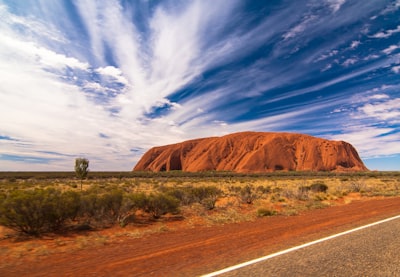
- Uluru — 348m sacred monolith glowing at sunrise and sunset
- Kings Canyon — 100m sandstone walls, the Garden of Eden
- Kata Tjuta — 36 ancient domes shaped over millions of years
- West MacDonnell Ranges — desert gorges, waterholes & chasms
Cultural Experiences
- Dreamtime storytelling with Anangu guides
- Ancient rock art galleries
- Traditional bush tucker and medicine walks
- Dot painting workshops with Anangu artists
- Wintjiri Wiru drone and light show
Unforgettable Moments
- Uluru's sunrise and sunset colour shifts
- Swimming beneath desert waterfalls
- World-class stargazing — among the best on Earth
- The immersive silence of a remote outback sunrise
Learning directly from Anangu people transforms Uluru from a famous landmark into a living cultural landscape with deep spiritual significance spanning 60,000+ years of continuous connection to Country — one of the world's oldest ongoing human cultures.
📅 Detailed Red Centre Itineraries
🚗 5-Day Classic Red Centre Road Trip
The most popular Red Centre circuit: Alice Springs → West MacDonnell Ranges → Kings Canyon → Uluru → Kata Tjuta → return. Total driving approximately 1,200km.
Alice Springs — Arrival & Orientation
Arrive in Alice Springs — Australia's outback capital — and collect your rental vehicle. Stock up comprehensively at Coles or Woolworths (last major supermarkets at reasonable prices). Visit the award-winning Alice Springs Desert Park (3 hours, excellent introduction to desert ecosystems and nocturnal animals), the historic Telegraph Station, and the School of the Air. Evening: sunset camel ride at Pyndan Camel Tracks or Earth Sanctuary desert wildlife tour.
West MacDonnell Ranges → Kings Canyon
Early departure west to Simpsons Gap (60km, 1 hour) — spot black-footed rock wallabies in early morning light. Continue to Standley Chasm (arrive before 11am for spectacular lighting when the sun illuminates the narrow gorge). Allow 3–4 hours total for West Macs stops including short walks at Ormiston Gorge and Ellery Creek Big Hole if time permits. Drive to Kings Canyon Resort. Arrive late afternoon, early dinner and rest for tomorrow's challenging rim walk.
Kings Canyon Rim Walk → Arrive Uluru
Pre-dawn start (6am) for the Kings Canyon Rim Walk (6km circuit, 3–4 hours, moderate-difficult, 500+ steps at the start — known as the "cardiac arrest climb"). Experience the Garden of Eden's lush hidden waterhole, dramatic 100m cliff views, and ancient beehive domes. Important: This walk closes when forecast temperatures exceed 36°C — always check at the resort the night before. Drive to Yulara (300km, 3 hours). Stop at Mount Conner lookout for photos of Australia's "other monolith." Afternoon rest — hydration essential after the rim walk. Sunset viewing at Uluru's dedicated Talinguru Nyakunytjaku platform. Book the Sounds of Silence dinner ($280pp) for an unforgettable sunset and stargazing experience.
Uluru Sunrise, Base Walk & Cultural Immersion
Pre-dawn departure (5:30am) for sunrise at Uluru. Join the free ranger-led Mala Walk (2km, 90 minutes, highly recommended) to learn Anangu stories and see rock art at the base. The full Base Walk (10.6km circuit, 3–4 hours) is achievable with an early start in cooler months. Visit the Cultural Centre to understand Tjukurpa (traditional law) and Anangu culture — essential context. Afternoon rest. Evening: Field of Light by Bruce Munro or the Wintjiri Wiru drone and light show ($195pp) telling the Mala creation story.
Kata Tjuta (Valley of the Winds) → Return Alice Springs
Arrive at Kata Tjuta by 6:30am for sunrise. Complete the spectacular Valley of the Winds walk (7.4km loop, 3–4 hours, moderate-difficult) through the 36 domes. Start early — the walk closes when temperatures exceed 36°C and afternoon heat can be severe. Shorter alternative: Walpa Gorge (2.6km return, 1 hour, easy). Drive back to Alice Springs (450km, 5 hours). Overnight in Alice Springs or continue south toward Coober Pedy or Adelaide.
🌄 7-Day Extended Red Centre Experience
Follow the 5-day itinerary above, then add two full days for deeper exploration:
- +Extra Day 6 — Full West MacDonnell Ranges Day: Base at Glen Helen Resort. Complete the Ormiston Pound Walk (7km, 3–4 hours) through the ancient quartzite gorge. Swim in the permanent waterhole at Ormiston Gorge and Glen Helen Gorge. Watch the sunset from the resort over the West Macs' ridgeline. Camp at gorge campgrounds under exceptional outback skies.
- +Extra Day 7 — More Uluru Experiences: Multiple sunrise/sunset viewings from different vantage points around Uluru (each one looks different). Join an Anangu-led SEIT Outback Australia bush tucker tour, complete Kuniya and Lungkata base walk sections, take a helicopter scenic flight for aerial perspectives of the monolith, or join a sunset camel ride.
🌡️ Best Time to Visit the Red Centre
Timing is critical in the Red Centre. The desert climate varies dramatically between seasons — affecting everything from hiking safety to which walks are open.
✅ Peak Season — May to September
- Daytime: 20–25°C
- Nights: 5–10°C (occasional frost)
- Perfect hiking weather
- All walks open (temperature permitting)
- Clear blue skies, best photography
- ⚠️ Book 3–6 months ahead
- Higher prices (50–100% premium)
🟡 Shoulder — April & October
- Daytime: 25–30°C (Oct warmer)
- 20–30% cheaper than peak
- Fewer crowds, good for photos
- Occasional hot days in October
- Wildflowers in September–October
- Good value window overall
🚫 Summer — November to March
- Daytime: 35–48°C
- Major walks close above 36°C
- Dangerous for hiking
- 40–50% cheaper accommodation
- Empty attractions
- Intense flies
- Only for experienced desert travellers
Visit between May and September for ideal conditions. June–August specifically offers guaranteed comfortable temperatures for the Kings Canyon Rim Walk and Kata Tjuta Valley of the Winds (both close in summer heat). Winter nights at Uluru can drop below 5°C — pack layers for the Field of Light and stargazing experiences. Always check the Bureau of Meteorology NT before and during your trip.
💰 Costs & Budget Guide — 5-Day Trip
Red Centre trips range from economical self-drive camping adventures to world-class luxury resort experiences. Here's what to expect per person on a 5-day trip:
- Car rental: $300–500 (split 2–4 ways)
- Fuel: $200–250
- Park entry: $38
- Camping 5 nights: $150–200
- Self-catering food: $150–250
- Car rental: $400–600 (split 2 ways)
- Fuel: $250–300
- Park entry: $38
- Budget hotels: $500–700
- Dining mix: $300–400
- 1–2 tours: $200–300
- 4WD rental: $800–1,200
- Fuel: $300–400
- Park entry: $38
- Resort stays: $1,500–3,000+
- Fine dining: $500–800
- Helicopter flights, premium tours
Key Costs to Know
- $Park entry: Uluru-Kata Tjuta National Park $38/adult (3-day pass, under 17 free). West MacDonnell parks are free. The park entry fee directly supports Anangu community programs.
- ⛽Fuel: Approximately $0.15–0.25/km — total $200–350 for 1,200–1,500km. Prices increase significantly at Yulara and Kings Canyon (remote surcharge). Fill up at every opportunity in Alice Springs before departing.
- 🏨Accommodation tiers: Yulara (Uluru) pricing: dorms $50–90/night, budget rooms $180–280/night (Outback Pioneer), mid-range $280–500/night (Desert Gardens), luxury $400–700/night (Sails in the Desert), ultra-luxury $2,000–4,000+/night (Longitude 131°). All Yulara accommodation is operated by Ayers Rock Resort — book far in advance for peak season.
- 🍽️Food savings: Self-catering for breakfast and lunch, one special dinner per night saves approximately $50–100/day versus full restaurant dining. A week's self-catering costs $150–250pp versus $600–900pp restaurants. Stock up comprehensively in Alice Springs.
- 🎭Paid experiences: Sounds of Silence dinner $280pp, Field of Light/Wintjiri Wiru $95–195pp, helicopter flights $150–500pp, camel rides $75–130pp, Aboriginal cultural tours $100–200pp. Most walks and sunset/sunrise viewings are included in the park entry fee.
🚨 Desert Safety & Practical Tips
Carry 4–6L water per person per day (6L+ in summer) · Never hike between 11am–3pm in warm months · Tell someone your detailed itinerary and expected check-in times · Check NT road conditions before departing · Carry spare fuel, tyre, and recovery gear · Download offline maps before losing signal · Never drive at night (wildlife)
Essential Preparations
- 💧Water: Minimum 6L per person per day in summer (Nov–Mar), 3–4L in winter (May–Sep). Dehydration is the #1 danger in the outback. Buy in bulk in Alice Springs — Yulara prices are significantly higher. Carry electrolyte sachets (Hydralyte) for heat exhaustion prevention.
- ⛽Fuel: Fill up at every opportunity. Key distances: Alice Springs to Erldunda (200km), Erldunda to Yulara (245km), Kings Canyon to Yulara (300km). Carry a 20L jerry can for remote routes. Fuel prices increase significantly in remote areas.
- 📱Communication: Very limited coverage outside towns — Telstra has the best coverage. Download offline maps (Google Maps, Maps.me) before departing. For remote 4WD tracks, consider a satellite device (Garmin inReach, SPOT), particularly if travelling solo or with any medical conditions.
- 🐍Wildlife hazards: Snakes (common September–April) — wear closed-toe shoes, watch where you step. Dingoes at Uluru and Kings Canyon — never feed, supervise children at dawn/dusk. Kangaroos, cattle, and camels on roads at night — never drive after dark. No crocodiles in the Red Centre (only in the tropical Top End).
- ☀️Sun protection: SPF 50+ sunscreen (reapply every 2 hours), wide-brim hat, quality sunglasses, long-sleeve sun-protective clothing (UPF 50+). UV levels in central Australia are extreme year-round, even on overcast days.
- 🚗If your vehicle breaks down: Stay with the vehicle — it's easier to find than a person on foot. Call 000 if coverage available. Conserve water, seek shade. Do not attempt to walk for help unless you are certain of the distances. This is why carrying extra water and leaving a detailed itinerary is not optional.
🏨 Where to Stay
Accommodation ranges from basic campgrounds to world-class luxury resorts. Book 3–6 months ahead for peak season (May–September), especially around Australian school holidays.
| Location | Budget | Mid-Range | Luxury / Camping |
|---|---|---|---|
| Alice Springs | YHA Alice Springs $35–45/dorm Alice on Todd $100–140 | DoubleTree by Hilton $150–200 Mercure Alice Springs $160–220 | Wintersun Caravan Park $35–50 camping G'Day Mate Tourist Park $40–55 |
| Kings Canyon | Kings Creek Station $25–50 camping | Kings Canyon Resort $180–350/room | Kings Canyon Resort powered camping $20–45 |
| Yulara (Uluru) | Outback Pioneer Lodge dorms $50–90 Outback Pioneer rooms $180–280 | Desert Gardens Hotel $280–450 Emu Walk Apartments $300–500 | Sails in the Desert $400–700 Longitude 131° $2,000–4,000+ all-incl. |
| West Macs (Glen Helen) | Free gorge camping (basic facilities, no booking required) | Glen Helen Resort $140–250/room | Glen Helen camping $20–35 |
All accommodation at Yulara is operated by Ayers Rock Resort. There is no town — only the resort complex. Book your Yulara accommodation immediately when your trip is confirmed for peak season travel. For June–August, rooms sell out 3–5 months in advance. For school holiday periods (April, July, September–October), book even earlier. At short notice, only camping or very expensive premium rooms typically remain.
🎒 What to Pack
You're hours from shops in the desert. Packing correctly can make or break your experience — especially in the remote sections between major stops.
🚗 Vehicle Essentials
- Spare tyre (properly inflated) & jack
- Tyre pressure gauge & pump
- 20L jerry can with extra fuel
- Recovery gear (if 4WD)
- Jumper cables
- Basic tool kit
- Torch with extra batteries
☀️ Personal Gear
- SPF 50+ sunscreen (multiple bottles)
- Wide-brim hat & sunglasses
- Quality hiking boots (broken in)
- 6L+ water bottle capacity per person
- Electrolyte sachets (Hydralyte)
- Camera & power bank (20,000mAh+)
- First aid kit with compression bandages
⛺ Camping Gear
- Sleeping bag rated to 0°C (winter)
- Camping stove & fuel
- Large cooler with ice
- Headlamp/torch
- Insect repellent
- Fly net for head — essential, not optional
- Camping cookware & utensils
👕 Clothing (Layer!)
- Long-sleeve UPF 50+ shirts
- Lightweight convertible hiking pants
- Warm fleece or jacket (5°C nights)
- Rain jacket (shoulder season)
- Multiple moisture-wicking socks
- Comfortable camp/town shoes
🍽️ Food & Supplies
Stock up comprehensively in Alice Springs — Coles and Woolworths have everything at reasonable prices. Limited options at Kings Canyon and Yulara with 50–100% price premiums on basics. Plan your meals before you shop.
Self-Catering Essentials (Buy in Alice Springs)
- 🍝Non-perishables: Pasta, rice, canned goods (beans, tuna, soup, tomatoes), crackers, cereal, muesli bars. These form the backbone of outback self-catering.
- 🥕Fresh produce that travels well: Potatoes, onions, carrots, apples, oranges. Avoid soft fruits — they bruise and spoil within a day in the heat.
- ☕Breakfast: Oats, instant coffee, tea bags, long-life milk or powdered milk, dried fruit. Breakfast is the easiest meal to self-cater — save restaurant budget for dinners.
- 💧Drinks: Buy water in bulk (Alice Springs prices). Electrolyte sachets, soft drinks for treats. Alcohol is available at most stops but carry what you want to save money.
Dining Highlights on Route
- 🍽️Alice Springs: Red Ochre Grill for native Australian cuisine (kangaroo, crocodile, barramundi), Hanuman for Thai/Indian fine dining, Bojangles Saloon for steaks and pub atmosphere.
- 🏜️Yulara/Uluru: Gecko's Cafe (casual, $15–25), multiple resort restaurants (mid-range to fine dining), Sounds of Silence dinner ($280pp under the stars — bucket list), Tali Wiru (premium fine dining, $350pp).
- 🍦Timboon-equivalent detour insight: In Kings Canyon/Yulara, the resort dining is your only option — prepare for premium pricing. Budget: cook your own lunch, one restaurant dinner per night. Self-catering saves $50–100/day.
🪃 Cultural Respect & Authentic Indigenous Experiences
The Red Centre is the traditional land of the Anangu people — one of the world's oldest continuous cultures, maintaining a living connection to this landscape for over 60,000 years. Respectful engagement with Indigenous culture doesn't just enrich your visit — it fundamentally changes what you experience.
Climbing Uluru has been permanently closed since October 26, 2019 after decades of requests from the Anangu traditional owners. Uluru is a sacred site central to Tjukurpa (traditional law) — equivalent in significance to climbing on a holy altar. The decision was made by the Uluru-Kata Tjuta National Park board after a prolonged democratic process. Walking around the base, joining a Mala ranger walk, or sitting quietly at sunrise produces a far more profound experience than the climb ever did.
Cultural Protocols & Respect
- Photography restrictions: Sacred sites and ceremony areas have clear no-photo signage throughout the national park. Always check and strictly respect these restrictions. Do not photograph Aboriginal people without permission. These aren't suggestions — they're cultural law.
- Take nothing, leave nothing: Anangu believe that removing rocks, plants, sand, or artifacts from Country brings spiritual consequences. Leave everything exactly as you find it. This is also a legal requirement in the national park.
- Learn basic language: "Palya" (PAL-ya) means hello/good/OK in Pitjantjatjara. A small effort is genuinely appreciated and opens doors to better conversations with Anangu.
- Support Indigenous businesses: Purchase authentic Aboriginal art directly from Maruku Arts or certified Indigenous-owned businesses — not mass-produced tourist reproductions. Money spent at Indigenous businesses directly supports community programs.
Authentic Aboriginal Cultural Experiences to Book
- 🪃Free Ranger-Led Mala Walk: Daily guided walks led by Parks Australia rangers — many of whom are Anangu — sharing Indigenous perspectives, Dreamtime stories, and rock art significance. This is the single best free activity at Uluru. 2km, 90 minutes, departs the base of Uluru every morning.
- 🎨Maruku Arts Dot Painting Workshop: Work alongside Anangu artists creating your own dot painting while learning the symbolism system. $75–150pp. One of the most hands-on cultural experiences available.
- 🌿SEIT Outback Australia Small-Group Tours: Maximum 11 guests. Aboriginal-guided tours including the Patji tour (bush tucker and culture, $185pp) and Cave Hill tour (rock art, Dreamtime stories, $185pp). Among the highest-rated cultural experiences in the park.
- ✨Wintjiri Wiru: A choreographed drone, laser and light show telling the Mala creation story in English and Pitjantjatjara language. $195pp. Spectacular visual experience created in collaboration with the Anangu community.
🚌 Guided Tour Options
Prefer not to self-drive? Guided tours handle all logistics, provide expert cultural commentary, and often access special experiences not available to independent visitors.
- 3–5 days camping
- All meals & equipment
- Park fees included
- Small groups (10–20 people)
- Active, social atmosphere
- 5–7 days
- Mix of hotels + camping
- Comprehensive itinerary
- Expert guides, smaller groups
- Cultural experiences included
- 4-star+ accommodation
- Fine dining experiences
- Helicopter flights option
- Private or very small groups
- Exclusive Anangu access
Tour vs self-drive: Guided tours shine for cultural depth, expert knowledge, and stress-free logistics. Self-drive is better for flexibility, photographers, larger groups, and those who want to linger at each site. The Red Centre rewards slowness — rushing through it on a 3-day tour misses much of what makes it profound.
Skip the Planning — Book an Expert-Led Red Centre Tour
Cooee Tours' outback guides know the best sunrise positions, the cultural stories behind the rocks, and the hidden gorges most self-drivers miss. All-inclusive from $695 per person.
Browse All Red Centre Tours →❓ Frequently Asked Questions
How many days do I need for a Red Centre road trip?
Most travellers spend 4–7 days exploring the Red Centre. A minimum of 4 days covers the major highlights (Uluru, Kings Canyon, Alice Springs). 5 days allows a comfortable pace. 7 days or more adds the West MacDonnell Ranges gorges in depth, multiple sunrise/sunset viewings at Uluru, and additional Aboriginal cultural experiences.
Day trips from Alice Springs to Uluru are technically possible (900km total) but deeply unsatisfying — you'll arrive exhausted at the most sacred landscape in Australia and spend 30 minutes looking at it. A single overnight stay transforms the experience completely. The light at dawn on Uluru — with virtually no one else around — is one of the most extraordinary moments Australia offers.
What is the best time of year to visit the Red Centre?
May to September is ideal — daytime temperatures of 20–25°C with cool, clear nights. This is peak season with perfect hiking weather and all walks open. Book 3–6 months ahead, particularly for school holiday periods (July is especially popular).
April and October are excellent shoulder months with fewer crowds and 20–30% savings on accommodation. Avoid December to February when temperatures regularly exceed 40°C (sometimes 48°C+) — the Kings Canyon Rim Walk and Kata Tjuta Valley of the Winds both close above 36°C, which is most summer days.
How much does a 5-day Red Centre road trip cost?
Per person costs for a 5-day trip: Budget $750–1,200 (camping, self-catering, car hire split 2–4 ways), mid-range $1,800–2,500 (budget hotels, mix of dining), luxury $4,000–8,000+ (resort stays, fine dining, helicopter flights).
The single biggest cost lever is accommodation — Yulara (Uluru) ranges from $50/night for dorms to $4,000+/night for Longitude 131°. Park entry is $38/adult for 3 days. Fuel Alice Springs to Yulara and back is approximately $200–300 total.
Do I need a 4WD for the Red Centre?
No. The main routes between Alice Springs, Kings Canyon, and Uluru via the Stuart Highway and Lasseter Highway are fully sealed and suitable for standard 2WD vehicles. A 2WD saves 50–100% on rental costs and is perfectly adequate for the classic Red Centre circuit.
A 4WD is only required for: the Mereenie Loop Road (gravel shortcut between Kings Canyon and Alice Springs — permit required from the Central Land Council), remote West MacDonnell tracks, and off-road exploration in the back country. For the itinerary in this guide, a small car is perfectly fine.
Can visitors climb Uluru?
No — climbing Uluru has been permanently closed since October 26, 2019. The traditional owners, the Anangu, had been requesting closure for decades. Uluru is a sacred site central to Tjukurpa (traditional law) — the rock is not a recreation facility but a living cultural landscape with profound spiritual significance.
Instead, visitors experience Uluru through: the 10.6km base walk (full circuit, 3–4 hours), the free ranger-led Mala Walk (2km, 90 minutes, highly recommended), the Cultural Centre, sunrise and sunset viewing platforms, and Aboriginal-led cultural tours. Most visitors report that the base-level experience is far more meaningful than the climb ever was.
Is it safe to drive at night in the outback?
No — night driving in the outback is strongly discouraged and genuinely dangerous. Kangaroos, cattle, camels, and emus are most active at dusk and after dark, and are extremely difficult to see until they're right in front of you. A collision with a large kangaroo at 100km/h is serious; a camel at speed can be fatal.
Always plan to arrive at your destination well before sunset. If driving near dusk is unavoidable, reduce speed to 60–80km/h maximum and remain extremely vigilant. Rental companies explicitly warn against night driving for good reason.
What should I do if my vehicle breaks down?
Stay with your vehicle. It provides shade, shelter, and is far easier to locate from the air or road than a person on foot. Call 000 for emergencies or your rental company's 24/7 roadside assistance if mobile coverage is available.
Conserve water — sip rather than gulping. Seek shade inside or under the vehicle. Display signs of distress (hood up, hazard lights on, bright clothing tied to the vehicle). Do not attempt to walk for help unless you are absolutely certain of the distance and conditions. This is why carrying 6L+ of water per person, food, and leaving a detailed itinerary with someone who will call for help if you don't check in is not optional — it's survival planning.
Are there dangerous animals in the Red Centre?
Yes, but encounters are rare with basic precautions:
- Snakes: Common in warm months (September–April). Wear closed-toe shoes, watch where you step and place hands, don't disturb rocks or logs. If bitten, apply pressure immobilisation bandage and seek immediate medical help.
- Dingoes: Present at Uluru and Kings Canyon. Never feed, don't approach, supervise children at dawn/dusk. Read the Parks Australia dingo safety guidelines.
- Spiders: Check shoes and camping gear before use.
Good news: There are absolutely no crocodiles in the Red Centre — saltwater and freshwater crocodiles are only found in the tropical Top End and far north. The water holes in the West MacDonnell Ranges are completely safe for swimming.
What is mobile phone coverage like in the Red Centre?
Coverage is very limited. Reliable signal is only available in Alice Springs (all carriers), Yulara/Ayers Rock Resort (Telstra best), Kings Canyon Resort (limited Telstra), and occasionally along the Stuart Highway. Expect no coverage for most of the journey, particularly in the West MacDonnell Ranges and between major stops.
Download offline maps before departing (Google Maps and Maps.me both support this — do it on WiFi the night before). For remote routes or solo travel, consider a satellite device (Garmin inReach or SPOT) for emergency communication. These rent for approximately $50–80 for a week and provide genuine peace of mind in areas with zero coverage.
Can you swim in the water holes in the Red Centre?
Yes! The West MacDonnell Ranges have excellent swimming spots that are safe and accessible. Best spots:
- Ellery Creek Big Hole — Large permanent waterhole, most popular and accessible, good car park and picnic area
- Ormiston Gorge — Surrounded by dramatic quartzite cliffs, beautiful mountain swimming hole
- Glen Helen Gorge — Permanent water in a scenic gorge setting, less crowded than Ellery Creek
Water is cold year-round (typically 15–20°C even in summer — refreshing in the heat). Always follow safety signage and never dive. There are absolutely no crocodiles in the Red Centre — only in the tropical north. These water holes are completely safe.
How do I book authentic Aboriginal cultural experiences?
Book authentic Aboriginal-led experiences through:
- Uluru-Kata Tjuta Cultural Centre — Anangu-guided tours, ranger walks
- SEIT Outback Australia — Small group Aboriginal-guided tours (bush tucker, rock art, Dreamtime)
- Maruku Arts — Dot painting workshops alongside Anangu artists
- Ayers Rock Resort tour desk at Yulara — for Wintjiri Wiru and other experiences
Book ahead — popular experiences like the SEIT bush tucker tour and Maruku Arts workshops fill weeks in advance during peak season. The free daily Mala ranger walk at Uluru requires no booking and is the single best free cultural experience available.
🔗 Useful Resources
- 🔗Parks Australia — Uluru-Kata Tjuta National Park: Official park information, fees, cultural guidelines, and all walking tracks
- 🔗NT Road Report: Current road conditions, closures, and warnings — check before every leg of the journey
- 🔗Bureau of Meteorology NT: Weather forecasts for Alice Springs, Yulara, and the Red Centre
- 🔗Uluru Cultural Centre: Learn about Anangu culture and Tjukurpa before your visit
- 🔗Tourism NT: Official Northern Territory tourism information
📖 More Australia Road Trip Guides
Highway 1 Big Lap Guide
The Red Centre connects to the 14,500km coastal loop

Great Ocean Road Guide
Victoria's iconic 243km coastal road trip
Best Time to Visit Australia
When to go where — Red Centre and beyond
Queensland Wildlife Guide
Reef, koalas, turtles & eco experiences