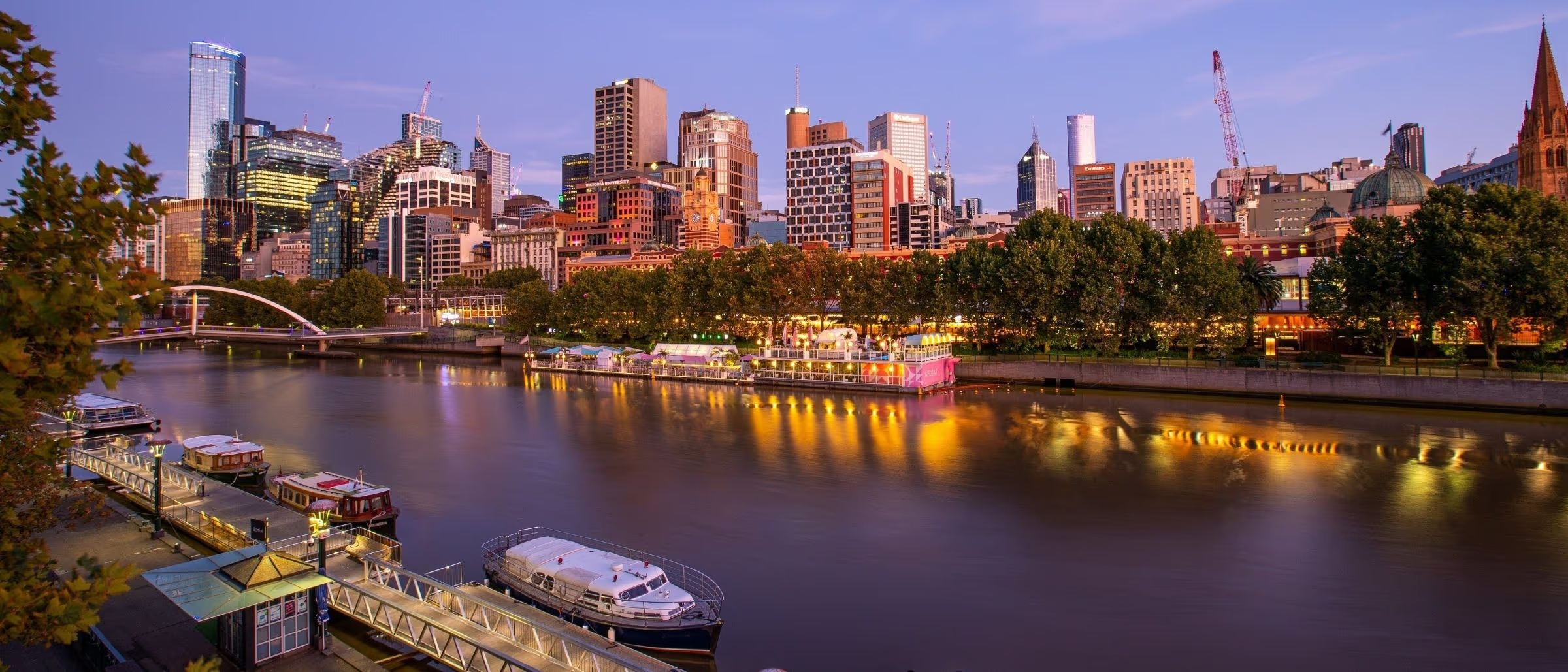
Victoria · 5.4 Million People · Australia's Cultural Capital
Melbourne —
Flat White & Laneways
"A city where the coffee is taken seriously, the sport is a religion, and every laneway hides something worth finding."
In March 2026 Melbourne was named the world's best city by Time Out — the first Australian city ever to top that ranking — and in July it placed third on the Economist Intelligence Unit's Global Liveability Index. The reputation is earned by what the city gives visitors daily: laneways thick with street art and hidden bars, the world's finest café coffee culture, the MCG on match day, the NGV's free permanent collection, and a food scene that is the equal of any city on earth.
The World's Most Liveable City
Melbourne's reputation is not a marketing line: it topped Time Out's Best Cities ranking for 2026 on the votes of 24,000-plus locals worldwide, and placed third on the Economist Intelligence Unit's 2026 Global Liveability Index with a score of 97 out of 100, behind only Copenhagen and Vienna. It held the EIU top spot for seven consecutive years to 2017. The reputation is supported by the experience of actually being there. The city is genuinely exceptional — the laneways are extraordinary (genuine bluestone alleyways running behind the CBD blocks, completely different in character from the main streets above them, housing some of the best coffee shops and bars in the world in unexpected configurations: basement entrances, rooftop terraces, warehouse conversions), the food is world-class across every cuisine and every price point, the arts and museum culture is outstanding (the NGV is Australia's most visited museum and the finest regional art gallery in the country), and the sporting passion is unlike anything in Australia — an AFL match at the MCG (100,000 capacity, frequently full) is one of the great sporting spectacle experiences in the world.
The practical character of Melbourne: start in the laneways — Hosier Lane (street art), Degraves Street (coffee), Centre Place (bars) — then work outward. The NGV on St Kilda Road (free, always) and the MCG (tours daily when no game, matches March–September) cover the cultural and sporting pillars. Queen Victoria Market (Tuesday, Thursday, Friday, Saturday, Sunday) is the best market in Australia. Specialty coffee at small roasters in the laneways is the definitive Melbourne experience — skip Starbucks entirely, ask locals for the current favourite. And the rooftop bars at sunset, with the Yarra and the Arts Centre spire below, justify staying until dusk.
Hosier Lane · Degraves St · Centre Place · AC/DC Lane · Presgrave Place
Melbourne Laneways — the Heart of the City
Melbourne's laneways are what makes Melbourne Melbourne — a network of narrow bluestone alleyways behind the CBD blocks, each with a distinct character, hiding specialty coffee, street art galleries, laneway bars, and boutique shopping that the city's main streets cannot replicate.
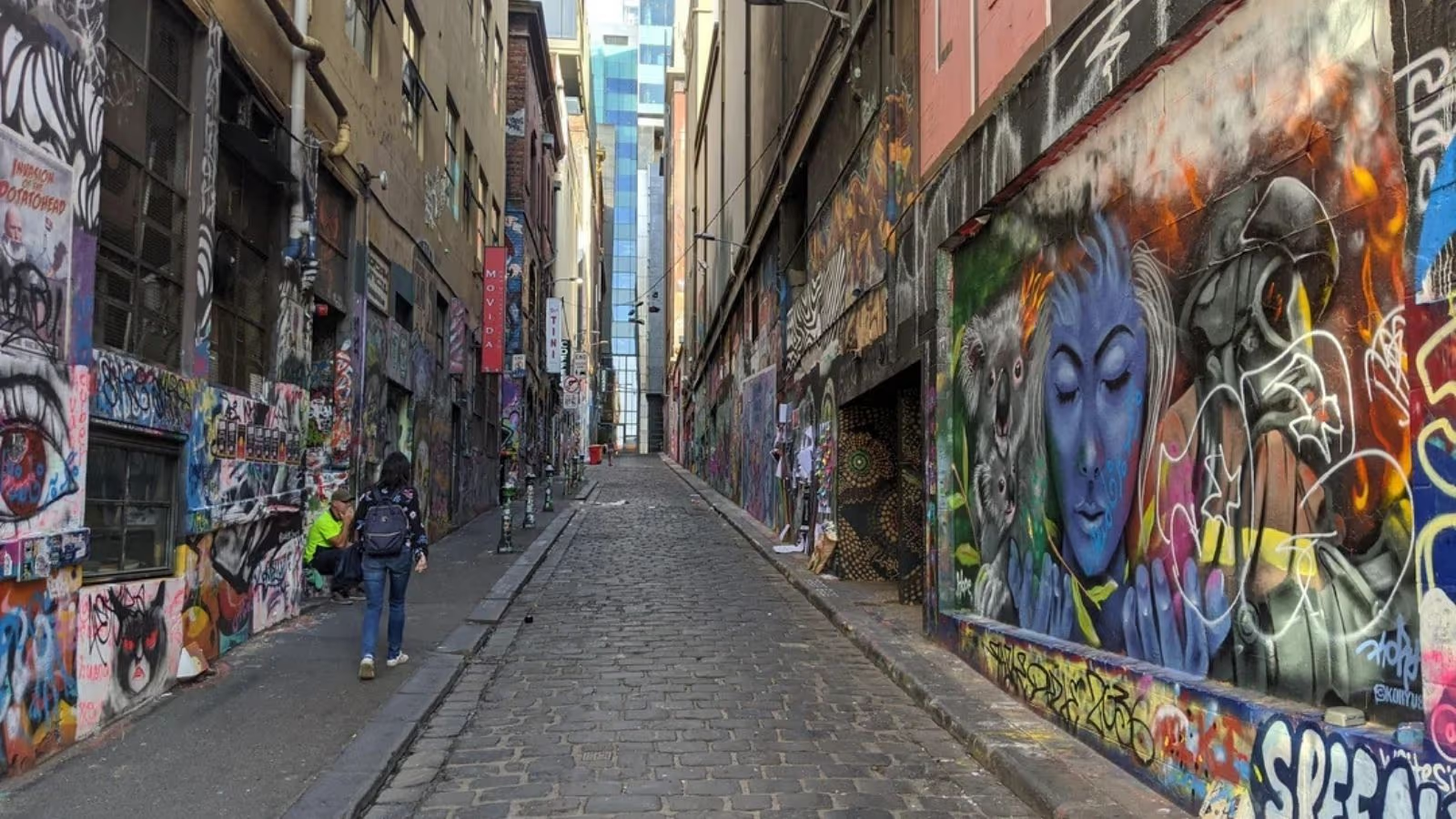
Hosier Lane · Degraves St · Centre Place · 24 hrs
CBD · Free · Open 24 Hours · Walking Distance from Flinders St
The Laneways — Melbourne's hidden city
Melbourne’s laneways are narrow Victorian bluestone service lanes running behind the 19th-century CBD blocks. From the mid-1990s, when the city set out to get residents living in the centre again, they filled up with coffee roasters, small bars, street art and shops that could only work in that compressed space. They are not a tourist attraction bolted on afterwards — they are where people who work in the city actually eat and drink.
The method is simple: get off at Flinders Street Station, walk into the grid behind Flinders Lane, and turn into every opening you pass. These six are the ones worth naming.
The one everybody photographs, and the birthplace of Melbourne street art. Both bluestone walls, floor to roofline, repainted constantly — work that is there in the morning is often gone by the weekend. Worth knowing what you are looking at: the City of Melbourne describes Hosier as a long-standing de facto “free-to-paint” area that needs no permit and no permission. It is tolerated rather than commissioned, which is why the quality swings from world-class to scrawl and back within a metre. Rutledge Lane runs off it and gets the overflow.
The archetypal Melbourne café lane and the one to do first thing. Narrow, loud, tables down both sides, half a dozen operators competing within fifty metres. Order at the counter, take an outside seat, and watch the station crowd come up the subway stairs.
The most vertical of the laneways — a partly covered passage with cafés and bars stacked above one another and reached by internal staircases, so the social space runs upward rather than along. Compressed, scruffy and completely characteristic.
Renamed from Corporation Lane by unanimous vote of the Melbourne City Council on 1 October 2004, in tribute to the band who filmed It’s a Long Way to the Top on the back of a flatbed truck down Swanston Street in 1975. Be realistic about what is there now: Cherry Bar, the rock venue that defined the lane for two decades, moved out in July 2019 and trades on Little Collins Street. What remains is the name, the sign, and some of the best music-themed street art in the city.
The odd one. Instead of large-format spray work, the walls carry small framed pieces, objects and miniatures hung like a domestic gallery, changing constantly. Easy to walk past; worth not walking past.
Large-scale murals and a couple of the CBD’s better restaurants behind unmarked doors. Quieter than Hosier and generally better painted.
Melbourne Neighbourhoods — Six Districts to Know
Melbourne is a city of distinct neighbourhoods, each with a character that the CBD cannot replicate. These six define the Melbourne that locals actually inhabit.
Free Permanent Collection · 3M Visitors A Year · Blockbusters · ACMI
NGV & Museums — Australia's Finest Collections
The National Gallery of Victoria is the most visited art museum in Australia — 3 million visitors across its two buildings in 2025, up 7.8% year on year, ahead of every other gallery in the country. The permanent collections are always free; the blockbuster exhibitions are world-class.
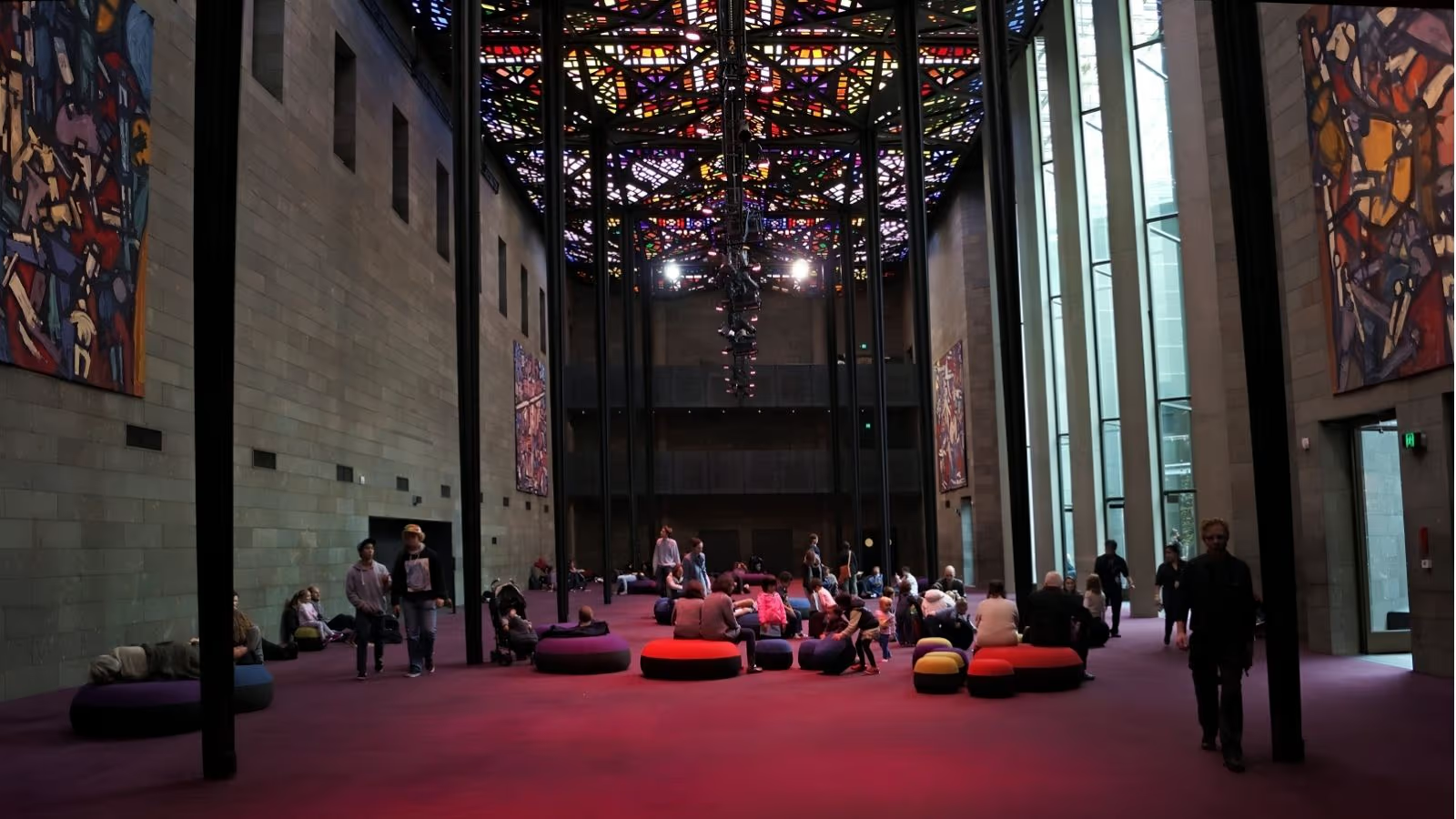
NGV International · St Kilda Rd · free permanent collection
National Gallery of Victoria · St Kilda Rd + Federation Square · ngv.vic.gov.au
National Gallery of Victoria — Australia's most visited museum
The National Gallery of Victoria operates across two major buildings — NGV International on St Kilda Road (the main building, international art from ancient to the 20th century) and The Ian Potter Centre: NGV Australia at Federation Square (Australian art, significant Indigenous collection, free). The permanent collections at both buildings are free, always, with no booking required. The blockbuster international exhibitions (typically two to three major shows annually) charge admission but represent the finest international touring exhibitions to reach Australia — the NGV regularly secures exhibitions that travel from the Louvre, MoMA, the Tate, and equivalent institutions. The NGV International building is itself worth experiencing: the entrance water wall (a glass wall with water flowing continuously down the surface, through which every visitor enters) is part of Sir Roy Grounds’ 1968 bluestone design and one of the most memorable architectural entrance sequences in Australia; the Great Hall, with Leonard French’s cut-glass ceiling above it — 224 diamond-cut triangles, still the largest stained-glass ceiling in the world, made between 1963 and 1967 — is the finest single interior space in Melbourne, and free to lie down under at any time. Both buildings are open daily 10am–5pm with free entry, closed only on Christmas Day and opening at 1pm on Anzac Day. Free guided tours of permanent collections depart daily.
ACMI — Australian Centre for the Moving Image
ACMI (Federation Square, directly adjacent to NGV Australia) is one of the world's finest screen culture museums — the recently redesigned permanent exhibition covers film, television, video games, and digital culture from their origins to the present in an immersive, technology-rich environment. The permanent collection is free. ACMI also screens significant cinema (Australian premieres, retrospective seasons, silent film with live score) in its two theatres. The combined NGV Australia + ACMI visit (both free for permanent collections) at Federation Square is the finest free half-day cultural programme in Melbourne.
Melbourne Museum
Melbourne Museum (Carlton Gardens, adjacent to the Royal Exhibition Building) is Australia's largest museum — natural history, social history, technology, and the Bunjilaka Aboriginal Cultural Centre in a modern building set in the UNESCO World Heritage Carlton Gardens. The Phar Lap exhibit (the racehorse's taxidermied body and oversized heart in adjacent display cases — Australia's most emotional sporting relic) is the most visited single exhibit in Melbourne Museum. The Forest Gallery (a living rainforest ecosystem inside the museum, with real trees and birds) is the most unusual. Entry A$20 adult; A$10 child; free for under-5s.
Royal Exhibition Building
The Royal Exhibition Building (1880) in Carlton Gardens is the only building in Australia to have hosted a sitting of the Federal Parliament (the opening of the first Federal Parliament in 1901) and is now inscribed on the UNESCO World Heritage List. The exterior — a grand Lombardic Renaissance dome visible across Carlton — is freely accessible; the interior (original exhibition hall with the full-height dome interior, historic murals, and original cast iron fittings) is accessible by guided tour only (A$10 adult, book at Melbourne Museum). The adjacent Carlton Gardens are among the finest Victorian formal gardens in Australia — free, open daily.
MCG · AFL · Cricket · Boxing Day Test · Australian Sports Museum
MCG & Sports — Australia's Sporting Capital
Melbourne is Australia's sporting capital — the MCG (100,024 capacity, the largest stadium in the Southern Hemisphere) hosts AFL and cricket; Rod Laver Arena hosts the Australian Open (January); the Melbourne Park precinct is the heartland of Australian sport.
Melbourne Cricket Ground · Yarra Park · Richmond · mcg.org.au
The MCG — Australia's greatest sporting venue
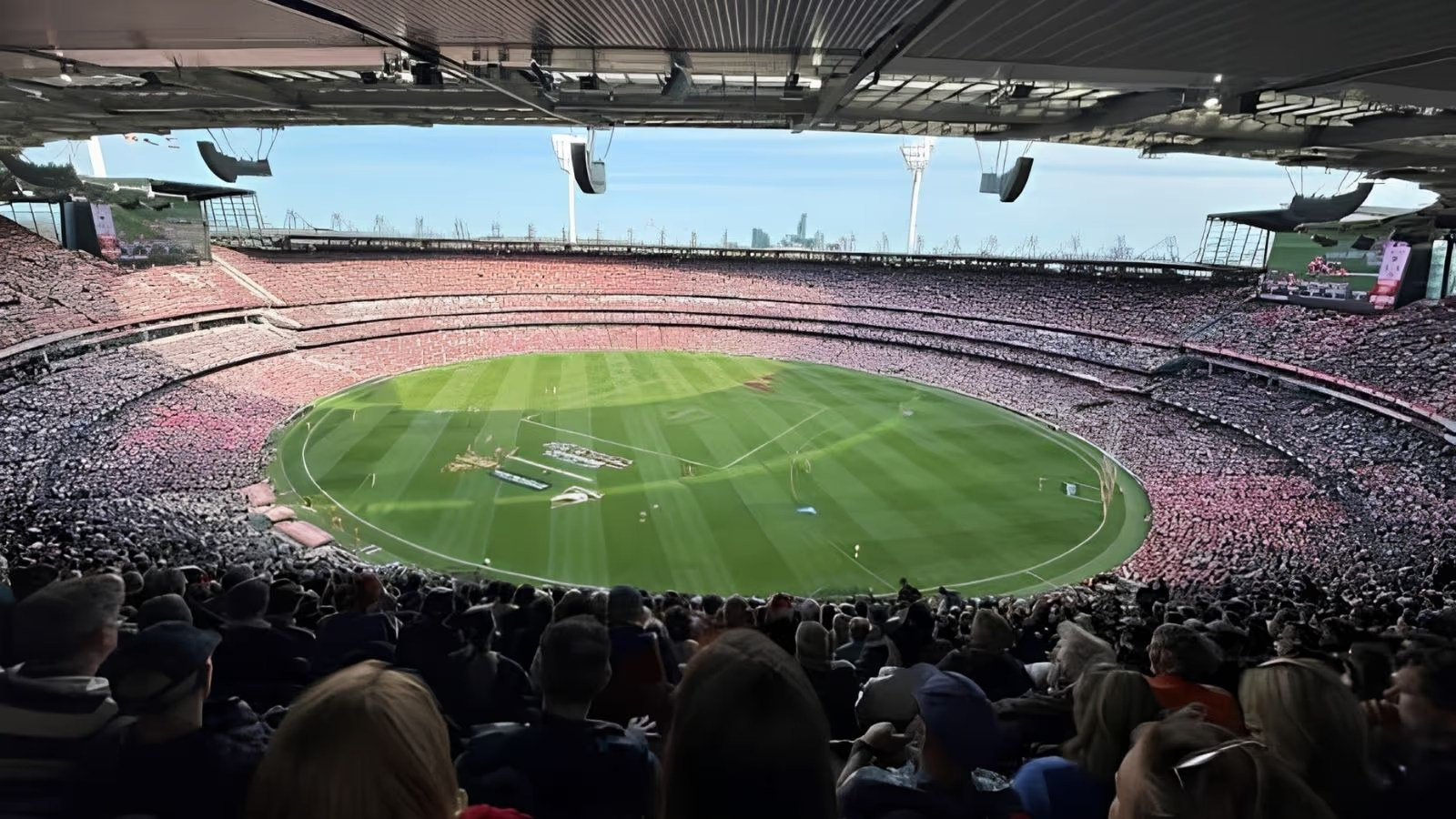
The MCG (Melbourne Cricket Ground) is not simply a stadium — it is the primary site of Australian sporting identity and has been since 1853. The 1956 Olympic Games were held at the MCG; the first Australian test cricket match was played here; it is the largest stadium in the Southern Hemisphere. The atmosphere of a fully-attended AFL match (which happens 8–10 times per season for the Melbourne Demons and Richmond Tigers home games, with attendances regularly exceeding 80,000) is unlike any other sporting experience in Australia — the crowd, the acoustics, the scale, and the specific culture of AFL spectatorship create an extraordinary two-hour event. AFL season 2026: home-and-away rounds ran 5 March to 23 August, with a five-week finals series — the first time the AFL has run five weeks of finals — closing with the Grand Final at the MCG on Saturday 26 September 2026. The Friday before (25 September) is a Victorian public holiday for the Grand Final Parade. Cricket: October–February (Sheffield Shield, Big Bash League) with the Boxing Day Test (December 26 vs England or South Africa, always at the MCG) the premier single day of cricket in the Australian sporting calendar — attendance regularly 80,000+. Year-round: the MCG guided tour (75 minutes, daily except major event days) takes you through the Long Room, the coaches' box, the press box and out onto the playing surface, and the Australian Sports Museum — renamed from the National Sports Museum, and still the finest sports museum in the country — sits inside the ground at Gate 3. Adult tour tickets start around A$37–38, with combined tour-and-museum tickets a little more; bookings are essential and prices move, so check mcg.org.au before you go.
100,024 capacity · AFL · Boxing Day Test · Australian Open
Queen Victoria Market · South Melbourne · Night Markets · Local Produce
Markets — Queen Vic and Beyond
Melbourne's market culture is among the finest in Australia — Queen Victoria Market (the largest open-air market in the Southern Hemisphere, trading since 1878) is the headline attraction, with the South Melbourne Market the finest local alternative.
Queen Victoria Market
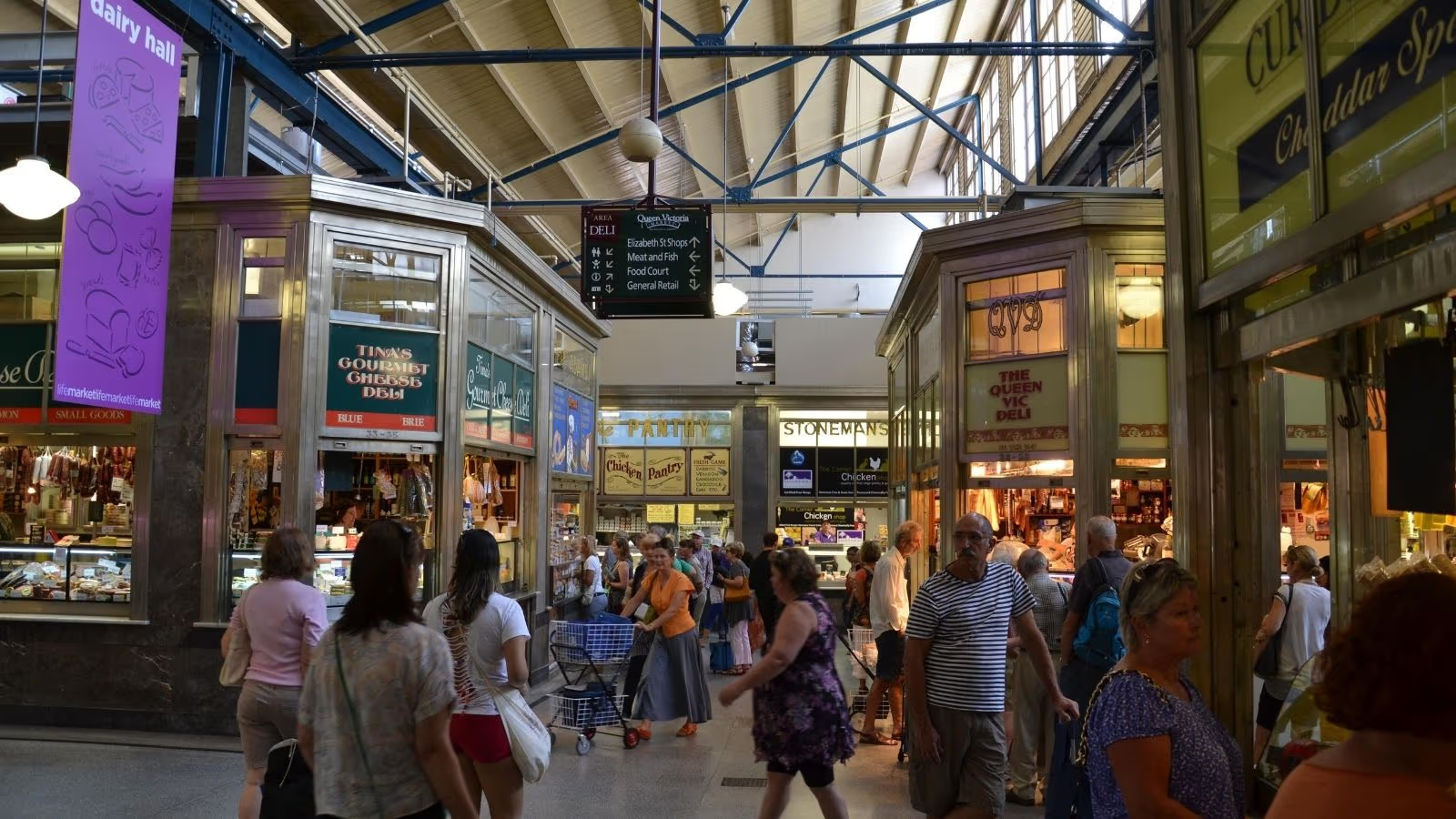
Queen Victoria Market (established 1878, 7 hectares, the largest open-air market in the Southern Hemisphere) is Australia's most visited market and the finest single food market experience in Melbourne — fresh produce, meat, seafood, international food stalls, and the general merchandise sheds covering clothing, souvenirs, and crafts in a heritage-listed complex of Victorian sheds and pavilions. Trading days: Tuesday, Thursday, Friday (general produce and food), Saturday (the finest day — full market plus the outdoor food producers), Sunday (general merchandise and food, reduced produce). Night Markets: Summer Night Market (Wednesday evenings, November–March, street food, live music, crowded and excellent) and Winter Night Market (Wednesday evenings, June–August). Free guided heritage tours available from the market office (check qvm.com.au). The Deli Hall — smoked meats, charcuterie, cheese, pickles from Melbourne's European communities — is the finest single section of the market.
South Melbourne Market
South Melbourne Market (trading since 1867) is the best-kept Melbourne market secret — less touristed than Queen Victoria Market but with arguably better quality produce, award-winning butchers and bakers, the finest selection of organic and specialty food in the city, and the original South Melbourne dim sim shop (the city's most famous single food item — a deep-fried or steamed pork dim sum sold at A$1.20 each, invented at the market in 1949, a Melbourne institution with a specific local cult following). Trading: Wednesday, Friday, Saturday, Sunday. The Wednesday morning session (9am–3pm) is the most relaxed and most popular with local residents. The cooking class programme (run from the market kitchen) is among Melbourne's best culinary experiences.
Pellegrini's 1954 · Specialty Roasters · Third Wave · Laneway Cafés
Coffee Culture — the World's Best Café Scene
Melbourne's coffee culture is the most developed in Australia and, by wide international consensus, among the best anywhere — espresso arrived with post-war Italian migration in the 1950s, the specialty espresso bar format was refined here through the 2000s, and the city's café ecosystem remains the country's most innovative and most demanding.
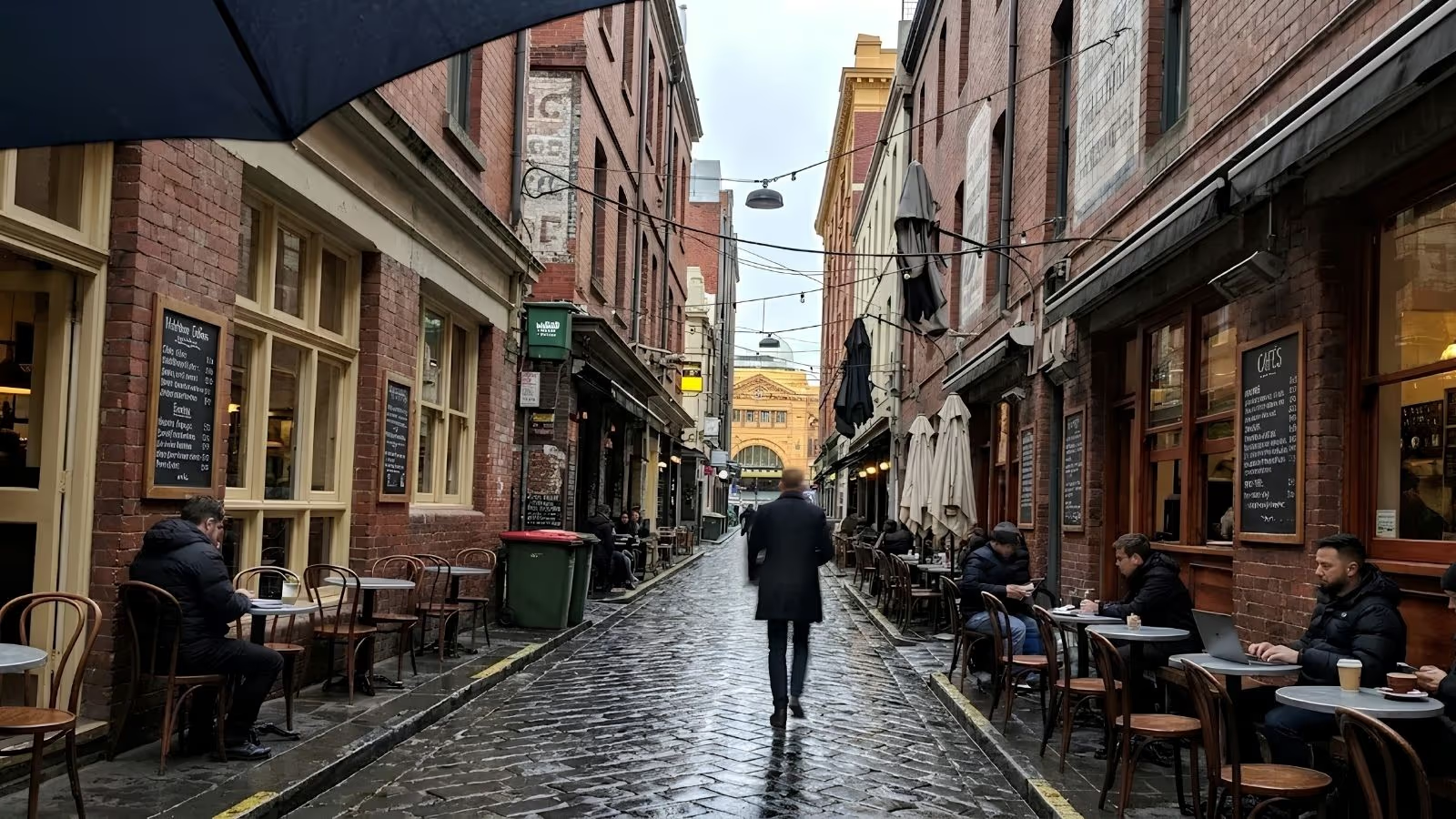
flat white · single origin · third wave · laneway roasters
CBD Laneways · Fitzroy · Collingwood · Southbank
Melbourne Coffee — seventy years of espresso
Melbourne's coffee habit is older than the specialty scene suggests. Espresso arrived with post-war Italian migration: Pellegrini's Espresso Bar at 66 Bourke Street opened in 1954 and was among the first places in the city — and probably the first in the CBD — to run an authentic Italian espresso machine. Its neon sign is now heritage-listed and the café is still trading, largely unchanged. Lygon Street cafés in Carlton took delivery of their machines around the same time, and the Legend Espresso & Milk Bar followed on Bourke Street just before the 1956 Olympics. Seventy years on, that is the foundation the modern scene is built on.
A word on the flat white, since Melbourne is often given credit for it: the drink's origin is genuinely contested and Melbourne is not really in the running. The documented Australian claim is Sydney's — Alan Preston put it on the menu at Moors Espresso Bar in 1985, and says he brought the idea from far north Queensland, where cafés had served "white coffee, flat" since the 1960s. New Zealand's competing claims come from Auckland and Wellington in the mid-to-late 1980s. A Sydney restaurant review referred to "flat white coffee" as early as May 1983, and the term appears in England well before that. What Melbourne can fairly claim is making it the default order and setting the standard by which it is judged.
Where to actually drink it: Seven Seeds (Carlton, one of the city's founding specialty roasters and the training ground for a generation of baristas), Brother Baba Budan (CBD, the hanging-chair café, Seven Seeds' city sibling), Proud Mary (Collingwood, off Smith Street, roasting a block away at Aunty Peg's), Patricia Coffee Brewers (CBD, standing room only, no seats at all), Market Lane (Prahran Market and elsewhere, the benchmark for sourcing and transparency since 2009), Padre Coffee (Brunswick East, roasting there since 2008), and dozens more of equal quality in every neighbourhood. The correct approach: ignore Starbucks completely (Melbourne residents treat this as a personal affront), ask your hotel concierge or a local for the nearest specialty roaster, order a flat white, and evaluate. The Melburnian expectation — milk texture, extraction, temperature, cup — is genuinely higher than any other Australian city.
Chinatown · Victoria Street · Lygon Street · Footscray · Springvale
Where to Eat in Melbourne
Melbourne's restaurant scene is not organised around a single fine-dining strip. It is organised around migration — each wave of arrivals since the 1850s built a precinct, and those precincts are still where the best and cheapest eating in the city happens. Learn the five and you can eat extremely well for a week without repeating yourself or booking anything.
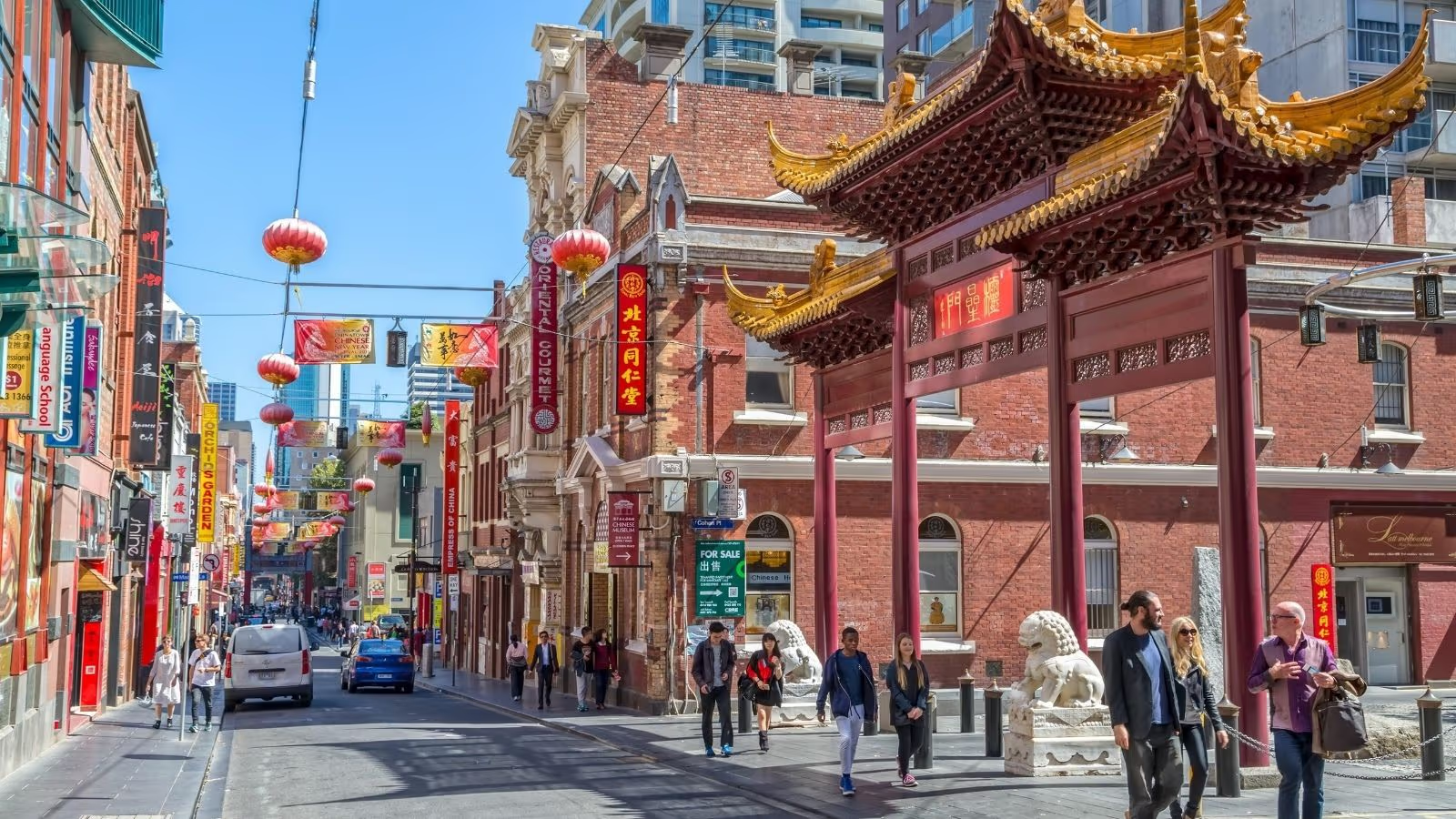
Chinatown and the CBD
Melbourne's Chinatown has operated continuously on Little Bourke Street since the 1850s gold rush, which makes it the oldest Chinese settlement of its kind in the Western world. It is not a tourist reconstruction — it is where the city eats late.
What to eat here
- Yum cha on a weekend morning, trolleys from around 9am. Arrive before 11am or expect to wait.
- Late-night Cantonese and Malaysian — many kitchens run past midnight, unusual for an Australian CBD.
- Hot pot and Sichuan along the northern end and up into Russell Street.
Practical
- Walk from Parliament station or the new Town Hall station; both are inside the Free Tram Zone.
- Expect A$15–$30 a head for yum cha, more for a sit-down banquet.
Victoria Street — Little Saigon
A single kilometre of Victoria Street in Richmond holds one of the densest Vietnamese food strips outside Vietnam, built by refugee families who settled here from the late 1970s. This is where Melburnians go for pho, not the CBD.
What to eat here
- Pho — beef broth, served all day. Most rooms are plain, fluorescent-lit and excellent.
- Bun cha, banh mi and rice-paper rolls from the bakeries and grocers between the restaurants.
- Vietnamese iced coffee with condensed milk, which is a genuinely different drink from anything in the laneways.
Practical
- Tram 109 from the CBD, or train to North Richmond and walk two minutes.
- A bowl of pho runs around A$15–$20. Many places are cash-friendly but card is now standard.
Lygon Street — the Italian quarter
Lygon Street was the centre of post-war Italian Melbourne and is where espresso culture entered the city. The southern end, closest to the CBD, is the touristed stretch with footpath spruikers; the better eating is north of Elgin Street and in the side streets.
What to eat here
- Pasta and pizza at the long-standing family rooms rather than the tourist-facing frontages.
- Gelato — Lygon Street's gelaterie are a Melbourne institution and open late.
- Espresso standing at the bar, which is how it is still taken here.
Practical
- Tram 1 or 6 north on Swanston Street; ten minutes from Flinders Street.
- Combine with Melbourne Museum and the Royal Exhibition Building, both two blocks east.
The outer food precincts
The best value eating in Melbourne is not in the inner city. Footscray in the west is East and West African, Vietnamese and Ethiopian; Springvale in the south-east is one of the largest Vietnamese and Cambodian precincts in the country; Preston and Coburg in the north are Lebanese, Turkish and Somali.
What to eat here
- Ethiopian injera platters and Somali suqaar around Nicholson Street, Footscray.
- Cambodian noodle soups and Vietnamese bakeries through the Springvale arcades.
- Turkish pide and Lebanese charcoal chicken along Sydney Road, Coburg.
Practical
- All three are on the suburban train network, and with the single fare zone they cost no more to reach than a CBD stop — less again during the half-price period to January 2027.
- Footscray is eight minutes from Southern Cross; Springvale about 35 minutes from Flinders Street.
The inner-north dining strips
Brunswick Street, Gertrude Street, Smith Street and Sydney Road carry most of Melbourne's contemporary independent restaurants — small rooms, short menus, natural wine lists, and the highest concentration of chefs who trained in the fine-dining kitchens and then left them.
What to eat here
- Modern Australian small plates, which is Melbourne's actual native cuisine.
- Gertrude Street for the most consistent standard in the city per block.
- Brunswick's Sydney Road for Middle Eastern bakeries and sweets alongside the newer rooms.
Practical
- Book Thursday to Saturday two to three days ahead; the best rooms go two weeks out.
- Walk-ins work well before 6pm or after 9pm at most venues.
The high end
Melbourne's fine dining sits mostly in the CBD basements and laneways and along the Southbank riverfront rather than in a single district. Degustation menus at the top rooms run A$200–$300 a head before wine and are booked one to three months ahead.
How to approach it
- Lunch menus at the top restaurants are often half the price of dinner for the same kitchen.
- Bar seats at fine-dining venues frequently take walk-ins when the dining room is full.
- The Arts Centre and Hamer Hall precinct means Southbank rooms are used to pre-theatre timing — ask for it.
Practical
- Book directly or through the venue's Google listing; Dimmi no longer exists as a booking brand.
- Melbourne restaurants apply a surcharge on Sundays and public holidays, typically 10–15%.
St Kilda · Brighton · Port Melbourne · Williamstown · Penguin Colony
Melbourne Beaches — Port Phillip Bay
Melbourne's beaches face north into the sheltered waters of Port Phillip Bay — calmer, warmer, and safer than ocean beaches, with the bay's distinctive amber evening light across the water and the Mornington Peninsula silhouette on the horizon.
St Kilda Beach
St Kilda is Melbourne's most famous beach suburb — the beach itself is a long, gentle bay beach with calm Port Phillip waters, the Esplanade foreshore, and the pier extending 400 metres into the bay. The pier's breakwater has a small resident colony of little penguins (Eudyptula minor) that can be observed from the public walkway at dusk (free, seasonal — they're present year-round but most accessible April–September before the tourist summer peak). Luna Park (1912, one of Australia's oldest amusement parks, free entry to the grounds and esplanade, rides ticketed) and the Esplanade Sunday market add character. The St Kilda foreshore cycling path and roller-skating rink at the Peanut Farm Reserve make this Melbourne's finest urban beach for active recreation.
Brighton Beach & the Bathing Boxes
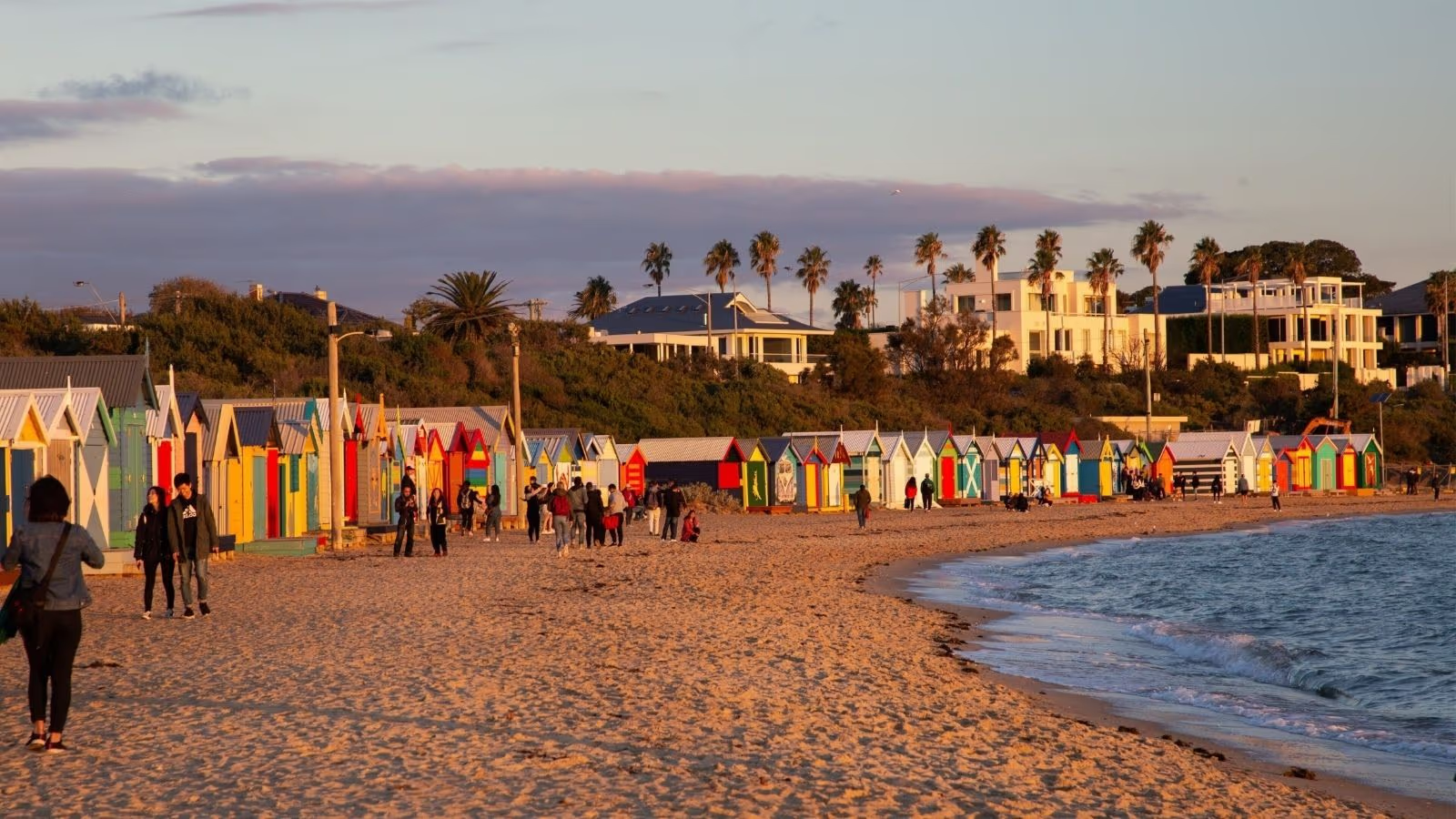
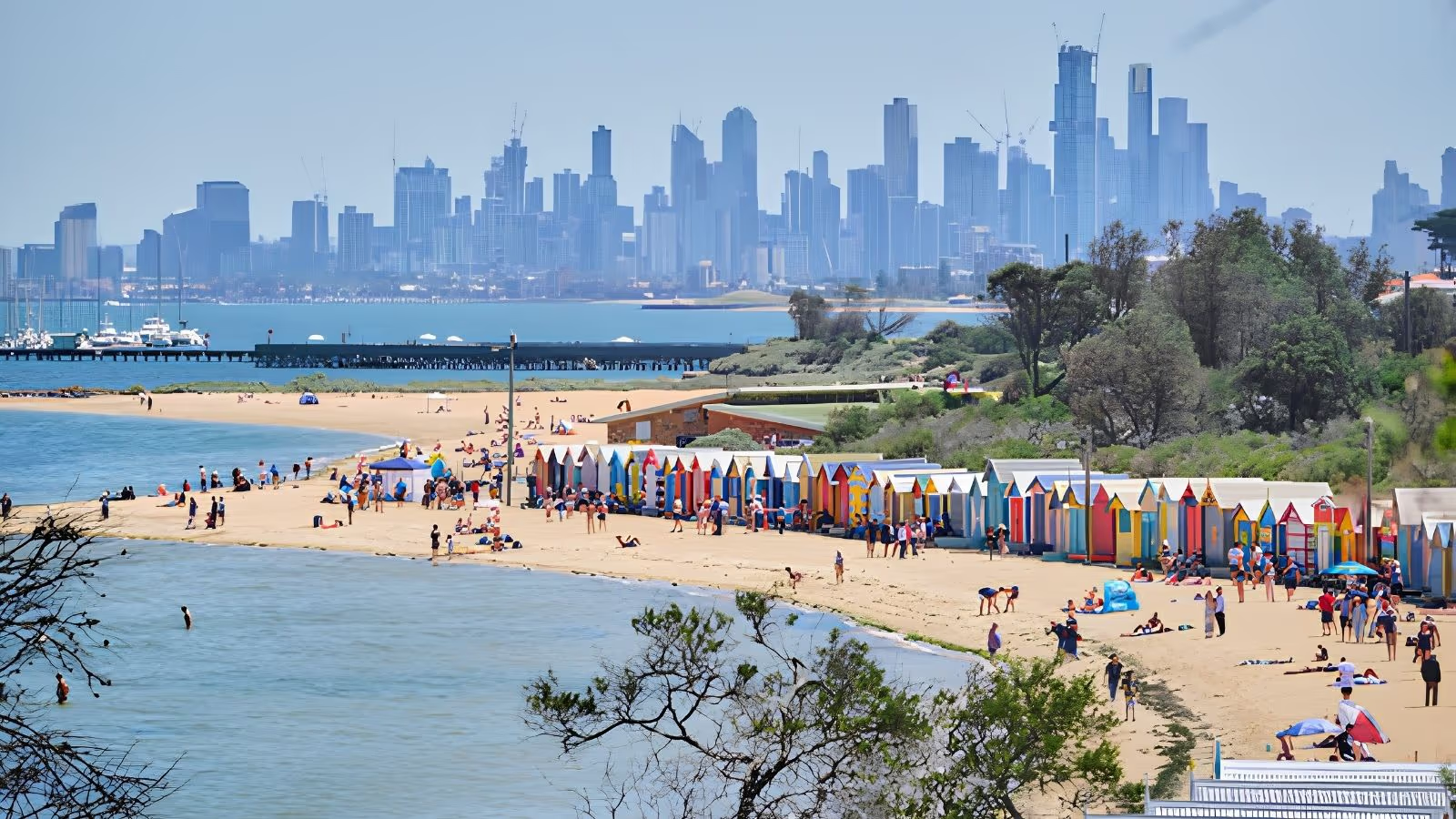
Brighton Beach is Melbourne's most-photographed coastal destination — 82 heritage bathing boxes in a continuous row along the beach, each individually painted in stripes, checks, and patterns, a Victorian tradition dating from the 1880s. The boxes are privately owned (some worth A$350,000+) and cannot be entered or sat on, but the exterior photography from the beach is one of Melbourne's finest free experiences. Best in the hour after dawn (eastern light, no crowds) or the hour before sunset (warm western light, fewer people than the peak midday). Train to Middle Brighton station (about 35 minutes from Flinders Street; no zone surcharge — Melbourne is a single fare zone) then a 10-minute walk north to the boxes. The beach is a calm bay beach with good swimming November–March.
Williamstown
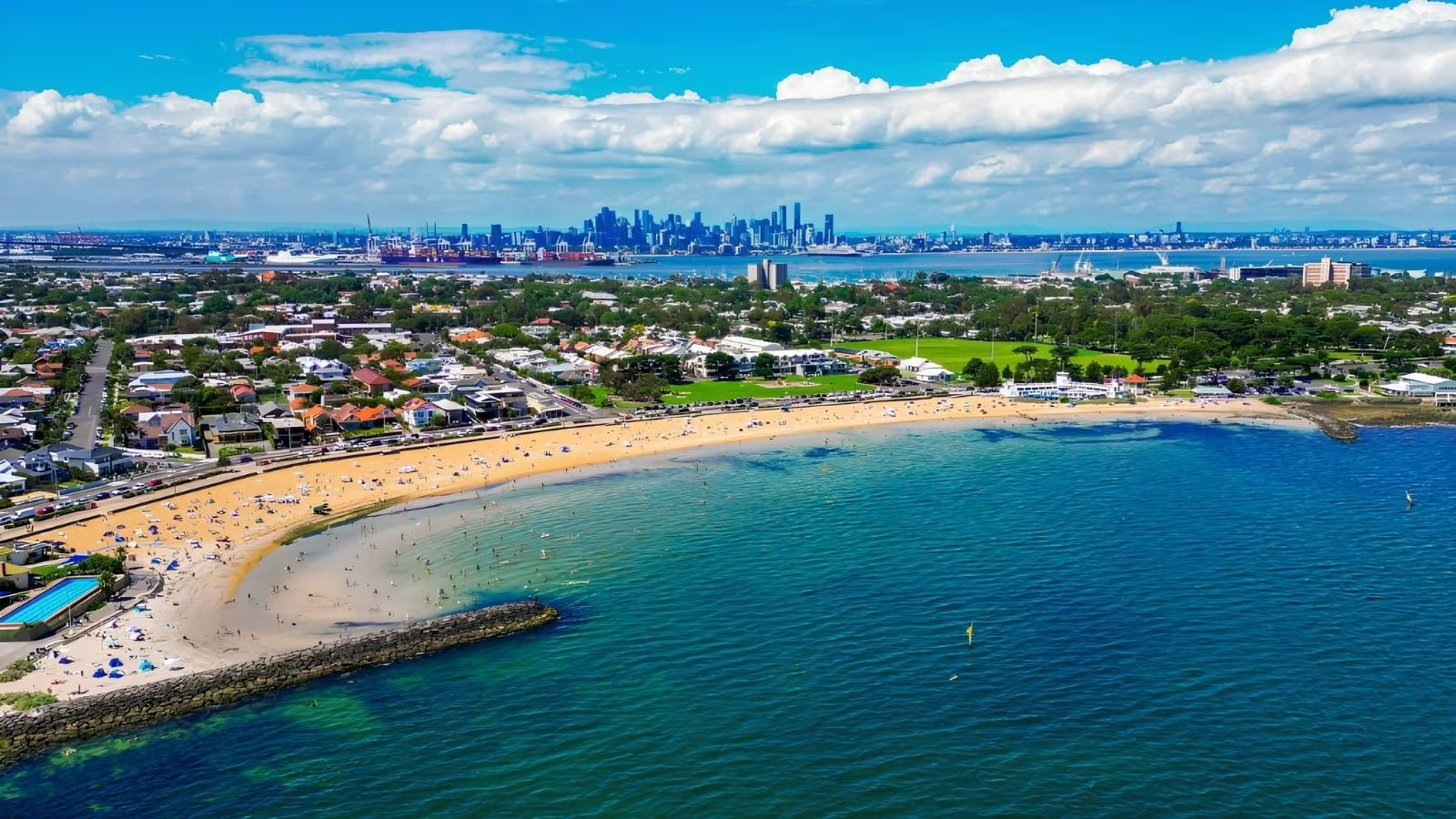
Williamstown is Melbourne's most historically significant coastal suburb — established 1837 as Melbourne's first port, it retains an extraordinary concentration of 19th-century maritime and residential architecture. The Williamstown beach (calm bay, good swimming, Hobsons Bay) has the finest view of the Melbourne CBD across Port Phillip Bay of any accessible beach location — a 10-km panorama of the city skyline across the water. The Williamstown Historic Railway and Museum (operated by volunteers, weekend steam and diesel trains), the Hobsons Bay Coastal Trail (17 km cycling and walking), and the foreshore restaurants make Williamstown the finest half-day coastal village excursion from Melbourne.
Rooftop Bars · Sunset Cocktails · City Views · Fitzroy to CBD
Rooftop Bars — Melbourne from Above
Melbourne's rooftop bar scene is among the world's finest — a city that takes the elevated outdoor drinking experience seriously, with venues ranging from sophisticated city-skyline bars to casual garden rooftops in Fitzroy and Collingwood.
Rooftop Bar (252 Swanston)
Melbourne's most famous rooftop venue — a large open-air bar on the roof of a CBD carpark building at 252 Swanston Street, with direct views of the city skyline, a cinema screen for evening outdoor film screenings (summer rooftop cinema programme, book at rooftopcinema.com.au), and cocktails and wine by the glass. Walk-in for drinks (no booking required for the bar); rooftop cinema requires advance booking. Open daily, year-round, with a retractable canopy for rain — genuinely the best all-weather rooftop in the city. The CBD location means it's 5 minutes from Flinders Street Station.
Siglo Bar
Siglo is the most sophisticated rooftop bar in the CBD — a split-level terrace and enclosed lounge on top of the Windsor Hotel annexe on Crossley Street (behind Spring Street parliament precinct), with 360-degree views taking in Parliament House, St Patrick's Cathedral, the CBD skyline, and the Arts Centre spire. The wine list is specifically excellent (by-the-glass selection genuinely representative of Victoria's finest producers) and the service is the most attentive of any Melbourne rooftop. Not the loudest or the trendiest — the most polished. Booking recommended for evenings; walk-in often possible midweek.
Naked in the Sky
Naked in the Sky (Brunswick Street, Fitzroy) is the finest neighbourhood rooftop bar in Melbourne — a lush, semi-outdoor garden terrace on the top floor of a converted Brunswick Street building, with dense foliage, a long cocktail list, and the most relaxed atmosphere of any Melbourne rooftop. Not a CBD skyline view — instead looking across the Victorian terrace rooftops of Fitzroy toward the city. Downstairs, Naked for Satan is the same venue at street level. It built its name on Basque-style pintxos; that menu has since been retired in favour of a shorter list of bar food — oysters, sliders, and the mussels and fries that are the standout — alongside the house-infused vodkas it is still known for. The combination visit (drinks upstairs, a plate downstairs) remains a genuine Fitzroy evening. Walk-in most nights except Friday and Saturday (where bookings are essential).
World's Best City 2026 · Metro Tunnel · Half-Price Fares · NFL at the MCG
Melbourne in 2026 — What Has Actually Changed
Most Melbourne guides online still describe the city as it was three years ago. Six things have changed since, and four of them change how you should plan a trip.
Events Calendar · Four Seasons in One Day · Best Months
When to Visit Melbourne
Melbourne's famous unpredictable weather makes every season a valid choice — the city's indoor cultural life is exceptional year-round. But the events calendar is the deciding factor for most visits.
Melbourne's most event-dense season — Australian Open tennis (January, Rod Laver Arena, book at ausopen.com 6+ months ahead), Boxing Day Test cricket at the MCG (December 26, book at cricket.com.au when released in September), Summer Night Markets at Queen Victoria Market (Wednesday evenings), rooftop cinema season, outdoor festival season. Peak tourist season: accommodation at its most expensive and most booked. Occasional heatwaves (40°C+) — the NGV, Melbourne Museum, and the Queen Victoria Market sheds become welcome cool refuges. Pack light clothing plus a light jacket for the inevitable cool change.
Autumn is Melbourne's finest overall season for visitors — the Formula 1 Australian Grand Prix (Albert Park, March, book at f1.com.au), the Melbourne International Comedy Festival (March–April, the largest comedy festival in the Southern Hemisphere), Moomba Festival (March long weekend, free, family-friendly, on the Yarra), AFL season beginning (March–April, first matches of the year at the MCG), and the Royal Botanic Gardens at their most colourful. Temperatures are mild (15–24°C), accommodation is slightly cheaper than summer, and the city feels at its most vibrant. The peak festival density of April–May makes this genuinely the best month for first-time visitors.
Melbourne's winter is the city's most authentic season — AFL football at the MCG reaches its peak intensity (finals series in September is winter's continuation), the laneways are at their most atmospheric (cosy, warm-lit, with rain on the bluestone outside), the NGV and Melbourne Museum are the finest indoor experiences in the city, and accommodation is at its cheapest. The Melbourne Winter Masterpieces exhibition at the NGV is typically the finest single cultural event in the city’s year; the 2026 edition is CARTIER, direct from the V&A in London and exclusive to Melbourne, at NGV International from 12 June to 4 October 2026 — nearly 400 jewels, timepieces and objects, around 300 of them never shown in Australia before. The cold (9–15°C) is genuine but manageable with layers; rain is frequent. The rooftop bars with covered/retractable areas are the best winter rooftop choice.
Spring brings the AFL Grand Final (late September, MCG — the biggest single-day sporting event in Australia, 100,000 capacity, tickets nearly impossible without ballot entry), the Melbourne Cup Carnival (Flemington Racecourse, first Tuesday of November — the Melbourne Cup is a public holiday in the Melbourne metropolitan area, and the racing carnival of four days around it is one of Australia's great social events), the Royal Botanic Gardens at their most vivid (spring colour from September), and the city's garden café culture returning to full outdoor form. The spring racing carnival makes accommodation in late October and early November significantly more expensive and harder to book — plan accordingly or specifically plan for it.
Yarra Valley · Dandenong Ranges · Phillip Island · Great Ocean Road
Day Trips from Melbourne — Victoria Beyond the City
Melbourne sits at the centre of Victoria's finest regional destinations — within 90 minutes of the CBD: the Yarra Valley wine region, the Dandenong Ranges rainforest, Phillip Island's penguins, and the first section of the Great Ocean Road.
Eastern Day Trips
The Yarra Valley (80+ cellar doors, Domaine Chandon, De Bortoli, Healesville Sanctuary wildlife park, Four Pillars Gin distillery) is Melbourne's finest wine region day trip — 50 km east, 1 hour by car. The Dandenong Ranges (Puffing Billy heritage railway, Rhododendron Gardens, William Ricketts Sanctuary, mountain ash forest walks) offer the finest accessible rainforest day trip from any Australian capital city — 45 km, 50 minutes by car. Both are combinable in a single long day with an early Melbourne departure.
Southern Day Trips
Phillip Island (Penguin Parade, 16,000 fur seals at The Nobbies, Cape Woolamai surf, Grand Prix Circuit) is 90 minutes south — Melbourne's finest wildlife day trip. The Mornington Peninsula (Peninsula Hot Springs, 50+ cellar doors, dolphin swims, two coastlines) is equally 90 minutes south via Peninsula Link. The Great Ocean Road begins at Torquay (100 km, 1 hour) — a day trip covers Bells Beach, Lorne, Kennett River koalas, and Apollo Bay comfortably; the Twelve Apostles require an overnight stay or very early Melbourne departure.
Getting Around · Myki · Where to Stay · Itineraries
Planning Your Melbourne Visit
Getting Around Melbourne
- Free Tram Zone (CBD): All trams within the CBD and Docklands are free — no Myki card required; simply board and ride. The boundary is approximately La Trobe Street (north), Flinders Street (south), Spring Street (east), Harbour Esplanade (west Docklands).
- Myki card: A$6 for the card (keep it — it's reloadable), loaded at 7-Eleven, train stations, or the PTV Hub. Touch on when boarding and touch off when alighting — always. There are no longer any fare zones in metropolitan Melbourne: since 2023 the whole metro network is a single zone, so one stop and a cross-town run cost exactly the same. Guides that still talk about "Zone 1" and "Zone 2" are out of date.
The Metro Tunnel — what it changed for visitors
Melbourne's rail network was rebuilt underneath the CBD and the new stations opened to the public on 30 November 2025, with full service from 1 February 2026. Nine-kilometre twin tunnels now carry the Sunbury line straight through to the Cranbourne and Pakenham lines, and five new stations opened with them.The two you will actually use
Town Hall sits at the southern end of Swanston Street and connects underground to Flinders Street Station — it puts you a minute from Federation Square, the NGV's Ian Potter Centre, Hosier Lane and Degraves Street. State Library is at the northern end of Swanston Street and connects to Melbourne Central — closest for Queen Victoria Market, RMIT and the northern laneways. State Library is 42 metres down and its platforms, 220 metres long and 18 metres wide, are among the widest underground metro platforms anywhere.The other three
Parkville serves the university and hospital precinct and is the quickest way to Melbourne Museum and Carlton Gardens. Anzac on St Kilda Road is the first station in Melbourne to connect the train and tram networks directly, and is the closest stop to the Shrine of Remembrance, the Royal Botanic Gardens and NGV International. Arden serves the new North Melbourne development precinct and is of limited use to visitors.What this means in practice
Older Melbourne guides route everything through Flinders Street. You now have a fast underground spine running the length of Swanston Street, which is the single most useful axis in the city for a visitor. It also freed up capacity on the City Loop, so the Frankston line returned to the Loop and the Werribee and Williamstown lines stopped running cross-city.- Fares in 2026 — read this before you budget: public transport across the whole of Victoria is half price from 1 June 2026 until 1 January 2027. The full-fare daily cap has dropped from A$11.40 to A$5.70, and the concession cap from A$5.70 to A$2.85. It applies to every train, tram and bus, including regional V/Line trains and coaches. It does not apply to SkyBus, ferries or non-subsidised regional buses. There is nothing to claim — tap on as normal and the discount calculates automatically. Under-18s travel free on a Youth myki, and Victorian seniors keep free weekend travel.
- Trains: the Metro network connects the CBD to every suburb. Flinders Street is the historic hub; since the Metro Tunnel opened, Town Hall and State Library stations carry much of the Swanston Street load. Night Network (all-night trains and buses on Friday and Saturday nights) eliminates the late-night taxi problem.
- Walking: The CBD is highly walkable — all laneways, the NGV, Federation Square, the MCG, Queen Victoria Market, and the Botanic Gardens are within 20 minutes' walk of Flinders Street Station.
- Cycling and e-bikes: the old docked Melbourne Bike Share scheme closed years ago. What operates now is dockless Lime e-bikes — up to 500 across the City of Melbourne, plus Yarra, Port Phillip and Stonnington — unlocked through the Lime or Uber app at roughly A$1 to start and A$0.45 a minute, capped around 25 km/h. A helmet comes attached to each bike and wearing it is the law in Victoria. Note that hired e-scooters are banned in the City of Melbourne (the council ended its Lime and Neuron contracts in August 2024); they still operate in Yarra and Port Phillip, and will cut out at the municipal boundary. The shared path network along the Yarra and the 25 km bay trail are excellent and flat.
- Car: Do not drive in the CBD. Hook turns (Melbourne-specific: right turns must be made from the left lane at most CBD intersections), tram priority, and CBD parking costs make driving impractical. Hire a car only for regional day trips (Great Ocean Road, Yarra Valley, etc.).
Where to Stay in Melbourne
- CBD: Most convenient for first-time visitors — all major attractions within walking distance or one tram stop. Full range of accommodation from international budget hostels (A$35–$60 dorm) to 5-star hotels (A$250–$600+). Most expensive location per room; saves most time.
- Fitzroy / Collingwood: The best inner-city neighbourhood alternative — excellent cafés, bars, and restaurants immediately outside the door; 10-minute tram to CBD; more local character than the CBD. Boutique hotels and Airbnb A$120–$280 per night.
- St Kilda: Beachside atmosphere, Esplanade foreshore, good access to CBD via tram 96 (25 minutes). Budget hostels (A$30–$50 dorm), holiday apartments, boutique hotels. Evening atmosphere is the most vibrant of any non-CBD location.
- Southbank: Direct access to NGV, Arts Centre, Crown, Eureka Tower; excellent Yarra River views from most hotels; very close to CBD. Business hotel district — premium pricing, corporate facilities.
- South Yarra: Upscale residential neighbourhood with excellent restaurants and Chapel Street shopping; train to CBD 10 minutes. Premium boutique hotels and serviced apartments A$180–$400.
- Booking timing: Major events (Australian Open January, F1 Grand Prix March, AFL Finals September, Melbourne Cup November) sell out accommodation citywide — book 6 months ahead for these periods. Otherwise 4–8 weeks is adequate for most of the year.
Suggested Itineraries
- One Day: Breakfast in Degraves Street → Hosier Lane street art → NGV International (free, 2 hours) → lunch in Southbank → MCG tour (if no game) or AFL match (if available, March–September) → Rooftop bar sunset at 252 Swanston → Chinatown dinner. Covers the five essential Melbourne pillars in a long day.
- Two Days: Day 1 as above. Day 2: Queen Victoria Market (morning, arrive 9am) → explore Fitzroy (Brunswick Street café, bookshops, galleries, lunch) → Royal Botanic Gardens (afternoon walk, free) → St Kilda (sunset, penguin colony at pier, Acland Street dinner).
- Three Days: Add: Day 3 chosen between a regional day trip (Yarra Valley wine region OR Dandenong Ranges with Puffing Billy — both 1 hour east) or a deeper Melbourne day (Melbourne Museum + Royal Exhibition Building, South Melbourne Market, Williamstown coastal village, Brighton Beach bathing boxes).
- Five Days: Three-day programme above, plus two additional days for: Phillip Island Penguin Parade (90 min south, stay overnight) + Mornington Peninsula (Peninsula Hot Springs + cellar doors, return via Sorrento–Queenscliff ferry).
- Event-specific: Australian Open (January): Rod Laver Arena + practice courts (ground pass A$30, see multiple matches daily) + Melbourne Park precinct. AFL Finals (September): book AFL ballot months ahead; alternatively Richmond or Geelong home finals at MCG. Melbourne Cup Week (November): Flemington Racecourse day tickets A$50–$120 depending on day; Cup Day (Tuesday) always the most expensive and most festive.
Twelve Insider Tips
Insider Tips for Melbourne
Common Questions
Melbourne FAQs
Three days is the comfortable minimum for Melbourne's highlights; five days is the ideal for a first visit that includes regional day trips. Two days is technically possible but means constantly rushing between attractions. Three days covers: laneways, NGV, MCG or AFL match, Queen Vic Market, one neighbourhood properly, Southbank, and St Kilda. Five days adds a Yarra Valley wine day trip, Phillip Island Penguin Parade, and enough slow time in the laneways and local restaurants to appreciate what Melbourne actually is. Melbourne consistently rewards visitors who stay longer than originally planned.
Melbourne is most famous for five things. Coffee — the world's most developed café culture, running since the Italian espresso bars of the 1950s, at a standard higher than any other Australian city. Laneways — the bluestone CBD back-alleys housing street art, hidden bars, and specialty cafés in a configuration unique to Melbourne. Sport — the MCG (100,000 capacity AFL and cricket), the Australian Open (tennis, January), the Melbourne Cup (horse racing, November), and a sporting cultural identity unlike any other city. Food — the finest multicultural restaurant scene in Australia. Arts and culture — the NGV (Australia's most visited museum), the Arts Centre Melbourne, the Melbourne International Comedy Festival.
Melbourne is moderately expensive but with an exceptional free-experience ratio — the NGV permanent collection (free), Royal Botanic Gardens (free), all CBD beaches accessible on free trams, Hosier Lane and all laneways (free), Federation Square events (usually free), and Brighton Beach visiting (free) mean a visitor can have an extraordinary day in Melbourne for the cost of breakfast, a coffee, and dinner. Budget travellers manage well on A$80–$120/day; mid-range A$150–$250/day. Accommodation in the CBD is the highest single cost; Fitzroy and Collingwood offer comparable quality at lower price points. Eating well is very affordable — Melbourne's Asian food options (Chinatown, Victoria Street Richmond, Springvale Vietnamese precinct) are extraordinary value.
No — a car is not needed for Melbourne city visiting and is actively counterproductive in the CBD. The tram and train network is excellent; the Free Tram Zone covers all major CBD attractions; the Night Network operates all-night trams on Friday and Saturday. A car becomes useful for regional day trips (Yarra Valley, Dandenong Ranges, Mornington Peninsula, Great Ocean Road, Phillip Island) — all of which have limited or no practical public transport options. The recommendation: arrive without a car, use Myki and walk, then hire a car for any specific regional day trip you want to do.
Yes, and most Melbourne guides online have not caught up. The Metro Tunnel opened to the public on 30 November 2025 with full service from 1 February 2026, adding five underground stations — Arden, Parkville, State Library, Town Hall and Anzac. For a visitor the two that matter are Town Hall, at the southern end of Swanston Street and connected to Flinders Street Station, and State Library at the northern end, connected to Melbourne Central. Between them they put both ends of the laneway grid directly on the train network for the first time. Anzac on St Kilda Road is the closest station to the Shrine of Remembrance, the Royal Botanic Gardens and NGV International, and is the first station in Melbourne to link the train and tram networks directly.
Less than usual. Public transport across Victoria is half price from 1 June 2026 until 1 January 2027, which has cut the full-fare daily cap from A$11.40 to A$5.70 and the concession cap from A$5.70 to A$2.85. It covers every metropolitan train, tram and bus plus regional V/Line trains and coaches, but not SkyBus, ferries or non-subsidised regional buses. You do not apply for it — tap on as normal and the discount calculates automatically. Note also that Melbourne abolished its fare zones in 2023, so one stop and a cross-town run now cost the same; any guide still quoting Zone 1 and Zone 2 prices is out of date. Trams within the CBD and Docklands Free Tram Zone remain free with no card at all.
The permanent collections at both NGV buildings are free, always, with no booking. NGV International at 180 St Kilda Road and The Ian Potter Centre: NGV Australia at Federation Square are both open daily from 10am to 5pm, closing only on Christmas Day and opening at 1pm on Anzac Day. Older guides that say NGV International closes on Tuesdays are wrong. Only the blockbuster exhibitions are ticketed — in 2026 that is CARTIER, the Melbourne Winter Masterpieces show, running at NGV International from 12 June to 4 October. The Great Hall and its Leonard French cut-glass ceiling, and the water wall at the entrance, cost nothing to see.
The Australian Open in January and the Formula 1 Australian Grand Prix in March both broke attendance records in 2026. The AFL home-and-away season ran 5 March to 23 August, followed by the first five-week finals series in the competition's history and the Grand Final at the MCG on Saturday 26 September, with the Friday before a Victorian public holiday for the parade. On Friday 11 September the MCG hosts the Los Angeles Rams and San Francisco 49ers in the first NFL regular-season game ever played in Australia. The Spring Racing Carnival follows — Caulfield Cup 17 October, Cox Plate 24 October and the Melbourne Cup on Tuesday 3 November, a public holiday across metropolitan Melbourne. The Boxing Day Test closes the year at the MCG on 26 December.
Follow the migration precincts rather than a restaurant list. Chinatown on Little Bourke Street has operated continuously since the 1850s and is best for weekend yum cha and late-night Cantonese. Victoria Street in Richmond is the city's Vietnamese strip and where Melburnians actually go for pho. Lygon Street in Carlton is the post-war Italian quarter, better north of Elgin Street than at the touristed southern end. Gertrude and Smith Streets in Fitzroy and Collingwood carry the best contemporary independent restaurants. For the best value in the city, take a train out to Footscray, Springvale or Coburg — with the single fare zone and the half-price period they cost no more to reach than a CBD stop. Book Thursday to Saturday two or three days ahead; walk in before 6pm or after 9pm.
Bikes yes, scooters not in the city centre. Hired e-scooters are banned in the City of Melbourne — the council ended its Lime and Neuron contracts in August 2024 — although they still operate in Yarra and Port Phillip, and a hired scooter will cut out at the municipal boundary. Shared e-bikes do operate in the City of Melbourne, up to about 500 Lime e-bikes, unlocked through the Lime or Uber app at roughly A$1 to start and A$0.45 a minute. A helmet comes attached and wearing it is the law in Victoria. The old docked Melbourne Bike Share scheme with its blue bikes no longer exists, despite still appearing in older guides.