

Japan is the easiest country in Asia to travel in and the one people prepare for most nervously. This is everything we tell first-time travellers: how to build the route, what to book early, how the trains and money and manners actually work, and an eleven-day itinerary that has never let anyone down.
Japan is the easiest country in Asia to travel in and the one people prepare for most anxiously, because it looks so different from home. The anxiety is misplaced. The trains are the most reliable on earth, the streets are the safest, nobody expects you to speak Japanese, and the culture that seems so formal from outside is, on the ground, a culture of people going out of their way to help a confused visitor. This guide is everything we tell first-time travellers before they go: how to plan the route, what to book early, how the trains and the money and the etiquette actually work, and the handful of mistakes that separate a good first trip from a great one.
Step one: the route
Almost every first trip should be some version of the Golden Route: Tokyo, a night in Hakone for Mount Fuji and an onsen, Kyoto with a day in Nara, and Osaka. It is not the route because it is obvious; it is obvious because it is the route — the modern capital, the old capital, the mountain and the food city, all on one Shinkansen line, in ten to twelve days.
How long
Ten days is the practical minimum for the Golden Route without rushing. Twelve to fourteen lets you add Hiroshima and Miyajima or the Japanese Alps. A week is enough for Tokyo and Kyoto only, and that is a fine week. Anything under six days is Tokyo alone, and Tokyo alone is still worth the flight.
Which direction
Fly into Tokyo and out of Osaka (Kansai), or the reverse. The full-service airlines price this open-jaw ticket the same as a return, and it saves a day and a AUD 150 train fare. Starting in Tokyo is easier because Haneda’s morning arrivals from Australia land you in the city by lunchtime and the pace builds from there; ending in Kyoto and Osaka means the trip slows into the temples rather than out of them.
Fewer bases, longer stays
The most common first-trip mistake is too many hotels. Every move costs half a day. Three nights in Tokyo, one in Hakone, three or four in Kyoto and one or two in Osaka is five hotels in eleven days, and it is enough. Day trips — Nikko or Kamakura from Tokyo, Nara or Uji from Kyoto, Kobe or Himeji from Osaka — extend the reach without the packing.

Step two: when to go
Late March to mid-April (cherry blossom) and mid-November to early December (autumn colour) are the famous seasons and the expensive, crowded ones. Late May and early-to-mid October give you the same weather and most of the beauty at a third off. January and February are cold, clear, cheap and empty in the cities. June is grey and cheap. July and August are hot and humid but full of festivals. Avoid moving between cities in Golden Week (29 April–5 May), Obon (mid-August) and New Year. Our month-by-month guide goes deeper.
Step three: what to book early, and how early
- Flights: four to six months out for peak seasons, two to three for shoulder.
- Kyoto accommodation in blossom or colour weeks: nine to twelve months. Not an exaggeration.
- Ryokan: three to six months; the well-known ones in Hakone longer.
- Ghibli Museum: tickets go on sale on the 10th of the month before and sell out within hours.
- teamLab Planets / Borderless: two to four weeks; weekends earlier.
- Sumo tournament seats: the day sales open, about a month before each tournament.
- Shinkansen seats: a month ahead is when they open; only needed in peak weeks, but the reserved car with oversized-luggage space fills first.
- Popular restaurants (omakase counters, famous kaiseki): a month or more, usually through the hotel concierge.
- Yakkan Shoumei medication permits if you need one: four weeks.
Step four: understand the trains before you land
The IC card
Load a Suica or Pasmo card into your iPhone or Android wallet before you leave Australia. It is the single most useful thing you will do. Tap on, tap off, on every train, subway, bus and tram in every city, and at every convenience store and vending machine. Top up from your phone. No queues, no ticket machines, no fare tables.
The Shinkansen
Japan’s bullet trains connect the Golden Route: Tokyo to Kyoto in two and a quarter hours, Kyoto to Osaka in fifteen minutes, Osaka to Hiroshima in an hour and a half. Buy individual tickets at the station or online through SmartEX; reserve a seat (it costs little more) and, if you have a large suitcase, a seat with the oversized-baggage space at the rear of the car. Trains leave to the second. Stand at the marked spot on the platform and your carriage door stops in front of you.
The Japan Rail Pass question
For Tokyo–Kyoto–Osaka it no longer pays: about AUD 300 in tickets against a AUD 520 seven-day pass (rising in October 2026). Regional passes (JR West for Kansai and Hiroshima, JR East for Tokyo’s surrounds) are the better buy for most first trips. Let whoever books your trip do the sum.
Send your suitcase ahead
Every hotel can forward a suitcase to your next hotel overnight for about AUD 25 through the takkyubin courier service. You travel between cities with a day bag; the case is in your next room when you arrive. It is how the Japanese travel and it removes the only genuinely awkward part of Japanese trains.
In the cities
Google Maps with live transit is accurate to the platform and the exit number. Tokyo’s Yamanote loop line reaches almost everywhere a visitor goes. Kyoto runs on buses, which are slow, and two subway lines and a good private railway, which are not — use the trains where you can. Taxis are clean, honest, expensive and worth it at night with four people.

Step five: where to stay, and what a ryokan is
Japanese city hotels are small, spotless and reliable; the “business hotel” chains (Dormy Inn, Mitsui Garden, Hotel Gracery, APA) are excellent value with rooms of 14–18 square metres. Western-brand hotels are larger and dearer. Apartment hotels (Mimaru) suit families. In Kyoto, a machiya townhouse rental is a lovely week for four to six people.
A ryokan is a traditional inn: tatami-mat room, futon laid out while you eat, a multi-course kaiseki dinner and Japanese breakfast included, communal hot-spring baths and a yukata robe to wear everywhere in the building. It is priced per person and it is not a hotel — it is the experience. One or two nights, ideally in Hakone or another onsen town, is the right amount for a first trip. Check-in is at three or four, dinner is at six or seven and is not moveable, and the bath has rules: wash thoroughly sitting at the taps before you get in, no swimwear, no towel in the water, tie long hair up. Tattoos may be an issue at older establishments; private baths (kashikiri) get around it.
Step six: money
Japan is now mostly card-friendly in cities, hotels, department stores and chains, and still cash-only at many small restaurants, temples, markets, rural buses and some ryokan. Carry more cash than you would in Australia — AUD 100–150 a day in yen — and withdraw it at 7-Eleven or Japan Post ATMs, which take Australian cards. Prices include tax. There is no tipping, anywhere, ever; leaving coins on a table will get a waiter chasing you down the street to return them.
Tax-free shopping gives ten per cent off purchases over ¥5,000 at participating shops on presentation of your passport; the system changes to a refund-at-departure model in November 2026, so expect a different process if you travel then. The costs guide has the full budget.
Step seven: etiquette, in the order it comes up
- Shoes off at the entrance of ryokan, temples, some restaurants and anywhere with a raised step and a row of slippers. Slip-on shoes and intact socks.
- Quiet on trains. No phone calls, low voices, no eating on local trains (fine on the Shinkansen).
- Queue. For everything. On the marked lines.
- Don’t eat while walking. Buy it, stand by the stall, eat it, move on.
- Rubbish goes home with you. There are almost no bins; convenience stores have them.
- Bow a little, or nod. Nobody expects a foreigner to get it right.
- Cash on the tray, not into the hand, at shops and restaurants.
- Chopsticks: never stuck upright in rice, never passed food-to-chopstick; both are funeral gestures.
- Onsen: wash first, naked, no towel in the water, hair up.
- Temples and shrines: bow at the gate, rinse your hands at the basin, don’t photograph the interior if signed, and a small coin at the offering box is welcome.
- Say “sumimasen” (excuse me / sorry) for everything and “arigatou gozaimasu” (thank you). Those two, plus “konnichiwa”, are all the Japanese you need.
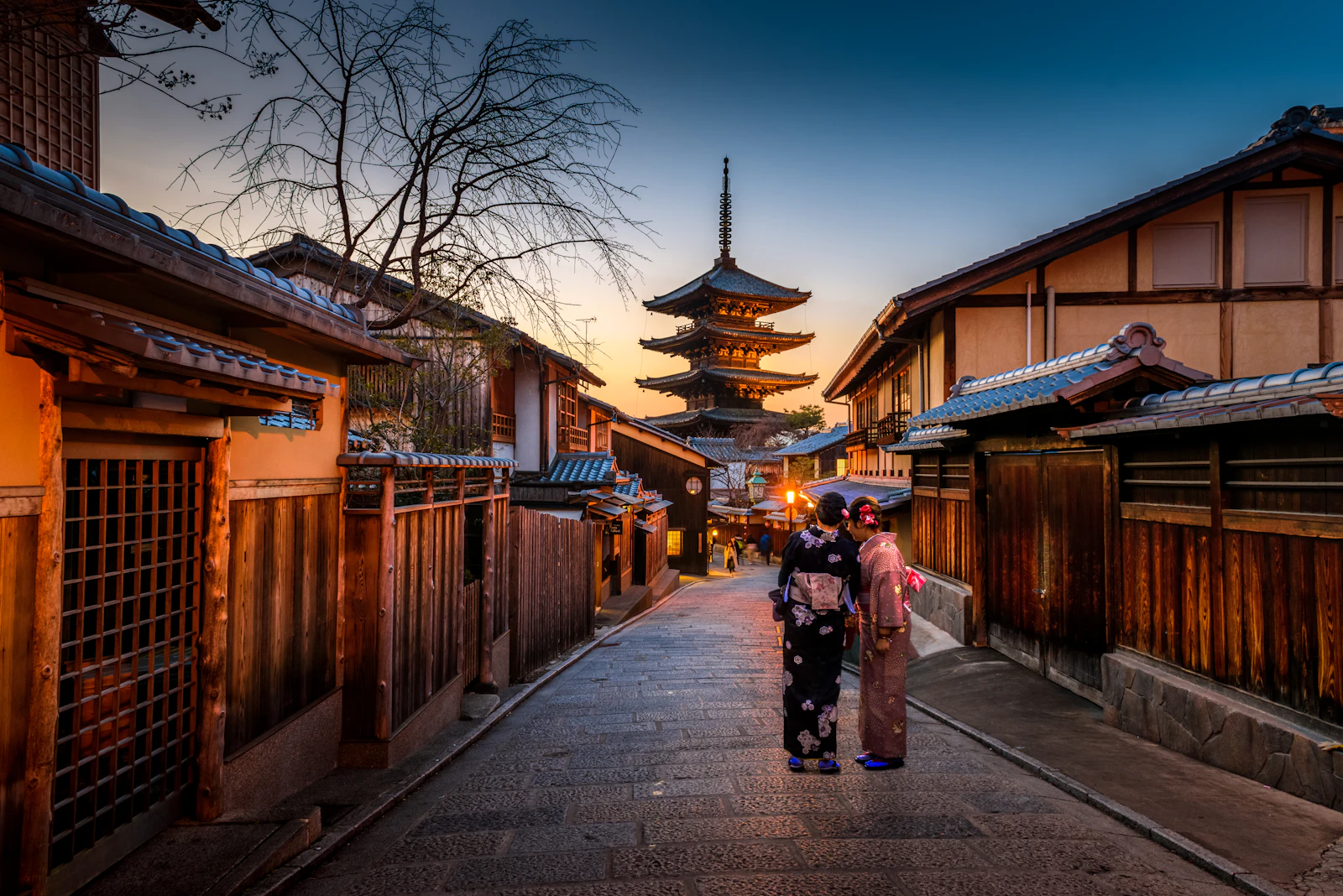
Step eight: eating
The food is the best in the world and the least intimidating once you know how it works. Restaurants specialise: a ramen shop does ramen, a tempura counter does tempura. Many have plastic models or photographs outside; many have a ticket machine inside where you buy your meal before sitting; most have an English menu or a QR code. Convenience stores (7-Eleven, Lawson, FamilyMart) sell breakfast, snacks and genuinely good meals around the clock. Department-store basements are food halls of a quality that has no equivalent in Australia. Lunch sets are the best value of the day at any restaurant. Our food guide goes city by city.
Dietary needs are the one area Japan is still catching up: vegetarian and vegan options exist but need seeking out (temple shojin-ryori cuisine, Indian restaurants, specific vegan cafes), gluten-free is hard because soy sauce contains wheat, and allergies should be written in Japanese on a card. Tell us and we will build it into the restaurant choices.
Step nine: staying connected
An eSIM bought before departure (10–20 GB for ten days, AUD 20–40) is the simplest. Pocket Wi-Fi rentals collected at the airport suit families sharing. Free Wi-Fi is common but patchy. Google Maps, Google Translate (the camera mode reads menus and signs), the Suica app and your airline app are the four things to have installed. Power is 100 V with two flat pins: Australian phones and laptops need the plug adaptor only.
Step ten: health, safety and the things that go wrong
Japan is as safe as anywhere on earth: lost wallets are handed in, women travel alone at night without concern, and the police boxes (koban) on every corner exist to give directions. The risks are ordinary ones. Earthquakes happen and buildings are built for them; your phone will sound an alert and the hotel will have instructions. Typhoons in September stop trains for a day. Summer heat is real and the convenience stores sell electrolyte drinks. Tap water is drinkable everywhere. Pharmacies are excellent but do not stock the brands you know; bring your regular medicines in original packaging and check the import rules — some Australian cold-and-flu tablets and ADHD medications are prohibited, as our entry guide explains. Travel insurance is essential because hospitals charge in full.
Step eleven: what to pack
Less than you think. Japanese hotels provide toothbrushes, razors, slippers, pyjamas and often a yukata; convenience stores and Don Quijote sell anything you forgot for less than at home; and laundry is easy (coin laundries everywhere, most business hotels have machines). What matters: comfortable shoes that slip off easily and socks without holes, because you will be shoeless daily; a light layer for over-air-conditioned trains in summer and a proper coat in winter; a folding umbrella in every season; a small towel and a coin purse; a day bag rather than a big one; and your medicines in original packaging with the prescription. Leave the large suitcase half-empty on the way over. You will fill it.
Travelling with children or older parents
Japan suits both better than any other Asian country. For children: it is safe, the trains are an attraction in themselves, convenience stores solve every snack emergency, Nara’s deer and Osaka’s Universal Studios and Tokyo’s teamLab and Ghibli Museum are world-class, and under-sixes travel free on trains. The constraint is hotel room size — ask for apartment hotels or connecting rooms. For older travellers: the stations are step-free, luggage forwarding removes the lifting, the Green Car on the Shinkansen is wide and quiet, the food is mild and the pace can be whatever you set. The one adjustment is fewer moves — three bases in eleven days rather than five — and a ryokan chosen for a private bath and Western-style beds if floor futons are a concern. Both are things we build into the itinerary when you tell us who is travelling.
Travelling solo
Japan is the best solo destination in Asia. Counter seating makes eating alone normal; capsule and business hotels price singles fairly; the cities are safe at any hour; and the culture of not intruding means you can be alone without being bothered. Women travelling solo report Japan as the country where they felt safest. The only adjustment is booking the ryokan night early, because some inns do not take single guests at busy times.
What to leave for the second trip
Hokkaido, Kyushu, Okinawa, the Japanese Alps in depth, the Setouchi islands, the Kumano Kodo pilgrimage trails and Koyasan. All are superb and none belongs on a first ten days. The Golden Route is a first trip because it is the foundation; everything else is built on knowing how Japan works, which after eleven days you will. Our twelve best places guide covers where to go next.
What a good day in Japan looks like
Start early. The famous places open at eight or nine and the difference between arriving at opening and at eleven is the difference between a garden and a queue. Have the convenience-store breakfast on the way, or the hotel’s if it is included. Do the one big thing before ten. Take lunch at whatever place has a queue of office workers outside — the lunch set will be AUD 15 and excellent. Do the second thing in the early afternoon, then stop: a coffee in a kissaten, a department-store basement, an hour in the hotel. Japanese cities come alive again at dusk, and Shibuya, Dotonbori, Gion and Pontocho are at their best between five and eight. Dinner is early by Australian standards — kitchens close at nine in many places — and the evening after is for a bar, a bath or a walk. Ten thousand steps is a quiet day; twenty is normal. That is why the shoes matter.
Build one empty half-day into every three. The best things that happen in Japan are the things nobody planned: the shrine festival you walk into, the backstreet you follow, the tiny restaurant with six seats and no sign. An itinerary that has no room for them has missed the point.
The apps and cards to set up before you leave
- Suica or Pasmo in Apple Wallet or Google Wallet, loaded with ¥5,000.
- Google Maps, with Tokyo, Kyoto and Osaka downloaded offline.
- Google Translate, with Japanese downloaded for the camera mode.
- SmartEX for Shinkansen tickets on the Tokaido line, or let your operator book them.
- Visit Japan Web for the arrival QR codes.
- Your bank’s app, with travel notification set and a card that does not charge foreign transaction fees.
- Smartraveller registration, so the Australian embassy in Tokyo can reach you if something happens.
- Your airline’s app, for the boarding pass and the inevitable gate change at Haneda.
- A note-taking app with your hotel names and addresses in Japanese, copied from the booking confirmations, to show a taxi driver.
- An eSIM installed and ready to activate on landing.
What will surprise you
The silence of a full train. The toilets, which have heated seats, bidets and a button that plays running-water sounds, and which are immaculate in every railway station in the country. Vending machines on mountain trails. The politeness of the staff at a chain convenience store. The absence of rubbish bins and the absence of rubbish. A taxi door that opens itself. Umbrella lockers. The Shinkansen conductor bowing to the carriage as he leaves it. That nobody jaywalks, even at 2 am on an empty street. That a lost phone left on a bench will be at the station office when you go back. That the plastic food models in the restaurant window are exactly what arrives. That Kyoto is a city of 1.4 million people with cars and convenience stores and not a museum. And that after eleven days the trains, the manners and the bowing feel not foreign but obvious, which is when you start planning the second trip.
The ten first-trip mistakes
- Too many hotels. Five in eleven days is plenty.
- Only two nights in Tokyo.
- Buying a Japan Rail Pass without doing the maths.
- Arriving at Kiyomizu-dera at eleven o’clock in April.
- Booking Kyoto in autumn six weeks out and finding nothing.
- Dragging a large suitcase onto a rush-hour subway instead of forwarding it.
- Skipping the ryokan night because it seemed expensive.
- Not carrying cash.
- Packing pseudoephedrine.
- Trying to see Hokkaido, Kyushu and the Golden Route in a fortnight.
A first-trip itinerary that works: 11 days
- Day 1 — Arrive Tokyo Haneda in the morning. Shinjuku hotel. Walk Shinjuku Gyoen, dinner in Omoide Yokocho.
- Day 2 — Asakusa and Senso-ji early, Tokyo Skytree, Ueno museums, Akihabara.
- Day 3 — Meiji Shrine, Harajuku, Omotesando, Shibuya crossing at dusk, teamLab in the evening.
- Day 4 — Day trip to Nikko or Kamakura, or a Tsukiji breakfast and Ginza afternoon.
- Day 5 — Forward luggage to Kyoto. Odakyu Romancecar to Hakone, the loop, ryokan dinner and bath.
- Day 6 — Morning bath, Open-Air Museum, Shinkansen from Odawara to Kyoto. Gion evening walk.
- Day 7 — Fushimi Inari at dawn, then the eastern hills: Kiyomizu-dera, Ninenzaka, Philosopher’s Path, Ginkaku-ji.
- Day 8 — Arashiyama bamboo grove at opening, Tenryu-ji, the Golden Pavilion, Ryoan-ji, Nishiki Market.
- Day 9 — Nara: Todai-ji, the deer, Kasuga Taisha. Back for a kaiseki dinner.
- Day 10 — Train to Osaka. Osaka Castle park, Kuromon Market, Dotonbori at night.
- Day 11 — Universal Studios or Himeji Castle, then Kansai Airport for the evening flight home.
That is the trip we build most often, and the one people come back from planning the second. When you are ready to turn it into a booking, the Japan tours page shows the shapes we start from and the things to do page helps you decide what goes in.
Frequently asked questions
How many days do you need for a first trip to Japan?
Ten to twelve for Tokyo, Hakone, Kyoto, Nara and Osaka without rushing. Fourteen adds Hiroshima or the Alps. A week covers Tokyo and Kyoto only.
Is Japan hard to travel in if you do not speak Japanese?
No. English signage is universal on transport, menus are illustrated or translated, Google Translate’s camera reads the rest, and people go out of their way to help. Three words — sumimasen, arigatou gozaimasu, konnichiwa — are all you need.
Should I get a Japan Rail Pass for my first trip?
Usually not for the Tokyo–Kyoto–Osaka route: individual tickets cost about AUD 300 against a AUD 520 seven-day pass. Regional passes or single tickets are the better buy for most first trips.
Is Japan safe for first-time travellers?
Japan is among the safest countries in the world. Violent crime against visitors is extremely rare, lost property is routinely returned, and solo travellers of any gender move around at night without concern. The practical risks are heat, typhoons in September and the cost of medical care without insurance.
What should I book before going to Japan?
Flights, all accommodation (Kyoto up to a year ahead in peak seasons), ryokan, the Ghibli Museum, teamLab, sumo seats, popular restaurants, and any medication import permit. Shinkansen seats only need booking in peak weeks.
Do you tip in Japan?
No. Tipping is not done in restaurants, taxis, hotels or by guides and can cause confusion. Service is included and excellent.
What is a ryokan and should a first-timer stay in one?
A traditional inn with tatami rooms, futon bedding, a multi-course kaiseki dinner and breakfast, communal hot-spring baths and yukata robes. Yes — one or two nights, ideally in Hakone or an onsen town, is the most memorable part of most first trips.
Can I use my phone in Japan?
Yes. Buy an eSIM before you leave or rent pocket Wi-Fi at the airport. Google Maps, Translate and a Suica card in your phone wallet are the essential tools. Australian phones and laptops need a plug adaptor only.
Ready to plan the trip?
Blog attracts, things to do informs, tours convert. The next step is the things-to-do page, then the tours page when you are ready.