Sweden is the country that gave the world flat-pack furniture, streaming music, the adjustable spanner, and a cultural concept called lagom — the Swedish word for “just the right amount” — that the guide considers the most concisely useful cultural idea available in the Nordic region. The guide’s Sweden programme begins with a question: what does a country look like when it has 90,000 lakes, 63% forest cover, and a cultural disposition toward understatement?
Sweden (Sverige — the Kingdom of Sweden — 450,295 km² — 10.5 million people — the largest country in Scandinavia by area — stretching 1,574km from the southern cape of Smygehuk (55°N) to the northern point of Treriksröset (69°N) on the Finnish and Norwegian borders — 90,000 lakes (more lakes per km² than any country except Finland) — 221,800 islands — 63% forested — the country that has simultaneously produced ABBA, Volvo, IKEA, Spotify, Skype, Minecraft, and the dynamite that funds the Nobel Prize — the guide’s Swedish innovation briefing: “Sweden has approximately 0.13% of the world’s population and has won approximately 30 Nobel Prizes — the guide presents this ratio without a complete explanation but notes that lagom, the Swedish cultural concept of ‘just the right amount’, may be the explanation and may also be the reason the Swedes do not boast about it”) is the Nordic country the guide describes as “the one that is most immediately comfortable for the Australian visitor — the cities are walkable — the English is universal — the infrastructure is excellent — the coffee culture is serious — and underneath all of this comfort is a country that has been thinking carefully about how to organise human life for a very long time and has arrived at some conclusions the guide considers worth the trip to examine.”
Sweden’s five primary visitor regions: Stockholm and surrounds (the capital — Gamla Stan (the Old Town — the medieval island city) — Djurgården (the museum island — the Vasa Museum — the ABBA Museum — Skansen) — the Stockholm archipelago (30,000 islands) — Uppsala (the university city — 40 minutes from Stockholm) — Drottningholm Palace (UNESCO — the working royal residence)). Swedish Lapland (Jukkasjärvi — the original Icehotel — the Northern Lights — the Sámi reindeer culture — Abisko National Park (the clearest skies in Scandinavia for aurora viewing — the aurora sky station at 900m) — Kiruna (the iron ore city being physically relocated 4km east — the guide’s Kiruna relocation briefing)). The Swedish West Coast and Gothenburg (Gothenburg — Sweden’s second city — the seafood markets — the Liseberg amusement park — the Bohuslän coast — the crayfish party tradition — the guide’s smörgåsbord). Swedish Lake Country and Dalarna (Lake Siljan — Dalarna — the Dala horse (the red painted wooden horse — the most recognisable Swedish folk art object — the guide’s Dala horse briefing) — the midsommar festival — Göta Canal). Southern Sweden (Skåne) (Malmö — the Öresund Bridge to Denmark — the Österlen coast — the beech forests — Sweden’s wine country (yes)).
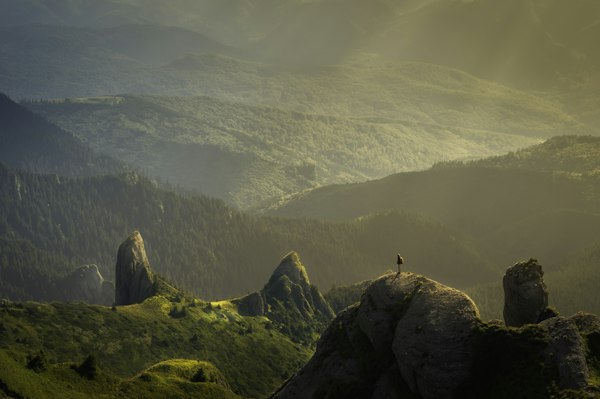
Sweden’s geography runs from the medieval island city of Stockholm through the forest-and-lake interior to the sub-Arctic wilderness of Lapland — three completely distinct Swedens within a single programme.
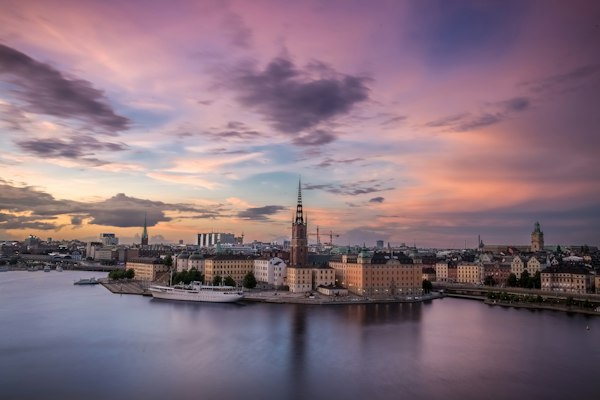
Stockholm (the capital — built across 14 islands where Lake Mälaren meets the Baltic Sea — 975,000 people in the city — the guide’s Stockholm character briefing: “Stockholm is the most beautiful European capital the guide has been unable to adequately prepare a visitor for — not because the guide has not tried — but because the specific combination of water, island, medieval architecture, and northern light that Stockholm presents on a clear June morning is not available in any prior cultural reference the guide has found reliably accessible to an Australian visitor — the guide stops trying to describe it and shows the group Gamla Stan from the Katarina lift at dawn instead”). The Gamla Stan (the Old Town — the medieval island city — Stadsholmen — the historic core of Stockholm from the 13th century — the guide’s Gamla Stan briefing: “Gamla Stan is built on the island that was Stockholm — the rest of the city grew outward onto 13 further islands — the guide walks Gamla Stan at 7am before the tour groups arrive — the cobblestones — the narrow lanes (the Mårten Trotzigs Gränd — the narrowest street in Stockholm at 90cm — the guide fits — the guide’s previous group member who did not fit is a programme anecdote the guide uses with appropriate discretion) — the Royal Palace (Kungliga Slottet — the largest palace in Scandinavia — 1,430 rooms — still a working royal residence — the guide’s palace size comparison: “Buckingham Palace has 775 rooms — the Stockholm Royal Palace has 1,430 — the guide presents this as data and not as a ranking”)). The Vasa Museum (the guide’s most consistently cited Stockholm museum recommendation — the preserved warship Vasa — built 1626–1628 — sank on its maiden voyage on 10 August 1628 — 1,333m from the pier — the guide’s Vasa briefing: “the Vasa was the most technically advanced warship in the world when it launched — it sank 20 minutes later — the guide presents this as the most completely available cautionary tale about overconfidence in naval engineering — and notes that the ship is more interesting sunk and preserved than it would have been as a successful warship — the guide considers this the most specifically Swedish available outcome: a 400-year-old failure that is now the country’s most visited museum”). The ABBA Museum (the guide’s ABBA position: “the guide has taken every group through the ABBA Museum since 2013 — the guide has not found a single group member who was not engaged by the museum — including group members who arrived declaring they were not ABBA fans — the guide considers ABBA the most universally accessible available Swedish cultural export and the museum the most honest available celebration of something that is both genuinely great and genuinely fun — which is a combination the guide finds rarer than expected in national museums”)).
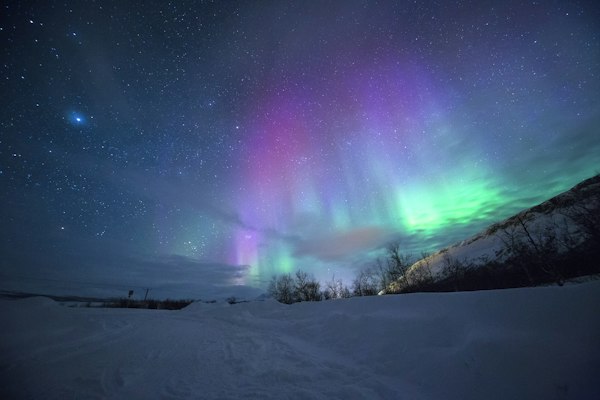
Swedish Lapland (the northernmost part of Sweden — the region above the Arctic Circle — Norrbotten County — the guide’s Lapland introduction: “Swedish Lapland contains approximately 4% of Sweden’s population and approximately 40% of its wilderness — the specific emptiness of Lapland is the kind that requires a 4-hour train from Stockholm to Kiruna (the iron ore city at 67°N) and then a further 15km to Jukkasjärvi (the village on the Torne River where the Icehotel was first built in 1989) to appreciate — the guide recommends the train rather than the flight for the arrival experience because the train allows the Swedish landscape to arrive progressively — and the arrival of the Swedish boreal forest at night in December — with the first significant snow — is the specific experience the guide considers the correct opening to the Lapland programme”). The Icehotel (Jukkasjärvi) (the world’s first ice hotel — built annually since 1989 from the ice of the Torne River — opening each December and melting back into the river each spring — the guide’s Icehotel design briefing: “each ice room in the Icehotel is designed by a different artist — selected through a global competition — the guide visits the design selection process brief every year — the guide’s position: “the Icehotel is the most completely re-invented available hotel on an annual basis — the guide has stayed in the Icehotel on 12 programmes — no two rooms have been the same — the guide has a favourite room from 2019 (the Room of Shadows — an ice chandelier that cast the shadow of the birch forest on the ice walls at night from a single candle — the guide considers this the most specifically correct available use of ice as an artistic medium) and has not found a 2020–2026 room that replaces it — though the guide looks every year”). The Icehotel 365 is the permanent structure — cooled artificially year-round — the guide’s position: “the guide recommends the seasonal hotel — the ice that is the hotel in December is the Torne River in May — this is the most available demonstration of the correct relationship between a building material and its source”). Abisko National Park and the Aurora Sky Station (the guide’s aurora programme: Abisko — 75km west of Kiruna — the mountain valley that creates the specific microclimate (the Abisko gap — the cloud-clearing effect of the valley topography) that produces the clearest skies in Scandinavia for aurora viewing — the Aurora Sky Station at 900m altitude on the Nuolja mountain — the guide’s Aurora Sky Station position: “the guide considers Abisko the finest available clear-sky aurora location in mainland Scandinavia and has found no comparably reliable alternative in 15 years of Nordic aurora programmes”)).
Gothenburg (Göteborg — Sweden’s second city — 590,000 people — on the western coast at the mouth of the Göta Älv river — the guide’s Gothenburg character briefing: “Gothenburg is the Swedish city that most resembles itself — which the guide means as a specific compliment — Stockholm is Sweden’s international face — Gothenburg is Sweden’s everyday face — the canals — the Dutch-influenced grid plan (the city was founded in 1621 with significant Dutch urban engineering involvement — the guide’s canal briefing: “the Dutch designed Gothenburg’s canal system — the guide finds the Dutch urban fingerprint in a Swedish city on the North Sea the most geographically specific available consequence of 17th-century commercial network geography”) — the trams — the fish market — the guide’s Gothenburg programme is structured around the guide’s own relationship with the city since 2010 rather than the standard circuit”). The Feskekörka (the Fish Church — the Gothenburg fish market — a covered market building constructed in 1874 in a deliberate neo-Gothic style that resembles a church — the guide’s Feskekörka briefing: “the Feskekörka sells fish — it looks like a church — the guide’s position: in Gothenburg these are not contradictory conditions — the guide considers fish in Sweden approximately as fundamental to the social fabric as religion was in the medieval period — the guide buys the freshly boiled langoustine at the Feskekörka and eats it standing at the counter — the guide has been doing this since 2010 — the guide’s langoustine position: the finest available single-ingredient Swedish seafood experience available at any price point”). The Bohuslän Coast (the granite coast north of Gothenburg — the red granite boulders — the fishing villages (Smögen — Fjällbacka — Lysekil) — the guide’s Bohuslän briefing: “the Bohuslän coast is the Swedish landscape that most consistently surprises visitors who expected something more mountainous — it is not fjord country — it is granite country — flat red rocks that extend into the sea — the guide’s Smögen programme: the wooden boardwalk above the fishing village at 6pm in July when the light is at the specific Bohuslän angle the guide has been photographing since 2010 and has not found it replicable at any other time of day or season”)).
Dalarna (the province — in central Sweden — the guide’s Dalarna introduction: “Dalarna is the Sweden that Swedes go to when they want to be most Swedish — the lakes, the red farmhouses, the folk music, the midsommar traditions — the guide considers Dalarna the emotional centre of Swedish cultural identity and has been saying this since 2009 — the guide has not found a conflicting Swedish position”) is the region most associated with the Swedish midsommar (Midsommar — the summer solstice celebration — the guide’s Swedish midsommar vs Finnish juhannus comparison: “the Finnish juhannus is a lake and a bonfire and a specific silence — the Swedish midsommar is a maypole and a dance and a specific noise — both are the same celebration expressed through opposite national temperaments — the guide presents both as correct within their respective cultural contexts and has a personal preference that the guide does not disclose because the guide considers the question unanswerable with available data”). The midsommarstång (the maypole — the specific Swedish midsommar tradition of erecting and dancing around the maypole — the guide’s maypole briefing: “the maypole is raised on Midsommarafton (Midsummer Eve — the Friday nearest to 24 June) — the traditional dances (including Små grodorna — the Little Frogs — a song where the dancers imitate frogs — the guide’s Små grodorna position: “the guide has participated in Små grodorna on 11 midsommar occasions — the guide finds the dance and its context charming — the guide does not find the dance dignified — the guide presents dignity as non-applicable to midsommar and has not found a Swede who disagreed”)). The Dala horse (Dalahäst) (the carved and painted wooden horse from Dalarna — the guide’s Dala horse briefing: “the Dala horse began as a children’s toy carved by forestry workers during the long winter months — the specific red colour (kurbits red — the guide notes that the red is called kurbits after the decorative folk art style used to paint it — not after the wood or the varnish) was standardised in Nusnäs village near Mora in the early 20th century — the Dala horse has been the most recognisable Swedish folk art object since approximately the 1939 World’s Fair — the guide visits the Grannas A. Olsson workshop in Nusnäs and watches the painting — the guide has watched the same painter paint the same horse for 12 years and finds the consistency more impressive with each visit”)).
The Stockholm Archipelago (Stockholms skärgård — the 30,000 islands stretching from the city of Stockholm eastward into the Baltic Sea — the guide’s archipelago briefing: “the Stockholm archipelago is the specific reason the Swedish summer has its specific character — the islands (from the large, inhabited, ferry-served outer islands to the flat granite skerry rocks barely above the waterline) provide the Swedish population with the most available per-capita combination of water, forest, and silence outside of Finland — the guide considers the archipelago the summer programme equivalent of the Lapland winter programme — completely different in character and completely essential for the same reason: the guide cannot understand Sweden without the landscape that makes the Swede what they are, and the archipelago summer makes the Swede what they are in July”) is the guide’s essential summer Sweden experience. The Waxholmsbolaget commuter ferry system (the guide’s ferry briefing: “the Stockholm archipelago ferries are the public transport system for the island communities — they carry commuters, schoolchildren, and delivery goods — they also carry the guide’s programme — the guide buys a standard ferry ticket and takes the group to the outer archipelago — the guide considers the most honest available archipelago experience the one that uses the same vessel as the person who lives on the island year-round — not the tourist boat — the guide has been taking the commuter ferry to Grinda since 2009 and considers the ferry journey itself a programme element”). The summer cottage culture (the guide’s archipelago cottage briefing: “the Swedish summer cottage tradition in the archipelago is the direct Baltic equivalent of the Finnish mökki — the family cottage on the island — the swimming off the granite rocks — the evening crayfish or langoustine — the silence of the Baltic at 9pm in July when the light is still full — the guide has spent 15 summers in the Stockholm archipelago and has found the 9pm July light the most specifically available Swedish argument for the existence of summer”)).
Öland and Gotland — the two largest Swedish islands in the Baltic Sea — are the guide’s recommended Baltic extension to any Stockholm programme and the destinations that most consistently surprise visitors who arrive expecting them to be smaller versions of the mainland. Öland (UNESCO World Heritage 2000 — the southern Öland agricultural landscape — the specific combination of the limestone alvar (the flat limestone grassland — a globally rare habitat — the guide’s alvar briefing: “the Öland alvar is one of the largest limestone alvars in the world — it is flat, windswept, and covered in wildflowers in June — the guide has walked the alvar at dawn in June and has not found a more available concentration of wildflower density per metre of Swedish landscape — the guide considers the alvar the most undervisited UNESCO landscape in Scandinavia and presents this position with some frustration at its undervisitation”) — the windmills (Öland has more windmills per km² than any Swedish county — the guide counts them from the coach window as a standard programme element — the current count from the main road: 71 — the guide’s count has been stable for 8 years). Gotland and Visby (the UNESCO World Heritage medieval town — the most completely preserved walled medieval city in Scandinavia — the guide’s Visby briefing: “Visby was the most commercially important city in the Baltic in the 12th–13th centuries — the Hanseatic merchants — the specific wealth visible in the church ruins (13 medieval churches — the guide visits all 13 — the guide notes that 13 churches in a single medieval city indicates a specific concentration of wealth and a specific competitive relationship between the merchants who funded them) — the city walls are 3.4km complete — the guide walks the complete wall on every Gotland programme — the guide’s wall time: approximately 1 hour 40 minutes — the guide notes this timing is also a measure of the guide’s pace changing over 15 years — the guide does not specify the direction of change”)).
The Swedish Sámi (the indigenous people of Sápmi — the traditional Sámi homeland that covers northern Sweden, Norway, Finland, and the Kola Peninsula of Russia — in Sweden approximately 20,000–40,000 people identify as Sámi — approximately 2,500 still practise reindeer herding as a primary livelihood — the guide’s Swedish Sámi briefing: “the Swedish state’s relationship with the Sámi is the guide’s most carefully constructed political lecture in the Swedish programme — the Swedish government recognises the Sámi as an indigenous people — Sweden is a signatory to ILO Convention 169 on indigenous rights — but the land rights questions remain contested — the guide presents the legal situation, the cultural situation, and the Sámi community’s own position as three separate things that are related but not identical — the guide has been doing this for 15 years and has not found a simpler available presentation”) are most visibly present in Jokkmokk — the Sámi cultural capital of Sweden. The Jokkmokk Winter Market (Jokkmokks marknad) (the annual market — held in the first week of February since 1602 — the guide’s market briefing: “the Jokkmokk market is 400+ years old — it is held at −20°C to −30°C — it draws 30,000 visitors to a town of 5,000 — the guide attends every February — the guide considers it the most concentrated available combination of Sámi handicrafts, reindeer products, traditional foodstuffs, and specific northern Swedish cold that exists in a single outdoor market format”). The Ájtte Swedish Mountain and Sámi Museum (the guide’s Ájtte briefing: “the guide spends 90 minutes in Ájtte before any outdoor Sámi programme — not as a cultural obligation — as a practical necessity — the visitor who has been to Ájtte sees the reindeer herd differently from the visitor who went directly from the airport”)).
The guide’s fika programme is non-negotiable and has been non-negotiable for 15 years. The guide’s fika instruction — delivered on Day 1 of every Sweden programme before the first coffee: “fika is not a coffee break — fika is a scheduled social event — in Sweden the workplace halts for fika and the person who skips it is not considered productive but antisocial — the guide considers this the most correctly prioritised available workplace policy in the Nordic region. The canonical fika venue the guide uses in Stockholm: Vete-Katten on Kungsgatan — opened in 1928 — the guide has been going there since 2009 — the kanelbulle costs more than it did in 2009 — the guide considers this accurate inflation data and not a reason to reconsider the venue. The guide’s fika order: a kanelbulle and a cup of Swedish coffee (light roast — always) — taken at a window table if available — the guide’s window table success rate at Vete-Katten: 11 of 15 years — the guide considers 11 of 15 an adequate outcome for a preferred table at a popular institution and has not attempted to improve the odds through advance arrangement because the guide considers advance arrangement of a fika table the most available contradiction of the fika spirit.”
The guide’s Sweden programme is built around four Swedish cultural concepts that the guide considers not just interesting but useful — applicable to the visitor’s own life in a way that most cultural concepts from most countries are not.
Lagom (the Swedish word — pronounced approximately “LAH-gom” — the guide’s etymology: “lagom derives from the Old Norse ‘laget om’ — meaning ‘around the team’ — the reference is to the Viking drinking horn being passed around the group — each person drinking just the right amount so there was enough for everyone — the guide considers this the most historically available origin story for a cultural concept and the most concisely useful one — the drinking horn origin suggests that lagom is fundamentally about social moderation rather than personal satisfaction — not too little — not too much — just enough for the group”) is the concept the guide considers the most applicable available Swedish cultural export. The guide’s lagom applications in the programme: Swedish design (IKEA — the guide’s IKEA briefing: “IKEA is lagom applied to furniture — not the cheapest available table — not the most expensive — the table that is good enough for the purpose it serves — the guide’s IKEA position: “the guide uses IKEA furniture in the guide’s own home — the guide considers this an available credential for the briefing”), Swedish food portions (the guide’s Swedish restaurant briefing: “the Swedish portion is not Australian-sized — it is correctly sized — the guide has found no Swedish restaurant where the guide left hungry — the guide has found several where the guide left with the specific satisfaction of having eaten exactly the correct amount — the guide considers this the most consistently available lagom dining experience in Europe”), and lagom in conversation (the guide’s Swedish social briefing: “the Swede who says a thing once has said it — the Swede who says it twice is very serious — the guide has found this pattern reliable across 15 years of Swedish programmes and uses it as the primary available indicator of Swedish social emphasis — the guide says the fika rule once — this is the guide’s most Swedish available programme delivery decision”)).
Swedish design (the guide’s design briefing — delivered in the Stockholm Design Museum (Designmuseet) on Day 2: “Swedish design is not decoration applied to an object — Swedish design is the object being made correctly — the aesthetic quality is the byproduct of the functional quality — the guide’s best available example: the Swedish kitchen knife — Mora knife — from Mora in Dalarna — a knife so functionally correct in its design that it has not been substantively changed since the 1890s — the guide carries one — the guide considers it the most lagom available single object in the guide’s equipment list”). The design genealogy: the guide’s Swedish design timeline briefing: “Carl Larsson (the Swedish painter who codified the Swedish home aesthetic in the 1890s — the specific colours — the specific relationship between interior and garden — the guide visits Carl Larsson’s house in Sundborn in Dalarna and considers it the available origin point of every IKEA catalogue that has followed), Axel Wenner-Gren (the Electrolux founder — applied the Swedish design principle to domestic appliances), Bruno Mathsson (the furniture designer — the ergonomic chair — 1930s — the guide’s briefing: “Bruno Mathsson designed a chair around the human body rather than a body around the chair — the guide considers this the most correct available design starting point and notes that it required 1930s Sweden to articulate it clearly”), and then IKEA, Spotify, and Minecraft — all of which the guide presents as the same design lineage: start with what the user needs — make it as well as possible — charge the correct amount.”
Allemansrätten (“everyone’s right” — enshrined in the Swedish constitution (Chapter 2, Article 18) — the guide’s legal briefing: “every person in Sweden — regardless of citizenship — has the right to walk, cycle, ski, swim, camp, and forage in any Swedish natural environment — forest — lake — meadow — coastline — regardless of who owns the land — with the obligation to leave no trace — the guide entered the Swedish forest for the first time on a programme in 2009 without asking anyone’s permission and has been entering it without asking permission on every programme since — the guide considers this the most consequential available constitutional fact about Sweden for a visitor from a country where access to private land requires consent”). The practical allemansrätten programme: “the guide walks the group into the Swedish forest under allemansrätten on every programme — picks blueberries (blåbär — the guide’s berry-picking instruction: single berry to test for ripeness — the guide’s standard is ‘it should not require an opinion’ — the ripe blueberry is obviously correct — the unripe one requires a decision — the guide picks only obvious ones) — and finds a specific clearing — always a different clearing — where the group sits and is quiet — the guide has found, across 15 years, that the Swedish forest produces in most visitors the same effect that the Finnish sauna produces: a specific stillness that is not available in the visitor’s habitual environment and that is available, under allemansrätten, to everyone.”
Fika (the Swedish verb and noun — from “kaffi” — an old Swedish slang for coffee — syllables reversed (a form of Swedish back-slang called “fikonspråket”) — the guide’s etymology briefing: “the word that defines the most important Swedish social institution comes from reversing the syllables of the word for coffee in 19th-century Swedish slang — the guide presents this as evidence that language, like lagom, contains the precise amount of history required to explain the present”) is the guide’s most consistently referenced Swedish cultural concept after lagom — and the one the guide considers the most practically transferable. The guide’s fika philosophy: “the Swedish workplace has two protected fika breaks — these breaks are not optional — they are the mechanism by which Swedish colleagues maintain the social connection that makes work sustainable — the Swedish research literature on fika (the guide has read it — the guide considers this an available professional credential) supports the position that fika reduces workplace stress, increases collaboration, and produces measurably better decisions — the guide presents this research not to justify fika (fika does not require justification) but to explain why the guide considers fika the most exportable available Swedish concept and the one the guide most wishes was adopted in Australia — the guide has been saying this since 2009 — the adoption rate in Australia has been — lagom.” The guide’s fika order: always the kanelbulle — always the window table when available — always the light roast — always with whoever is in the group — the guide does not fika alone in Sweden — the guide considers this the most specifically correct available programme rule.
The guide’s Sweden programme is built around a sequence that mirrors the country’s own self-understanding: the city (Stockholm — the design and history), the nature (the forest — the archipelago — allemansrätten), the culture (midsommar — fika — lagom), and, for the winter programme, the Arctic (Lapland — the Icehotel — the aurora — the specific cold that the Icehotel treats not as an obstacle but as a material). Sweden is the country that has been quietly demonstrating for several centuries that moderation and excellence are not opposites — that you can have very good design without excess, very good social organisation without coercion, and very good coffee without pretension.
The Icehotel in January at 3am — the aurora above — the Torne River ice beneath — the guide outside in −35°C standing very still. The guide’s Icehotel aurora position: “the guide has seen the Northern Lights from the Icehotel roof on 7 occasions — each time from the same position — the guide has not found the position less correct on any occasion — the guide considers staying in a hotel made of ice and standing on its roof to watch the sky the most specifically Swedish available articulation of the proposition that the correct environment for the correct experience justifies any amount of cold.” Sweden is the country that does not boast about what it has — it simply arranges for you to stand in front of it — and the guide finds this the most available and least acknowledged Swedish design achievement.
Swedish cuisine is built on cold-water seafood, the forest pantry of berries and mushrooms, the rye bread tradition, and the preservation methods that kept Sweden fed through the long winters.
The guide’s smörgåsbord protocol: “the smörgåsbord has an order — the Swede who goes directly to the meatballs has made an error.” The guide’s order: (1) pickled herring (sill — the guide’s preferred preparation: mustard herring on crispbread — “not the sweetest, not the most pungent, exactly the right herring”), (2) gravad lax (dill-cured salmon with mustard sauce — “the single best available Swedish cold fish preparation — the guide has been making this claim since 2009 and has found no challenger”), (3) warm dishes (köttbullar — the guide’s IKEA meatball position: “the IKEA meatball is the correct meatball for the available context” — Janssons frestelse: “the guide eats it at every Swedish Christmas table and considers ‘temptation’ an understatement”), (4) dessert (rice pudding — cloudberry jam — the guide eats the cloudberry in Sweden and Finland and draws no conclusions about which country’s claim is superior).
The guide’s kräftskiva briefing: “the dill at the kräftskiva is not a seasoning — it is a covering — the guide has attended kräftskivor where the crayfish were not visible through the dill layer — the guide considers this the most available physical demonstration of the Swedish commitment to dill as a primary flavour.” The paper hat: mandatory — the guide wears one — every year — 15 years — the guide does not consider the hat dignified — dignity is non-applicable to the kräftskiva (same position as midsommar and Små grodorna — the guide notes the pattern). Helan Går: the guide sings all three verses — 90 occasions — the guide considers it the most socially functional available 45-second cultural participation experience in Sweden because it requires only the willingness to lift a glass and be present.
Gravad lax (“buried salmon” — original preparation: buried in the ground to ferment — current preparation: salt, sugar, and dill — the guide’s assessment: “an improvement in every available dimension except the story”). The guide has made gravad lax at the Swedish stuga (cottage equivalent) on 8 programmes using the same dill ratio every time — the guide’s ratio is proprietary and not disclosed in this guide because the guide considers it the most specific available programme element. Served with hovmästarsås (“headwaiter’s sauce” — mustard-dill — the guide has never met the Swedish headwaiter credited with inventing it — the guide considers the etymology unresolved and the sauce correct regardless) on knäckebröd (Swedish crispbread — the guide’s position: “the kanelbulle has no icing and the gravad lax has crispbread — both are correct — lagom applied to carbohydrate selection”).
Kanelbulle (Swedish cinnamon bun — the guide’s correction: “the cardamom is as important as the cinnamon — the guide considers the name a 15-year ongoing misunderstanding that the guide has not resolved”). No icing — pearl sugar instead — the guide’s icing-absence position: “the pearl sugar is exactly the correct amount of sweet — lagom in bun form — the absence of icing is the most specifically Swedish available confectionery decision.” Sweden celebrates Kanelbullens dag on 4 October — the guide has attended at Vete-Katten on 3 occasions — the queue is the longest the guide has experienced at a fika venue — the guide considers the queue part of the experience and has not sought to avoid it. Secondary recommendation: kardemummabulle (pure cardamom bun — “the kanelbulle’s more honest available sibling”).
The guide’s meatball identification briefing: “white pepper and allspice combined is the guide’s most specific available Swedish meatball identification feature — the guide has blind-tasted meatballs from three countries every programme that includes a comparative food lecture and has correctly identified the Swedish meatball on 14 of 15 occasions — the guide attributes the one failure to a Norwegian meatball that was unusually allspice-forward.” Served with lingonberry jam (“the lingonberry is the specific acidic counterpoint — the meatball without it is incomplete — both positions held since 2009”) and cream sauce. The guide’s meatball venue recommendation: not the tourist restaurant — the home version — the guide includes one home-cooked meatball meal per programme and considers this the most available context for the meatball to be what it is.
Swedish aquavit (snaps) — the guide’s snaps tradition briefing: “the Swedish snaps is typically unaged — caraway or dill flavoured — ice cold — accompanied by a snaps song — the most common is Helan Går (‘The Whole One Goes’) — the guide has sung Helan Går at approximately 90 Swedish food events over 15 years — the guide knows all three verses — the guide sings with the full commitment the occasion requires — the guide considers Helan Går the most socially functional available 45-second Swedish cultural participation experience because it requires nothing except willingness to lift a glass and be present at a table.” The guide’s snaps recommendation: Skåne Akvavit (caraway-forward — preferred at the kräftskiva) and O.P. Anderson (dill-caraway — preferred at the Christmas julbord) — the preference is context-specific and the guide notes that aquavit in the wrong context is contextually incorrect regardless of technical quality.
From a 5-day Stockholm introduction to the 14-day grand circuit — the guide’s fika at Vete-Katten, the Icehotel Room of Shadows, Abisko’s aurora sky station, and the correct smörgåsbord order.
Days 1–3: Stockholm · Gamla Stan 7am (90cm lane · guide fits · anecdote · appropriate discretion) · Vasa Museum (sank 1,333m from pier · 20 minutes · most specifically Swedish outcome) · ABBA Museum (no non-fan unengaged since 2013) · fika Vete-Katten (kanelbulle · window table · 11/15 · guide does not book). Day 3: archipelago commuter ferry (Grinda · guide since 2009 · journey is the programme · granite slab swim · allemansrätten · 9pm July light). Day 4: Design Museum (Mora knife presented · guide carries one · Bruno Mathsson chair briefing). Day 5: Drottningholm Palace (UNESCO · working royal residence) · smörgåsbord farewell (herring first · the order matters).
Day 1: fly Stockholm–Kiruna (1.5 hours) · Kiruna relocation briefing (most ambitious municipal relocation in Swedish history). Day 2: Jukkasjärvi Icehotel (room design competition · guide’s 12 visits · no two rooms same · 2019 Room of Shadows — ice chandelier — single candle — still looking · Icehotel bar: drink before it melts · guide’s timing instruction). Days 3–4: Abisko National Park (aurora programme · guide’s 15-year preferred location · Aurora Sky Station 900m · clearest skies in Scandinavia) · dog sledding Torne River (the cold · the silence between runner sounds). Day 5: Sámi programme (Ájtte Museum 90 minutes first · practical necessity · reindeer · joik: in honour of · not about). Day 6: fly Stockholm.
Day 1: train Stockholm–Mora · Lake Siljan swim (allemansrätten · correct entry to programme). Day 2: Nusnäs Dala horse workshop (same painter · 12 years · consistency more impressive each visit) · Carl Larsson house Sundborn (the available origin point of every IKEA catalogue). Day 3: Midsommarafton (maypole · flower crown · Små grodorna — 11 participations — charming — not dignified — dignity non-applicable — no Swede disagreed · Helan Går · 90 occasions · all three verses · paper hat · guide wears one). Days 4–5: Lake Siljan circuit (Falun copper mine UNESCO · forest walk · blueberry picking · the ripe berry requires no opinion) · return Stockholm.
Day 1: Feskekörka Fish Church (langoustine at the counter · standing · finest single-ingredient Swedish seafood at any price · guide since 2010) · canal boat (Dutch 1621 · most geographically specific 17th-century commercial network consequence) · Haga kanelbulle (largest in Sweden · lagom does not apply here · guide notes this). Day 2: Bohuslän coast (Smögen boardwalk · 6pm July light · the guide’s unreplicable light · Fjällbacka · red granite · flat rock swimming). Day 3: kräftskiva (August timing · dill covering not seasoning · paper hat mandatory · Helan Går). Day 4: X2000 return Stockholm (3 hours · most consistently pleasant Scandinavian train journey · guide reads on this train · book disclosed on request).
Day 1: Stockholm ferry to Gotland (3 hours · guide on deck · Visby walls visible before any other detail). Days 2–3: Gotland + Visby (UNESCO medieval walls · 3.4km · guide walks every visit · 1hr 40min · pace changing · direction unspecified · 13 medieval churches · guide visits all 13 · competitive merchant wealth visible · June roses · guide’s rose moment). Days 4–5: Öland (southern alvar · UNESCO · most undervisited Scandinavian UNESCO landscape · guide’s frustration documented · 71 windmills counted · stable 8 years · Borgholm castle). Return Stockholm.
Day 1: fly Stockholm–Kiruna · Abisko transfer · midnight sun walk (guide goes · 22 occasions · still goes · position will not change). Day 2: Kungsleden hiking (440km trail · Abisko section · 15km · guide has walked 22 programmes · not less correct on any occasion). Day 3: Sámi programme (Ájtte 90 minutes · reindeer · joik). Day 4: Torne River midnight sun kayak (engine-off equivalent · guide does not speak first 20 minutes · the river does). Day 5: fly Stockholm · return.
Days 1–3: Stockholm (Gamla Stan · Vasa · ABBA · archipelago · fika). Day 4: Öresund Bridge train (5 hours · guide’s most consistently pleasant Scandinavian train journey · guide reads · book disclosed on request · same answer every time). Days 5–7: Copenhagen (Nyhavn · Tivoli · the guide’s comparison: “Stockholm is more beautiful — Copenhagen is more fun — the guide holds both positions simultaneously and presents neither as superior” · Christiansborg · Nørrebro · smørrebrød). Fly home from Copenhagen.
Days 1–3: Stockholm (Gamla Stan · Vasa · ABBA · archipelago · fika · Design Museum · Mora knife). Days 4–5: Dalarna (lake swim · Dala horse · Carl Larsson · Falun mine · forest · blueberries). Days 6–7: Gothenburg (Feskekörka langoustine · standing · canal · Smögen light). Days 8–9: Gotland + Öland (Visby 1hr 40min · 13 churches · 71 windmills). Days 10–14: Swedish Lapland (fly Kiruna · Icehotel if Dec–Mar · Abisko aurora · 15-year preferred · Ájtte 90min · reindeer · joik · Jokkmokk market if Feb · Kungsleden hike · Torne River).
Days 1–8: Sweden (Stockholm · Dalarna · Gothenburg · Swedish Lapland Icehotel + Abisko aurora). Days 9–17: Finland (fly Helsinki · silence briefing Day 9 · 40% compliance · guide has the data · Helsinki · Lake District mökki · smoke sauna 8-hour fire · programme element not cost · Finnish Lapland aurora). The guide’s pairing position: “Sweden gives the most comfortable available Nordic entry — Finland gives the most specific — the guide considers the combination the most complete available picture of what Nordic means when it is not a furniture catalogue.”
No bad month in Sweden. Only the programme that matches the month. The summer Sweden and the winter Sweden are different countries in the same geography.
December: Icehotel opens (guide’s first-week position: “the ice is at its most precise — the artist’s vision most intact”) · Stockholm Christmas markets · the guide’s glögg: “the Swedish glögg is the most correct available hot spiced wine — warmer than the German version — more cardamom — the guide drinks it every December.” January–February: guide’s preferred winter Lapland window · Jokkmokk Winter Market (first week February · −20°C to −30°C · 400+ years · guide attends every year) · Abisko aurora at maximum probability · dog sled. March: Icehotel final weeks · the guide’s March position: “the snow is deep — the light is returning — the Icehotel in its final weeks has a quality it does not have in December — the guide considers this an available argument for both ends of the season.”
April: Stockholm emerging · the guide’s April position: “the city reveals it has been there all along — the first outdoor fika — the guide considers April Stockholm the most available Nordic city in its most transitional moment.” May: Valborg (Walpurgis Night 30 April · Uppsala · guide attends every year · “most enthusiastically available student celebration in Scandinavia — the guide has been making this claim since 2010”) · archipelago opening · the guide’s May archipelago position: “May is too cold for swimming and too beautiful to miss — the guide considers this the most available Swedish argument for the shoulder season being the correct season for the committed visitor.”
June: guide’s preferred summer month · midsommar late June (guide books Dalarna — not Stockholm — Stockholm empties — “as good a proof of Swedish priorities as any other available evidence”) · midnight sun in Lapland guaranteed 31 May–14 Jul · guide goes outside at midnight — 22 occasions — still going. July: warmest month · archipelago peak · Smögen 6pm light · the guide’s July ferry timing: 9am (residents) not 11am (tourists) · “the guide prefers the residents’ company and the 9am coffee.” August: kräftskiva season · the guide’s August position: “August is when the Swedish summer becomes aware it is ending — the light begins its amber turn — the crayfish arrive — the paper hats go on — the guide considers August the most complete available single Swedish month.”
September: Swedish höstfärger (autumn colours · the guide’s colour briefing: “the September forest light is more layered than June — the guide cannot define ‘layered’ as applied to light — the guide uses it anyway — no group member has asked for clarification”) · mushroom season (chanterelles under allemansrätten · in butter · on crispbread · outdoor table · “most honest available Swedish lunch”) · aurora season opens at Abisko. The guide’s September event: chanterelle lunch and first aurora of the season on the same day — achieved twice in 15 years — the guide has been trying to replicate it since 2018. October: höstfärger reaching south · Saimaa equivalent at the archipelago · the guide’s October archipelago: “the sauna in October — the autumn-coloured forest — the cold water — the guide recommends it over the summer version for visitors who have already done the summer.”
Three structures — from the 7-day Stockholm and Lapland introduction to the 14-day grand circuit.