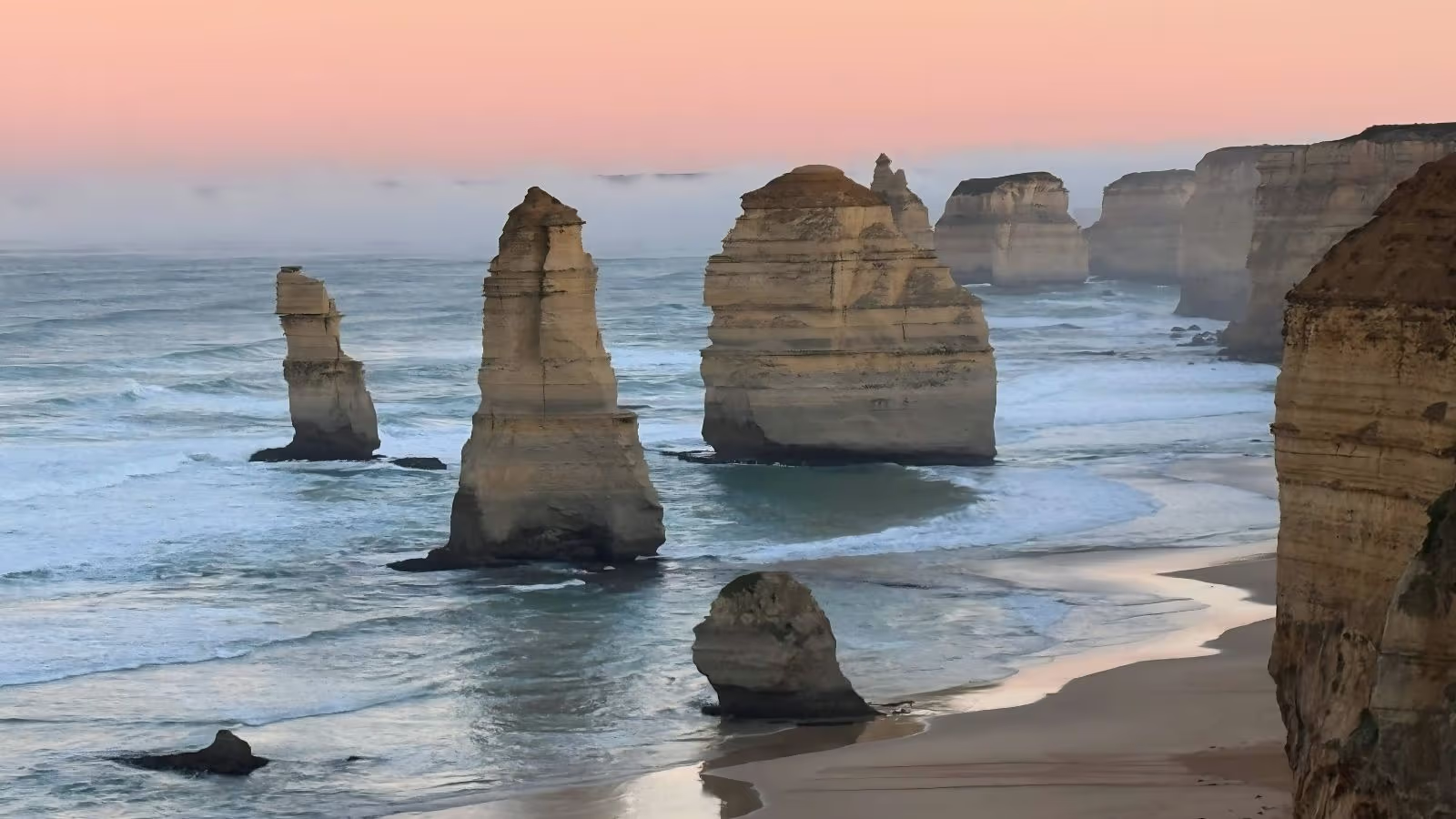


Highway 1 Australia — affectionately known as the Big Lap — is the world's longest national highway, circumnavigating the entire mainland continent for over 14,500 kilometres. Recognised by Guinness World Records, this iconic route connects every mainland state capital from Sydney and Melbourne to Darwin and Perth, weaving through tropical rainforests, dramatic ocean cliffs, vast coastal deserts, and ancient outback landscapes.
Whether you're planning the complete Big Lap of Australia in a caravan, campervan or motorhome, or targeting a specific section — the Great Ocean Road, Queensland's tropical coast, or Western Australia's remote Coral Coast — this guide covers everything you need to drive Highway 1 with confidence in 2026, including realistic costs, the apps every grey nomad uses, and how to combine self-drive with expert-guided tours.
What Is the Big Lap of Australia?
The "Big Lap" is the popular Australian term for driving the complete circuit of Highway 1 — a ring road that hugs the coastline around the entire mainland continent. Unlike most highways that follow a single road, Highway 1 is a network of linked sealed roads that collectively form the world's longest continuous national highway. Depending on where you are, it may be signed as the Pacific Highway, Bruce Highway, Stuart Highway, Princes Highway, Eyre Highway, or simply "A1."
Established in 1955 as part of Australia's National Route Numbering initiative, Highway 1 connects every mainland capital city — Sydney, Melbourne, Brisbane, Perth, Adelaide, and Darwin — across five states and the Northern Territory. Tasmania is the popular optional extension, accessed via the Spirit of Tasmania ferry from Geelong (Victoria) to Devonport. See our Tasmania travel guide for the island loop.
Highway 1 is recognised by Guinness World Records as the world's longest national highway. The Pan-American Highway is technically longer in total distance, but is interrupted by the roadless Darien Gap. Highway 1 remains fully uninterrupted from start to finish — every kilometre sealed.
The 9 Key Sections of the Big Lap
| Section | Distance | Min Duration | Highlight |
|---|---|---|---|
| Sydney → Melbourne | ~900km | 3-5 days | Great Ocean Road, Princes Highway coast |
| Melbourne → Adelaide | ~730km | 2-4 days | Twelve Apostles, Mt Gambier, Coorong |
| Adelaide → Perth | ~2,700km | 1-2 weeks | Nullarbor Plain, Eyre Peninsula sea lions |
| Perth → Broome | ~2,200km | 1-2 weeks | Ningaloo Reef, Coral Bay, Shark Bay, Pinnacles |
| Broome → Darwin | ~1,900km | 1 week | Kimberley, Gibb River Road (4WD detour) |
| Darwin → Cairns | ~2,800km | 1-2 weeks | Kakadu, Katherine Gorge, Gulf Country |
| Cairns → Brisbane | ~1,700km | 1-2 weeks | Great Barrier Reef, Whitsundays, K'gari |
| Brisbane → Sydney | ~950km | 3-5 days | Byron Bay, Port Macquarie, Central Coast |
| Tasmania (optional ferry) | ~1,400km loop | 1-2 weeks | Cradle Mountain, Port Arthur, Freycinet |
Most Popular Highway 1 Sections 2026
Not everyone has time for the complete Big Lap — and that's completely fine. These are the most popular sections for 2026 visitors, balancing iconic scenery with practical travel logistics.
 Most Scenic
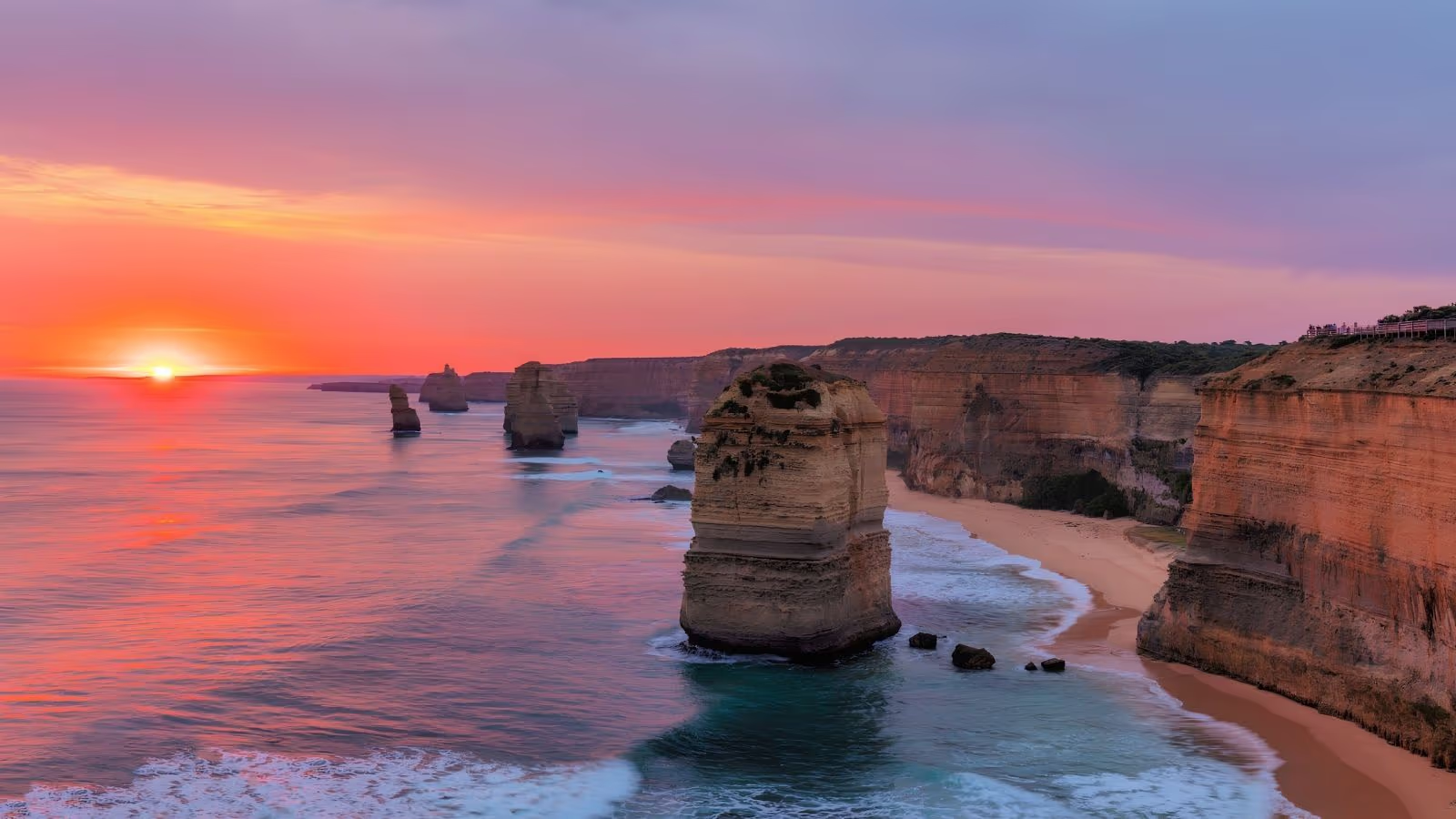
VIC: Melbourne → Adelaide
The legendary Great Ocean Road, Twelve Apostles, Loch Ard Gorge, and charming villages like Lorne and Apollo Bay. The most photographed coastal drive in Australia and Highway 1's most iconic stretch.
 Best Beaches
NSW: Sydney → Brisbane
World-class surf, bohemian Byron Bay, Port Macquarie, Coffs Harbour, and Gold Coast. Prime whale watching May-November. The easiest first Big Lap section in a caravan or campervan.
 Tropical Paradise
QLD: Brisbane → Cairns
Whitsunday Islands, Great Barrier Reef access, K'gari (Fraser Island — world's largest sand island), Daintree Rainforest. Best visited in the dry season; the wet season brings rain, humidity and stinger risk.
 Most Remote
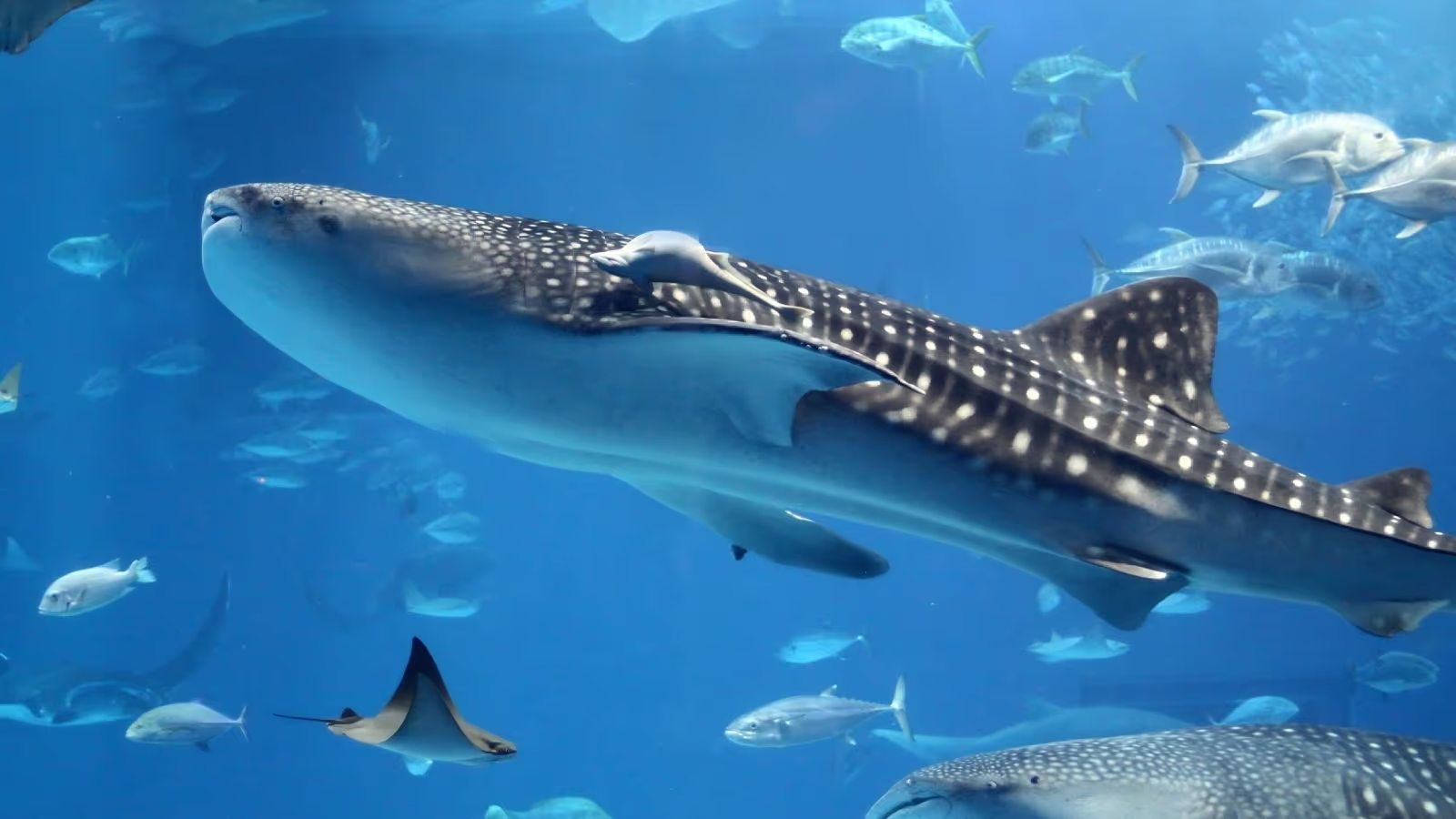
WA: Perth → Exmouth
Ningaloo Reef (swim with whale sharks Mar-Jul), Coral Bay, Shark Bay dolphins, Kalbarri's gorges, and The Pinnacles Desert. Fuel stops are well-spaced but plan ahead with the Fuel Map app.
 Bucket List
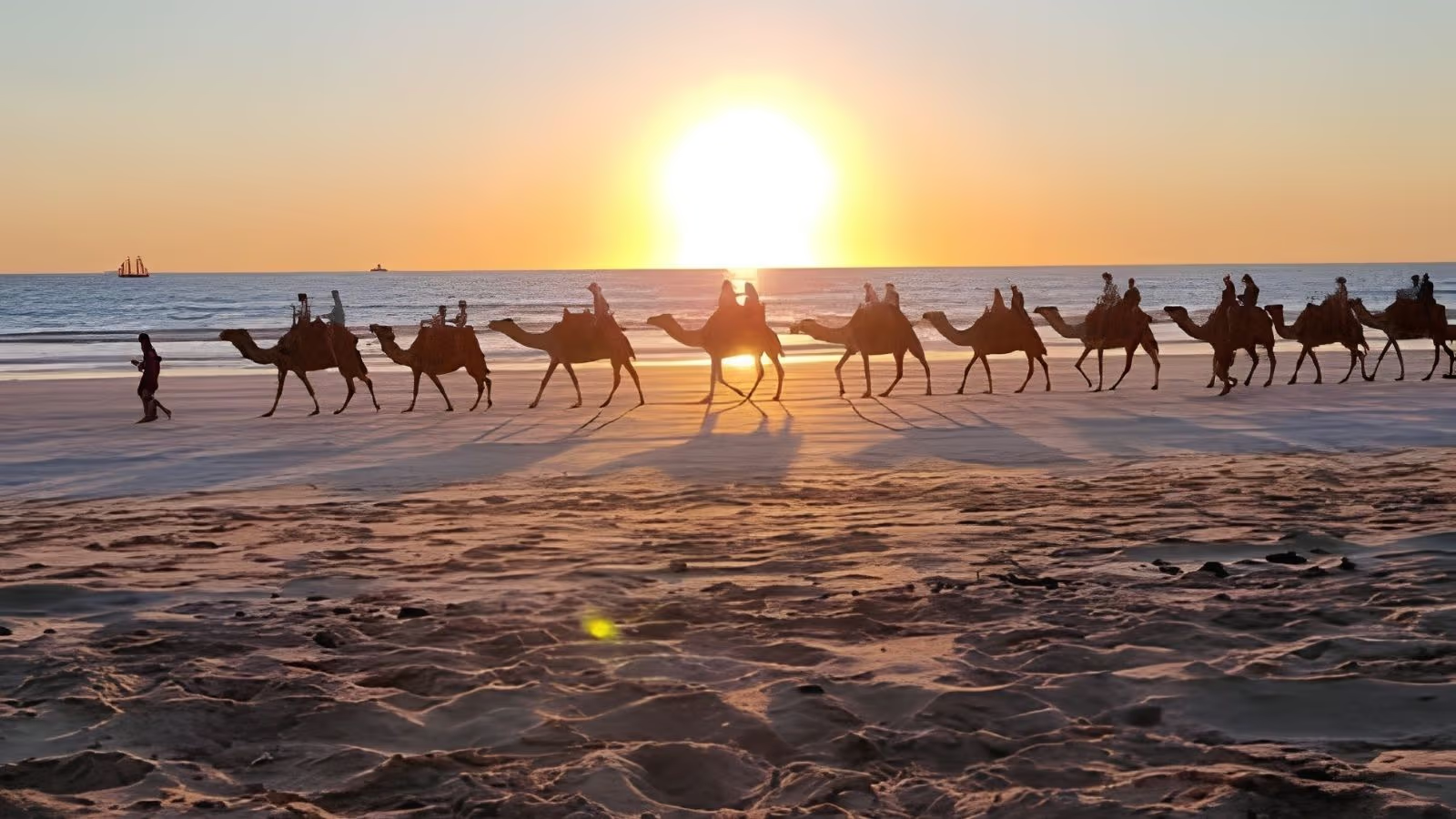
WA: Exmouth → Broome
Cable Beach sunsets, the remote Kimberley Coast, Horizontal Falls, and ancient gorge country. The Gibb River Road (4WD only) is the legendary inland alternative.
 Cultural Immersion
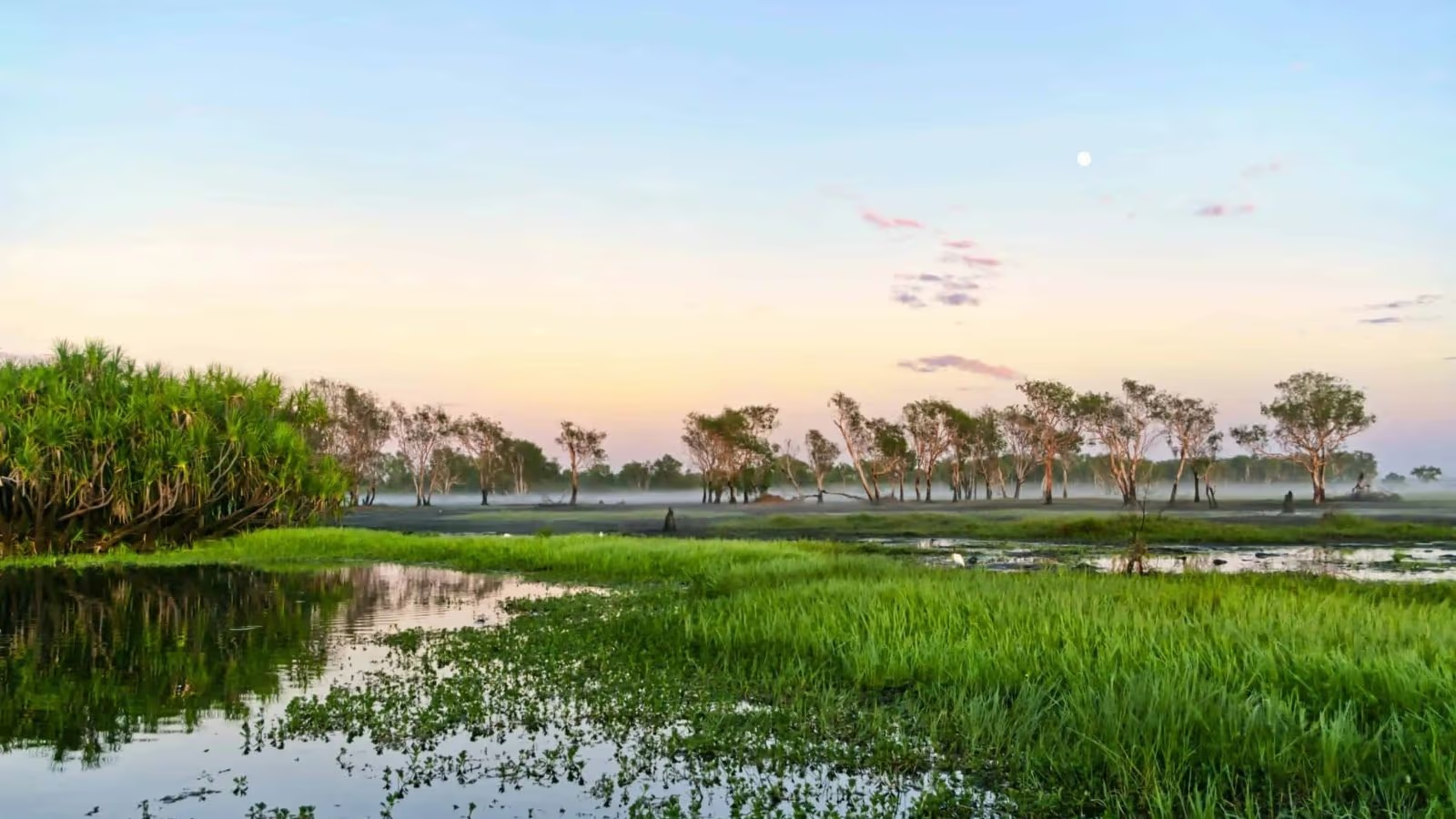
NT: Darwin Region
Kakadu National Park, Litchfield waterfalls, Katherine Gorge, and Uluru-Kata Tjuta (1,000km Stuart Highway detour). Dry season only — roads flood Nov-Apr and crocodile activity increases.
Vehicle Choice: Caravan, Motorhome, Campervan or 4WD?
Your vehicle setup will define how you experience the Big Lap more than almost any other decision. Most travellers complete the entire Highway 1 in a fuel-efficient 2WD setup and hire a 4WD locally for specific detours like K'gari, Cape York or the Gibb River Road.
4WD + Caravan
The classic grey nomad rig. Maximum living space, full bathroom, room to stand and cook.
- Largest living space
- Best for couples 2+ months
- Unhitch and explore in tow vehicle
- High fuel consumption (15-22L/100km)
- Tight in coastal town carparks
Campervan
Transport and accommodation in one. Toyota Hiace (compact), Mercedes Sprinter, Jayco or Winnebago are most popular.
- One vehicle, lowest fuel use
- Easy to park in towns
- Smaller than 6m fits everywhere
- Less living space than a caravan
- Whole rig moves whenever you do
Motorhome
Bigger than a campervan, integrated build with proper bathroom. The middle path between caravan and campervan.
- Full bathroom and kitchen
- One driving licence, no towing
- Comfortable for long stays
- Expensive to buy outright
- Awkward to park 8m+ rigs
4WD + Rooftop Tent
Toyota LandCruiser, HiLux, Ford Ranger or Nissan Patrol with a rooftop tent. Maximum off-road capability.
- Best for outback and 4WD tracks
- Cheapest serious Big Lap setup
- Beach driving, river crossings
- Daily setup/pack-down
- No standing room indoors
Camper Trailer
Hard or soft-floor trailer towed behind a 4WD or large SUV. Off-road capable versions handle most detours.
- Cheaper than a caravan
- Many are off-road rated
- Compact when packed
- Setup time of 15-30 min
- Cramped in extended rain
Hire / Rent Setup
Apollo, Britz, Maui, Jucy and Wicked offer one-way rentals from any capital. Cheapest for trips under 2 months.
- No purchase or resale hassle
- Roadside assistance included
- Try before you buy
- $50k+ for a 6-month trip
- Limited customisation
If your rig has a toilet, grey-water tank and sealed waste system, it's classed as "self-contained" — which unlocks access to thousands of free and low-cost camps. Many councils now require self-contained certification (CMCA "Leave No Trace" sticker) for free camps. This single feature can save $30-$120 per night on caravan park fees.
Essential Apps & The Free Camping Network
Every successful Big Lapper uses a small kit of essential apps. Between them they will save you thousands on accommodation, hundreds on fuel, and prevent the kind of remote-area mistakes that strand travellers. None of them are optional — install them all before you leave the suburbs.
The gold standard. Tens of thousands of free, low-cost and paid campsites across Australia, with reviews, photos, GPS, facilities and recent updates. Works offline once downloaded. About $8 one-off purchase — pays for itself the first night.
Free alternative with crowd-sourced campsite database. Many travellers use both — CamperMate is stronger on recent reviews, WikiCamps stronger on remote and obscure sites. Also lists dump points, fuel, and showers.
Trusted offline-friendly database with high-quality verified entries. Strongest for grey nomads. Print companion book is genuinely useful for the Nullarbor and remote WA where mobile coverage disappears entirely.
Crowd-sourced fuel prices across the country, including remote roadhouses. Saves 15-30 cents per litre on highway fills by directing you to the right servo. Critical on the Nullarbor where $3/L remote prices are common.
Cheaper-station finder for metro and regional areas. Strongest in capital cities and major regional centres. Free, with a clean map interface and history-aware price tracking.
The premium 4WD touring app — offline topographic maps, 4WD tracks, national park boundaries, and points of interest. Essential if you plan Cape York, the Gibb River Road, or Savannah Way detours.
The official Bureau of Meteorology app. Cyclone tracking, marine forecasts, fire warnings, and rainfall radar. Non-negotiable in cyclone season (Nov-April) for northern Australia.
$195+/month for Starlink Roam or Mini. Provides reliable internet anywhere with clear sky view — including the Nullarbor, the Kimberley, and most of remote WA and NT. Game-changing for digital nomads and emergency comms.
The Free Camping Network — How It Works
Australia has one of the world's strongest free camping networks. Between national parks, council-managed free camps, station stays, showgrounds, and 24-hour rest stops, a self-contained rig can spend most nights paying $0-$15 instead of $50-$120 at a caravan park. The savings on a 3-month lap can run to $5,000-$9,000.
- Free roadside rest stops: All states allow overnight stays at signed 24-hour rest areas. Use WikiCamps to find rated ones (many quiet, some highway-noisy).
- Council-managed free camps: Many rural councils offer free or donation camping at showgrounds and town parks — partly because it brings travellers to local shops and pubs.
- National park sites: $3-$15 per person per night in QLD and NT; $20-$40 in WA and Tasmania. State annual park passes ($50-$120) pay back fast.
- Station stays: Working cattle stations across QLD, NT and WA offer powered or unpowered camping for $15-$40. Includes hot showers and often, station tours.
- Pub camps: Many outback pubs invite caravanners to camp for free or $10-$20 if you eat at the pub. Some of the friendliest nights on the road.
- Paid caravan parks (BIG4, G'Day Parks, NRMA, Top Parks): Memberships save 10-15%. Worth stopping every 5-7 days for laundry, long showers, and full-power site overnights.
Planning Your Big Lap — How Long Do You Need?
Most travellers actually cover 25,000-30,000km in total once detours and side trips are factored in. Here's how to calibrate your timeline:
| Trip Type | Distance | Duration | Best For | Budget (per person) |
|---|---|---|---|---|
| Single Section | 500-1,000km | 3-7 days | First-timers, short holidays | $700-$2,800 |
| Multi-Section | 2,000-4,000km | 2-4 weeks | Extended holidays, state exploration | $2,800-$11,200 |
| Half Loop | 7,000-8,000km | 4-8 weeks | East or West coast focus | $8,400-$22,400 |
| Full Big Lap | 14,500km +detours | 3-12 months | Gap year, sabbatical, grey nomads | $13,000-$50,000+ |
| Big Lap + Tasmania | 16,000km +detours | 4-13 months | The full Australia loop | $15,000-$55,000+ |
Clockwise vs Anticlockwise — Which Direction?
Most Australian Big Lappers prefer anticlockwise (starting and ending in Sydney or Melbourne, heading north first). The reasoning is primarily seasonal: heading north in autumn aligns your timing with Queensland and the NT's dry season (May-October), and brings you to Western Australia in winter/spring.
Most Big Lappers cover 25,000-30,000km in total once detours, side trips, and backtracking are factored in. Highway 1 itself is 14,500km — that's the spine of your journey. Budget time, kilometres and fuel accordingly: at 2026 prices, expect $3,000-$5,000 in fuel alone for a full Big Lap.
Best Time to Drive Each Region
Summer (Dec-Feb)
Ideal for VIC, SA, southern NSW. Avoid NT and northern QLD — cyclone season. Great Ocean Road at peak crowds.
Autumn (Mar-May)
Best shoulder season — perfect for east coast travel. Transition from wet season in NT. Whale sharks at Ningaloo (WA).
Winter (Jun-Aug)
Prime season for WA coast, NT, and northern QLD (dry season). Whale watching begins on east coast. Mild southern weather.
Spring (Sep-Nov)
Wildflower season in WA (spectacular). Mild east coast weather. Good for Great Ocean Road before summer crowds build.
Essential Planning Tips
- Plan 3-5 hours of driving per day maximum — 250-400km — leaving time for stops, meals, and spontaneous discoveries. Road trip fatigue is real.
- Book caravan parks 2-3 months ahead for coastal towns during school holidays. BIG4 and G'Day Parks fill months in advance during peak season.
- Buy state national park passes ($50-$120 per state) before entering — they pay for themselves after 3-4 park visits.
- Download offline maps and apps before remote sections. Mobile coverage disappears entirely on the Nullarbor, much of WA's coast, and NT remote stretches.
- Never drive at night in rural areas — kangaroos, wombats, and emus are most active at dusk and dawn. A kangaroo collision at highway speed can write off a vehicle.
- Fill up at every opportunity in remote sections — particularly on the Nullarbor, WA coast north of Geraldton, and NT Gulf country. Don't assume the next town has fuel.
Big Lap Australia Costs 2026
Caravan park prices have increased significantly since 2023 — $50/night sites are now $80-$120+ in coastal hot spots, and remote roadhouse fuel can hit $3/litre. Here's a realistic 2026 breakdown:
Budget Traveller
- Free camping + national parks ($0-$15/night)
- Self-catering most meals ($30-$50/day)
- Self-contained van required for cheap sites
- Fuel ($40-$80/day, distance dependent)
- 3-month Big Lap: $9,000-$18,000
Mid-Range Traveller
- Mix of free camps + caravan parks ($50-$120/night)
- Mix of dining out and cooking ($60-$100/day)
- BIG4 or G'Day Parks membership saves 10%
- Some guided tours and attractions
- 3-month Big Lap: $18,000-$36,000
Comfort Traveller
- Premium caravan parks, glamping, hotels
- Regular restaurant dining ($100-$200+/day)
- Multiple guided tours, premium experiences
- Fuel ($40-$80/day)
- 3-month Big Lap: $36,000-$72,000+
Many international Big Lappers purchase a campervan or 4WD in Sydney or Melbourne, drive the full circuit, then sell in the same city. With a $25,000-$50,000 vehicle budget, a $15,000-$30,000 resale at the end, and no rental costs, this approach can be significantly cheaper than long-term rental for trips over 2 months.
State-by-State Highway 1 Breakdown
Each state delivers a completely different flavour of the Big Lap. Here's what to expect and plan for in each region: For the national overview, start with our Australia travel guide.
🟦 Victoria (VIC) — Great Ocean Road & Beyond
Victoria's stretch of Highway 1 is arguably the most iconic section in Australia. The Great Ocean Road hugs dramatic clifftops above the Southern Ocean, passing through the Twelve Apostles limestone stacks, Loch Ard Gorge, London Bridge, and the charming towns of Lorne and Apollo Bay before looping back inland through the ancient Otway rainforests.
Continue west and you'll pass through Warrnambool (whale nursery June-September), Port Fairy's historic fishing village, and Portland before crossing into South Australia near Mt Gambier. Geelong is also the departure point for the Spirit of Tasmania ferry if you're adding the Tasmania extension.
Browse Great Ocean Road guided tours from Melbourne → Read the full Victoria travel guide →🔴 South Australia (SA) — Wine, Wildlife & the Nullarbor
From Adelaide, the Eyre Highway west leads to the Nullarbor Plain — one of the world's most remote and legendary drives, with the world's longest straight road (146km), dramatic coastal cliffs at the Great Australian Bight, and some of the best Southern Right whale watching in Australia (June-October).
The greater Adelaide region offers world-class wine tourism in the Barossa Valley, McLaren Vale, and Clare Valley, as well as Kangaroo Island — a wildlife sanctuary with sea lions, koalas, penguins, and extraordinary coastal scenery.
Read the full South Australia travel guide →🟡 Western Australia (WA) — Coral Coast to the Kimberley
Western Australia is the longest and most remote state section of Highway 1. Heading north from Perth, the road passes The Pinnacles Desert and Kalbarri's dramatic gorges before reaching Shark Bay (UNESCO World Heritage), where dolphins interact daily with visitors at Monkey Mia.
Further north, Ningaloo Reef at Coral Bay and Exmouth is Australia's most accessible reef — and home to the world's largest seasonal aggregation of whale sharks (March-July). Beyond Exmouth, the route passes through increasingly remote Pilbara landscapes before reaching the tropical pearl town of Broome with its iconic Cable Beach.
Read the full Western Australia travel guide →🟠 Northern Territory (NT) — The Tropical Top End
The Northern Territory is strictly a dry-season destination (May-October) — many roads flood completely during the wet season and crocodile activity increases dramatically near water. Darwin serves as the gateway to Kakadu National Park (UNESCO World Heritage), where ancient Aboriginal rock art, vast wetlands, and extraordinary birdlife create a truly unique experience.
Litchfield National Park (just 90 minutes from Darwin) offers stunning waterfalls and accessible swimming holes. Katherine Gorge (Nitmiluk National Park) features dramatic red sandstone gorges perfect for canoe and boat cruises. A 1,000km Stuart Highway detour south reaches Uluru-Kata Tjuta — Australia's most sacred and iconic landmark.
Read the full Northern Territory travel guide →🟤 Queensland (QLD) — Tropical Paradise
Queensland's stretch of Highway 1 is pure tropical indulgence. From Cairns, the Bruce Highway passes through Townsville and Bowen before reaching Airlie Beach — the gateway to the Whitsunday Islands, arguably Australia's most photogenic island group with Whitehaven Beach's silica sands. Further south, K'gari (Fraser Island) — the world's largest sand island — requires a 4WD ferry crossing.
The Sunshine Coast and Gold Coast round out the journey before reaching the NSW border. Reef access is available at multiple points — Cairns, Port Douglas, Airlie Beach, Townsville, and Lady Elliot Island near Bundaberg. Dry season (May-October) is strongly recommended to avoid humidity, rain, and tropical stingers in northern waters.
Read our Cairns & Far North Queensland blog → Read the full Queensland travel guide →🔵 New South Wales (NSW) — Byron Bay to the Border
NSW offers exceptional diversity along Highway 1. The northern stretch from Byron Bay through Ballina, Coffs Harbour, and Port Macquarie is lush, subtropical coast with excellent surfing, whale watching (May-November), and abundant wildlife including koalas at Port Macquarie's Koala Hospital. Sydney breaks the journey with world-class city experiences — Harbour Bridge, Bondi Beach, and Royal National Park.
South of Sydney, the Princes Highway reveals Jervis Bay's powder-white sand (among the whitest in the world), Batemans Bay's oyster trails, and the wild Sapphire Coast all the way to the Victorian border.
Read the full New South Wales travel guide →Optional 4WD Detours & Tasmania Extension
Highway 1 is your spine — but Australia's most unforgettable adventures branch off it. These detours need separate planning, generally a 4WD (except Tasmania), and add significant time and budget. Each is a bucket-list trip in its own right.
 Cape York
QLD: Cape York
The Tip of Australia — corrugated tracks, river crossings, Aboriginal cultural sites. 4WD essential. Some travellers join a tag-along convoy for the first attempt.
 Kimberley
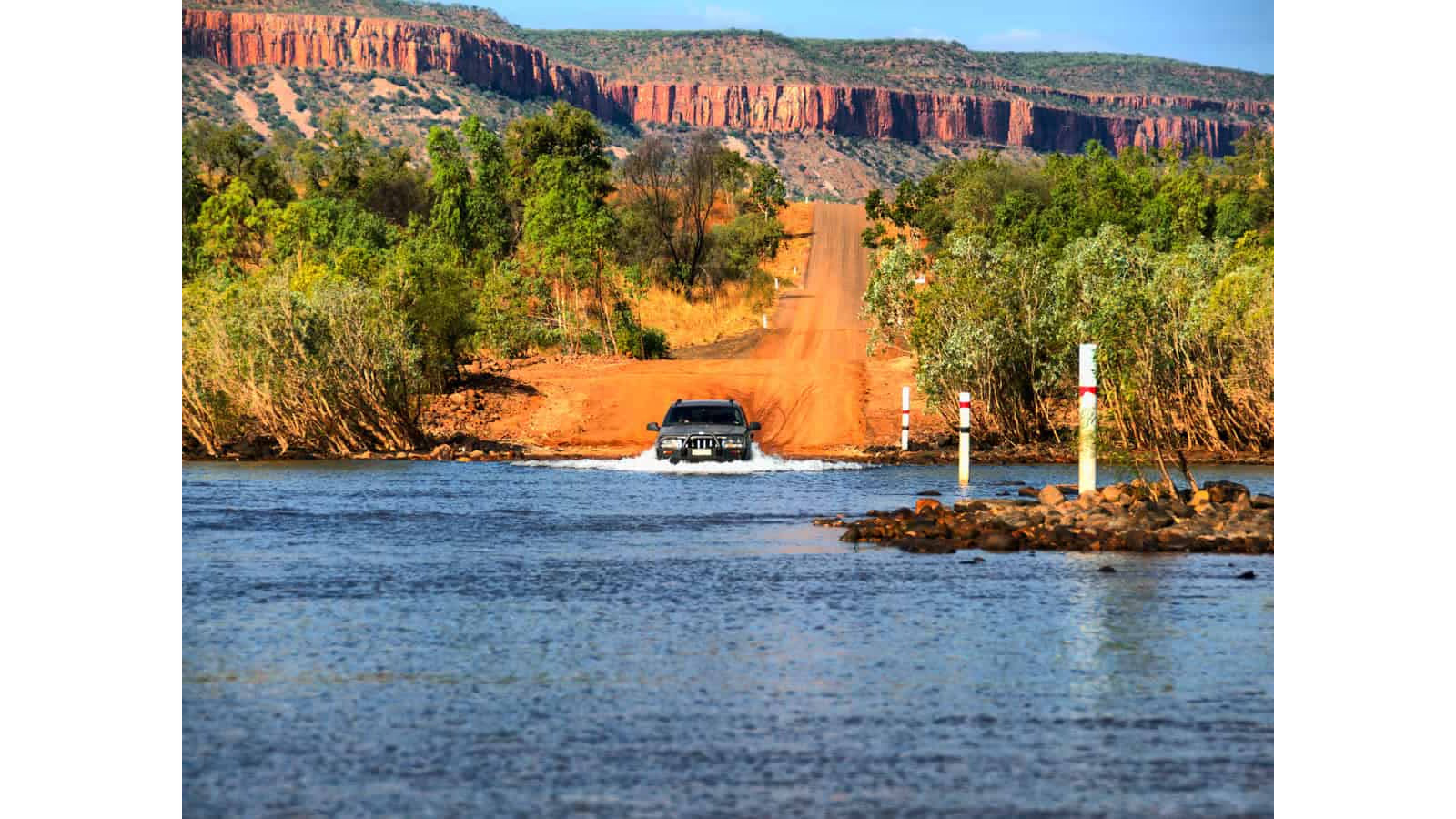
WA: Gibb River Road
The Kimberley's legendary inland 4WD route from Derby to Kununurra. Ancient gorges (Windjana, Bell, Manning), Mitchell Falls, and station stays. Tyres, recovery gear, satellite comms non-negotiable.
 Savannah Way
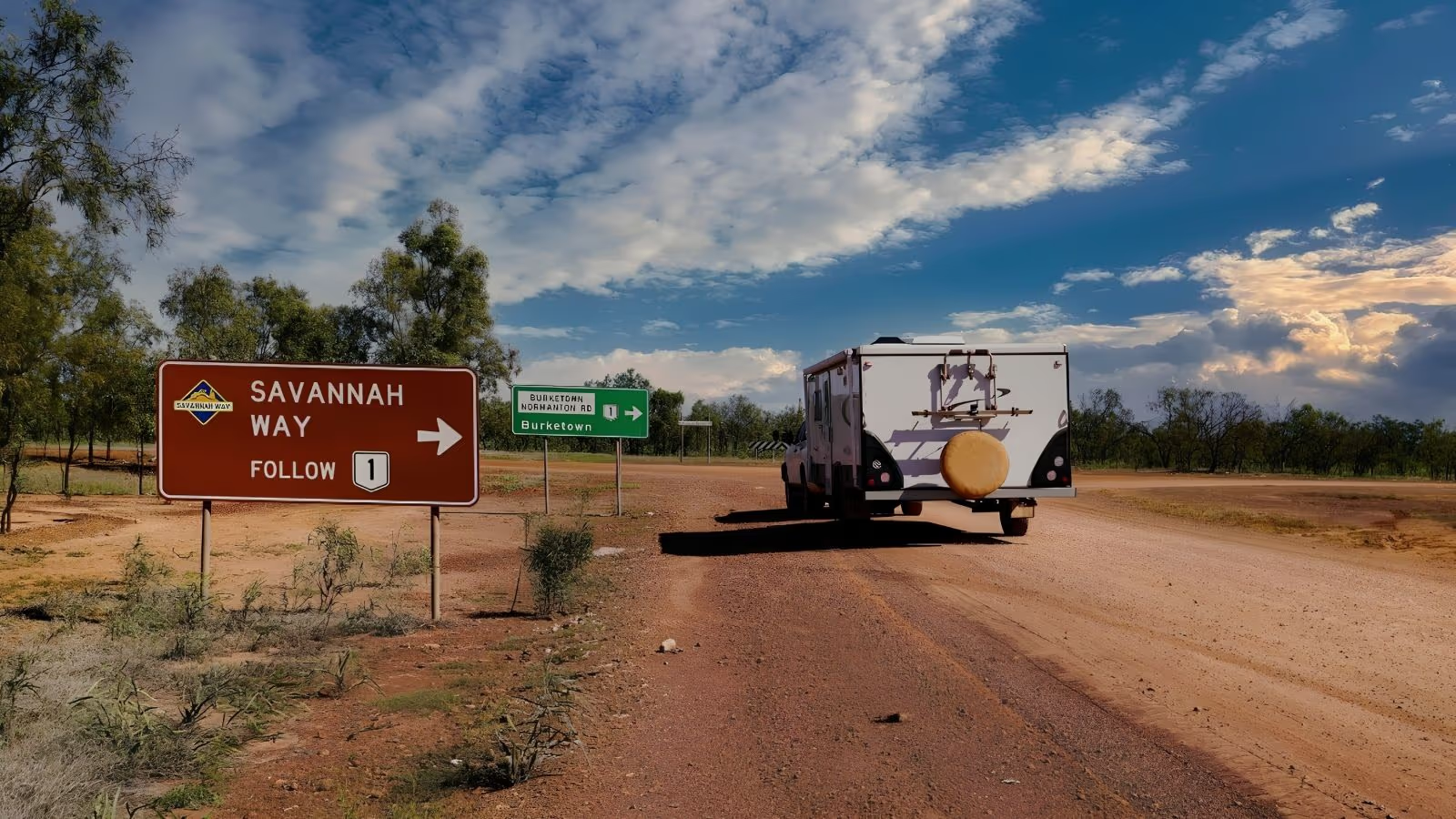
QLD-NT-WA: Savannah Way
Cairns to Broome the inland way — through Gulf Country, the Roper region and the Kimberley. Australia's great alternative to Highway 1 for the northern stretch. Mix of sealed and unsealed.
 K'gari
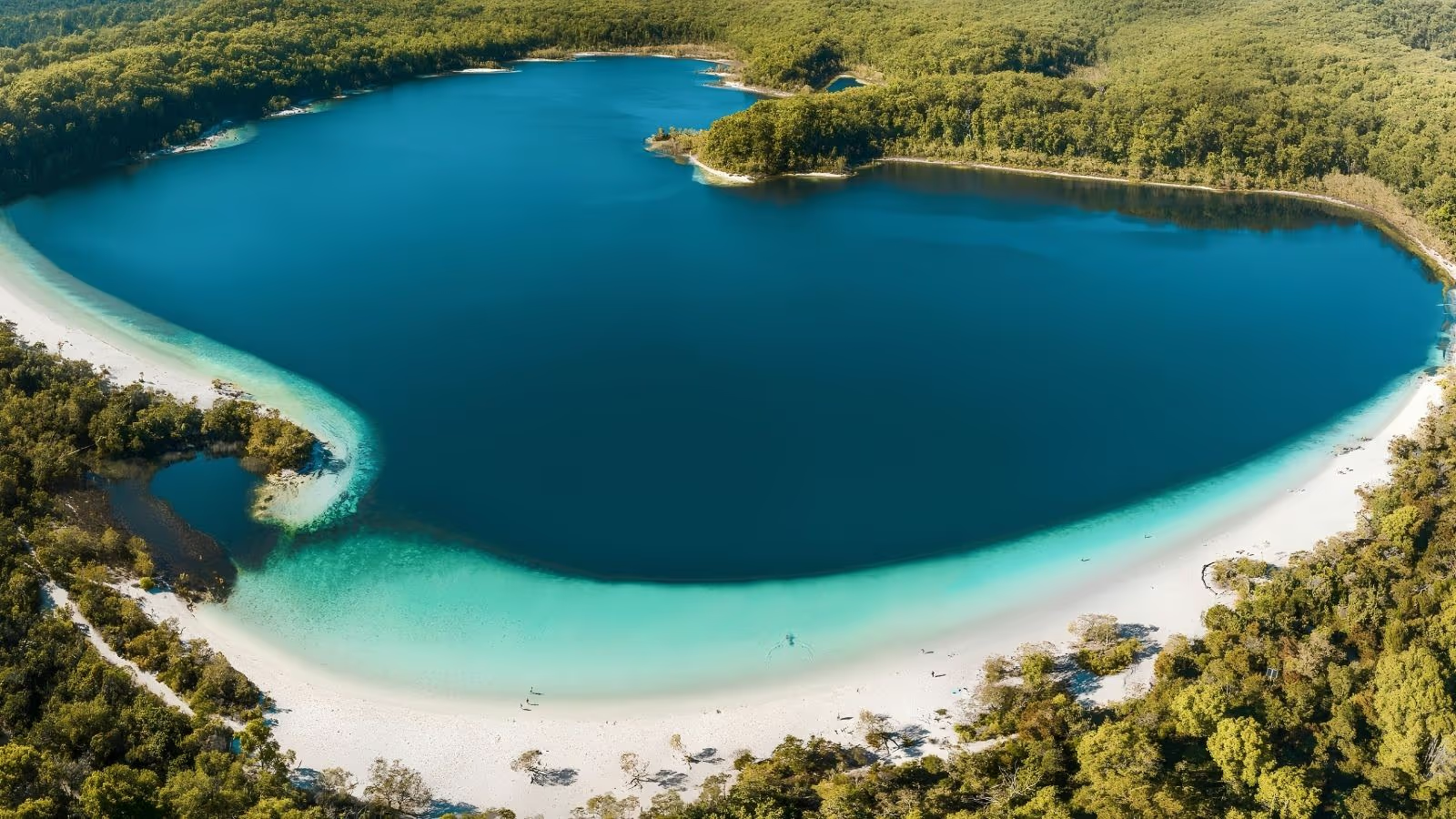
QLD: K'gari (Fraser Island)
World's largest sand island. 4WD mandatory; soft sand requires deflated tyres. Lake McKenzie, the Maheno shipwreck, dingos. Vehicle permits + camping permits required ahead.
 Tasmania
TAS: Spirit of Tasmania Extension
Ferry from Geelong (VIC) to Devonport. Cradle Mountain, Wineglass Bay, Port Arthur, Hobart, Bay of Fires. Plan it with our Tasmania guide. No 4WD needed. Book the ferry 4-6 months ahead for peak summer with a caravan.
 Red Centre
NT: Uluru & the Red Centre
Uluru, Kata Tjuta, Kings Canyon, Alice Springs and the MacDonnell Ranges. All sealed roads — 2WD friendly. Cooler than the coast in winter nights.
Grey Nomads & The Big Lap: Australia's Fastest-Growing Travel Movement
The grey nomad — typically an Australian retiree or semi-retiree who trades the suburban home for a caravan or motorhome and heads off on an extended road trip — is the single biggest demographic doing the Big Lap. Hundreds of thousands of Australians over 55 hit the road each year, generating an estimated $8+ billion annually for regional economies. If you're planning your Big Lap in retirement, you're joining one of the country's most vibrant and social travel movements.
Who Are Grey Nomads?
Grey nomads are overwhelmingly couples aged 55-75 who have recently retired or taken redundancy, often selling or renting their family home to fund an extended trip. They're typically self-funded or on the Age Pension, own their own rig (frequently a 4WD + caravan combination), and plan to travel for 3-18 months. However, the movement has broadened considerably — "grey" is now a loose term, and younger empty-nesters, sea-changers, and even families are embracing the same long-form road trip lifestyle.
Grey Nomad Big Lap Tips
- Join a club before you leave: The Campervan and Motorhome Club of Australia (CMCA) offers a self-contained certification sticker, roadside assistance, a national magazine, and access to thousands of member-only camp sites. The Caravan Club of Australia is another excellent network. Both provide pre-departure briefings, route planning resources, and tag-along convoy opportunities for first-timers tackling remote sections like Cape York.
- Stagger your Medicare and prescriptions: Before departure, arrange 3-month or 6-month supplies of regular medications where possible. Ask your GP for "Regulation 24" scripts for any medications that may be unavailable in isolated areas. Carry copies of all medical records and a comprehensive first aid kit in both the tow vehicle and caravan.
- Plan your finances carefully: Set up direct debits for all bills before leaving. Consider notifying your bank of extended travel to avoid card blocks in remote areas. A Bankwest or ING account with no overseas/ATM fees is useful even domestically. Many grey nomads maintain a separate "Big Lap fund" and spend $60,000-$120,000+ over a full year.
- House-sitting and mail management: Options include renting your home (often generating $2,000-$4,000/month), house-sitting with a trusted family member, or using a mail redirection service (Australia Post, ~$80/year). Disconnect unnecessary utilities, set timers for security lighting, and arrange lawn mowing.
- Solo grey nomads: More common than people assume. Travelling alone increases the importance of satellite communication, regular check-ins with a designated contact, and membership with an emergency response service like the RACQ (QLD), NRMA (NSW), or national CMCA roadside assistance. The Big Lap grey nomad community is extraordinarily welcoming — solo travellers are rarely truly alone at a caravan park or free camp.
- Online communities: Grey Nomads Forum (greynomads.com.au), Campertrailer Australia Forum, and Facebook groups like "Big Lap Australia" (280,000+ members) are indispensable planning resources. Real-time road and camp reports keep you informed before you arrive — nothing beats local intelligence from someone who camped there last Tuesday.
Big Lap Pre-Departure Checklist
Getting your rig, health, admin, and finances sorted before you leave is far less stressful than discovering problems on the road. Use this pre-departure checklist as your baseline — it covers the areas most commonly overlooked by first-time Big Lappers.
Vehicle & Rig Checklist
- Full mechanical service on both tow vehicle and caravan/motorhome. Have a qualified caravan workshop (not a regular mechanic) inspect wheel bearings, brake controller, wiring harness, coupling, and jockey wheel. Caravans often sit unserviced for months between trips.
- Tyres: Replace any tyre over 5 years old regardless of tread depth (UV degradation). Match tyre types and load ratings across tow vehicle and caravan where possible. Carry a quality full-size spare and a portable 12V compressor. Check tyre pressures at minimum weekly on the road.
- Weigh everything before you leave. Most Big Lappers are overloaded without knowing it. Visit a public weighbridge with the rig fully loaded (full water tank, full fuel, all gear on board). ATM (Aggregate Trailer Mass) and GVM (Gross Vehicle Mass) limits are legal requirements; exceeding them voids insurance and exposes you to liability.
- 12V and solar system: If free camping is a priority, ensure your battery bank and solar panels are sized for your planned usage. Rule of thumb: 200Ah of lithium (or 400Ah AGM) per person per day is a reasonable starting point for lights, fridge, and device charging. Add 200-400W of solar minimum.
- Water system: Service the caravan's water filter and pump. Carry an additional 20-40L portable water container for remote sections where tanks run low. Check all connections for leaks before departure.
- Dust-proofing: Seal any holes in the underbody, cupboard joins, and body gaps. Check at night with bright lights on inside the van. Red dust penetrates everywhere — a single dirt-road day without dust-proofing can ruin electronics and dry goods storage.
Health & Medical Checklist
- Full medical check-up for all travellers at least 6 weeks before departure. Check blood pressure, cholesterol, dental (expensive in remote towns), eyes, and hearing. Ask GP specifically about extended-period remote travel.
- Medications: Obtain 3-6 month supplies of all regular medications. Ask for "Regulation 24" authority prescriptions for medications that may not be available in isolated pharmacies. Carry an up-to-date medication list in your wallet and a copy in the first aid kit.
- First aid kit: Comprehensive kit in both the tow vehicle and living area. Include snake bite bandages (compression bandages — 3 minimum), EpiPen if allergic to bee stings, SAM splint, tourniquet, and blister management. The Royal Flying Doctor Service (RFDS) provides an excellent remote-area medical kit checklist at rfds.org.au.
- Travel health insurance: Even within Australia, a remote medical evacuation can cost $5,000-$50,000+. Comprehensive travel insurance (or the RFDS membership subscription in remote areas) is essential, not optional.
Admin & Finance Checklist
- Bills and utilities: Set up direct debits for all bills 3-4 weeks before departure. Disconnect or suspend Netflix, gym memberships, and other unused subscriptions. Redirect mail via Australia Post or arrange a trusted contact to collect.
- Bank access: Notify your bank of extended travel. Set up accounts with no ATM fees (ING, Bankwest). Download your bank's app for mobile banking and ensure it works offline (caching). ATMs are rare in remote areas — carry $500+ cash for outback sections.
- Insurance review: Update contents insurance to cover the caravan and its contents (many home policies don't extend). Ensure comprehensive caravan insurance covers off-road use, wildlife collisions, and storm/flood damage. Review vehicle insurance for towing requirements.
- National park passes: Purchase annual passes for QLD, WA, SA, NT, and NSW before crossing state borders. Saves money and avoids queues at major parks during peak season.
What to Pack for the Big Lap: The Essential List
The golden rule of packing for the Big Lap is to take half of what you think you need, and twice as much money. Overloaded rigs are uncomfortable, mechanically stressed, and often illegal. Everything below the ATM limit should earn its place. You can top up clothing and household items cheaply at op shops in regional towns — don't leave home with a van stuffed to the ceiling.
Kitchen & Cooking
A well-equipped caravan kitchen makes self-catering easy and drastically reduces daily costs. Essentials include a good camp oven for long slow cooks on gas, a coffee setup (plunger or stovetop moka if you're serious), and non-perishable pantry staples bought in bulk at city supermarkets before entering remote areas. Consider a quality 12V portable fridge (Engel, ARB, or Waeco) as an additional fridge-freezer if your rig only has an absorption fridge — 12V compressor fridges are far more efficient.
- Camp oven (cast iron Dutch oven): Versatile enough for bread, roasts, and curries over any heat source.
- Quality sharp knives + sharpener: More useful than almost any other piece of kitchen gear. One chef's knife, one paring knife.
- Non-perishable bulk pantry: Flour, sugar, rice, pasta, canned tomatoes, lentils, coconut milk, olive oil, long-life UHT milk. Buy in bulk before remote sections — outback roadhouse prices are 2-3x city prices.
- Folding table and camp chairs: You'll spend hours under the awning. Don't underestimate how much time you'll sit outside; a good folding setup becomes the centre of camp life.
Clothing
Australia spans multiple climate zones and the Big Lap takes you through all of them. Pack for versatility rather than volume. A good merino wool base layer works in tropical humidity and frosty winter mornings in the southern highlands. Aim for a maximum of 10 days' clothing:
- Lightweight, versatile layers: 5-7 shirts (mix of short and long sleeve), 3 pairs of shorts/pants, 1 good pair of walking shoes, lightweight puffer jacket for cold evenings in VIC/TAS/SA.
- Sun protection essentials: Wide-brim hat (not a baseball cap), UV-rated sunglasses rated to Australian standards, rashie/long-sleeve swim shirt for reef and beach days in northern waters.
- Wet weather layer: A packable waterproof jacket is enough. Heavy raincoats are overkill unless you're doing Tasmania in winter.
Outdoor & Recreation
- Snorkelling gear (mask, fins, snorkel): Essential for Ningaloo Reef, the Great Barrier Reef, and dozens of other reef locations. Renting at tourist sites adds up quickly.
- Fishing gear: Light rod and basic tackle for beaches, rivers, and estuaries. A $50 fishing licence covers most states (buy online before crossing state borders).
- Binoculars: Bird watching and whale watching are Big Lap highlights. A decent 8x42 pair transforms wildlife encounters from distant brown blobs to genuine moments of wonder.
- Headtorch per person: Essential for camp nights, early mornings, and navigating van cupboards in the dark. Bring spare batteries or use rechargeable models.
Tech & Communications
- Satellite communicator or Starlink: For remote sections, a Garmin inReach Mini ($599 + $50-$100/month plan) or Starlink Mini ($799 hardware + $195+/month) provides emergency SOS, two-way messaging, and weather updates where mobile phones are useless. Non-optional for the Nullarbor, Cape York, and Gibb River Road.
- UHF CB radio: Standard channel for Australian travellers and road trains on outback highways. Channel 40 is the road channel. A $100 handheld or installed UHF unit makes you visible to truck drivers and other travellers at cattle grid crossings and blind corners.
- 12V device charging: Portable power station (Jackery, EcoFlow, or similar) for charging devices when not plugged into shore power. Essential for extended free camping.
- Dash cam: Useful for insurance purposes and capturing Australia's extraordinary scenery. Look for a model with a wide-angle lens and 12V hardwire kit so it runs without draining the battery when parked.
Recovery & Vehicle Essentials
- Full-size spare tyre (and the tools to change it). Confirm the spare is the correct specification for your vehicle. On the road, a standard jack-and-brace kit is rarely adequate — invest in a quality 4WD jack and breaker bar.
- Tyre repair kit and 12V compressor: A portable compressor (ARB Twin, TPMS-compatible) with tyre plugs handles most punctures without needing a spare. Invaluable for dirt-road deflation-reinflation cycles.
- Jump starter pack: A lithium jump starter (NOCO Boost or similar) removes dependence on finding another vehicle with jump leads in a remote area. Doubles as a power bank.
- Fire extinguisher: A 2.5kg dry powder or CO2 extinguisher accessible from outside the caravan. Often legally required at bush campsites and national parks during fire season.
Solar Power & Off-Grid Living on the Big Lap
The ability to camp completely off-grid — free from both caravan park fees and shore power hookups — is one of the Big Lap's greatest freedoms. Solar power has transformed free camping, and a well-designed 12V system can keep a couple comfortable indefinitely without a generator. Here's what you need to know.
How Much Solar Do You Need?
The standard recommendation for a couple doing extended free camping is 200-400W of rooftop solar paired with a 200Ah lithium battery bank (or 300-400Ah AGM if budget is the constraint). This comfortably runs a 50-60L 12V fridge, LED lighting, device charging, and a CPAP machine. Add a second 200Ah lithium battery and 200W solar if you run a washing machine, induction cooktop, or large 240V appliances via an inverter.
- Lithium (LiFePO4) vs AGM: Lithium batteries are 2-3x the upfront cost but offer 3-4x more usable capacity, significantly lighter weight (half the mass), and 10+ year lifespans. For full-time Big Lap living, lithium pays back within 18-24 months in avoided generator fuel and caravan park fees.
- MPPT solar regulator: A quality MPPT (Maximum Power Point Tracking) regulator (Victron, Redarc, or BMPRO) extracts 10-30% more charge from your panels than a cheaper PWM controller. For a permanent Big Lap setup, it's not optional.
- DC-DC charger: A quality DC-DC charger (Redarc BCDC, Victron Orion) charges your house batteries from the alternator while driving — separate from solar. Essential for cloudy stretches through Tasmania and southern Victoria in winter.
- Generator as backup (not primary): Many full-timers carry a small inverter generator (Honda EU22i or Yamaha EF2200iS) for use in extended cloudy periods or high-demand days. Generator etiquette at free camps is important — most campfire culture expects quiet hours respected, and many parks restrict generator use to 7am-9pm.
Big Lap with Pets
Dogs and cats are increasingly common Big Lap companions. Australia's national parks are less pet-friendly than many travellers expect — most national parks ban dogs from all areas including campgrounds, and cats are banned from all camping areas nationwide. However, free camps on roadsides, council-managed camp grounds, state forests, and many private caravan parks welcome pets. Plan your itinerary around pet-friendly destinations, and check WikiCamps' pet-filter before booking. Kakadu, the Whitsundays, K'gari (Fraser Island), and most national parks along the route are no-go zones for dogs — plan alternative pet-friendly accommodation in those areas or use pet boarding facilities in nearby towns.
On the road, never leave a pet in a vehicle in the Australian sun — cabin temperatures reach fatal levels within minutes. Microchipping is legally mandatory in all states; carry an up-to-date vaccination certificate. A $50 pet travel kit (portable water bowl, cooling mat, tie-out stake, and a familiar blanket) goes a long way to reducing travel stress for animals.
Take a Break from Driving — Let a Local Show You
14,500km is a lot of time behind the wheel. Hand the keys over for a day or two and join one of the many guided experiences Cooee Tours offers along Highway 1 — reef cruises, wine-country drives, rainforest walks, cultural tours and outback adventures.
Browse All Cooee Tours →Safety & Vehicle Preparation
Kangaroos, wombats, emus and cattle are most active at dawn and dusk. If you see one animal, slow down immediately — they travel in groups. Never drive at night in rural areas if avoidable. A kangaroo collision at 100km/h can total a vehicle and write off a caravan.
- Pre-trip vehicle service: Full mechanical inspection — brakes, tyres (including spare), fluids, cooling system, battery. For caravans: bearings, brake controller, tyre pressures, hitch security.
- Driver fatigue protocol: 15-minute break every 2 hours minimum. Swap drivers regularly. Fatigue causes more accidents than alcohol on Australian roads.
- Water for remote sections: Carry 10+ litres per person for Nullarbor, WA coast, and NT Gulf country stretches. Dehydration can set in quickly at 40°C+.
- Communication plan: Inform someone of your itinerary and check in regularly. For Nullarbor and extremely remote sections, consider a satellite communicator (Garmin inReach Mini) or Starlink Mini.
- Crocodiles (NT and northern QLD): Never swim in unmarked waterways north of the Tropic of Capricorn. Both saltwater and freshwater crocodiles inhabit these waters. Obey all warning signs.
- Marine stingers (northern waters): Box jellyfish and Irukandji inhabit northern coastal waters October-May. Swim only at patrolled beaches with stinger nets or wear a lycra stinger suit.
- Emergency numbers: 000 (police, fire, ambulance). 112 works on any mobile network. Store roadside assistance in your phone before departing.
- Sun protection: Australian UV Index is extreme year-round. SPF 50+ sunscreen, wide-brim hat, and UV-rated sunglasses are non-negotiable.
Self-Drive + Guided Tours: The Optimal Strategy
The smartest Big Lap approach combines self-drive freedom with expertly guided tours at key destinations. This hybrid strategy gives you flexibility and spontaneity while ensuring you don't miss hidden gems, gain valuable local insights, and access areas that are difficult or impossible to reach independently.
Where Guided Tours Add Maximum Value
- Great Ocean Road (VIC): Expert commentary on geology, shipwreck history, Aboriginal culture, and insider photo spots. Browse Melbourne day tours
- Great Barrier Reef (QLD): Marine biologist-guided snorkelling and diving trips from Cairns or Airlie Beach — all equipment provided, guaranteed reef access, professional safety briefings.
- Kakadu & Litchfield (NT): Traditional owner-led cultural tours, safe crocodile spotting, Yellow Water Billabong cruises, and wet-season waterfall access via 4WD.
- Ningaloo Reef — Whale Shark Tours (WA): Swim with whale sharks (March-July) on licensed tours with spotter aircraft. Self-arranging this experience is essentially impossible.
- Wine Region Tours: Barossa Valley, Margaret River, Hunter Valley, Yarra Valley and McLaren Vale guided tours with a designated driver, cellar door access, and winery lunch inclusions.
- Uluru-Kata Tjuta (NT): Anangu cultural guides explain Tjukurpa (Dreaming) stories; sunrise and sunset viewing with Field of Light experience.
Aim to integrate 2-3 guided tour days for every 5-6 days of independent driving. This rhythm breaks up long highway stretches, provides expert local context, and creates the memorable highlights that distinguish a good trip from an extraordinary one.
Frequently Asked Questions
How long does it take to drive Highway 1 (the Big Lap)?
Driving the complete 14,500km Big Lap takes 3 months minimum, with 6-12 months recommended to properly experience it. Most Big Lappers cover 25,000-30,000km in total once detours are factored in.
Popular individual sections: Melbourne to Adelaide (3-5 days), Sydney to Brisbane (3-7 days), Brisbane to Cairns (7-14 days). These shorter sections are ideal for travellers with limited time.
What is the best time of year for the Big Lap Australia?
There is no single "best time" for the entire Big Lap because Australia's climate varies dramatically across 14,500km. The trick is to sequence your timing so you're always in each region during its optimal season.
Anticlockwise (most popular): Depart Sydney heading north in April/May, reach NT/WA in June-August (dry season), complete the Nullarbor westbound in August/September, reach Perth by September, finish on the east coast by November.
Avoid: The northern wet season (November-April) in NT, northern WA, and far north QLD — roads flood, humidity is severe, and crocodile risk near water increases.
Do I need a 4WD to drive the Big Lap?
No — Highway 1 itself is 100% sealed and accessible in any standard 2WD vehicle. Many Big Lappers complete the entire circuit in a regular campervan or motorhome.
A 4WD opens access to: K'gari (mandatory for self-drive), Jim Jim Falls and Twin Falls in Kakadu, Cape Range beach access roads, Gibb River Road (Kimberley), Cape York, and hundreds of remote outback detours. The strategy many travellers use: complete Highway 1 in a fuel-efficient 2WD, then rent a 4WD locally for 2-4 day specific detours.
How much does the Big Lap cost in 2026?
Budget (free camping, self-catering): $100-200/day = $9,000-18,000 for a 3-month Big Lap per person.
Mid-range (mix of caravan parks at $50-$120/night, mixed dining): $200-400/day = $18,000-36,000 for 3 months per person.
Comfort/luxury: $400-800+/day = $36,000-72,000+ for 3 months per person.
Major additional costs: vehicle purchase ($25,000-$200,000) or rental ($1,500-$6,000/month), fuel for the full loop ($3,000-$5,000), insurance ($800-$2,500), park passes ($300-$600), guided tours ($500-$3,000+).
Can I do the Big Lap in a campervan or caravan?
Absolutely — campervans, caravans and motorhomes are by far the most popular Big Lap choices, combining transport and accommodation in one and offering enormous flexibility.
Key apps: WikiCamps Australia, CamperMate, and Camps Australia Wide list thousands of free and low-cost camping spots along the entire route.
Size tip: Smaller campervans (under 6m) are significantly easier to navigate through coastal towns, national park access roads, and busy caravan parks.
Clockwise or anticlockwise — which direction for the Big Lap?
Most Australians prefer anticlockwise (Sydney/Melbourne → QLD → NT → WA → SA → back east). The logic is seasonal: heading north in autumn means you arrive in QLD and NT during dry season (May-Oct), reach WA during ideal winter (Jun-Sep), and return to the temperate south in spring.
Clockwise works well if you're starting from Perth or Adelaide. The best direction depends on when and where you start.
What are the must-see stops on Highway 1?
VIC: Great Ocean Road, Twelve Apostles, Grampians NP
SA: Kangaroo Island, Barossa Valley, Eyre Peninsula sea lions, Nullarbor cliffs
WA: Ningaloo Reef, Coral Bay, Shark Bay/Monkey Mia, Cable Beach Broome, Kimberley
NT: Kakadu NP, Litchfield waterfalls, Katherine Gorge; Uluru (detour)
QLD: Great Barrier Reef (Cairns/Airlie), Whitsunday Islands, K'gari, Daintree Rainforest
NSW: Byron Bay, Sydney Harbour, Jervis Bay, whale watching (May-Nov)
Optional extensions: Tasmania (1-2 week loop via Spirit of Tasmania ferry), Cape York (3-4 weeks), Gibb River Road (1-2 weeks)
Is Highway 1 safe to drive?
Yes — with proper preparation. Highway 1 is fully sealed and well-maintained. The main risks are wildlife collisions (especially at dawn/dusk) and driver fatigue on long remote stretches — both preventable with awareness and discipline.
Key measures: never drive at night in rural areas, take 15-minute breaks every 2 hours, carry extra water and fuel for remote sections, and have an emergency communication plan (Starlink Mini or Garmin inReach) for Nullarbor, remote WA, and NT Gulf country sections.
Can I work remotely while doing the Big Lap?
Yes — increasingly common. Starlink RV ($195+/month) now provides reliable internet anywhere with a clear view of the southern sky, including the Nullarbor and most of the WA coast. Standard Telstra mobile plans cover most populated areas.
Many digital nomads schedule slow weeks in towns with reliable internet, then move during weekends.
What about doing the Big Lap with kids?
Family Big Laps are increasingly common. The most common arrangement is distance education / homeschooling through your home state — Schools of the Air, Distance Education Centres, or registered home-education frameworks.
Plan 3-4 hours of structured learning on driving days and use travel days for excursions and experiential learning.
What apps do I really need?
Camping: WikiCamps Australia (paid, gold standard), CamperMate (free alternative), Camps Australia Wide (offline-friendly).
Fuel: Fuel Map Australia (remote coverage), PetrolSpy (metro and regional).
Navigation: Hema Maps (premium 4WD offline maps), Google Maps with offline downloads.
Weather: BOM Weather (official Bureau of Meteorology).
Safety: A satellite communicator (Garmin inReach Mini) or Starlink Mini for remote areas.
Should I buy or rent my Big Lap vehicle?
Rent: Best for trips under 2 months. Apollo, Britz, Maui, Jucy and Wicked offer one-way rentals from any capital city. $1,500-$6,000/month all-in. No purchase or resale hassle.
Buy: Best for trips over 2-3 months. Purchase in Sydney or Melbourne (largest used markets), drive the lap, sell in the same city. Net cost over a 6-month trip is often $10,000-$20,000 cheaper than rental.
What insurance do I need?
Comprehensive vehicle insurance is essential — choose a policy that explicitly covers wildlife collisions, off-road use (if applicable), and remote-area recovery. Specialist insurers like Club 4X4, CIL, Apia and Suncorp offer caravan and motorhome-specific cover.
Travel/medical insurance: Even within Australia, comprehensive travel insurance protects against unexpected medical evacuation costs from remote areas (e.g. Royal Flying Doctor Service transfers).
Can I take pets on the Big Lap Australia?
Yes, but with important limitations. Most Australian national parks ban dogs from all campgrounds and walking tracks — this includes Kakadu, the Whitsundays, K'gari (Fraser Island), Ningaloo, and most national parks along Highway 1. Cats are banned from all camping areas nationwide.
Pet-friendly options along the Big Lap route include council-managed free camps, many state forest campgrounds, roadside rest areas, and a significant proportion of BIG4 and G'Day Parks. Use WikiCamps' pet filter to identify compatible campsites before you arrive. Always carry up-to-date vaccination records and ensure microchipping is current across all states.
How much solar do I need for a Big Lap Australia?
For a couple doing extended free camping, the practical minimum is 200W of rooftop solar paired with 200Ah of lithium batteries (or 300Ah AGM). This comfortably runs a 12V fridge, LED lighting, and device charging indefinitely in most Australian sunshine.
For higher loads (CPAP machine, washing machine, regular 240V appliances via inverter), aim for 400W solar and 200-400Ah lithium. Add a DC-DC charger to top up batteries from the alternator while driving. A quality MPPT solar regulator (Victron, Redarc, BMPRO) extracts significantly more charge than cheaper PWM models. For cloudy stretches in Tasmania and southern Victoria, a small backup generator is useful.
Is it possible to do a solo Big Lap of Australia?
Absolutely — solo Big Lappers are common and the grey nomad community is extraordinarily welcoming. Solo travellers rarely feel isolated at free camps and caravan parks, where a shared campfire or morning tea invitation is the norm rather than the exception.
Solo-specific priorities: (1) A satellite communicator (Garmin inReach) or Starlink Mini is non-negotiable for remote sections. (2) Establish a regular check-in schedule with a designated home contact. (3) Join the Big Lap or Camper Trailer Australia Facebook communities before departure — tag-along convoy opportunities for Cape York, Gibb River Road, and other remote sections are regularly posted. (4) Consider a smaller, more manageable rig for easier solo setup and manoeuvring.
What is the best free camping app for Australia?
WikiCamps Australia is the consensus favourite — it covers the most sites, has the most detailed facilities information, and works reliably offline once downloaded. The one-off purchase price (~$8) pays for itself on the first free night.
CamperMate is a strong free alternative with better recent user reviews and a clean map interface. Camps Australia Wide is preferred by many grey nomads for its high-quality verified data and offline reliability in remote areas. The companion book (Camps Australia Wide, updated regularly) is genuinely useful for the Nullarbor and very remote WA sections where digital coverage disappears. Most experienced Big Lappers use at least two of these apps simultaneously.
How do I become a grey nomad in Australia?
There's no formal definition, but "grey nomad" typically describes an Australian retiree or semi-retiree who chooses long-term caravan or motorhome travel as their primary lifestyle. The key steps are: (1) Retire or reduce work commitments. (2) Choose and purchase your rig (caravan + 4WD, motorhome, or campervan). (3) Sort finances — home rental, bills, health insurance, and a travel budget. (4) Join CMCA or a caravan club for community, resources, and self-contained certification. (5) Hit the road, typically starting with a shorter test trip before committing to the full Big Lap.
The CMCA (Campervan and Motorhome Club of Australia) at cmca.net.au is the best starting resource, offering planning guides, a network of member sites, and the CMCA Self-Contained certification sticker that opens access to thousands of free camps.
Related Australian Travel Guides


