🌊 Understanding Whale Migration
Most whale watching is driven by migration — among the longest journeys of any mammal on Earth. Humpback whales, found in every ocean, undertake annual round trips of up to 8,000 kilometres between cold, food-rich polar feeding grounds and warm tropical waters where they breed and give birth. Because the two hemispheres have opposite seasons, this means there is excellent whale watching somewhere in the world in every month of the year.
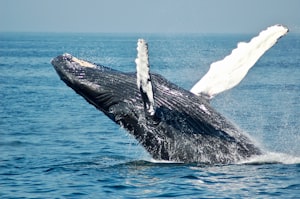
Across most humpback routes, the migration toward the breeding grounds tends to be brisk, with briefer sightings, while the return journey is widely considered the superior experience: mother-calf pairs travel slowly, rest in sheltered bays for days at a time, and display far more surface activity as calves gain strength. This is when breaching, tail slapping, spy-hopping, and playful interactions are most frequent — so it pays to learn which leg of the migration you'll be catching at your chosen destination.
Commercial whaling drove many humpback populations to the edge of extinction in the 20th century — some regional populations fell to a few hundred animals. Since the international moratorium on commercial whaling, most have rebounded dramatically; the eastern Australian population alone has recovered from fewer than 500 to well over 40,000. It is one of conservation's great success stories, and the reason whale watching is now so reliable in peak season at the world's best locations.
Species You Might Encounter
| Species | Primary Season | Best Locations | Signature Behaviours |
|---|---|---|---|
| 🐋 Humpback Whale | Year-round (by region) | Hawaii, Australia, Tonga, Iceland | Breaching, tail slapping, singing |
| Blue Whale | Varies by region | Sri Lanka, Azores, California, Mexico | Enormous blow, surface feeding, long dives |
| Gray Whale | Dec–April | Baja California, Mexico | Friendly close approaches in calving lagoons |
| Orca (Killer Whale) | Region-dependent | Norway, Iceland, Bremer Bay (Australia) | Cooperative hunting, pod coordination |
| Southern Right Whale | Jun–Oct | South Africa, Argentina, S. Australia | Close-to-shore resting, nursing calves |
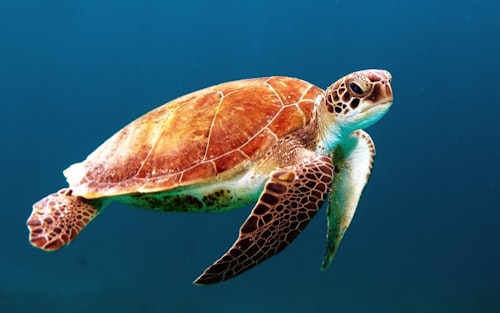
Beyond whales, most tours regularly encounter dolphins, sea turtles, seabirds, and — in tropical waters such as Western Australia's Ningaloo, the Philippines, and Mexico — whale sharks. Marine biologists and naturalists on board the better operators provide education and commentary throughout each trip.
📍 The World's Premier Whale Watching Destinations
Australia & the Pacific
Gold Coast, Australia
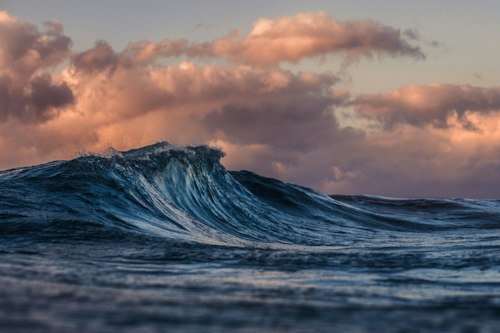
Around 35,000 humpbacks pass along Australia's east coast each year, and the Gold Coast's sheltered bay is one of the few places where they actively rest, socialise, and calve rather than simply passing through. Tours depart daily from Main Beach and Surfers Paradise through the season — and it's our home territory, so we know it well.
Hervey Bay, Australia
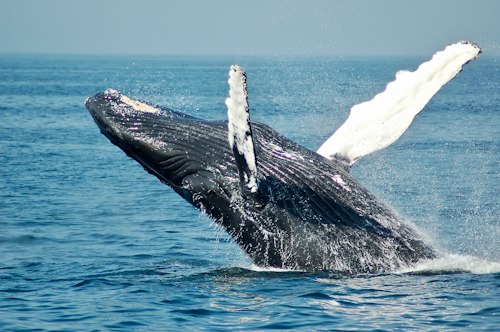
Widely regarded as one of the world's best places for close, extended humpback encounters. Sheltered between K'gari and the mainland, the bay is a natural rest stop where relaxed whales frequently approach vessels — a behaviour known as "mugging."
Maui, Hawaii
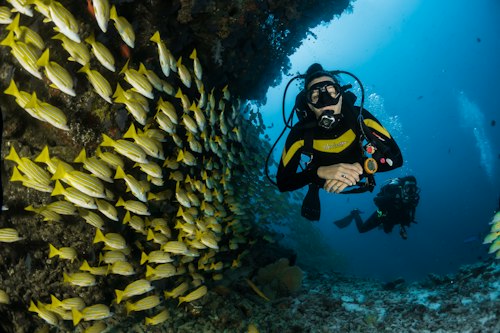
Thousands of North Pacific humpbacks gather in the warm, shallow channels around Maui each winter to breed and calve. The Au'au Channel is so reliable that whales are routinely visible from shore, and the underwater "song" of the males is famous worldwide.
Kaikōura, New Zealand
A deep ocean trench close to shore brings resident sperm whales — the largest toothed predators on Earth — within reach all year. Dusky dolphins, fur seals, and migrating humpbacks and orcas add to one of the Southern Hemisphere's most reliable marine encounters.
The Americas, Europe & Africa
Baja California, Mexico
In the calving lagoons of Baja California Sur — San Ignacio and Magdalena Bay — gray whales famously approach small boats and let people touch them, the only place on earth where this regularly happens. Nearby, the Sea of Cortez hosts blue whales, the largest animals ever to have lived.
Húsavík, Iceland
Iceland's "whale watching capital" on Skjálfandi Bay offers some of Europe's most reliable sightings — humpbacks, minkes, white-beaked dolphins, and the occasional blue whale, all against a backdrop of midnight-sun mountains.
Northern Norway
Each winter, orcas and humpbacks follow vast shoals of herring into the fjords around Tromsø and Skjervøy — a feeding spectacle watched under the Arctic twilight and, often, the northern lights. Among the most dramatic whale encounters anywhere.
Hermanus, South Africa
Hermanus, near Cape Town, is famous for some of the world's finest land-based whale watching — southern right whales calve so close to shore they can be watched from clifftop paths, announced by the town's traditional "whale crier."
🌊 Spotlight: Whale Watching on the Gold Coast
Whale watching isn't only for far-flung destinations — it might be on your doorstep, or part of a wider trip. The Gold Coast is Cooee Tours' home territory, so here's our local knowledge on one of Australia's most accessible whale-watching spots, as an example of how to read any whale destination.
Why the Gold Coast Is Exceptional for Whale Watching
Unlike most coastal locations where whales are simply passing through, the Gold Coast's open embayment provides shallow sandy-bottom waters and shelter from southeast winds — conditions humpbacks actively seek for resting, socialising, and calving. Local marine research has shown the bay acts as a nursery and social hub rather than just a migration corridor. It's a good lesson for any destination: look for sheltered bays and calving grounds, not just migration routes.
Main Beach Departures
Sea World Cruises Terminal, Mariners Cove. Purpose-built vessels with 3 viewing decks, marine naturalists, and underwater hydrophones. Multiple daily departures.
Surfers Paradise
Whales in Paradise boutique tours — fewer passengers, licensed bar, rail-side seating throughout. Small-group experience from the heart of Surfers Paradise.
Land-Based Viewing
Burleigh Head NP (Tumgun Lookout), Elephant Rock, Point Danger, and Coolangatta headland — free viewing spots during peak season.
Season Dates
The Gold Coast season runs from late May to late October, with the peak — and the slow, playful mother-calf pairs — from August to October.
Typical Costs
Half-day tours run about 2–2.5 hours, with prices broadly in line with other major whale-watching ports. Many operators offer a free return trip if no whales are seen — ask when you book.
Bonus Wildlife
Bottlenose dolphins, green sea turtles, seabirds, and occasional minke whales regularly spotted alongside humpbacks during tours.
📅 When to Visit — Regional Season Guide
Because the hemispheres run on opposite seasons, there is good whale watching somewhere in the world every month of the year. As a rule, the slower return migration with mother-calf pairs gives the most active, interactive viewing. Here is roughly when to go, region by region.
May – November (humpbacks)
Peak: Aug–Oct · NZ sperm whales year-roundDecember – April
Peak: Jan–Mar (humpbacks)December – April
Peak: Feb–Mar (gray whale calves)April – October
Peak: Jun–Aug (midnight sun)November – January
Orcas & humpbacks · Arctic lightJune – November
Peak: Aug–Oct (southern right calving)Book morning departures when possible — the sea is usually calmest before afternoon winds build, whales tend to be more active, and the light is best for photographing breaches and flukes. This holds true at almost every whale-watching destination in the world.
🎒 What to Bring & How to Prepare
Seasickness
Take medication 30–60 minutes before departure. Focus on the horizon if you feel unwell. Morning tours have calmer conditions — prefer them if you're sensitive to motion.
Sun Protection
SPF 50+, hat, and sunglasses. Open water amplifies UV. Reef-safe sunscreen preferred — you may be near marine environments.
Layers
Even on warm days, ocean breezes at speed are cold — and Arctic or Patagonian trips need serious warmth. Bring a windproof jacket and closed-toe shoes with grip.
Photography
Telephoto 200–400mm for distant breaches. Modern phone cameras are excellent. Bring extra batteries — a 2.5-hour session with whales generates more photos than you expect.
Families
Most operators are family-friendly with life jackets, safety briefings, and indoor cabins. Check minimum age requirements — typically 2–5 years.
Choose a Responsible Operator
Pick operators who keep their distance, carry a naturalist on board, and support marine research — look for accreditation such as the World Cetacean Alliance's "Whale Heritage" or local equivalents. Many also offer a free return trip if no whales appear.
🌊 Conservation: Why Responsible Whale Watching Matters
Many of the world's humpback populations have recovered from near-extinction — eastern Australia's alone rebuilt from fewer than 500 individuals to over 40,000 — one of conservation's most remarkable turnarounds. It reflects the end of commercial whaling, strong marine protection laws, and decades of research and public education that responsible whale watching directly supports.
Responsible whale watching helps conservation by giving whales economic value alive, funding marine research, and building public awareness of ocean health. Choose operators who follow recognised responsible-watching guidelines (such as the World Cetacean Alliance or regional codes of conduct) and who contribute to research.
Approach rules vary by country but follow a common pattern: keep a minimum distance (often around 100 metres, more for mothers with calves), never chase or surround whales, limit the number of boats near any animal, and let the whale set the terms if it approaches. Swimming with whales is tightly restricted and only permitted at a handful of licensed locations worldwide — always check local regulations before booking an in-water experience.
Whale Watching on Australia's East Coast?
Wherever in the world you plan to watch whales, choose responsibly and time it to the season. And if your travels bring you to South East Queensland, Cooee Tours can help you plan a Gold Coast whale watching day from late May to late October, with expert local guides.
Book a Whale Tour →