🇮🇸 Land of Fire & Ice · 63°N · 23 Hours from Brisbane

Fire. Ice.
Darkness. Light.
Iceland.

A country the size of Victoria sitting on the Mid-Atlantic Ridge where two tectonic plates pull apart at 2.5cm per year. Eleven percent of its surface is glacier. It has active volcanoes, 200 geothermal pools, the world’s oldest parliament, puffins by the million, and the aurora borealis overhead for six months of the year. This is a country that is being geologically created in real time.

103,000 km²
Area — Similar to Victoria
11%
Glacier Cover · Vatnajökull Largest
930 CE
Alþingi — World’s Oldest Parliament
Sep–Mar
Prime Aurora Borealis Window
100%
Electricity from Renewables
🇮🇸 Iceland
Land of Fire & Ice

Iceland — The North Atlantic
Island Where the Earth
Is Still Being Made

Iceland (population 370,000 — 103,000 km² — the 18th-largest island in the world and the second-largest island in Europe after Great Britain — positioned on the Mid-Atlantic Ridge where the North American and Eurasian tectonic plates diverge at 2.5cm per year, making Iceland one of the most geologically active landmasses on Earth) is the most extreme and most geologically honest landscape available to Australian travellers in the northern hemisphere. The country sits directly on the ridge between two plates and directly above a mantle hotspot — the geological double feature that produces its extraordinary density of volcanic and geothermal activity: 130 volcanic mountains, 200 geothermal pools, 10,000 waterfalls, and 11% ice cover (Vatnajökull — the largest glacier in Europe at 7,900 km² — containing within it the Grímsvötn and Bárðarbunga subglacial volcanoes — the most volatile glacier on Earth).

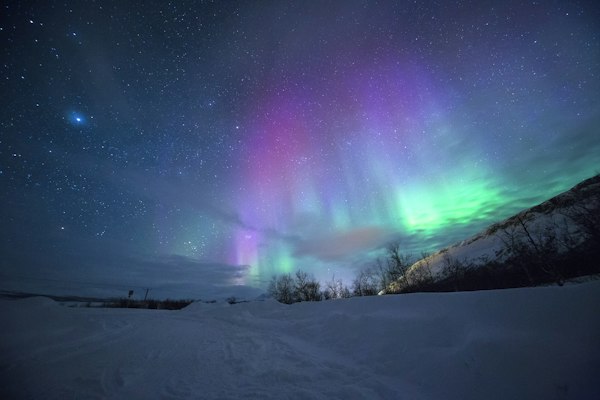
The country’s four defining experiences. The aurora borealis (the northern lights — visible on clear dark nights from September to March — the specific advantage Iceland has over Scandinavia is the density of rural dark sky landscapes accessible within 1 hour of Reykjavík — the aurora forecast at en.vedur.is provides real-time Kp index and cloud cover prediction — the typical Icelandic aurora hunt involves driving 30km from the city along the Reykjanes Peninsula or north toward Þingvellir and waiting in a layered silence punctuated by the car’s heater until the sky moves). The Golden Circle (the 300km tourist circuit from Reykjavík — Þingvellir National Park (UNESCO World Heritage — the rift valley where the North American and Eurasian plates are visibly pulling apart — the original outdoor parliament site of the Alþingi, 930 CE — the world’s oldest parliament), Geysir (the original geyser — the word “geyser” derives from the Old Norse “geysa,” to gush — the Strokkur geyser erupts every 5–10 minutes to 15–40 metres), and Gullfoss (the “Golden Falls” — the two-tiered, 32-metre cascade on the Hvítá River — the waterfall that saved itself — threatened with hydroelectric development in the 1920s by a foreign investor, the farmer’s daughter Sigríður Tómasdóttir walked barefoot to Reykjavík repeatedly to petition for its protection and threatened to throw herself into the falls if the development proceeded — the project was eventually abandoned and the falls are now part of the national park)). The glaciers and South Coast (the Ring Road’s South Coast — Seljalandsfoss (you can walk behind it), Skógafoss, the black sand beach at Reynisfjara with its hexagonal basalt columns and the Reynisdrangar sea stacks, Jökulsárlón glacier lagoon (the iceberg flotilla — the icebergs calved from Breiðamerkurjökull glacier drifting through the lagoon to Diamond Beach where they wash ashore on black volcanic sand), and Vatnajökull glacier hike). The midnight sun and highland F-roads (June–July — 24 hours of daylight — the interior highland F-roads (4WD required — open June–September) leading to Landmannalaugar (the rhyolite mountain landscape of pink, green, and yellow volcanic rock) and Þórsmörk (the mountain valley between three glaciers)).

✅ Iceland Practical Essentials
  • Visa: Australian passport holders do not require a visa to visit Iceland for up to 90 days. Iceland is a Schengen Area member (despite not being an EU member — it is in the EEA). No ETA or pre-registration required for Australians.
  • Currency: Icelandic Króna (ISK) — approximately ISK 215 = AUD$1. Iceland is expensive: a restaurant meal ISK 3,000–6,000 (AUD$14–28), a pint of beer ISK 1,500–2,200 (AUD$7–10), a petrol station hot dog (the Icelanders’ national snack — a lamb-pork-beef mix with raw and crispy fried onion, ketchup, mustard, and remoulade — available at Bæjarins Beztu Pylsur in Reykjavík since 1937) ISK 600 (AUD$2.80 — the best food value in the country). Credit cards accepted absolutely everywhere, including sheep farms on remote roads. There are almost no cash transactions in Iceland.
  • Driving: Iceland drives on the right. The Ring Road (Route 1) circles the entire country in 1,332km. F-roads (the gravel highland tracks prefixed “F” on the map) require a 4WD vehicle with high clearance — driving a standard hire car on an F-road voids the insurance entirely and risks a rescue bill of ISK 500,000–2,000,000 (AUD$2,300–9,300). Road conditions at road.is — check before every highland drive. Do not leave the road to drive on the moss — Icelandic moss grows at 1mm per year and vehicle tracks are visible for decades. Fines for driving off designated roads are ISK 50,000–500,000.
  • Weather: Icelandic weather changes in 20 minutes. The Icelandic Meteorological Office (en.vedur.is) provides hourly forecasts, aurora Kp index predictions, and storm warnings (the colour-coded alert system — yellow, orange, red — Red means do not travel; this is not a suggestion). Wind is the primary hazard: hurricane-force gusts (above 60m/s) are recorded at highland areas multiple times per year and can lift car doors off their hinges — always hold the door handle when opening in highland conditions.
  • Safety at waterfalls and coastline: Sneaker waves (sleeper waves — large waves that arrive without the preceding swells that normally signal danger) kill approximately 2 visitors per year at Reynisfjara black sand beach. The warning signs at the beach are real. Never turn your back on the ocean at Reynisfjara. The basalt column ledge at the back of the beach is the correct position if a wave is coming.
Six Key Destinations

Iceland from Reykjavík to Vatnajökull

Iceland’s Ring Road circles a country most visitors experience only in fragments. Here are the six zones that reward the most time.
Reykjavik Iceland Hallgrimskirkja church colourful houses aurora
Reykjavík
🏛 Capital · 370,000 people · Base City

Reykjavík (population 130,000 city, 370,000 metro — the northernmost capital city in the world at 64°N — settled by Norse chieftain Ingólfr Arnarson c.874 CE — the name means “Bay of Smokes” from the steam rising from the geothermal springs Arnarson observed on first landing) is the world’s most northerly capital city and the smallest capital city in Europe, functioning simultaneously as a city of genuine cultural weight (the per capita book publishing rate is the highest in the world — 1 in 10 Icelanders will publish a book in their lifetime) and as the world’s most convenient base for one of the most geologically extreme landscapes on Earth. Hallgrímskirkja (the 74.5-metre Lutheran church whose concrete expressionist silhouette dominates the Reykjavík skyline — designed by Guðjón Samúelsson in 1937, construction completed 1986 — the form inspired by the columnar basalt formations of the Icelandic landscape (the same hexagonal geometry as the Giant’s Causeway, but used as architectural grammar) — the viewing platform at the top of the tower provides the finest 360-degree view of Reykjavík and the surrounding bay). The Harpa Concert Hall (the hexagonal glass facade designed by Henning Larsen and Olafur Eliasson — completed 2011 — the interior panels catch and reflect the changing Arctic light across the harbour, appearing different at every hour — the building is as much a light installation as a concert hall). The hot dog at Bæjarins Beztu Pylsur (the kiosk on Tryggvagata — operating since 1937 — Bill Clinton ordered one in 2004 and the photograph hangs inside — the correct order is “eina með öllu” — one with everything — raw onion, crispy fried onion, ketchup, mustard, and remoulade on a steamed lamb-pork-beef sausage — ISK 600 — the most value-dense food experience in Iceland). The Reykjavík nightlife (the most concentrated bar scene per capita of any city in Europe — Laugavegur Street, the main artery — the bars do not fill until midnight and function as social clubs until 5am — the Icelanders’ relationship with winter darkness and communal warmth produces a specific sociability that has no equivalent in cities at lower latitudes).

  • Hallgrímskirkja tower — basalt-inspired concrete, 74.5m · best city panorama
  • Harpa Concert Hall — Eliasson hexagonal glass · sunrise reflections on the harbour
  • Hot dog at Bæjarins Beztu — since 1937 · “eina með öllu” · AUD$2.80
  • Laugavegur bars — midnight to 5am · highest bar density per capita in Europe
  • National Museum of Iceland — Viking Age artefacts · free for children
Golden Circle Iceland Þingvellir tectonic plates Geysir Gullfoss
The Golden Circle
🪖 Þingvellir · Geysir · Gullfoss · 300km Circuit

The Golden Circle (the 300km triangular route from Reykjavík through Þingvellir, Geysir, and Gullfoss and back — completable in a single long day (9am–9pm in summer) or spread across two days for greater depth) contains three of Iceland’s most significant sites. Þingvellir National Park (UNESCO World Heritage Site — the rift valley where the North American and Eurasian tectonic plates are pulling apart — the Almannagjá rift (the “All Men’s Gorge” — a 5-metre-wide, 40-metre-deep cleft in the lava field that is the visible eastern edge of the North American plate — walking through the gorge means walking on the American continent) — the Law Rock (Lögberg — the flat-topped basalt prominence from which the Lawspeaker of the Alþingi recited the law from memory every year from 930 CE — the world’s oldest parliament, not in a building but in a natural outdoor amphitheatre of volcanic rock — the acoustics of the rift valley meant that the recited law could be heard across the assembly plain without amplification — a 10-minute walk from the visitor centre, and perhaps the most genuinely important patch of flat ground in European democratic history). Silfra fissure (the crack between the plates filled with glacially filtered groundwater — visibility 100+ metres — the most transparent freshwater on Earth — snorkelling or diving in Silfra means being in the gap between two continents in water 2–4°C). Geysir (the original geyser, from whose name all geysers derive — the Great Geysir itself is dormant after seismic activity in 2000 reactivated and then stilled it — Strokkur, 50m south, erupts every 5–10 minutes to 15–40m — the guide explains that watching Strokkur from the correct angle — with the sun behind you — produces the internal iridescent turquoise bubble of superheated water expanding before the eruption). Gullfoss (the 32-metre two-tiered waterfall on the Hvítá River — the history of Sigríður Tómasdóttir’s campaign explained — the viewing platform above the upper falls, the walkway to the lower viewing point where the spray drenches you within 30 seconds in wind).

  • Þingvellir — walk through the Almannagjá rift on the North American plate
  • Silfra fissure — 2–4°C · 100m+ visibility · snorkel between continents
  • Strokkur geyser — erupts every 5–10 min · watch from upwind
  • Gullfoss — 32m cascade · Sigríður Tómasdóttir saved it from hydroelectric
  • Secret Lagoon, Flúðir — 40-min south of Geysir · oldest public pool in Iceland
Iceland south coast Seljalandsfoss Skogafoss Reynisfjara black sand
The South Coast
🌊 Waterfalls · Black Sand · Jökulsárlón

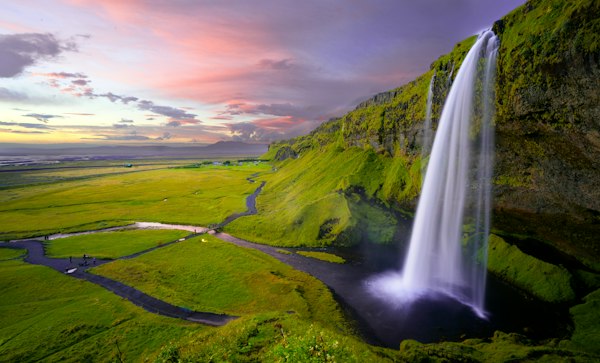
Iceland’s South Coast (the Ring Road south from Reykjavík to the Vatnajökull glacier — approximately 370km — the most concentrated stretch of Iceland’s major natural landmarks accessible from a single road without a 4WD) delivers more photographic and experiential material per kilometre than any comparable route in Iceland. Seljalandsfoss (the 60-metre waterfall where a path leads behind the curtain of falling water — the narrow ledge requires waterproof clothing and a head torch in poor light — the view from behind the curtain — the light filtering through the falling water — is one of Iceland’s most unusual perspectives). Skógafoss (the 60-metre, 25-metre-wide waterfall at Skógar — a double rainbow in the mist on sunny afternoons is routine — the staircase of 527 steps to the cliff top leads to the Fimmvörðuháls trail, the multi-day hiking route connecting Skógar to Þórsmörk through the lava field produced by the 2010 Eyjafjallajökull eruption — the still-steaming black lava field on the ridge, the most visibly recent geological surface on the South Coast). Reynisfjara (the black basalt sand beach at Vík — the Reynisdrangar sea stacks (three basalt columns rising from the surf — in Icelandic folklore, trolls turned to stone at sunrise while dragging ships ashore) — the hexagonal basalt columns of the Garðar cliff face — and the sneaker wave warning signs that are genuine and must be heeded). Jökulsárlón glacier lagoon (the glacial lake at the terminus of Breiðamerkurjökull, an outlet glacier of Vatnajökull — the icebergs calved from the glacier face drifting through the lagoon — blue, white, and occasionally black from volcanic ash layers — the seal population on the ice floes — the short river channel to the ocean where the icebergs wash onto Diamond Beach — the black volcanic sand beach strewn with translucent ice fragments like scattered glass — the most photographed beach in Iceland). Vatnajökull glacier hike (the glacier tongue accessible from the car park at Skaftafell — crampons provided — the blue ice cave beneath the glacier, accessible October–March when the ice is stable).

  • Seljalandsfoss — walk behind the waterfall · waterproof clothing essential
  • Reynisfjara — black sand, sea stacks · never turn back on ocean
  • Jökulsárlón — iceberg lagoon · seals on floes · Diamond Beach
  • Vatnajökull glacier hike — crampons on ice · blue ice caves Oct–Mar
  • Skógafoss 527 steps — leads to the 2010 Eyjafjallajökull lava field
Snæfellsnes Peninsula Iceland glacier volcano Kirkjufell mountain
Snæfellsnes Peninsula & the West
⛰ Glacier Volcano · Kirkjufell · Jules Verne

The Snæfellsnes Peninsula (a 90km-long peninsula extending into the North Atlantic from the western fjords — 3 hours from Reykjavík — sometimes called “Iceland in miniature” because it contains glaciers, volcanic craters, lava fields, black sand beaches, fishing villages, bird cliffs, and mountain scenery within a single 90km drive) is Iceland’s most compact and most mythologically charged landscape. Snæfellsjökull (the glacier-topped stratovolcano at the peninsula’s tip — 1,446 metres — Jules Verne’s Journey to the Centre of the Earth (1864) uses Snæfellsjökull’s crater as the entrance to the interior — the mountain is a National Park in itself — the glacier is retreating: it has lost 25% of its volume since 1996 and glaciologists predict it will have largely disappeared by 2050). Kirkjufell (the 463-metre arrowhead-shaped mountain at Grundarfjörður — the mountain used as the “Arrowhead Mountain” in Game of Thrones Season 7 — the Kirkjufellsfoss waterfall in the foreground provides the compositional anchor for the most replicated Iceland landscape photograph — the best time for photography is autumn, when the aurora frames the mountain from the north, or winter when snow covers the summit). The Djúpalónssandur black pebble beach at the base of Snæfellsjökull (the lifting stones used by fishermen to test their strength — four stones of 23, 54, 100, and 154kg — “Fullsterkur” (fully strong) required lifting the heaviest stone onto a ledge — only those who could lift the 100kg or 154kg stone were considered strong enough to work on the fishing boats). The Lóndrangar basalt pinnacles. The Arnarstapi sea arch.

  • Snæfellsjökull — Jules Verne’s descent entrance · glacier retreating since 1996
  • Kirkjufell — Game of Thrones “Arrowhead Mountain” · aurora framing in winter
  • Djúpalónssandur — lifting stones · 23, 54, 100, 154kg test weights
  • Arnarstapi — sea arch · Arctic tern colony · best puffin beach on the peninsula
  • Stykkishólmur — the colourful fishing village · ferry to the Westfjords
Westfjords Iceland Látrabjarg puffins cliffs remote fjord
The Westfjords
🌊 Most Remote · Puffins · Dynjandi Waterfall

The Westfjords (Vestfirðir — the large peninsula in the extreme northwest of Iceland — the most remote and least visited region of Iceland — 950km of fjord coastline — accessible by road via the 1.9km-high Ísafjarðardjúp fjord crossing or by flight (45 minutes from Reykjavík to Ísafjörður — the world’s shortest regular commercial runway at 1,250m, the approach between vertical cliff faces requiring one of the steepest civilian landing angles in commercial aviation — not for the nervous)) contains the experiences that repeat visitors to Iceland cite as their finest: the complete absence of other tourists, the scale of the unmodified landscape, and the wildlife at Látrabjarg. Látrabjarg (the 14km-long, 440-metre-high sea cliff at the Westfjords’ far western tip — the westernmost point of Europe — home to 10 million nesting seabirds including razorbills, guillemots, fulmars, and the largest puffin colony in Iceland — approximately 1 million Atlantic puffins (Fratercula arctica) nesting in burrows at the cliff’s top — the puffins are remarkably unafraid of humans and will approach to within 30cm on the cliff path — the most reliably close wild puffin encounter available anywhere in the world — the correct season is June–August when the birds are present before their late August departure for the open Atlantic). Dynjandi (the “Thundering One” — the largest waterfall in the Westfjords — a 100-metre, 30-metre-wide fan-shaped cascade that broadens from 7 metres at the top to 30 metres at the base, with six smaller falls below it — accessible via a 10-minute walk from the car park — the most photogenic single waterfall in Iceland by the assessment of most Icelandic photographers). Reykjarfjörður geothermal hot pots (the collection of unofficial outdoor hot pools accessible to any visitor — ISK 0 — the geothermal water emerging from the hillside at 40–45°C, collected in stone basins above the fjord — the correct Westfjords experience is sitting in 42°C water watching the Arctic light change colour on the fjord opposite, with no other visitors in sight).

  • Látrabjarg — 1 million puffins · Jun–Aug · approach within 30cm
  • Dynjandi — fan-shaped 100m waterfall · 10-min walk · no crowds
  • Reykjarfjörður hot pots — free geothermal pools · Arctic light on the fjord
  • Ísafjörður — tiny town, kayaking the fjords · ski in April
  • Best combined with Snæfellsnes via the Stykkishólmur ferry
Iceland Landmannalaugar highlands F-roads rhyolite volcanic interior
The Highlands & Interior
⛰ F-Roads · 4WD Only · Jun–Sep

The Icelandic interior (the central highland plateau — accessible only via F-roads requiring a high-clearance 4WD vehicle — the roads open approximately June to September depending on snow conditions — road.is provides daily road status updates) is the most remote and most geologically extreme landscape accessible to a visitor in Iceland without a snowcat or aircraft. Landmannalaugar (the highland valley at 590m altitude in the Fjallabak Nature Reserve — the rhyolite mountain landscape of pink, red, purple, green, and yellow volcanic rock (rhyolite — a silica-rich volcanic rock produced by slow-cooling acidic lava — the oxidation of different minerals produces the colour range) — a natural geothermal pool at the base of a lava field where the river emerges at 38–40°C — the starting point of the Laugavegur Trail (the 55km, 4-day hiking route connecting Landmannalaugar to Þórsmörk — the most celebrated multi-day walk in Iceland — the route crosses two glaciers (on snow bridges), the obsidian lava field of Hrafntinnusker, the red and yellow rhyolite mountains of Brennisteinsalda, the green valley of Álftavatn, and the sand desert of Emstrur before descending into the birch woodland of Þórsmörk — mountain huts at each stage, bookable at fi.is — sell out months ahead for July and August)). Askja (the remote caldera in the northeast interior — accessed via the Sprengisandur F-road through the central desert — the Víti crater lake (“Hell” — the acid-blue, 22°C geothermal lake in the caldera — swimmable in summer) — the Öskjuvatn caldera lake (the second deepest lake in Iceland — 217m — formed during the 1875 Askja eruption that deposited ash across Iceland and prompted mass emigration to North America)). Mývatn (the lake in the northeast whose surrounding landscape is Iceland’s most concentrated geothermal display outside Þingvellir: the Námaskarð sulphurous fumarole field, the Krafla volcano (last erupted 1984), the Dimmuborgir lava castle formations, and the Mývatn Nature Baths — the geothermal bathing pool often described as the quieter, less expensive, equally beautiful alternative to the Blue Lagoon).

  • Landmannalaugar — rhyolite mountains · geothermal pool · Laugavegur trailhead
  • Laugavegur Trail — 55km, 4 days · book mountain huts at fi.is months ahead
  • Askja caldera — Víti crater lake (swim!) · 1875 eruption · remote F-road access
  • Mývatn Nature Baths — quieter Blue Lagoon alternative · Krafla volcano nearby
  • F-roads open Jun–Sep · 4WD essential · check road.is before departing
💡 INSIDER TIP — The Icelandair Free Stopover Programme

Icelandair operates a unique free stopover programme: if you are flying between Europe and North America (or vice versa) on Icelandair, you can add a stopover of up to 7 nights in Iceland at no additional airfare cost. For Australian travellers routing London–New York or Amsterdam–Boston (common Australia–USA combinations), this means Iceland can be added to a USA or European trip without paying a separate return fare to Reykjavík. The caveat: Icelandair’s Australia–Iceland routing requires connecting in London or Amsterdam, so this works best when combined with a UK/Europe leg. The stopover programme is available at icelandair.com when booking. The 7-night stopover aligns exactly with the minimum time needed to do the Golden Circle, South Coast, Snæfellsnes, and at least two aurora nights — the minimum viable Iceland itinerary.

The Northern Lights

How to See the Aurora Borealis in Iceland

The aurora is not a scheduled event. It is a geomagnetic phenomenon that requires darkness, clear skies, and solar activity. Here is what actually determines whether you see it.

🌟
The Science: What Causes the Aurora

The aurora borealis (named by Pierre Gassendi in 1621 after Aurora, the Roman goddess of dawn, and Boreas, the Greek god of the north wind) is produced when solar wind particles — charged protons and electrons expelled from the sun — are guided by Earth’s magnetic field into the polar regions where they excite atoms in the upper atmosphere. Green light (the most common colour, produced by oxygen atoms at 100–150km altitude). Red (oxygen at higher altitudes, above 200km — rarer, appears at the aurora’s highest extent). Blue and purple (nitrogen molecules, typically at lower altitudes — visible in the strongest displays). The Kp index (the planetary K-index, measured 0–9 — Kp3 produces aurora visible only at high latitudes; Kp5 is a minor geomagnetic storm visible across Iceland; Kp7 produces the full-sky displays with visible motion that appear in photographs — occurs 4–6 times per month during active periods). Real-time Kp forecast at en.vedur.is (the Icelandic Meteorological Office aurora forecast — updated every 3 hours, showing cloud cover prediction alongside the Kp forecast — the single most useful website for any Iceland aurora hunt).

The Practical: How to Actually See It

Season: September to March provides the darkness required — Iceland has no true astronomical darkness in May, June, and July (the midnight sun prevents aurora viewing entirely). The equinox months (September–October and February–March) statistically produce the strongest geomagnetic activity. Clear sky: Cloud cover is the most frequent cause of aurora non-sightings — en.vedur.is provides cloud cover maps updated every 3 hours. The correct aurora strategy is not to stay in Reykjavík and look north — it is to drive toward the clearest sky on the forecast map, even if that means driving 2 hours. Darkness: Light pollution from Reykjavík significantly reduces aurora visibility. Drive a minimum of 30km from the city — the Reykjanes Peninsula coast road, Þingvellir, or the road to Þórsmörk all provide genuine dark sky. Photography: Manual mode, ISO 800–3200, f/2.8 or wider, 10–25 second exposure. A tripod is non-negotiable. The phone camera’s night mode approximates this — but a DSLR or mirrorless camera captures the colour the eye often cannot at Kp3–4 levels (the aurora appears as a white-green glow to the naked eye until Kp5, when the colour and motion become clearly visible). Patience: The aurora is not a continuous display. It pulses, sometimes appearing for 20 seconds, sometimes for 40 minutes. The most spectacular moments — the substorm (the rapid brightening and motion that produces the curtain effect) — typically last 2–5 minutes and then subside. Stay outside for at least 90 minutes once Kp3+ is confirmed on the forecast.

The Country That Exists at the Edge of What’s Possible

Iceland sits at the convergence of extremes that should logically cancel each other out: the darkness of winter that makes the aurora possible, the light of summer that makes it impossible and the hiking extraordinary. The cold that preserves the glacier ice and the heat that produces the geothermal pools you float in while it snows. The geology that builds new land at Diamond Beach and destroys old land at every eruption. The population small enough to know everyone in the capital and confident enough to have produced some of the world’s finest contemporary literature, music, and visual art from that smallness.

“Iceland is the only country where you can stand in a geothermal pool at 40°C watching snow fall, a glacier on the hill above you, the Northern Lights beginning to move overhead, and genuinely not know which photograph to take first.”

The Icelanders have a concept called þetta reddast (“it will work out”) — a foundational cultural attitude toward the unpredictability of weather, geography, and circumstance that is the direct product of living on a volcano in the North Atlantic. It is not complacency. It is the philosophical position of people who have built a culture on a landmass that can erupt, flood, or freeze without notice. Visitors who arrive in Iceland with a fixed itinerary and an unwillingness to change it encounter the country’s weather as an obstacle. Visitors who arrive with flexibility and the willingness to drive toward clear sky at midnight encounter it as a gift.

9 Curated Experiences

Iceland Tours from Brisbane

From a 3-night aurora hunt to the full Ring Road circuit — all designed around Iceland’s seasonal requirements.

🌟 Northern Lights · Winter
Aurora Borealis Intensive — 4-Night Hunt
⏱ 4 nights from Reykjavík★ 5.0(2,450 reviews)

The dedicated aurora hunt — designed for visitors whose primary reason for coming to Iceland is the Northern Lights and who want to maximise their aurora probability across 4 nights. The itinerary is weather-adaptive: the guide monitors en.vedur.is every 3 hours and adjusts the nightly departure direction based on the cloud cover forecast map — the critical variable is not the Kp index but the gap in the cloud cover, which requires a different direction every night. Night 1: Þingvellir direction (the rift valley at 35km from Reykjavík — dark sky, flat terrain, the reflective lake surface doubling the aurora display if clear). Night 2: Snæfellsnes direction if the western cloud pattern is clearer. Night 3: Reykjanes Peninsula lava field (the most reliably clear sky in the Reykjavik area — the ocean proximity reduces cloud retention). Night 4: anywhere the forecast shows Kp4+ and sky 50%+ clear. The daytime programme fills the aurora waiting with Golden Circle circuit (Þingvellir on foot — the Almannagjá rift, the Silfra fissure snorkel — Strokkur — Gullfoss), the Blue Lagoon (pre-booked — the 38–40°C silica-rich geothermal water in a lava field 40km from Reykjavík — the steam in cold air), and Reykjavík city (Hallgrímskirkja, Harpa, the hot dog). The guide carries a Kp alert app and wakes guests at 2am when a substorm is predicted — this is the service that separates the dedicated aurora tour from the self-drive hope.

Includes
Reykjavík hotel 4 nightsWeather-adaptive aurora huntGolden Circle guided dayBlue Lagoon pre-bookedKp alert wake service
🪖 Golden Circle · South Coast
Golden Circle & South Coast Highlights
⏱ 2 days from Reykjavík★ 4.9(3,780 reviews)

The 2-day circuit covering Iceland’s two most visited route — the Golden Circle (Þingvellir, Geysir, Gullfoss) and the South Coast (Seljalandsfoss, Skógafoss, Reynisfjara, Jökulsárlón) — the minimum viable Iceland trip for a first-time visitor arriving from London on an Icelandair stopover. Day 1: Þingvellir (the Almannagjá rift walk — the guide explains the tectonic context and the Alþingi history at the Law Rock — the geologically most significant 45 minutes in Iceland) — Geysir (Strokkur from the correct angle: upwind, with the sun behind you — the turquoise bubble visible 3 seconds before the eruption — the guide predicts the eruption timing from the 60-second settling pattern) — Gullfoss (the upper and lower viewing platforms — the spray) — optional Silfra snorkel (2–4°C, drysuit provided — the most transparent freshwater on Earth). Overnight Selfoss or the Golden Circle area. Day 2: Seljalandsfoss (behind the waterfall — arrive early before the tour buses), Skógafoss (the 527 steps, the rainbow), Reynisfjara (the sneaker wave briefing — not optional — the basalt columns, the sea stacks, the black sand), Jökulsárlón glacier lagoon (the iceberg boat tour — the seal count from the boat — Diamond Beach), Vatnajökull glacier walk (1-hour guided walk with crampons on the glacier tongue). Return Reykjavík by 8pm.

Includes
Hotel 1 night (Selfoss area)Golden Circle guided full daySouth Coast guided full dayJökulsárlón boat tourGlacier walk with crampons
🌊 Vatnajökull · Ice Caves
Glacier Hike & Blue Ice Cave — Vatnajökull
⏱ Full day from Skaftafell★ 5.0(1,890 reviews)

Vatnajökull glacier (8,100 km² — the largest glacier in Europe and the third largest outside the polar regions — covering approximately 8% of Iceland’s total area — the glacier surface sits at 1,100–2,109m (the summit of Hvannadalshnjúkur, Iceland’s highest peak)) is accessible to visitors at sea level via its outlet glaciers — the glacier tongues that extend from the main icecap toward the coast. The glacier hike (Falljökull or Svínafellsjökull outlet glaciers — both accessible from Skaftafell within the Vatnajökull National Park — crampons, ice axe, and helmet provided — the 3–4 hour guided walk across the glacier surface — the guide explains the crevasse formation (the lateral stress fractures where the glacier bends over subglacial ridges — the crevasses are typically 10–40m deep and must be crossed only on snow bridges confirmed stable by probing — the guide leads on all crossings) — the blue ice exposed at depth (the ice that has been compressed for hundreds of years, all air bubbles forced out, the density causing light to travel through it differently — absorbing the red end of the spectrum and transmitting only blue)). The blue ice cave (accessible October–March when the cave entrance is stable — the cave forms annually when meltwater carves through the glacier body and refreezes — the interior of the cave: the walls are the blue of deep glacial ice — the compressed centuries visible in the bubble-free clarity — the light entering through the translucent ice ceiling from above — one of the most otherworldly interior spaces accessible in Iceland — the cave configuration changes year to year as the glacier moves 70–100cm per day). Note: ice caves are not accessible in summer — they collapse in the melt season. The October–March window is the only time this experience exists.

Includes
Transport from Reykjavík or SkaftafellCrampons, ice axe, helmetGlacier surface hike (3–4hrs)Blue ice cave (Oct–Mar)Certified glacier guide
🚗 Ring Road · Full Circuit
Iceland Ring Road Full Circuit — 8 Days
⏱ 8 days self-drive★ 4.9(1,340 reviews)

The Ring Road (Route 1 — 1,332km — circling the entire perimeter of Iceland) is the most complete single road trip available in the country — and the one that delivers the full range of Iceland’s landscape variety: the volcanic South Coast, the glacier tongues reaching the coastal plain, the black sand fjord coastline of the East, the geothermal intensity of the Northeast, and the mountain-and-lava emptiness of the North. 8 days is the minimum viable circuit — the guide advises 10–12 for those with more time. The package includes a pre-booked 4WD hire car (a mid-size SUV, the correct vehicle for the Ring Road — not required for the sealed Ring Road itself but necessary for any F-road extension), all 7 nights accommodation (a mix of guesthouses and small hotels pre-booked along the route), and a detailed route brief that includes the specific stops on each segment, the exact times of day for best photography at each location (Reynisfjara — late afternoon west light; Jökulsárlón — golden hour; Goðafoss — morning; Mývatn — sunset from Námaskarð), and the off-Ring-Road extensions worth the detour (the Eastfjords, the Kjölur highland road if the weather allows). The aurora monitoring and wake service is included September–November (the peak aurora months that overlap with the best South Coast driving weather). The guide’s pre-departure briefing covers: F-road rules, the weather colour code, river crossing protocol, glacier safety, and the specific wildlife the route passes (Arctic fox, reindeer in the East, puffin colonies at Dyrhólaey May–August, seals at Jökulsárlón).

Includes
4WD hire car 8 days7 nights accommodation along routeDetailed route brief & stops guideAurora alert service (Sep–Nov)F-road safety briefing
🌊 Snæfellsnes · Westfjords
Snæfellsnes Peninsula & Westfjords
⏱ 6 days from Reykjavík★ 5.0(890 reviews)

The western Iceland circuit — Snæfellsnes Peninsula combined with the Westfjords via the Stykkishólmur ferry — the most dramatic landscape combination in Iceland that the majority of visitors never reach. The Snæfellsnes circuit (2 nights based in Grundarfjörður or Stykkishólmur — Kirkjufell at dawn and dusk for the aurora framing (September–March), the Djúpalónssandur lifting stones, the Snæfellsjökull glacier hike (the mountain accessible in summer by 4WD to 700m, then on foot to the glacier edge — the most committed single-day walk on the peninsula), the Arnarstapi sea arch and puffin colony (May–August), the Ytri-Tunga natural beach with Atlantic grey seal colony (present year-round)). Ferry to the Westfjords (the Baldur ferry from Stykkishólmur to Brjánslækur — 2.5 hours across the Breiðafjörður bay — the Breiðafjörður is one of Iceland’s most biodiverse marine areas: white-tailed eagles, sea otters, Arctic terns, puffins, and grey seals visible from the ferry deck). Westfjords (3 nights based in Ísafjörður — Látrabjarg puffin cliff (the 1-million-bird colony — June–August — 3-hour drive from Ísafjörður on partly gravel road) — Dynjandi waterfall (the fan-shaped 100m cascade — 10-minute walk — the most satisfying single waterfall in Iceland by volume-to-access ratio) — Reykjarfjörður free geothermal hot pots (no facilities, no entry fee, no other visitors — the definitive Westfjords moment)). Return to Reykjavík via Route 60 or by the Westfjords domestic airport (45-minute flight, Isavia operates Ísafjörður–Reykjavík daily).

Includes
Reykjavík hotel 1 nightSnæfellsnes 2 nightsBaldur ferry (Breiðafjörður crossing)Westfjords 3 nightsLátrabjarg puffin cliff guided
⛰ Highland · Laugavegur
Laugavegur Trail — 4-Day Guided Trek
⏱ 4 days · Jun–Sep only★ 5.0(720 reviews)

The Laugavegur Trail (55km — from Landmannalaugar to Þórsmörk — the most celebrated multi-day walk in Iceland and one of the finest in Europe) is the walk that converts hill-walkers into Iceland addicts. The landscape it passes through in 4 days covers more geological variety than most hiking trails cover in 200km: the rhyolite mountains of Landmannalaugar (the starting-point geothermal pool, the pink and yellow and green rock), the obsidian lava field of Hrafntinnusker (the volcanic glass strewn across the highland plateau — black, mirror-smooth, sharp enough to cut — the most otherworldly surface underfoot in Iceland), the glacial plateau at 1,100m (the 360-degree highland panorama — no road, no building, no human structure in any direction — the guide identifies the glaciers), the teal-blue Álftavatn lake in the valley below, the black desert crossing at Emstrur (the Icelandic desert — the dark volcanic sand of the interior — a landscape that looks like the Moon with weather), and the final descent through Þórsmörk’s birch woodland — the first trees after 4 days without them. Mountain huts at each stage (pre-booked at fi.is — sleeping bags provided, dinner and breakfast at the huts — the guide carries group emergency equipment). Grade 3–4 — sustained uphill sections up to 400m — river crossings (thigh-deep in wet years — gaiters essential). The trail is open June–September. The F-road vehicle access to Landmannalaugar operates June–October depending on snow, but the trail itself may retain snow until mid-June in high-snow years — the guide assesses current conditions before departure.

Includes
F-road transport to Landmannalaugar4 nights mountain hutsHut dinners & breakfastsCertified mountain guideEmergency equipment
♨ Blue Lagoon · Geothermal
Blue Lagoon & Reykjanes Geothermal Tour
⏱ Full day from Reykjavík★ 4.8(4,230 reviews)

The Blue Lagoon (Bláa Lónið — on the Reykjanes Peninsula, 40km southwest of Reykjavík — a geothermal spa in a lava field whose turquoise water is a by-product of the Svartsengi geothermal power plant — the water (seawater heated by geothermal energy to 38–40°C, rich in silica, algae, and minerals) flows into the lava field at a rate that completely renews the pool every 40 hours — the silica-white colour of the water produced by microsilica in suspension, the same process that makes the Milky Lakes of New Zealand) is Iceland’s most visited attraction and the most photographically reproducible experience in the country. The correct approach: book in advance (the Blue Lagoon operates timed entry, sold out weeks ahead in summer — book at bluelagoon.com — the Comfort Package (ISK 14,990 — approximately AUD$70 — includes entrance, silica mud mask, and towel) is the base level; the Retreat Spa Package upgrades to floating private lagoon access with butler service). The Reykjanes Peninsula geothermal circuit (the tour extends beyond the Blue Lagoon to the broader Reykjanes UNESCO Geopark — the Gunnuhver mud pools (Iceland’s largest geothermal mud pool — the boiling grey mud churning at the surface — the steam visible from 2km), the Reykjanesviti lighthouse on the cliffs above the sea stack of Valahnúkamöl — the Bridge Between Continents (the footbridge spanning the Leif the Lucky Bridge fault line — the Mid-Atlantic Ridge’s surface expression — walking from one side of the bridge to the other means stepping from the North American plate to the Eurasian plate — a 10-minute stop that provides the geopolitically most specific walk available to any person on Earth)).

Includes
Blue Lagoon Comfort entry (pre-booked)Silica mud mask & towelGunnuhver mud poolsBridge Between ContinentsReykjavík hotel transfers
☀ Midnight Sun · Jun–Jul
Midnight Sun & Highland Interior — Summer
⏱ 5 days · Jun–Jul★ 4.9(680 reviews)

The midnight sun (June 21st — the summer solstice — the sun never sets in Iceland — it passes below the horizon briefly around midnight in Reykjavík but remains light throughout — above the Arctic Circle at Grímsey Island, it does not set at all for 3 days around the solstice) transforms Iceland into a landscape that operates on a completely different temporal logic. The tour is designed around this: hike at midnight, sleep at noon if you want, photograph at 3am when the light is horizontal and the landscape is entirely empty of other visitors. The 5-day summer highland tour accesses the F-roads (open from approximately mid-June — road.is confirms) and the interior landscape that 80% of Iceland visitors never see. Landmannalaugar (the rhyolite mountains at sunset — which in late June occurs at 11:30pm and looks like late afternoon — the natural geothermal pool at the campsite base — the day-hiking on the Brennisteinsalda crater circuit (4km, 2hrs, the most colour-saturated volcanic landscape in Iceland)), Þórsmörk (the mountain valley between three glacier tongues — the Goðaland area, the Valahnjúkur viewpoint above the birch forest and the glacier), the Landmannalaugar to Þórsmörk day walk (the first 15km of the Laugavegur Trail to Hrafntinnusker and the obsidian field — day walk version, return), Mývatn (the geothermal lake — the midnight sun over Námaskarð’s sulphur fields — the Dimmuborgir lava castles at 11pm in full light — the photography conditions are unlike anything available at any other time), and Goðafoss (the “Waterfall of the Gods” — named for the moment in 1000 CE when the Lawspeaker Þorgeir Ljósvetningagoði threw his Norse god idols into the falls after Iceland adopted Christianity at the Alþingi — the falls visible from the Ring Road, the 100m walk to the viewpoints revealing the full 12m drop and 30m width).

Includes
4WD hire car 5 daysLandmannalaugar 2 nights (guesthouse)Þórsmörk guided dayMývatn overnightF-road safety briefing
🇮🇸 Iceland · 8-Day Package
Essential Iceland 8-Day Complete Package
⏱ 8 days / 7 nights★ 5.0(1,120 reviews)

The Essential Iceland 8-Day Package — designed as the complete first Iceland visit, covering the Golden Circle, South Coast, glacier, Snæfellsnes, Blue Lagoon, and aurora hunting (if in season) in a logical, non-rushed circuit. Reykjavík (2 nights — Hallgrímskirkja, Harpa, hot dog, Laugavegur orientation), Blue Lagoon (arrival day, pre-booked — the 38–40°C silica pool as the jet lag recovery mechanism — it works), Golden Circle full day (Þingvellir, Geysir, Gullfoss — optional Silfra snorkel add-on), South Coast full day (Seljalandsfoss, Skógafoss, Reynisfjara, Jökulsárlón iceberg lagoon, Diamond Beach — return Reykjavík by 9pm), Snæfellsnes Peninsula (overnight — Kirkjufell, Djúpalónssandur lifting stones, Snæfellsjökull glacier edge, Arnarstapi seal colony), aurora nights (September–March — the guide monitors en.vedur.is on every dark night and adjusts departure direction based on cloud cover — all 7 nights are potential aurora nights — the aurora probability in Iceland is approximately 65–75% over 7 nights in clear-sky conditions during peak season). Internal hire car (4WD), all 7 nights accommodation, and the pre-departure briefing are included. The Westfjords extension (2 nights) and the Laugavegur Trail extension (4 nights, June–September) are both available as add-ons.

Includes
7 nights accommodation4WD hire car 8 daysBlue Lagoon Comfort (pre-booked)Golden Circle & South Coast guidedAurora hunt service (Sep–Mar)
Two Icelands

Winter vs Summer — Choosing Your Iceland

Iceland is not the same country in January and July. Both versions are extraordinary. The choice depends entirely on which extreme you want to experience.

🌟
Aurora Iceland — Dark Season
September – March · Best: Oct–Nov & Feb–Mar

The dark season Iceland is the aurora Iceland — the version of the country that exists only when there is genuine astronomical darkness to reveal it. September and October bring the first dark nights after the midnight sun, the summer vegetation still green, the waterfalls at full autumn flow, and the equinox geomagnetic enhancement (the aurora is statistically more active at the spring and autumn equinoxes — a phenomenon known as the Russell-McPherron effect — related to the angle at which solar wind strikes Earth’s magnetosphere). November brings the first snow on the highland, the tourist crowds at their lowest, and the aurora season fully established. February and March: the most consistently productive aurora months in terms of Kp stability, the Ring Road fully accessible (no summer F-road dust), and the blue ice caves at maximum size and stability. The winter Iceland also offers glacier hiking, ice cave access, hot spring bathing in snow conditions (the Blue Lagoon in January, with steam rising over the ice at the pool edge), snowmobiling on Langjökull glacier, and dog sledding. The days are short (5–6 hours of usable daylight in December–January) and the weather can be extreme — bring the cold gear and the flexibility.

Midnight Sun Iceland — Light Season
June – August · Best: Jun–Jul for midnight sun, Aug for puffins

The light season Iceland is the hiking Iceland, the puffin Iceland, and the highland F-road Iceland. June 21 (the solstice) — the sun never sets. July and August: the Laugavegur Trail is open, the F-roads are accessible, the puffins are at Látrabjarg (departing in late August), and the waterfalls are at their most voluminous (the glacial melt swells the rivers by 40–60% in July compared to October). The wildflowers on the highland are extraordinary in June — the Arctic forget-me-not, the mountain avens, the purple saxifrage. The midnight sun creates a specific Iceland that the dark season cannot: hiking at midnight in full daylight, photographing Kirkjufell at 2am with horizontal golden light, eating dinner outside at 11pm. The downsides: the aurora is impossible (too bright), the Blue Lagoon and Golden Circle are at their most crowded (book everything months ahead), and the midges (a very minor Icelandic insect problem — nothing like Scotland’s midges — present near some inland lakes in July). August: the best all-round month — the crowds beginning to thin, the puffins still present until late August, the highland accessible, the days long, and the first aurora possible from late August.

🌸
Spring Shoulder — April & May
April – May · Best: May for first wildflowers

The spring shoulder is Iceland’s most underrated season. April offers the last reliable aurora nights of the season (the nights are still dark enough — barely — in early April at higher latitudes in Iceland) combined with the snow still on the highlands and the dramatic contrast of green valley and white mountain. The Westfjords ski season (April — the only skiing in Iceland — the ski hills above Ísafjörður operated by a collective of local farmers, no lifts on some runs, the most anarchic and most specifically Icelandic ski experience available). May: the highland F-roads are still closed (typically open mid–June) but the Ring Road is fully operational, the wildflowers are starting in the lowlands, and the puffin advance scouts arrive at Látrabjarg. Prices are 20–30% lower than summer peak. The Ring Road in May with lingering snow on the highland and no tourist coaches is a specific version of Iceland that rewards the traveller willing to forgo the midnight sun and the fully open F-roads.

Deep Winter — December & January
December – January · Extreme & Atmospheric

December and January are Iceland’s most extreme months and the ones that most completely reveal the country’s character. 5 hours of daylight in Reykjavík at the solstice. The highland inaccessible. The North Atlantic at its most violent. The geothermal pools at their most atmospheric (the Blue Lagoon in December with the stars overhead and the steam-cloud illuminated by the underwater lights). The Reykjavík Christmas lights (the city invests heavily in holiday lighting — the Old Town at night in December is the most concentrated artificial light display in the country for most of the year). New Year’s Eve in Reykjavík: the largest per-capita fireworks display in the world — Icelanders spend more per person on New Year’s Eve fireworks than any other nation, the fireworks organised by the country’s rescue teams as a fundraiser — the entire city fires simultaneously for 30 minutes — visible from anywhere in the capital. The aurora probability is high, the tourist crowds are the year’s lowest outside Black Friday week, and the prices are the lowest of any winter month.

Essential Preparation

Before You Go to Iceland

Getting to Iceland
Brisbane to Iceland (KEF): approximately 23 hours via London (Icelandair — departs LHR daily, 2hrs 45min to KEF) or via Copenhagen (SAS or Icelandair — 3hrs). Singapore Airlines to London (13hrs from Singapore) + Icelandair to Reykjavík is the most reliable routing from Brisbane. The Icelandair Stopover programme allows up to 7 nights in Iceland at no additional airfare cost when flying between Europe and North America — the most cost-effective way to add Iceland to a UK/Europe trip. Book at icelandair.com. No visa required for Australian passport holders for up to 90 days (Iceland is a Schengen member). No ETA required.
🚗
Hire Cars & F-Roads
Hire a 4WD for any itinerary involving the highlands or the Westfjords. For the Ring Road only, a standard sedan or small SUV is adequate. The F-road rule: driving a non-4WD vehicle on any F-road (prefixed “F” on Icelandic maps) voids all hire car insurance entirely — you are personally liable for recovery costs (ISK 500,000–2,000,000). River crossings on F-roads: the guide advises exiting the vehicle and walking the crossing on foot before driving — the water depth and current strength cannot be assessed from the driving seat. Never cross a river without first assessing it on foot. Road conditions: road.is, updated daily. The single most important website in Iceland after en.vedur.is.
Clothing for Iceland
The layering system is non-negotiable: merino wool base layer (moisture management), fleece or down mid layer (insulation), and a windproof, waterproof outer shell (the primary Icelandic weather hazard is wind-driven rain, not cold — a 15°C day with 70km/h wind and horizontal rain feels like −10°C). Waterproof over-trousers for glacier hiking, F-road driving (the gravel spray from other vehicles), and Reynisfjara. Wool socks inside waterproof boots. The single most important purchase before arriving in Iceland: a buff or neck gaiter — more useful than a hat in Icelandic wind conditions. DEET insect repellent is needed only near Mývatn lake in July. Sunscreen is needed in summer — the 24-hour UV exposure at northern latitudes is substantial.
Hot Springs Etiquette
Iceland’s geothermal pools — from the Blue Lagoon to the free highland hot pots — require showering without swimwear before entering. This is a genuine cultural protocol enforced at all public facilities: the shower stations at pool entrances have attendants who check. The Icelandic public pool (sundlaug) is a community institution at the centre of everyday life — Reykjavík’s Laugardalslaug (the largest public pool in Iceland — multiple indoor and outdoor pools at different temperatures, a water slide, and a hot pot section — ISK 1,100 — AUD$5 — the most value-dense experience in Reykjavík — the locals use it as a social club and conduct business in the hot pots — bring shampoo and a towel). The free rural hot pots (Reykjarfjörður in the Westfjords, the Landbrotalaug pool near Snæfellsnes, the Hrunalaug near Flúðir) require the same showering protocol.
Day by Day

Iceland Itineraries

Three circuits — from a 5-day first visit to the 10-day Ring Road and beyond.

⌛ 5 Days · First Iceland
Reykjavík, Golden Circle & South Coast
Hot Springs · Geysers · Glaciers · Black Sand
Day 1
Arrive KEF. Blue Lagoon (pre-booked — 40km from the airport — the jet lag solution is 2 hours in 39°C water). Drive Reykjavík (50km). Hallgrímskirkja tower view. Hot dog at Bæjarins Beztu (6pm — “eina með öllu”). Laugavegur evening (the bars fill at midnight; eat dinner by 9pm and walk the street).
Day 2
Golden Circle. Hire car. Þingvellir 9am (the Almannagjá rift walk — Law Rock — the most geologically and historically layered 45 minutes in Iceland). Geysir 12pm (Strokkur from upwind). Gullfoss 2pm (upper and lower platforms — rain gear essential at the lower). Secret Lagoon Flúðir (40 min from Gullfoss — the oldest public pool in Iceland, 38°C, outdoor, no crowds — the correct alternative to the Blue Lagoon on day 2). Return Reykjavík.
Day 3
South Coast. Depart 7am. Seljalandsfoss (8:30am — behind the waterfall before the tour coaches). Skógafoss (the 527 steps). Reynisfjara (the sneaker wave briefing from the guide — non-optional — the basalt columns, the sea stacks, the black sand). Jökulsárlón (the iceberg lagoon — allow 1.5hrs — the seal count, the iceberg boat tour). Diamond Beach. Return Reykjavík 9pm.
Day 4
Aurora night (Sep–Mar) or Snæfellsnes day drive. If dark season: drive Þingvellir direction at 10pm (the guide checks en.vedur.is at 9pm for cloud cover and Kp). If summer: Snæfellsnes Peninsula (Kirkjufell, Djúpalónssandur lifting stones, Snæfellsjökull glacier edge — 3-hour return drive).
Day 5
Reykjavík free day + depart. Laugardalslaug public pool morning (ISK 1,100 — the local experience — the hot pot at 44°C where the Icelanders talk). National Museum of Iceland (free for under-18, ISK 2,500 for adults — the Viking Age, the settlement, the medieval church). Depart KEF (allow 2.5hrs from city — the airport security queue is significant in summer).
Book This Itinerary →
⌛ 8 Days · Ring Road Highlights
The Ring Road — Key Stops
South Coast · East · Mývatn · North · West
Days 1–2
Reykjavík + Golden Circle. Day 1: Blue Lagoon, Reykjavík orientation. Day 2: Golden Circle (Þingvellir, Geysir, Gullfoss, Secret Lagoon). Overnight Selfoss. Begin the Ring Road south.
Days 3–4
South Coast to East Fjords. Day 3: Seljalandsfoss, Skógafoss, Reynisfjara (the wave briefing), Jökulsárlón (iceberg lagoon, Diamond Beach). Overnight Höfn. Day 4: Glacier hike on Vatnajökull (crampons, ice axe — 3 hours on the ice). Drive to the Eastfjords (the fjord road — the quietest section of the Ring Road — red house farms, fishing villages, reindeer in the road). Overnight Egilsstaðir.
Day 5
Eastfjords to Mývatn. Dettifoss (the most powerful waterfall in Europe — 500 m³/second — the thunder audible from 1km). Námaskarð sulphur fumarole field (the most Mars-like surface in Iceland — the guide explains the chemistry). Mývatn Nature Baths (the quieter Blue Lagoon — 36–40°C — the panoramic view of the lake). Overnight Mývatn area.
Day 6
Mývatn to North Iceland. Dimmuborgir lava formations (the “dark castles” — the collapsed lava tube landscape). Krafla volcano (the caldera lake — Viti — the turquoise acid crater). Goðafoss (the Waterfall of the Gods — the idols thrown in 1000 CE — the full fall visible from the east bank). Akureyri (Iceland’s second city — 19,000 people — the botanical garden at 65°N, the Nonni Museum, the geothermally heated outdoor pool). Overnight Akureyri.
Days 7–8
West Iceland to Reykjavík. Day 7: Hvammstangi seal colony (the grey and harbour seals on the black sand — 400 animals — the most accessible seal beach in Iceland). Snæfellsnes Peninsula (Kirkjufell, Djúpalónssandur). Overnight Grundarfjörður or Snæfellsnes area. Day 8: Snæfellsjökull National Park morning, Blue Lagoon second visit optional, Reykjavík KEF departure.
Book This Itinerary →
⌛ 10 Days · Complete Iceland
Ring Road + Westfjords + Highlands
Every Region · Puffins · Interior · Aurora
Days 1–2
Arrival + Golden Circle. Day 1: Blue Lagoon (KEF arrival). Reykjavík. Day 2: Golden Circle full (Þingvellir Silfra snorkel optional — 2–4°C drysuit — the most transparent water on Earth — between two continents). Secret Lagoon.
Days 3–4
South Coast + Glacier. Day 3: Full South Coast (Seljalandsfoss, Skógafoss, Reynisfjara, Jökulsárlón, Diamond Beach). Day 4: Vatnajökull glacier hike (crampons) or blue ice cave (Oct–Mar). Drive East Fjords. Overnight Egilsstaðir.
Days 5–6
North Iceland. Day 5: Dettifoss, Námaskarð, Mývatn Nature Baths. Day 6: Dimmuborgir, Krafla, Goðafoss, Akureyri. Overnight Akureyri.
Days 7–8
Westfjords (fly Akureyri–Ísafjörður, 45min). Day 7: Arrive Ísafjörður, drive to Dynjandi (the fan waterfall — 100m), overnight Westfjords guesthouse. Day 8: Látrabjarg puffin cliff (Jun–Aug: 1 million puffins — the 30cm approach distance — 3hrs at the cliff). Reykjarfjörður free hot pots. Overnight Westfjords.
Days 9–10
Snæfellsnes + Reykjavík. Day 9: Fly Ísafjörður–Reykjavík (45min) — hire car — Snæfellsnes Peninsula (Kirkjufell, Djúpalónssandur, Snæfellsjökull edge, Arnarstapi). Overnight Snæfellsnes. Day 10: Return Reykjavík. Laugardalslaug pool (the farewell 44°C hot pot — the Icelanders doing what they always do — talking, slowly, in warm water). Depart KEF.
Book This Itinerary →

Standing on the glacier
at midnight in full daylight,
the ice moving under you.

Our Iceland specialists pre-book the Blue Lagoon timed entry before it sells out, monitor en.vedur.is every three hours during aurora season and wake guests at 2am when a Kp5 substorm is confirmed, and know which cloud gap on the Reykjanes Peninsula is clearest on Tuesday night in October. They know which direction produces the Kirkjufell aurora photograph, why the Westfjords puffins at Látrabjarg in July are 30cm from your face, and what “þetta reddast” means when the forecast changes on the Ring Road at 7am. Twenty-three hours from Brisbane. Let us put Iceland together for you — properly.

Plan My Iceland Trip → Call 0409 661 342

50,000+ Australian travellers · ATAS Accredited · 35+ Years