The Best Time to Visit Brisbane
Brisbane runs on a humid subtropical clock — warm enough to swim almost year-round, but with a clear sweet spot. Here's how each season really feels, month by month, so you can match your trip to the weather, the crowds and the festivals.
🌤️ Brisbane Weather & Climate Guide · Updated 2026
Best Time to Visit Brisbane
The Honest Season-by-Season Guide
✍️ By Cooee Tours Editorial
📅 Updated January 2026
⏱ 9 min read
🏆 Best Overall: April–May & Sept–Oct
🌊 Whale Watching: June–October
💸 Best Value: May–June
Brisbane's Climate — What You Actually Need to Know
Brisbane climate classification. Subtropical humid (Köppen Cfa) — four distinct seasons, no true dry season, summer-dominant rainfall and mild winters. Mean annual temperature 20.4°C; annual rainfall around 1,150 mm, concentrated December to March.
Brisbane's subtropical climate means the city is visitable year-round — but the experience varies enormously by season. Summers are hot and stormy. Winters are spectacularly clear. Autumn is the hidden sweet spot that most visitors never plan around. Here's everything you need to align your trip with the weather that suits you best.
Brisbane sits at 27°S latitude in a humid subtropical climate zone — neither the full tropics of Cairns nor the temperate comfort of Sydney. It experiences four genuine seasons, but compressed and warmer than most international visitors anticipate. The single biggest misconception about Brisbane's weather is how much first-timers underestimate the summer humidity — and how perfect the winter actually is.
Unlike many Australian cities, Brisbane's temperature swings between seasons are moderate — from summer highs of 30–32°C down to winter afternoon highs of 20–21°C. What changes more dramatically is humidity, rainfall, and the character of each day. A July afternoon in Brisbane, at 21°C under completely cloudless skies, is one of the finest tourism days in Australia. A February afternoon at 31°C with 85% humidity and an approaching thunderstorm is a completely different experience — genuinely manageable if you're prepared, genuinely unpleasant if you're not.
Subtropical humid (Cfa) — four distinct seasons, no true dry season, summer-dominant rainfall, mild winters. Mean annual temperature: 20.4°C. Annual rainfall: ~1,150mm, concentrated December–March.
🏆Best OverallApril–May & Sept–Oct 🌊Whale WatchingJune–October 🌸WildflowersAugust–October 💸Best ValueMay–June & Feb–Mar 👪FamiliesApril, September
Brisbane's Four Seasons — What to Actually Expect
Understanding how Brisbane's seasons actually feel — not just the temperature statistics — is essential for planning. Here's an honest assessment from a team that operates guided tours across Southeast Queensland every single day of the year.
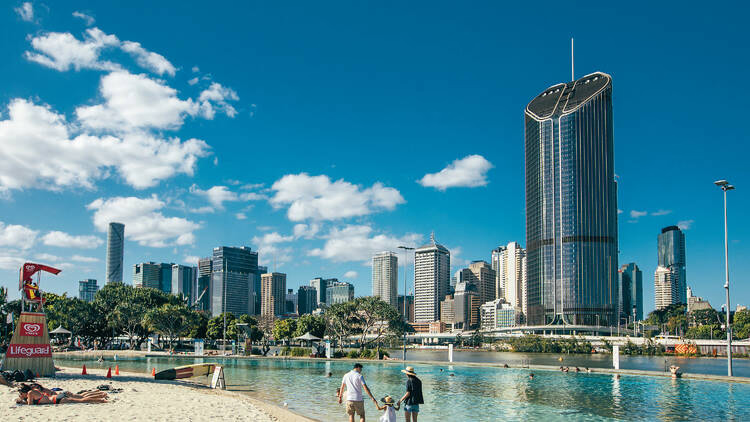
☀️ Summer — December to February
The hot, humid, stormy season
27–32°C
Brisbane's summer is genuinely hot and humid — not unbearably so, but noticeably. The subtropical position means afternoons frequently produce dramatic thunderstorms that cool things significantly, then clear within an hour. January and February are the wettest months, though Brisbane summer rain rarely lasts all day — it's intense, brief, and atmospheric.
Peak tourist season over Christmas and school holidays drives accommodation prices up sharply. The Gold Coast beaches are at their liveliest in summer, and the region's landscapes are at their most lush and green.
- Long days — sunrise before 5am, sunset after 6:30pm
- Waterfalls at peak flow after summer rainfall
- Most vibrant beach atmosphere on the Gold Coast
- Christmas and NYE events throughout the region
- High humidity — feels 4–6°C hotter than the thermometer
- Afternoon thunderstorms disrupt outdoor activities
- Peak school holiday pricing from mid-December
- Australia Zoo and major attractions very crowded
🍂 Autumn — March to May
The hidden sweet spot — locals' favourite
18–26°C
Autumn is Brisbane's genuinely best season — and the one most international visitors miss. March retains some summer warmth, but the humidity drops sharply. By April, days are consistently clear and blue with warm afternoons and cool evenings. May is often Brisbane's finest single month: perfect temperatures, minimal rainfall, and shoulder-season prices at their lowest.
The hinterland landscapes are extraordinary in autumn — crisp mornings with valley mist, afternoon light that transforms the Glass House Mountains, and coastal waters still warm enough to swim comfortably through April.
- Perfect temperatures — warm days, genuinely cool evenings
- Very low Brisbane rainfall — reliable sunny days
- Shoulder season pricing at hotels and tours
- Hinterland day trips at their most photogenic
- Ocean still warm for swimming through April
- April school holidays bring brief crowd peaks
- Ocean cools in May — some find it too cool for swimming
❄️ Winter — June to August
Spectacularly clear and perfectly comfortable
10–21°C
Brisbane's winter is a genuine revelation for visitors from cold-climate countries — clear blue skies, crisp mornings, warm sunny afternoons, and virtually zero rain. If you're visiting from Europe, North America, or southern Australia during their own winters, Brisbane in June–August delivers exceptional tourism weather at a fraction of the price of Christmas peak season.
Humpback whale migration season runs June through October along the Queensland coast. Winter is the best season for hiking and outdoor activities — the Glass House Mountains, Gold Coast hinterland, and national parks are all best explored in the winter cool.
- Clearest skies and lowest humidity of the year
- Whale watching season begins on Stradbroke Island
- Ideal for national park walks and day trips
- Peak photography weather — extraordinary clarity
- June is Brisbane's driest month of the year
- Ocean too cool for casual swimming (18–20°C)
- Mornings can reach 8–10°C — pack a warm layer
- July school holidays inflate prices at major attractions
🌸 Spring — September to November
Wildflower season and warming perfection
15–26°C
Spring in Southeast Queensland is spectacular. September's jacaranda season turns Brisbane's streets, parks, and suburban gardens vivid purple — a photographic moment that stops visitors mid-walk. October brings warming temperatures and the return of afternoon storms, while November tips into pre-summer warmth with excellent beach conditions.
The Glass House Mountains and Sunshine Coast hinterland show their most colourful faces in spring — native wildflowers, grevilleas, and banksias bloom across the heath. Whale watching continues through October on Stradbroke Island.
- Jacaranda season (October–November) — Brisbane's most beautiful
- Native wildflowers across hinterland and coastal heath
- Warming ocean — good for swimming again by November
- Whale watching continues through October
- Shoulder season pricing September–October
- October–November afternoon storms beginning to return
- November approaching summer humidity levels
- September school holidays — brief crowd peak
"The single biggest surprise for first-time visitors to Brisbane is how much they underestimate summer humidity — and how perfect the winter actually is."
Brisbane Weather by Month — Full Data
Monthly climate averages from the Bureau of Meteorology, combined with operational observations from our guided tours across every month of the year. The "Overall Rating" reflects the full visitor experience — not just temperature.
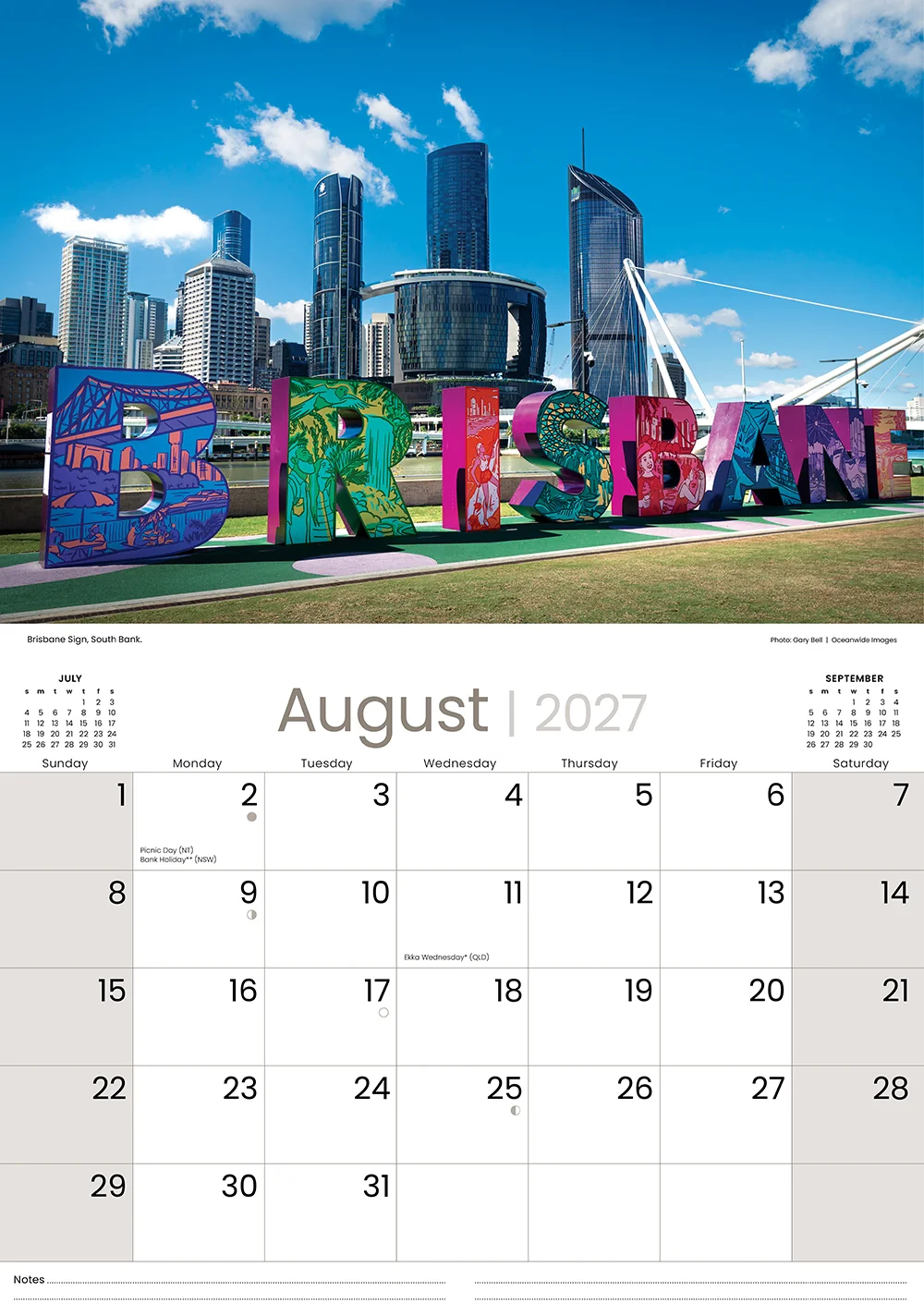
| Month | Max °C | Min °C | Rain Days | Rainfall (mm) | Humidity | Rating | Verdict |
|---|---|---|---|---|---|---|---|
| January | 29°C | 21°C | 13 | 160mm | High | Peak Season | |
| February | 29°C | 21°C | 14 | 160mm | High | Hottest & Wettest | |
| March | 27°C | 19°C | 12 | 140mm | Moderate | Turning Point | |
| April | 25°C | 16°C | 9 | 90mm | Low | Best Month | |
| May | 22°C | 13°C | 7 | 75mm | Low | Best Month | |
| June | 20°C | 10°C | 5 | 60mm | Low | Whale Season Begins | |
| July | 20°C | 9°C | 5 | 55mm | Low | School Hols Crowds | |
| August | 22°C | 10°C | 5 | 60mm | Low | Peak Whale Season | |
| September | 24°C | 13°C | 6 | 40mm | Low | Overall Best Month | |
| October | 26°C | 16°C | 9 | 100mm | Moderate | Jacaranda Season | |
| November | 27°C | 18°C | 11 | 120mm | Moderate | Warming Up | |
| December | 29°C | 20°C | 12 | 150mm | High | Christmas Peak |
Monthly averages based on Bureau of Meteorology data for Brisbane (Station 040913), 30-year climate averages. Rainfall figures are approximations. "Rain days" indicates days with ≥1mm recorded rainfall.
Best Time for Each Activity in Southeast Queensland
Different seasons unlock different experiences across the Brisbane region. Use this guide to match your visit timing to the specific activities that matter most to you.
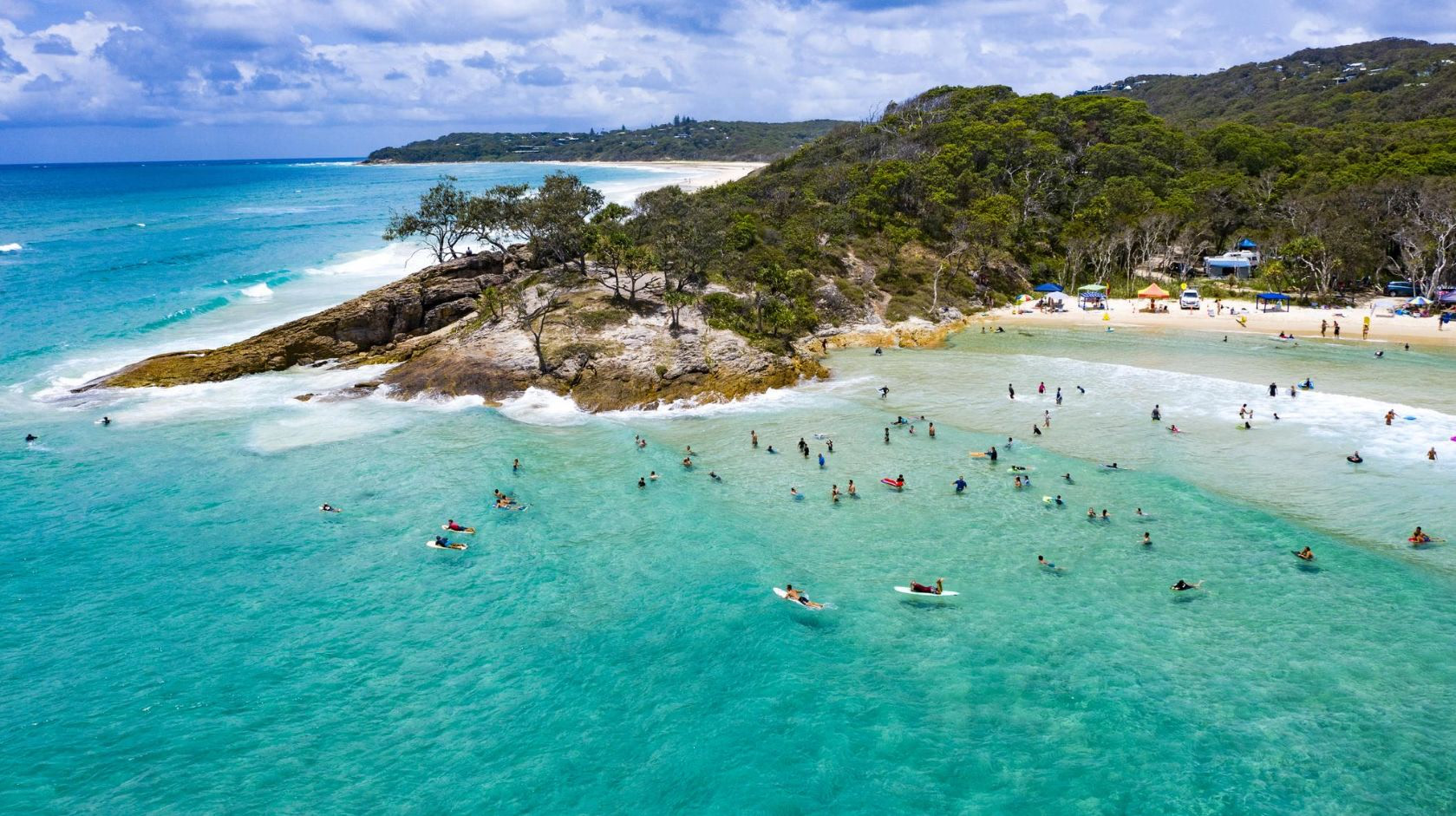
🐋 Whale Watching — North Stradbroke Island
June–October Humpback whales migrate north along the Queensland coast from June, peaking in July and August. Mother and calf sightings are common in August–September. Our Stradbroke Island tour during this period offers extraordinary close-proximity encounters. Book Stradbroke Island Tour →🌸 Jacaranda Season — Brisbane City
Late Oct–Nov Brisbane's jacaranda season turns tens of thousands of trees vivid purple simultaneously. New Farm Park, Stuartholme hill, and McDougall Street in Milton are the finest spots. Peak is typically mid-to-late October.🌿 Hiking & National Park Walks
May–September Queensland's national parks are all significantly better walked in the cooler months. Summer heat makes prolonged walks uncomfortable and storm risk cuts days short. Winter and autumn light is dramatically better for photography throughout. Glass House Mountains Tour →🏖️ Beach Swimming — Gold Coast & Sunshine Coast
November–April Ocean temperatures peak at 24–26°C from December to March. By May the water cools noticeably. Noosa's protected bay water extends comfortable swimming slightly longer than the open Gold Coast beaches.🌺 Native Wildflowers — Hinterland & Coastal Heath
August–October The Sunshine Coast hinterland, Glass House Mountains heath, and Stradbroke Island coastal heath display spectacular wildflowers — banksias, grevilleas, waratahs, and native orchids. A season many visitors completely miss planning around. Sunshine Coast Tour (includes hinterland) →🦘 Australia Zoo — Best Animal Activity
Year-round Australia Zoo operates year-round, but the Africa Savannah animals (cheetahs, giraffes, rhinos) are most active in cooler months. Summer heat drives them indoors by midday. May–September provides the best all-day animal encounter conditions. Australia Zoo Day Tour →🧺 Eumundi Heritage Markets
Wed & Sat — All Year Eumundi runs every Wednesday and Saturday regardless of season. Summer visits require arriving early to avoid the heat by mid-morning. Autumn and winter mornings are crisp, comfortable, and ideal — stallholders are at full capacity with seasonal produce. Sunshine Coast Tour (includes Eumundi) →🎭 Brisbane Events Calendar Highlights
MarchBrisbane Comedy Festival, Craft Beer Festival, outdoor cinema season begins. AugustThe Ekka (Royal Queensland Show) — Australia's most beloved agricultural show, running since 1876. OctoberBrisbane Festival (arts & performance), Valley Fiesta, peak jacaranda season.Tours That Work With Every Season
Cooee Tours operates year-round. Whale watching on Stradbroke (June–Oct) and wildflower hinterland tours (Aug–Oct) book out early — plan ahead.
Month-by-Month: What Brisbane Really Feels Like
More granular than seasons — here's what to actually expect month by month, based on years of operating daily tours through every condition Brisbane's climate delivers.

January
Avg max 29°C · 13 rain days
Peak summer heat and humidity. School holidays in full swing — attractions very crowded, prices high. Afternoon storms frequent but dramatic. Good for beach days if you can handle the heat. Not ideal for extended outdoor tours.
February
Avg max 29°C · 14 rain days
Brisbane's wettest month — rain falls in afternoon bursts rather than all day. Still hot and humid. Post-school-holiday prices drop but heat remains. Wildlife parks are lush and green after the wet season rainfall.
March
Avg max 27°C · 12 rain days
The turning point. Humidity starts dropping sharply, temperatures soften, and prices move to shoulder season. Easter falls in March some years — excellent timing. Days are getting dramatically better each week.
April
Avg max 25°C · 9 rain days
One of Brisbane's two best months. Clear skies, low humidity, warm afternoons, cool evenings. Hinterland is extraordinary — valley mist at dawn, golden afternoon light. Ocean still warm enough to swim. An exceptional time to visit.
May
Avg max 22°C · 7 rain days
Brisbane's finest month overall — perfect temperatures, minimal rainfall, lowest humidity, and annual accommodation pricing lows. Australia Zoo, Glass House Mountains, and all day trips are extraordinary in the May light.
June
Avg max 20°C · 5 rain days
Brisbane's driest month and the start of whale season on Stradbroke Island. Days are cool and spectacularly clear — the city skyline, Glass House Mountains, and the entire coast at their sharpest. Pack a jacket for evenings.
July
Avg max 20°C · 5 rain days
Excellent outdoor weather — clear and dry — but Queensland school holidays run through most of July, driving up prices and crowds at major attractions. Book Australia Zoo well in advance. Still one of the best touring months.
August
Avg max 22°C · 5 rain days
Peak whale season — mother and calf pairs most common in August. The Ekka (Royal Queensland Show) is a genuine Queensland institution. Perfect conditions for all outdoor activities. One of the absolute best months to visit Brisbane.
September
Avg max 24°C · 6 rain days
Our single best month recommendation overall. Temperatures warming beautifully, hinterland wildflowers, active whale season, jacarandas starting to appear, and school holiday prices back to normal. Exceptional touring conditions region-wide.
October
Avg max 26°C · 9 rain days
Full jacaranda season — Brisbane is genuinely stunning in purple. Ocean warming back to comfortable temperatures. Some afternoon storms returning, but mornings are consistently magnificent. Brisbane Festival adds outstanding cultural programming.
November
Avg max 27°C · 11 rain days
Pre-summer warmth with good beach conditions and increasing storm frequency. Humidity rising noticeably but still pleasant if you enjoy warm weather. Prices remain shoulder-level before the December peak begins.
December
Avg max 29°C · 12 rain days
Christmas in Brisbane is genuinely festive — South Bank celebrations, outdoor events, and city energy at its highest. But school holiday crowds build from mid-December and prices peak. Book accommodation and tours months ahead.
Storms, Humidity and What to Pack
The practical side of Brisbane weather — the parts that change what you put in a bag rather than which month you book.
Summer storms are an afternoon event, not a washout
Brisbane's summer storms have a rhythm that catches visitors out. They build through a hot, still afternoon and break somewhere between three and six o'clock — often spectacularly, sometimes with hail — and then clear. A storm forecast for a summer afternoon rarely means the day is lost; it means the morning is the time to be outdoors and the late afternoon is the time to be under cover. Tours built around Brisbane summers are scheduled with exactly that in mind.
What they do affect is the river. Heavy upstream rain turns the Brisbane River brown for days and can suspend CityCat services on the worst of it. If a river cruise is the centrepiece of your day, it is worth having a wet-weather alternative in mind between December and February.
Humidity is what people actually remember
The temperature figures for a Brisbane summer look manageable on paper — high twenties to low thirties. The humidity is what makes January feel different from a dry thirty degrees elsewhere in Australia. Mornings before nine are genuinely pleasant; the middle of the day in February is not, and the difference between shade and full sun is far larger than the forecast suggests. This is the single biggest reason we start summer tours early.
The hinterland is the standard escape. Mount Tamborine, the Scenic Rim and the Blackall Range all sit several hundred metres up and run four to six degrees cooler, which is why hinterland days sell better in January than coastal ones.
Winter is drier and colder than visitors expect
Brisbane winters are mild by any Australian standard, but the mornings surprise people. Inland suburbs regularly drop to single figures in July, and the Granite Belt two hours west gets genuine frost. Days are clear and in the low twenties — excellent walking weather — but the swing between dawn and mid-afternoon can be fifteen degrees. Layers matter more here than a heavy coat.
Sun protection is a year-round issue
Queensland's UV levels reach extreme readings for much of the year, including winter days that feel cool. Burn times in summer can be under fifteen minutes. Hat, sunscreen and a shirt with sleeves are worth packing whatever month you visit, and shade is the thing to look for when choosing where to sit at any outdoor stop.
A packing list by season
- Summer (December–February) — light breathable clothing, a hat, high-SPF sunscreen, a compact rain jacket for the afternoon storm, swimmers, and a layer for aggressive indoor air-conditioning.
- Autumn (March–May) — the easiest season to pack for. Light clothing with one warm layer for evenings, and comfortable walking shoes.
- Winter (June–August) — layers rather than bulk: a jumper or jacket for mornings and evenings, lighter clothing underneath for the middle of the day, and something warmer again if a Granite Belt or hinterland day is on the itinerary.
- Spring (September–November) — light clothing, sun protection as the UV climbs, and a light jacket for early spring evenings.
Frequently Asked Questions
What is the absolute best month to visit Brisbane? If we had to choose one month: September. The weather is perfect (24°C average, minimal rain), wildflowers are blooming in the hinterland, whale season is still active on Stradbroke Island, jacarandas are just beginning to appear, and school holiday prices have normalised. It combines ideal touring conditions with seasonal natural events that are genuinely extraordinary. April and May are close runners-up, particularly for value-to-experience ratio.
Is Brisbane too hot to visit in summer? Not unbearable, but significantly hotter and more humid than most international visitors expect. December to February averages 29–30°C with high humidity, and afternoons frequently produce dramatic thunderstorms. If heat affects you significantly, visit in autumn or winter instead. If you love hot beach weather and can handle humidity, summer on the Gold Coast is genuinely excellent. The key is scheduling outdoor activities (national parks, day trips) in the morning and resting indoors during the hottest 1–4pm window.
Does Brisbane get cold in winter? Relative to most of Australia, yes — cold mornings are a genuine surprise. June and July mornings regularly reach 8–10°C, which is genuinely cold for a subtropical city. Pack a warm layer for evenings and early starts. By mid-morning (10am onwards), temperatures climb to 18–21°C under clear skies and become thoroughly pleasant. Brisbane winter afternoons are frequently described by visitors as "perfect" — warm enough for t-shirts, cloudless skies, and spectacularly low humidity.
When is whale watching season near Brisbane? Humpback whale migration season runs June through October along the Queensland coast. Peak sighting months are July, August, and September, when mother-and-calf pairs are commonly seen at close proximity to the coast. Our North Stradbroke Island tour offers the best whale watching access from Brisbane — the island's eastern beaches face directly onto the migration route. Book well in advance for July and August dates as these are consistently our most popular departure days.
When should I visit Brisbane to avoid crowds? May, June, and August–September offer the best combination of excellent weather and lower crowd levels. Australian school holidays (December–January, April, July, September–October) are when families visit in volume and attractions become significantly busier. May and June represent Brisbane's quietest tourism period — which is ironic given the weather is among the year's best.
Is Brisbane good to visit at Christmas? For the festive atmosphere, yes — Brisbane's Christmas events at South Bank, the outdoor light displays, and the energy of a subtropical Christmas are genuinely special. However, December brings high humidity, school holiday crowds, and peak accommodation pricing. Book your accommodation and tours at least 3–4 months ahead if visiting for Christmas. If flexibility allows, the week between Christmas and New Year has a wonderful relaxed energy as crowds thin and the city settles.
What Brisbane weather should I pack for? Year-round: SPF 50+ sunscreen (Queensland UV is intense in all seasons), comfortable walking shoes, and a reusable water bottle. Summer: lightweight breathable clothing, umbrella for afternoon storms. Autumn/Spring: light layer for evenings. Winter: a proper jacket for mornings (it will be 8–10°C before 9am in June–July), which you can shed by midday. Swimwear is worth packing November–April for the Gold Coast and Sunshine Coast beaches.
Cooee Tours Editorial Team
Cooee Tours has been operating guided day tours across Southeast Queensland since 1974 — operating in every weather condition, every season, every month of the year. Our guides have walked the Noosa National Park coastal track in July frost and February heat, driven the Glass House Mountains in autumn mist and spring wildflowers, and watched humpback whales from North Stradbroke Island for fifteen consecutive whale seasons. This guide is built from direct operational experience, not weather statistics alone.
In This Guide
Quick Temperature Guide
- Jan–Feb29°CHigh rain
- March27°CModerate
- April25°CLow ⭐
- May22°CMinimal ⭐
- Jun–Jul20°CVery low ⭐
- August22°CVery low ⭐
- Sep24°CLow ⭐
- Oct–Nov26–27°CRising
- December29°CHigh
Plan Your Visit
Whatever season you're visiting, we run guided tours year-round from Brisbane with hotel pickup.
Related Guides
More Brisbane & Queensland Guides
🌆
Brisbane Guide
Things to Do in Brisbane — The Complete 2026 Guide
From South Bank and GOMA to hidden neighbourhood gems and the best day trips in Southeast Queensland.
🚐
Day Trip Guide
Best Day Trips from Brisbane — 12 Options Ranked
Australia Zoo, the Sunshine Coast, Moreton Island, Byron Bay — the complete guide to escaping Brisbane for the day.
🗓️
Itinerary
The Perfect 3-Day Brisbane Itinerary
A day-by-day guide built by locals — from South Bank at dawn to Mt Coot-tha at sunset, and a day trip in between.
Before you go: our Brisbane visitor essentials page covers emergency numbers, licensing, tipping, UV and storm season in one place.
Brisbane Weather by Month 2026
Monthly averages from the Bureau of Meteorology, combined with our touring experience of what each month actually feels like to visit.
| Month | Max °C | Min °C | Rain Days | Humidity | Rating | Verdict |
|---|---|---|---|---|---|---|
| January | 29 | 21 | 13 | High | Peak Season | |
| February | 29 | 21 | 14 | High | Hot & Wet | |
| March | 27 | 19 | 12 | Moderate | Good Value | |
| April | 25 | 16 | 9 | Low | Best Month | |
| May | 22 | 13 | 7 | Low | Best Month | |
| June | 20 | 10 | 5 | Low | Whale Season | |
| July | 20 | 9 | 5 | Low | School Hols | |
| August | 22 | 10 | 5 | Low | Best Month | |
| September | 24 | 13 | 6 | Low | Best Month | |
| October | 26 | 16 | 9 | Moderate | Jacarandas | |
| November | 27 | 18 | 11 | Moderate | Warming Up | |
| December | 29 | 20 | 12 | High | Peak Season |
Best Time for Each Activity
Different seasons open and close different experiences in Southeast Queensland. Use this guide to align your 2026 visit with the activities that matter most to you.
🐳 Whale Watching (Minjerribah)
🌸 Jacaranda Season
🚶 Hiking & National Parks
🏖️ Beach Swimming
🌺 Wildflowers & Native Blooms
🐊 Australia Zoo & Wildlife Parks
🛒 Eumundi Markets
🎭 Brisbane 2026 Events Calendar
Book Tours That Work With Your Season
All Cooee Tours run year-round. Whale watching on Minjerribah (June–Oct) and wildflower hinterland tours (Aug–Oct) are genuinely special seasonal experiences — book ahead as these dates fill early.
Minjerribah Island (Whale Season) Sunshine Coast & Hinterland TourMonth-by-Month: What to Expect
More granular than seasons — here's the real experience of each month in Brisbane and Southeast Queensland, built from years of operating daily tours in all conditions.
Peak summer heat and humidity. School holidays in full swing — attractions very crowded and prices high. Afternoon storms frequent but dramatic and photogenic. Good for beach days if you don't mind heat and crowds. Not ideal for extended outdoor national park touring.
Brisbane's wettest month on average, but rain falls in afternoon bursts rather than all day. Still hot and humid. Royal Edinburgh Military Tattoo at Suncorp Stadium (75th anniversary 2026) is unmissable if you're here. Post-school-holiday prices drop but the heat remains. Wildlife parks look lush after the wet season.
The turning point. Humidity drops, temperatures soften to genuinely pleasant levels, and prices move to shoulder season. Easter can fall in March — excellent timing. Still some storms but the days are dramatically improving. The hinterland starts looking extraordinary.
One of Brisbane's two best months. Clear skies, low humidity, warm afternoons, cool nights. Brisbane Comedy Festival (Apr 24–May 24) and Sting's The Last Ship at QPAC fill the evenings. The hinterland is extraordinary — mist in morning valleys, golden afternoon light on the Glass House Mountains. Ocean still warm for swimming.
Brisbane's finest month for weather and value combined. Temperatures perfect, rainfall minimal, humidity low, accommodation prices at their annual low. GOMA Friday Nights (Olafur Eliasson) and Paniyiri 50th (May 23–24) make May 2026 exceptional. Australia Zoo, the Glass House Mountains and all day trips are at their best in the May light.
Brisbane's driest month and the start of whale season on Minjerribah. Days are cool and spectacularly clear — the city skyline, the Glass House Mountains and the Sunshine Coast coastline are at their sharpest and most photogenic. Pack a jacket for evenings (8–10°C). Genuinely exceptional touring weather.
Excellent weather — clear and dry — but Queensland school holidays run through most of July, driving up prices and crowds at major attractions. Book Australia Zoo, Lone Pine and accommodation well in advance. Still one of the better months for outdoor touring despite the crowds. Whale season is at peak intensity.
Peak whale season on Minjerribah — mother and calf pairs most common in August. The Ekka (Royal Queensland Show) runs mid-August — a quintessential Queensland institution since 1876. Night Feast at Brisbane Powerhouse (from Jul 29). Perfect weather for all outdoor activities. One of the absolute best months to visit.
Possibly the single best month overall. Temperatures warming beautifully, wildflowers in the hinterland, whale season still active, school holiday prices back to normal, Brisbane Festival transforms the city (4–26 September) and BIGSOUND fills Fortitude Valley (1–4 September). Exceptionally good touring conditions throughout the region.
Jacaranda season begins — Brisbane is genuinely stunning in purple. Ocean warming back to comfortable swimming temperatures. Some afternoon storms returning but mornings are consistently magnificent. End of whale watching season. Tame Impala at Brisbane Entertainment Centre (October 2026 — 3 nights). An excellent month for both city culture and day trips.
Pre-summer warmth returning. Rugby League World Cup Grand Final at Suncorp Stadium — the biggest event in rugby league, in Brisbane. Good beach conditions but increasing storm frequency and rising humidity. Prices remain at shoulder levels before the Christmas peak. Excellent if you enjoy warm weather and don't mind the occasional dramatic storm.
Christmas in Brisbane is genuinely festive — South Bank Christmas celebrations, outdoor events, city light displays, and the city at its most lively. But school holiday crowds build sharply from mid-December, prices peak, and humidity is high. Book accommodation and tours months in advance. The week between Christmas and New Year has a wonderful relaxed energy.
School Holidays and Public Holidays
Two things book out regardless of season: anything running on a fixed date, and anything with a hard capacity limit. Whale-watching sailings in the June-to-November window, ferry vehicle spaces to Straddie on weekends, and cellar-door long lunches all fall into that group.
How far ahead to book changes with the month. For the December–January peak, accommodation in the inner suburbs and day tours to Moreton and Straddie want four to six weeks. Easter and the late-June holidays want three. Through the shoulder months of March, May, September and November a fortnight is usually comfortable.
Ready to Plan Your Brisbane Visit?
Whatever season you're visiting, Cooee Tours runs year-round day tours to the best of Southeast Queensland — whale watching in winter, wildflowers in spring, and the classic Australia Zoo and Sunshine Coast tours every week of the year.
All Day Trips from Brisbane Call (07) 4194 3333Free 48hr cancellation · Max 12 guests · Hotel pickup included
For the climate itself rather than the calendar, see Brisbane weather.