How Much Does a Trip to Brisbane Cost?
Real 2026 numbers for a Brisbane holiday — daily budgets for every kind of traveller, plus what you'll actually pay for beds, food, transport and tours in one of Australia's best-value cities.
Brisbane Is One of Australia's Best-Value Cities
What a trip costs, before we break it down line by line.
Brisbane is noticeably kinder on the budget than Sydney or Melbourne, and one quirk of Queensland policy makes it dramatically so: public transport is a flat 50 cents a trip, any distance, on every bus, train, ferry and tram. Getting around — usually a real line in a city budget — is close to free here, which frees up money for the things you actually came for.
That fare is not a promotion or a trial. It began as a six-month trial in August 2024, was made permanent shortly afterwards, and in the 2026–27 state budget it was written into legislation. For a visitor planning a 2026 trip, it is simply how Brisbane works — and it is the single biggest reason the numbers on this page look lower than the equivalent numbers for other Australian capitals.
As a rough guide, a budget traveller can do Brisbane comfortably on around $120 to $150 a day, a mid-range trip runs about $250 to $350, and luxury starts around $550 and climbs from there. Those figures cover a bed, meals, getting around and a bit of doing — the sections below show exactly what sits inside each one.

Why Brisbane costs less than Sydney or Melbourne
Three things do most of the work. The first is transport, already covered. The second is accommodation: Brisbane's hotel stock leans business-heavy, which means rates soften on weekends in the CBD precisely when leisure cities get more expensive. The third is geography — the best things to do here are outdoors and mostly free. South Bank's Streets Beach, the Gallery of Modern Art, the City Botanic Gardens, the Kangaroo Point cliffs, the Mt Coot-tha lookout and the entire riverwalk cost nothing to enjoy.
What Brisbane does not have is a cheap airport rail link, and that is worth knowing before you land. The Airtrain is the one transport service excluded from the 50-cent fare, and it is dealt with properly further down this page.
Daily Budgets for Brisbane
Three realistic daily budgets, all-in — bed, food, transport and a bit of doing. Choose the one that matches your trip.
Budget
A hostel bed, self-catering with the odd cheap eat out, 50-cent transport everywhere, and the city's many free attractions.
- Hostel dorm bed, $35–45
- Supermarket breakfast, bakery lunch, one meal out
- Transport, about $2 a day
- Free attractions plus one paid entry every few days
Mid-Range
A comfortable central hotel, eating out once or twice a day, and a paid tour or attraction most days.
- Central 4-star room, $180–250
- Café breakfast and a proper dinner out
- Transport, about $2 a day
- A day tour or major attraction most days
Luxury
A five-star river hotel, fine dining, premium experiences and the odd private transfer.
- Five-star river or design hotel, $350+
- Fine dining, $120+ a head before wine
- Private transfers where they suit
- Private guiding and premium experiences
What these budgets assume
Each figure is per person per day and excludes flights. For couples, the accommodation line effectively halves per head, which is why a couple travelling mid-range often lands closer to $200 each rather than $300. For families, the same logic applies more strongly once you move into a serviced apartment with a kitchen — see the sample budgets below.
They also assume you are actually doing something each day. A slow Brisbane trip built around the riverwalk, the free galleries and a picnic at New Farm Park costs materially less than the budget line suggests. It is genuinely possible to have a very good day here for the price of lunch and two bus fares.
What Things Actually Cost
Indicative 2026 prices in Australian dollars, grouped by where your money goes.
Beds
| Type | Per night | What you get |
|---|---|---|
| Hostel dorm bed | $35–45 | Social backpacker hostels in West End and the CBD, often with a rooftop pool. |
| Budget hotel / motel | $120–160 | Clean, well-located 3-star rooms a little out from the centre. |
| Mid-range hotel | $180–250 | Central 4-star hotels and serviced apartments in the CBD or South Bank. |
| Luxury hotel | $350+ | Five-star river and design hotels — The Calile, W, Emporium. |
Serviced apartments deserve a special mention for families and longer stays. A two-bedroom apartment in the CBD or South Brisbane often lands close to the price of two hotel rooms, but adds a kitchen and a washing machine. Over a week, the saving on breakfasts and laundry alone usually covers a day tour. Our where to stay in Brisbane guide breaks the areas down properly.
Food and drink
| Item | Typical price | Notes |
|---|---|---|
| Specialty coffee | $5–6 | A flat white from one of Brisbane's independent roasters. |
| Café breakfast | $18–28 | A proper sit-down brunch — smashed avo to the works. |
| Casual lunch | $22–35 | A bakery, food-hall or pub lunch between sights. |
| Dinner out | $45–70 | A relaxed dinner with a drink at a mid-range restaurant. |
| Fine dining | $120+ | A James Street or riverfront room, before wine. |
| Beer or wine | $11–16 | A schooner of local craft beer or a glass of wine. |
Two local habits will cut this line considerably. Brisbane's food halls and market stalls — Eat Street Northshore on weekends, the food courts under the CBD towers on weekdays — serve genuinely good meals well under restaurant prices. And most licensed restaurants outside the very top tier allow BYO wine for a corkage fee of around $10 to $15 a bottle, which changes the arithmetic of a dinner out for two.
If food is the point of the trip rather than the fuel for it, our where to eat in Brisbane guide covers the precincts in detail.
Getting around
| Item | Typical price | Notes |
|---|---|---|
| Public transport, any trip | $0.50 | Bus, train, ferry (CityCat) and tram — one flat fare, any distance. |
| A full day on transport | ~$1–2 | Realistically a couple of dollars, even hopping all over the city. |
| Airtrain from the airport | $23.30 | The exception to the 50c fare — the rail link to the CBD. About 15% less booked online. |
| Taxi or rideshare, airport–CBD | $45–55 | When the Airtrain hours don't suit or you've got luggage. |
| Car hire | $55–80 | Only really needed for day trips beyond the city. |

Once you are in the city, the CityCat is the thing to understand. It is a commuter ferry, not a tourist cruise, but it runs the length of the river past almost everything worth seeing — and it costs the same 50 cents as a bus. The free CityHopper runs a shorter inner-city loop and costs nothing at all. Our getting around Brisbane guide goes through every mode.
Attractions, Tours and the Things Worth Paying For
Where the discretionary money goes — and how much of Brisbane is genuinely free.
| Experience | Adult price | Notes |
|---|---|---|
| Cooee Brisbane day tour | From $79 | City sights, a river cruise and local commentary in a small group. |
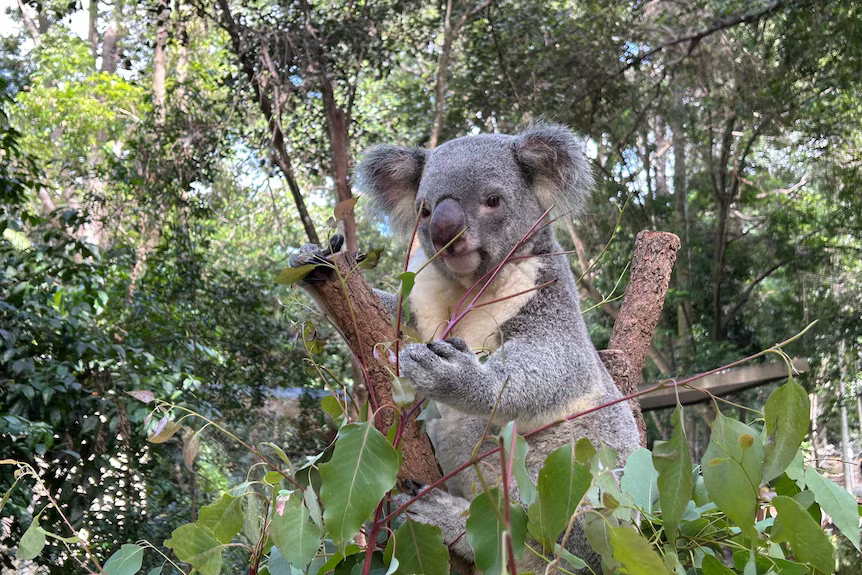
| Lone Pine Koala Sanctuary | $63 | Child (3–13) $45, family (2 adults + 3 children) $193. Open 9am–5pm daily, last entry 4pm. |
| Australia Zoo | $76.95 | Child (3–14) $51.95, family of four $229.25. About an hour north — a full day out. |
| Story Bridge Adventure Climb | From about $100 | Twilight and night climbs cost more. Ages 6+. Check the operator for current pricing. |
| North Stradbroke Island ferry | $13.50 each way | Passenger fare from Cleveland; $23 return. Vehicles cost considerably more and must be pre-booked. |
| South Bank, GOMA, Streets Beach | Free | Parklands, the gallery and the city lagoon — all free, all day, every day. |
How much of Brisbane is free
More than most visitors expect. The Gallery of Modern Art and the Queensland Art Gallery charge nothing for their permanent collections. So does the Queensland Museum. Streets Beach — a genuine lagoon with real sand, lifeguards and a city skyline behind it — is free, and so is the whole of the South Bank parklands around it. The Mt Coot-tha summit lookout is free, as are the Botanic Gardens at its base and the City Botanic Gardens by the river.
Add the Kangaroo Point cliffs, the New Farm Park riverwalk, the Saturday morning Jan Powers Farmers Markets, and the free CityHopper ferry that connects several of them, and a first-time visitor can fill three days without paying admission to anything. Our free things to do in Brisbane guide lists them properly.
Where a paid tour actually saves money
Counter-intuitively, the day trips. Getting yourself to Australia Zoo, the Glass House Mountains or Tamborine Mountain without a car means either hiring one at $55 to $80 a day plus fuel and parking, or stitching together train and shuttle connections that eat most of the day. A guided day tour rolls the transport, the entries and the commentary into one number, and for two people it usually lands under the do-it-yourself total once you count the car.
For the city itself the maths flips. Brisbane is compact, walkable and served by a 50-cent transport network, so a self-guided day is close to free. Pay for a tour in the city when you want the commentary and the local knowledge, not because it saves money — because it usually will not.
When Brisbane Is Cheapest
The same trip can cost noticeably less with a little timing.
Winter is the sweet spot
June to August. Outside major events, hotel rates ease and the weather is at its best — clear, mild days made for being outdoors. The best-value season by a distance, and the one time of year Brisbane's climate is unambiguously better than Sydney's or Melbourne's.
Travel midweek
CBD and South Bank hotels lean business-heavy, so Sunday-to-Thursday nights are often cheaper than weekends — the reverse of most leisure cities. The exception is a big event weekend, when everything moves the other way at once.
Dodge the spikes
Summer school holidays from mid-December to late January, plus big-ticket events and concerts, push accommodation up sharply. The Ekka in August and Brisbane Festival in September both fill rooms. Check the calendar before locking dates.
Book beds early, tours flexibly
Accommodation rewards booking ahead — rates rise as inventory thins. Tours and attractions rarely get cheaper by waiting, but they do sell out in peak season, so book the ones you care about and leave the rest loose.
Two dates are worth planning around specifically. The Ekka — the Royal Queensland Show — runs in August and brings roughly 400,000 people to the Brisbane Showgrounds, with a public holiday attached in the Brisbane City Council area. Brisbane Festival runs across September, with Riverfire opening it. Both are wonderful and both are expensive weeks to need a hotel room.
For the full picture on weather and seasons, see our best time to visit Brisbane guide, and for what is on when, the Brisbane events calendar.
Sample Brisbane Budgets
Rough all-in totals for four common trips — excluding flights.
Backpacker · 5 days
Hostel, self-catering with a few meals out, 50-cent transport, free attractions and one paid day tour.
- 5 nights hostel, $175–225
- Food, roughly $60 a day
- Transport, about $10 all week
- One day tour and one paid attraction
Couple · long weekend
Three nights in a mid-range hotel, dinners out, a couple of tours and plenty of riverside walking.
- 3 nights central hotel, $540–750
- Two dinners out plus cafés
- A day trip and a river experience
- Transport, under $10 between them
Family of four · a week
Serviced apartment, mix of cooking and eating out, Lone Pine and a day trip, near-free transport.
- 7 nights two-bedroom apartment
- Breakfasts in, dinners split between both
- Lone Pine family pass, $193
- Transport, about $14 for the whole family all week
Luxury couple · 3 nights
Five-star river hotel, fine dining, a private experience and the good tables booked.
- 3 nights five-star, $1,050+
- Fine dining most nights
- A private guided day
- Transfers rather than transport
The family figure is the one that surprises people most, and the reason is the transport line. Four people moving around a European or American city for a week would spend several hundred dollars on fares. In Brisbane the same week costs about fourteen dollars. That single difference funds most of a day trip.
How to Do Brisbane for Less
Local ways to stretch a Brisbane budget without missing anything.
Nine things that actually move the number
- Use the CityCat as sightseeing. The full run from the University of Queensland to Northshore Hamilton passes most of the city's landmarks and costs 50 cents. Sit outside at the back.
- Take the free CityHopper. The inner-city ferry loop costs nothing and connects North Quay, South Bank, the CBD, Howard Smith Wharves and Kangaroo Point.
- Stay just outside the CBD. West End, Woolloongabba, Spring Hill and Kangaroo Point are a short ferry or bus ride from the centre and consistently cheaper.
- Book a serviced apartment for stays over four nights. A kitchen and a washing machine change the food and laundry lines materially.
- Eat your big meal at lunch. Many of the better restaurants run set lunch menus at a fraction of dinner prices.
- Check for BYO. Corkage of $10 to $15 replaces a $60 wine list on a dinner for two.
- Do the free galleries on a hot afternoon. GOMA, QAGOMA and the Queensland Museum are free, air-conditioned and genuinely good.
- Skip the Airtrain if time allows. The Skygate shuttle plus a 50-cent connection saves $23 a head each way.
- Bundle the day trips. One guided day out usually beats a hire car plus separate entries once you count parking and fuel.

The one place it's worth spending is on the doing — and even there, Brisbane is generous. A single small-group Brisbane day tour rolls the city sights, a river cruise and a local guide's commentary into one fixed price, which usually works out cheaper than paying for each piece separately once you count transfers and entries. Tell your Brisbane specialist your budget and they'll shape the day to fit it, or browse our Brisbane itineraries for trips already costed end to end.

What not to cut
Two things are worth the money even on a tight trip. The first is one day trip out of the city — the Glass House Mountains, Tamborine Mountain, Moreton Bay or Stradbroke. Brisbane's real advantage over other Australian capitals is what sits within ninety minutes of it, and a visitor who never leaves the CBD has seen the least interesting part.
The second is a proper meal somewhere good. Brisbane's food scene has changed enormously in a decade and eating exclusively from food courts misses it. One dinner at a James Street or Howard Smith Wharves room, booked ahead, is a better use of $140 than four mediocre ones.
Brisbane Travel Cost FAQs
Is Brisbane cheaper than Sydney or Melbourne?
Yes, on most lines. Accommodation and dining run lower than Sydney and broadly comparable to or slightly below Melbourne, and public transport is dramatically cheaper because of the flat 50-cent fare. The gap is widest for families and for anyone moving around a lot.
How much should I budget per day in Brisbane?
Around $120 to $150 a day for budget travel, $250 to $350 for mid-range, and $550 upwards for luxury. Those are per person and exclude flights. Couples sharing a room usually come in lower per head than the mid-range figure suggests.
Is public transport really 50 cents in Brisbane?
Yes. A flat 50-cent fare applies across all zones and modes on the Translink network — bus, train, ferry and tram — regardless of distance. It began as a trial in 2024, was made permanent, and was legislated in the 2026–27 state budget. The one exception is the Airtrain to and from the airport.
How much is the train from Brisbane Airport to the city?
The Airtrain is $23.30 one way to Brisbane city stations, with around 15% off when booked online in advance. Children aged 14 and under travel free with a fare-paying adult. A slower 50-cent alternative exists via the free Skygate shuttle and a bus-and-train connection.
What is the cheapest time of year to visit Brisbane?
Winter, roughly June to August, outside major event weeks. Rates ease and the weather is at its best. Avoid the mid-December to late-January school holidays, and check whether your dates collide with the Ekka in August or Brisbane Festival in September.
How much does a Brisbane day tour cost?
Cooee's Brisbane day tours start from $79 per person, covering the city sights, a river cruise and local commentary in a small group. Day trips further afield — Australia Zoo, the Sunshine Coast, the Gold Coast hinterland — cost more because of the distance and the entries included.
How much is Lone Pine Koala Sanctuary?
Adult entry is $63, children aged 3 to 13 are $45, and a family pass for two adults and three children is $193. Entry includes the free-range kangaroo feeding, the raptor show, the sheepdog display and the keeper talks. It is about 20 minutes from the CBD.
Can you visit Brisbane on a tight budget?
Comfortably. Between 50-cent transport, free galleries, free parklands and the free CityHopper ferry, a visitor can fill several days without paying admission to anything. Around $120 a day covers a hostel bed, food and a bit of doing.
Do I need to hire a car in Brisbane?
Not for the city itself — it is compact, walkable and served by cheap public transport, and CBD parking is expensive. A car only earns its cost if you are doing several day trips independently, and even then a guided day tour is often cheaper for two people once fuel and parking are counted.
How much does a week in Brisbane cost for a family of four?
Roughly $3,500 to $5,000 excluding flights, based on a serviced apartment, a mix of cooking and eating out, a major attraction like Lone Pine and one day trip. The transport line for a family of four for a whole week is about $14.
Plan a Brisbane Trip That Fits Your Budget
Tell us your budget and our Brisbane specialists will build a trip around it — small-group tours, the right beds and the good tables, costed end to end with no surprises.
More Brisbane planning guides
Cooee Tours acknowledges the Turrbal and Yuggera (Jagera) peoples as the Traditional Custodians of the land on which Brisbane stands, and pays respect to Elders past and present.
Before you go: our Brisbane visitor essentials page covers emergency numbers, licensing, tipping, UV and storm season in one place.