Getting Around Brisbane
One flat 50-cent fare takes you anywhere on Brisbane's buses, trains, ferries and Metro — no matter how far. Here's how to use the river city's network like a local, from the airport to the last ferry home.
The 50¢ flat fare
Brisbane sits inside TransLink’s South East Queensland network, where a single journey on any bus, train, ferry or the Brisbane Metro is a flat 50¢ — no matter how far you travel. What began as a six-month trial in August 2024 was made permanent across every TransLink network from February 2025, so the price you see here is here to stay.
It is, frankly, one of the best public-transport deals in the country. A cross-town trip that once cost $5 or more in peak now costs the same 50¢ as a single stop, and a full week of commuting tops out at around $5. The flat fare covers all zones and all times of day, which means there’s no longer any need to think about peak versus off-peak, zone boundaries or daily caps.
Pay with a go card, a contactless debit or credit card, your phone or smartwatch, or a paper ticket. TransLink’s Smart Ticketing means most travellers simply tap on (and tap off, on trains and ferries) with the card already in their wallet. The SEQ network is cashless on board, so top up a go card at a station machine or a go card retailer before you ride if that’s your preferred method.
A few details worth knowing: children aged four and under travel free at all times; children aged five to 14 travel free on weekends with an orange child go card; and Queensland Seniors Card holders continue to travel free on Brisbane City Council buses during off-peak times. The one service the 50¢ fare does not cover is the Airtrain to Brisbane Airport, which runs on the suburban tracks but charges its own separate premium fare.
To put that in perspective: in most Australian capitals a typical commute still costs several dollars each way, so Brisbane’s flat fare is genuinely the cheapest big-city public transport in the country. The old zone system, daily caps and frequency discounts have all been retired — there’s simply nothing to calculate. If you want a reusable go card (handy for kids’ concession fares and topping up with cash), you can buy and reload one at train and busway stations, 7-Eleven and other go card retailers, or online; most visitors, though, will just tap their existing bank card or phone and never bother.
Buses & Brisbane Metro
Brisbane’s bus network, run by Transport for Brisbane under TransLink, is the backbone of city travel, with high-frequency routes feeding the CBD along a world-class set of dedicated busways — the South East Busway, the Northern Busway and the Eastern Busway — that let buses bypass road traffic entirely. The busways are why a bus across Brisbane is often quicker than driving.
The Brisbane Metro adds two turn-up-and-go rapid-transit lines running a fleet of 60 battery-electric, bi-articulated vehicles that recharge in minutes at the end of each route. The M1 runs Eight Mile Plains to Roma Street and the M2 runs UQ Lakes (University of Queensland) to the Royal Brisbane and Women’s Hospital (RBWH), every five minutes on weekdays and around the clock on weekends. Both opened in 2025 and use the existing busways, plus a new tunnel beneath Adelaide Street and the Victoria Bridge “green bridge” to glide through the CBD.
Look out for the high-frequency BUZ routes and the blue and maroon CityGlider services, which run around the clock on Friday and Saturday nights, and the late-night NightLink buses and trains for getting home after a night out. Key interchanges include the Cultural Centre, King George Square, Roma Street and the Queen Street bus station underground.
If you’re staying inner-city, the busways do most of the heavy lifting: stations like South Bank, Mater Hill, Buranda, Woolloongabba and the Royal Brisbane sit right on the network, and buses arrive so often you rarely need a timetable. Brisbane’s “New Bus Network” reorganised many routes around the Metro in 2025, so it’s worth a quick check of the journey planner if you’re working from an older map — the simplest trips often now involve a short ride to a busway station and a turn-up-and-go Metro into town.
Trains
Queensland Rail’s suburban network links the CBD with the suburbs and well beyond — south to the Gold Coast (the Varsity Lakes line), north toward the Sunshine Coast (the Gympie North line), west to Ipswich and Rosewood, and out to Caboolture, Cleveland, Shorncliffe and Ferny Grove. The main interchanges are at Roma Street, Central and Bowen Hills, with handy inner-city stops at Fortitude Valley, South Bank and Park Road. Trains are part of the 50¢ flat fare.
The one exception is the Airtrain to Brisbane Airport — it runs on the same tracks to both terminals but charges its own premium fare separate from the 50¢ network.
Brisbane’s rail network is also in the middle of its biggest upgrade in generations. Cross River Rail — a new 10.2 km line with twin tunnels under the river and the CBD — is delivering four new underground stations at Boggo Road, Woolloongabba (beneath the Gabba), Albert Street (the first new CBD station in over a century) and a high-capacity underground Roma Street, plus a rebuilt Exhibition station. Construction and testing are well advanced through 2026, with passenger services expected to come online later this decade ahead of the Brisbane 2032 Olympics.
Day to day, trains run roughly every 15–30 minutes off-peak and far more often in peak, with the Gold Coast line (Varsity Lakes) and the Airport line being the two most useful for visitors. The reopened Exhibition station also springs to life each August for the Ekka, Brisbane’s big agricultural show. For real-time platforms and any weekend trackwork — common while Cross River Rail testing continues through 2026 — the TransLink and Queensland Rail apps are the quickest way to check before you head to the station.
From Brisbane Airport to the city
This is the question we’re asked most, so here are all the options, cheapest to most convenient. Brisbane Airport sits about 13 km north-east of the CBD, with separate Domestic and International terminals linked by a free terminal transfer.
Airtrain (about $22 one way, ~20 minutes) is the fastest public option — it runs from both terminals to Central, Roma Street and on to the Gold Coast line. Note it is not part of the 50¢ fare; it sets its own price. Public bus (route to the airport precinct) is the cheapest at 50¢ but slower and less direct with luggage. Taxi or rideshare (Uber, DiDi) runs roughly $45–$70 to the CBD depending on traffic and surge, from the signed ranks and rideshare zones.
For groups, families, early flights or anyone who just wants to step off the plane and be driven, a pre-booked private airport transfer is the easiest of all — a fixed price, no surge, and a driver waiting at arrivals with your name. It’s usually the best value once there are three or more of you, or when you’re carrying real luggage. We run exactly this service across Brisbane.
CityCat & ferries
Few cities commute by river the way Brisbane does. The CityCat catamarans run the length of the Brisbane River — the all-stops F1 connects the University of Queensland at St Lucia with Northshore Hamilton, while express services skip stops in peak. They’re fast, frequent, and at 50¢ they double as the best-value river cruise in the city, sliding past South Bank, the CBD, the Story Bridge and the riverside suburbs.

Smaller KittyCat ferries handle the cross-river hops, and the free CityHopper loops the inner-city terminals — North Quay, South Bank, the Maritime Museum, Eagle Street Pier, Holman Street, Dockside and Sydney Street — at no charge at all, making it a brilliant free way to see the riverfront. All up it’s a fleet of more than two dozen CityCats, including newer accessible Generation-3 vessels, plus a network of terminals. And yes, every paid ferry trip is 50¢ too.
The terminals double as a sightseeing map of the city: hop off at South Bank for the Wheel of Brisbane and the parklands, at Eagle Street Pier for the dining precinct, at Sydney Street for New Farm and the Powerhouse, or at Bulimba and Teneriffe for the cafe strips. Ferries run from early morning until late at night, so a sunset CityCat with the CBD lights coming on is one of the best-value evenings in town. The vessels are wheelchair- and pram-friendly, and the river breeze beats a stuffy bus on a Brisbane summer day.
Walking
The Brisbane CBD is small, flat and genuinely walkable, and a riverside city has the walks to match. The Brisbane Riverwalk and City Reach Boardwalk trace the water from New Farm through the CBD, while a string of car-free green bridges — the Goodwill Bridge, the Neville Bonner Bridge to South Bank and the newer Kangaroo Point Bridge — stitch both banks together for pedestrians and cyclists.

Many of the things visitors want to see — South Bank, the Cultural Precinct, Queen Street Mall, the Botanic Gardens and the Story Bridge — are an easy stroll or a short ferry hop apart. Pair a CityCat one way with a walk back along the river and you’ve seen the best of the city for 50¢.
A few favourites: the riverside loop from the Botanic Gardens across the Goodwill Bridge to South Bank and back is about 3 km of flat, shaded path; the climb up to the Kangaroo Point cliffs rewards you with the city’s best skyline view; and the Howard Smith Wharves precinct under the Story Bridge links to the New Farm riverwalk for a longer stroll. Brisbane’s subtropical climate means early morning and late afternoon are the comfortable windows for walking in summer — and there’s always a ferry or bus to bail onto if the heat wins.
Bikes & e-scooters
Brisbane’s old CityCycle docking scheme has been replaced by dockless shared e-bikes and e-scooters you unlock with an app and leave at your destination. Operators rotate over time (recent names include Beam, Neuron and Lime), and they’re a quick, cheap way to cover the “last mile” between a ferry or busway stop and where you’re actually going.
The riding is good, too: the Bicentennial Bikeway along the river, the V1 Veloway bike highway and the Riverwalk give you long, mostly separated paths. A few rules to know — helmets are required by law, footpath riding is limited to walking pace in busy areas, and there are no-go and slow zones around the CBD and South Bank that the apps enforce automatically.
Trams Not in Brisbane
Brisbane retired its tram network in 1969, so there are no trams in the city today — the busways and Brisbane Metro fill that role. The only tram (light rail) system in Queensland is the Gold Coast’s G:link, about an hour south, which is handy if your trip pairs Brisbane with a few days on the coast.
Taxis
Taxis are easy to find at ranks across the CBD, the airport and major venues, or booked on demand by phone or app. The big operators are 13CABS and Black & White Cabs, both with wheelchair-accessible vehicles available on request. Metered fares apply, with higher night and public-holiday tariffs, plus a small surcharge from the airport rank.
Both operators run apps for on-demand booking, and larger maxi-taxis seating up to 11 are available for groups or extra luggage if you book ahead — handy when there are too many of you for a regular car but a coach would be overkill.
Rideshare
Brisbane is well served by rideshare. Uber and DiDi are the two main apps operating across the city and at Brisbane Airport, and they’re often a few dollars cheaper than a taxi outside surge periods. At the airport, both pick up from signed rideshare zones at the Domestic and International terminals. (Ola left the Australian market in 2024, so it’s Uber and DiDi you’ll be choosing between.)
Driving & parking
You don’t need a car to enjoy Brisbane, but one is handy for day trips to the hinterland, the bay or the coast. Hire cars are available at the airport and across the city. Be aware Brisbane’s motorway network is largely electronic-tolled — the Clem7, Legacy Way and AirportlinkM7 tunnels, the Go Between Bridge, and parts of the Gateway and Logan motorways all use cashless tolling. Hire cars usually bundle tolling, or you can set up a temporary Linkt (GoVia) account so you’re not chasing toll notices later.
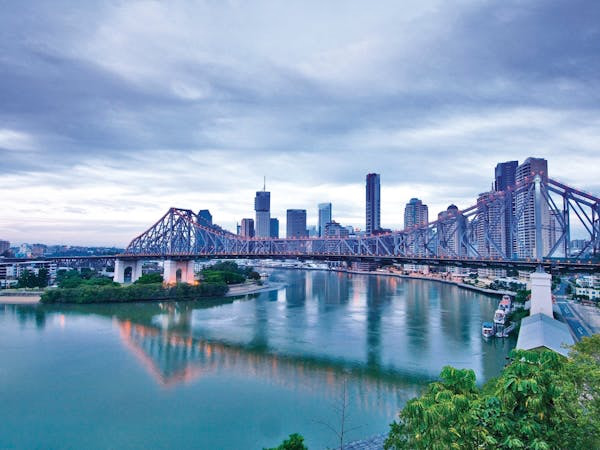
CBD parking is plentiful but pricey, so many locals use park ’n’ ride car parks at busway and train stations on the city fringe, then ride in for 50¢ — far cheaper and quicker than driving into town. If you’d rather skip the wheel altogether, our transfers and charters below cover the trips a car would normally handle.
Practical park ’n’ ride options ring the city — large car parks at stations like Eight Mile Plains, Springwood, Carseldine, Ferny Grove and along the Gold Coast line let you drive the first leg, park free or cheaply, and ride in for 50¢. In the CBD itself, secure parking stations are easy to find but can run $50+ for a day, so booking ahead through a parking app usually saves money. Most hire cars come with an electronic toll tag bundled in; confirm this at pick-up so a quick run through the Clem7 or AirportlinkM7 doesn’t turn into a toll notice weeks later.
Accessibility
Brisbane’s public transport is broadly accessible. The electric Brisbane Metro vehicles, most buses, every CityCat and the major train stations offer step-free or ramped, level boarding with dedicated spaces for wheelchairs, prams and mobility aids. Accessible taxis are available from 13CABS and Black & White Cabs.
Concession fares (for eligible holders) and the Companion Card scheme apply, and the free CityHopper and CityCats are particularly easy with prams. Accessibility does vary at some older suburban stations, so it’s worth checking the TransLink journey planner, which flags accessible stops and services, before you set out.
Companion Card holders travel with a carer at no extra charge, assistance animals are welcome across the network, and staff at major stations can help with boarding ramps if you ask. For door-to-door travel with specific mobility needs, our private transfers can arrange a suitable vehicle in advance.
Day trips & getting out of the city
Half of Brisbane’s appeal is what’s an easy hop away. Queensland Rail runs trains south to the Gold Coast (the Varsity Lakes line, then connect to the G:link tram) and north toward the Sunshine Coast (the Gympie North line) — both on the 50¢ fare. Intercity and interstate coaches run from the Roma Street transit centre, which is becoming the state’s “Grand Central” interchange.
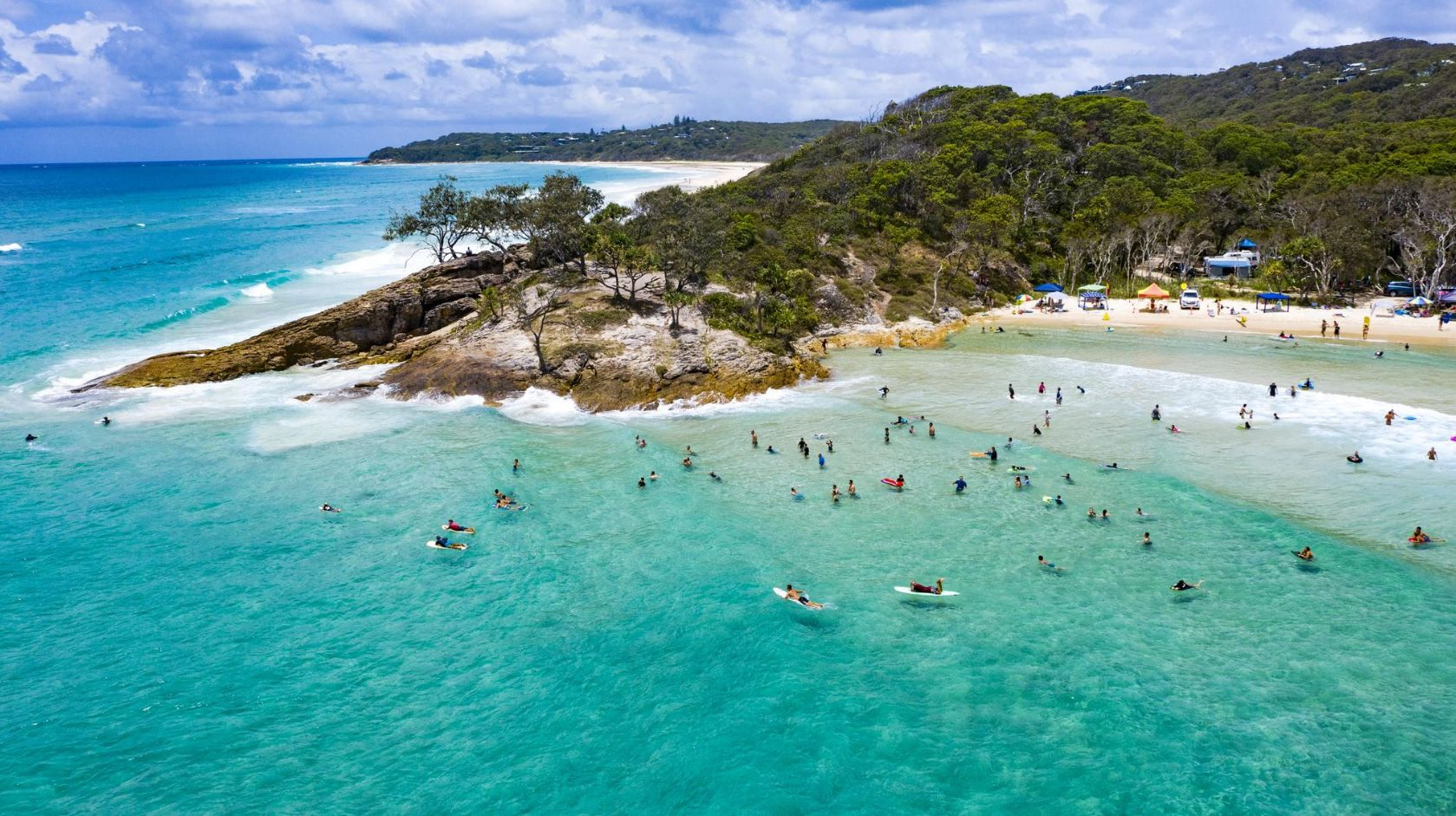
For day trips to the Scenic Rim, Tamborine Mountain, Moreton Bay or the wineries — or anywhere the timetable doesn’t reach neatly — a private transfer or coach charter takes the logistics off your plate. We can pick you up at the door, run the group on your own schedule, and have you back without anyone watching the last train. See our services below.
Using the network like a local
A handful of small habits make Brisbane transport effortless. Tap on and off on trains and ferries (the gates and readers record both ends), but on buses you only tap on as you board. Whatever you tap — go card, contactless card or phone — keep using the same card all trip so it links correctly.
Plan with the TransLink journey planner or app rather than guessing; it shows live departures, platform changes and accessible services, and it’ll often route you via a quick CityCat you’d never have thought of. Avoid the tightest peaks (roughly 7:30–9am and 4:30–6pm) if you can, ride the free CityHopper for a no-cost river loop, and remember the around-the-clock CityGlider buses and NightLink services for getting home late on weekends. At 50¢ a trip, there’s no penalty for hopping on and off as you explore.
Not sure what to choose? As a rough guide: solo visitors and couples can do almost everything on the 50¢ network and the free CityHopper; families love the CityCats (kids travel free or cheap, and the river keeps everyone entertained); business travellers with tight timing usually pair the Metro or a train with a pre-booked airport transfer; and groups, weddings and events are simplest with a private coach charter that keeps everyone together. Mixing modes is the Brisbane way — a ferry for the views, a Metro for speed, and a transfer for the airport run with luggage.
A car-free day in Brisbane (for about $2)
Here’s how easy — and cheap — a full day is on the 50¢ network. Start with a morning CityCat from South Bank up to New Farm (50¢), wander Howard Smith Wharves under the Story Bridge, then jump the free CityHopper back across the river. Catch a bus or the Metro into the CBD for Queen Street and the Botanic Gardens (50¢), and ride a train out to West End or Paddington for lunch (50¢).
In the afternoon, take the CityCat upriver to the University of Queensland and back for the views (50¢), then walk the Goodwill Bridge to South Bank for a swim at Streets Beach. That’s four paid trips — about $2 — plus a free ferry and a couple of walks, and you’ll have seen the river, the city and the best of South Bank without ever touching a car.
Looking ahead: Brisbane 2032
Brisbane’s network is being built out fast ahead of the 2032 Olympic and Paralympic Games. Cross River Rail will add a second river crossing and four new underground CBD stations; the Brisbane Metro is exploring extensions to the north, east, further south and out to the airport; and station and busway upgrades are rolling out across the city.
For visitors that means the getting-around picture only improves from here — more turn-up-and-go services, more capacity and better connections, still on that flat 50¢ fare. We’ll keep this guide updated as each piece opens.
Common questions
A flat 50¢ per journey on any TransLink bus, train, ferry or Metro across South East Queensland, regardless of distance. Children under five travel free, and 5–14 year-olds ride free on weekends with a child go card.
Yes. The 50¢ flat fare began as a six-month trial in August 2024 and was made permanent across all TransLink networks from February 2025. It applies to buses, trains, ferries, the Brisbane Metro and trams statewide — the Airtrain to the airport is the one exception.
Not necessarily — you can now tap on with a contactless debit or credit card or phone on most services under TransLink's Smart Ticketing. A go card or paper ticket still works, and the SEQ network is cashless on board.
The Airtrain links both terminals to the city and Gold Coast lines in about 20 minutes (it charges its own fare, separate from the 50¢ network). Door-to-door, a private airport transfer or taxi is the simplest option with luggage, and rideshare also serves the airport.
Absolutely — at 50¢ they’re some of the best-value sightseeing in the city, gliding past South Bank, the CBD and the Story Bridge. The free CityHopper loops the inner-city terminals at no charge at all.
Yes. TransLink's Smart Ticketing lets you tap on and off with a contactless Visa, Mastercard or American Express card, or a phone or smartwatch, on buses, trains, ferries and the Metro. You still pay the same flat 50¢ fare. A go card or paper ticket remains an option, and you top up a go card at stations or retailers.
No. Brisbane retired its tram network in 1969; the busways and the electric Brisbane Metro now fill that role. The only light rail in Queensland is the Gold Coast's G:link, about an hour south of Brisbane.
Queensland Rail runs trains to the Gold Coast (Varsity Lakes line) and toward the Sunshine Coast (Gympie North line), both on the 50¢ fare. For door-to-door travel, day trips, or groups, a Cooee Coach Charter or private transfer is the easy option.
Yes. Uber and DiDi both operate at Brisbane Airport, with designated rideshare pick-up zones at the Domestic and International terminals. A pre-booked private airport transfer is often simpler with luggage, as the driver meets you on arrival with no surge pricing.
Largely yes. Brisbane Metro vehicles, most buses, all CityCats and the major train stations offer step-free or ramped boarding and dedicated spaces. Accessibility varies by older suburban station, so check the TransLink journey planner, which flags accessible stops and services.
The cheapest is a public bus at the flat 50¢ fare, though it's slower with luggage. The Airtrain is fastest at about $22 and 20 minutes (it sets its own fare, separate from the 50¢ network). Taxi or rideshare runs roughly $45–$70 to the CBD. For groups or early flights, a pre-booked private transfer is often the best value door-to-door.
No — on buses you only tap on as you board. On trains and ferries you tap on and tap off at both ends. Use the same go card, contactless card or phone for the whole journey so it links correctly, and you'll still pay the flat 50¢ fare.
Yes. Prams and luggage are fine on buses, trains, the Metro and CityCats, which have dedicated spaces. Bikes are allowed on trains (outside the busiest peaks) and on CityCats subject to space, but not on buses. The free CityHopper and CityCats are especially pram-friendly.
Brisbane's network is expanding ahead of the 2032 Olympic and Paralympic Games. Cross River Rail is adding four new underground CBD stations and a second river crossing, the Brisbane Metro is exploring extensions including to the airport, and stations and busways are being upgraded — all still on the flat 50¢ fare.
You can buy and reload a go card at train and busway stations, at 7-Eleven and other go card retailers, or online. The SEQ network is cashless on board, so top up before you ride. Most visitors skip the go card entirely and simply tap a contactless bank card or phone, which charges the same 50¢ fare.
Yes. The flat 50¢ fare covers all TransLink services across South East Queensland, including Gold Coast buses and the G:link tram, Sunshine Coast buses, and the trains that run between Brisbane and both coasts. The only exception is the Airtrain to Brisbane Airport, which charges its own fare.
Getting around other regions
When You'd Rather Not Use the Network
Airport Transfers
Door-to-door Brisbane Airport transfers — meet-and-greet, fixed prices and no surge pricing, with a driver waiting when you land at the Domestic or International terminal.
Coach Charters
Private coaches and mini-buses for groups, events, weddings and corporate travel — your own driver, your own schedule, anywhere in Brisbane and beyond.
Explore Brisbane
Guided tours and day trips around Brisbane and South East Queensland that handle the logistics so you can enjoy the day rather than navigate it.
Before you go: our Brisbane visitor essentials page covers emergency numbers, licensing, tipping, UV and storm season in one place.
Arriving by air? See the Brisbane Airport guide for terminals and every route into the city, or compare airport transfer options.
Driving instead? Parking and tolls covers what a car actually costs here.