The Brisbane Travel Guide
Everything you need to plan the perfect Brisbane trip — where to stay, eat and get around, what it costs, when to come, and the day trips worth the drive. Shown properly, by locals who've been here since 1974.
Queensland · River City · Moreton Bay
The city we work in. Our team has been here since 1974 — on the river, between Moreton Bay’s islands and the Scenic Rim’s Gondwana rainforests. This is the guide we wish every visitor had before landing at BNE.
2.7M population 280+ sunshine days a year Subtropical river city
Explore the Guide Browse Brisbane Tours
Maiwar · Turrbal & Yuggera Country
Brisbane isn’t a city we read about. It’s the city our offices sit in, the city our specialists grew up in, and the city fifty years of building tours has given us a relationship with the ferry captains, the winemakers, and the rangers that you can’t replicate from a guidebook.
This guide is the Brisbane chapter of our Queensland travel guide — the islands, reef, hinterland and wine country all connect from here.
This is the guide we wish every visitor to Queensland’s capital had before they arrived. Brisbane is a subtropical river city between Moreton Bay (seven islands, year-round wild dolphins, humpback whale migration) and the Scenic Rim (Gondwana rainforests, cool-climate wineries, ancient volcanic mountains). Most visitors who give Brisbane three days end up wishing they’d given it five.
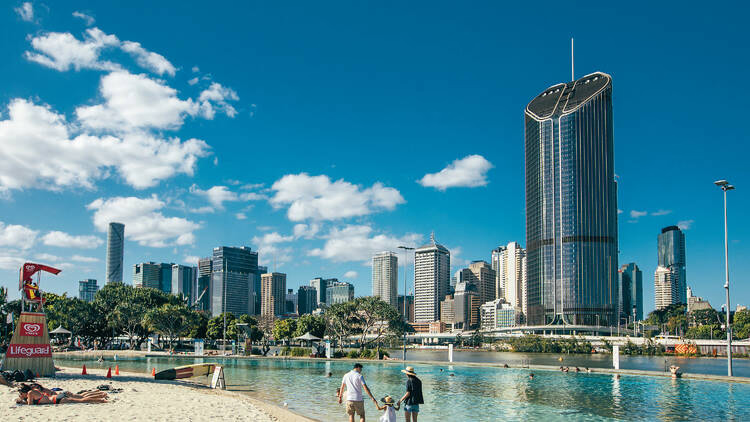
The city itself rewards anyone willing to slow down. The Brisbane River is genuinely used — CityCats ferry locals to work, South Bank’s Streets Beach is the only inner-city lagoon beach in Australia, and Lone Pine Koala Sanctuary (the world’s first, founded 1927) is a 20-minute drive from the CBD. We’ll show you where to slow down, where to detour, and where to just get on the river.
Brisbane at a glance
Everything you need to know first
Where Queensland’s river city 2.7 million people, Australia’s third-largest city. Sits on the meandering Brisbane River, 25km inland from Moreton Bay. Capital of Queensland Get there Brisbane Airport (BNE) 14km from CBD. Direct international flights from Auckland, Tokyo, Singapore, LA, Honolulu. Airtrain to CBD (22 minutes); taxi/Uber ~$50 Climate Subtropical · ~11–30°C Hot, humid summers (Dec–Feb) buffered by sea breezes. Mild dry winters (Jun–Aug). Spring has jacarandas in late October; autumn is dry and clear Best months March to November Year-round destination with 280+ sunshine days. Spring (Sep–Nov) for weather and jacarandas. Winter (Jun–Aug) for whale watching. Autumn (Mar–May) for reliably clear days Time & currency AEST (UTC+10) · AUD Queensland does not observe daylight saving — same time as Brisbane year-round. Cards accepted everywhere, tap-to-pay standard, ATMs widely available Traditional Owners Turrbal and Yuggera/Jagera Brisbane sits on the lands of the Turrbal and Yuggera/Jagera peoples (Meanjin). Moreton Bay is Quandamooka Country. We acknowledge these ongoing connections to land, waters, and culture Getting around TransLink + CityCat Buses, trains, and the iconic CityCat ferry network all on one GoCard tap. The CBD is walkable; for hinterland and island day trips, a guided tour with pickup is simplest Headline experiences Moreton, Lone Pine, Tamborine Snorkel the Tangalooma Wrecks, hold a koala at the world’s first sanctuary (founded 1927), and taste Tamborine Mountain’s boutique wines — all within 75 minutes of the CBD
Why Brisbane rewards a longer stay
Most guidebooks list Brisbane as a stopover on the way to the Gold Coast or Cairns. We’d push back — here’s why.
Seven world-class day trips within 90 minutes
Very few Australian cities pack this much diversity into a short drive. Moreton Island (snorkel the Tangalooma Wrecks), North Stradbroke Island (whale watching from shore), Tamborine Mountain (rainforest and boutique wineries), Springbrook National Park (UNESCO Gondwana rainforest), the Glass House Mountains (volcanic plugs named by Captain Cook), Lamington National Park (ancient Antarctic beech forest), and the Gold Coast (surf breaks and theme parks). Brisbane is where you base yourself; the region is what you come for.
The world’s first koala sanctuary — 20 minutes from the CBD
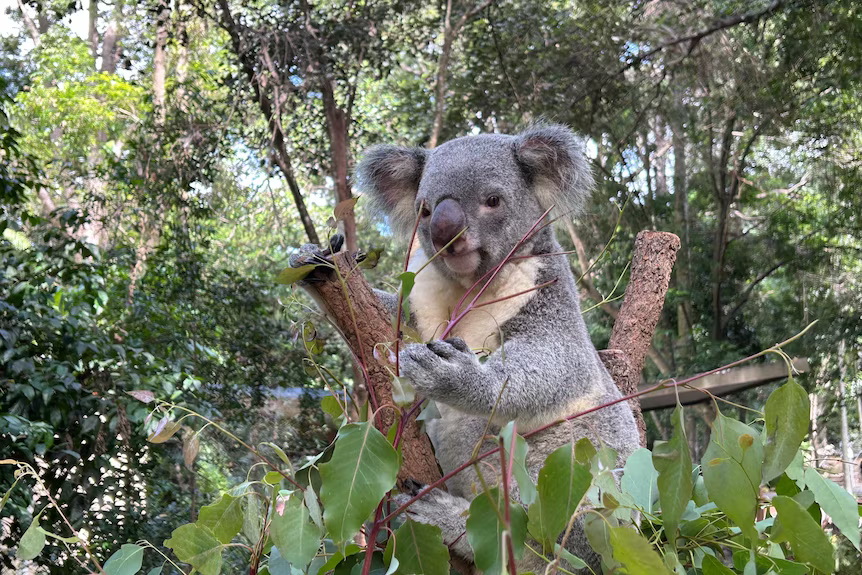
Lone Pine Koala Sanctuary opened in 1927 and is still the largest koala sanctuary in the world, with 130-plus koalas. Queensland is one of only a few Australian states where visitors can legally hold a koala — not possible in Sydney, Melbourne, or Canberra. Lone Pine combines that with hand-feeding kangaroos in an open paddock, wombats, platypus in glass enclosures, and Tasmanian devils.
280+ sunshine days and a genuinely year-round climate
Brisbane’s subtropical climate means winter (June–August) is still 12–22°C — t-shirt weather during the day, light jacket at night. Summer is warm (21–30°C) but buffered by afternoon sea breezes off Moreton Bay. There’s no genuine off-season here, which means prices stay sensible and crowds don’t spike the way they do in Cairns or the Whitsundays.
A food and drink scene that has finally caught up
For years, Brisbane sat in the cultural shadow of Sydney and Melbourne. That’s no longer the case. Howard Smith Wharves (beneath the Story Bridge) has become one of Australia’s most photogenic dining precincts. James Street (Fortitude Valley) is designer boutiques and hatted restaurants. Queen’s Wharf opened in late 2024 with new flagship dining. Weekend markets at West End, Eumundi, and Davies Park rival anything south of the border.
A subtropical river city
Between the bay and the rainforest
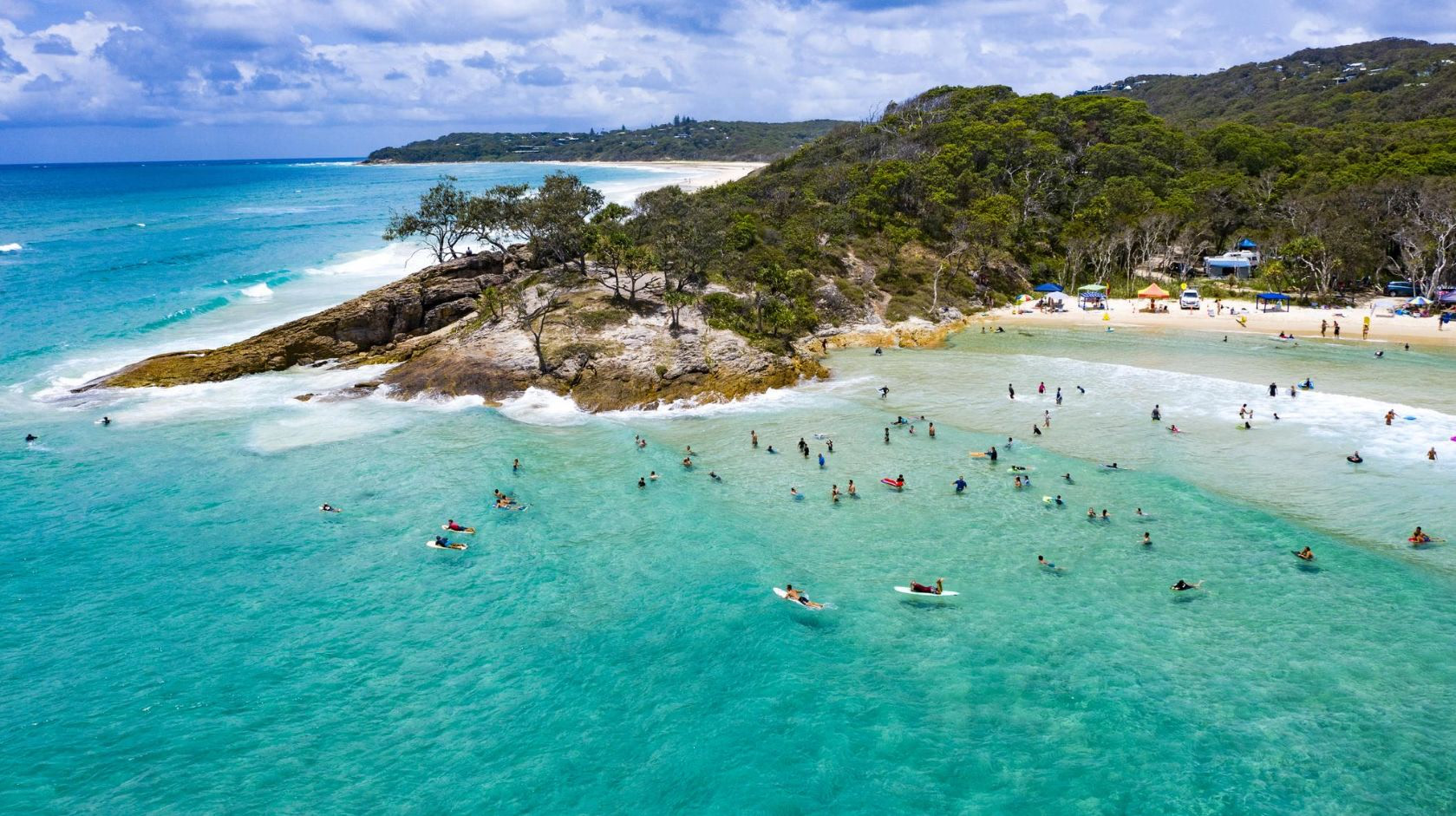
Few cities sit between two such different ecologies. To the east, Moreton Bay’s seven islands stretch into the Pacific — sand dunes, marine wrecks, year-round wild dolphins. To the west and south, the Scenic Rim’s ancient volcanic plateau holds UNESCO Gondwana rainforest, glow-worm caves, and boutique wineries at altitude. Brisbane is the hinge between them — a 30-minute drive in either direction.
When to visit — each season rewards different things
A subtropical climate means every month works. But each season rewards something different, and a good trip knows what it’s coming for.
Spring (September–November) · Our favourite
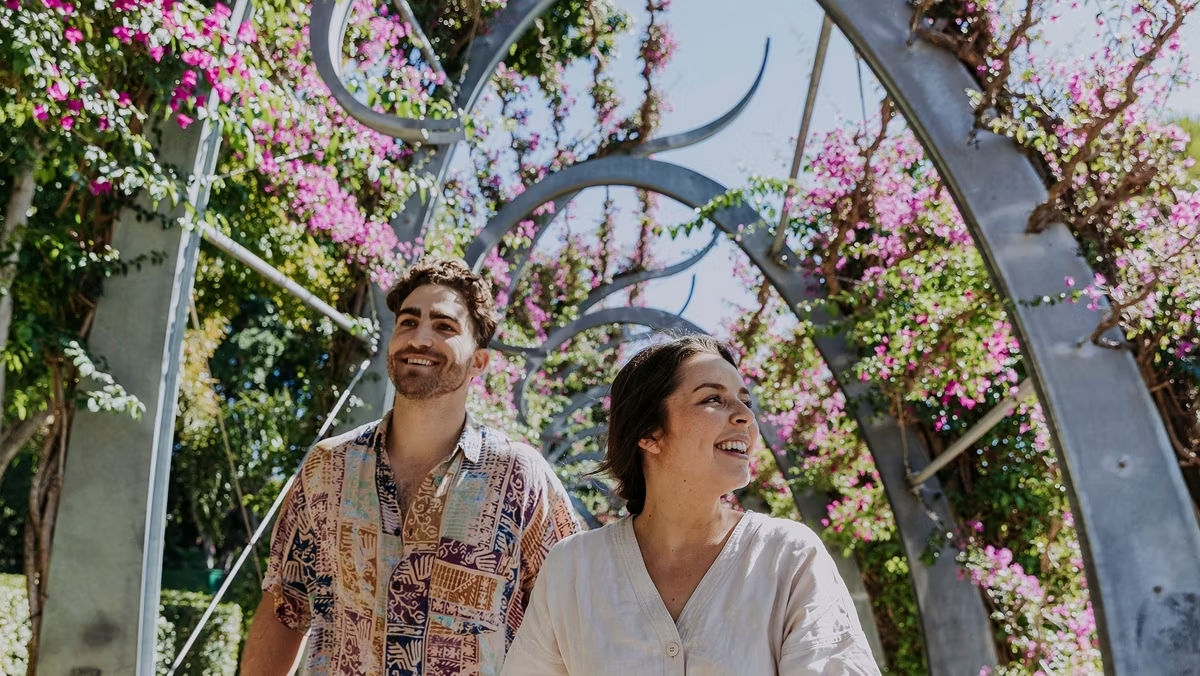
17–27°C, low humidity, spectacular jacaranda blooms. For pure weather, this is the sweet spot. Jacarandas turn New Farm and the river precincts purple in late October. The Glass House Mountains are dry enough for comfortable hiking. The water in Moreton Bay is warming up without yet being hot. Best for: city walks, island day trips, hinterland hiking, outdoor festivals (Brisbane Festival is in September).
Summer (December–February) · Water season
21–30°C, high humidity, afternoon storms common. Brisbane summers are hot but not extreme — afternoon storms roll through quickly and evenings are pleasant. January is peak school holidays, meaning Moreton Island and North Stradbroke get busier. Book reef and island tours 2–3 weeks ahead. Best for: beach days, snorkelling, river kayaking, Streets Beach at South Bank, outdoor dining.
Autumn (March–May) · Underrated
17–26°C, clear skies, lowest rainfall months. Autumn is quietly Brisbane’s most reliable season — warm, dry, low humidity, and crowds thinner than the Gold Coast or Cairns. Tamborine Mountain’s vintages have just been bottled, and the hinterland rainforest walks are at their most comfortable without summer humidity. Best for: wine touring, rainforest walks, city sightseeing.
Winter (June–August) · Whale watching peak
11–22°C, mild and dry, genuine t-shirt days. The humpback whale migration peaks July–September, and you can see whales from the shore at North Stradbroke Island’s Point Lookout. The dry winter air gives the Glass House Mountains their clearest visibility of the year — great for hinterland drives and lookouts. Nights are cool; pack a light jacket. Best for: whale watching, hinterland hikes, Story Bridge climbs, longer walks in Lamington.
Day trips and nearby explorations
Six places around Brisbane that reward a half-day or full-day visit. Most itineraries combine two.
🤿
Moreton Bay · 75 min from Brisbane
Moreton Island & Tangalooma
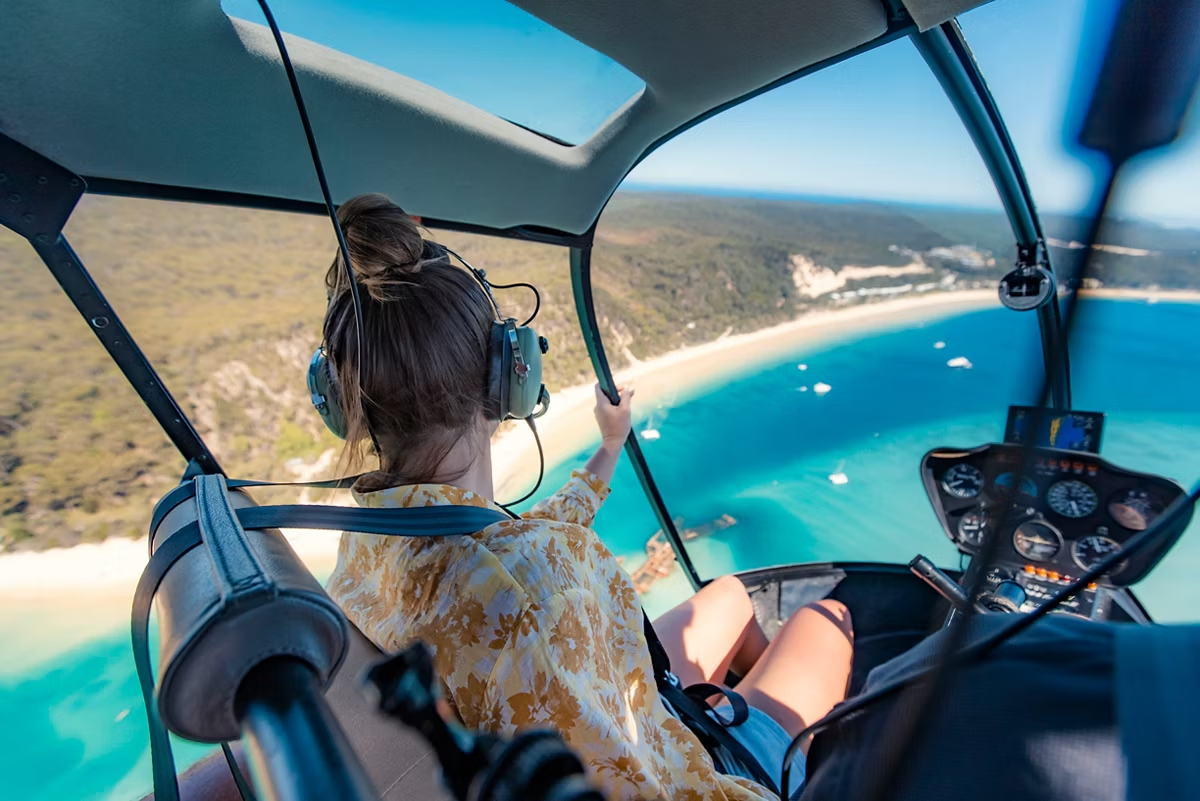
The world’s third-largest sand island and Brisbane’s most popular day trip. Snorkel the Tangalooma Wrecks (15 deliberately-scuttled vessels now teeming with fish and wobbegong sharks), sandboard the coastal dunes, and watch wild dolphins at sunset.
🍷
Scenic Rim · 65 min from Brisbane
Tamborine Mountain
A cool-climate plateau covered in boutique wineries, a spectacular rainforest Skywalk, and the artisan Gallery Walk. Cedar Creek Estate, Witches Falls Winery, and Sirromet’s mountain cellar door — all within 15 minutes of each other.
🐨
Fig Tree Pocket · 20 min from CBD
Lone Pine Koala Sanctuary
The world’s first and largest koala sanctuary, founded in 1927. Hold a koala (Queensland is one of the few states where it’s legal), hand-feed kangaroos in an open paddock, meet wombats and Tasmanian devils, watch bird-of-prey demonstrations.
🏛
South Brisbane · CBD-adjacent
South Bank & Cultural Precinct
Streets Beach (Australia’s only inner-city lagoon beach), the Queensland Art Gallery and GOMA, the Queensland Museum, QPAC, and the South Bank Parklands — all free or low-cost, all within walking distance. Best in late afternoon for the CBD skyline.
🐋
Moreton Bay · 90 min from Brisbane
North Stradbroke Island
Locally known as “Straddie” — the world’s second-largest sand island. Point Lookout is one of the rare places on Earth where you can watch humpback whales migrate past from the shore (June–October). Rich Quandamooka Aboriginal heritage throughout.
💧
Gold Coast Hinterland · 90 min from Brisbane
Springbrook National Park
UNESCO Gondwana Rainforest. Purling Brook Falls drops 109 metres; the Best of All Lookout is exactly that; the Natural Bridge’s glow-worm cave at night ends up being the trip highlight for most visitors. Combines naturally with Tamborine for a full-day itinerary.
What you came here for — top Brisbane experiences
Beyond the obvious. These are the experiences our specialists consistently hear guests call the highlight of their trip.
Water and marine experiences
Tangalooma Wrecks snorkelling — 15 deliberately-sunk vessels close to shore, now a protected marine habitat. Visibility averages 10–15 metres. Green turtles, trevally, the occasional wobbegong shark. CityCat the length of the river — the cheapest scenic cruise in Australia, under $5 one way. Wild dolphin feeding at Tangalooma — one of the few places on Earth where wild bottlenose dolphins approach the shore nightly. Whale watching from Point Lookout (June–October, from the shore). Kayaking under the Story Bridge at dusk — our most-requested local activity.
Nature and wildlife
Lone Pine koala cuddle — Brisbane sessions run 10:30am and 2pm daily. Queensland is one of the only states permitting koala holding. Glow worms at Natural Bridge — tens of thousands of bioluminescent larvae on a cave ceiling, in Springbrook National Park. Morning lorikeet feeding at Currumbin — 45 minutes south but worth the drive; hundreds of wild rainbow lorikeets descend at dawn and dusk. Platypus spotting at Mt Tamborine — Cedar Creek Falls has a resident pair. O’Reilly’s bird-feeding in Lamington — crimson rosellas and king parrots land on outstretched arms.
Food, wine and city experiences
Howard Smith Wharves — the riverfront precinct under the Story Bridge. Felons Brewing Co for Queensland craft beer, ARC Dining for hatted fine dining, Mr Percival’s overwater for cocktails at sunset. Eat Street Northshore — 180+ food vendors in converted shipping containers, Fri–Sun only. James Street, Fortitude Valley — designer boutiques by day, hatted restaurants by night. West End Markets — Saturday mornings, multicultural Brisbane at its best. Story Bridge Adventure Climb — Brisbane’s answer to the Sydney Harbour Bridge climb. Mt Coot-tha lookout at sunset — the city’s highest accessible point, free entry, the best $0 sunset in Queensland.
From our Brisbane departures
Trip ideas from the Brisbane office
Day tours with hotel pickup, run by guides who live here. Most depart from Brisbane CBD; all link to detailed itineraries.
Most popular
Brisbane & surrounds · Multiple departures
Best Brisbane Tours 2026
Our curated selection of the highest-rated Brisbane day tours and short itineraries. City + Lone Pine combinations, Moreton Bay departures, hinterland half-days, and small-group experiences our specialists return to year after year.
Moreton Bay · Full-day
Moreton Island Day Tours 2026
Tangalooma Wrecks snorkelling, sandboarding the coastal dunes, wild dolphin feeding at sunset. Ferry, gear and lunch included. Departs Holt Street Wharf with Brisbane CBD pickup.
Fig Tree Pocket · Half-day
Lone Pine Koala Sanctuary tours
The world’s first koala sanctuary, 20 minutes from the CBD. Hold a koala (legal in QLD), hand-feed kangaroos, see wombats and Tasmanian devils. Includes admission and CBD return transfers.
Scenic Rim · Full-day
Mt Tamborine wine tours
Three boutique mountain wineries with cool-climate vintages, plus the Tamborine Rainforest Skywalk and Gallery Walk. Lunch at a hatted mountain restaurant. Our most-booked Brisbane day tour.
Moreton Bay · Full-day
North Stradbroke Island day tours
Ferry to “Straddie”, Point Lookout for whale watching (Jun–Oct, from the shore), Cylinder Beach swim, and lunch at the Stradbroke Hotel. Quandamooka cultural sites en route.
Brisbane · Half-day & full-day
All Brisbane tours & experiences
The full Brisbane departures catalogue — city tours, river cruises, Story Bridge climbs, food and brewery tours, Gold Coast and Sunshine Coast day trips. Filterable by date and theme.
Latest from the Cooee Journal
Brisbane field notes
Three reads from our specialists on getting the most out of a Brisbane visit.

3 days in Brisbane: the city, the bay, and the hinterland
Our specialist’s three-day Brisbane plan — day one in the city, day two on Moreton Island, day three in the Tamborine wine country. The hinge: not trying to do everything, picking the right two.
Day trips from Brisbane: the eight that actually reward your time
There are dozens of day trips listed in every Brisbane guide. We rank the eight that genuinely earn the drive — and the ones we’d quietly suggest skipping on a first visit.
Brisbane river cruises: CityCat vs commercial vs private hire
The Brisbane River is one of the most under-used scenic assets in Australian tourism. We compare the $5 CityCat option, the commercial paddlewheelers, and the private charter market — what each is worth and when.
Continue south-east Queensland
Beyond Brisbane
The most natural extensions from a Brisbane visit — all within a 90-minute drive or short flight.
Gold Coast
An hour south of Brisbane. Surfers Paradise high-rise, Burleigh Heads surf, theme parks, and the hinterland reaching back through Tamborine and Springbrook. Easiest day trip pairing — or a second base for a longer stay.
Sunshine Coast
90 minutes north. Noosa Heads’ protected beaches, the Glass House Mountains, Eumundi Markets, and Australia Zoo. Quieter and slower than the Gold Coast — a different kind of Queensland coast.
The Whitsundays
A 1.5-hour flight north to the Great Barrier Reef’s tropical archipelago. 74 islands, Whitehaven Beach’s silica sand, and reef sailing. Common pairing for travellers extending a Brisbane visit into a full Queensland trip.
Queensland overview
Reef, rainforest, outback, beach — Queensland in one place. The complete state guide with all regions, planning advice, and itineraries from our Brisbane specialists.
Honest answers before you book
Questions our Brisbane specialists answer most often. If yours isn’t here, our team replies within one business day.
Our top five: Moreton Island (snorkel the Tangalooma Wrecks), Tamborine Mountain (wineries and rainforest Skywalk), Lone Pine Koala Sanctuary (world’s first), Springbrook National Park (UNESCO rainforest and glow worms), and North Stradbroke Island (whale watching from shore, June to October). All within 90 minutes of the Brisbane CBD. See our day trips section above for full details.
June to October, peak July to September. Moreton Bay offers excellent humpback sightings during migration. For a Brisbane day trip, North Stradbroke Island’s Point Lookout lets you watch whales migrate past from the shore — no boat required. For a more immersive experience, dedicated Moreton Bay whale-watching boats run daily in season.
Yes — particularly well-suited. Lone Pine Koala Sanctuary is the clear standout: children can hold koalas and hand-feed kangaroos in an open paddock. South Bank has an inner-city lagoon beach (free), the Queensland Museum and GOMA both have free entry to permanent exhibits, and the CityCat ferry is a working, cheap river cruise that kids love. Most Cooee tours offer child pricing for ages 4–15.
Two to three days covers the city plus one day trip. Four to five days allows for two or three day trips and a real sense of the city. Seven days opens up the full South East Queensland circuit — Brisbane, Moreton Bay, the Scenic Rim hinterland, the Gold Coast and the Sunshine Coast — all while returning to the same accommodation each evening.
Not in the city. TransLink buses, trains and the CityCat ferry network cover the CBD and inner suburbs well, all on one GoCard tap. The CBD itself is very walkable. For day trips into Moreton Bay, Tamborine Mountain or Springbrook, organised tours with hotel pickup (like ours) are the simplest option — particularly for island day trips where the ferry logistics add complexity.
Yes. The Gold Coast is 80km south — an hour by car or train. Popular day trips combine Surfers Paradise and Burleigh Heads beaches with the hinterland (Tamborine, Springbrook) or theme parks (Movie World, Dreamworld, Sea World). Our guided tours include hotel pickup from Brisbane CBD.
Guaranteed at sanctuaries: koalas, kangaroos, wallaroos, platypus, wombats, Tasmanian devils. In the wild: dolphins year-round in Moreton Bay, humpback whales June to October, sea turtles, rainbow lorikeets at dawn and dusk (spectacular at Currumbin), and occasionally wild koalas in the hinterland eucalypts. O’Reilly’s in Lamington is the standout for bird-feeding experiences.
Brisbane is genuinely year-round with over 280 days of sunshine. Spring (September–November) has our favourite weather — plus jacaranda blooms. Autumn (March–May) is low-humidity and reliably clear. Winter (June–August) is mild and peak whale-watching season. Summer (December–February) is warm and best for water activities, though expect afternoon storms. See our When to Visit section above for full month-by-month detail.
How Cooee plans your Brisbane trip
Brisbane is where we work, every day
Our office is on Adelaide Street in the CBD. Our specialists live in West End, Paddington, New Farm and Wynnum. The Moreton ferry captains know us by name, the Tamborine winemakers pick up when we call, and the Lone Pine rangers keep a spot for our groups. This isn’t a city we research; it’s the city we’re from.
Group size varies by tour — up to 45 on our extended coach journeys, 24 on regional small-group departures, and 14 on the most intimate trips. More about how we work →
50+ years in Brisbane 14–45 group size by tour 20 min CBD to Lone Pine
More from the Cooee group
Sister brands & travel essentials
More from the Cooee group — and a quick-link to the local transport detail to make your Brisbane stay easy.
Cooee Golf
Golf-themed itineraries and country-club packages across Australia. Tee times, transfers, and clubhouse dining bundled into one trip.
Cooee Coffee
Café trails, working-roastery tours, and the regional barista culture that has quietly become world-class. From bean to brew.
Cooee Shopping
Markets, makers, and main-street shopping itineraries across Australia. The best of regional retail in one curated catalogue.
Cooee Wine
Cellar doors and wine regions across Australia — the Scenic Rim, Granite Belt, Barossa and beyond, planned with a dedicated Cooee Wine concierge.
Cooee Cruising
Coastal, river and ocean cruising itineraries — launching 2026. Reef Sleep stays, the Murray, expedition cruises and ocean liners.
Cooee Nature
Wildlife, rainforest and geology — the Glass House Mountains, Australia Zoo and Mary Cairncross, threaded through the natural story of each region.
Getting around in Brisbane
Brisbane local transport guide
Uber, taxis, buses, trains and CityCat ferries. Plus airport transfers, private coach charter options, and the practical detail for moving around Brisbane without a hire car.
Plan your Brisbane visit
Tell us about the trip you’re imagining
When you’d like to travel, how many people, and what catches your eye — Lone Pine and Moreton Island, the Tamborine wineries, a city + Gold Coast week, or something custom. A Brisbane-based Cooee specialist replies within one business day with options and an indicative quote.
Plan My Brisbane Trip — Free Enquiry Call a Brisbane Specialist — 0409 661 342
Brisbane Travel Guide FAQs
What are the best day trips from Brisbane?
How many days do you need in Brisbane?
Is Brisbane worth visiting, or just a stopover?
When is whale-watching season near Brisbane?
How do I get from Brisbane Airport to the city?
The Brisbane Travel Guide
Plan the trip
- Best Time to Visit Brisbane
- Getting Around Brisbane
- How Much Does a Trip to Brisbane Cost?
- The perfect 3 days in Brisbane
- Where to Eat in Brisbane
- Where to Stay in Brisbane
- Brisbane Visitor Essentials
- Brisbane Airport Guide
- Brisbane Airport Transfers
- Brisbane Neighbourhoods
- Brisbane Weather
- Is Brisbane Safe?
- Parking in Brisbane
- Brisbane Cruise Terminals
- Brisbane Markets
- Brisbane Nightlife
- Brisbane CBD (neighbourhood)
- South Bank (neighbourhood)
- Fortitude Valley (neighbourhood)
- New Farm (neighbourhood)
- West End (neighbourhood)
- Kangaroo Point (neighbourhood)
- Brisbane Airport to the City
- Accessible Brisbane
- Shopping in Brisbane
- Paddington & Red Hill (neighbourhood)
- Teneriffe (neighbourhood)
- Howard Smith Wharves (neighbourhood)
- South Brisbane (neighbourhood)