Queensland · Sub-region

Where the Great Dividing Range blooms.
One and a half hours from Brisbane.

Toowoomba is Australia’s second-largest inland city — population 140,000, sitting at 700 metres above sea level on the Great Dividing Range, 125km west of Brisbane. A four-season climate genuinely unusual in Queensland, 150+ public parks (the densest concentration per capita in regional Australia), and a ten-day September flower festival that has run continuously since 1950. Giabal and Jarowair country, the gateway to the Granite Belt and the Bunya Mountains.

Sep 18–27 Carnival 2026 700 m on the Range 150+ parks Garden City

Toowoomba is Australia’s second-largest inland city — population 140,000, sitting at 700 metres above sea level on the eastern escarpment of the Great Dividing Range, 125 kilometres west of Brisbane via the Toowoomba Bypass. Most Australians know it as the place to stop for coffee on the way somewhere else. The city rewards the visitor who actually stops.

The elevation gives Toowoomba four distinct seasons (genuinely unusual in Queensland — spring 12–25°C, winter mornings occasionally touching 2–4°C with frost, summer 28–30°C with cool evenings, autumn the colour-change months) and a horticultural tradition that has produced more than 150 public parks and gardens — the densest concentration of public green space per capita of any Australian regional city. The defining annual event is the Carnival of Flowers, held continuously each September since 1950 — originally a community morale initiative in post-war austerity, now the largest annual event in regional Queensland with 500,000+ visitors over ten days. 2026 is the 76th edition.

This guide is what we give our own guests planning Toowoomba: the six city highlights (Queens Park, Japanese Gardens, Picnic Point, Laurel Bank, Empire Theatre, Cobb+Co Museum), four major day trips (Granite Belt wines, Bunya Mountains, Main Range, Girraween), where to stay (the heritage Vacy Hall is the answer), and the practical detail on the Toowoomba Bypass and Wellcamp Airport. Giabal and Jarowair country, 1.5 hours west of Brisbane.

Toowoomba at a glance

Everything you need to know first

Where
Great Dividing Range
125km west of Brisbane on the Great Dividing Range’s eastern escarpment. Australia’s second-largest inland city at 700m altitude. Population 140,000. The gateway to the Granite Belt south and the Darling Downs west
Get there
1.5 hrs by car
Warrego Highway via the Toowoomba Bypass (Nexus Bypass — $1.6B, 41km, completed 2019, toll ~$3.50 each way). Bus from Brisbane Transit Centre 2-2.5 hrs. Wellcamp Airport (WTB) operates daily Qantas flights from Sydney and Melbourne
Traditional Custodians
Giabal · Jarowair
Giabal and Jarowair peoples are Traditional Custodians of the Toowoomba region. The wider Darling Downs is also home to the Barunggam (western Darling Downs) and the Wakka Wakka, central to the Bunya Mountains cultural significance
Carnival of Flowers
76th edition · Sep 2026
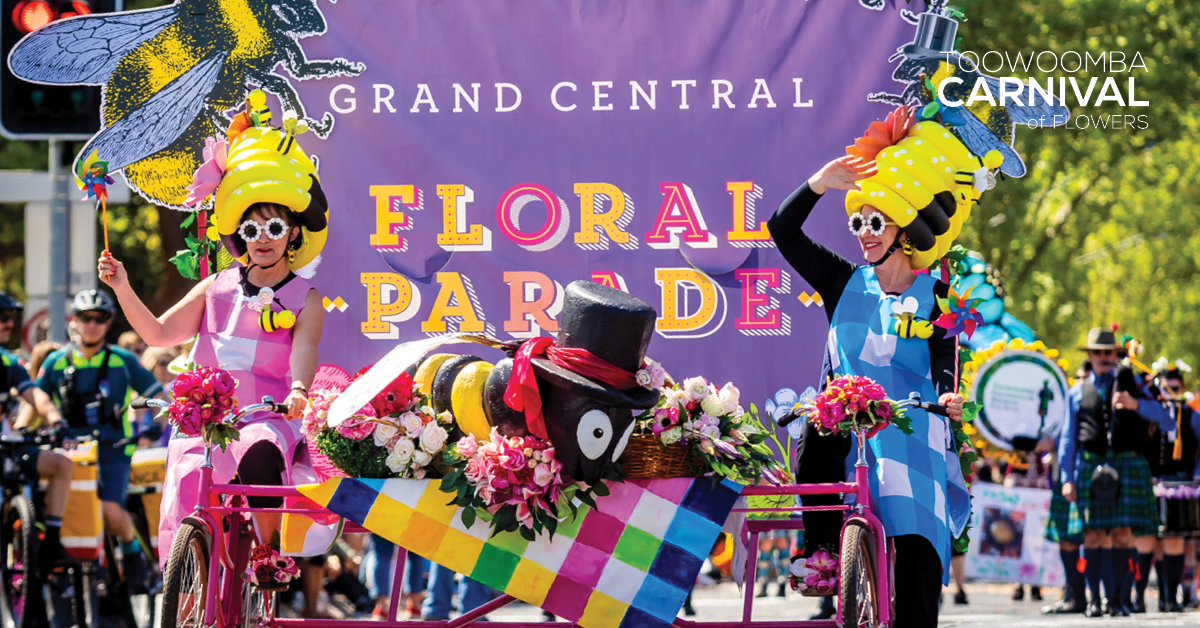
18-27 September 2026. The festival has run continuously since 1950. 500,000+ visitors over 10 days. The Grand Central Floral Parade (fresh flowers only, no artificial materials) is the centrepiece. Book accommodation 6 months ahead
Climate
Four-season at altitude
Genuinely four-season inside subtropical Queensland. Spring 12-25°C, winter mornings 2-4°C with frost, summer 28-30°C with cool evenings, autumn the colour-change months. 4-8°C cooler than Brisbane year-round
Parks & gardens
150+ public parks
The densest concentration of public green space per capita of any Australian regional city. Queens Park established 1870 (oldest in Queensland), Japanese Gardens (Ju Raku En) 4.5ha opened 1989, Laurel Bank scented garden, Picnic Point escarpment park
Best months
Sep · Apr-May
September for the Carnival of Flowers (book 6 months ahead). April-May for the Japanese Gardens autumn maple colour (most photographed seasonal display in regional Queensland). October-November for roses at peak without the Carnival crowds. June-August for the Picnic Point dawn fog views
Minimum stay
1 day. Ideally 2-3
A single day from Brisbane covers the gardens, escarpment and heritage CBD. Two days adds the Granite Belt wineries or the Bunya Mountains. Three days lets you slow down and add Main Range, Girraween or the Crows Nest antiques day

Why Toowoomba is Queensland’s most underestimated city

A city that knows what it is — the Garden City of the Great Dividing Range, a genuinely four-season climate inside a subtropical state, and a horticultural culture that has been investing in itself for 75 years.

Four-season climate at altitude — rare in Queensland

Toowoomba’s elevation (690–700 metres on the Great Dividing Range’s eastern escarpment) gives it a climate that genuinely separates from the rest of Queensland. Spring temperatures of 12–25°C. Winter mornings that occasionally touch 2–4°C with frost on the lawns. Summer days in the high 20s rather than the lowland 30s, and cool evenings every night. Autumn that produces actual colour change in deciduous trees — the Japanese maples in the Japanese Gardens, the elms and oaks in the older streets. The combination of altitude and temperature is the technical reason why this city has invested so heavily in horticulture: the climate rewards it, and the horticultural community has spent 150 years responding.

150+ public parks — densest in regional Australia

Toowoomba has more than 150 public parks and gardens — the densest concentration per capita of any Australian regional city. Queens Park (26 hectares, the formal Botanic Gardens established 1870, the oldest in Queensland) is the centrepiece. Laurel Bank Park (the scented garden with 300 heritage rose varieties). Picnic Point (the escarpment lookout park). Plus dozens of smaller neighbourhood parks, the heritage residential street verges with their jacaranda canopies, and the public gardens of the City Hall and Civic Square precinct. The Toowoomba Regional Council horticultural programme — a year-round operation maintaining all of this — is the largest of any local council in Queensland.

The heritage CBD — the finest outside Brisbane

Toowoomba’s CBD contains the finest concentration of intact Victorian and Edwardian commercial architecture in Queensland outside the Brisbane CBD. The Ruthven Street and Margaret Street heritage precinct preserves the wool-trade prosperity of the late 19th-century Darling Downs in sandstone and rendered brick of unusual quality. The Toowoomba Railway Station (1875 — the oldest intact working station building in Queensland) maintains a platform garden consistently among the most decorated in Australia. The Empire Theatre (1911 — French Renaissance — 1,766 seats — heritage-listed) is the most significant performing arts venue in regional Queensland, hosting the Queensland Symphony Orchestra and Broadway touring productions.

The street art revolution — the First Coat Festival

Since 2015, the annual First Coat Festival has commissioned Australian and international artists to paint large-scale murals on buildings across Toowoomba’s CBD and industrial suburbs. The festival is now the largest regional street art festival in Australia — 60+ permanent murals across the city. The self-guided walking map (downloadable from the festival website or available from the Toowoomba Visitor Information Centre on James Street) covers a 4km circuit through the CBD, the Clifford Street industrial precinct, and the laneways off Margaret Street. The Cactus and Bunker street art zones are the densest concentrations. Toowoomba is now visited by an entire category of traveller specifically for the murals — a transformation in the city’s identity that has happened inside ten years.

We acknowledge the Giabal and Jarowair peoples as Traditional Custodians of the Toowoomba region, and pay respect to Elders past, present, and emerging. The Darling Downs is also home to the Barunggam (western Darling Downs) and Wakka Wakka peoples — the Wakka Wakka are central to the cultural significance of the Bunya Mountains, where the Jarowair, Wakka Wakka and Barunggam peoples gathered every three years for the bunya feasts when the cones ripened (Booburrgan Ngmmunge — the largest pan-tribal Aboriginal gathering in eastern Australia, drawing peoples from as far afield as the New England Tablelands and North Queensland).

The Toowoomba Carnival of Flowers — September since 1950

Seventy-six years of one community festival

The Carnival of Flowers began in 1950 as a community morale initiative during post-war austerity. Local horticultural societies decorated the city’s parks and a single day’s parade was organised to lift spirits in a regional centre that had endured the war years. The festival has run every September since — 2026 is the 76th edition, with 500,000+ visitors over the ten days. The centrepiece is the Grand Central Floral Parade, held on the Saturday of the festival’s second week: floats built on steel frames over many months by community groups, schools and commercial sponsors — and every visible element must be a fresh flower, fresh leaf, or fresh seed. Artificial materials disqualify the float. By Saturday afternoon the leading floats are already wilting in the spring sun. The transience is part of the aesthetic, and the simple fact of a city that has invested itself entirely in a single flower festival for 76 years is genuinely infectious local pride.

When to visit — the four-season city

Toowoomba’s altitude gives it a four-season climate genuinely distinct from coastal Queensland — the right month depends on what you want to see.

September · Carnival of Flowers (the spectacular month)

Weather: Spring 12–25°C, mild and dry, jacaranda canopy in flower (the streets purple from above). Best for: The Carnival of Flowers (10 days), the Grand Central Floral Parade Saturday week 2, the Queens Park competition display gardens, the city’s gardens at their most lavish. Trade-offs: The city is at peak crowds and peak prices. Accommodation books out 6 months ahead. Restaurants need reservations. The pay-off: the gardens and the public energy are unmatched anywhere else in regional Queensland.

October–November · Spring without the crowds

Weather: 13–27°C, warming, dry. Best for: The roses at peak in Queens Park and Laurel Bank — the Carnival has been packed away but the gardens are at their absolute peak bloom in October–November (1,500 roses across 170 varieties at Queens Park alone). The jacarandas in flower into mid-October. The wildflower season at Girraween National Park (September–November). Trade-offs: Some Carnival-week installations have been removed. The gain: half the price, a third of the crowds, gardens almost as good.

April–May · Japanese Gardens autumn maples

Weather: 8–22°C, mild, dropping humidity, the cool nights producing the temperature differential needed for autumn colour. Best for: The Japanese Gardens (Ju Raku En) — the Japanese maples (Acer palmatum) turn yellow, orange and crimson in a display genuinely unusual in subtropical Queensland. The garden’s autumn season is the most photographed seasonal event in regional Queensland. The 7am visit with the tea house reflected in the still lake water is the correct April morning. Trade-offs: Cool — bring a light layer. Toowoomba mornings can sit at 8–10°C through May.

June–August · Winter (the contrarian’s choice)

Weather: 2–18°C, cold mornings (frost on the lawns at dawn), clear days, low humidity. Best for: The Picnic Point dawn experience (the Lockyer Valley fog filling the valleys below the escarpment, the Darling Downs visible above the cloud — the most specifically Toowoomba visual experience available, and only available in the cool months). The escarpment views at their clearest with the low-humidity winter air — visibility frequently exceeds 200km from Picnic Point in July. The parks quiet, the cafes warm, the Empire Theatre programming at its most concentrated. Trade-offs: Genuinely cold for visitors expecting Queensland warmth — pack winter clothes.

Critical Carnival accommodation note: The city of Toowoomba and a 60km radius around it fill completely during Carnival week. Book accommodation 6 months minimum ahead. We pre-book rooms at Vacy Hall, the Burke & Wills, and the Condamine from January for the September Carnival departures. If the city itself is sold out, overflow accommodation in Oakey, Dalby and Warwick (30–45 minutes away) is the standard fallback — but those properties also fill quickly. Last-minute Carnival visits without accommodation booked are not possible.

The six highlights of Toowoomba

A well-structured Toowoomba day covers the gardens (Queens Park, Japanese Gardens, Laurel Bank), the escarpment (Picnic Point) and the heritage (Empire Theatre, Cobb+Co Museum). All six are within 15 minutes of each other.

CBD · Carnival HQ · Free entry

Queens Park & Botanic Gardens

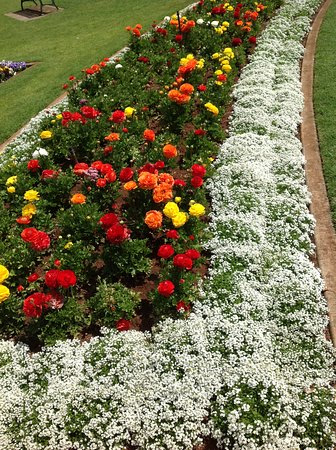
26 hectares in the CBD — the formal Botanic Gardens established 1870, the oldest in Queensland. The heritage rose beds (1,500 roses across 170 varieties) at peak in October–November. The heritage Moreton Bay figs planted in the 1880s. The conservatory, the formal sunken garden, the central lawn. Heart of the Carnival of Flowers — competition display gardens, judging and Floral Parade viewing all centre here. Toowoomba Farmers Market runs every Saturday 6am–12pm in the adjacent car park.

🌹 Best for: Carnival HQ, roses (Oct-Nov), Saturday market

USQ campus · 4.5 ha · Free entry

Japanese Gardens (Ju Raku En)

“Garden of Ease and Pleasure” — 4.5 hectares on the University of Southern Queensland campus, designed by Yasuo Teshima of Kochi City (Toowoomba’s sister city in Japan) and officially opened on 1 October 1989. One of the finest Japanese gardens in Australia — a complete expression of traditional design principles (borrowed scenery, asymmetry, rock-water-plant integration as symbolic rather than decorative). The tea house hosts traditional tea ceremonies by appointment. Peak season April–May: the Japanese maples turn yellow, orange and crimson — the most photographed seasonal display in regional Queensland.

🍁 Best for: autumn maples (Apr-May), 7am quiet visit

Eastern escarpment · 8km from CBD

Picnic Point & the Escarpment

The escarpment lookout park 8km east of the CBD — sealed road through a koala habitat corridor. The lookout platform offers a 270-degree panorama west across the Lockyer Valley to the Darling Downs plains (visibility 200km on clear days) and east over the Lockyer’s agricultural patchwork. The Table Top Mountain Walking Track (4.5km loop) passes through escarpment woodland with reliable koala sightings. The Picnic Point Kiosk (heritage 1930s) for coffee. The dawn view in July (valley fog below, farmland above) is the most specifically Toowoomba visual experience available.

🌄 Best for: dawn fog views (Jul-Aug), koalas, kiosk coffee

McKenzie Street · 3km from CBD · Free entry

Laurel Bank Park & Scented Garden

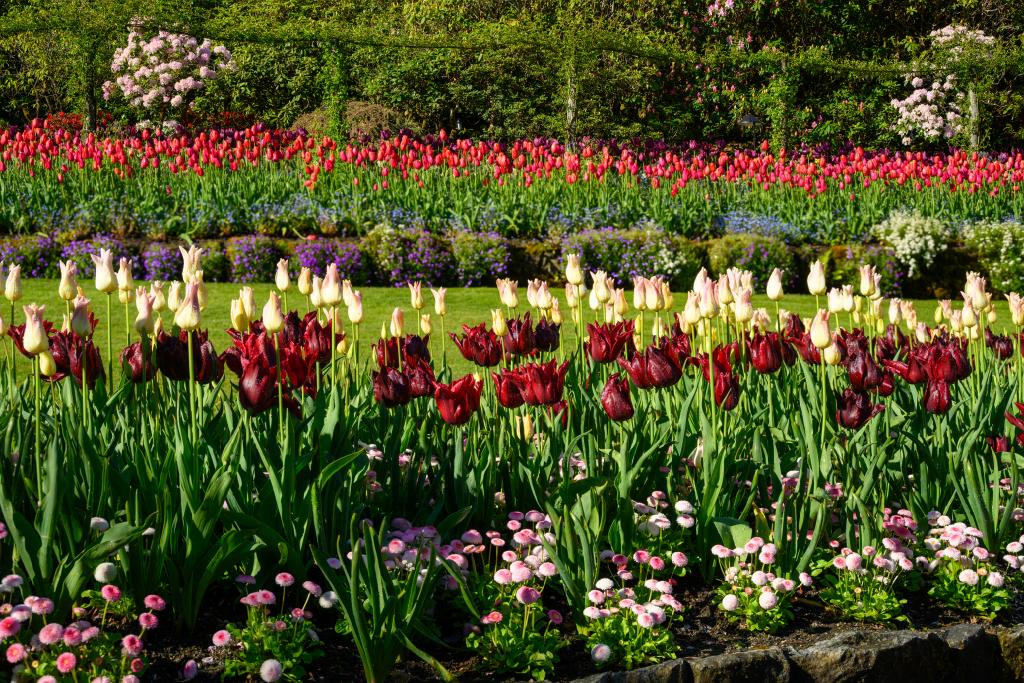
The Toowoomba park designed specifically for the olfactory experience. The scented garden — a circular planting around a central sundial, the plants chosen for fragrance (lavender, rosemary, boronia, gardenias, sweet olive, daphne, and 300 heritage rose varieties — the most fragrant concentrated garden in Queensland). The plant labels include Braille text alongside standard text — Laurel Bank is a touch-and-smell garden designed accessible to visitors with visual impairment. Peak fragrance October–November.

🌷 Best for: 300 heritage roses, accessible scented walk

56 Neil Street · 1,766 seats · Heritage-listed

Empire Theatre & Heritage CBD

The 1,766-seat performing arts venue at 56 Neil Street — built 1911 in the French Renaissance style as the Empire Picture Palace, heritage-listed, the most significant performing arts venue in regional Queensland. The painted ceiling, dress circle and original proscenium arch survive intact. Hosts the Queensland Symphony Orchestra, Broadway touring productions, and the Toowoomba Repertory Theatre. The surrounding Ruthven Street and Margaret Street heritage precinct is the finest concentration of intact Victorian and Edwardian commercial architecture in Queensland outside Brisbane CBD. The Toowoomba Railway Station (1875, oldest intact in Queensland) and the First Coat Festival murals are within walking distance.

🎭 Best for: heritage architecture, theatre, First Coat murals

Lindsay Street · Queensland Museum Network

Cobb+Co Museum

The purpose-built museum housing Australia’s largest collection of horse-drawn vehicles — 39 carriages and coaches including the Concord coaches (the same design used in the American West), dray wagons and Cobb & Co mail coaches. The Cobb & Co stagecoach company (founded San Francisco 1853, Australian operations from 1853) ran 6,000 horses and 28 coaches per week through Queensland at its peak. The blacksmithing demonstration (Friday–Sunday at 11am — the only regularly operating public blacksmithing demonstration in Queensland). The Darling Downs history galleries cover Indigenous history (Jarowair, Giabal, Barunggam peoples), pastoral wool and wheat economy and German immigrant communities.

🛞 Best for: heritage transport, blacksmithing (Fri-Sun 11am)

Day trips & deeper detail — beyond the city

Toowoomba’s position on the Dividing Range puts it within reach of some of Queensland’s finest rural and natural landscapes. Four major day trips genuinely worth the drive, plus the city’s strangest hidden secret.

The Granite Belt — Queensland’s cool-climate wine region

Centred on Stanthorpe, 1.5 hours south of Toowoomba (210km from Brisbane). At 800–1,000m altitude, the Granite Belt produces varieties unsuited to lowland Queensland: Shiraz, Cabernet Sauvignon, Chardonnay, Merlot, plus the increasingly successful “Strange Bird” varieties (Fiano, Tempranillo, Vermentino — the heat-tolerant Italian and Spanish varieties that the still-warm summers suit perfectly). 40+ open cellar doors. Ballandean Estate (established 1932, Queensland’s oldest winery), Symphony Hill (biodynamic at 1,000m, multi-award-winning Shiraz), Robert Channon (the Verdelho). Pair with an afternoon walk in adjacent Girraween National Park (“Place of flowers” in Bigambul language — 11,700 hectares of granite boulder country, the Pyramid Walk 5km return to a 150m granite dome, spring wildflowers September–November).

Bunya Mountains National Park — rainforest and ancient cultural significance

22,000 hectares of subtropical rainforest, 1.5 hours northwest of Toowoomba, centred on the bunya pine (Araucaria bidwillii) — an ancient conifer whose massive cones (the “bunya nut”) were the most important food source for Aboriginal peoples across southeast Queensland. The Wakka Wakka, Jarowair and Barunggam peoples gathered every three years for the bunya feasts when the cones ripened — Booburrgan Ngmmunge, the largest pan-tribal Aboriginal assembly in eastern Australia, drawing peoples from as far afield as North Queensland and the New England Tablelands. The cones weigh up to 10kg and fall without warning — do not stand under a bunya pine in cone season (February–April). Walking tracks: Scenic Circuit (4km loop), Mt Kiangarow (6.6km return to the park’s highest peak at 1,135m). Glossy Black Cockatoos feed in the pines. Cool 15–22°C at the summit even in summer. For a longer stay in the area, see our South Burnett travel guide.

Main Range National Park — the highest escarpment hiking close to Toowoomba

30,000 hectares on the eastern escarpment, 30 minutes east of Toowoomba via the Cunningham Highway — the highest-altitude section of the Great Dividing Range accessible from the Toowoomba corridor. White Rock (1,077m, Queensland’s 4th highest peak — the 9.5km return summit walk delivers 360-degree views). Cunninghams Gap (surveyed by Allan Cunningham in 1827 — the first European route over the Main Range — the sealed highway provides easy walking access to the escarpment). Spicers Gap (4WD-required gravel road along the escarpment crest — the former bullock wagon track from Ipswich, 800m vertical drop in under 2km). The orchid flowering season (September–November) brings the highest density of native orchid species of any accessible park in southeast Queensland.

First Coat Festival & the murals walk — the city’s identity since 2015

The annual First Coat Festival (March–April each year since 2015) commissions Australian and international artists to paint large-scale murals across Toowoomba’s CBD and industrial suburbs. The festival is now Australia’s largest regional street art festival — 60+ permanent murals across the city, with the self-guided walking map (downloadable from the festival website or available from the Toowoomba Visitor Information Centre on James Street) covering a 4km circuit through the CBD, the Clifford Street industrial precinct, and the laneways off Margaret Street. The Cactus and Bunker street art zones are the densest concentrations. The First Coat Festival has transformed Toowoomba’s visual identity inside ten years — a category of traveller now visits the city specifically for the murals.

The Toowoomba Redwood Forest — the city’s strangest hidden secret. 15km southwest of the CBD on Spring Creek Road (off the Gore Highway), a private property contains a stand of California Coastal Redwoods (Sequoia sempervirens) planted in the 1930s and now reaching 30–40 metres in height. The trees are entirely incongruous in the Queensland pastoral landscape — a dense, cathedral-dark redwood grove in the middle of Darling Downs grazing country, and the single most surprising visual experience accessible from Toowoomba. The 20-minute walk through the grove is the quietest 20 minutes available within 20km of the city. Entrance by gold coin donation. No facilities. No road signage — navigate by the property address on Google Maps.

Toowoomba departures & itineraries

Trip ideas — day tours, Carnival packages and Darling Downs weekends

All Cooee-operated, all hard-capped at 24 (most run 14–20), all with hotel pickup from Brisbane.

Full catalogue

Toowoomba tours · All 2026 departures

All Toowoomba tours

The complete 2026 Toowoomba tour index. Carnival of Flowers packages (September), Granite Belt wine days, Bunya Mountains rainforest tours, Main Range hikes, Tamborine day trips, and Toowoomba day tours from Brisbane. Use this as the catch-all starting point.

Day & overnight From Brisbane & Sunshine Coast All seasons
View full catalogue →

Carnival of Flowers · Sep 18-27 2026

Carnival of Flowers package

The four-night Carnival of Flowers long weekend — Queens Park competition gardens, the Grand Central Floral Parade Saturday week 2 (reserved viewing position on Margaret Street), the Empire Theatre Carnival production (tickets secured by us in May), and the Saturday Farmers Market morning. Vacy Hall accommodation pre-booked from January. Limited departures — book by April.

View the Carnival package →

Granite Belt · Wine tour

Toowoomba wine tours (Granite Belt)

The Granite Belt cellar door circuit done right. Ballandean Estate at 9am opening (Queensland’s oldest winery, 1932), Symphony Hill biodynamic at 1,000m altitude, Robert Channon for the Verdelho, lunch among the granite hills. Optional Girraween National Park afternoon walk (Pyramid Walk or Granite Arch Circuit) to pair the wine with the spring wildflowers. Pickup from Toowoomba or Brisbane.

View Granite Belt wine tours →

Things to do · Toowoomba activities hub

Toowoomba things-to-do

The activity catalogue for the city itself — Japanese Gardens guided tours, Queens Park Botanic walks, Picnic Point escarpment tours, Cobb+Co Museum experiences with the Friday blacksmithing demonstration, First Coat murals walk, and the Toowoomba Farmers Market Saturday morning. Mix-and-match for a self-paced city visit or pre-book guided versions.

View things-to-do hub →

Bunya Mountains · Day tour from Toowoomba

Bunya Mountains day tour

1.5 hours northwest to Queensland’s second national park (gazetted 1908) and the cultural heart of the Wakka Wakka, Jarowair and Barunggam peoples. The Scenic Circuit walk, the Booburrgan Ngmmunge cultural interpretation, lunch at the Bunya Mountains Lodge, and an introduction to the bunya pine ecology. Glossy Black Cockatoos in the pines. Cool 15–22°C at the summit even in summer.

View the Bunya day tour →

Latest from the Cooee Journal

Toowoomba field notes

Three reads from our specialists on planning a Toowoomba trip.

Continue Queensland

Beyond Toowoomba

The natural pairings — Brisbane as the gateway, the Sunshine Coast for the coastal counter, the South Burnett for the country continuation north, or the wider Queensland circuit.

From Toowoomba travellers

Recent guests who’ve travelled the Garden City, the Granite Belt and the Bunya Mountains with us.

“The Japanese Gardens at 7:30am in late April — the maple trees in full crimson and orange, the still water of the lake reflecting the tea house, no other visitors yet. Our guide had timed the morning precisely. I had no idea anything in subtropical Queensland looked like this. Worth the 1.5 hour drive from Brisbane on its own.”

Catherine N.

Toowoomba day trip · April 2026

Sydney, Australia

“Carnival of Flowers Saturday parade. We were in a reserved viewing spot on Margaret Street, and our guide explained that every visible piece of every float had to be a fresh flower or leaf — no artificial materials. Watching forty-foot floats covered entirely in roses, dahlias and ferns roll past, knowing they’d be wilted by Sunday morning — there’s something genuinely moving about that level of community commitment to a transient art form.”

David & Maria L.

Carnival of Flowers package · September 2026

Auckland, NZ

“Picnic Point at 6am in July. The Lockyer Valley below us was completely white under cloud — the fog filling the valleys — and we were standing in clear morning sunshine on the escarpment. Our guide explained the inversion physics over coffee from the kiosk. The Darling Downs visible 200km west across the cloud. Genuinely one of the most striking single moments of any Queensland trip.”

James S.

Picnic Point dawn · July 2026

Melbourne, Australia

“Granite Belt wine day from Toowoomba. Ballandean Estate at 9am opening (Queensland’s oldest winery, 1932), Symphony Hill at 1,000m altitude with the granite boulders visible from the cellar door, lunch at a Stanthorpe heritage venue, then Girraween Granite Arch walk in the afternoon. The combination of cellar doors and granite boulder walking is unique in Queensland — and the Strange Bird varieties (Fiano, Tempranillo) are genuinely surprising.”

Priya R.

Granite Belt & Girraween · May 2026

Singapore

“Bunya Mountains in October. The Scenic Circuit through proper subtropical rainforest, the bunya pines towering above us with cones the size of footballs (we kept well clear — the guide showed us an 8kg cone shell on the ground). Glossy Black Cockatoos feeding right above the track. The temperature 8°C cooler than Brisbane. The history of the bunya gatherings — the largest pan-tribal Aboriginal assemblies in eastern Australia — properly explained on the way up. A perfect Queensland day.”

Erik J.

Bunya Mountains day tour · October 2026

Stockholm, Sweden

“Saturday morning Toowoomba Farmers Market at Queens Park, then the Cobb+Co Museum’s blacksmithing demonstration at 11am. The blacksmith, the heated forge, the ringing hammer, the steel slowly bending — the only working blacksmithing demonstration in Queensland. Then the museum’s collection of 39 horse-drawn coaches, the Concord coaches the same as the American West. Genuinely educational without being dry.”

Sarah H.

Toowoomba day trip · September 2026

Perth, Australia

Honest answers before you book

Questions our Toowoomba specialists answer most often.

When is the Toowoomba Carnival of Flowers held?

The Carnival of Flowers is held each September for 10 days, typically across the second and third weeks — 18–27 September 2026. The festival has run continuously since 1950, making 2026 the 76th edition. The Grand Central Floral Parade (floats built entirely from fresh flowers, no artificial materials permitted) is held on the Saturday of the festival’s second week. Queens Park competition display gardens and the Laurel Bank Park rose beds peak during Carnival week. Accommodation in Toowoomba and within a 60km radius fills completely. Book at least 6 months ahead, or accept overflow accommodation in Oakey, Dalby or Warwick (30–45 minutes away).

What is the best season to visit the Japanese Gardens?

The Japanese Gardens (Ju Raku En — “Garden of Ease and Pleasure” — on the USQ Toowoomba campus) have two peak seasons. Autumn (April–May) is the most spectacular: the Japanese maple trees turn yellow, orange and crimson in a display unusual for subtropical Queensland — Toowoomba’s 700m altitude produces the cool nights required for autumn colour. Spring (September–November) brings cherry blossom and bulb displays coinciding with the Carnival of Flowers. Visit before 10am at any time of year for the still-water reflections of the tea house. The 4.5-hectare garden was designed by Yasuo Teshima of Kochi City (Toowoomba’s sister city in Japan) and opened on 1 October 1989.

Is Toowoomba worth a day trip from Brisbane?

Yes — Toowoomba is one of the most rewarding day trips from Brisbane for visitors who enjoy gardens, heritage architecture and escarpment scenery. The Toowoomba Bypass (completed 2019) reduces the Brisbane drive to 1.5 hours, making a full day trip genuinely viable. A well-structured day covers the Japanese Gardens (early morning — 9am ideal), Queens Park Botanic Gardens, Laurel Bank Park scented garden, Picnic Point escarpment lookout (with the 270° view over the Lockyer Valley and Darling Downs), and the Cobb+Co Museum. The Toowoomba Farmers Market every Saturday (6am–12pm at Queens Park) is a recommended start to a Saturday visit.

How far is Toowoomba from Brisbane?

125km west of Brisbane via the Warrego Highway (A2) — 1.5 hours by car. The drive uses the Toowoomba Bypass (Nexus Bypass) — a $1.6 billion 41km toll road completed in 2019 that eliminated the bottleneck of the old Range crossing. Toll is approximately $3.50 each way. Toowoomba Wellcamp Airport (WTB) operates daily Qantas flights from Sydney and Melbourne — 30 minutes west of the city centre. Regular bus services from Brisbane Transit Centre take 2–2.5 hours.

What is the Granite Belt and how do I visit?

The Granite Belt is Queensland’s premier cool-climate wine region, centred on Stanthorpe — 1.5 hours south of Toowoomba (210km from Brisbane). At 800–1,000m altitude, it produces varieties unsuited to lowland Queensland: Shiraz, Cabernet Sauvignon, Chardonnay, plus the increasingly successful “Strange Bird” varieties (Fiano, Tempranillo, Vermentino). 40+ boutique wineries open for cellar door tastings — Ballandean Estate (1932, Queensland’s oldest winery), Symphony Hill (biodynamic, multi-award-winning Shiraz), Robert Channon (Verdelho). Pair the wine circuit with an afternoon walk in adjacent Girraween National Park (granite boulders, spring wildflowers Sep–Nov).

What are the Bunya Mountains and what should I know?

The Bunya Mountains National Park (22,000 hectares of subtropical rainforest, 1.5 hours northwest of Toowoomba) is centred on the bunya pine (Araucaria bidwillii) — an ancient conifer whose massive cones, weighing up to 10kg, were the most important food source for Aboriginal peoples across southeast Queensland. The Wakka Wakka, Jarowair and Barunggam peoples gathered every 3 years for the bunya feasts when the cones ripened — Booburrgan Ngmmunge, the largest pan-tribal Aboriginal gathering in eastern Australia. Park warning: do not stand under a bunya pine in cone season (February–April) — the falling cones are genuinely dangerous. Walking tracks: Scenic Circuit (4km loop), Mt Kiangarow (6.6km return to the park’s highest peak, 1,135m). Glossy Black Cockatoos feed in the pines. Cool 15–22°C at the summit even in summer.

Where should I stay in Toowoomba?

Vacy Hall (1876 Georgian manor on Russell Street) is the most atmospheric — heritage-listed, 19 rooms, award-winning restaurant, gardens, the correct Carnival of Flowers base. Burke & Wills Hotel for central CBD modern rooms. Condamine Hotel mid-range. The Spotted Cow heritage pub for budget. All accommodation fills completely during Carnival of Flowers week — book 6+ months ahead. Cooee Tours pre-books accommodation through the year for September Carnival departures. See our detailed Toowoomba accommodation guide for full options.

What is the First Coat Festival?

The First Coat Festival (annual, March–April since 2015) is Australia’s largest regional street art festival. It commissions Australian and international artists to paint large-scale murals on buildings across Toowoomba’s CBD and industrial suburbs — 60+ permanent murals are now part of the city’s visual identity. The self-guided walking map (downloadable from the festival website or available from the Toowoomba Visitor Information Centre on James Street) covers a 4km circuit through the CBD, the Clifford Street industrial precinct, and the laneways off Margaret Street. The Cactus and Bunker street art zones are the densest concentrations.

What is the Toowoomba Redwood Forest?

15km southwest of the Toowoomba CBD on Spring Creek Road (off the Gore Highway), a private property contains a stand of California Coastal Redwoods (Sequoia sempervirens) planted in the 1930s and now reaching 30–40 metres in height. The trees are entirely incongruous in the Queensland pastoral landscape — a dense, cathedral-dark redwood grove in the middle of Darling Downs grazing country. The 20-minute walk through the grove is the quietest 20 minutes available within 20km of the city. Entrance by gold coin donation. No facilities. No road signage — navigate by the property address on Google Maps.

Can Cooee Tours coordinate group bookings to Toowoomba?

Yes — group bookings are a specialty, especially for the Carnival of Flowers. We coordinate private coach charters from Brisbane and the Sunshine Coast, secure Carnival-week accommodation at Vacy Hall and Burke & Wills (held from January for September), arrange reserved Floral Parade viewing positions on Margaret Street, negotiate Empire Theatre Carnival production tickets in May, organise private Granite Belt cellar door circuits with designated drivers, and provide a single point of contact throughout. Suitable for clubs, seniors groups, schools, milestone birthdays and corporate retreats. Call 0409 661 342 or email contact@cooeetours.com.au for a tailored quote.

How Cooee plans your Toowoomba trip

Brisbane-based, Garden City specialists

We’re 1.5 hours from Toowoomba and have been booking the Carnival of Flowers for 35 years. Our specialists know which Carnival accommodation to hold from January, the Empire Theatre Carnival production tickets to secure in May, the Japanese Gardens 7am quiet window in April, the Picnic Point dawn timing in July, and the Granite Belt cellar door circuit in the order that works. We coordinate the transfers, the heritage Vacy Hall booking, the reserved Floral Parade viewing positions, the wine-trail designated driver — one team, one contact, one invoice.

Hard cap of 24 travellers per departure (most run with 14–20). More about how we work →

35+
years booking the Carnival
24
max group size (hard cap)
1.5h
from our Brisbane office

Plan your Toowoomba trip

Tell us about the trip you’re imagining

When you’d like to travel, how many people, and what matters most — the Carnival of Flowers (book by April), the Japanese Gardens autumn maples, a Granite Belt wine weekend, a Bunya Mountains rainforest day, or just a relaxed Brisbane day trip. One day or four, Carnival week or shoulder season. A Brisbane-based Cooee specialist replies within one business day with options, dates and an indicative quote.

Or email contact@cooeetours.com.au · Brisbane office hours Mon–Fri 9am–5pm AEST