Toowoomba wineries & breweries
Toowoomba may be better known for flowers than grapes, but it holds its own for a drink. A few scenic cellar doors sit close to the city, a growing craft-beer and gin scene bubbles away in town, and — best of all — Toowoomba is the gateway to Queensland's finest wine region, the Granite Belt. Here's where to raise a glass, and how to taste without driving.
Preston Peak & the local wineries
Closest to the city, Preston Peak Wines perches on the escarpment about 15–20 minutes south, with sweeping views to match its tastings (usually by appointment). Further out at Maclagan, Rimfire Vineyards offers a relaxed country cellar door about 45 minutes north-west. They're a lovely taste of Downs wine — but for the full experience, they whet the appetite for the Granite Belt to the south.
Gateway to the Granite Belt
The real prize for wine lovers is the Granite Belt, around Stanthorpe and Ballandean, about 1.5–2 hours south of Toowoomba. This high, cool-climate region — Queensland's best — is dotted with boutique wineries (including names like Symphony Hill), granite boulders and, in winter, genuine frosty charm and "Brass Monkey" festivities. Toowoomba is the natural northern base for a Granite Belt trip; make it an overnight to do the cellar doors justice.
Breweries & distilleries
Back in the city, the craft scene is thriving. 4 Brothers Brewing pulls a crowd at its Margaret Street taproom, and there are more breweries around town and up at Highfields. For spirits, Hopscotch Distillers and Pechey Distilling Co. — makers of Toowoomba Dry Gin — are worth seeking out, and CBD wine bars like Uva and Host round out the after-dark options. It all pairs neatly with the city's dining and café scene.
A short history of the glass on the Range
Wine on the Darling Downs is older than most visitors assume. Vines went into Downs soil in the nineteenth century alongside the wheat and the wool, planted by German and Italian settler families who looked at the basalt ridges and cool nights and saw something familiar from home. For most of the twentieth century the region drank beer and shipped its grapes elsewhere, and the idea of Queensland wine was a punchline in southern states. What changed the joke was altitude. Toowoomba sits roughly 700 metres above sea level on the crest of the Great Dividing Range, and the high country running south of it climbs higher still — cold winter nights, real frost, a genuine dormant season for the vines. That is the ingredient Queensland's coastal strip can never fake, and it is why the state's serious wine grows up here rather than anywhere within sight of a beach.
The beer story is more recent and more urban. Like most Australian regional cities, Toowoomba spent decades drinking whatever the big breweries sent up the Range, poured in grand old timber pubs that are themselves worth a look for the architecture alone. The craft turn arrived in the 2010s, roughly in step with the city's cafe boom and its street-art reinvention, and it took root in the same place — the compact CBD blocks where an empty warehouse or a tired shopfront could become a taproom without anyone asking permission from a head office in Brisbane. The result is a drinking scene that feels grown rather than installed: small rooms, local faces behind the bar, and beer brewed a short walk from where you drink it.
Planning a Granite Belt day from Toowoomba
The Granite Belt deserves to be planned like the headline act it is. The region sits around two hours south-west of Toowoomba around Stanthorpe, and the drive itself is part of the appeal — the road climbs steadily until the paddocks give way to orchards, and the orchards to grey granite boulders the size of houses. This is Australia’s highest wine country of any consequence, and the altitude does the work: slow ripening, bright natural acid, and wines with a structure that surprises people who arrived expecting sunshine-state novelty. The cellar doors are mostly small and family-run, which means the person pouring your tasting frequently grew the grapes, made the wine, and named the dog asleep by the door.
Treat it as a full day at minimum. Two hours down and two hours back leaves a comfortable window for three or four cellar doors with a proper lunch in the middle — more than that and the tastings blur into each other, which does the wines no favours and your afternoon even fewer. Pack a jumper in any season; the Granite Belt runs genuinely cold, and a winter tasting with frost still on the ground at ten in the morning is one of Queensland's stranger pleasures. If the region hooks you, and it tends to, the smarter play is an overnight stay so that nobody has to watch the clock or count the pours. Toowoomba makes the natural northern base either way.


How a tasting actually works
If you have never done a cellar-door circuit, the choreography is simple and nobody minds a beginner. You taste in order — sparkling and whites first, then reds light to heavy, sweet things last — in small pours that add up faster than they look. The spittoon on the counter is not a prop; using it is normal practice and the surest sign of someone who intends to enjoy the whole day rather than the first half of it. Ask questions. Small operators would rather talk about their malbec's difficult vintage than stand in silence, and the stories are half the value of visiting in person rather than ordering the same bottle online.
Two habits mark out the seasoned taster. First, book ahead where a venue asks for appointments — smaller cellar doors around Toowoomba often run tastings this way, and turning up unannounced to a family operation can mean a closed gate rather than a warm welcome. Check locally before you set out. Second, buy something where you genuinely liked the wine. Tastings at small wineries are hospitality, not free samples in a supermarket aisle, and a bottle or two purchased at the door is what keeps the whole fragile ecosystem of high-country winemaking solvent. The good news is that this obligation is rarely a burden; the boot of the car filling up as the day goes on is traditional.
An evening crawl through the city's small bars
Toowoomba's own drinking scene concentrates into a few walkable CBD blocks, which makes an evening crawl almost absurdly easy to organise: park once, or better yet stay in town, and let the night unfold on foot. The pattern that works is beer first, wine second, something stronger last. Start at a taproom while the light is still good and the food trucks are still trading, move to a wine bar as the evening settles in, and finish somewhere with a serious back bar and a bartender who has opinions. The distances involved are a few hundred metres at most — this is a city where the entire night out fits inside a ten-minute walking radius.
What gives the scene its character is that nothing here is a franchise experience. The taprooms pour beer made in town, the wine lists lean on Granite Belt producers you may have met at their own cellar doors that morning, and the gin in your glass has a better-than-even chance of having been distilled on the Downs. It pairs naturally with the city’s dining, and the where to eat guide covers the food side of the same blocks. On a Friday or Saturday the rooms fill with a mix of locals and up-the-Range weekenders from Brisbane; midweek is quieter and more conversational, and the bartenders have time to talk you through what is in the glass.
Why the coach is the honest answer
Every tasting day collides with the same piece of arithmetic: somebody has to drive, and country tasting routes are precisely where you do not want that somebody to have been tasting. The self-drive compromise — one designated driver watching everyone else enjoy the day, or worse, everyone quietly counting their own standard drinks against the clock — drains the pleasure out of the exercise. The winding roads of the high country and the descent of the Toowoomba Range demand full attention at the best of times, and a cellar-door circuit is not the best of times. The arithmetic has one clean solution, and it has a driver's seat that nobody in your party has to sit in.
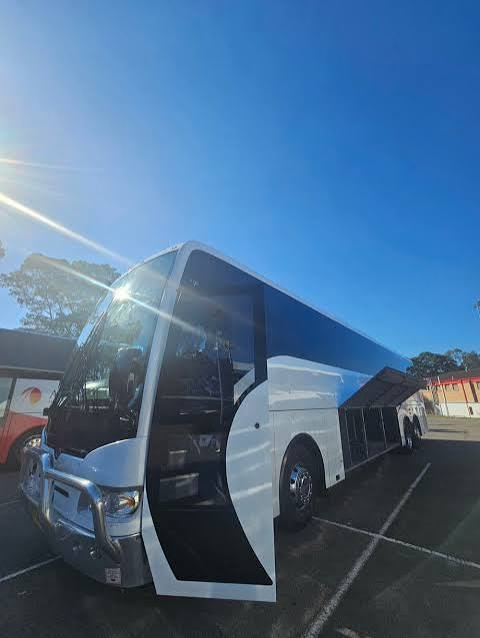
A coach turns the whole day inside out. Everyone tastes, nobody drives, and the trip home down the Range becomes a doze in a comfortable seat instead of a white-knuckle obligation. Cooee Tours’ wine tours run cellar-door days with transfers included, visiting local wineries and the Granite Belt without a single member of your group holding the keys — and because the driver knows the roads and the venues, the day runs on local knowledge rather than a phone’s navigation guesses. For groups, the economics usually beat organising cars and skippers anyway. It is the difference between managing a tasting day and simply having one.
Drinking well during the Carnival of Flowers
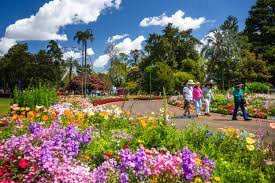
Spring is when Toowoomba’s food and drink scene performs at full stretch. The Carnival of Flowers — 18 September to 5 October in 2026, the festival’s 77th year — brings with it FEASTival, the Carnival’s food and drink program, which concentrates regional producers, food stalls and pouring rights into one long celebratory weekend on 26 and 27 September. If your interest in Toowoomba runs as much to the glass as the garden bed, this is the fortnight to aim for: the city’s bars run at festival pitch, regional winemakers come to you rather than the other way around, and the whole CBD hums in a way it does at no other time of year.
It is also the easiest time of year to do the whole thing from Brisbane without a car. Cooee Tours’ Carnival day tours run from $89 an adult out of Brisbane CBD and Chermside, with Gold Coast and Sunshine Coast departures as well, and a deluxe option at $159 that folds in a two-course lunch. The gardens fill the day; the tastings, the FEASTival stalls and the small bars fill the edges of it. Book early for the Carnival window — September in Toowoomba operates on a different level of demand from the other eleven months, and the coach seats go the way of the accommodation.

The Darling Downs on your plate and in your glass
The reason the drinking is good up here is the same reason the eating is: the Darling Downs is one of Australia's great food-producing regions, and Toowoomba sits on its rim like a dress circle seat. The black-soil plains west of the city grow grain and beef of national significance; the cooler ridges run to orchards, berries and vegetables; and the whole spread lands on Toowoomba menus with a directness that coastal cities pay heavily to imitate. A good Downs lunch — and the cafes and dining rooms of the city take their supply lines seriously — is the natural companion to a tasting day, ballast and pleasure in equal measure.
Drink follows food in the same local spirit. The barley in the local beer, the botanicals in the local gin and the grapes in the high-country wine are all, to a degree that would surprise a city drinker, grown within an hour or two of where you consume them. This is what regional drinking is actually for — not novelty, but proximity. Order the local option and you are tasting the same soils you drove through that morning, which is either a romantic notion or a simple statement of agricultural fact depending on how many cellar doors you have visited by the time it occurs to you.
A drinking year on the Downs
Every season on the Downs argues its own case. Spring is the obvious answer — Carnival, FEASTival, the city at its liveliest and the weather at its kindest — and for a first visit it is the right one. Summer runs warmer but rarely coastal-oppressive at 700 metres, and the beer gardens and taprooms earn their keep on long evenings. Autumn is the sleeper: vintage time in the high country, when the cellar doors are busiest with actual winemaking and the light over the Downs goes golden in a way photographers cross the country for. The paddocks brown off, the mornings sharpen, and the red wines start making more sense than they did in January.
Winter belongs to the Granite Belt. The high country south of Stanthorpe gets properly cold — frost, the occasional flurry, days when the mercury forgets to try — and the region leans into it with open fires at the cellar doors and reds poured at their best. Toowoomba itself does a gentler version of the same season: clear cold nights, warm rooms, and a bar scene that feels made for it. The practical upshot is that there is no wrong month for this particular interest, only different ones. If flowers and festival energy matter, book September; if fireside shiraz with no crowds matters, book July and pack accordingly.
One day, two days, or the full weekend
A single day from Toowoomba divides cleanly into two templates. The town day: a lazy cafe morning, a look at the escarpment, then an afternoon-into-evening amble through the taprooms, wine bars and a distillery-poured gin, all on foot with the hotel a short stroll away. The country day: an early start south to the Granite Belt, three or four cellar doors with a long lunch in the middle, and home over the Range in time for a late dinner. Both are excellent; they are also entirely different days, and the honest advice is not to try to hybridise them. A rushed version of each is worse than a relaxed version of either.
With two days you simply do both, which is where a weekend stay earns its keep. Cooee’s 2-day weekend tours run from $595 and bundle the accommodation and the driving into one booking, with 3-day versions from $880 for those who want the Downs villages and gardens folded in as well. The weekend shape also fixes the pacing problem that ambushes day-trippers: with a bed in town, the evening bar crawl stops being a race against the drive home and becomes what it should be — the slow, talkative end of a day that never once required anyone to say “just a small pour, I’m driving.”
A tasting day for people who aren't tasting
Every tasting group contains at least one person who is there for the day rather than the drink — the pregnant partner, the teetotal friend, the one who simply prefers tea. Toowoomba is unusually kind to them. The city's great gardens are free and central: Queens Park's heritage-listed 26 hectares, Laurel Bank's scented garden, the Japanese stillness of Ju Raku En out at the university. The cafes pour some of regional Queensland's best coffee. And in September the private gardens of the Carnival open their gates, which means the non-drinker's itinerary can be every bit as rich as the taster's — arguably richer, since they will remember all of it.
The trick for mixed groups is to build the day around the shared elements — the drive, the lunch, the views, the gardens — and let the tastings be one thread rather than the whole rope. Cellar doors in this part of the world are generally set in exactly the kind of countryside worth visiting anyway, and most pour coffee and soft options without ceremony. A day that runs garden, cellar door, long lunch, lookout, taproom sends everyone home satisfied, whatever was in their glass. The Downs does not force the choice between flowers and fermentation; it is one of the few places that does both this well within the same afternoon.
Practical notes for a Downs drinking trip
From Brisbane, Toowoomba is roughly 125 kilometres and about 1.75 hours by coach, the last stretch climbing the Toowoomba Range to the city's perch on the Great Dividing Range. It is a genuinely scenic approach and a genuinely demanding drive — the Range road is steep, winding and heavily trafficked, and it is the single strongest argument for letting a professional handle it in both directions. Once in town, the drinking geography is compact: the taprooms, wine bars and restaurants cluster within a few CBD blocks, so a central hotel puts everything within a flat, safe walk and removes the car from the equation entirely.
The country venues are a different matter. Local cellar doors sit fifteen to forty-five minutes out of town on rural roads, and the Granite Belt is a two-hour run south — distances that make the taxi option expensive and the self-drive option compromised. Plan tastings for the middle of the day, confirm opening arrangements locally before travelling (small venues keep small-venue hours), and carry water and a plan for lunch. Or collapse all of that planning into one phone call: Cooee Tours on 0409 661 342 will build the transfers, the venues and the lunch into a single day that starts and ends at your door. See the full tour range for what is running when you visit.
What to expect, and what not to
Calibrate expectations and this region will exceed them. Toowoomba is not the Barossa and does not pretend to be; the local cellar-door count is small, and the city's strength is the way wine, beer and gin sit inside a broader day of gardens, escarpment views and very good food. The Granite Belt, meanwhile, is criminally underrated by southerners and rewards anyone who makes the run south with wines that win arguments. Come expecting a polished, crowded wine-tourism machine and you will find something better: small rooms, real people, and the mild thrill of drinking well in a place the wine map keeps forgetting to include.
Three closing tips from the road. First, do not attempt the town scene and the Granite Belt in one day; the maths of distance and alcohol simply does not work, and both halves deserve better. Second, aim your trip at a shoulder if you can — a Friday crawl beats a Saturday crush, and autumn beats summer for the country runs. Third, and most usefully: decide before you leave home that nobody in your group is driving, and book accordingly. Every good tasting story starts with that decision, and every regrettable one starts with its absence. The Downs will handle the rest.
Wineries & breweries: your questions
Yes, a handful close to the city. Preston Peak Wines, about 15–20 minutes south with grand escarpment views, is the best known (tastings are usually by appointment), and Rimfire Vineyards lies out at Maclagan, around 45 minutes north-west. For a bigger wine experience, Toowoomba is the gateway to the Granite Belt around Stanthorpe — Queensland's premier wine region — about 1.5–2 hours south. See our day trips guide.
It's the northern gateway, but not next door — the Granite Belt (around Stanthorpe and Ballandean, home to wineries like Symphony Hill) is about 1.5 to 2 hours' drive south of Toowoomba. It makes a great long day trip or overnight from the city. Don't confuse the two regions: the celebrated Granite Belt wineries are down south, while Toowoomba itself has just a few closer cellar doors.
It does. 4 Brothers Brewing runs a popular taproom on Margaret Street, and there are others around town and the region (Volcanic Brewing, and Monty Brewing up at Highfields). On the spirits side, Hopscotch Distillers and Pechey Distilling Co. (makers of Toowoomba Dry Gin) lead a small but growing craft scene. It's an easy, walkable add-on to the CBD café and dining circuit.
Yes — a guided tour is the relaxed, safe way to taste without driving the winding country roads. Cooee Tours runs Toowoomba and Granite Belt wine tours that visit cellar doors with transfers included. See our wine tours for options, or we can arrange a private tasting day built around the wineries and breweries you'd most like to visit.
The CBD has a lively scene: the 4 Brothers Brewing taproom on Margaret Street, wine bars such as Uva at Walton Stores and Host, and rooftop options like George Banks. Many double as good places to eat, so they pair naturally with the city's dining — see our where to eat guide for the full picture.