Toowoomba day trips
Toowoomba is the hub of the Darling Downs, and half its appeal is what lies just beyond — waterfalls and bushland to the north, historic woolsheds to the west, rainforest to the north-east, and the fertile Lockyer Valley spread out below the range. It's even the gateway to the Granite Belt wine country. Here are the best day trips, all within easy reach of the city.
Crows Nest, Highfields & Ravensbourne
Head north for the leafy highlights. Crows Nest (about 45 minutes up the New England Highway) is the gateway to a national park of waterfalls, granite rock pools and gorge lookouts. On the way, the village of Highfields has its Pioneer Village and cafés, and the foodie-and-arts scene around Hampton is worth a stop. To the north-east, Ravensbourne National Park protects pockets of cool subtropical rainforest with easy walks and lookouts.
Jondaryan, the Lockyer Valley & more
West of town, the historic Jondaryan Woolshed — a working 19th-century woolshed complex, open daily — tells the story of the Downs' pastoral heritage. Drop off the range to the east and you're in the Lockyer Valley, one of Australia's most productive "salad bowls", dotted with farm gates and country pubs. The nearby dams (Cressbrook, Perseverance, Cooby) offer picnicking and fishing — though not swimming, and Cressbrook's water recreation is currently closed, so check ahead.
Gateway to the Granite Belt
Toowoomba is the northern gateway to the Granite Belt, Queensland's premier cool-climate wine region around Stanthorpe, about 1.5 to 2 hours south. With its cellar doors, granite scenery and (in winter) genuine cold-climate charm, it's a rewarding long day trip or, better, an overnight. Closer to home, the historic town of Warwick (about an hour south) and the wide Western Downs town of Dalby (about an hour west) round out the touring options.
How the Downs fits together
The first thing to understand about day-tripping from Toowoomba is that the city sits at the hub of a wheel. It stands roughly 700 metres up on the crest of the Great Dividing Range, and the roads leave it like spokes: the New England Highway runs north through Highfields towards Crows Nest, the Warrego Highway strikes west across the black-soil plains past Oakey towards Dalby, the range road drops east into the Lockyer Valley, and the southern routes make for Warwick and, beyond it, the Granite Belt. Nearly every day trip worth doing is a run out along one spoke and back again, which makes planning refreshingly simple. You are not building an itinerary so much as choosing a direction, and each direction has a distinct personality — bushland north, pastoral west, produce country east, wine country south.
The distances reward honesty. Highfields is barely 15 minutes up the road. Crows Nest is about 40 minutes. Warwick is roughly an hour south, and the Granite Belt is a genuine two hours each way. The classic mistake is trying to chain two spokes into a single day and spending most of it behind the windscreen; the Darling Downs is at its best taken unhurried — a morning drive, a proper lunch, a lookout, and back up the range before dusk. If you want the arguments settled for you, our guide to the best day trips from Toowoomba ranks the lot.

Highfields: the shortest day trip on the Downs
Highfields barely qualifies as a day trip at all, and that is exactly its value. Fifteen minutes north on the New England Highway, it is close enough that Toowoomba locals treat it as an outer suburb with a village temperament — cafés, gardens and the living-history buildings of the Highfields Pioneer Village, where the working past of the Downs is kept in motion rather than behind glass. Because the drive costs you almost nothing, Highfields is the trip you take when the day is half-planned: a late start, a long morning tea, a browse, and home in time for whatever the afternoon holds. Visitors on a tight Toowoomba weekend can slot it in without sacrificing anything else.
It also earns its keep as a first stop rather than a destination. If you are heading north to Crows Nest, Highfields is where the espresso machine lives; pausing here turns a 40-minute highway run into a civilised two-act morning. Going the other way, it makes a soft landing on the return leg — the last stretch into Toowoomba passes right through, so a late-afternoon stop costs no detour at all. Either way, treat it as the Downs in miniature: unhurried, green, and quietly proud of its history. Our Highfields guide covers the village in detail.

Spring Bluff and the railway gardens
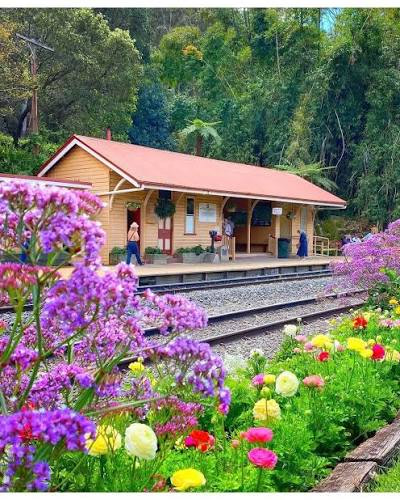
Spring Bluff is the day trip that fits inside a morning. The heritage railway station sits on the old main-range line between Murphys Creek and Toowoomba, a short drive off the crest, and it is one of the region's most photographed places for a simple reason: its platform gardens. Tended with a devotion that borders on the competitive, they turn a working relic of the railway age into a flower show with signals attached. Out of season it is a quiet, green pocket in the folds of the range — a platform, a picnic lawn and birdsong — and precisely the kind of small, particular place that makes the Downs rewarding to poke around in.
Timing is everything here. During the Carnival of Flowers (18 September to 5 October in 2026) the station beds are at their absolute peak and Spring Bluff becomes a pilgrimage site, so expect company and check access and parking arrangements locally before you set out — special arrangements often apply in peak weeks. The road in is narrow and winding, which is half the charm; take it gently. The rest of the year you may well have the platform to yourself, which is its own kind of luxury. The full story, and how it pairs with a Murphys Creek loop, is in our Spring Bluff guide.
A full day at Crows Nest — falls, rock pools and Hampton
If you have one whole day and want bush rather than farmland, drive the 40 minutes north to Crows Nest. The town is the doorway to Crows Nest National Park, where the creek drops about 20 metres over Crows Nest Falls into a granite gorge, pooling in rock basins that look engineered for photographs. The Koonin Lookout gives you the gorge from above; the walking tracks give it to you from every other angle. The air runs noticeably cooler up here than in the city, which in a Queensland summer is worth the drive on its own. Pack water and decent shoes, and check park alerts before you go — conditions on the tracks change with the weather.
The refinement that turns this from a good day into a great one is Hampton, the little highway settlement you pass on the way. Its food-and-arts scene makes it the natural lunch act of the northern run: falls and gorge in the morning while your legs are fresh, then a slow Hampton afternoon on the way home. The falls are at their theatrical best after rain, and midweek visits mean quieter tracks and easier parking at the trailheads. As a single, self-contained day out from Toowoomba, this run is very hard to beat.
The Lockyer Valley, honestly
Drop off the eastern edge of the range and you land in the Lockyer Valley, some of the most productive vegetable-growing country in Australia — the "salad bowl" tag is earned, not marketing. What you get here is working agricultural landscape: irrigated paddocks in improbable greens, big skies, farm gates, packing sheds and country pubs that still function as the town noticeboard. It is a drive-and-graze day rather than a walk-and-look day, and the pleasure is in the specifics — buying whatever was picked that week from the person who picked it, and eating lunch in a pub where the front bar conversation is about rain.
Set your expectations accordingly and the Lockyer delivers. This is not a curated tourist precinct; farm-gate stalls open when there is produce to sell and close when there is not, so check opening arrangements locally rather than building the day around a single stop. What is in the ground changes with the season, which is precisely the point — the valley in winter brassica season is a different trip from the valley in summer. The descent and climb of the range bookend the day with the region's best free scenery, and if you time the return for late afternoon, the light on the escarpment is a reward in itself.
Making the Granite Belt work
The Granite Belt is the glamour trip and the honest guide admits the arithmetic: Queensland's cool-climate wine country around Stanthorpe sits about 140 kilometres south of Toowoomba, a solid two hours each way through Warwick. That is four hours of driving wrapped around your day, so this is the spoke that punishes a lazy start. What waits at the end justifies the effort — high granite country strewn with boulders the size of houses, cellar doors, orchards, and in winter the novelty of genuine cold in Queensland, occasionally with frost-white mornings thrown in.
As a day trip it works if you run it with discipline: leave early, cap yourself at three stops, appoint a non-tasting driver without sentiment, and accept you will come home in the dark. It works better as an overnight, which converts a logistics exercise into a holiday — and if wine is the whole point of your visit, consider basing yourself down there instead. The third option is to let someone else drive entirely; a guided tour removes the driver-sacrifice problem that hangs over every wine region. Toowoomba's role is gateway, and it plays it well: you can decide over breakfast on the range whether today is a Granite Belt day.
Day trips season by season
Spring is the headline act. The Carnival of Flowers (18 September to 5 October 2026 — the 77th festival) fills Toowoomba itself, and the day-trip network becomes both extension and escape: Spring Bluff is in its garden-competition finery, the Lockyer is green, and a morning out of town is the antidote to Carnival crowds in the parks. The catch is beds — accommodation across the city and the nearer towns books out well ahead in Carnival weeks, so a spring visit wants planning months out, not days. Build your day trips around the festival program rather than against it and you get the best of both.
The other three seasons split the spoils. Summer brings storm season, which sounds like a warning but is half the show — afternoons of towering cloud, and waterfalls actually running at Crows Nest afterwards; start days early and be off the range roads when the weather arrives. Autumn has the clearest air of the year, the pick for lookouts and long views across the Downs. Winter means frosty mornings, bright blue days and the Granite Belt at its coldest and most atmospheric — pack properly and it is arguably the best touring season of all, with the region's roads and cafés at their quietest.
Eating your way around the Downs
The Darling Downs runs on morning tea, and no day trip should fight this. Every direction out of Toowoomba is punctuated by country bakeries, pub dining rooms and farm-adjacent cafés where scones are treated as load-bearing infrastructure, and the settlement of Hampton in particular has built a small reputation on feeding travellers well. The reliable strategy is to eat where you stop rather than where you planned — country kitchens reward opportunism, and the day's best meal is often the one you didn't schedule. A pub lunch in a Lockyer or Western Downs town, eaten under a ceiling fan among people who actually farm the land you drove through, is worth any number of curated food experiences.
Two practical notes keep the strategy honest. First, country hours are real hours: small-town cafés may not serve a late lunch and some close midweek days entirely, so check locally before making one venue the hinge of your day. Second, carry a picnic as insurance on national-park runs — Crows Nest and Ravensbourne days are far better with food in the boot, eaten at a gorge lookout, than with a hungry drive back to the nearest town. Fill the thermos in Toowoomba, buy whatever the farm gates offer along the way, and the catering looks after itself.

Photographing the countryside
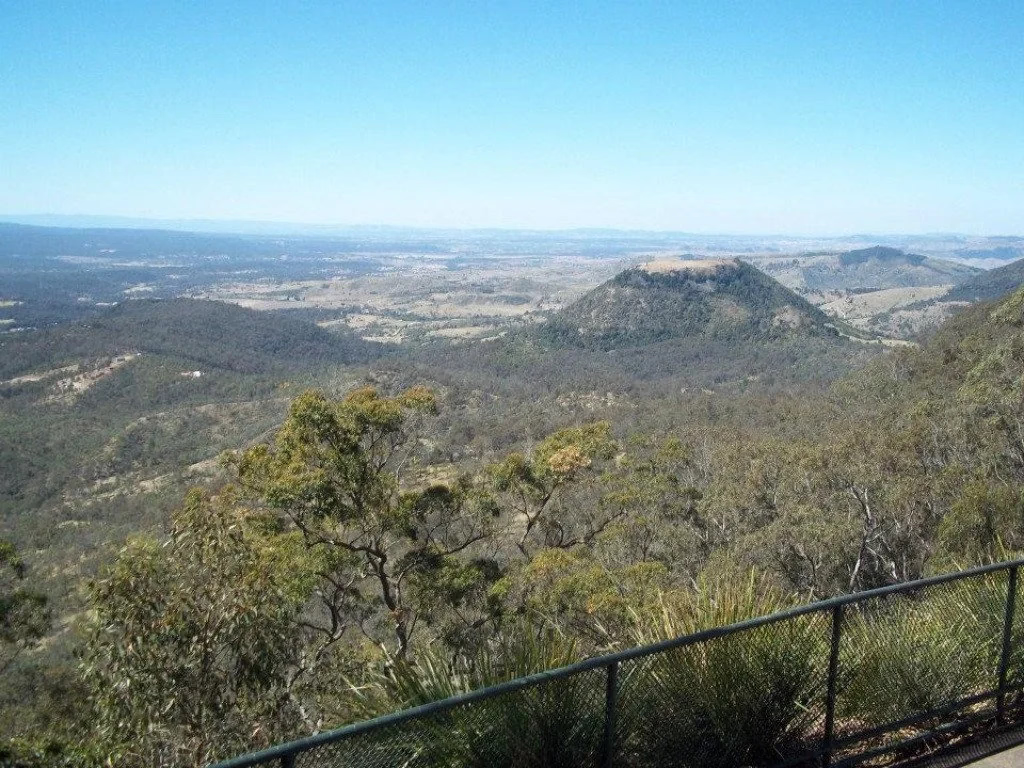
The Downs photograph best at the edges of the day. Start before you leave town: Picnic Point at sunrise gives you the escarpment, the Lockyer Valley filling with light and, on cool mornings, mist pooling below the lip — a spectacular overture to any eastern or northern run. Out on the plains, the country is all horizontals — fence lines, crop rows, windmills and grain infrastructure marching to a huge sky — and it turns painterly in the first and last hour of light while looking merely flat at noon. Plan driving through the middle of the day and shooting at either end of it.
A few specifics earn their place on the memory card. Late light on the western spokes throws long shadows across the black-soil paddocks; the granite country in the south rewards a longer lens picking boulders out of the hills; and Spring Bluff in Carnival season is the region's most reliable colour set-piece. The safety note matters more than any composition tip: the highways carry serious traffic including road trains, so never shoot from the shoulder on a whim — pull fully off at rest areas, town approaches and formal lookouts. The Downs is generous with vantage points; use the sanctioned ones.
Seeing the Downs by coach with Cooee Tours
Every day trip on this page assumes a driver who would rather be looking out the window, which is where a coach earns its fare. Cooee Tours, family-run since 1974, has been bringing travellers up the Toowoomba Range for decades — the run from Brisbane is about 125 kilometres and roughly 1.75 hours, with the climb up the escarpment as the scenic overture. In Carnival season, day tours from Brisbane run from $89 per adult, which buys you the flowers, the commentary and the considerable pleasure of watching the range go past without steering through it.
For the wider Downs, the weekend formats are the honest answer to the distances in this guide. The 2-day weekend tour (from $595) and 3-day tour (from $880) trade the out-and-back day-trip pattern for an unhurried loop — the gardens and lookouts plus the country beyond them, with the accommodation, pacing and lunch stops already argued about on your behalf. If your group would rather share a bottle in the Granite Belt than nominate a driver, this is the version of the Downs to book.
Sample runs you can actually do
The northern classic: morning tea at Highfields around 9am, on to Crows Nest for the falls-and-lookout walk before the day warms up, a slow lunch at Hampton on the return, home by mid-afternoon — a relaxed six hours that shows you bush, gorge and village without ever feeling like a schedule. The range sampler: Spring Bluff first thing while the light is soft, back up the crest and down the other side for a Lockyer Valley farm-gate amble and pub lunch, then up the range again in time for sunset at Picnic Point. Neither run demands an early alarm, and both leave margin for the unplanned stop that becomes the day's highlight.
The big southern day is the exception that demands discipline: away by 7.30am, straight run through Warwick to reach Stanthorpe and the Granite Belt by around 10, three unhurried stops, and home in the dark — rewarding, but only with an early start and a firm hand on the itinerary. The meta-rule across all three: build days around one anchor and let the rest be discovered. The Downs is a region of small, particular pleasures, and itineraries that breathe find them; itineraries that don't just log kilometres.
The fine print of the Downs
A short list of things that save a day trip. Check Queensland national-park alerts before Crows Nest or Ravensbourne runs — tracks close after weather and reopen on their own timetable. Remember the district's dams are drinking-water storages with no swimming, and that Cressbrook's water-recreation area is currently closed, so confirm access before building a day around any of them. Fuel and coffee are cheapest and most plentiful in Toowoomba itself; top up before the western and southern runs, where towns space out. And respect the range's microclimate — the crest can be misty and ten degrees cooler than the valley floor, so a warm layer belongs in the car even in January, especially if your day ends at a lookout.
The verdict on Toowoomba as a touring base is easy to give. Few regional cities in Australia put this much variety inside an hour's radius — waterfalls, rainforest, a working woolshed, produce country, heritage railway gardens — with a wine region waiting at the two-hour mark for the ambitious. Sleep on the crest of the range, pick a spoke each morning, and the Darling Downs will fill as many days as you give it. Whether you drive it yourself or take the coach tour version, go unhurried: this is slow country, and it repays being treated that way.
Toowoomba day trips: your questions
The Darling Downs is full of them. Favourites include the falls and bushland of Crows Nest (about 45 minutes north), the historic Jondaryan Woolshed (west), the rainforest of Ravensbourne National Park (north-east), the village of Highfields just up the road, and the produce country of the Lockyer Valley below the range. Toowoomba is also the gateway to the Granite Belt wine region.
It's the northern gateway, though the Granite Belt wine country around Stanthorpe is a solid 1.5 to 2 hours' drive south (about 140 km), so it's a long day trip or better as an overnight. If wine is your focus, consider staying down there; if you want a taste, Toowoomba has its own wineries and breweries much closer to hand.
The town of Crows Nest, about 45 minutes north on the New England Highway, is the gateway to Crows Nest National Park, known for Crows Nest Falls (a ~20 m waterfall), granite rock pools, the Koonin Lookout over the gorge, and bushwalks and camping. It's a lovely, cooler bush escape, often paired with the food and arts scene around nearby Hampton. See our Crows Nest page.
Generally no — the district's dams (Cressbrook, Perseverance, Cooby) are drinking-water storages, so swimming is not permitted. Some allow boating, fishing or picnicking. Importantly, Cressbrook Dam's water recreation was closed from April 2026 (with major dam-safety works also underway), so check its current status before planning a visit there. For a waterfall and rock pools, Crows Nest National Park is the better bet.
You'll want a car — the Darling Downs' towns, parks and wineries are spread out and public transport between them is minimal. Toowoomba makes an ideal central base, with most day trips within an hour or so. If you'd rather not drive, Cooee Tours runs guided day and weekend tours from Brisbane and Toowoomba that take in the highlights. See our getting around guide.