The Station Gardens
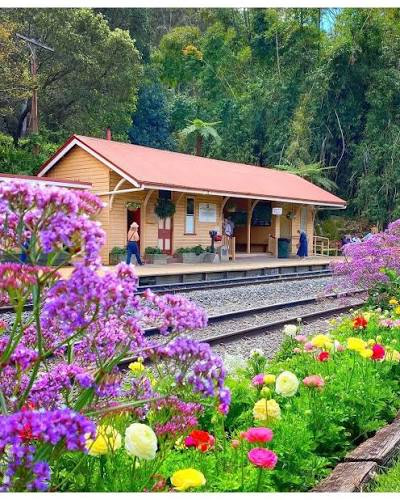
Terraced beds framing the historic station buildings and platform — award-winning, lovingly kept, and at full spectacle through September and October.
A postcard come to life — the heritage-listed railway station halfway up the Range, wrapped in award-winning gardens that have been kept in bloom for over a century.
When the railway conquered the Toowoomba Range in the 1860s, Spring Bluff became one of its stations — and somewhere along the way, its gardens became the point. Generations of stationmasters and gardeners have kept the beds in competition condition, and today the heritage-listed station sits in a fold of the Range wrapped in blooms, lawns and picnic grounds: the most photographed spring scene on the Darling Downs.
Spring is the season — the gardens are planted to peak alongside the Carnival of Flowers — but the setting earns a stop year-round, and the drive down the old Range road to reach it is half the pleasure.
Terraced beds framing the historic station buildings and platform — award-winning, lovingly kept, and at full spectacle through September and October.
A green fold of the Range with bush rising behind and the railway curving through — the kind of composition photographers drive hours for, twenty minutes from the city.
Lawns and tables below the station make it a natural morning-tea stop on any Highfields or Crows Nest run.
Spring Bluff features on our two-day Toowoomba touring and group charters.
See the Tours| Getting there | Off the old Toowoomba–Murphys Creek road, about 20 minutes from the Toowoomba CBD. Access arrangements and parking can vary during festival season — check before travelling on peak weekends. |
|---|---|
| Cost | Grounds are free to visit. |
| Best time | Spring, aligned with the Carnival of Flowers — but the gardens are tended year-round. |
| Combine with | Highfields (15 min) and the Crows Nest–Hampton loop for the classic Range half-day. |
Spring Bluff exists because the Toowoomba Range was, for Victorian-era engineers, a genuinely alarming proposition. When the railway pushed west from Ipswich in the 1860s, the line had to climb from the Lockyer Valley floor to a city sitting roughly 700 metres above sea level on the crest of the Great Dividing Range, and it did so the only way the technology of the day allowed — by winding, doubling back and clinging to the contours of the hillside. Stations and sidings were spaced along the climb for water, for crossing trains and for the small army of workers who kept the line open, and Spring Bluff was one of them: a functional dot on a working railway, occupying a green fold about halfway between Murphys Creek at the bottom and Toowoomba at the top.
What makes the place remarkable is what happened after the necessity faded. Most of the little Range stations dissolved back into the bush when steam gave way to diesel and the railway stopped needing them. Spring Bluff survived because somewhere along the way its people started gardening — seriously, competitively, and with the particular stubbornness of railway staff who had decided their platform would be the prettiest in Queensland. The heritage-listed station you visit today is the compounded result of that decision, renewed every year for over a century, and it is the reason a spot with no town, no shop strip and no through traffic remains one of the most visited places on the Darling Downs each spring.
The tradition that built Spring Bluff was competitive gardening, railway style. Queensland's railways once encouraged stationmasters to beautify their posts, and the staff on the Toowoomba Range took to it the way some workplaces take to fantasy football — with terracing, colour theory and quiet ruthlessness. The station's beds were cut into the hillside in stepped tiers so that the display reads as a single composition from the platform, from the lawns below and, historically, from the windows of a passing train. That last audience shaped everything: these are gardens designed to be seen in a sweep, massed blocks of colour rather than fussy detail, and they still photograph that way.
Today the plantings are managed with the Toowoomba Carnival of Flowers explicitly in mind. Beds are turned over in the cooler months and planted to hit their peak in the second half of September, when the Carnival draws tens of thousands of visitors up the Range and a healthy fraction of them make the pilgrimage down the old road to see the station in full colour. If you have seen a postcard, a calendar or a tourism campaign for the Darling Downs, odds are decent you have already seen Spring Bluff in September without knowing its name. The gardens are tended year-round, though, and part of the pleasure of an off-season visit is seeing the working bones of the display — the terraces, the edging, the century of accumulated craft — without the crowds.
The approach sets the scene properly. You leave the plateau and drop into a valley that feels a full climate zone removed from the city twenty minutes behind you — taller trees, deeper shade, birdsong instead of traffic. The road delivers you to a small parking area below the station, and the first full view is the one everyone comes for: heritage timber station buildings in railway cream and colour, the platform above, terraced flower beds stepping down the slope, and the line itself curving away into cuttings at either end. It is a compact scene, and that is part of its power — everything fits in one glance, and in spring that glance is extravagant.
Allow more time than the size of the place suggests. The precinct rewards slow circuits: up along the platform for the classic elevated angles, down onto the lawns where picnic tables sit under mature trees, across to the memorial and interpretive signage that sketch the station's working past. The railway line through the station remains part of the operating network, so treat it as live infrastructure — admire from the platform and the grounds, and keep children and tripods well clear of the tracks. Forty-five minutes covers a brisk visit; with a picnic and a camera you will comfortably fill two hours.
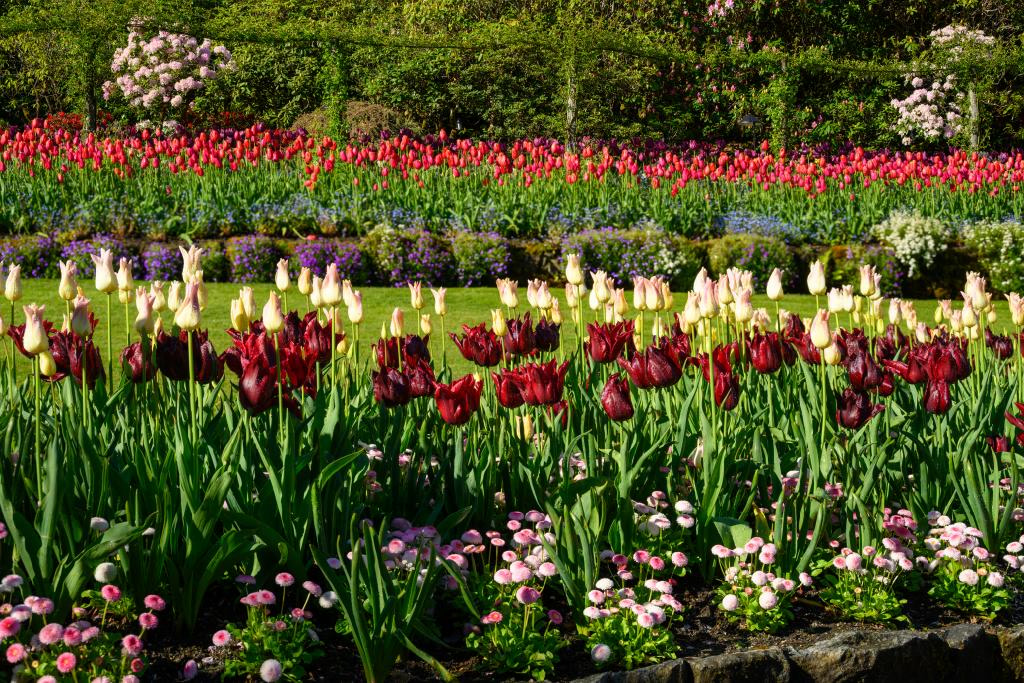
Spring Bluff in Carnival season is the version that built the reputation. The Toowoomba Carnival of Flowers runs from 18 September to 5 October in 2026 — the 77th festival — and the station's beds are planted to peak across exactly that window. Massed annuals in full flower against the heritage buildings, the lawns green from winter rain, and the light on the Range at its clearest: this is the fortnight when the twenty-minute detour from town becomes non-negotiable. It is also, predictably, the busy fortnight. Weekends during the Carnival bring steady traffic down the narrow road, and special access or shuttle arrangements can apply on peak days — check current arrangements before you travel rather than assuming you can simply drive in and park at 10am on the middle Saturday.
The smart plays are timing and combination. Early morning on a weekday delivers the gardens at their freshest with the fewest people in your photographs, and pairs naturally with a late-morning run up to Highfields for coffee. If you are building a full Carnival itinerary, treat Spring Bluff as the out-of-town chapter alongside the city's big four — Queens Park, Laurel Bank Park, Ju Raku En and Picnic Point — and give it its own half-morning rather than squeezing it between parade commitments. Cooee Tours' Carnival of Flowers day tours from Brisbane run from $89 per adult, and the touring itineraries treat the Range country as a feature, not an obstacle.
The station does not close when the tulip photographs stop. Summer brings deep green and long shadows — the valley holds its moisture better than the plateau, and on a hot Downs day the shade of the picnic grounds is a genuine amenity rather than a nicety. Storm season paints the Range in dramatic light, though it also occasionally rearranges the roads, so a quick check of conditions before descending is sensible after heavy rain. Autumn is the sleeper pick: mild air, stable weather, the gardens in transition and the whole precinct frequently close to empty on weekdays.
Winter is turnover time in the beds, which sounds like a reason to stay away and is actually a modest attraction in its own right — you can read the architecture of the terraces plainly, and the bare framework makes the spring transformation easier to appreciate when you return. The heritage buildings, the railway setting and the valley itself carry the visit regardless of what is flowering. If your travel dates are fixed and they are not September, go anyway; just recalibrate expectations from spectacle to serenity, and claim the best picnic table without competition.
If you are calendar-planning a trip, the decision tree is short. Travelling between 18 September and 5 October 2026? The station is a headline act of Carnival season — book accommodation early, favour weekday mornings, and expect the gardens at maximum wattage. In the shoulder weeks either side, the beds are still handsome and the crowds thin dramatically; early September catches the display building, mid-October catches it easing as the jacarandas begin in town. And the 2027 festival is already confirmed for 17 September to 4 October, so travellers who miss this spring can lock the next one in with confidence.
From the Toowoomba CBD, Spring Bluff is about twenty minutes: out through the city's northern edge, then down the old Toowoomba–Murphys Creek road as it drops off the plateau into the Range country. The road is sealed but narrow and winding in its lower reaches — entirely manageable in an ordinary car, driven at the pace the corners suggest, and the descent is one of the more scenic short drives in the region. Coming from Brisbane, the station sits on the Range between Murphys Creek and Toowoomba; most visitors sensibly do it as part of a Toowoomba day rather than a standalone dash, since the city and its gardens are only minutes further on.
Parking at the station is limited and informal, which matters only in Carnival season, when peak weekends can fill it and traffic management or altered access arrangements sometimes apply — confirm the current setup locally before a September weekend visit. The grounds are free to enter. Facilities are modest: picnic tables, interpretive signage, and amenities whose availability is worth confirming before you promise anyone anything. Mobile reception can thin out in the valley folds, so download maps before you descend. Surfaces are a mix of platform, lawn and slope; the core viewing areas are manageable for most visitors, but the terraced sections involve steps and gradients, so travellers with mobility considerations should plan to enjoy the main display from the platform and lower lawns.
One further note on weather: the Range makes its own micro-climate, and the station’s valley can sit under mist while Toowoomba, seven hundred metres up on the plateau, is clear and sunny. Photographers should read that as an opportunity — heritage buildings emerging from valley mist is a genuinely uncommon frame in Queensland — while picnickers should read it as a reason to pack a jumper even in October. After heavy rain, ask locally about the state of the old road before descending, and build enough slack into the day to linger if the morning turns out fine.

Spring Bluff is close to photographer-proof in September — point a phone at the platform and something publishable comes back — but it repays actual craft. The classic frame is from the lawns below the station, shooting slightly upward so the terraced beds stack into the composition beneath the heritage buildings, with the tree line closing the top of the frame. Morning is the professional's window: the valley catches soft directional light before the overhead glare arrives, colours read saturated rather than bleached, and you will share the lawn with birds instead of tour groups. Late afternoon works in reverse, with warm side-light raking across the terraces.
Beyond the postcard, hunt the details. Massed plantings reward tight shots — a wall of blooms compressed with a longer lens, the repetition doing the aesthetic work. The railway furniture is a gift: station signage, lamp posts and the curve of the rails all anchor foregrounds and give the flowers a sense of place that a pure garden shot lacks. Respect the working line while you do it — every angle worth having is available from the platform and grounds. If you are building a broader flower-season portfolio, the best gardens of the Carnival make natural companion shoots on the same trip, and the city's parks fill the middle of the day when the valley light goes flat.
Spring Bluff's picnic grounds are the point, so plan to use them. The lawns below the station carry scattered tables under mature shade, and a rug on the grass with the gardens above you is the canonical way to take morning tea here — generations of Toowoomba families have marked spring exactly this way. There is no permanent shop strip at the station; whether any kiosk or coffee cart is operating varies with season and events, so the reliable strategy is to arrive provisioned. During the Carnival, Cooee Tours offers a Spring Picnic Lunch add-on for $22 on its day tours, which solves the logistics neatly for coach travellers.
Self-caterers have excellent supply lines. Toowoomba's cafes and providores are twenty minutes back up the hill, and in the other direction the New England Highway strip through Highfields and the little food hamlet of Hampton has grown into a legitimate provisioning run — bakeries, cafes and local produce within easy reach of the station. A practical circuit: coffee and supplies in Highfields, morning at Spring Bluff, then lunch up the highway before continuing to Crows Nest. If you would rather someone else handled the chairs, tables and catering entirely, that is precisely the case for the coach — see the full Toowoomba tour range for itineraries that build the eating in.
Spring Bluff is quietly excellent with children, for reasons that have little to do with flowers. It is a real railway station in a valley, which for a certain age bracket outranks any garden bed ever planted — there are rails curving into cuttings, signals, heritage buildings and the permanent tantalising possibility of a train. The lawns give younger kids genuine running room away from roads, the picnic tables keep the logistics simple, and the whole visit fits inside the attention span of a preschooler if you keep it to an hour. The essential rule is the obvious one: the line through the station is live, so the platform edge and tracks are strictly out of bounds, and the grounds are laid out so that supervising this is easy rather than stressful.
For school-aged kids, the station works as a history lesson wearing a disguise. The interpretive signage tells a story with actual drama in it — a railway hauled up a mountain by hand and steam, staff who gardened their workplace into fame — and the terraces make the effort visible in a way a plaque alone never manages. Families building a bigger day should note the pairing logic: Spring Bluff plus the Cobb+Co Museum's National Carriage Collection back in town makes a coherent transport-history day that both generations rate, with Queens Park's playground as the pressure valve between the two.
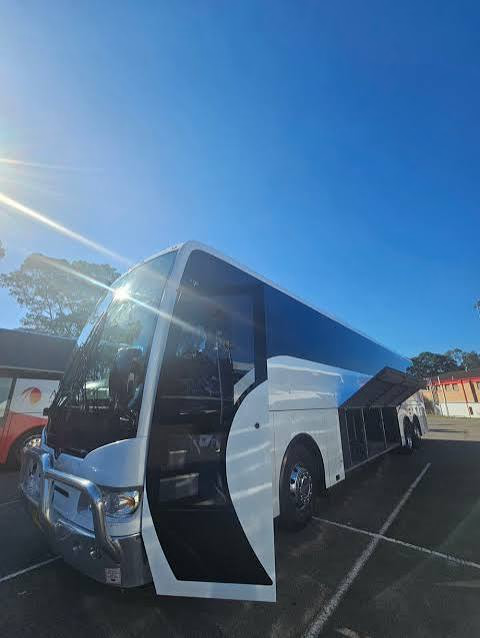
The coach case for Spring Bluff is unusually strong. The station sits down a narrow road off the main routes, parking is the scarce resource in peak season, and the best visiting window — September — is exactly when the Range roads carry their heaviest traffic of the year. A coach dissolves all three problems: you ride up the Toowoomba Range from Brisbane in about an hour and three quarters watching the Lockyer Valley fall away, the driver handles the descent and the parking, and you step out at the precinct with nothing to manage but a camera. Cooee Tours has been running family-owned touring since 1974, and the Range country in spring is core repertoire.
During the Carnival of Flowers, day tours depart from Brisbane CBD and Chermside from $89 per adult and $69 per child, from the Gold Coast (Helensvale) at $99 and $79, and from the Sunshine Coast (Maroochydore and Caboolture) at $109 and $89, with a Deluxe day tour at $159 including a two-course lunch. Premium coach seating in the first four rows is a $5 add-on, and the $22 Spring Picnic Lunch pairs naturally with the station's lawns. Travellers who want the unhurried version — Spring Bluff without a same-day return to the coast — should look at the 2-day weekend tour from $595, which gives the Range towns the second morning they deserve. Bookings and questions: 0409 661 342 or contact@cooeetours.com.au.
Spring Bluff anchors the best half-day loop on the northern side of Toowoomba. The standard circuit runs: down to the station for the morning, back up to Highfields on the New England Highway for coffee and a browse, then north through Hampton — the little food-and-produce stop on the highway — and on to Crows Nest, the timber-and-verandah country town about forty minutes north of the city, with its national park country close by. Driven without hurry, the loop fills a morning and lunch; add the return leg along the escarpment and you have consumed a very good day without ever being more than an hour from the city.
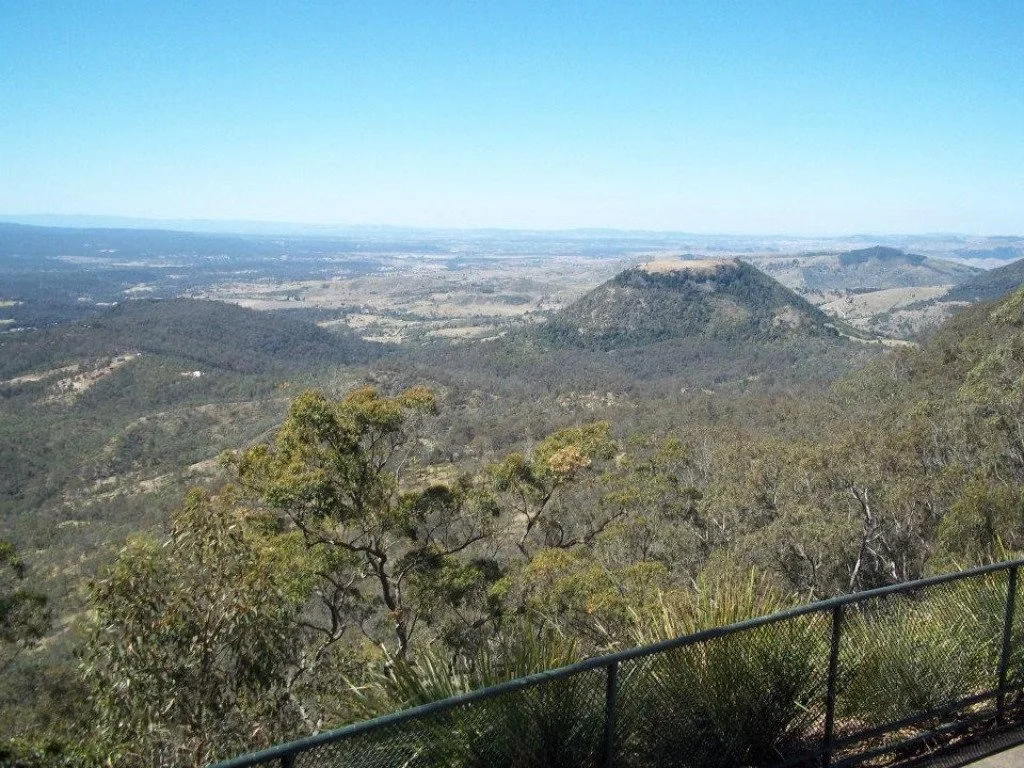
The other natural pairing is vertical rather than northern: Spring Bluff for the fold-of-the-Range experience, then Picnic Point for the top-of-the-Range one. The lookout's escarpment panorama over the Lockyer Valley is the reverse angle of the country you drove through to reach the station, and seeing both in one day gives the geography a satisfying click — you understand, viscerally, what the railway builders were up against. September visitors should also keep a city garden in reserve for the afternoon; the full menu is laid out in our Toowoomba day trips guide, which sequences the Range attractions honestly by season.
Spring Bluff is a five-star stop with a calendar attached. In the second half of September it is close to obligatory — the single most concentrated dose of the Carnival of Flowers aesthetic outside the city parks, and arguably the most photogenic railway station in Queensland. From October to August it is a lovely, quiet heritage precinct in a green valley: absolutely worth twenty minutes of driving if you are already in Toowoomba, not worth a dedicated two-hour pilgrimage from Brisbane on its own. Knowing which version you are visiting is the entire trick to rating it fairly.
The distilled advice: go on a weekday morning if you possibly can; arrive provisioned, because the valley has lawns rather than lattés; treat the railway as live because it is; check access arrangements before Carnival weekends rather than discovering them at the bottom of a narrow road; and build the northern loop — Highfields, Hampton, Crows Nest — around it rather than doubling back. Most of all, give it the unhurried hour it was designed for. A century of railway gardeners did not terrace a hillside so you could photograph it from the car park in four minutes, and the difference between a snapshot stop and a proper visit here is the difference between seeing the postcard and being in it.
Toowoomba is one very good destination out of a very long list. Cooee Tours has been running coaches since 1974 — start with the continent, the country next door, or somewhere further afield.
Every destination below has its own travel guide, things-to-do pages and tour range — built the same way as this one.