The Best Day Trips from Toowoomba
Toowoomba earns its visit — but it's also the perfect base. Eight drives, from twenty minutes to two hours, that show you the rest of the Downs.
Spring Bluff Railway Station — 20 minutes
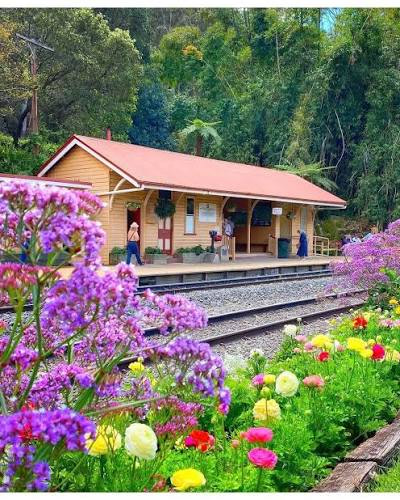
The shortest and most photographed: a heritage-listed station halfway down the Range, wrapped in award-winning gardens that peak spectacularly in spring. Combine it with the old Range road for the scenic loop.
Highfields — 15 minutes north
Village shopping, gardens, cafes and pioneer heritage just up the New England Highway — the easy half-day that pairs naturally with Spring Bluff or a Crows Nest run.
Crows Nest — 40 minutes north
Granite country. The village does antiques and country bakeries; Crows Nest National Park, just east of town, does waterfalls, rock pools and eucalypt walks — Crows Nest Falls and the Valley of Diamonds lookout are the headline tracks. Our Crows Nest & Hampton loop runs the full half-day.
Hampton — 30 minutes north
A hamlet with a food reputation far bigger than its footprint — regional produce, cafes and cool-climate growers along the ridge, celebrated each year at the Hampton Festival.
North for granite and villages, east for the valley and produce, south for wine. Toowoomba sits at the junction of three different Queenslands.
The Lockyer Valley — 30–45 minutes east
Down the Range into some of Australia's most productive farmland — roadside stalls, farm gates and country towns like Gatton and Laidley. Best done as a loop on the way back to Brisbane.
Goombungee and the western Downs — 30–40 minutes
Head north-west and the country opens into classic Darling Downs grain-and-cattle plains, with quiet villages like Goombungee offering the pub-and-bakery rhythm of the rural Downs without another tourist in sight.
The Bunya Mountains — about 90 minutes
An island of ancient rainforest rising out of the plains, home to the world's largest stand of bunya pines, walking tracks and famously bold king parrots. Cooler again than Toowoomba — bring the extra layer even in summer.
The Granite Belt — about 2 hours south
Queensland's high-altitude wine country around Stanthorpe: cool-climate cellar doors, apple and stone-fruit orchards and granite landscapes on Girraween's edge. The day trip most visitors are surprised exists at all — and the natural extension for anyone who enjoyed the wine notes in our food and wine guide.
Doing it without the driving
Several of these routes feature in our coach touring, and for groups we build custom Darling Downs charters around any of them. Call 0409 661 342 to talk through a group itinerary.
How to choose your direction
The eight trips above sort themselves by compass point, and the compass is the honest way to plan. North along the New England Highway is village country — Highfields, Hampton, Crows Nest — where the appeal is granite scenery, small-town food and short bushwalks, and where everything sits within an hour of your accommodation. East means dropping off the escarpment into the Lockyer Valley, which pairs naturally with a Brisbane departure or return because you were driving through it anyway. West and north-west open onto the broadacre Darling Downs proper, where the reward is space, silence and towns that see more grain trucks than tourists. South is the long play: the Granite Belt is a genuine two-hour commitment each way, and it wants a full day or, better, an overnight.
The second sorting principle is effort. Spring Bluff and Highfields are half-day trips you can bolt onto a morning in the city gardens without changing your shoes. Crows Nest, Hampton and the Lockyer Valley are honest half-days that become full days if you walk or graze properly. The Bunya Mountains and the Granite Belt each swallow a day whole, and trying to combine either with anything else is how visitors end up driving country roads at dusk among the kangaroos — which is the one thing every local will tell you not to do. Pick one trip per day, give it room to breathe, and keep the second half of this list for your second visit.
Highfields in detail: the gateway you shouldn't skip
Because Highfields sits only fifteen minutes up the highway, day-trippers treat it as a place the car passes through on the way to somewhere grander. That is a mistake worth correcting. The village has quietly become Toowoomba's northern satellite — garden centres and gift barns, a cluster of cafes that hold their own against the city's best, and a pioneer village that preserves the timber-and-tin working history of the ridge in a way the museums down the Range don't. An hour here on the way north sets the tone for the whole loop: unhurried, well-fed, slightly surprised at how much sits behind the highway frontage.
The practical play is to make Highfields your morning-tea stop northbound or your late-lunch stop southbound, not both — the villages further up deserve your appetite too. If gardens are your thing, the nurseries here are where Toowoomba's own gardeners shop, which during Carnival season makes them a working exhibit in their own right. Our full Highfields guide covers the village stop by stop.


Crows Nest and Hampton: the long version
The capsule version above sells the northern loop short, so here is the long version. Hampton earns its stop because the ridge it sits on is genuinely different country — cooler, wetter, greener than the plains either side — and the growers up here supply the kind of produce that Toowoomba's better kitchens name-check on their menus. The hamlet itself takes ten minutes to see and two hours to eat through, which is the correct ratio. Crows Nest, twenty minutes on, flips the register from food to texture: verandahed shopfronts, antique dealers whose stock actually turns over, and a bakery queue that functions as the town's public square.
Then there is the national park, which is the part first-timers underestimate. The falls circuit is short on paper and generous in practice — granite outcrops, sudden gorge views, water the colour of strong tea sliding over pink rock. Give it the full morning and the villages the afternoon, or reverse it in summer to walk in the cool. We keep dedicated pages on both Crows Nest and Hampton with the detail this roundup can't fit.
Spring Bluff done properly
Twenty minutes gets you to the station, but the station rewards a plan. The gardens exist because of a century-old Queensland Rail tradition of station-master horticulture, and Spring Bluff was its perennial prize-winner — a working railway halt halfway down the Range that happens to be maintained like a show garden. In September and October, when the beds are planted out for the Carnival of Flowers, it is one of the most photographed places on the Darling Downs, and mid-week mornings are the difference between having the platform to yourself and queueing for the picture.
Make it a loop rather than an out-and-back. Drop down via the old Toowoomba–Murphys Creek road, take the station slowly, then climb back up the Range with the escarpment forest closing over the road — the loop shows you more country than the return drive does and costs perhaps twenty extra minutes. There's a cafe at the station in season; opening days move around, so check locally before you build lunch plans around it.
East off the edge: the Lockyer Valley loop
The Lockyer trip is the one to build around a Brisbane leg, because the valley floor is precisely what the Warrego Highway crosses between the coast and the Range. Done as a destination rather than a transit, it changes character completely: you leave the highway for the farm roads around Gatton and Laidley, and suddenly you are in one of the most intensively farmed valleys in the country, with roadside stalls selling whatever came out of the ground that week and silos standing in for skyscrapers. The valley's produce ends up on Sydney and Melbourne plates within days; buying it fifty metres from the paddock is the day trip's quiet luxury.
The scenic logic is vertical. From Picnic Point on the Toowoomba escarpment you look down onto the valley's quilt of irrigated green; two hours later you can be standing inside the view, looking back up at the blue wall of the Range. Doing both in one day — lookout first, valley floor second — is the rare day trip that shows you both sides of its own postcard. Our Lockyer Valley page maps the towns and the farm-gate trail.
The Carnival changes the calendar
From 18 September to 5 October 2026 the Carnival of Flowers rearranges every itinerary in this guide, and mostly for the better. Spring Bluff is planted to competition standard and becomes the region's single best photograph. Hampton and Crows Nest catch the overflow of visitors wanting country air between garden visits, so their cafes hum without ever reaching city-queue lengths. Even the Lockyer glows, with spring planting greening the valley floor under clear westerly light. The one adjustment worth making: do your day trips mid-week and keep the weekends for the city itself, because parade Saturday and the two festival Sundays concentrate the traffic where you don't want it.
If you'd rather have the season handled for you, Cooee's Carnival of Flowers day tours run right through the festival from $89 per adult, and the itineraries fold in the out-of-town highlights — Spring Bluff included — alongside the city gardens. It is the lazy way to sample two entries from this list in one day, with somebody else watching the Range traffic.
Eating your way around the Downs
Day-trip eating up here follows a reliable law: the smaller the town, the better the baked goods, and the more likely the cafe doubles as the local produce store. Hampton is the headline act, but the pattern holds everywhere north of the Range — country kitchens working with cream, beef and vegetables that travelled minutes rather than days. The correct strategy is one proper sit-down meal per day trip and a rolling program of bakery stops around it. Nobody has ever regretted the second vanilla slice on the New England Highway; plenty have regretted planning a day trip around city-style dinner timing and finding country kitchens close mid-afternoon.
Pack a picnic as insurance and eat it somewhere the guidebooks don't list — a silo-side rest area on the western plains, the grass above the falls at Crows Nest, a Lockyer farm-gate verandah. Country hours are real: many kitchens shut by 2.30pm and some villages go quiet on Mondays and Tuesdays, so check locally before building the day around a specific room.

Day-tripping with children
Ranked for the under-tens, the list reorders itself sharply. Crows Nest National Park wins: short trails, rock pools, tangible waterfalls and the permanent possibility of a goanna. The Bunya Mountains run second on the strength of the king parrots, which land on small people with a confidence that produces either delight or tears, occasionally both. Spring Bluff works because trains and gardens are a coalition of interests, and the Lockyer's farm stalls turn shopping into show-and-tell. The Granite Belt, magnificent as it is, asks four hours of car seat for cellar doors — save it for the adults-only visit.
The tactical notes: national park facilities are basic, so carry more water and snacks than seems reasonable; phone coverage drops in the gorges and behind the Bunyas' bulk, so download maps before leaving Toowoomba; and every child's day trip should end with the promise of hot chips somewhere specific. The villages' playgrounds — Highfields' and Crows Nest's especially — are well-kept pressure valves for the drive home.
The photographer's version of this list
Photographically the eight trips divide into light problems. The escarpment and Spring Bluff are morning subjects — east-facing, best before the haze builds over the Lockyer. The western Downs around Goombungee are an evening subject, all long gold light on grain paddocks and windmills, and the half-hour before sunset out there is the single best light this region produces. Crows Nest's gorge is a midday-friendly subject, since the sun needs height to reach the granite and the water. The Bunyas are for the overcast days that ruin everything else: rainforest interiors photograph best under cloud, when the contrast collapses and the greens saturate.
Carry a polariser for the rock pools and the valley haze, and treat the drives themselves as the subject — the Downs' signatures are the things you pass at 100 km/h: silos, single-lane timber bridges, avenues of self-sown sunflowers in the right season. Build in stopping time; the difference between a day trip and a photography day trip is about ninety minutes of standing beside the car.
Country-road practicalities
None of these drives is difficult, but all of them are country driving, which has its own etiquette. Fuel up in Toowoomba — prices climb and stations thin out with every kilometre north and west. Wildlife is a dawn-and-dusk reality on every route, and the kangaroo hour is the reason locals schedule day trips to end by late afternoon. Phone coverage is good along the highways and patchy in the gorges and behind the ranges, so download offline maps for the national park sections. After heavy rain, check park alerts before committing to Crows Nest or the Bunyas: creek crossings and track closures are routine, and the falls are actually at their best a day or two after the rain stops, not during it.
Allow more time than the map suggests. Highway kilometres up here move at the speed of the slowest grain truck you meet, overtaking lanes are rationed, and the villages deserve unplanned stops. The reliable formula is the map's estimate plus a third — and a day trip that gets home relaxed at four beats one that gets home tense at six.
The lookout that starts every eastern day
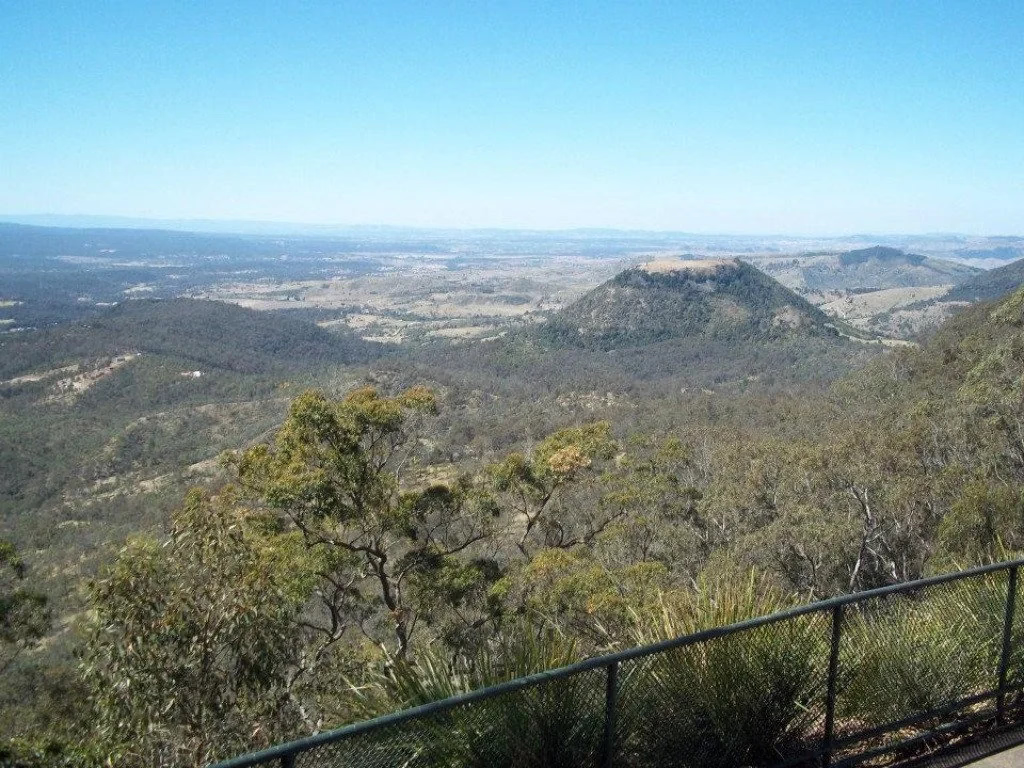
One in-town stop belongs in a day-trips guide because it is the key to reading all of them: Picnic Point, on the crest of the Range at the eastern edge of the city. From the escarpment lawns you see the whole eastern day-trip theatre at once — the Lockyer Valley floor seven hundred metres below, the Great Dividing Range running away north toward the Crows Nest country, and on clear days the ranges beyond Brisbane. Ten minutes here with a coffee from the cafe turns the map into geography; it is the difference between driving routes and understanding them.
Locals use it as a barometer, too. If the valley is full of morning fog, the Lockyer will burn off into a glorious day while the ridge country stays crisp; if the westerly haze is up, point the car east rather than west. Details and walking tracks are on our Picnic Point page — and if you time the return from any eastern loop for late afternoon, the lookout gives you the day's best light for free.
When to let someone else drive
There is a version of every trip in this guide where you watch the country instead of the centre line. Cooee Tours has run coaches through this region since 1974, and the northern villages, Spring Bluff and the Lockyer all feature across our touring calendar — during the Carnival especially, when day tours from Brisbane, the Gold Coast and the Sunshine Coast put the best of the Downs within a single seated day. For garden clubs, probus groups and family reunions we build private charters around any route on this page, at whatever pace the group actually wants rather than the pace the brochure assumes.
The honest comparison: self-driving wins on flexibility and spontaneous bakery stops; the coach wins on Range traffic, parking, wine tastings that no designated driver has to sit out, and the underrated pleasure of a driver-guide who has been telling these roads' stories for decades. Browse the current calendar at our Toowoomba tours index, or call 0409 661 342 and describe the day you're imagining.
The verdict: which trip when
If you have one spare day, take the northern loop — Highfields, Hampton, Crows Nest and the falls — because it compresses the most variety into the least driving and feeds you best along the way. If your day trip has to double as your journey home to Brisbane, the Lockyer loop is the obvious pick, with Picnic Point as the overture. Photographers and romantics should hold out for a clear winter or spring day and go west for the light. The Bunyas are the wildcard for rainforest lovers, and the Granite Belt is the reason to come back with an overnight bag.
The larger point is the one this whole guide has been circling: Toowoomba is not just a destination but the best touring base in southern Queensland's interior — a comfortable regional city with three different Queenslands radiating from its ring road. Between the Carnival in September, jacarandas in November and crisp blue winters, there is no wrong season to test the proposition. Pick a direction and go.
Building a week of day trips
Visitors staying three days or more can turn this list into a rhythm rather than a menu. The pattern that works: alternate town days with country days, so the gardens, museums and cafe belt of Toowoomba itself get their due between drives. Day one in the city establishes the base; day two takes the northern loop while your enthusiasm for driving is fresh; day three is a city morning and a Spring Bluff afternoon; day four goes east or west depending on the weather; and a fifth day earns the Bunyas or the Granite Belt. Spacing the long drives apart keeps each one an event rather than a chore, and the city days double as recovery for whoever holds the wheel.
Weather should out-vote the plan. The western plains and the Lockyer want clear, dry days; the Bunyas positively improve in mist and drizzle; the falls at Crows Nest peak a day or two after rain. Toowoomba's own forecast is a poor guide to conditions off the Range — the escarpment makes its own weather — so check the destination's forecast, not the city's, before committing the day.
What the day trips teach you about the Downs
Taken together, the eight drives are a short course in why this region looks the way it does. The Range explains the rain: the escarpment wrings the moisture out of the easterlies, which is why Hampton's ridge grows berries while Goombungee's plains grow wheat, and why the Lockyer below stays warm enough for winter vegetables while Toowoomba's gardeners plan around frost. The granite explains the north — poorer soils, bonier hills, bush instead of broadacre — and the black soil explains everything west, some of the deepest and most productive agricultural earth in the country. Every stop on every loop is a footnote to that geology.
Which is, quietly, the best reason to do these trips at all. Plenty of Queensland day trips deliver a lookout and a bakery; the Darling Downs delivers a legible landscape, one where an ordinary window seat explains itself as you go. Spend a few days driving out of Toowoomba in different directions and the region stops being scenery and starts being a story — one the city's own gardens, built on that same black soil, then finish for you back where you started.
See the Carnival the easy way
Cooee Tours runs coach day tours from $89pp and 2-day overnight tours from $595pp — no traffic, no parking, local driver-guide included.
Carnival of Flowers Tours