Farm Gates & Stalls
Seasonal produce sold metres from where it grew — the boot-filling tradition of the Brisbane–Toowoomba run. What's on offer follows the harvest calendar.
The valley you cross to reach the Garden City — and one of Australia's most productive patches of farmland, laced with farm gates, roadside stalls and country towns worth the exit ramp.
Every visitor to Toowoomba sees the Lockyer Valley — it's the patchwork of green spread below Picnic Point — but most only ever cross it at highway speed. Slow down and it repays the detour: this is one of Australia's most fertile and productive farming valleys, a vegetable bowl whose farm gates, roadside stalls and grower outlets sell the landscape by the kilo.
The country towns stitch it together — Gatton with its university and rural-capital energy, Laidley with its heritage streetscape and gardens — and the whole valley works best as a loop: up the Range one way, home through the farms the other.
Seasonal produce sold metres from where it grew — the boot-filling tradition of the Brisbane–Toowoomba run. What's on offer follows the harvest calendar.
Gatton and Laidley carry the valley's history and its bakeries — heritage streetscapes, murals and markets on the right weekends.
Take the highway up the Range, come home through the valley floor — the return route that turns transit into touring.
Our driver-guides narrate the Lockyer on every climb up the Range — it's half the commentary.
See the Tours| Getting there | The Warrego Highway runs the valley's spine between Brisbane and Toowoomba; exits at Gatton and Laidley open the back roads. |
|---|---|
| Cost | Free to explore; budget for the produce you won't resist. |
| Best time | Year-round — the crops rotate with the seasons. Weekends for markets. |
| Combine with | Any Toowoomba trip — it's literally on the way. See it from above at Picnic Point first. |
The Lockyer Valley's fertility is not luck; it is geography doing exactly what geography promises. The valley floor is built from deep alluvial soils laid down over immense spans of time by Lockyer Creek and its tributaries as they carried sediment off the sandstone country and the basalt heights of the Great Dividing Range. The result is a broad corridor of dark, water-holding farming soil sitting between Brisbane and the Toowoomba Range — soil so productive that the valley is routinely described as one of Australia's premier vegetable-growing districts, and often quoted among the most fertile farming areas anywhere. However you rank it, the evidence is visible from the highway: crops in every direction, in every month.
Farming here is intensive in the proper sense of the word. Rather than the broadacre grain and cattle country of the Downs above, the Lockyer works in vegetables — brassicas, beans, onions, carrots, lettuce, sweet corn and a long supporting cast — grown on irrigated blocks that turn over multiple plantings a year. Winter is the famous season: while southern growing districts shiver, the valley's mild, frost-light floor keeps harvesting through the cool months, which is why so much of the winter produce in east-coast markets has a Lockyer postcode. The nickname you will hear — Australia's salad bowl — is marketing, but it is marketing with the receipts to back it.
The valley's story also carries harder chapters, and locals tell them plainly. Flood has shaped this country as surely as sediment — the same creek system that built the soils has periodically risen through the towns along it, most gravely in 2011 — and the communities of Grantham, Murphys Creek and their neighbours carry that history with a matter-of-fact resilience that visitors tend to find quietly moving. It is worth knowing as you drive: this is not a decorative landscape but a working one, farmed by families who have taken the valley's full bargain, good seasons and bad, for over a century and a half.
Read west to east, the valley introduces itself in stages. Withcott sits hard against the foot of the Toowoomba Range, the last flat ground before the climb and a traditional last-fuel-and-pie stop. Helidon, a few minutes east, is old sandstone country — the quarries here supplied the honey-coloured stone in some of Queensland's grandest public buildings — and Murphys Creek tucks up a side valley toward the railway country below Spring Bluff. These western villages are small, but they hold the valley's most dramatic scenery, with the escarpment wall standing over every view.
Gatton is the working capital — the valley's biggest town, home to the University of Queensland's rural campus and the research farms that make this district a national centre of agricultural science. It is a proper country service town rather than a boutique one: wide streets, good bakeries, parks well suited to a driving break, and a Saturday energy that comes from actual commerce rather than tourism. Laidley, south of the highway, is the heritage set-piece — a main street of awninged nineteenth-century shopfronts, a pioneer village precinct, and a district that turns out handsomely for its spring garden festival; dates vary year to year, so check locally.
The connective tissue is just as rewarding as the towns. Forest Hill, between Gatton and Laidley, is a tiny rail-era village with a pub-and-hall streetscape that photographers stop for; Grantham and Ma Ma Creek open up the quieter southern farm roads; and Plainland, on the highway itself, has grown into the valley's modern services hub and the logical coffee stop for eastbound and westbound traffic alike. None of these places asks more than half an hour of you, and together they turn the transit corridor into a day's touring.

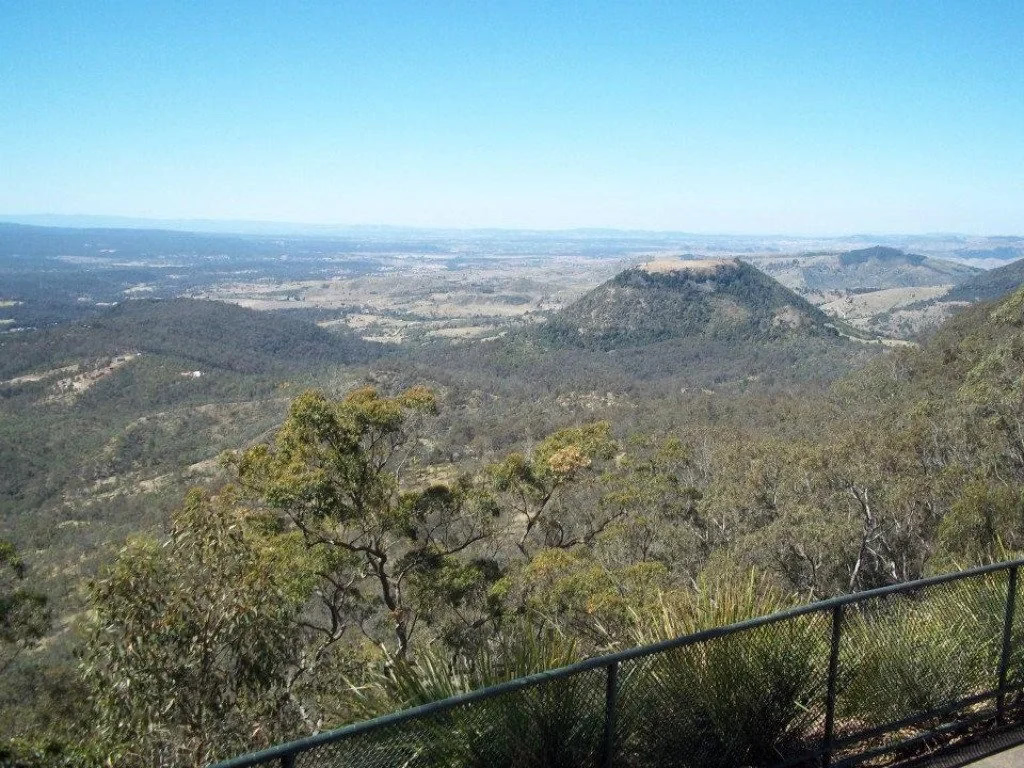
Buying produce where it grew is the valley's signature visitor experience, and it operates on a spectrum. At one end are the honesty-box roadside stalls — a table, a cash tin, whatever came out of the paddock that morning — which reward the traveller willing to take the Gatton–Laidley back roads at browsing speed. At the other are established farm-gate outlets and grower shops with regular hours, refrigeration and the full seasonal range. In between sit the weekend markets that rotate through the valley towns, where the growers meet their public directly. Individual stalls come and go with the seasons, so treat any specific tip as provisional and confirm locally; the tradition itself, though, is reliable.
The calendar matters more than the map. Winter and early spring are the glory months, when the valley's cool-season harvest peaks and the stalls groan with brassicas, root vegetables, silverbeet and citrus from the ridgelines; summer swings the range toward beans, corn, melons and stone fruit trucked down from the granite country. Whatever the month, the produce is closer to the ground than anything in a city aisle — often picked that day, priced accordingly, and sold by people who can tell you exactly which paddock it came from and what the weather did to it.
A few practical courtesies keep the system working. Bring cash and a cool bag or esky — valley summers are unkind to unprotected lettuce, and honesty boxes cannot make change for a fifty. Do not enter paddocks or pick anything without explicit invitation; pick-your-own operations exist but run to their own schedules, so ring ahead rather than assuming. And if a stall is bare by afternoon, that is the valley telling you the correct time to visit: the boot-filling crowd shops before lunch, and the best of the day's picking goes with them.
The single best thing you can do to understand the Lockyer Valley costs nothing and takes twenty minutes: stand on the Toowoomba escarpment and look down at it. From Picnic Point, on the city's eastern lip some 700 metres above sea level, the whole system lays itself out — the quilt of irrigated blocks in every shade of green, the tree-lined wander of Lockyer Creek, the towns stitched along the highway, and Table Top Mountain standing in the foreground like an exhibit. It is one of the great free views in Queensland, and it converts the valley from scenery you drove through into a landscape you can actually read.
The trick is to do both perspectives in one trip: the valley floor at ground level for the farm gates and the towns, and the escarpment for the synthesis. Most itineraries fall naturally into that shape anyway, since the Warrego Highway delivers you up the Range regardless — but build in the Picnic Point stop deliberately, with time for a coffee from the cafe there, rather than treating it as an afterthought. Sunrise and late afternoon give the valley its depth; midday flattens it. After rain, when the blocks are freshly turned or freshly green and the air is rinsed clear, the view earns every superlative the lookout's plaques offer.
There is also a quieter satisfaction available to the return traveller. Once you have driven the valley floor — once you know which cluster of sheds is a Gatton research farm and which green smudge is Laidley's street trees — the view from the top becomes a map of places rather than a pattern of colours. Locals never tire of it, which tells you something: the Lockyer from Picnic Point is that rare view that improves with familiarity.
Tucked into the folds where the valley meets the Range, the district's most photogenic corner rewards a deliberate detour. Spring Bluff railway station sits on the historic Main Line between Murphys Creek and Toowoomba — a single heritage station in a steep green valley, kept in bloom by generations of gardeners and famous across Queensland for the displays it mounts during the Toowoomba Carnival of Flowers each spring. Out of season it is a serene picnic spot with a remarkable railway story; in Carnival weeks it is one of the most photographed scenes in regional Australia.
The railway is the reason any of this exists. The line from Ipswich up the Range to Toowoomba, driven through in the 1860s, was one of colonial Queensland's great engineering feats — a slow, curling climb through cuttings and gullies that the road traveller never sees. Murphys Creek village grew up as a railway town at the foot of the climb, and the back road from it toward Spring Bluff and on up to Highfields is the valley's best-kept scenic drive: creek crossings, escarpment walls and forest that feels a world away from the highway ten minutes behind you.
Practicalities: the Spring Bluff access road is narrow and shared, so take it gently, and expect Carnival-season crowds in September — in 2026 the festival runs 18 September to 5 October, and weekday mornings are markedly calmer than weekends. There is no entry fee. Combine the station with a Murphys Creek picnic stop and the climb to Highfields or Toowoomba, and you have converted the standard highway ascent into the prettiest possible version of the same journey.
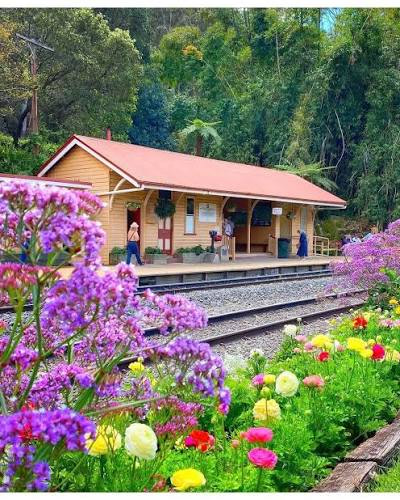
Winter is the valley's professional peak. From June through August the cool-season harvest fills the paddocks and the farm stalls, the light turns clear and low, and the escarpment views sharpen in the dry air — this is the season the Lockyer does better than almost anywhere in the state. Days are mild on the valley floor even when Toowoomba, 600 metres higher, is frosted; the sensible traveller exploits that gradient, walking the valley in shirt sleeves at noon and packing a coat for the Range top.
Spring belongs to the Toowoomba Carnival of Flowers, and the valley is its grand approach. Every September — 18 September to 5 October in 2026, the festival's 77th year — tens of thousands of visitors cross the Lockyer on their way up the Range, and the smart ones make the crossing part of the show: a farm-stall stop at Plainland or Gatton, the Spring Bluff gardens, then the climb to the Carnival parks. Laidley's own spring festival tradition adds a valley-floor bloom to the season; timing varies, so confirm dates locally before planning around it.
Summer and autumn each argue their own case. Summer is storm season — dramatic afternoon skies over the paddocks, warm evenings, and the year's best corn and melons at the stalls, balanced against real heat on the valley floor; start early and carry water. Autumn is the underrated option: harvest continuing, temperatures easing, and April–May driving weather as good as the year offers. The honest summary is that the Lockyer has no closed season — the crops rotate, the stalls restock, and the view from Picnic Point merely changes its palette.
Valley eating is country eating, done with the confidence of a district that grows the ingredients. The bakery tier is the daily backbone — Gatton, Laidley and the highway villages all keep serious bakeries whose pie and sponge output sustains the region's farmers and has converted generations of passing motorists — and the country-pub tier stands ready behind it, with generous schnitzel-and-salad lunches in dining rooms that double as local history museums. Neither tier takes bookings terribly seriously except for large groups, which is part of the charm.
The cafe scene has climbed steadily as the valley's tree-changers and university crowd have raised expectations. Gatton and Plainland in particular now pour coffee that would pass muster in Brisbane, and a handful of rooms build their menus explicitly around Lockyer produce — which, given the paddock is often visible from the window, is less a marketing angle than a statement of logistics. Weekend brunch trade is genuine, so mid-morning arrivals beat the rush. Opening days thin out early in the week in the smaller villages; if a specific cafe matters to your plan, confirm hours before you commit the detour.
The self-catering play is arguably the valley's best meal: assemble lunch from the farm stalls and bakeries as you go, then eat it somewhere with a view — the parks in Gatton and Laidley, the creekside picnic areas at Murphys Creek, or up at Picnic Point with the whole valley below your sandwich. It is the cheapest first-rate lunch in southern Queensland, and it tastes faintly of smugness, as all well-planned picnics do.

The Lockyer is quietly excellent family territory, chiefly because it deals in things children can see working. Tractors actually ploughing, irrigation actually running, produce actually coming off paddocks and onto stall tables — for small passengers raised on picture-book farms, the valley is the pop-up version, visible at highway speed and better again from the back roads. The towns add the practical infrastructure: parks and playgrounds in Gatton and Laidley rated highly by the travelling-parent grapevine, bakeries with reliable milkshakes, and distances short enough that no leg of the day exceeds anyone's patience.
Structure the day around stops rather than sights. A playground leg-stretch at Gatton, a farm-stall visit where the children choose the strangest vegetable on the table, a picnic at Murphys Creek with creek paddling in the warmer months, and the Spring Bluff or Picnic Point finale — that sequence fills a family day without a single queue or ticket. The honesty-box stalls are a particular hit as a childhood economics lesson: real money, real change, and the radical concept of a shop that trusts you.
Two cautions from experience. First, the valley is working farmland, and machinery, dams and paddocks are not playgrounds — keep the crew on the public side of every fence. Second, summer heat on the valley floor is genuine; front-load outdoor stops into the morning and bank the air-conditioned bakery visit for early afternoon. Winter, conversely, is nearly perfect family weather down here, whatever the frost is doing on the Range above.
The Lockyer photographs like a demonstration of why patchwork became the standard farmland metaphor. The raw material is colour-blocked geometry — beds of green in a dozen values, freshly turned dark soil, silver irrigation lines and the blue-hazed wall of the Great Dividing Range behind everything — and the composition improves with elevation. The escarpment lookouts give the aerial view without the drone; on the floor, the back roads between Gatton, Ma Ma Creek and Laidley supply the ground-level frames: shed and windmill studies, avenue trees, and the long straight roads that vanish into crop.
Light and season do the heavy lifting. Winter mornings deliver valley fog that burns off in slow theatrical stages below the Range — the signature Lockyer shot, best taken from the escarpment as the sun clears the ridge. Summer's storm fronts build monumental skies over the paddocks in the afternoons, for photographers who respect the weather they are aiming at. Spring adds the Spring Bluff gardens at full Carnival pitch, and any season's late golden hour turns the vegetable blocks into stripes of lit and shadowed green that need no editing.
Courtesies apply here as everywhere in working country: shoot from public roads, never enter paddocks uninvited, and be unmissably visible if you stop on road shoulders — farm traffic moves fast and wide. Ask before photographing stallholders or their setups, which in practice means a friendly minute of conversation that usually ends with better photographs and occasionally with free tomatoes. The valley is generous to photographers who treat it as a workplace first and a subject second.
The logistics are the easiest on this side of Queensland. The Warrego Highway runs the valley's full length — Brisbane to Toowoomba is roughly 125 kilometres, about 1.75 hours by coach up and over the Range — and the valley occupies the middle hour of that journey, with well-signed exits at Plainland, Gatton and the western villages. There are no tolls beyond the metropolitan network, no seasonal closures in ordinary conditions, and fuel and food at regular intervals; as touring country goes, it is essentially foolproof.
The loop is the connoisseur's itinerary. Rather than retracing the highway, run the triangle: highway west with a Plainland or Gatton stop, then the southern back roads through Forest Hill and Laidley, rejoining the highway for the Range climb — or invert it, descending from Toowoomba via the old Murphys Creek road past Spring Bluff and coming home along the valley floor. Either version adds perhaps forty minutes over the straight run and multiplies the sightseeing several-fold. The full guide to the corridor, including where to break the journey, lives in our Brisbane to Toowoomba drive guide.
Timing rules of thumb: two hours converts the transit into a genuine visit (one town, one stall, one lookout); a half day does the loop with lunch; a full day adds Spring Bluff, Laidley's heritage streets and an unhurried finish at Picnic Point. Mobile coverage is solid along the highway and patchier on the back roads. And one honest warning — the produce stalls are a known hazard to luggage space. Travellers who scoffed at the esky advice have been observed nursing ten kilos of vegetables on their laps up the Range, and they were not unhappy about it.
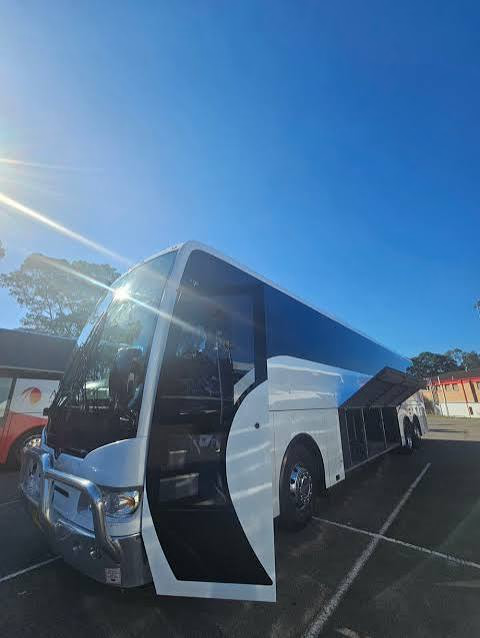
Every Cooee Tours run from Brisbane to Toowoomba crosses the Lockyer Valley, and our driver-guides treat the crossing as the show's first act rather than the boring bit before it. The commentary works the paddocks like a menu — what is growing, who is harvesting, why the winter lettuce in half the country's sandwiches started here — and the climb up the Toowoomba Range delivers the valley's grand reveal as the floor drops away below the coach windows. Passengers consistently rate the ascent among the day's highlights, which says something for a day that ends in Carnival gardens.
In September, that day is the classic: our Carnival of Flowers day tours depart Brisbane CBD and Chermside from $89 per adult and $69 per child, with Gold Coast departures from $99 and Sunshine Coast from $109, plus a deluxe day tour at $159 including a two-course lunch. The coach does the Range so nobody in your party has to, the valley commentary comes standard, and premium seating in the first four rows is a $5 add-on for those who want the widescreen version of the climb. It is the definitive day tour from Brisbane in the state's spring calendar.
Groups can go further. Charters for garden clubs, seniors' organisations and social clubs regularly build valley elements into a Downs itinerary — a farm-gate stop, a Spring Bluff visit, a Laidley heritage hour — and the full tour program includes 2-day weekend tours from $595 and 3-day tours from $880 for itineraries with room to take the valley slowly. Call 0409 661 342 or email contact@cooeetours.com.au and we will build the crossing you want.
The Lockyer Valley's problem, and its opportunity, is that everybody sees it and almost nobody stops. It will never out-spectacle the coast or out-bloom the Garden City above it, and it does not try; what it offers instead is the increasingly rare experience of productive country doing its work in plain sight, garnished with good bakeries, honest towns and one of Queensland's finest free views from the escarpment that frames it. Travellers who give it two deliberate hours almost invariably report the same mild surprise: the bit between Brisbane and Toowoomba turned out to be a place.
The distilled advice: shop the stalls before lunch, carry cash and an esky, take at least one back road, and finish — always — at the top of the Range looking down on where you have just been. Winter for the harvest and the clear air; September if you are Carnival-bound, with the valley as your overture; and any season at all if your standard for a detour is fresh food, short distances and no queues. Confirm market dates, festival timing and small-town cafe hours locally, because the valley runs on farming time, not tourism time — that is precisely its charm.
And if you would rather watch it all from an elevated seat with the commentary handled, that is the coach's whole argument. Either way, do not let the Lockyer stay a windscreen blur. The salad bowl rewards the exit ramp — and it sends you up the Range better fed, better stocked and considerably better informed about what is actually on your plate.
Toowoomba is one very good destination out of a very long list. Cooee Tours has been running coaches since 1974 — start with the continent, the country next door, or somewhere further afield.
Every destination below has its own travel guide, things-to-do pages and tour range — built the same way as this one.