Brisbane to Toowoomba: The Day-Trip Guide
Ninety minutes, seven hundred vertical metres, one completely different Queensland. The best regional day trip from Brisbane — done in the right order.
The drive
It's roughly 125 kilometres west via the Warrego Highway — around 90 minutes on a clear run, longer on festival weekends. The Toowoomba Bypass (the Second Range Crossing) now carries most heavy and through traffic around the city, which has made the classic climb up the Range gentler than it used to be. However you climb it, the moment the road crests and the Darling Downs opens out westward is the day trip's first highlight.
The order of operations
Day-trippers waste their day by doing Toowoomba in the wrong order. The right one: gardens first — Queens Park in the morning light, before the crowds and the hard sun; Laurel Bank second, while the legs are fresh; lunch third, in the CBD cafe belt with a laneway street-art wander attached; and Picnic Point last, because the escarpment view over the Lockyer Valley is best in the afternoon and it's on the way home anyway. Reverse any of it and you're fighting the light and the crowds all day.
Gardens in the morning, lookout in the afternoon. The day trip has one rule and that's it.
Timing the seasons
Spring is non-negotiable if you can choose — the Carnival of Flowers (18 September – 5 October 2026) is the single best reason the trip exists, and October–November adds the jacarandas. Autumn brings deciduous colour, winter brings crisp blue walking days. Summer works too — Toowoomba's 700 metres keep it milder than Brisbane ever manages.
Drive or coach?
Midweek and off-season, drive — the flexibility is worth it. Festival weekends are a different equation: parade-day road closures, vanished parking and a two-hour return drive after a full day on your feet. That's the day the coach earns its fare — from $89pp with drop-offs at the garden gates and a driver-guide handling everything. The full comparison is in driving vs coach.
Extending the day
If the day trip leaves you wanting the rest — and it usually does — the two-day itinerary adds Spring Bluff, Highfields and the museums, and the day trips guide opens up the wider Downs.
A road with a long memory
The corridor you drive west out of Brisbane is one of the oldest working routes in Queensland. Long before the Warrego Highway had a number, this was the way inland — the track that carried squatters, teamsters and eventually Cobb & Co coaches up onto the Downs, back when the climb over the Range was a day's work rather than a quarter of an hour. The railway followed in the 1860s, winding up the escarpment through Murphys Creek and Spring Bluff on a line so serpentine it remains a marvel of colonial engineering. Every era of that history left its mark on the modern drive: the highway towns of the Lockyer grew up as staging posts, and Toowoomba itself grew rich as the place where the inland's wool and grain met the road down to the port.
You don't need to care about any of this to enjoy the trip, but knowing it changes what you see. The Cobb+Co Museum on Lindsay Street — home of the National Carriage Collection, directly opposite Queens Park — is the day trip's history lesson, and it lands differently when you've just driven the route those coaches worked. What takes you an hour and three-quarters took them the better part of two days. Arrive with that number in your head and the Range crossing stops being a commute and becomes a small act of time travel.
Reading the Lockyer Valley from the highway
The middle third of the drive is the part most day-trippers fast-forward through, which is a shame, because the Lockyer Valley is one of the most productive vegetable-growing districts in Australia and the highway gives you a moving tour of it. West of Ipswich the traffic thins, the horizons widen, and the paddocks begin their rotation of crops — what's green, what's flowering and what's freshly turned changes with the month, so the same drive reads differently in May and September. The blue wall ahead of you the whole way is the Great Dividing Range, with Toowoomba sitting invisible on its crest, seven hundred metres above the valley floor you're crossing.
If the schedule allows even half an hour of slack, leave the highway once. The farm-gate stalls and country towns a few minutes off the bitumen — Gatton and Laidley are the anchors — sell the valley's produce at prices that make the detour self-funding, and they turn the transit leg into part of the day out. We've mapped the worthwhile turn-offs on our Lockyer Valley guide; the short version is that the valley rewards exactly as much curiosity as you bring to it.
The climb, and what to do with it
The final ten minutes are the drive's signature. From the valley floor the highway lifts you seven hundred vertical metres in a handful of sweeping bends, the eucalypt forest closes in, the temperature drops a degree or two, and then the road crests and delivers you into a city that was hiding in plain sight the whole way — gardens, church spires and jacaranda-lined streets where the map promised only escarpment. Toowoomba's altitude is the day trip's secret ingredient: it is why the city grows tulips, why summer up here is bearable, and why the air on arrival smells different from the air you left in Brisbane.
Two practical notes for the climb. First, fuel and coffee logic favours doing both in the valley or on arrival, not on the Range itself. Second, if heights and hairpins make anyone in the car queasy, the modern alignment is genuinely gentle — this is a highway climb, not a mountain pass — and the Toowoomba Bypass has taken most of the trucks elsewhere. Coach passengers get the best of it: the elevated seating turns the climb into a viewing gallery, and nobody on board has to watch the road instead of the view.
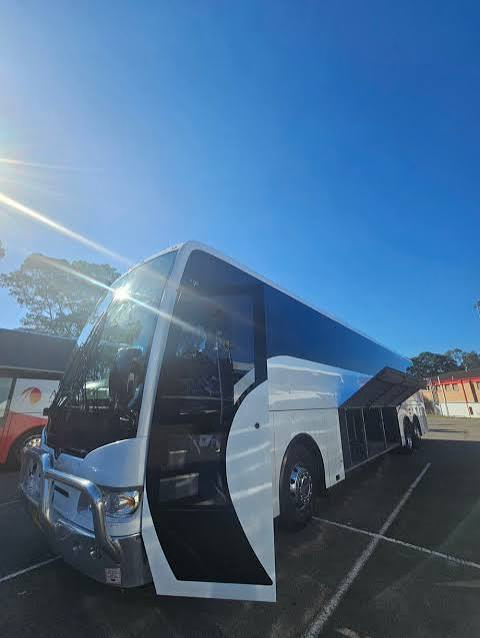

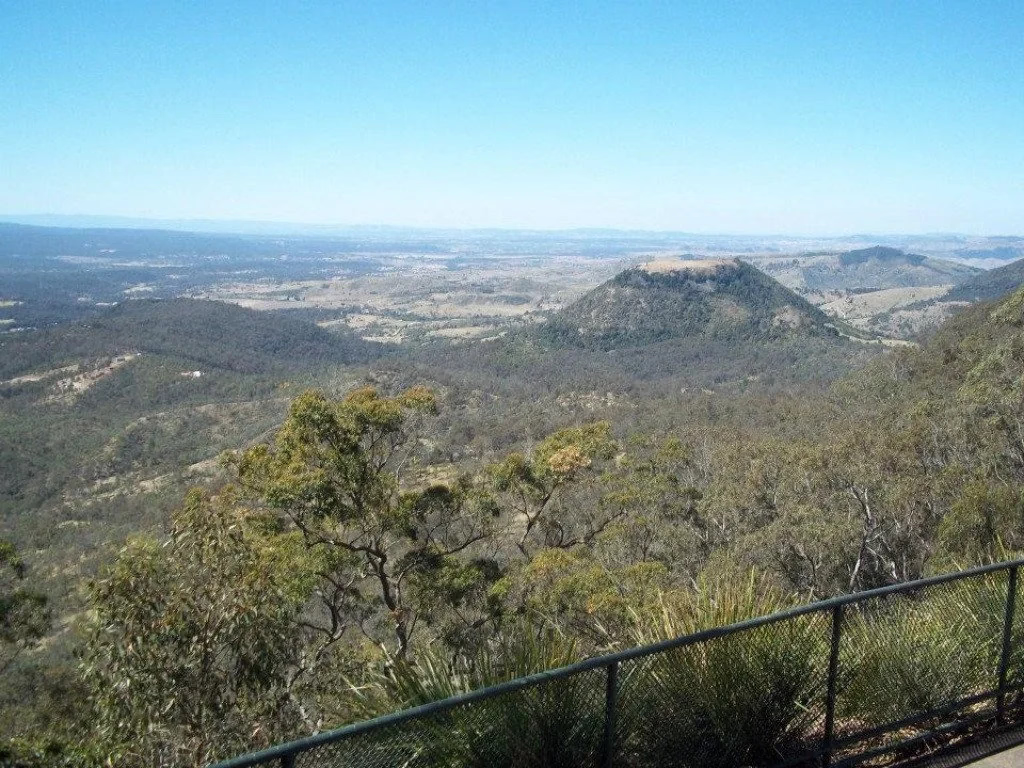
First stop: the edge of the world you just climbed
There is a strong argument for making Picnic Point your first stop rather than your last, at least once: pulling in minutes after you top the Range and looking back down on the entire valley you just crossed is the day trip's best orientation exercise. The lookout sits on the escarpment's lip at the eastern edge of the city, with lawns, walking tracks and a cafe, and the view runs from the Lockyer's patchwork floor to the ranges behind Brisbane on a clear day. Ten minutes here converts the drive from an abstraction into geography — that's the highway threading the valley, that's Table Top Mountain in the foreground, that's how far seven hundred metres actually is.
The afternoon-light argument for saving it until last still stands, and the ideal day does both: a quick morning hello for orientation, the long golden goodbye on the way out. Either way, don't skip it — of everything free in Toowoomba, the escarpment view is the thing you can't get anywhere else in southern Queensland. Walking tracks and practical detail live on our Picnic Point page.
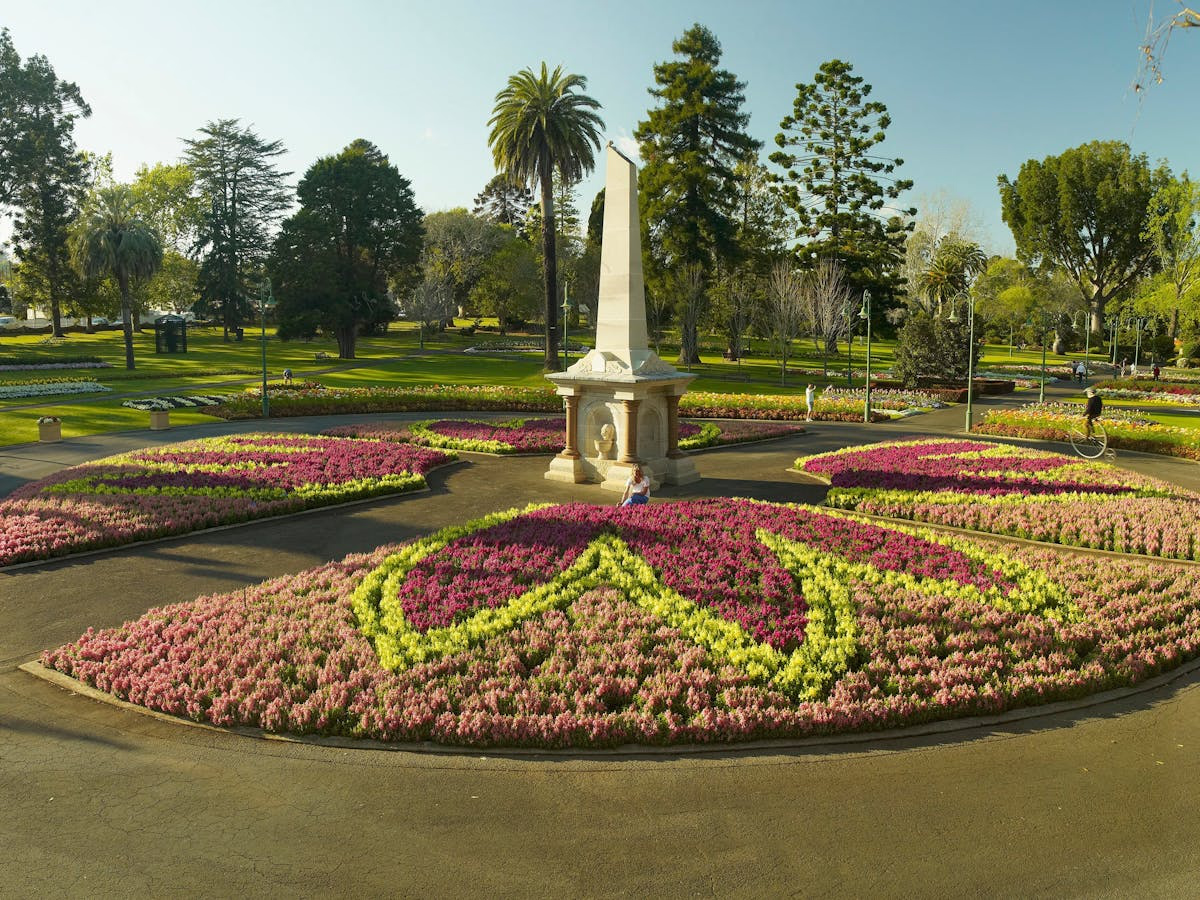
Queens Park: the anchor of the day
Whatever else the day holds, it pivots around Queens Park. Twenty-six heritage-listed hectares in the middle of the city, free, open always, and maintained to a standard that makes first-time visitors ask who pays for it all — this is where Toowoomba's Garden City title stops being marketing and starts being observable fact. The botanic section's annual beds are the showpiece, replanted through the year and brought to a crescendo for September's Carnival of Flowers, while the older tree collection — figs, pines and exotics dating back well over a century — gives the park its architecture. Across Lindsay Street sits the Cobb+Co Museum, which is the rainy-day insurance policy and the history chapter in one building.
Give the park a full unhurried hour in the morning, when the light is kind and the tour groups haven't landed. It is also the day's best free picnic venue if you shopped the Lockyer stalls on the way up. The full walking notes are on our Queens Park page — including the corners of the arboretum most day-trippers never find.
Lunch: the cafe belt earns its reputation
Toowoomba's food scene is the part of the day trip that Brisbane visitors least expect and most talk about afterwards. The city's cafe culture punches far above its regional weight — a legacy of altitude (coffee tastes better in crisp air, whatever the physicists say), cheap heritage real estate that let independents flourish, and the Downs' produce arriving from every direction. The action concentrates in the blocks around Margaret Street and the laneways off it, where the street-art program has turned service alleys into dining rooms. You can eat as well here at lunch as almost anywhere in regional Australia, generally without a booking on a weekday.
The tactical advice: eat at midday or at two, not at one, if you're visiting in festival season, and leave room for the bakeries. Between the morning gardens and the afternoon lookout, lunch is also the natural moment to walk the laneway street art — it's free, it's dense, and it fills exactly the hour when the light is too hard for garden photography anyway.
The Carnival version of this day trip
For nineteen days a year the Brisbane–Toowoomba day trip becomes something else entirely. From 18 September to 5 October 2026, the 77th Carnival of Flowers dresses the whole city for company: Queens Park and Laurel Bank planted to competition standard, private gardens open across the suburbs, the Grand Central Floral Parade on Saturday 19 September, and the FEASTival food program over 26–27 September. It is the best single day out in regional Queensland and the one weekend cluster when every warning in this guide about traffic and parking applies at full strength. Go mid-week if your diary allows; go anyway if it doesn't.
This is also the fortnight when the coach maths becomes unarguable. Cooee's Brisbane–Toowoomba Carnival day tour runs from $89 per adult and $69 per child, picking up in the Brisbane CBD and at Chermside, with the itinerary built around the gardens at their peak. The deluxe version at $159 adds a proper two-course lunch, and the add-ons menu — a Spring Picnic Lunch at $22, premium front-of-coach seating for $5 — covers the small comforts that make a long day easy.
How the coach day actually runs
Since the coach option keeps coming up, here is what it looks like from the inside. Morning pickup in the city or at Chermside, then the same Warrego Highway run you'd drive yourself — except the commentary starts in the Lockyer, where a driver-guide with decades on this road has a story for most of the paddocks. The Range climb arrives as theatre rather than a driving task. In Toowoomba the coach does what cars can't: drops at the garden gates, shuffles between sites while passengers walk the short way through the good bits, and holds everyone's shopping in the luggage bay. The day ends with the Range descent at dusk and a drop-off back where you started, no parking receipts involved.
The difference from self-driving is not really the money — by the time fuel and festival parking are counted, the gap narrows — it's the shape of the day. Nobody's day ends with a ninety-minute night drive down the Range after six hours of walking. Browse the full calendar, including seniors' departures and food-trail variations, at the Toowoomba tours index, or call 0409 661 342 with questions the website can't answer.
Staying for the evening
The standard day trip points the car home at four, but the city rewards the trippers who stay for dinner. Toowoomba's evening happens along Margaret Street and its laneways — restaurants and bars in heritage shopfronts, and a main street that photographs beautifully once the lights come on against the last of the western sky. Because the city sits on the Range's crest, dusk itself is an event: the light goes long and gold over the Downs in a way coastal Brisbane never quite manages. An early dinner and a 7.30pm departure still has you home at a civilised hour, and the highway east runs quiet and easy at night.
The one caveat is the wildlife hour on the Range fringe at dusk — keep the speed sensible for the first twenty minutes of the descent — and the one upgrade is obvious: if dinner is going well, Toowoomba's accommodation is a fraction of coastal prices outside festival weekends, and waking up at seven hundred metres to a crisp morning and an empty Queens Park is the strongest possible argument for turning the day trip into an overnight.

The family version of the day
With children aboard, the day trip re-sequences but doesn't shrink. The drive itself divides neatly into three half-hour episodes — city escape, valley, climb — which is within tolerance for most small passengers, especially with a Lockyer fruit-stall stop as the intermission. In town, Queens Park's playground and lawns absorb the post-car energy spike, the Cobb+Co Museum turns the history into carriages you can walk around, and Picnic Point supplies the mandatory ice-cream-with-a-view. The whole circuit works without anyone walking further than a small person wants to.
Timing matters more with kids: leave Brisbane by eight so the park happens before the midday sun, hold the museum for the early afternoon slump, and start the descent by four so the day ends before patience does. During the Carnival, add the parade or the Queens Park program at the cost of accepting the crowds — school-age children generally vote it worth the trade.
Photographing the day
The day trip has three photographic acts, each with its own light. Act one is the valley: early morning fog burning off the Lockyer floor, best from the moving car's passenger seat or a quick highway-town detour. Act two is the gardens in mid-morning — Queens Park's beds want sun that is bright but still angled, which in practice means before eleven. Act three belongs to the escarpment: Picnic Point from mid-afternoon onward, when the light rakes across the valley and the haze turns the ranges blue in receding layers. Between the acts, the laneway street art fills the harsh midday hours, since murals don't care about hard light.
September adds a fourth act — the Carnival beds in full colour ask for a polariser and patience with crowds; early arrivals own the frame — and November swaps the tulips for jacaranda canopies over the park avenues. Whatever the month, the one shot everyone forgets is the Range itself: pull into the lookout parking rather than trying anything creative from the driver's seat.
The arithmetic of the day
For the budget-minded, the day trip's numbers are friendly. The headline attractions — Queens Park, Laurel Bank, Picnic Point, the street art, the Carnival's public gardens — are free, which is not something any coastal day trip can claim. The self-drive costs are fuel for the 250-kilometre round trip plus whatever parking your timing earns you; the coach alternative is a flat $89 with the logistics absorbed. Lunch is the discretionary middle, running from bakery money to serious-restaurant money depending on ambition, and the Lockyer farm stalls on the way home are the cheapest quality souvenirs in Queensland.
For the time-budget: the honest minimum for a day that doesn't feel rushed is nine hours door to door — ninety-plus minutes each way, an hour at each of three sites, lunch, and slack. Ten to eleven hours is the comfortable version. Anything shorter and you are better served doing fewer things well; the city will still be on its Range next time.
The verdict, and when to upgrade
As a day trip from Brisbane, Toowoomba is the strongest inland option there is: real altitude, real gardens, real food, real history, none of it requiring a ticket, all of it inside two hours of the city. The day works in every season, peaks spectacularly for nineteen days each spring, and — done in the right order — never feels like the 250 kilometres it actually is. The only people it disappoints are the ones who treat it as a drive with stops instead of a destination with a drive attached.
The upgrade path is equally clear. If the day leaves you planning a return before you reach Ipswich — a common condition — the overnight versions solve everything the single day can't: Spring Bluff and the northern villages, the museums at leisure, dinner without a deadline. Cooee's 2-day weekend tours from $595 and 3-day tours from $880 package precisely that during the Carnival, or you can build your own around the two-day itinerary. Either way, the first trip up the Range is rarely the last.
Common mistakes, and how to not make them
After enough seasons watching day-trippers come and go, the failure patterns are predictable. The late start is the classic: leave Brisbane at ten and you hit the gardens at high noon, the cafes at peak queue and the lookout before the light turns — the whole day runs one beat behind its own potential. The over-stuffed itinerary is its cousin: six attractions planned, four visited, none enjoyed. And the weather misread catches Queenslanders especially — Toowoomba at 700 metres runs several degrees cooler than Brisbane year-round, with winter mornings that qualify as genuinely cold and a westerly in August that means business. The fix for all three costs nothing: leave by eight, plan three things, pack one more layer than Brisbane logic suggests.
The subtler mistake is treating the trip as interchangeable with a coastal day out. The hinterland day rewards a different tempo — long stops rather than many, walking rather than hopping — and visitors who bring beach-day pacing to a garden city tend to leave puzzled about what they missed. What they missed was the sitting still: twenty minutes on the Queens Park lawns or the escarpment edge is not wasted time up here, it is the product itself.
Which day of the week to go
Outside festival season, the day trip barely cares which day you choose, but the margins are worth knowing. Weekdays win on every logistical measure — empty highway, easy parking, cafe tables on demand — at the small cost of a quieter city that keeps regional hours, with some rooms and museums resting early in the week; check locally if a specific venue matters to your plans. Saturdays bring the city fully alive at the price of sharing it. Sundays split the difference and add the best light-traffic run home of the week.
During the Carnival the calculus sharpens: parade Saturday concentrates the fortnight's entire crowd into one glorious, gridlocked morning, and the festival's middle weekdays offer the same gardens at half the density. The connoisseur's choice is a Tuesday or Wednesday in the Carnival's second week — beds at absolute peak, coaches outnumbering cars at the garden gates, and the city humming without straining. If the parade itself is the point, book the coach, embrace the crowd, and let someone else solve the parking.
See the Carnival the easy way
Cooee Tours runs coach day tours from $89pp and 2-day overnight tours from $595pp — no traffic, no parking, local driver-guide included.
Carnival of Flowers Tours