Toowoomba in 2 Days: The Garden City Weekend
Timed for a Friday-night arrival from Brisbane and a Sunday-evening run home — the weekend shape that lets the Garden City actually breathe.
Friday evening — arrive and settle
Beat the weekend traffic up the Range on Friday night and Saturday starts in Toowoomba instead of on the Warrego Highway. Check in, walk a block or two of the heritage centre while the sandstone catches the last light, and eat early — the CBD's restaurants and heritage pubs do their best work unhurried. Then sleep at 700 metres, where even summer nights are cool.
Saturday morning — the gardens, in order
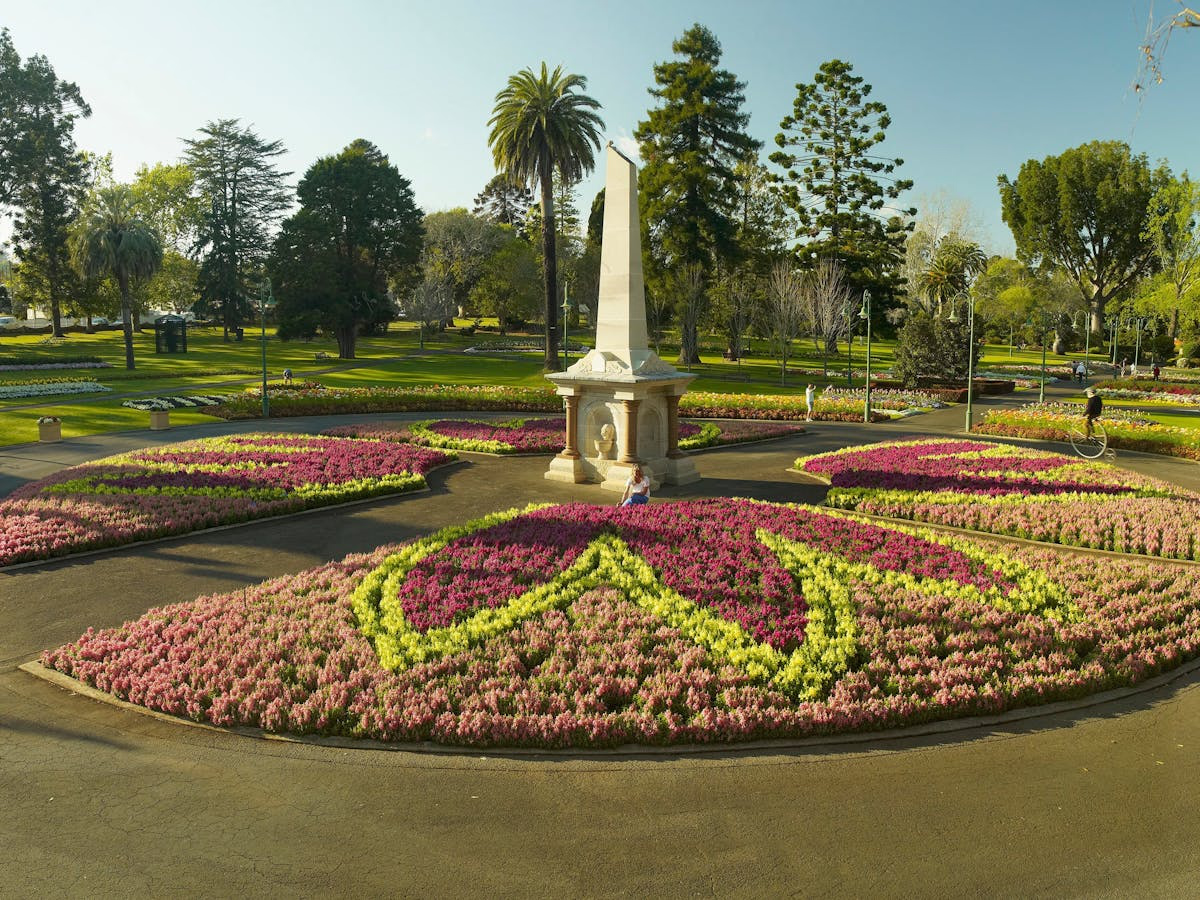
Start at Queens Park with the morning: around 26 hectares of heritage-listed parkland, grand trees, and — in spring — the feature flower beds that made this city famous. Give it ninety minutes. Then cross town to Laurel Bank Park for the heritage roses and the scented garden; smaller, quieter, and the park many locals privately prefer.
Saturday midday — the cafe crawl
Toowoomba's CBD carries a cafe and specialty-coffee culture that outperforms its postcode — plan lunch around it (our coffee guide has the map). Walk it off through the CBD laneways afterward, where years of mural festivals have left one of regional Australia's best street art collections between the Victorian facades.
The two-day rule: gardens and city on day one, Range and villages on day two. Don't mix them — the moods are different.
Saturday afternoon — Ju Raku En, then the heritage streets
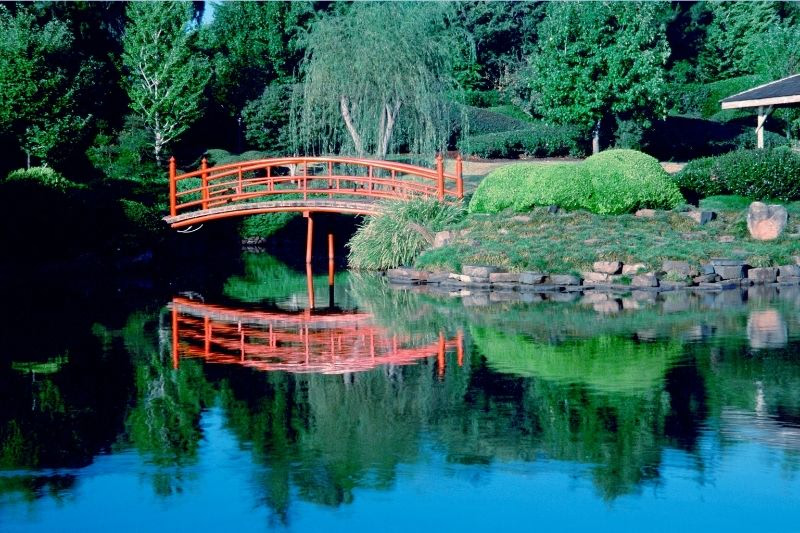
Spend mid-afternoon at Ju Raku En, the traditionally designed Japanese garden on the UniSQ campus — three kilometres of lakeside paths and a complete change of register from the morning's massed colour. Back in town, the old centre rewards a slow walk: grand civic sandstone, Federation pubs, the restored Empire Theatre. If there's a show on, take it.
Saturday evening — Picnic Point sunset
End day one on the escarpment edge. Picnic Point looks east over the Lockyer Valley and Tabletop Mountain, and its golden hour is the single best free spectacle in the city. Dinner back in town, and you've done Toowoomba proper.
Sunday morning — down the Range to Spring Bluff
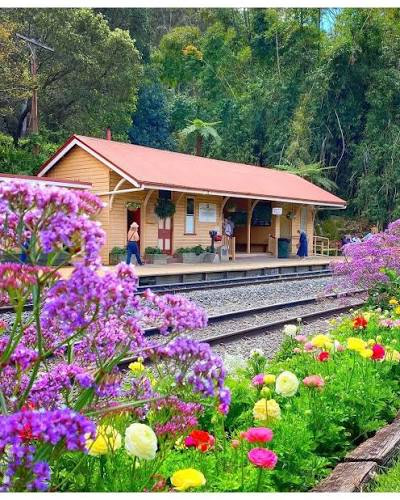
Day two belongs to the surrounds. Start at Spring Bluff Railway Station, the heritage-listed stop halfway down the Range wrapped in award-winning gardens — twenty minutes from the CBD and the most photographed spring scene on the Downs. Then loop back up through Highfields for village shopping, gardens and morning tea.
Sunday midday — Cobb & Co and one more park
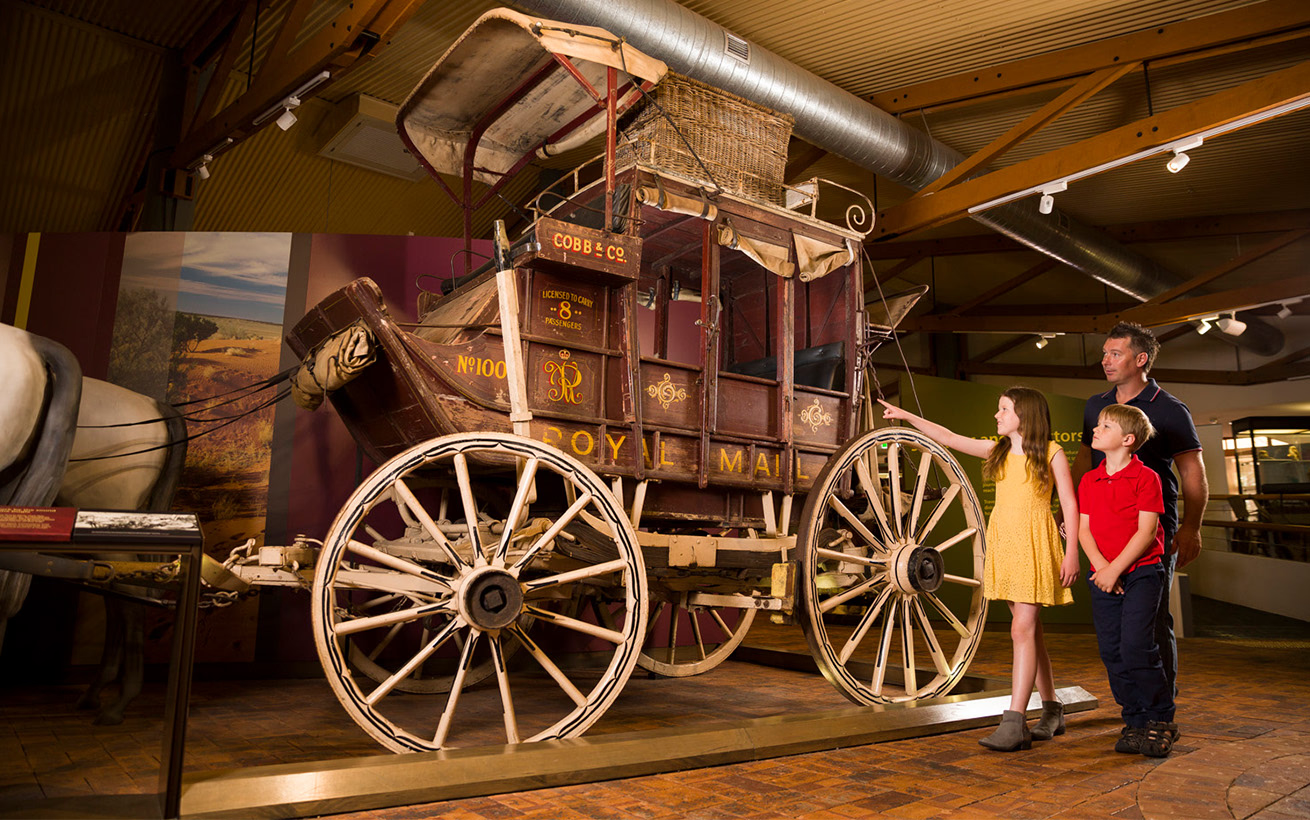
The Cobb & Co Museum holds the National Carriage Collection and hands-on heritage trades — give it a couple of hours, especially with kids or weather in play. If the legs still work, Boyce Gardens is the quiet finisher: a former private garden with a rainforest gully most visitors never find.
Sunday afternoon — the run home
Roll down the Range mid-afternoon and you're in Brisbane before dinner. Extending? Our day trips guide covers Crows Nest, Hampton and the wider Downs, and if your weekend lands in festival season, the Carnival of Flowers guide reshapes everything above around the flowers.
Why the Garden City earned the name — a short history for the weekend visitor
Knowing a little of the backstory makes the two days land differently. Toowoomba grew rich in the second half of the nineteenth century as the market town of the Darling Downs — some of the most productive agricultural country in Australia — and its merchants and graziers spent that wealth the Victorian way: on civic sandstone, iron-laced verandahs, and gardens. The altitude did the rest. At roughly 700 metres on the crest of the Great Dividing Range, the city enjoys a temperate climate that lets it grow cool-country plants no coastal Queensland city can sustain, and by the early twentieth century its parks, street trees and private gardens had hardened into a civic identity. The Carnival of Flowers, first run in 1949, didn't invent the Garden City; it formalised it.
That history is why the weekend itinerary looks the way it does. The gardens aren't attractions bolted onto a regional city — they're the city's founding argument about itself, and the heritage streets, the museum and the escarpment lookouts are chapters of the same story. Walk Queens Park knowing it has been the town's green centrepiece since the 1870s, or pass the grand facades on Margaret Street knowing they were built on wool and wheat money, and the place stops being a pretty stop-off and starts reading as one of the most intact Victorian-era regional cities in the country.
Going deeper at Queens Park: how to actually walk it
The Saturday-morning plan above gives Queens Park ninety minutes; here's how to spend them well. Enter from the Margaret Street side and take the perimeter first — the avenues of mature figs and camphor laurels are the park's oldest residents and its best architecture, and walking the outside edge first gives you the scale of the place before you narrow your focus. Work inward to the formal beds at the heart of the park (spectacular in spring, respectably planted year-round), then finish on the Lindsay Street side, which sets you up for either the botanic section or a coffee run back toward town.
Two refinements worth knowing. First, the park rewards earliness disproportionately: at 8am you share it with dog-walkers and get the low light under the trees; by 10:30 on a fine Saturday it's a busy public park like any other. Second, don't treat the surrounding streets as dead space — the blocks around the park carry some of the city's best heritage housing, and the two-minute detours are part of the texture. Our full Queens Park guide maps the sections in detail if you want the long version.
Ju Raku En, properly: reading the garden you're walking through
Ju Raku En deserves more explanation than an itinerary slot allows, because it's a different kind of garden from everything else on this weekend. Set on the University of Southern Queensland campus, it is one of Australia's largest traditionally designed Japanese gardens, and 'traditionally designed' is doing real work in that sentence: the layout follows classical stroll-garden principles, in which a path circuits a central lake and the scenery is composed — deliberately, view by view — to reveal itself in sequence as you walk. The three kilometres of paths aren't a distance to cover; they're the mechanism of the design.
Walk it accordingly. Go slowly, stop where the path widens (those spots are engineered viewpoints, not accidents), and notice how the mountain, the lake and the borrowed backdrop recompose themselves every fifty metres. The dry garden near the entrance and the waterfall at the lake's head are the technical showpieces, and the whole circuit runs comfortably inside an hour at contemplative pace. Entry is free, parking on campus is straightforward on weekends, and the contrast with Queens Park's massed Victorian colour is the single most instructive hour of the whole itinerary — two entirely different philosophies of what a garden is for, one bus ride apart. More in our Ju Raku En guide.
Saturday night: Margaret Street after dark
The itinerary above hands you back to town after the Picnic Point sunset with a vague instruction to have dinner; be more ambitious than that. Toowoomba's evening scene has grown up considerably, and most of it concentrates along and around Margaret Street, where the heritage awnings light up and the choice runs from serious dining rooms through wine bars to heritage pubs that have been pouring since the wool boom. The city's altitude does its evening party trick here: even after a warm day, the night air at 700 metres is crisp enough to make a coat and a slow walk between venues feel like part of the entertainment.
Book Saturday dinner ahead — this is a regional city, and its best rooms are small and known. If there's a show at the Empire Theatre, one of Australia's finest restored theatres, build the evening around it and eat early. And walk back to your accommodation if it's anywhere near the centre; Margaret Street's lit facades are the heritage tour nobody schedules, and it's the version of the city day-trippers structurally cannot see. Where to base yourself for all this is its own question — our where to stay guide breaks down the CBD-versus-East-Toowoomba decision properly.

Spring Bluff in focus: a railway station that became a destination
Sunday's first stop merits its backstory. Spring Bluff sits on the Main Range railway — the astonishing 1860s engineering project that hauled the railway up the Toowoomba Range through cuttings and tunnels dug largely by hand — and for more than a century its stationmasters competed in railway garden competitions with the fervour other towns reserved for football. The result, compounding decade over decade, is a heritage-listed station in a fold of the Range wrapped in terraced gardens that have made it the most photographed spring scene on the Darling Downs, and a place of genuine pilgrimage during the Carnival of Flowers.
Practicalities: it's around twenty minutes from the CBD, down a winding road between Murphys Creek and Toowoomba, with parking that fills by mid-morning on fine spring weekends — another argument for the itinerary's early start. The gardens peak for the Carnival in September but are tended year-round, and the setting (rail line, cutting, forested valley walls) carries the visit even outside bloom. Check locally for cafe opening days before relying on it for morning tea. The full story is in our Spring Bluff guide.
Cobb+Co, expanded: why the carriage museum is better than it sounds
On paper, a museum of horse-drawn vehicles sounds like a specialist's afternoon. In practice the Cobb+Co Museum is the itinerary's reliable overachiever, because the National Carriage Collection is really a museum of how pre-motor Australia actually moved — mail coaches that ran timetabled routes across impossible country, drays and buckboards that built the Downs, and the grand private carriages that were the era's status vehicles. The interpretation is excellent, the scale is right for a two-hour visit, and the heritage trades workshops — blacksmithing, silversmithing, leadlighting, running on a changing schedule — add live fire and noise to what could otherwise be a static collection.
For the weekend visitor its greatest structural virtue is placement: directly on Lindsay Street opposite Queens Park, which means it can slot into Saturday if Sunday's weather looks better for the Range, or absorb a wet Sunday entirely. Give it two hours; with children, give it three and let the trades demonstrations set the schedule. Paired with the morning at Spring Bluff, it makes Sunday a day about the Downs' working history — the horses, the railway, the trades — which is the counterweight the garden-heavy Saturday needs.
The September variation: this weekend during the Carnival of Flowers
If your two days land between 18 September and 5 October 2026, the itinerary holds its shape but changes register entirely. The Carnival of Flowers — the 77th festival in 2026 — loads Queens Park and Laurel Bank with their famous massed displays, opens the champion private gardens of the Chronicle Garden Competition, and stages headline events across the city: the Grand Central Floral Parade on Saturday 19 September, the FEASTival food program on 26–27 September, and a full evening calendar that makes the Saturday-night section above plan itself. Book accommodation months ahead; festival weekends sell the city out.
The honest trade-offs: everything is more spectacular, and everything is harder. Spring Bluff's gardens hit their annual peak but its car park becomes a contest; the cafe belt hums but queues; the parks are at their once-a-year best and carry crowds to match. The two-day structure is actually the festival's best answer — you can absorb the big Saturday events and still see the quiet version of the city on Sunday morning before the day-trip coaches arrive. For the full festival playbook, start with the Carnival of Flowers guide and tours.
Other seasons, other weekends: autumn, winter and jacaranda time
The weekend doesn't demand spring. Late autumn — April into May — is the connoisseur's pick: Queens Park's deciduous avenues turn properly gold, a rarity at Queensland latitudes, and the crisp mornings suit the itinerary's early starts. Winter delivers the year's clearest air, which transforms the escarpment stops; the Picnic Point sunset and the Sunday Range views are at their sharpest in July, and the city's fireplaces, pubs and coffee rooms lean into the season with some enthusiasm. Pack genuinely warm layers — Toowoomba at 700 metres frosts overnight, and visitors from Brisbane reliably underdress by one full coat.
Then there's November, when the jacarandas take over and the city runs a quieter, purpler second act to the Carnival with none of the logistics. The itinerary needs no restructuring — the trees find you, especially around Queens Park and the older residential streets. Whichever season you pick, the two-day shape holds; only the emphasis moves. Our best time to visit guide weighs the months against each other in detail.
The weekend with kids: what changes
The two-day structure suits families better than the one-day sprint, because it lets you halve the daily ambitions. Day one: Queens Park's playground precinct is a destination in its own right and buys the adults their garden time by rotation; Ju Raku En works for children if you frame the circuit as a hunt (turtles in the lake, the waterfall, the stone lanterns) rather than a stroll; and the Picnic Point sunset converts to an early-evening fish-and-chips run with the state's best backdrop. Day two is the easy win — Spring Bluff has trains-and-tunnels romance built in, and Cobb+Co's live blacksmithing and climb-adjacent carriages are the weekend's guaranteed hit.
Adjust the connective tissue rather than the stops: book accommodation with a pool or garden, eat early, and swap the Saturday cafe crawl for a Queens Park picnic sourced from the CBD's bakeries. The city's compactness is the family feature nobody advertises — nothing on the itinerary is more than fifteen minutes from anything else, which keeps car-seat time to a rounding error. The Toowoomba with kids guide has the complete family playbook.
A photographer's weekend: where the light goes
Two days lets you photograph Toowoomba instead of merely photographing your visit to it. The schedule writes itself around three fixed appointments: Queens Park within an hour of sunrise on Saturday, when the low light rakes through the fig avenues; Picnic Point in the last ninety minutes of Saturday light, when the east-facing view means the sun works from behind you and the Lockyer Valley floor takes the colour; and Spring Bluff on Sunday morning, when the valley fold holds soft light late and the station gardens sit in open shade long after the ridgelines are lit. Everything else — street art, Ju Raku En, the heritage facades — tolerates the middle of the day.
Ju Raku En is the subtle assignment: the stroll-garden design means the compositions are pre-built, and overcast weather improves it, so hold it in reserve as your grey-sky option. Margaret Street's awnings and facades earn a blue-hour walk on Saturday evening before dinner. If you're travelling in festival season, the calculus changes again — crowds, parade colour, massed beds — and our Carnival photography guide covers that version shot by shot.
Budgeting the weekend: what it actually costs
One of Toowoomba's quiet advantages is how much of this itinerary is free. Queens Park, Laurel Bank, Ju Raku En, Picnic Point, Spring Bluff, the street art lanes and every heritage streetscape: no charge, all year. Your real spend concentrates in four places — accommodation (the swing item; modest midweek, premium on festival and event weekends), food and coffee (the city runs cheaper than Brisbane for comparable quality), museum entry at Cobb+Co, and fuel or transport. A couple doing the weekend comfortably but not extravagantly can hold the whole exercise to a figure that would barely cover a single night in most coastal holiday towns.
The corollary: spend where it counts. Put the savings into one genuinely good Saturday dinner and accommodation within walking distance of Margaret Street, because the evening is the part of the weekend the budget version usually amputates. And book the big-ticket weekends — Carnival especially — as far ahead as your planning tolerates, since festival pricing rewards the organised and punishes the spontaneous with equal efficiency.
The no-car version: doing this weekend by coach
Everything above assumes a car, but the weekend runs perfectly well without one — and for some travellers, considerably better. Cooee Tours packages this exact two-day shape as a 2-day Toowoomba weekend tour from $595 per person: coach travel from Brisbane up the Range, the gardens, the escarpment and the Downs touring sequenced for you, overnight accommodation handled, and a local driver-guide narrating the country you'd otherwise drive past. The arithmetic appeals most to seniors, solo travellers and groups, but its real constituency is anyone who has noticed that the designated driver sees the least of any weekend.
If two days keeps feeling tight — and this itinerary does leave Crows Nest, Hampton and the wider Downs on the table — the 3-day weekend tour from $880 adds the extra day the region quietly deserves. Both run year-round with festival departures that sell out first. Details and dates for everything are at Toowoomba tours, or call 0409 661 342 with questions; for the self-drive crowd, our getting around guide covers parking and local transport.
The verdict on two days
Two days is Toowoomba's correct dose. One day forces the highlight reel and leaves you doing arithmetic at every stop; three days opens the wider Downs but starts to need a reason. The weekend hits the structural sweet spot this itinerary is built on — city and gardens at full depth on Saturday, Range and villages on Sunday, and an evening in between that recasts the place from destination to somewhere you briefly lived. Visitors consistently report the same revision on the drive home: they came for the gardens and left rating the city.
The final advice is about posture rather than logistics. Toowoomba doesn't perform for visitors the way coastal tourist towns do; it simply goes about being a prosperous, tree-heavy, 700-metre-high regional city, and lets you notice. The weekend visitor who walks slowly, eats locally, and stands at Picnic Point for the full duration of the sunset will get the point completely. The one racing between stops with a checklist will conclude it was pleasant. Both are correct; only one had the better weekend.
See the Carnival the easy way
Cooee Tours runs coach day tours from $89pp and 2-day overnight tours from $595pp — no traffic, no parking, local driver-guide included.
Carnival of Flowers Tours