The Perfect One-Day Toowoomba Itinerary from Brisbane
Ninety minutes up the Range, eight hours of gardens, parade and country food, and home by dark. Here's the day, hour by hour.
7:00am — Leave Brisbane early
The climb up the Great Dividing Range to Toowoomba takes around 90 minutes on a clear run, but festival weekends are not clear runs. Leaving by 7am puts you in the gardens before the peak crowds and buys you the best light of the day. (On a Cooee coach, this is the part where you drink your coffee and watch the Lockyer Valley farmland roll past while someone else worries about the traffic.)
9:00am — Queens Park Botanic Gardens
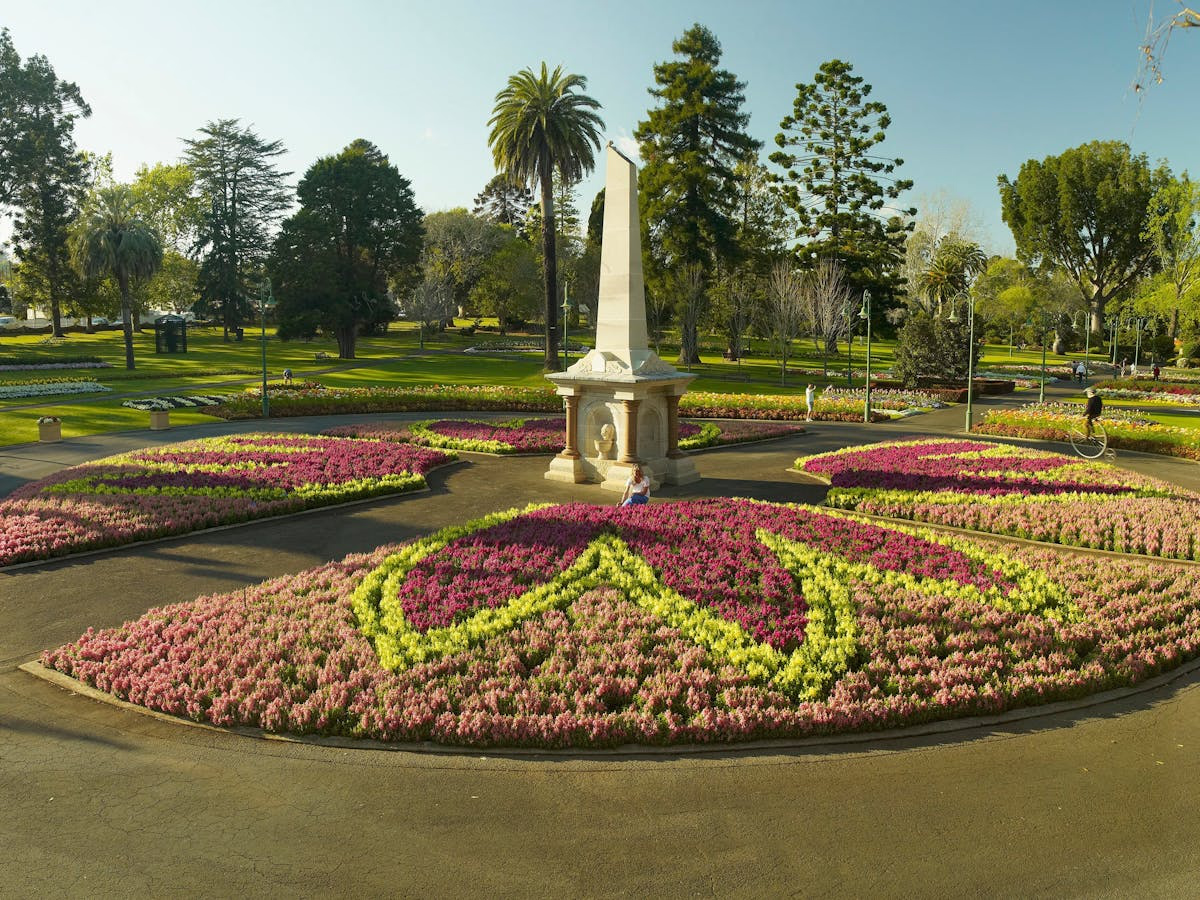
Start at the festival's heart. The heritage-listed Queens Park carries the biggest feature displays of the Carnival — massed beds of tulips, poppies and annuals in their tens of thousands, at their freshest and least crowded in the morning. Give it a solid ninety minutes; the display beds reward slow walking.
11:00am — Laurel Bank Park
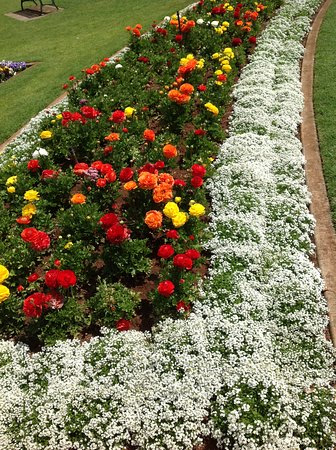
Ten minutes across town, Laurel Bank is the connoisseur's park — heritage roses, a scented garden, and themed beds tended with the kind of obsessive love that wins prizes. It's smaller and quieter than Queens Park, and many visitors quietly prefer it.
12:30pm — Lunch in the Garden City
Toowoomba's CBD cafe scene has been one of regional Queensland's best-kept secrets for a decade, and during the Carnival the whole city cooks: a festival food trail links dozens of venues, country bakeries defend their pie reputations, and heritage pubs do the Darling Downs beef justice. If your date lands on FEASTival weekend (26–27 September), lunch sorts itself.
Parade-day note: on Saturday 19 September, build your early afternoon around the Grand Central Floral Parade — stake out Margaret Street early or catch the floats arriving into Queens Park.
2:00pm — Ju Raku En or the private gardens
Choose your afternoon. Ju Raku En, on the UniSQ campus, is one of Australia's largest traditionally designed Japanese gardens — three kilometres of lakeside paths and a complete change of mood from the festival beds. Alternatively, the Chronicle Garden Competition's champion private gardens open their gates during the Carnival, offering a glimpse of what Toowoomba's home gardeners can do with a year of preparation. Some private gardens are ticketed; check conditions.
3:45pm — Picnic Point Lookout
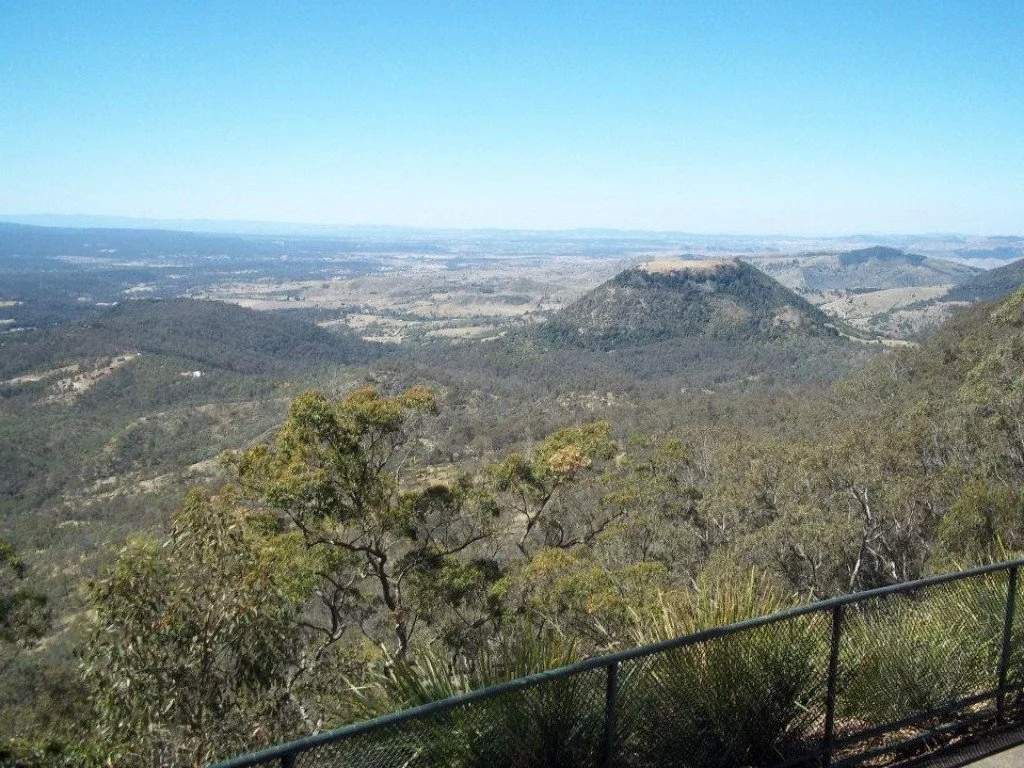
End on the edge. Picnic Point sits right on the escarpment with sweeping views over the Lockyer Valley and Tabletop Mountain — gardens and walking trails up top, and the best late-afternoon light in the city. It's the natural full stop to a Carnival day.
4:30pm — Roll home
Down the Range and back into Brisbane by early evening. If you're self-driving, budget patience for festival-weekend traffic on the way out of town. If you're on the coach, recline the seat — we'll wake you at your drop-off.
Want the itinerary without the logistics?
This is, more or less, exactly the day our Brisbane to Toowoomba Carnival day tour runs — from $89pp with return coach travel, a local driver-guide and every stop above handled for you.
This day works in any month — here's the year-round version
The hour-by-hour route above was written with September in mind, but strip out the parade and the competition gardens and you're left with a skeleton that holds up in any month of the year: gardens in the morning, the city at lunch, a quieter garden in the afternoon, the escarpment at day's end. Toowoomba is not a one-festival town, whatever the tourism calendar implies. The parks are maintained to the same exacting standard in May as in September, the cafe belt trades all year, and Picnic Point's view over the Lockyer Valley does not take annual leave. What changes with the seasons is emphasis, and the rest of this guide walks through exactly how to re-weight the day depending on when you go.
The practical difference outside festival season is that everything gets easier. The 90-minute drive from Brisbane genuinely takes 90 minutes rather than the optimistic figure plus festival traffic. Parking beside Queens Park is a matter of choosing a bay rather than winning one. Cafe tables appear without a wait, and the gardens hold perhaps a hundredth of their September crowds. If your aim is Toowoomba itself — the trees, the escarpment air, the unhurried country-city rhythm — a non-festival day trip from Brisbane arguably shows you more of it, because you spend your hours looking at the place rather than negotiating it.
The drive up: what the 125 kilometres actually look like
The run from Brisbane is around 125 kilometres and divides neatly into three acts. The first is motorway — the Ipswich Motorway and then the Warrego Highway, functional rather than scenic, best dispatched early with coffee. The second act begins past Gatton, where the Lockyer Valley opens out into one of Australia's most productive vegetable-growing districts; depending on season you'll pass paddocks of lucerne, sweet corn, brassicas and onions, with the Great Dividing Range building steadily on the horizon ahead. It is honest, workmanlike countryside, and it repays a window seat.
The third act is the climb itself. From Withcott the road lifts roughly half a kilometre in a handful of minutes, winding up the forested face of the Toowoomba Range until the temperature drops, your ears pop, and the city announces itself at around 700 metres above sea level on the crest of the Great Dividing Range. It is one of the few Australian regional cities you enter from below, and the transition — subtropical lowland to cool-aired garden city — is the single best free spectacle of the day after Picnic Point. If you're driving, keep left and let the trucks labour; if you're on a coach, this is the moment to look up from your phone.
Queens Park beyond spring: a season-by-season reading
Queens Park's September beds get the photographs, but the park is heritage-listed for the other eleven months as much as for the festival. Its roughly 26 hectares in the city centre are structured around avenues of mature trees — figs, camphor laurels and conifers planted across more than a century — and the trees, unlike the annuals, only improve with the calendar. Autumn (April into May) turns the deciduous avenues gold and copper, a genuine rarity in Queensland and reason enough on its own for a day trip. Winter mornings are crisp, often frosted, with the kind of hard blue light photographers drive hours for. Even in high summer the canopy makes the park one of the coolest places in the city, in the literal sense.
Give it the same ninety minutes you would in festival season, but walk it differently: less time nose-down in flower beds, more time under the trees and along the perimeter avenues. The botanic section on the Lindsay Street side keeps year-round interest, and the adjacent Cobb+Co Museum makes an easy add-on if the weather turns. Entry is free every day of the year, and outside September you will frequently have entire avenues to yourself on a weekday morning — a state of affairs that would be unimaginable during the Carnival of Flowers.
Laurel Bank Park: the connoisseur's stop, twelve months a year
Laurel Bank's 4.5 hectares repay a visit in any season, and its scented garden — designed to be enjoyed by touch and smell as much as sight — is a year-round proposition by definition. The park's gardeners work to a rotation that means the themed beds are rarely bare: spring's displays give way to summer plantings, and the rose collection carries flushes well beyond September. Because the park is compact, it suits the middle of a day-trip itinerary perfectly; forty-five minutes here is a full serve, where forty-five minutes in Queens Park is a taster.
The croquet lawns and mature trees give Laurel Bank a distinctly Edwardian temper, and it is usually markedly quieter than Queens Park even in festival season — outside it, you may share the place with a handful of locals and nobody else. Entry is free. If you're pruning the itinerary for time, the honest advice is that Laurel Bank is the stop to protect: it is the park visitors most often report as their surprise favourite, precisely because they'd never heard of it before arriving.
The lunch window, done properly
Toowoomba's cafe scene deserves more than the sixty minutes the festival itinerary allows it, and on a year-round day trip you can give it ninety. The city's coffee culture is genuinely strong — local roasters supply a belt of cafes through the CBD and the surrounding heritage streets, and standards run well above what the postcode might suggest. The pattern that works: coffee and a pastry mid-morning between the two parks, then a proper sit-down lunch after Laurel Bank, somewhere in the blocks around Margaret and Ruthven Streets where most of the best rooms cluster within a ten-minute walk of each other.
What to eat is a Darling Downs question. The region grows and raises a large share of what lands on its own tables, and menus lean into it — Downs beef, Lockyer Valley vegetables, and country baking that takes its pie and sponge responsibilities seriously. Weekend trading hours are generous but individual kitchens vary, so if you have your heart set on one particular room it's worth confirming opening days before you travel. For a deeper map of the scene, our Toowoomba coffee guide covers the roasters and rooms in detail.

The wet-weather swap: Cobb+Co Museum
Every day-trip itinerary needs a rain plan, and Toowoomba's is better than most cities' fair-weather plans. The Cobb+Co Museum on Lindsay Street, directly opposite Queens Park, houses the National Carriage Collection — the country's definitive assembly of horse-drawn vehicles, from grand coaches to the working drays that built the Darling Downs — alongside hands-on heritage trades workshops in blacksmithing, leatherwork and silversmithing that run on a changing schedule. Two hours pass quickly here, and its position means you can pivot to it from Queens Park in the time it takes to cross a road.
The museum also earns its place on fine days if you're travelling with anyone whose interest in flower beds has a natural ceiling — which, candidly, describes a percentage of every travelling party. Slot it into the early afternoon in place of the second garden, and the day loses nothing. Our full Cobb+Co Museum guide covers the collection highlights and how to time a visit around the trades demonstrations.
The walking filler: street art between the stops
Toowoomba's CBD laneways carry one of regional Australia's most extensive street art collections — the legacy of years of mural festivals that have left dozens of large-scale works threaded between Victorian shopfronts and warehouse walls. It costs nothing, needs no booking, and fits into the exact gaps a day-trip itinerary produces: the twenty minutes after lunch, the pause while half your party finishes their coffee. Start in the lanes off Ruthven Street and follow your nose; the density is highest in the blocks between Margaret and Herries Streets.
The collection rewards even a short wander because the works are genuinely varied — photorealist portraits, abstract colour fields, pieces three storeys tall — and because the contrast with the city's sandstone-and-verandah architecture is half the point. If it hooks you, our street art guide maps the laneways properly. On a one-day visit, think of it as connective tissue: the thing that turns walking between car park and cafe into part of the itinerary.
November: the jacaranda variation
If your day trip lands in late October or November, re-weight the morning. Toowoomba's jacaranda season is the city's quiet second festival — no events, no crowds, just streets and park edges washed in purple, with Queens Park's surrounds among the best displays. The light is warmer, the days longer, and the city has fully exhaled after the Carnival; November's logistics are September's with the difficulty setting lowered. It is, by a comfortable margin, the best-kept scheduling secret in this guide.
The route barely changes: Queens Park still opens the day, but linger on its fringes and the surrounding streets where the jacarandas mass. Laurel Bank and Picnic Point hold their usual slots. Photographers should note the purple carpet is at its best a week or so after peak bloom, when fallen flowers double the effect at ground level. Our jacaranda season guide covers timing and the best streets in detail.
Winter: the clearest views of the year
A winter day trip sounds counterintuitive for a garden city and is anything but. At 700 metres, Toowoomba does a proper southern-style winter by Queensland standards — frosted mornings, still days, and air of a clarity the warmer months never quite manage. That clarity is the point: Picnic Point's view over the Lockyer Valley to Tabletop Mountain is at its absolute sharpest on a cold, dry July morning, when the haze that softens summer vistas is simply absent. Pack a coat you'd consider excessive in Brisbane; you'll wear it.
Wind the itinerary an hour later in winter — there's no crowd pressure to beat, and the gardens want the sun on them before they show well. A 10am Queens Park start, long lunch in a warm room, Cobb+Co or the street art lanes in the early afternoon, then Picnic Point at 4pm as the light goes long and gold across the valley. The escarpment cafe makes a civilised final stop; confirm its hours locally before you build the day around it. Home down the Range with the heater on and Brisbane's humidity waiting at the bottom like a warm towel.
September: the one section on the Carnival
In the interests of completeness: for eighteen days from 18 September to 5 October 2026, everything above acquires a festival overlay. The Toowoomba Carnival of Flowers — the 77th running of it in 2026 — fills Queens Park and Laurel Bank with their famous massed displays, opens the champion private gardens, runs the Grand Central Floral Parade on Saturday 19 September, and stages the FEASTival food program on 26–27 September. It is the city's defining event and it transforms the day trip, along with the traffic, the parking and the cafe queues.
We won't duplicate the festival planning here, because we've already written that day in full: the Carnival of Flowers one-day itinerary is this route re-tuned for festival conditions, hour by hour. If that's your date, read that guide instead — and consider the coach seriously, because September is the month when someone else handling the Range traffic and the parking stops being a comfort and becomes a strategy. Cooee's Brisbane Carnival day tour runs from $89 per adult during the festival.
The family version of the day
With children, the itinerary keeps its shape and changes its centre of gravity. Queens Park earns a longer stay — its playground precinct is one of the best in regional Queensland and can absorb an hour on its own — while Laurel Bank's compact scale suits shorter legs better than you'd expect, and the scented garden is a genuinely good game for small noses. The Cobb+Co Museum moves from rain plan to headline: carriages you can inspect at wheel height and heritage trades running live are reliably the day's most-remembered stop for the under-twelves.
Two structural tips. First, front-load the driving: leave Brisbane by 7:30am so the Range climb happens while energy is high, and accept that the homeward leg will be a nap. Second, keep Picnic Point in the plan — the lookout is pram-friendly at the top, the view lands with all ages, and ice cream at day's end is a nonnegotiable line item in any competent family itinerary. Our Toowoomba with kids guide has the full version.
Timing the light: a photographer's schedule
The itinerary's running order happens to serve photographers well, but it's worth being deliberate about it. Queens Park wants morning light — by 9am the sun is high enough to fire the beds without flattening them, and the tree avenues throw long useful shadows until about 10:30. Laurel Bank's tighter plantings tolerate the middle of the day better than most gardens because the beds are the subject rather than the vistas. The street art lanes are a midday assignment by design: flat overcast or high sun both work when your subject is a painted wall.
Picnic Point is the day's scheduled golden hour, and the schedule is correct. The lookout faces east over the Lockyer Valley, which means late afternoon puts the sun behind you and drives warm light straight onto the valley floor and Tabletop Mountain — arrive an hour before you think you need to and watch the colour build. In winter that show runs from about 4pm; in high summer, closer to 5:30. If photography is the day's actual purpose, our photography guide goes deeper on all of these locations.
Coach or car: the honest comparison
Self-driving buys flexibility: you can chase the jacarandas down a side street, stretch lunch, or bolt for home early. The costs are real, though — roughly three hours of concentration on a highway and a mountain climb, fuel and wear across 250 kilometres, parking in the city, and the fact that whoever drives sees the Lockyer Valley only in glances. On festival weekends, add contested parking and a slow crawl up the Range. For a solo traveller or a couple who enjoy the road, the car wins on freedom. For groups, seniors, and anyone whose favourite part of a day trip is not the M2, the arithmetic shifts.
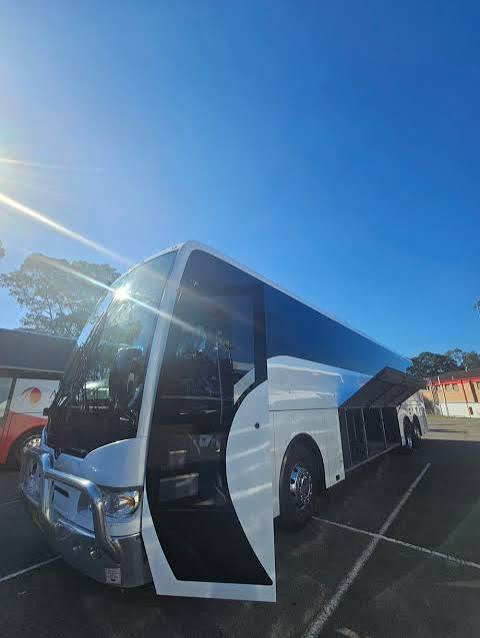
The coach version of this day is the one Cooee Tours has been refining for years: pick-ups in Brisbane, the Range climb with someone local at the wheel, every stop above sequenced for you, and the run home while you doze. During the Carnival that's the day tour from $89; across the rest of the year, the same logic drives our seniors, food and garden touring — the full slate is at Toowoomba tours, including dedicated seniors tours with a gentler pace and door-friendly pick-ups. Questions, group bookings or dates: 0409 661 342, or contact@cooeetours.com.au.
What to skip when the day runs short
Days run short — a late start, a long lunch, a toddler negotiation — and the itinerary should degrade gracefully rather than collapse. The order of sacrifice, from first to last: the street art lanes go first (you'll walk past some regardless); Ju Raku En or the second garden goes next, painful as that is; then the museum. What you protect at all costs is the pairing that defines the day — one proper garden done slowly, and Picnic Point at the end. A day trip that is only Queens Park and the escarpment lookout, with a good lunch between them, is still unmistakably a Toowoomba day.
The reverse also holds: if the day runs long, resist adding stops and instead deepen the ones you have. An extra half-hour under the Queens Park figs beats a rushed drive-by of a fourth garden, and a second coffee in the cafe belt beats arriving at Picnic Point forty minutes before the light is ready. Toowoomba rewards the visitor who does less, slower — which is, not coincidentally, the entire operating philosophy of the itinerary on this page.
The verdict: is Toowoomba worth a day trip from Brisbane?
Unreservedly, and more than once. The city sits at that rare sweet spot for a day trip from Brisbane: far enough to feel like a genuine change of altitude, air and pace, close enough that the travel never swallows the day. No other destination within two hours of Brisbane offers the same stack — heritage-listed gardens, a nationally significant museum, a serious cafe scene and an escarpment lookout — inside a single walkable, parkable regional city. The common mistake is treating it as a September-only proposition; the second most common is trying to see all of it in one visit.
The better model is the one this guide has been quietly arguing for: pick the season that matches your interests — spring for the flowers, November for the jacarandas, autumn for the colour, winter for the views — run the day unhurried, and leave something for next time. And if a single day keeps feeling too short, that's the itinerary telling you something; our two-day weekend version is the natural next step, with the Downs villages and Spring Bluff added to everything above.
Want more depth on each stop? See our full guides to Queens Park, Picnic Point Lookout and the Cobb+Co Museum before you lock the running order.
See the Carnival the easy way
Cooee Tours runs coach day tours from $89pp and 2-day overnight tours from $595pp — no traffic, no parking, local driver-guide included.
Carnival of Flowers Tours