The Family Guide to the Carnival of Flowers
A festival where the headline attractions are free, the timing lands inside the school holidays, and there's a parade for the dog. The Carnival might be Queensland's most parent-friendly big event.
The budget maths works
Start with the number every parent wants: zero. Entry to the feature floral displays in Queens Park and Laurel Bank Park is free, all day, every day of the festival. The Grand Central Floral Parade is free to watch from the street. Add a picnic and you've built a full family day out for the cost of getting there — a rare equation on the modern events calendar.
The parade is made for kids
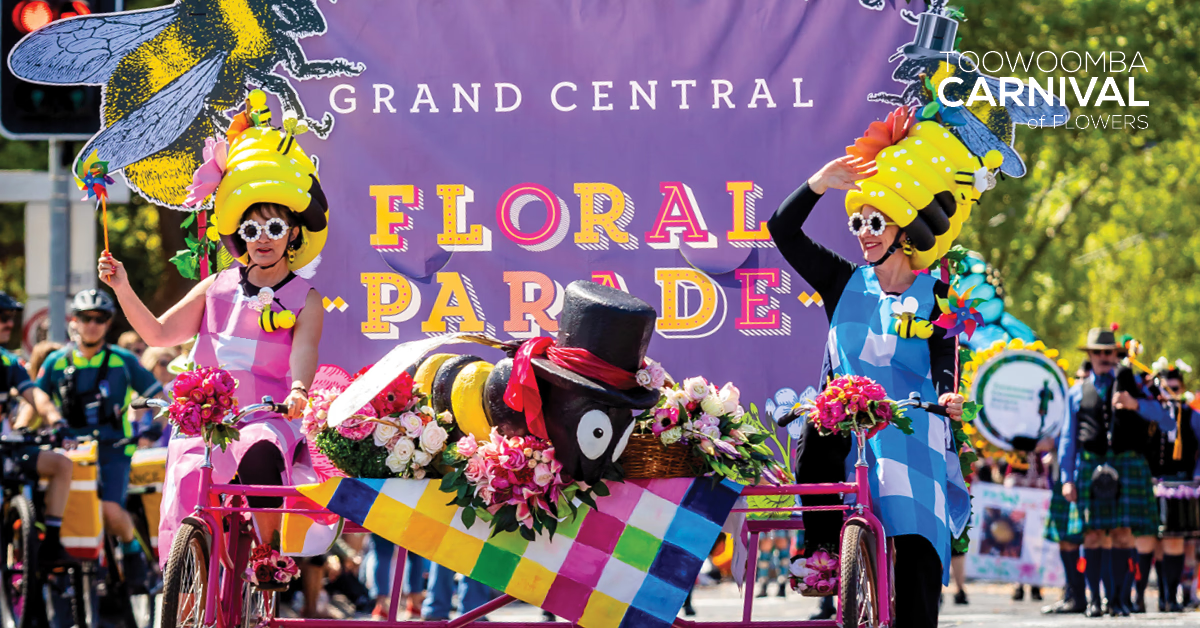
Saturday 19 September, more than 30 flower-covered floats, plus roving performers, carnival characters and street entertainers along the route. Arrive early, claim a kerb, bring snacks and hats. Small kids see best from shoulders or a low camp chair at the front of the crowd; the Queens Park end catches the arrival atmosphere.
Between events: run them in the parks
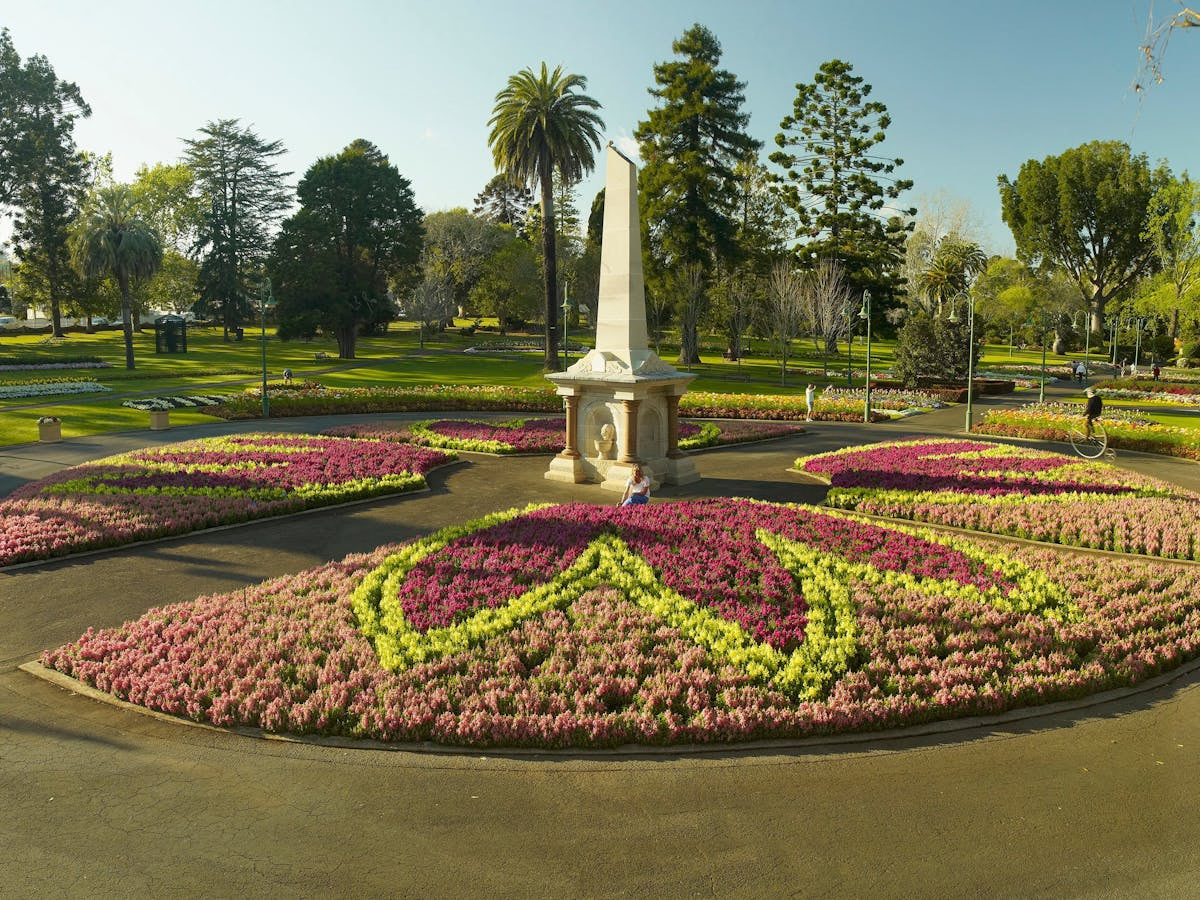
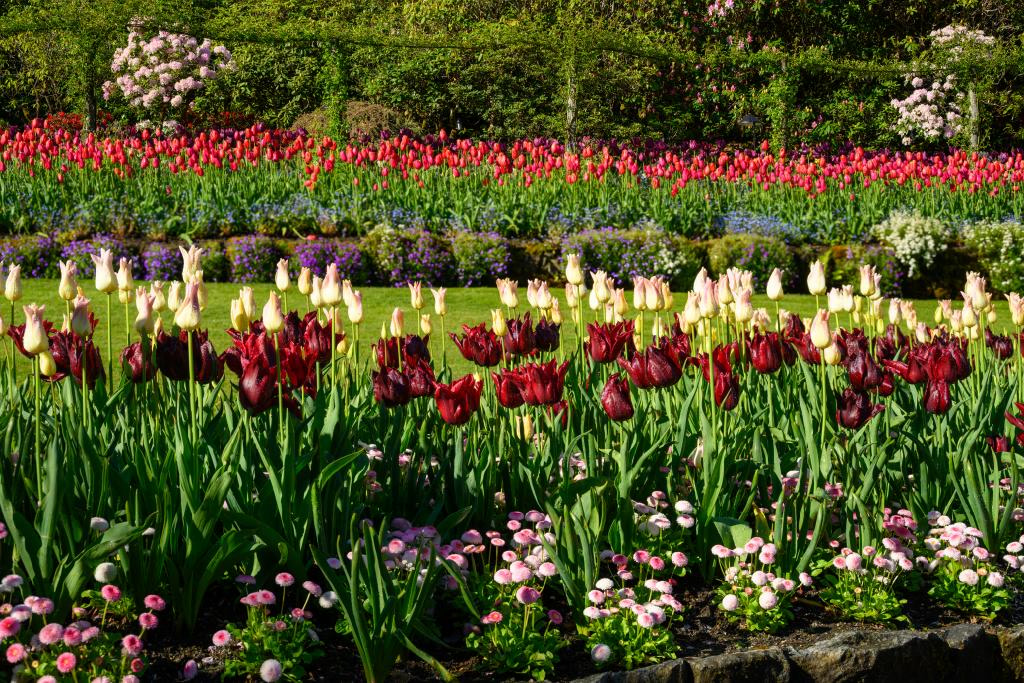
Queens Park is exactly what a heritage city park should be — big lawns for burning energy, playground, shade, and flower beds that genuinely impress kids at tulip height. Picnic Point adds a playground with a view and easy walking trails; it was named for a reason, so pack accordingly.
Feature weekends bring markets, rides and live entertainment. Midweek brings space and calm. Choose based on your children, not the program.
The Paw Parade: 4 October
On the final weekend, the festival hands the spotlight to the dogs. The Paw Parade on Sunday 4 October is one of the most cheerful events on the entire program and a guaranteed hit with kids — whether your own dog is marching or you're just there for the costumes.
School-holiday timing is deliberate
The 2026 dates — 18 September to 5 October — are built around the Queensland school holidays, and the final stretch lands on the King's Birthday long weekend. That's your window for an overnight family escape; it's also why family accommodation books out early. Plan ahead.
Honest logistics for parents
Prams handle the main parks well — paths are sealed and mostly level. Toowoomba sits around 700 metres up, so pack a warm layer for everyone even on sunny days; spring mornings bite. Parking near the parks on feature weekends is genuinely hard with kids in tow, which is exactly why families increasingly take the coach: door-to-gardens, no car seats to shuffle, and the kids arrive fresh instead of car-cranky.
A family day, hour by realistic hour
Forget the adult itineraries; here is the version tested on actual children. 8:30am: arrive — early is everything with kids, because you get the gardens before the crowds and the tantrum-triggering queues simply don't exist yet. 9am: Queens Park, but lead with the playground, not the flower beds. Twenty minutes of climbing buys you forty minutes of civilised garden walking afterwards, a trade every parent recognises as daylight robbery in their favour. The beds themselves genuinely land with kids at tulip height — let them pick a favourite colour per bed and the walk becomes a game instead of a march.
10:30am: morning tea from the bag you cleverly packed, on the lawns, while the adults take turns wandering the botanic corners. 11:30am: the markets while energy holds — kids love the stalls, and a small buy-your-own-treat budget converts browsing into an event. 12:30pm: picnic lunch, then the honest decision every family day needs: push on to Laurel Bank while the toddler naps in the pram, or declare victory and take the scenic drive home past the decorated houses with everyone strapped in and fading. Both are wins. The families who struggle are the ones who planned an adult day and brought children to it.


The playground audit
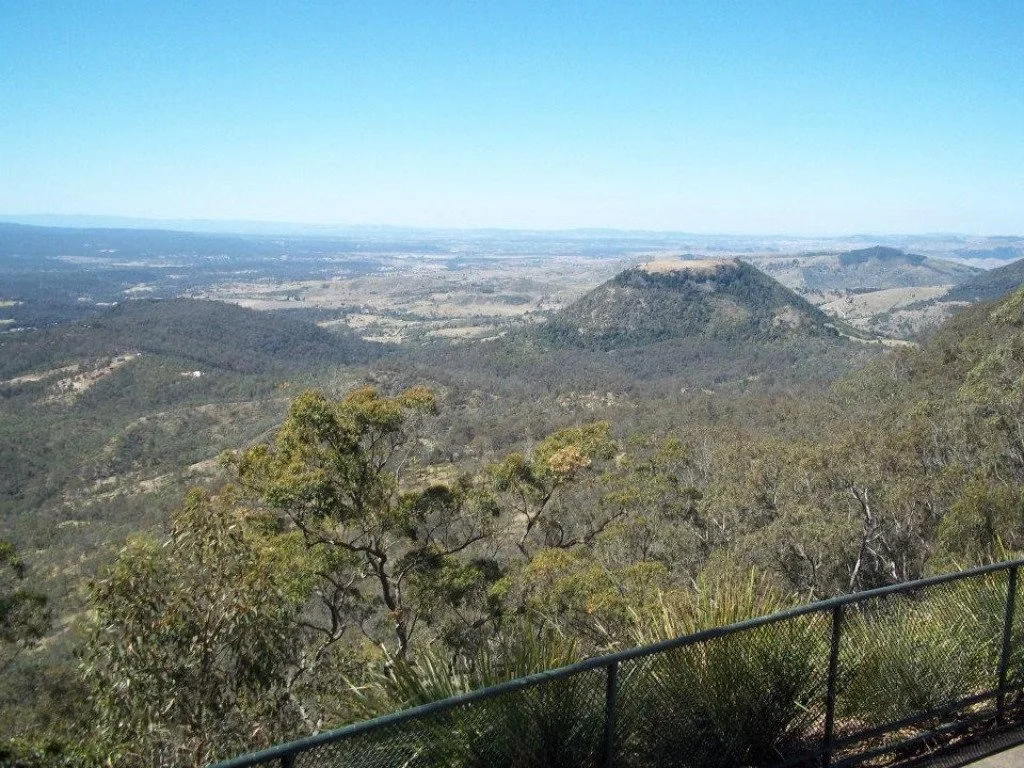
Parents plan around equipment, so here's the honest survey. Queens Park holds the festival's ace: quality playgrounds inside the park itself, meaning the adults are never more than a lawn's width from the flowers while the kids burn fuel. Shade is decent, lawns are vast, and the ice-cream radius is short. Picnic Point adds a playground with a hundred-kilometre view — the rare piece of play equipment that parents photograph — plus easy short trails that count as adventure at age six.
Laurel Bank is the calmer garden and its play options are lighter, which makes it the right second stop on a good day and the right skip on a fading one. The strategic summary: anchor the day at Queens Park, treat Picnic Point as the bonus round, and hold Laurel Bank for families whose youngest members still travel by pram — its paths were made for wheels.
The Paw Parade and the final weekend
Mark Sunday 4 October in the family calendar now: the Paw Parade is the festival handing its stage to dogs in costume, and there is no demographic on earth it lands with harder than the under-tens. It's free, it's ridiculous in the best way, and it caps the final weekend when the whole festival has relaxed into school-holiday mode — warmer days, easier parking, and a town full of families in exactly your situation.
The final week is quietly the family sweet spot all round: Queensland school holidays mean nobody's counting truancy, the beds are still full, and the feature-weekend crush has passed. If your family's Carnival can land anywhere, land it there — with the parade Saturday as the alternative for families whose kids are float-and-marching-band people. Most are; budget for shoulders.
Feeding the troops without losing the day
Festival food with kids is a logistics problem wearing a menu, so solve it in advance. The championship move is the picnic: pack it or pre-order one, claim Queens Park lawn, and let lunch double as playground time — no queues, no seating hunt, no $9 regret purchases. The markets work brilliantly as the treat layer rather than the meal layer: one stall visit each, chosen by the child, budget capped, dignity intact.
Cafe lunches are doable midweek but punishing on feature weekends, when every table in the precinct has a wait attached — if you need one, walk two blocks further out than feels natural and the queues halve. Water is the other quiet win: the parks have refill stations, so bottles beat buying, and a filled bottle per child at 8:30am prevents the 11am whinge-cascade every parent can transcribe from memory. None of this is glamorous; all of it is the difference between a festival day and a festival endurance event.
Pram and toddler logistics
The good news first: this is one of Australia's most pram-friendly festivals. Queens Park and Laurel Bank run sealed, level paths through everything that matters; kerb cuts are civilised; and the distances between anchor points are short. The realities worth planning: feature-weekend crowds turn pram-driving into slalom (another vote for mornings and the final week), shade demands the hat-and-cream ritual despite the cool air — 700-metre UV is sneaky — and the altitude means the layer rule applies double to small bodies at 9am kerbs.
Nap strategy separates the professionals: the coach ride home is nature's perfect nap slot, the decorated-homes drive works as a pram-nap loop for self-drivers, and the parade — loud, joyful — is nobody's nap window, so schedule accordingly. Baby-change facilities cluster at the main park amenities; the CBD's centres backstop them. Pack half what you think and you'll still use two-thirds.
Rainy-day and heat-day backups
September behaves most years, but families need the Plan B card. Rain: Cobb & Co Museum, directly opposite Queens Park, is the region's best family wet-weather asset — the National Carriage Collection reads as 'giant old vehicles' to kids, the heritage trades demonstrations add sparks and noise, and you can be back at the beds twenty minutes after the shower passes. The library and gallery quarter backstops a longer soak.
Unseasonal heat flips the schedule rather than cancelling it: gardens by 9, done by 11:30, museum or long lunch through the hot middle, then the decorated-homes drive in air conditioning and Picnic Point's breeze for late afternoon. The festival's rhythm bends easily around weather for families who hold plans loosely — which, by September of any parenting year, is a well-practised skill.
The coach option, judged by a parent jury
Families increasingly take the coach for reasons that have nothing to do with scenery: no car seats to uninstall at a festival car park, no driver missing the day, no parking sport with a toddler aboard, and the ride home functioning as a guaranteed dual-nap window. Child fares run on all three Classic departures — $69 from Brisbane, $79 from the Gold Coast, $89 from the Sunshine Coast — and the luggage bay swallows the pram whole.
The honest counters: fixed timings suit families who can hold a schedule, and the day is long for under-fours from the further departures — Brisbane's 90-minute legs are the toddler-safe bet, while the Sunshine Coast run suits school-age stamina. Verdict from years of coach-aisle evidence: for families of walkers and schoolers, the coach turns the festival's hardest parts into someone else's job; for the pram-and-nap brigade, Brisbane departure or self-drive with this guide open on a knee. Either way, the flowers don't care how you arrived, and neither will the photos.
The packing list, parent edition
The standard Carnival packing advice — layers, hats, water, camera — applies double with children and gains a family annexe. The non-negotiables: a warm layer per child even on a sunny forecast, because the 700-metre morning bites small bodies hardest and the 9am parade kerb is where under-dressed family days go to die; sunscreen and hats despite the cool air, since altitude UV is the sneakiest thing on the Downs; refillable bottles, one per walker, filled before the first whinge rather than after; and the snack reserve calibrated to your crew's known collapse intervals.
The force-multipliers: wet wipes beyond any rational estimate, a change of clothes for anyone under six (fountains exist, gravity exists, ice cream exists), the picnic rug that converts any lawn into base camp, and — the veterans' pick — a cheap kite or ball for the Queens Park lawns, which buys adult garden-gazing time at a rate no screen can match. Leave home the scooter (crowds), the good pram (gravel exists) and the ambition to see everything. The festival will still be there next September; the family that paced itself will actually want to come back.
Turning the flowers into a kids' game
The difference between children enduring gardens and children owning them is usually one invented game. Field-tested options: colour bingo — each child claims a colour at the gate and counts their beds, winner picks the ice-cream stop; the photographer's apprentice — hand over the phone at one garden per day and let them shoot their own set, which produces both engagement and occasionally startling art; petal maths for the school-aged — if this bed holds ten thousand tulips, how many in the whole park? — which smuggles arithmetic into a festival; and judge for a day at the decorated homes, scoring gardens out of ten from the back seat with full ceremonial seriousness.
None require preparation beyond remembering they exist, and each converts the day's longest walking stretches into its most quoted memories. The festival supplies forty million props; the game is just the permission slip.
Grandparents in the party: the three-generation day
The Carnival is one of Queensland's best three-generation outings, with light planning. The formula that works: anchor at Queens Park where sealed paths, benches, playgrounds and flowers coexist within one lawn's radius — grandparents garden-gaze while parents playground-supervise, and everyone reunites for the picnic. Choose midweek or the final week over feature Saturdays; crowds tax every generation differently and none enjoyably. Build in the sit-downs deliberately: morning tea as an event, not a pause.
The coach earns its three-generation stripes here too — low-step boarding for the seniors, no car-seat gymnastics for the parents, nap acoustics for the smallest, and nobody's licence doing the Range twice. Book adjacent rows early, reserve the front seats for the generation that appreciates them, and let the driver be the day's designated adult. Families report the multi-generation coach day as the format where everyone actually saw each other, which — beneath the flowers — was always the point.
The family verdict, weekend by weekend
Condensing this guide's calendar advice for the fridge door: opening weekend — parade wow, maximum crowds, best for robust school-agers and shoulder-capable parents; FEASTival weekend — a food event with a family fringe, workable but not built for you; midweek any week — the pram-and-toddler golden path, empty playgrounds and unhurried beds; final week — the family sweet spot: school holidays, warm days, Paw Parade, relaxed town. Book transport early whichever you choose, pack the layer, lead with the playground, picnic over queues, and declare victory before the meltdown rather than after. The Carnival has been a family festival since 1949; it knows how to catch you.
Questions parents actually ask
Will my kids actually enjoy flowers? Framed as a walk-and-look, briefly; framed as playground-parade-picnic-game with flowers as the set dressing, genuinely — and that framing is this whole guide. Toilets? Main park amenities at both premier gardens plus the CBD's centres; the pre-departure visit remains civilisation's finest parenting technology. Prams on the parade route? Fine at the kerb, hard in the crush — corners and the Queens Park end give wheels room. Can we bring the dog? Parks yes on lead; the Paw Parade positively expects it. Cost for a family of four? The free spine plus picnic and treats lands around coach-fare-plus-pocket-money — the festival remains one of Queensland's cheapest great days out.
And the one nobody asks aloud: what if it all goes wrong by 11am? Then you've had a playground morning among forty million flowers, the coach or car is right there, and Toowoomba forgives early exits with a scenic drive home past gardens that ask nothing of anyone. Some of the best family Carnival days are the short ones — the festival's mercy is that every hour of it counts.
The keepsake layer
Cheap, deliberate memory-making for the family archive: the same photo of the kids at the rotunda every year you return — the growth-chart shot that Carnival families treasure by the third visit; the market stall where each child chooses one small thing with their own money; the judged-from-the-back-seat decorated-homes scorecard kept in the glovebox; and the pressed petal from the lawn (fallen only, the gardeners ask) laminated into a bookmark at home. The festival manufactures wonder at industrial scale; families just need containers for it. Yours are allowed to be this simple.
The family guide, folded small
Playground before petals; mornings before crowds; picnic before queues; final week before feature Saturdays unless the parade's the point; layers before optimism; games before boredom; coach before car-seat gymnastics where the maths suits; and victory declared one hour before anyone would have demanded it. That's the entire craft of a family Carnival, learned the hard way by thousands of Septembers' worth of parents so yours doesn't have to be one of them. The flowers do their part on schedule — forty million strong, at exactly eye level for the smallest visitors, every single year since 1949. Bring the crew; the Garden City has been expecting families all along.
Ages and stages: the same festival, four different days
The family Carnival is really four festivals wearing one program, and calibrating to your crew's current stage saves more grief than any packing list. The under-fives get the version this guide has already mapped — playground-led, pram-pathed, victory declared early. Primary-schoolers are the festival's sweet spot: old enough for the games, young enough for genuine wonder, and exactly the right height for beds planted at their eye level; give them the colour-bingo brief and a market budget and they will out-walk their parents. Tweens want jobs, not tours — official photographer, navigator, parade-position scout — and respond to responsibility the way toddlers respond to playgrounds. Teenagers require the most honest handling: lead with the food stalls, the street-art laneways two blocks from the gardens, and full phone-photography licence among the most photogenic beds in regional Australia, and let the flowers ambush them sideways. The under-tens will tell you the day was great; the teens will post it, which every parent recognises as the same review in a different dialect.
The mixed-ages family — most families, in other words — solves the spread by zoning the day rather than averaging it: playground blocks for the small ones while the teens graze the markets, a reunion picnic in the middle, and one all-ages set piece (parade, Paw Parade or the decorated-homes drive) as the shared memory. Nobody gets their perfect day; everybody gets a good one, which after roughly age two is the definition of a successful family outing anywhere on earth.
The overwhelmed-child reset: where the quiet lives
Every festival family eventually meets the moment the guides skip: the child who has simply had enough — of crowds, of colour, of being asked to admire things. Toowoomba, helpfully, keeps quiet rooms attached to its loud ones. Ju Raku En, the Japanese garden at the university, is the region's great decompression chamber — free, calm and green rather than riotous, with still water, gravel paths and space where a scrambled small person can reassemble at their own pace while the adults enjoy one of Australia's largest traditionally designed Japanese gardens with entirely clear consciences. Laurel Bank's scented garden runs the same service in miniature: a garden built to be smelled rather than surveyed, which turns out to be exactly the sensory register an overstimulated child can still enjoy.
The craft is in deploying the reset before the meltdown rather than after — the veteran parent's tell is a child who stops commenting — and in treating it as part of the day, not an apology for it. Twenty quiet minutes beside water buys a second act at the beds that no amount of pushing through would have produced. The festival's scale is its glory and its tax; families who schedule the exhale alongside the spectacle get to enjoy both, and usually discover the quiet gardens were the parents' favourite stop all along.
Making it two days: the family weekend version
Everything in this guide compresses into one day because most families only have one — but the Carnival opens up remarkably for the family that stays over. A second day dissolves the itinerary maths that forces the hardest choices: the Cobb and Co Museum gets a proper unhurried visit instead of a rain-contingency cameo, with the carriage halls and heritage trades demonstrations enjoyed at child pace; Spring Bluff's heritage railway station — a working piece of train-book scenery dressed in Carnival gardens — earns its detour, and no demographic on earth appreciates a heritage station like the under-eights; and the gardens themselves can be split sensibly, Queens Park's big day separated from Laurel Bank's gentle one instead of stacked against the same afternoon nap.
The booking mathematics favour the organised: September accommodation sells out months ahead, which is where the 2-day weekend tour from $595 per person earns its place on the family shortlist — coach, itinerary and accommodation solved in one transaction, with the driving, parking and navigating all removed from the parental job description for the entire weekend. Self-driving families can build the same shape with an early room booking and this guide's pacing rules. Either way, the overnight buys the thing single-day families never see: the town after the day-trippers leave, an unhurried dinner, and children who meet day two rested instead of rationed. One day makes a memory; two make a tradition, and the Carnival has been converting families into annual returners on exactly those terms since 1949.
See the Carnival the easy way
Cooee Tours runs Carnival day tours from Brisbane ($89pp), the Gold Coast ($99pp) and the Sunshine Coast ($109pp), plus a $159 small-group Deluxe Experience with lunch included — no traffic, no parking, local driver included.
Carnival of Flowers Tours