Driving vs Coach Tour to the Carnival of Flowers
Yes, we run the coaches — but here's the comparison played straight, including the days when driving yourself is genuinely the right call.
The case for driving
Your car, your schedule. Self-driving wins on flexibility: you can chase the light for photos, linger an extra hour at Laurel Bank, detour to Spring Bluff on a whim, or build a multi-day Downs road trip with the Carnival as one stop. Families with very young children often prefer their own vehicle for the gear, the naps and the escape hatch. And midweek, outside the feature weekends, driving to Toowoomba is easy — the road is good, the traffic is normal, and parking is findable.
The case against driving (on feature weekends)
Now the other column. On parade weekend, tens of thousands of visitors climb the Range with you. Streets along the parade route close on Saturday 19 September. Parking near Queens Park evaporates before breakfast, and what remains is a long walk from everything. Then, at day's end, you drive two hours home after eight hours on your feet. None of this ruins the day — but all of it taxes it, and the driver pays the whole bill while everyone else enjoys the festival.
The real cost of driving isn't fuel — it's arriving stressed and leaving tired, on the two days of the year when Toowoomba's roads are at their worst.
What the coach actually buys
Count what's bundled into a from-$89 seat: return travel from Brisbane, drop-offs at the garden gates, a driver-guide who knows the Downs and handles every closure and detour, commentary on the way up, and a seat to doze in on the way home. No parking, no navigating, no designated driver at the cellar door. For seniors, garden clubs and anyone who'd rather spend their energy in the gardens than the traffic, the arithmetic is short.
The honest verdict
Driving wins midweek, for photographers chasing their own schedule, and for families building a longer road trip. The coach wins on parade day, on feature weekends, for seniors and groups, and for anyone whose ideal festival day contains zero minutes of parking. Many of our regulars do both in the same season — coach for parade weekend, car for a quiet midweek return. That's not indecision; that's the correct answer.
The full cost ledger, line by honest line
Start with the numbers nobody itemises until September. Self-driving Brisbane–Toowoomba return: fuel for 250-plus kilometres including the Range climb both ways; the bypass toll if you take it; festival-day parking, which ranges from paid and distant to free and mythical; and the invisible line — a driver who works the whole day and sees the festival through a windscreen. Against that, the $89 coach fare includes the transport, the morning tea a self-driver buys separately, the decorated-homes route no visitor finds unaided, and the return of the driver to the holiday.
Run the same sums from the Gold Coast (add tolls, add an hour each way) or the Sunshine Coast (add two) and the gap widens with every kilometre. For a solo traveller the coach wins on arithmetic alone; for a couple it roughly breaks even before counting a single convenience; for a family the car claws back ground on fares — until parking, stress and the nap-logistics column have their say. The ledger's conclusion isn't that driving is wrong; it's that driving is only cheap if your time, energy and parking luck are free.
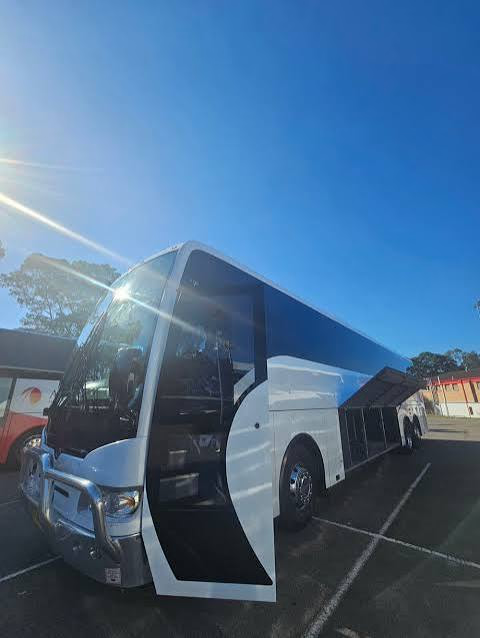
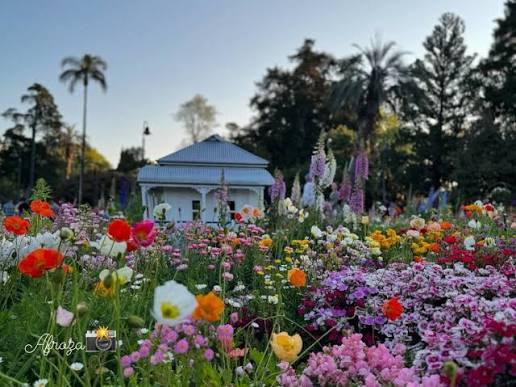
Parade day: the logistics case decided
If the comparison has a knockout round, it's Saturday 19 September. Parade day closes the central streets from early morning, reroutes traffic across a city already at capacity, and turns parking into a before-breakfast competition with towing consequences. Self-drivers can absolutely manage it — with dawn arrival, a pre-scouted park, and the acceptance that leaving mid-afternoon means joining the exodus down the Range in convoy.
The coach simply opts out of all of it: drop-offs inside the closed-street logistics that buses are planned around, a driver who has run parade day for years, and a departure that glides past the car park queues at their most philosophical. It's the one date where even devoted self-drivers book seats — and, not coincidentally, the date our coaches fill first. If parade day is your Carnival, the debate this article stages is already over.
The parking map nobody prints
For the drivers still reading — respect, and here's the honest intelligence. Feature weekends: the streets ringing Queens Park fill before 9am, the CBD's timed parking turns over too fast for a festival day, and the realistic play is the fringe — a ten-minute-walk radius where all-day options survive longest — or the designated event parking when it runs. Midweek transforms everything: ordinary parking discipline returns and the whole debate cools accordingly.
Three rules earn their keep: park once and walk everything rather than re-parking between gardens (the second park is where festival mornings die); photograph your street sign, because post-festival euphoria erases parking memories with documented reliability; and read the signage twice on parade day, when normal rules suspend and the tow trucks know it. Laurel Bank's surrounds run gentler than Queens Park's; Picnic Point holds out best of all, which is one more argument for making it the morning stop either way.

The Range drive, assessed both ways
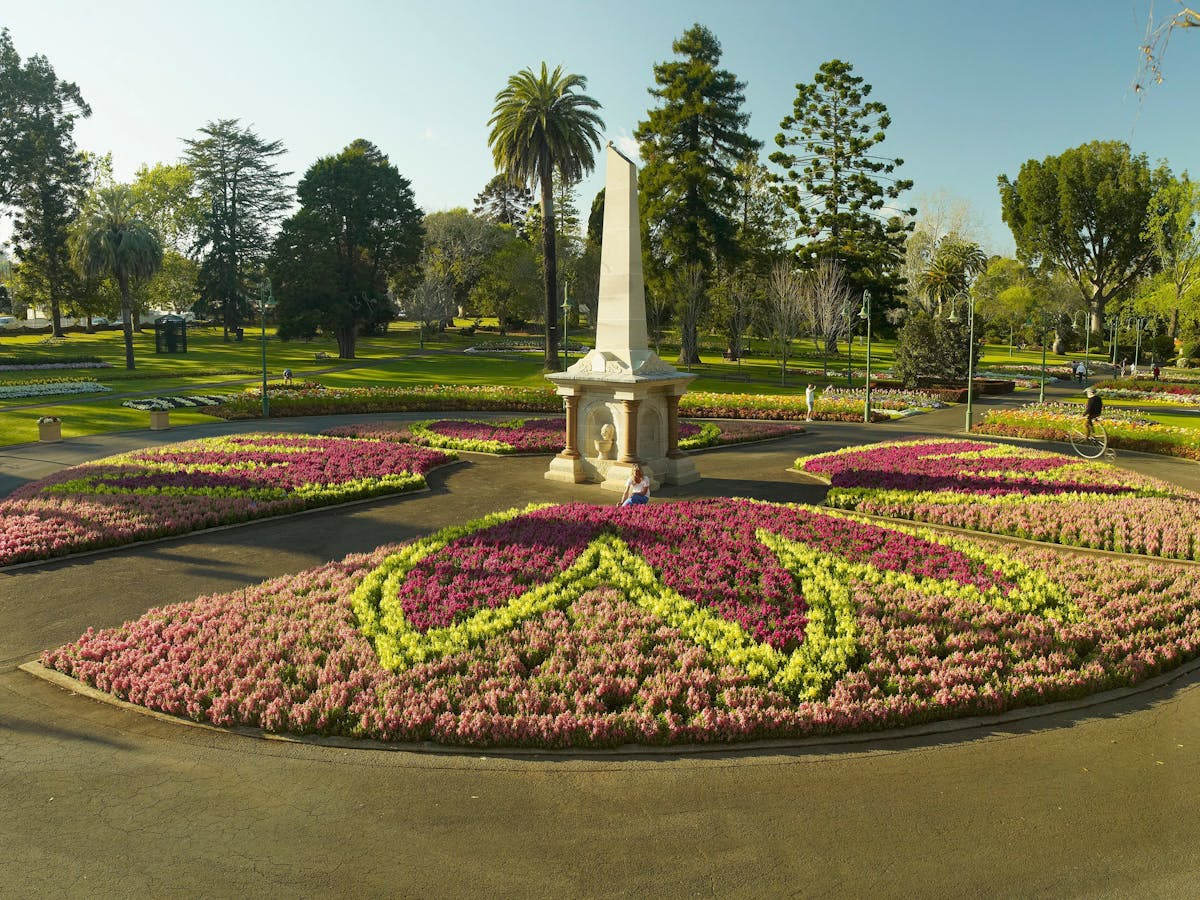
The climb itself deserves its own verdict, because it's simultaneously the drive's best scenery and its main tax. As a passenger — coach seat, left side going up — the Toowoomba Range is a highlight: the Lockyer Valley unfolding behind, the escarpment swinging past, and someone else negotiating the grade among the B-doubles. As a driver it's ninety concentrated minutes of mirrors and lane discipline that deposits you at the festival already spent — competent, absolutely; enjoyable, ask your passengers what you missed.
Weather amplifies the gap: Range fog is atmospheric theatre from a coach window and white-knuckle navigation from a driver's seat, while festival-weekend congestion turns the climb into a queue with a view. The bypass gives through-drivers a cleaner option at toll price, and confident mountain drivers will shrug at all of this — but the honest summary is that the Range rewards whoever isn't holding the wheel, and the coach sells that seat by the day.
When driving genuinely wins
Fair play demands the counter-case, and it's real. Drive if your Carnival is a freestyle itinerary — Spring Bluff at dawn, Newtown Park's roses, three private gardens across opposite suburbs and a ridge detour, on your own clock. Drive if you're pram-and-nap scheduling around a toddler whose timetable answers to no coach. Drive if you're staying regional — basing in Highfields or making the festival one stop on a longer Downs wander. Drive midweek, when the parking tax drops to loose change and the flexibility dividend pays in full.
And drive if you simply love the drive — the Warrego through the Lockyer is a genuine Queensland touring route, and this website would be lying if it pretended otherwise. The comparison was never coach-good-car-bad; it's that each format has a natural constituency, and September's crowds move the boundary heavily coach-ward on exactly the days most visitors travel.
The hybrid strategies nobody mentions
The debate hides third options worth knowing. Drive-and-stay: motor up midweek, base centrally for a night, and do your festival on foot — capturing self-drive flexibility while opting out of the day-tripper crush entirely; the where-to-stay guide below makes this plan bookable. Split parties: half the family coaches, the drivers road-trip, everyone meets at the rotunda — solving the car-seat-versus-flexibility standoff that stalls family planning. The charter: groups of friends or clubs hire the coach outright, choosing their own stops with none of the scheduled-departure constraints — self-drive freedom at coach comfort, priced per group.
Even the pure formats hybridise at the edges: coach guests get ninety free-range minutes in the precinct, and smart drivers copy the coach itinerary's timing wholesale. The formats are converging on the same well-tested day; the remaining question is only who holds the wheel on the Range.
What coach guests actually get: the fare, unpacked
Since the comparison keeps pricing one side in dollars and the other in vibes, here's the $89 unpacked properly: return luxury coach with a local driver who runs this festival all season; Chermside and CBD pickups; morning tea at Picnic Point — the lookout stop self-drivers ration to save parking spots; Queens Park delivered inside its golden morning window; the 90-minute festival free-time block; Laurel Bank in the afternoon; and the decorated-homes drive threading suburbs no visitor maps alone. Plus the unlisted items: commentary that turns the Lockyer Valley into a story, a luggage bay for the market haul, and a group that has quietly become part of the day's pleasure by the ride home.
The Gold Coast ($99) and Sunshine Coast ($109) fares buy the same day plus the kilometres, and the $159 Deluxe upgrades the formula with extra gardens and a seated lunch. None of it is magic; all of it is the accumulated craft of running one festival for decades — which is, finally, what the fare purchases: everyone else's trial and error, pre-paid.
The decision tree, printable
Cut out and keep: Parade Saturday? Coach, no further questions. Solo or couple, any feature weekend? Coach — the ledger and the crowds agree. Family of four with school-agers? Coach from Brisbane for the nap-logistics dividend; drive midweek if flexibility rules. Toddler timetable? Drive, midweek, this guide's parking rules applied. Freestyle garden ambitions or regional touring? Drive, and enjoy the Warrego properly. Group of six-plus? Price the charter before deciding anything. Still torn? Coach up this year, drive next — the festival repeats annually precisely so visitors can test both sides of this article. Whichever branch you land on, arrive before ten; the flowers hold the casting vote, and they're morning people.
The passenger economy: what non-drivers gain
The comparison usually audits the driver's day, but the passengers are voting too. In a self-driven car, passengers spend the Range managing snacks, navigation disputes and the driver's blind-spot anxieties; on the coach, the same people spend it watching the Lockyer Valley scroll past a picture window with commentary attached. Multiply by the return leg — when car passengers manage a tired driver and coach passengers manage a nap — and the passenger economy explains something the ledgers miss: why coach bookings skew toward couples and groups who have done the drive before. They're not buying transport twice; they're buying everyone's day, once.
It also reframes the family calculus. A car turns one parent into staff; the coach returns both to the holiday, which on parade day — shoulders required, kerbs contested — is not a luxury but load-bearing infrastructure. The cheapest seat in the vehicle is always the one nobody has to work from.
Timing freedom: the honest trade
The self-drive argument's crown jewel is the open clock, so weigh it properly. What the car's freedom buys: dawn starts no coach matches, the third private garden across town, the impulse ridge detour, the leave-when-the-toddler-says departure. What it quietly costs: every timing decision becomes yours to research, and September's crowds punish the improvised schedule hardest — the noon arrival, the un-scouted parking, the golden hour missed in the exodus queue.
The coach inverts the trade: a fixed frame, inside which every timing decision has been pre-made correctly — golden-window gardens, beaten queues, the practiced exit. Freedom-lovers chafe at the frame until they notice it contains precisely the schedule they'd have designed with a week's research. The real question isn't freedom versus constraint; it's whose expertise sets your clock, and what your research hours are worth in September.

Verdicts from the road: what returners choose
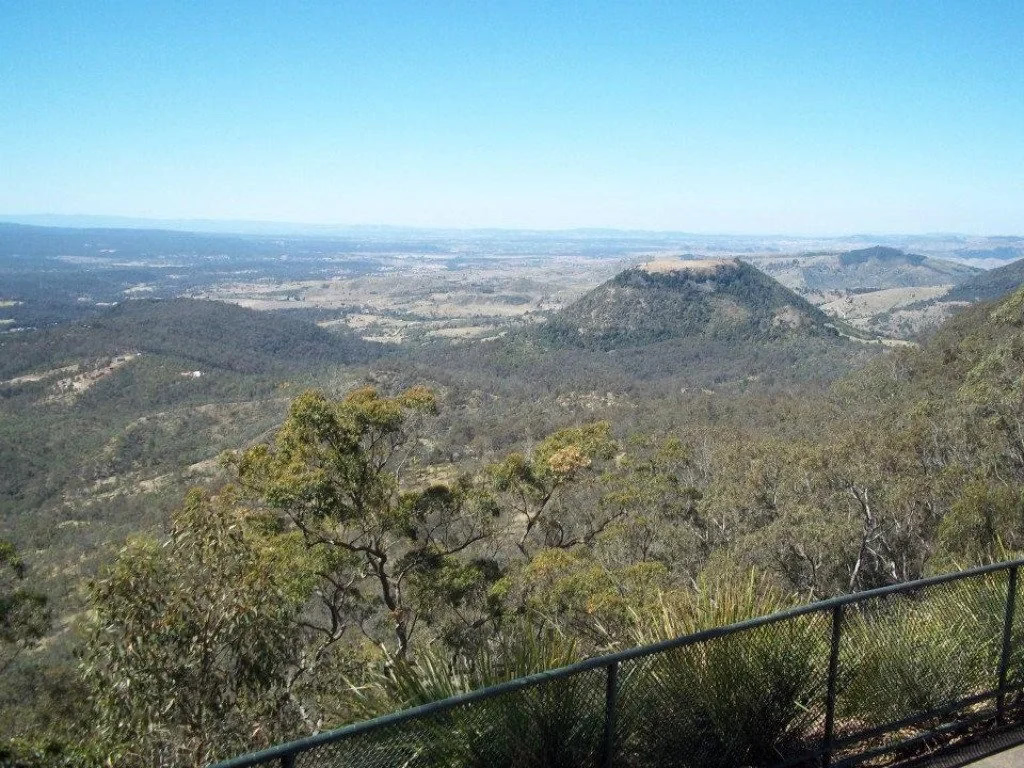
The most honest data this debate owns is repeat behaviour, and it patterns clearly. First-timers split roughly with their home distance — Brisbane visitors trial the drive, coast visitors trial the coach. Returners converge: the drive-first cohort books coaches for feature weekends and keeps the car for midweek freestyle years; the coach-first cohort stays converted and upgrades — Deluxe for the gardens, weekends for the festival entire. Almost nobody migrates coach-to-car for a feature weekend twice.
Read that pattern back and it settles the article: both formats are good enough to repeat, and September's crowds do the deciding. The festival's own advice, distilled from decades of car parks and coach manifests, is simply this — match the format to the date, book whichever early, and let the flowers, not the logistics, be the thing you remember. That's the whole debate; the kettle at Picnic Point serves both congregations.
Special cases: mobility, motion and the nervous driver
Three constituencies deserve their own verdicts. Mobility-limited travellers: the coach wins decisively — low-step boarding, garden-gate drop-offs that erase the parking walk, and drivers practised at unhurried assistance; self-driving reintroduces every distance the festival's accessible paths were designed to remove. Motion-sensitive passengers: honours split — the Range's curves are gentler from a coach's high, forward-facing seats than a car's back seat, and the front-row reservation ($5) exists partly for this exact customer. The nervous mountain driver: no shame and no contest; the Range with festival traffic is nobody's exposure-therapy venue, and the fare is cheaper than the stress by any exchange rate.
Each case points the same direction for the same reason: the coach's real product was never kilometres, it's the removal of the day's hardest jobs — and the harder the job sits with you personally, the better the fare prices.
The environmental line
One more ledger line modern travellers weigh: a full coach replaces around fifty cars' worth of festival traffic on an escarpment road that feels every September, and the arithmetic per passenger-kilometre isn't close. The festival's own sustainability story — composted beds, climate-matched plantings — extends naturally to how its visitors arrive, and shared travel is the single biggest lever a Carnival-goer holds. It won't decide the debate alone, but on the margin where the ledgers tied, it's a thumb on the coach side of the scale — and a genuinely nicer view of the valley while it weighs.
Frequently fought questions
'But the coach schedule wastes my morning' — the 7am departures exist precisely to land you in the gardens by the golden window; the wasted morning is the 10am self-drive arrival, cruising for parking. 'We'll split fuel four ways' — and parade parking one way; run the whole sum. 'I know a secret parking spot' — so did the four hundred people who arrived before you last parade day; secrets don't scale in September. 'The coach is for seniors' — the manifest disagrees: families, photographers and couples fill half the seats, seniors simply figured the maths out first, as usual. 'What if I want to stay later?' — then this whole debate was a stalking horse for the weekend tours, and the accommodation guide below is your next read.
Every objection has a season where it's right — which is exactly what the decision tree above is for. What none of them survive is parade Saturday; some arguments the tow trucks settle.
Last word to the festival itself: it predates every car in its car parks and will outlast this debate comfortably. However you crest the Range — white knuckles or window seat — the beds don't check arrival methods, the rotunda photographs identically, and the scone at Picnic Point tastes like September regardless. Get there early, get there rested, and get there booked; the rest is transport trivia the tulips have never once asked about.
The weather wildcard: deciding the week before
One variable neither column of this ledger controls is the sky, and it deserves its own hearing because September on the Downs occasionally auditions all four seasons in a single day. The festival itself is close to weatherproof — the beds shrug at drizzle, the parade has rolled through conditions that cancelled lesser events, and a grey morning actually flatters the tulips for anyone carrying a camera. What the weather changes is the transport question. A wet festival day multiplies the self-driver's taxes: the Range in rain means spray off the B-doubles and brake discipline on the descent, the distant free park becomes a ten-minute soaking, and the car's boot fills with wet everything for the drive home. The coach converts the same forecast into a minor inconvenience — drop-offs at the garden gates shorten the exposure to a dash, the luggage bay swallows the dripping umbrellas, and the worst outcome is a fogged window between gardens.
The planning consequence is asymmetric. Coach travellers can book their date weeks out and ignore the forecast entirely, because the fare already includes the wet-day contingencies. Self-drivers should hold a two-part plan: the fine-day version built on fringe parking and long walks, and a wet-day fallback that accepts paid parking closer in as cheap insurance against a day spent damp. And both congregations should remember the festival's oldest meteorological truth — the morning is almost always the day's best weather as well as its best light, which gives the early start yet another line on its already crowded list of victories.
The long-haul edition: joining from the Gold Coast and Sunshine Coast
Everything this comparison has weighed so far doubles when the day starts at the coast. From the Gold Coast or the Sunshine Coast, self-driving to Toowoomba means three hours or more each way — motorway, city fringe, valley floor and Range climb — which turns the driver's shift into six-plus working hours wrapped around a day already spent on foot. That arithmetic is why the coastal departures are the coach's strongest constituency: the Gold Coast Carnival tour boards at Helensvale for $99 an adult and $79 a child, and the Sunshine Coast departure picks up at Maroochydore and Caboolture for $109 and $89, delivering the identical festival day with the kilometres professionally handled at both ends.
Run the coastal ledger honestly and it barely needs a second column. The extra fare over the Brisbane price buys two to four hours of additional driving nobody in the car would have volunteered for, and the return leg — which from Brisbane is a manageable descent — becomes from the coasts the sort of night drive that ends festival enthusiasm for a year. The one caveat is stamina: the coastal days run long, so they suit travellers who nap well in transit and families whose youngest members are past the toddler timetable. For everyone else on the coastal strips, this is the rare travel decision where the spreadsheet, the passengers and the driver's own shoulders all vote the same way.
Two checklists, one September
Whichever side of this debate claims you, the preparation differs more than the destination, so here is each format's checklist folded small. The self-driver's version: fuel before the Range rather than gambling on festival-town queues; the parking plan scouted on a map the night before, with a paid fallback named; the car packed with layers, water and the picnic that beats every queue; the street sign photographed at the park; and the departure decision made before fatigue makes it for you — leaving at three beats convoying at five. The coach traveller's list is shorter because most of it is outsourced: the seat booked early (parade-day departures fill first, every year, without exception), the pickup point confirmed and reached with margin, the camera charged for the window seat, and a soft bag for the market haul the luggage bay is waiting to carry.
The shared items are the ones that decide the day regardless of wheels: the warm layer for a 700-metre morning, the early start that beats both the crowds and the light's decline, and the booking made — for a seat, a park or a table — before September's demand curve makes it expensive. Transport is the debate; preparation is the verdict. The travellers who plan either format properly have more in common with each other than with the improvisers on their own side, and the festival rewards them identically — in unhurried mornings, which have always been the Carnival's true currency.
Whichever way you travel, know the destinations before you go: Queens Park, Picnic Point and the full Carnival of Flowers guide cover parking, access and timing at each.
See the Carnival the easy way
Cooee Tours runs Carnival day tours from Brisbane ($89pp), the Gold Coast ($99pp) and the Sunshine Coast ($109pp), plus a $159 small-group Deluxe Experience with lunch included — no traffic, no parking, local driver included.
Carnival of Flowers Tours