A spring institution since 1949
The Carnival of Flowers has run every spring since 1949, which makes it Australia's longest-running floral festival — and in 2026 it stages its 77th edition, from Friday 18 September to Monday 5 October, under the theme Spring Adventures. For eighteen days the Garden City becomes exactly what the nickname promises: more than 40 million petals across the public parks, champion private gardens opened by their owners, a floral parade through the city streets, and a program of food, wine and music that has grown into a festival-of-festivals.
This page is the visitor's guide — what the Carnival is, how it works and how to do it well. When you're ready to book the easy version, our Carnival tours page carries the full tour reference, itineraries and departures from Brisbane.
The 2026 dates and feature events
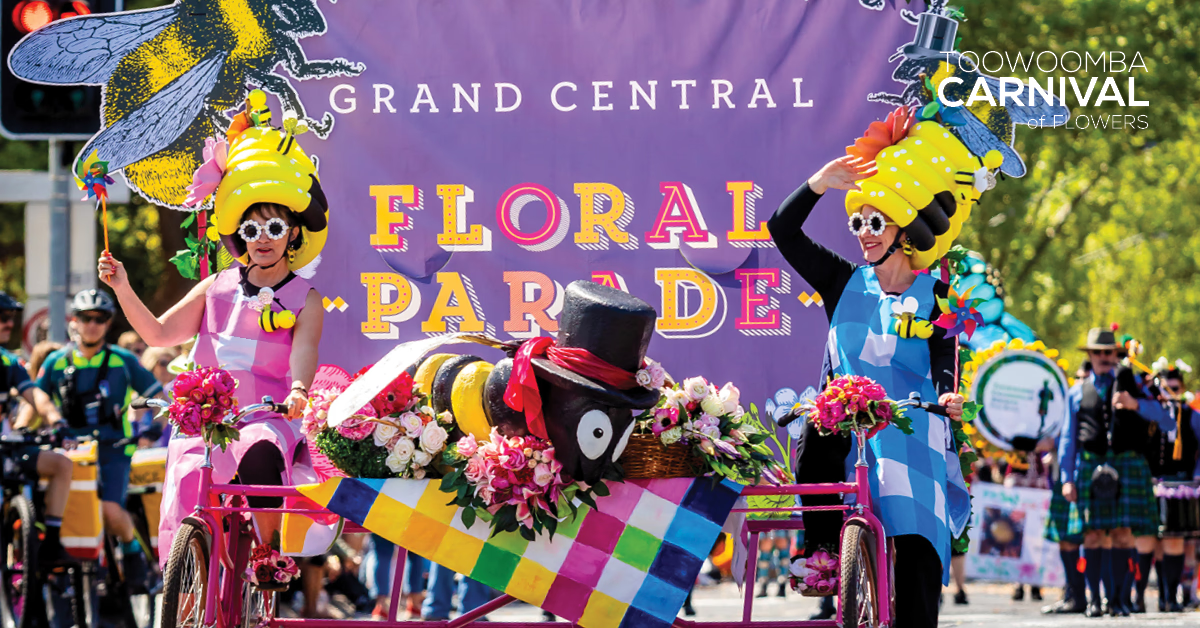
The festival is built around three feature weekends, with the flowers running continuously between them. The opening weekend (18–20 September) brings Floral Friday — the city dresses in bloom — and the festival's centrepiece: the Grand Central Floral Parade on Saturday 19 September, when more than thirty flower-covered floats, marching bands and community groups process through the city to Queens Park. 2026 marks Grand Central's thirtieth year as parade partner, and the crowds treat it accordingly: claim your kerb early.
The middle weekend (26–27 September) belongs to FEASTival, the food festival within the festival — chefs, producers, markets and pop-up kitchens celebrating the Darling Downs' larder. The closing long weekend (2–5 October) carries the Weekend Table producer-led dining series and, on Sunday 4 October, the Paw Parade — the dog-friendly favourite that closes the festival with wagging tails. Around the anchors run garden competitions, twilight events, concerts and workshops; the full program and ticketing live on the official festival website, tcof.com.au.
The gardens in festival mode
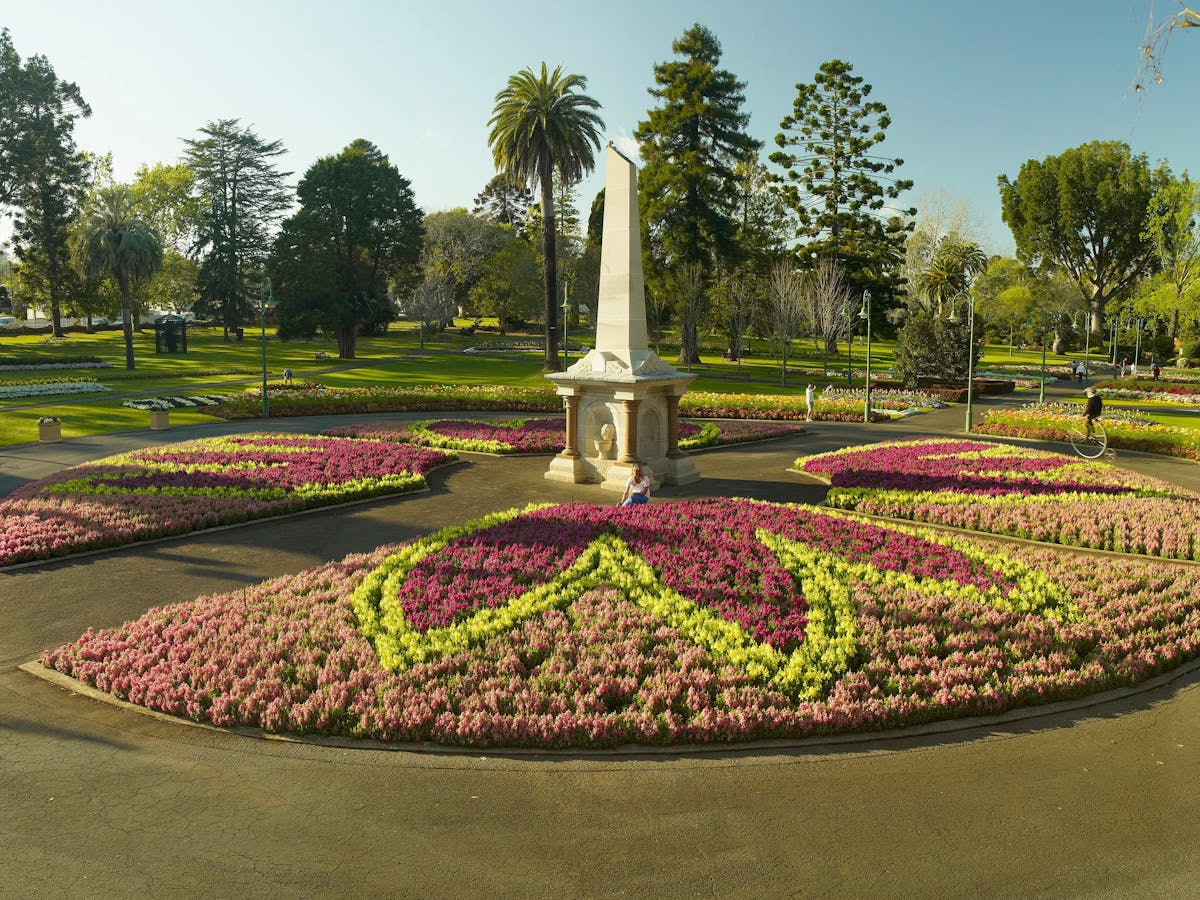
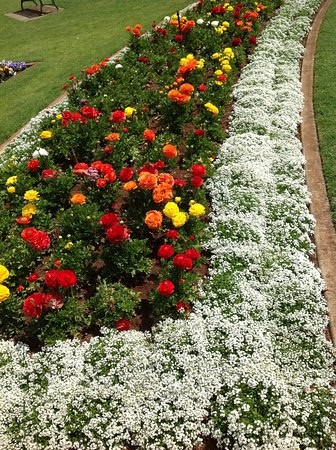
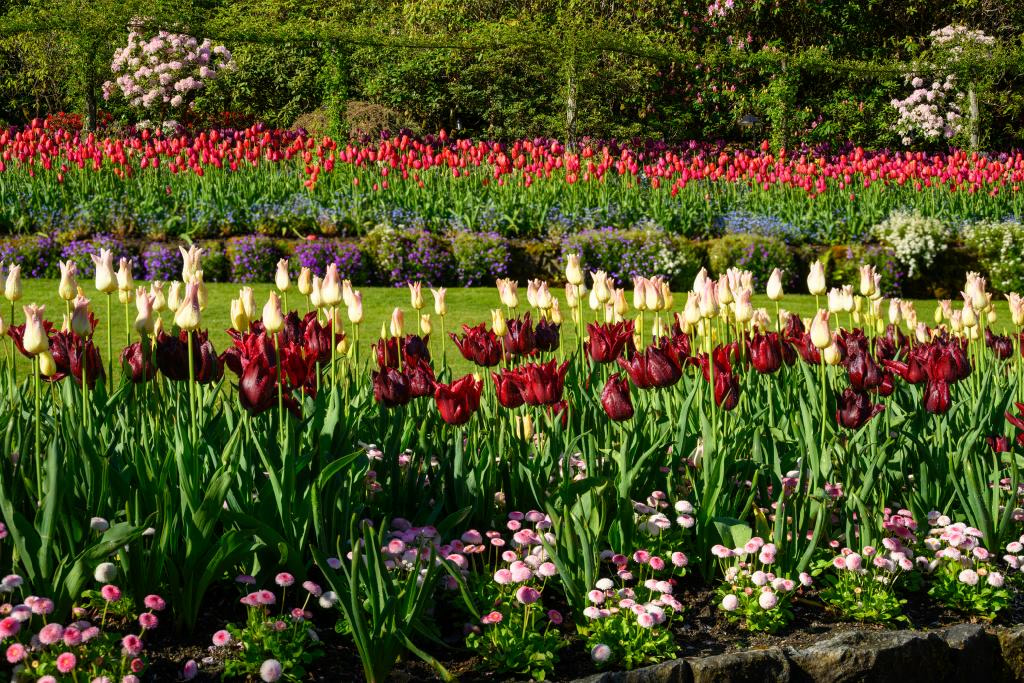
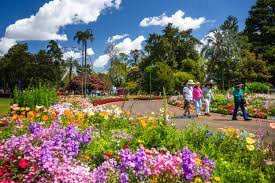
Queens Park is the epicentre — the heritage botanic gardens' feature beds are planted, timed and tended all year for these eighteen days, and the massed displays of tulips, poppies and annuals are the images that made the festival famous. Laurel Bank Park runs the quieter masterclass: heritage roses, the scented garden, and the topiary that photographers cross the state for. Both are free, every day of the festival — a fact that still surprises first-timers, and one of the reasons the Carnival remains Australia's most democratic major festival.
The champion private gardens are the sleeper hit: home gardens tended for twelve months for this one fortnight, opened by their owners, with the competition results setting local bragging rights for the year. Some are free, some ticketed — check the program. Beyond the city, Spring Bluff Railway Station plants its famous beds to peak with the festival, and Ju Raku En offers the contemplative counterpoint when your eyes need a rest from massed colour. The full trail is in our gardens guide.
What's free and what's ticketed
The heart of the Carnival costs nothing: the park displays, the streetscapes, watching the parade from the footpath, and most of the city's festival dressing. A first-time visitor could fill two full days without buying a single ticket. The ticketed layer sits on top — signature dinners, concerts, some private gardens, premium FEASTival and Weekend Table experiences — and the best of it sells out when the program drops, usually months ahead. The local's rule: budget for one ticketed experience that matches your interests (food, music or gardens), and let the free program carry the rest.
Choosing your weekend
Each feature weekend has a personality. Parade weekend is maximum spectacle and maximum crowds — the right choice for a first Carnival, provided you embrace the bustle and book everything early. FEASTival weekend is for the appetite: fewer crowds than parade day, and the food program at full stretch. The closing long weekend suits families — school holidays, the Paw Parade and a gentler pace as the festival exhales. And the quiet secret is midweek: identical flowers, empty paths, easy restaurant tables and photographers working unhurried. If your dates can flex, the best-time guide weighs every trade-off.
Planning your visit
Accommodation is the critical path. Feature weekends sell out months in advance, every year, and prices firm as the festival approaches — book the moment your dates are set, or plan midweek. Our accommodation guide maps the options from city-centre walkability to heritage character stays.
Pack for the altitude. Toowoomba sits at 700 metres, and early spring on the Range is beautiful but changeable — crisp mornings, mild days, cool evenings and the occasional theatrical shower. Layers, comfortable walking shoes, sun protection and a compact rain jacket cover it; the packing guide has the complete list.
Time your days. Gardens between 8am and 10am, always — soft light, fresh beds, room to breathe. Middays are for lunch and laneways, afternoons for private gardens or events, and golden hour belongs to Picnic Point. On parade day, be positioned by mid-morning or embrace watching from further down the route.
Getting around: the festival precinct is compact and walkable, but parking near Queens Park vanishes early on feature weekends and parade-day road closures reshape the city centre. If you're driving, park wide and walk in — or skip the problem entirely on a coach.
The Carnival with kids
The festival is genuinely family-friendly: the parks are free playground-adjacent spectacle, the parade is pure children's theatre, and the closing weekend's Paw Parade delights every age bracket. The playbook: mornings in the gardens while energy and light are both good, playground breaks built into the route, ice cream as negotiating currency, and the parade watched from a spot with an easy exit rather than the densest kerb. School holidays overlap the festival's tail, which makes the final week the family sweet spot. The family guide covers prams, facilities and the full kid-logistics manual.
Photographing the festival
The Carnival is one of Australia's great photography events, and it rewards planning: morning light for the feature beds, overcast days for saturated colour, the parade shot from elevation or kerb-level (pick one and commit), and Picnic Point for the golden-hour closer. Bring more storage than you think you need, mind the beds — no stepping in for the angle, festival etiquette is enforced by glare — and remember the private gardens are people's homes: ask before photographing owners. The photography guide maps the classic frames hour by hour.
Getting there: drive or coach
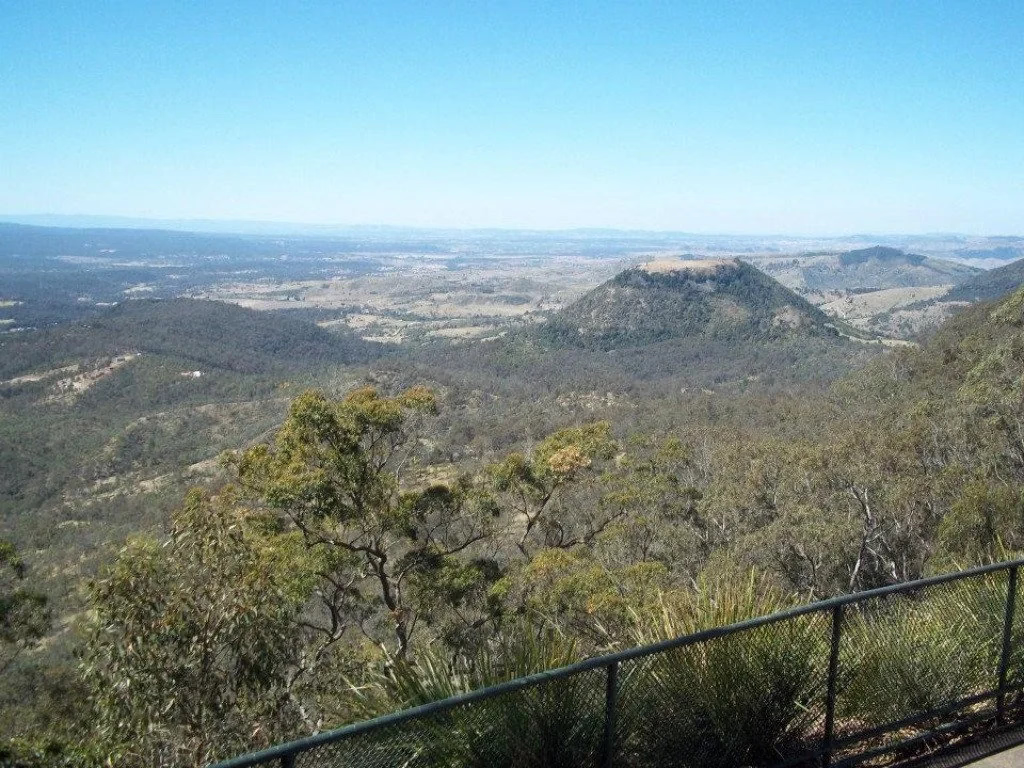
Toowoomba is roughly 125 kilometres and ninety minutes west of Brisbane up the Warrego Highway — a genuinely scenic climb as the road crests the Great Dividing Range. Midweek, driving is easy. Feature weekends are another matter: festival traffic, vanished parking, parade closures and a two-hour round trip after a full day on your feet. That's the day the coach earns its keep — door-to-garden drop-offs, a driver-guide who knows the program, and a doze down the Range while someone else handles the highway. The honest comparison lives in driving vs coach.
Beyond the festival fortnight
The Carnival is the crescendo of a longer regional spring. As the festival closes, Toowoomba's jacarandas turn the heritage suburbs purple from late October — a quieter, cooler-toned encore most visitors never see. The Lockyer Valley's farm gates hit their spring stride, wildflowers light the granite country around Crows Nest, and the Granite Belt pairs spring cellar doors with Girraween's blooms two hours south. If the festival is your anchor, consider making it the opening act of a longer southern Queensland spring — our day trips guide maps the circuit.
Looking ahead: 2027
Planning further out? The 78th Carnival is already locked in for 17 September – 4 October 2027. Dates, the book-early strategy and tour registration live on our Carnival of Flowers 2027 page.
How a country show became a national institution
The first Carnival bloomed in 1949, when post-war Toowoomba decided its gardening obsession deserved a stage — and the formula it struck has barely needed changing since: civic displays to showcase the city's horticulture, a competition to put private gardeners on their mettle, and a parade to throw the whole thing a party. Across seven decades the festival grew from a local celebration into a fixture of the national events calendar, surviving droughts, downturns and every change in travel fashion. That endurance is the tell. Festivals live this long only when a community genuinely means them — and Toowoomba means its flowers. Every September you can see the whole arrangement renewed: council gardeners bedding out displays a year in planning, home gardeners unveiling twelve months of quiet work, and a city of 100,000-plus turning itself into Australia's biggest garden party.
The parade tells the same story in miniature. What began as decorated vehicles has become a procession of genuinely elaborate floral floats — community groups, schools and businesses competing in craft as much as spectacle — and its route into Queens Park stitches the festival's two halves, streets and gardens, into one civic performance. Thirty-plus floats, marching bands, and a kerbside crowd that arrives with chairs, thermoses and generational expertise in corner selection.
A festival day, hour by hour
7:00am — if you stayed in town, this is the golden secret: the parks at dawn, dew still on the beds, photographers and dog-walkers only. 8:30am — breakfast in the cafe belt while the tour coaches are still climbing the Range. 9:30am — Queens Park's feature beds in the best light of the day; ninety minutes vanishes easily. 11:30am — Laurel Bank, gentler and quieter, roses and the scented garden. 1:00pm — lunch on the festival food trail, or FEASTival itself if it's the middle weekend. 2:30pm — the wildcard: champion private gardens, a twilight-event warm-up, Ju Raku En's calm, or the laneway murals if your eyes need a colour change. 4:00pm — Picnic Point for the escarpment gold. Evening — festival dining, a show at the Empire, or the drive home with the coach doing the work. Repeat with variations for as many days as you've given yourself; the program is built so no two festival days need to match.
Eating and drinking the festival
Food has grown from side-dish to co-headliner. FEASTival (26–27 September in 2026) concentrates the Darling Downs' producers, chefs and makers into one weekend of markets, demonstrations and pop-up kitchens; the Weekend Table series (2–5 October) spreads producer-led long lunches and dinners across the region's venues; and between them a festival food trail links dozens of cafes and restaurants running Carnival-themed dishes for the duration. Toowoomba's everyday scene — the specialty coffee institutions, the pastry pilgrimage that is Baker's Duck, produce-driven rooms like The Finch — lifts to meet the occasion, and the region's cellar doors on the Granite Belt make a natural extension for the wine-inclined. Book the sit-down experiences early; graze the trail freely. The food and wine guide maps all of it.
Accessibility at the Carnival
The festival's core is unusually accessible as major events go: Queens Park and Laurel Bank run sealed, mostly level paths through the display areas, accessible facilities sit within the main parks, and the free, come-anytime structure means you can build days around energy and mobility rather than fixed session times. Parade day is the crowd-management exception — position early along less congested stretches of the route, or watch the floats arrive into Queens Park at the finish. For accessible coach touring to the festival — vehicle options, boarding assistance, carer arrangements and pacing — our accessible tours page covers the details, and a call to 0409 661 342 two to three weeks ahead lets us plan it properly.
The festival by the numbers
Eighteen days. Seventy-seven festivals since 1949, without a missed spring. More than 40 million petals across the city's parks and displays. Thirty-plus floats in the Grand Central Floral Parade — itself in its thirtieth year of that partnership in 2026. Two heritage parks running free displays every single day. One long weekend, one food festival, one dog parade — and roughly ninety minutes from Brisbane's northern suburbs to the first flower bed, if the Warrego behaves. The scale explains the crowds; the crowds, if anything, undersell it.
Six habits of Carnival veterans
They book beds before anything else — accommodation is the festival's true scarce resource. They go early and go often: mornings for the gardens, and repeat visits over multiple days rather than one heroic slog. They pick one feature weekend and own it, instead of promising themselves all three. They pre-book exactly one ticketed experience and let the free program carry the rest. They never drive into the parade precinct on the third Saturday of September — a rule written in the parking tickets of the once-optimistic. And they carry layers, because 700 metres of altitude does not negotiate with spring. Adopt all six on your first visit and locals will assume it's your fifth.
Quick answers
When is the 2026 Carnival? Friday 18 September to Monday 5 October — the 77th festival. Is entry free? The park displays, streetscapes and parade viewing are free every day; signature events, some private gardens and premium dining are ticketed via the official program at tcof.com.au. When is the parade? Saturday 19 September 2026 — arrive well before mid-morning for a kerbside spot. What should I wear? Layers and walking shoes; spring on the Range runs crisp mornings to mild afternoons with theatrical intermissions. Can I do it as a day trip? Comfortably — and our day tours from $89pp remove the traffic and parking entirely. Should I stay overnight? If you can: the festival evenings, dawn gardens and second-day pace are where the Carnival becomes a holiday rather than an excursion. What about 2027? Already dated — 17 September to 4 October — with early planning on our 2027 page.
Where the festival lives: a precinct guide
The Carnival's geography is mercifully compact. Queens Park and its botanic gardens anchor the north-eastern corner of the centre, with the Cobb & Co Museum next door for a weather-proof interlude and the cafe belt a flat ten-minute walk away. Laurel Bank Park sits on the centre's south-western side — the two parks bracket the CBD, and the walk between them through the heritage streets and mural laneways is a festival attraction in its own right. The parade route runs through the heart of it all to finish at Queens Park, which is why the third Saturday reshapes the city's traffic. Beyond the walkable core, Spring Bluff waits twenty minutes down the Range, Ju Raku En ten minutes west on the university campus, and Picnic Point five minutes east on the escarpment — the three satellite stops that turn a garden visit into a full festival day. First-timers can navigate the whole thing with nothing more than comfortable shoes and a park map from the visitor information centre.
If you're staying over, base yourself in or near the city centre: the dawn-garden trick, festival evenings and the walk-everywhere convenience are worth more than any savings on the fringe. Motels cluster along the main approaches, heritage and boutique stays hide through the older suburbs, and every one of them books out for feature weekends — the accommodation guide ranks the trade-offs honestly.
What the flowers are actually doing
Part of the Carnival's magic is horticultural sleight of hand. The feature beds you admire in September were designed a year earlier, seeded and raised through the winter in the city's nurseries, and bedded out in a precisely timed campaign so that tens of thousands of tulips, poppies, pansies and annuals hit their peak inside the same eighteen-day window — on a mountain whose spring weather is anything but cooperative. Frosts are dodged, storms are endured, and the display teams replant and groom daily through the festival to keep the beds camera-fresh from opening Friday to closing Monday. The private competition gardeners run the same campaign at domestic scale, which is why their open gardens inspire a particular awe: everything you're seeing was grown for this fortnight, by someone who will start again for next year the week after you leave. Gardeners visit the Carnival the way musicians attend concerts — professionally moved.
If you only have three hours
Sometimes the festival has to fit inside a bigger itinerary, and it can. The ruthless version: Queens Park's botanic beds first and without detour — they are the festival's essence, and an unhurried hour covers the display core. Then thirty minutes at Laurel Bank for the roses and the change of register, a takeaway coffee from the cafe belt between them, and finish with twenty minutes at Picnic Point on the way down the Range so the day ends with the valley view. You'll leave having genuinely seen the Carnival rather than sampled it — and, on recent evidence, having already planned the return trip. The full-day itinerary is the same skeleton with the pace restored.
A word on festival etiquette
The Carnival runs on goodwill, and the code is simple. Stay out of the beds — no photograph is worth the gardeners' year. Ask before photographing people in the private gardens; you are standing in someone's home. Keep dogs leashed and save their big moment for the Paw Parade. Give the kerbside chairs their hard-won parade positions — the retirees staked them fairly. And thank a display gardener if you pass one working; they replant this spectacle daily for eighteen days straight, and they are the festival, in the most literal sense. Small courtesies, freely given, are why a 77-year-old event still feels like a country town's spring party — because underneath the 40 million petals, that's exactly what it is.
Visit the Carnival without the hassle
Our Carnival of Flowers coach tours from Brisbane handle transport, timing and parking — day tours from $89pp, or make a weekend of it with our 2-day (from $595pp) and 3-day (from $880pp) tours. Garden-gate drop-offs, local driver-guides, zero parade-day parking stress.