The Best Time to Visit the Toowoomba Carnival of Flowers
The 2026 Carnival runs for eighteen days, from Friday 18 September to Monday 5 October — and every one of them offers something different. Here's how to pick your moment.
First, the good news: the flowers don't have an off day
The feature displays in Queens Park and Laurel Bank Park are planted to peak for the whole festival and are refreshed and tended daily. Whether you arrive on Floral Friday or the final Monday, more than 40 million petals will be doing their thing. So the question isn't when the flowers are best — it's which version of the festival suits you.
Parade weekend: 18–20 September
The opening weekend is the big one. Floral Friday launches the festival on 18 September, and the Grand Central Floral Parade — more than 30 flower-covered floats winding along Margaret Street into Queens Park — rolls on Saturday 19 September. It's the Carnival at maximum wattage: crowds, colour, street entertainment, atmosphere.
The trade-off is obvious. This is the busiest weekend of the eighteen days. Accommodation books out earliest, parking is hardest, and the popular gardens hum. If the parade is the reason you're coming — and for many first-timers it should be — embrace it and plan around the crowds rather than against them.
Rule of thumb: come for the parade if it's your first Carnival. Come later if it's your fifth.
FEASTival weekend: 26–27 September
The middle weekend belongs to the food. FEASTival brings celebrated chefs, live cooking demonstrations, artisan markets, pop-up kitchens and boutique bars — a genuine food festival folded inside the flower festival. The gardens are still in full glory but the opening-weekend crush has eased. For couples and food-and-wine travellers, this is arguably the sweet spot of the whole program.
The final long weekend: 2–5 October
The Carnival finishes on Queensland's King's Birthday long weekend with the Weekend Table dining series — producer-led food experiences across the Darling Downs — and the much-loved Paw Parade on Sunday 4 October. School holidays are in full swing, so it skews family. Four days also makes it the easiest weekend to turn into a proper short break.
The quiet secret: midweek
Here's what locals know. On the weekdays between feature weekends, the gardens are just as spectacular and remarkably calm. Photographers get clean shots, seniors get space and shade, and lunch tables are easy to come by. Cooee Tours runs midweek departures for exactly this reason — many of our regulars won't travel any other way.
Time of day matters too
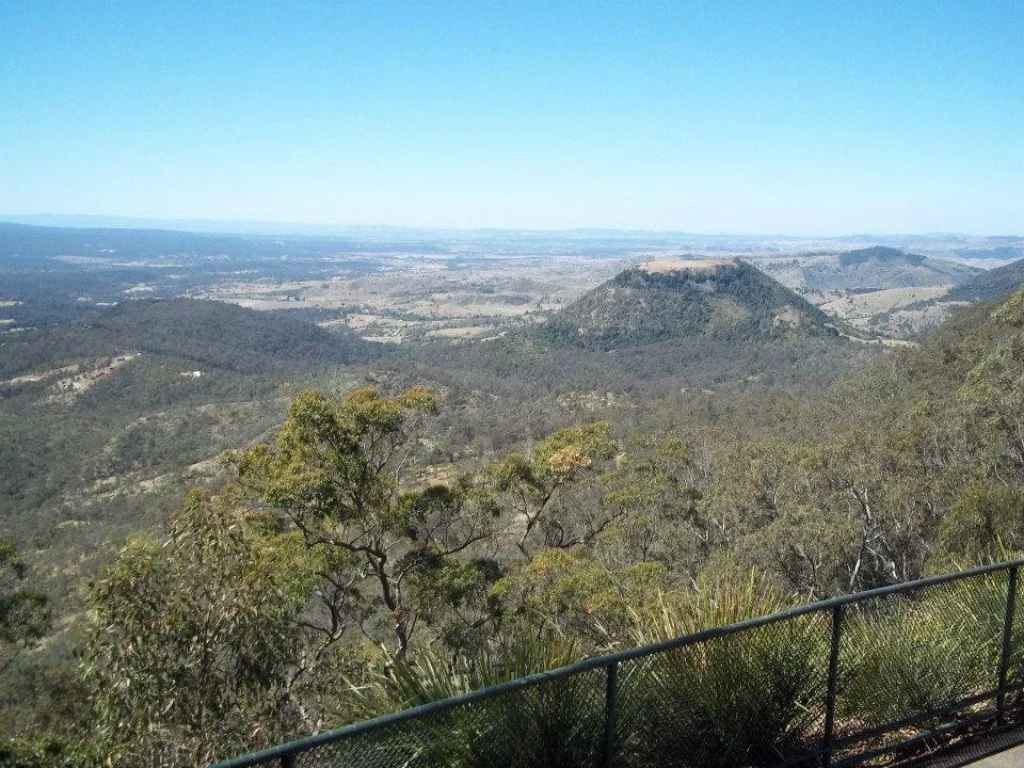
Whenever you come, mornings win. The light is soft, the beds are freshly tended, and the coaches from Brisbane haven't all arrived yet. Queens Park between 8am and 10am is the Carnival at its serene best. Save Picnic Point for late afternoon — the escarpment views over the Lockyer Valley are made for golden hour.
Week by week inside the 2026 festival
Week one (18–20 September) is the festival at maximum voltage: opening energy, beds at their box-fresh peak, and parade Saturday — the single biggest day of the Queensland regional events year. Choose it for atmosphere; accept the crowds as the ticket price. Week two (21–27 September) is the connoisseur's pocket: displays still immaculate, weekday crowds noticeably softer, and FEASTival landing on its weekend to give food-first visitors their date.
Week three (28 September – 5 October) mellows: the school-holiday families arrive, the Paw Parade brings its final-Sunday cheer, and the long-weekend Monday closes the show. The beds, planted for the full run, hold remarkably — late visitors trade a fraction of botanical perfection for a lot of breathing room, and plenty of regulars consider it the best exchange rate in the program.


The hour-by-hour light guide
Whatever week you choose, the day has its own best-time answer. 8–11am is the golden window: beds freshly tended, light angled and soft, paths open. 11am–2pm is peak everything — arrivals, sun, queues — and the right time to be at lunch or in the shade of Ju Raku En rather than shoulder-to-shoulder at the feature beds. 2–4pm the gardens exhale as day-trippers start their drives home, and 4pm onward belongs to overnight guests: golden hour at Picnic Point, long shadows on emptying lawns, and the kind of light photographers plan whole trips around.
The practical conclusion writes itself: arrive early or stay late, and organise the middle around food, festival events and the indoor gems. Day tours are built on the first half of that logic; weekend stays capture both ends.
Crowd calculus: what 'busy' actually means
Numbers help calibrate. The Carnival draws visitor crowds into the hundreds of thousands across its run — but spread over 18 days and a whole city, 'busy' is wildly uneven. Parade Saturday concentrates everything: roads close, parking evaporates by breakfast, and the centre operates at event capacity. Feature-weekend Sundays run second. But a Tuesday morning in week two? You'll share Queens Park with school groups, retirees and gardeners — comfortably.
If crowds genuinely bother you, the ranking is: midweek beats weekends, mornings beat afternoons, week two beats week one, and any day beats parade Saturday — unless the parade is the point, in which case embrace it fully and let a coach handle the logistics that make the day hard.
September at 700 metres: the weather truth
Toowoomba's spring weather is a genuine feature — and a genuine trap for coastal visitors. Expect mid-Septembers days around the low-to-mid 20s, abundant sunshine, and mornings that start in single figures often enough to matter. The 700-metre altitude drives the whole show: it's why the tulips grow and why the parade kerb at 9am punishes shorts. Rain, when it comes, arrives as spring showers that pass — and leave the beds glittering for the best photographs of the week.
Pack layers, favour mornings, and treat a forecast shower as a photography appointment rather than a cancellation. The festival has run through seventy-odd Septembers of Downs weather; it knows what it's doing.
Just missed it? The purple consolation prize
If your dates land after 5 October, don't cancel — redirect. From late October through November, Toowoomba runs its unofficial second festival as the jacarandas turn the older streets and park edges lilac-purple, with none of the Carnival's crowds and all of its altitude-powered charm. Nearby Goombungee even stages a dedicated jacaranda celebration in early November. Pair the purple with the State Rose Garden's ongoing flush and the year-round gardens, and a 'missed the Carnival' trip quietly becomes its own reward — our jacaranda season guide has the full map.
The booking timeline that gets the date you want
Choosing the best time is only half the job; securing it is the other. Parade Saturday coach seats and festival-window accommodation sell out first — weeks to months ahead — followed by feature-weekend dates, with midweek holding longest. The working timeline: decide your week as early as you can, book beds and weekend tours by autumn, lock day-tour seats in winter, and leave only the add-ons for spring. Every year the September enquiries tell us the same story in reverse; be the caller from June instead.
The case for each weekend, argued properly
Opening weekend is the festival's champagne moment — parade, box-fresh beds, the city at maximum welcome. Its case: you see the Carnival as it dreams of itself. Its cost: everyone else had the same idea, and beds, roads and kerbs price that in. FEASTival weekend argues food: the Downs' producers concentrated into two days, gardens as garnish — the right weekend for visitors whose cameras point at plates. The closing stretch argues ease: school-holiday warmth, the Paw Parade's charm, long-weekend Monday, and a town that has hit its festival stride without its festival nerves.
There's no wrong weekend, only wrong expectations — take the crowds of opening weekend knowingly, or the mellower late run deliberately, and every version delivers. The only unarguable loser is deciding in September, when the choosing has been done for you by availability.

A midweek masterplan: one Tuesday, done right
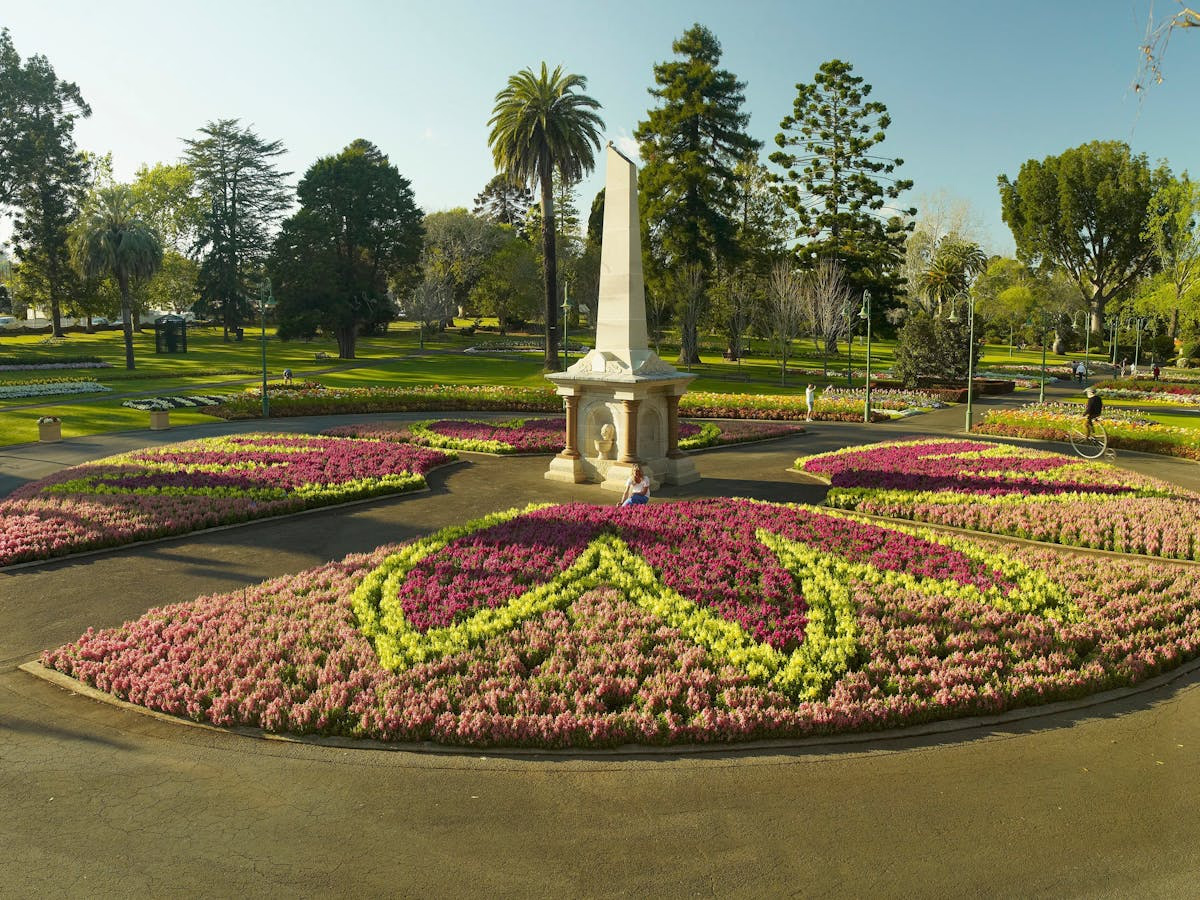
To make the midweek case concrete, here is a real shape for a week-two Tuesday. 9:15am: Picnic Point, coffee, valley haze lifting. 10am: Queens Park with perhaps a tenth of Saturday's foot traffic — the rotunda shot without strangers, gardeners at work and happy to talk. 12pm: laneway lunch in a CBD that can seat you. 1:30pm: Laurel Bank as the scent lifts, then an open champion garden with the owner in attendance because midweek visitors get conversations weekends can't. 3pm: the decorated streets, unhurried. 4pm: home ahead of every crowd you never met.
That Tuesday costs the same as the Saturday. It contains the same festival. The only thing it lacks is the queue — which is the entire argument, resting.
Best time by traveller type
Photographers: week two midweek, plus golden hours — or the weekend formats that own dawn and dusk. Families: parade Saturday for the wow or the final school-holiday week with the Paw Parade; mornings regardless, because small legs and crowds disagree. Seniors and garden clubs: any midweek, with week two the sweet spot — quality light, gentle crowds, easy cafes. Food-first visitors: FEASTival weekend, booked early. The undecided: second Saturday. Full festival wrapping, no parade-day extremity, and every option still open. It's the compromise date that rarely feels like one.
How locals time their own Carnival
Instructive, watching the home crowd. Locals skip opening Saturday almost universally — that's the visitors' day — and take their gardens midweek, early, often repeatedly, treating the festival as three weeks of short visits rather than one long day. They walk the decorated streets at dusk. They book the good dinner tables for the quiet Thursdays. And they finish the festival at the Paw Parade, which every local will tell you, straight-faced, is the true headline event. Visitors can't copy the repeat visits, but they can copy the principle: the Carnival rewards those who take it at its own unhurried pace, at its quieter hours, with its dogs.
The pattern beyond 2026
Everything in this guide is transferable, because the Carnival is a pattern as much as an event: mid-September start, three weekends, parade on the first Saturday, food weekend mid-run, families and dogs to close. The 2027 dates will land in that shape as surely as the bulbs will go in on schedule — so a reader planning years ahead can bank the strategy now and pour the dates in later. The festival has kept its rhythm for seven decades; your best time to visit will keep too.
Timing the tours: which departure suits which date
Applying all of the above to the practical booking screen: for parade Saturday, any of the Classic day tours from Brisbane, the Gold Coast or the Sunshine Coast — booked the moment you decide, because those coaches fill first and the drivers build parade days around kerb time. For the midweek sweet spot, the Deluxe Experience is the natural pairing: its small group and extra gardens are precisely what quiet Tuesdays were made for. For FEASTival weekend, day tours work but the 2-Day Weekend works better — the food program rewards an evening, and the Saturday-night table beats the 3:15 coach home.
And for the take-it-all approach, the 3-Day Long Weekend is the only format that banks every window this guide has praised: the dawn gardens, the golden hours, a full festival day and the quiet Sunday beyond it. Its Carnival dates are the first sell-out of the season, which suggests the market has read the same timing logic and reached the same conclusion.
The one-paragraph answer
Because every guide owes its skimmers a verdict: the best time to visit the 2026 Toowoomba Carnival of Flowers is a midweek morning in the second week — arriving before 10am — unless you want the parade, in which case Saturday 19 September, booked early and embraced whole; or the food, in which case FEASTival weekend, 26–27 September; or the family version, in which case the final week's school-holiday warmth and the Paw Parade. Mornings beat afternoons everywhere, layers beat optimism always, and early booking beats every other strategy combined. That's the article; the rest was evidence.
Reading the bloom reports like a local
In the weeks before and during the festival, the organisers and local media publish bloom updates — which beds are peaking, which displays came early, what the weather has done to the schedule. Locals read them the way anglers read tide charts. If your dates are flexible inside the window, these reports are your final targeting tool: a cold snap can hold tulips glorious into week three; an early warm run can bring the roses forward. The official festival channels carry the updates; five minutes of reading the week before you travel converts a good date into a precise one.
The deeper habit worth copying: locals treat the festival as a living system rather than a fixed exhibit. Beds change daily, displays are groomed each dawn, and the garden you saw Tuesday is not quite the garden your friend sees Friday. 'Best time' is finally granular — and the reports put the granularity in your favour.
Weather contingencies by week
September on the Downs runs a known playbook, and each week has its contingency. Week one risks the lingering cold snap — mornings near frost that slow nothing but the shorts-wearers; the beds are bred for it. Week two risks the first hot westerly, which tires afternoon displays and makes the morning rule absolute. Week three risks spring storms — dramatic, brief, and secretly the photographer's jackpot as covered in our photography guide. None of the three risks a lost day for a visitor with layers, a compact umbrella and a flexible hour or two; the festival has weathered seventy-odd Septembers without once being rained out of existence.
The only true contingency planning the Carnival demands is the human kind — booked seats, booked beds, and the humility to arrive before the crowd you're hoping to avoid.
Putting it all together: three worked examples
The Brisbane couple with one free Saturday: take the second Saturday — full festival wrapping, no parade extremity — on the $89 day tour, arrive at Queens Park by ten, book dinner at home for eight. The photographing retiree with a flexible week: Tuesday of week two on the Deluxe, front-row seat reserved, bloom report read the night before, tripod left home in favour of patience. The Sunshine Coast family of four: final-week Thursday in the school holidays on the $109 departure — playground intervals, picnic lunch pre-ordered, Paw Parade weekend avoided in favour of space, and everyone asleep by Gympie on the way home.
Three different best times, all correct — because the best time to visit the Carnival was never a date. It's a match between the festival's rhythm and yours, and now you have the sheet music for both.
One closing courtesy to your future self: whichever timing you choose, write down what worked. The visitors who come back — and the Carnival's repeat rate suggests you will — arrive sharpest when last year's notes ride along: which hour the light behaved, which cafe seated fastest, which garden earned the extra half hour. The festival keeps its rhythm year to year; a few lines of your own turn that reliability into a personal advantage no guide can match.
The departure maths: when to leave, when to head home
Choosing the right date only pays if you arrive at the right hour, so here is the day-tripper's arithmetic. Brisbane to Toowoomba runs about 125 kilometres and roughly an hour and three quarters by coach, the last stretch climbing the Range — which means a departure by about 7:30am lands you in the gardens inside the golden 9-to-11 window that this whole guide keeps banging on about. Leave at nine and you arrive at the day's worst hour, having spent the best of it on the highway. The return leg has its own deadline: on festival weekends the down-Range exodus builds from mid-afternoon, and the driver who starts the descent by 3:15pm travels a different, happier road than the one who lingers until five. Parade Saturday tightens everything further — street closures from early morning mean arriving before they matter or parking well outside them.
Midweek loosens every one of these numbers, which is one more entry in this guide's long argument for the quiet days. And the coach option quietly deletes the arithmetic altogether: someone else does the dawn start, the Range, the parking and the exodus, while you do the one-day itinerary at its intended hours. However you travel, the principle is the same — the best time to visit the Carnival is decided twice, once on the calendar and once on the clock, and the second decision is the one most visitors fumble.
Already thinking about 2027
For the planners who read timing guides a year out — you are numerous, and you are correct — the 2027 festival is already confirmed: 17 September to 4 October 2027, the 78th running, holding the exact rhythm this guide has mapped. Same mid-September start, same three-weekend arc, same first-Saturday parade logic, same closing long weekend. Every strategy above transfers wholesale; simply pour the 2027 dates into the template. The one thing that changes year on year is the booking curve, which steepens annually as the festival's audience grows — accommodation for the 2027 parade weekend will be contested even earlier than 2026's was, and the travellers who treat the October-before as their booking season will again collect the best rooms and the smuggest Septembers.
Coach seats follow the same curve, and the tour calendar opens well ahead: the Carnival of Flowers 2027 tours page carries next year's departures as they're released, which is the practical answer for anyone whose 2026 dates simply cannot work. There is also a quietly popular third use for the long lead time: the gift. A booked Carnival date makes a better present than most objects, and September is exactly far enough from Christmas to look thoughtful rather than convenient. Plan a year out and the only thing left to chance is the weather — and at 700 metres in September, even that plays along more often than not.
Stretching the visit: the shoulder days
Whichever window you choose, the trip improves if you pad it. The evening before your garden day is the cheapest upgrade in the festival: arrive by late afternoon, walk the decorated streets at dusk when the locals do, eat unhurried, and be at the park gates next morning while your day-tripping counterparts are still on the highway. The morning after works the same trick in reverse — one more garden at opening pace before the drive home, which turns the classic single day into something closer to a full festival visit for the price of one night's stay. Midweek shoulder nights book easier and cost less than the weekends they border, so a Thursday-to-Saturday or Sunday-to-Tuesday shape often beats the obvious Friday-to-Sunday on every measure that matters.
Padded far enough, the visit stops being a Carnival trip and becomes a Darling Downs spring trip with the Carnival as its centrepiece — country towns and the escarpment on the flanking days, gardens at the heart. This is the shape the multi-day formats are built around, and it is also the shape locals recommend to visiting relatives, which is the strongest endorsement available. The narrow question of this guide is when to come; the generous answer is: for slightly longer than you were planning. September at 700 metres rewards the extra day every single time.
Once your dates are set, get to know the places you'll be timing them around: the Carnival itself, Queens Park at its September peak, and Spring Bluff's famous station gardens.
See the Carnival the easy way
Cooee Tours runs Carnival day tours from Brisbane ($89pp), the Gold Coast ($99pp) and the Sunshine Coast ($109pp), plus a $159 small-group Deluxe Experience with lunch included — no traffic, no parking, local driver included.
Carnival of Flowers Tours