The Best Gardens to Visit During the Carnival of Flowers
Six gardens, six personalities. Here's where to point your feet — and your camera — during the 2026 Carnival.
Queens Park Botanic Gardens — the showstopper
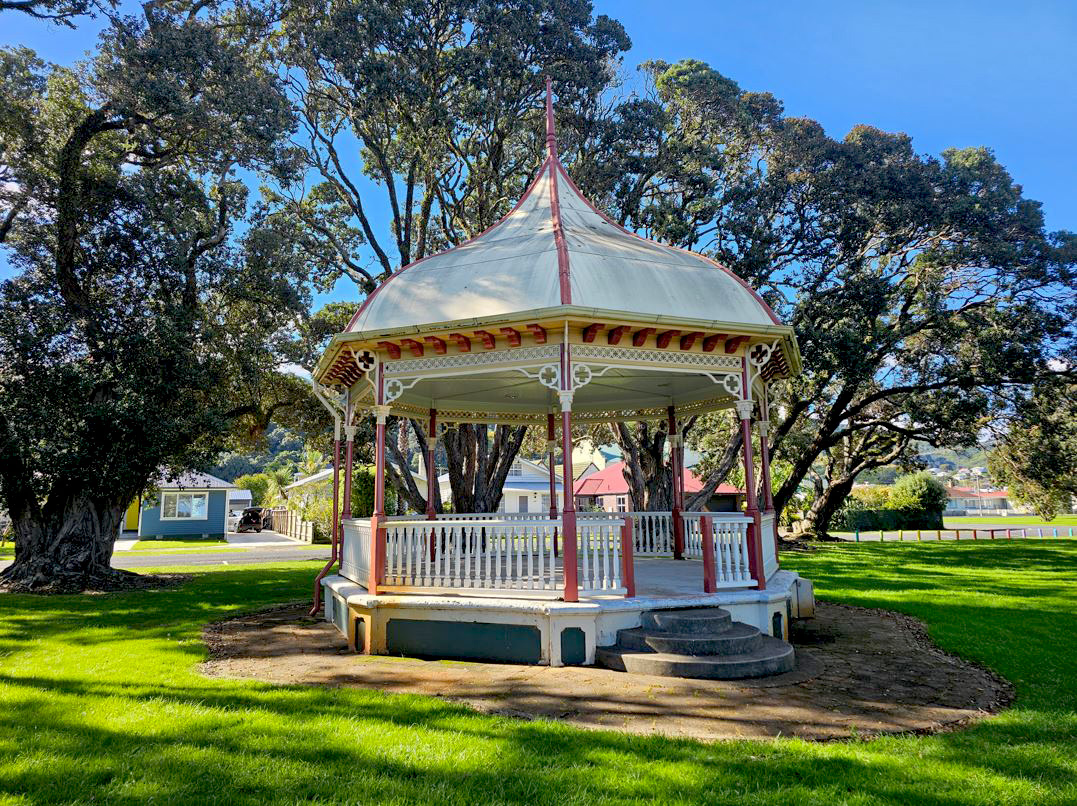
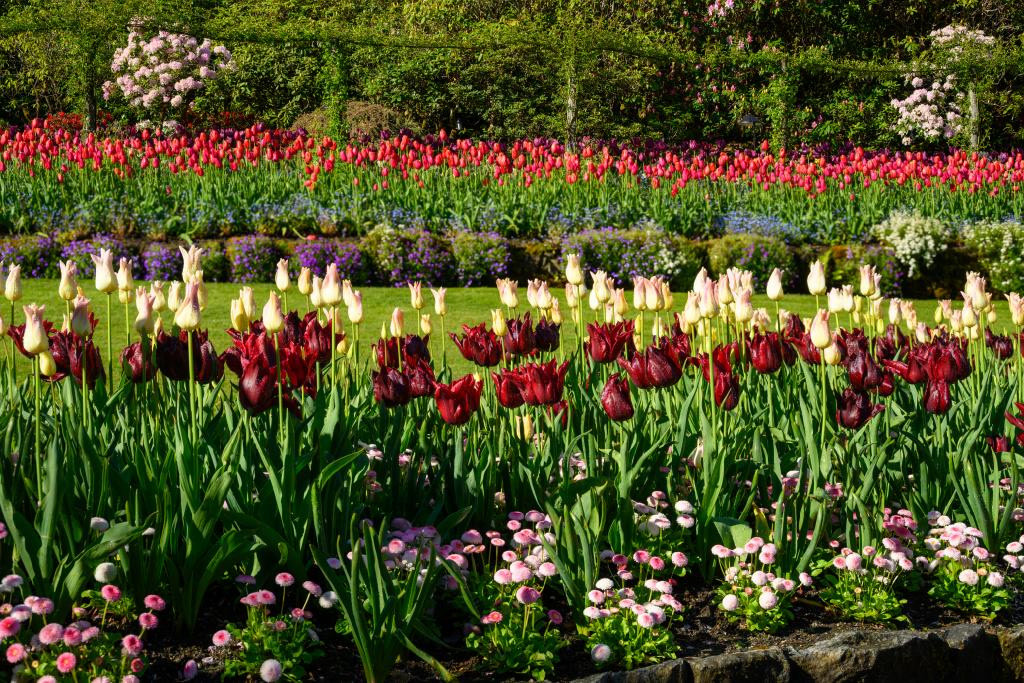
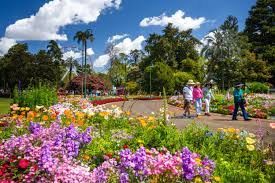
If the Carnival has a main stage, this is it. Heritage-listed parkland in the middle of the city, carrying the festival's biggest feature displays — massed spring beds planted in their tens of thousands and refreshed daily. The Grand Central Floral Parade finishes here on 19 September, and the park anchors much of the festival entertainment. Entry is free, every day of the Carnival. Go early for the light and the space.
Laurel Bank Park — the romantic
Across town, Laurel Bank trades scale for intimacy: heritage roses, a scented garden designed to be experienced with your eyes closed, and themed beds of near-competition standard. Locals will tell you — quietly, so the tourists don't hear — that Laurel Bank rivals Queens Park with half the crowd. Also free, also open daily.
Ju Raku En Japanese Garden — the change of pace
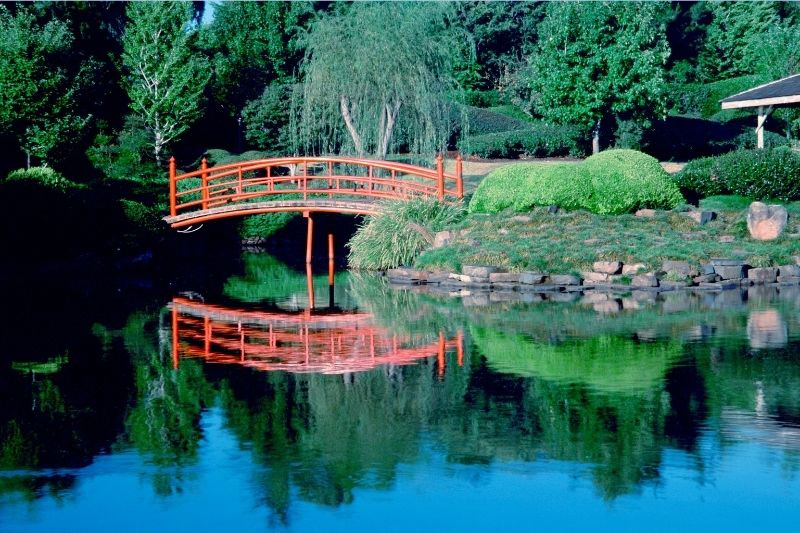
One of Australia's largest traditionally designed Japanese gardens, on the University of Southern Queensland campus. Three kilometres of paths circle the central lake past bridges, stone arrangements and sculpted plantings. After a morning of massed colour, its restraint is exactly what your eyes want.
The Carnival trick is contrast: follow the loudest garden with the quietest one.
Picnic Point — the view
Gardens, parkland and walking trails perched directly on the escarpment edge, with panoramic views over the Lockyer Valley and Tabletop Mountain. Come late in the day: golden hour from Picnic Point is the single best free spectacle in Toowoomba, spring flowers included.
Spring Bluff Railway Station — the postcard
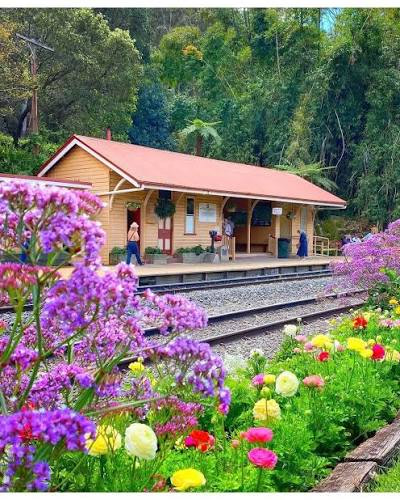
Halfway down the Range, a historic railway station wrapped in award-winning gardens that exist, as far as anyone can tell, purely to be photographed. It's a short drive out of the city and among the most beloved spring scenes on the Darling Downs. Access arrangements vary during the festival period, so check before you visit.
The champion private gardens — the secret
Every Carnival, the city's champion home gardeners — winners of the long-running garden competition — open their gates to visitors. These gardens are tended all year for this one fortnight, and touring them is like being let in on something. Opening arrangements and ticketing vary by garden and by year; check the official festival program.
Seeing them all in one go
Our Carnival of Flowers coach tours from Brisbane string the headline gardens together in a single well-paced day — Queens Park, Laurel Bank and Picnic Point on every departure, with private gardens or Ju Raku En depending on your date.
Behind the beds: how a city grows 40 million petals on schedule
The displays you're planning to see aren't luck — they're logistics. Toowoomba Regional Council's parks team designs each Carnival's beds around eighteen months out: colour schemes drawn, bulb and seedling orders placed by the hundred thousand, and plantings staged so that everything from tulips to snapdragons hits peak inside a specific three-week window. Species with different clocks are sown weeks apart to bloom together; backup seedlings stand by in the nursery for any bed the weather bullies.
Knowing this changes how you look at Queens Park. Those aren't flower beds; they're a timed performance in its only three weeks of existence, replanted from scratch every single year. No two Carnivals ever repeat a design — which is the real answer to 'we saw it last year': no, you didn't. You saw last year's.
The gardens nobody queues for
When the tour coaches cluster at Queens Park, the connoisseurs drift elsewhere. Newtown Park's State Rose Garden, on the city's west side, holds one of Queensland's most serious rose collections — thousands of bushes coming into first flush right on Carnival time, with a fraction of the foot traffic. The Botanic Gardens section adjoining Queens Park proper hides its 1870s heritage plantings and shaded fernery behind the headline beds; most visitors stand fifty metres away and never enter.
And Ju Raku En, the Japanese stroll garden on the university campus, runs its own quiet counter-program — three kilometres of lake-edge path where the Carnival's colour riot gives way to green structure and reflection. Overcast day? Ju Raku En is the pick; flat light that dulls a tulip bed makes a Japanese garden glow.
Timing the big two: an hour-by-hour strategy
Queens Park rewards the early: 9–11am gives you soft light, fresh-tended beds and room to move, with tour-coach peak hitting late morning and lunchtime crowding the paths. Laurel Bank inverts nicely — its themed displays and scented garden hold their best into the afternoon, when the fragrance lifts and the morning rush has moved on. That's the logic behind every good Carnival day plan you'll read, ours included: Queens Park before noon, Laurel Bank after.
Parade Saturday scrambles all of it — the city centre fills by mid-morning and the gardens actually go quiet during the parade itself, which is the day's secret garden window if floats aren't your thing. On FEASTival weekend, do the gardens first and graze afterwards; the food precinct only gets busier as the day ages.
Accessibility, garden by garden
Honest terrain notes, because 'accessible' means different things. Queens Park: sealed, level main paths throughout the display areas — the easiest premier garden in regional Queensland, with parking and facilities close. Laurel Bank: sealed and gentle, with a couple of grassed display areas; the scented garden was designed with accessibility in mind and remains the standard-setter. Ju Raku En: compacted gravel, mostly level, one or two slopes near the lake worth a companion's arm.
Spring Bluff involves slopes almost everywhere — the station sits in a cutting, and the best viewpoints climb; mobility-limited visitors can still enjoy the platform level well. Private competition gardens are the wildcard: suburban blocks with steps, gravel and enthusiasm-first landscaping. Ask at the gate; owners are famously helpful about routes.
Pairing gardens with the festival program
The gardens don't exist in a vacuum for those three weeks — the program flows around them, and pairing well doubles your day. Parade Saturday pairs the morning gardens with an afternoon kerb on Margaret Street. FEASTival weekend pairs Queens Park with the food precinct at its fullest — one long graze between beds. The final weekend pairs Laurel Bank's mature displays with the Paw Parade's charm offensive, and any weekday pairs everything with the version of Toowoomba the locals actually live in: quiet cafes, easy parking for those who drove, and gardeners at work in the beds who'll talk technique if you ask. They always talk technique if you ask.
Seeing them all in one day: the realistic version
Can you do every garden in this article in a day? No — and the visitors who try come home with sore feet and identical photos of four different rose beds. The realistic single day is the classic trio: Picnic Point for the morning view, Queens Park before noon, Laurel Bank after lunch, with the decorated suburban gardens threaded between by vehicle. That's the exact shape of the coach day tours, arrived at through years of trial and someone else's error.
Add Ju Raku En or a champion private garden and you're describing the Deluxe tour's extra hours; add Spring Bluff and Newtown Park and you're describing a weekend — which, not coincidentally, is why the weekend tours exist. Match ambition to format and every garden gets the attention that makes it worth the trip.
A year in the life of a Carnival bed
Follow one Queens Park feature bed through its calendar and the festival's scale comes into focus. October, days after the crowds leave: the spent display is lifted, soil rested and fed, and the design meetings for next year's colour scheme are already under way — themes are chosen, drawings made, and the numbers run on how many tens of thousands of plants each bed will swallow. Summer belongs to procurement: bulb orders placed with growers as far away as Tasmania and the Netherlands' southern-hemisphere partners, seed trays scheduled, and the nursery's production line booked solid.
Autumn is propagation — hundreds of thousands of seedlings raised under cover while the beds host interim plantings so the park never looks bare. Winter is the planting campaign itself: crews working to sequence charts that stagger each species by its bloom clock, cold mornings notwithstanding, with bulbs chilled to schedule and backups held against frost or flood. Late August brings the nervous weeks — too warm and things rush, too wet and they sulk — and then September delivers the performance, on time, to an audience that mostly never wonders how. Now you'll wonder every time, which is the correct way to walk these gardens.
Reading the competition gardens like a judge
The Chronicle Garden Competition's open gardens reward visitors who know what they're looking at. Categories span grand established gardens to courtyard-sized achievements, and the judges' criteria — design coherence, plant health, seasonal timing, degree of difficulty — are exactly the lens that turns a nice stroll into a fascinating one. Notice how champions handle transitions between garden rooms; how colour schemes repeat and rhyme; how the truly obsessive time entire beds to peak for judging week the way the council times Queens Park.
Etiquette matters here: these are homes. Gate fees (small, and worth it) fund the culture; paths are for staying on; and the gardener, if present, is the exhibit's best feature — ask one question about their soil and budget twenty minutes for the answer. Many a visitor has arrived a tourist and left with cuttings advice and a new life plan.
Gardens for specific loves
Match the garden to the gardener you are. Rose devotees: Newtown Park's State Rose Garden first, Laurel Bank's collection second, and September's first flush as your timing reward. Japanese garden students: Ju Raku En is among Australia's largest traditionally designed stroll gardens — allow a full unhurried hour and walk it clockwise. Heritage tree people: Queens Park's botanic section and the avenues of the older streets carry a century and a half of canopy. Design magpies: the competition gardens, where ideas outnumber plants. And the altitude-curious: everything, honestly — the whole city is one big demonstration of what 700 metres does for a Queensland garden.
Mistakes garden visitors make (so you don't)
After years of coach-window observation, the repeat offenders: arriving at noon, when light and crowds are both at their worst — mornings, always. Doing only Queens Park and calling the Carnival done — Laurel Bank is the other half of the argument. Skipping the decorated streets because they're not on the official map — they're the city's soul, visible from any vehicle. Underestimating distances — the gardens cluster, but Spring Bluff, Newtown Park and Ju Raku En are drives, not strolls. Forgetting the layer — 700 metres, cold mornings, every year, someone in shorts.
And the subtle one: photographing everything and seeing nothing. Shoot your shots, then pocket the phone for one full bed walked slowly. The festival was planted for eyes first.
Quickfire answers for garden visitors
Are the gardens really free? The public ones, yes — every day of the festival. Dogs? Parks yes on lead, festival event spaces vary, private gardens no. Picnics? Encouraged, and Queens Park's lawns are built for them. Wheelchairs and prams? Excellent in the big two, mixed at Spring Bluff and the private gardens — the accessibility notes above have the detail. Best single hour of the whole festival? Queens Park, 9am, any midweek morning of week two. Can one day really cover it? The classic trio, yes — done well on a coach, done adequately by car, done exhaustingly on optimism. The weekend exists for the rest.
The gardens and the coach: how the tours thread them
A note on how the guided options handle everything above, since matching format to ambition is half the craft. The Classic day tours take the proven trio in its proven order — Picnic Point for the morning view and tea, Queens Park inside the golden window, Laurel Bank after lunch — with the decorated streets threaded through by coach and about ninety minutes of festival free time in the middle. It's the itinerary this article's timing advice describes, industrialised gently: drivers who know which gate to use, which hour beats which crowd, and where the coach can wait while you don't rush.
The Deluxe adds the third and fourth gardens this guide keeps praising — Ju Raku En on most dates, a champion private garden in season — plus the sit-down lunch that turns a garden day into a garden occasion. And the weekend tours own the gardens this article files under 'drives, not strolls': Spring Bluff at its quiet Sunday best, the ridge country beyond, and Queens Park at dawn, which no day format can sell you at any price. None of this is the only way to do the gardens; it is the way that removes every reason they usually go half-seen.
If you only have two hours
The compressed version, for travellers threading the Carnival into a bigger trip: park once near Queens Park (early, or arrive delivered), give the feature beds and rotunda forty-five unhurried minutes, walk the botanic section's heritage corner for fifteen, then drive the five minutes to Laurel Bank for its themed displays and scented garden. That's the festival's essential argument in two hours flat — and if the two hours land midweek before 11am, it will outperform many visitors' full Saturdays.
What the compressed version teaches, mostly, is that you'll want to come back — which locals would tell you is the gardens' oldest trick. The festival has been converting two-hour visitors into annual pilgrims since 1949; consider this guide's length a symptom.
The garden vocabulary worth knowing
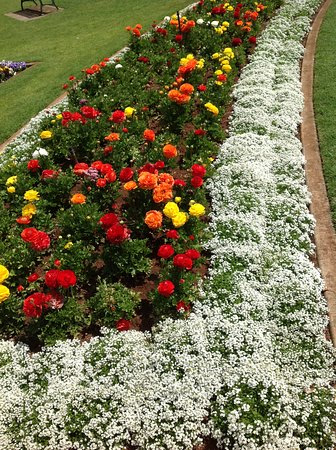
A short glossary sharpens the visit. Carpet bedding: the Victorian art of planting low annuals in patterned blocks — Laurel Bank's speciality, and the technique behind every themed display you'll photograph. Mass planting: single-variety blocks at overwhelming scale, Queens Park's signature move; the effect depends on ruthless uniformity, which is why the beds are culled daily during the festival. First flush: a rose's opening bloom of the season, timed at Newtown Park to land inside the Carnival window. Stroll garden: Ju Raku En's genre — a designed walking circuit where the composition changes with every dozen steps, built to be moved through rather than looked at.
Drop any of these on a working gardener in the beds and watch the conversation open. The festival's deepest pleasure is that it's staffed by people who love explaining it — the vocabulary is simply the key that starts them.
One last local secret
The gardens keep a final gift for the observant: the changeover hour. Arrive as the parks open and you'll catch the grooming crews at work — deadheading, edging, replacing the night's casualties bed by bed. It's the festival's stagehands visible for twenty minutes before the performance resumes, and watching a crew reset a hundred-metre bed with nursery trolleys and practised speed explains the Carnival better than any plaque. Say good morning; you'll likely learn which bed is peaking this week before the bloom report says so. The gardens reward earliness twice — once with light, once with truth.
The wildlife working the beds
The gardens have a second cast that nobody plants. Queens Park's mature figs and flowering trees run a dawn chorus that starts well before the grooming crews arrive — magpies patrolling the lawns with proprietorial confidence, rainbow lorikeets shrieking through the canopy, honeyeaters treating the spring blossom as a personal buffet. Down at bed level, the massed plantings pull in bees and butterflies by the thousand on warm mornings, and standing beside a hundred metres of flowering annuals in full pollinator traffic is one of the festival's underrated sensory experiences: the whole bed audibly hums. Ju Raku En adds waterbirds to the bill — ducks working the lake edge, the occasional heron posing on a stone arrangement with better compositional instincts than most photographers. None of this appears in the program, and all of it improves the visit. Our Queens Park guide covers the park's full twenty-six hectares, birdlife and all.
The practical upshot: the wildlife rewards the same hours the light does. Early morning is when the birds are boldest and the bees are just warming into their shift, and a child who has gone glassy-eyed at the fourth tulip bed will re-engage instantly for a magpie standoff or a duck escort along the Ju Raku En path. Watch where the honeyeaters concentrate, too — they are reliable guides to whichever flowering trees are at their peak that week, and they have never once been wrong. Give the beds your camera and the canopy your ears, and the gardens double in size without your walking a step further.
The garden visitor's kit
A day across four or five gardens is a mild endurance event, and the right small kit turns it from managed discomfort into ease. The non-negotiables: a warm layer you can shed by ten (the 700-metre morning is a genuine thing, whatever Brisbane was doing when you left), sun protection for the middle of the day, shoes built for hours of gravel and lawn rather than for photographs, and a water bottle — the gardens are generous with taps and stingy with kiosks. Add a small notebook or a phone note for plant names: every significant bed and specimen is labelled, and the visitor who records the varieties they loved goes home with a shopping list instead of a vague ache. A picnic rug earns its place if Queens Park lunch is in the plan, which it should be.
Just as useful is the list of what to leave behind. Big day-packs become a burden by the third garden and a menace in the crowded bed-side paths; heels and brand-new shoes lose to lawn and gravel every time; and anything that needs two hands is one hand too many when the camera comes out. Travel light, dress in layers, and let the kit disappear into the background — the gardens are the point, and the best-equipped visitors are the ones you never notice managing their equipment at all.
Taking the Carnival home
The secret purpose of a Carnival garden visit — ask any of the thousands of gardeners who make the trip annually — is theft. Not of cuttings, but of ideas, and the festival is the most generous open classroom in Australian horticulture. Queens Park teaches the power of ruthless mass planting: one variety, one colour, absolute uniformity, at a scale your own bed can echo even at a hundredth the size. Laurel Bank teaches scent placement — fragrance planted at path edges and nose height, where people actually walk, rather than marooned mid-bed. Ju Raku En teaches that structure outlasts colour: get the bones, water and stone right and the garden works in every season, flowers optional. And the champion private gardens teach the most transferable lesson of all — that a suburban block, ordinary soil and one obsessive human are the only prerequisites for any of it.
Serious idea-thieves should give themselves the time to steal properly. The standard day tours cover the headline gardens at a fair pace; the Deluxe day tour ($159, small group, two-course lunch included) runs the same gardens with longer, unhurried garden time — which for a working gardener is the difference between seeing the beds and understanding them. Bring the notebook, ask the crews what varieties they've used and why, and plant your own September accordingly. The Carnival has been quietly redesigning backyards across south-east Queensland for decades; there is no reason yours should be spared.
See the Carnival the easy way
Cooee Tours runs Carnival day tours from Brisbane ($89pp), the Gold Coast ($99pp) and the Sunshine Coast ($109pp), plus a $159 small-group Deluxe Experience with lunch included — no traffic, no parking, local driver included.
Carnival of Flowers Tours