One Perfect Day at the Carnival of Flowers
You've got one day at Australia's longest-running floral festival. Here's exactly how to spend it — tested and refined over years of Carnival seasons.
9:30am — start at Picnic Point, not the gardens
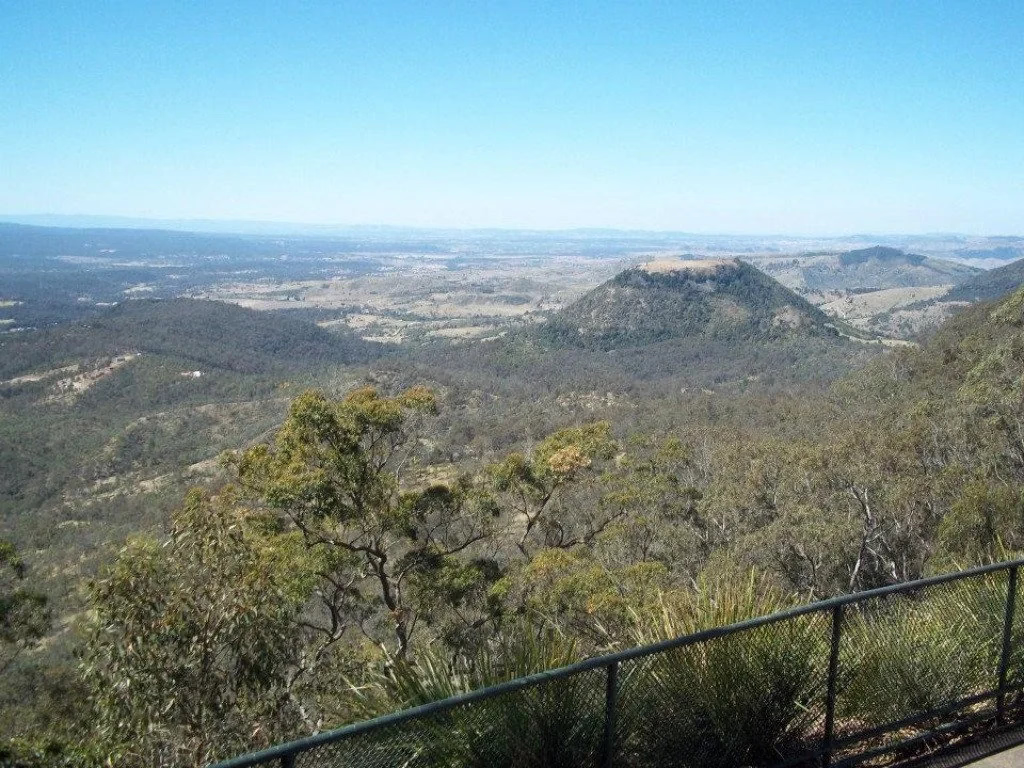
Counterintuitive, but trust us: begin at Picnic Point Lookout on the city's eastern edge. You arrive before the crowds, the morning light over the Lockyer Valley is superb, and a cuppa with that view sets the tone. It also puts you at the top of the Range, working into the city with the traffic instead of against it.
10:15am — Queens Park while the light is soft
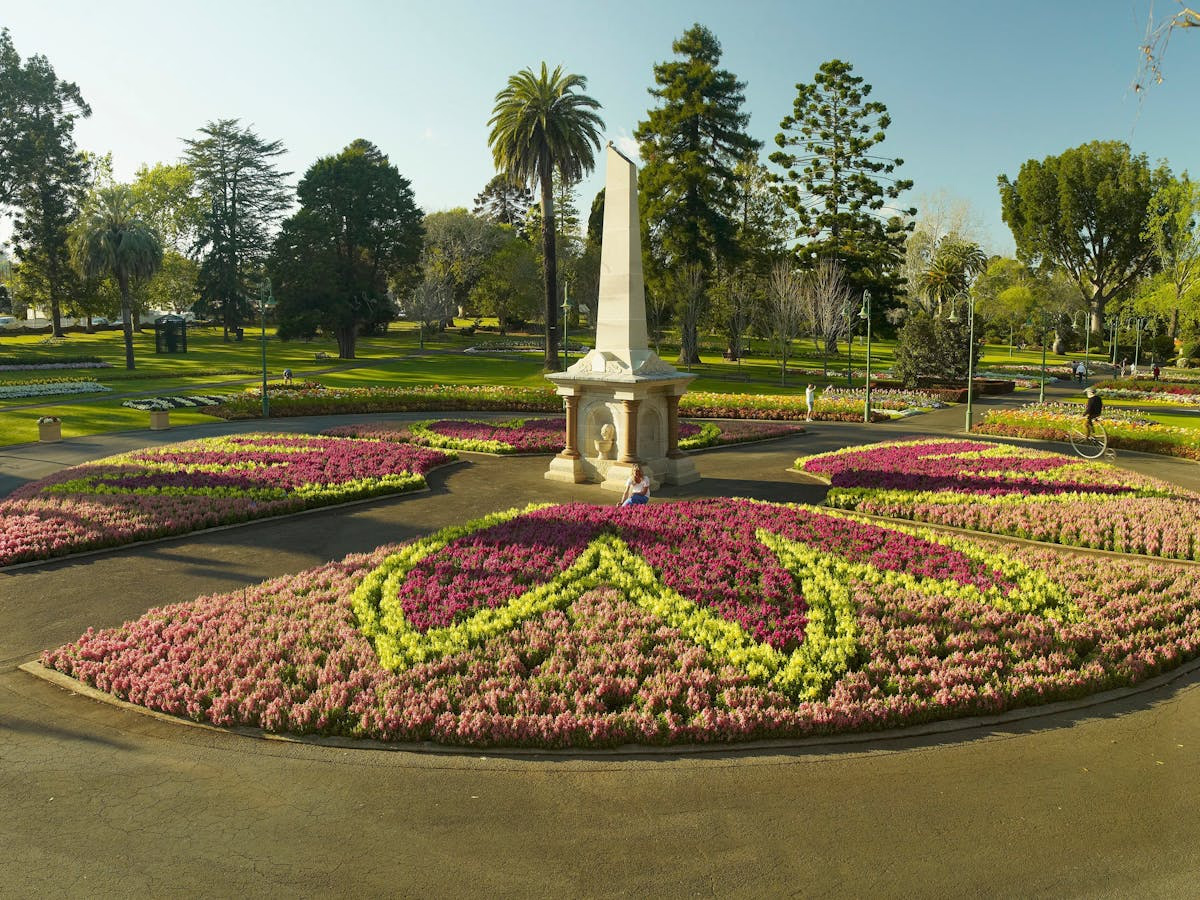
Go straight to the Carnival's centrepiece while the beds are at their photogenic best. Give it a full 90 minutes: the formal displays, the rotunda, the adjoining botanic gardens if you're quick on your feet. This is the busiest garden of the festival — being here before midday makes a real difference.
12:00pm — lunch in the festival precinct
You're now in the heart of the Carnival with options in every direction: market stalls and street food around the park, or a proper sit-down in the CBD cafe belt a short walk away. Give yourself about 90 minutes to eat, browse the markets and catch the street entertainment.
On parade day — Saturday 19 September — flip the afternoon: claim your kerb early and build lunch around the floats.
1:45pm — Laurel Bank Park
The afternoon belongs to Laurel Bank — more intimate than Queens Park, with themed displays, floral archways and the scented garden. Compact enough to enjoy thoroughly in an hour without rushing.
2:45pm — the decorated homes drive
Finish with the Carnival's best-kept open secret: the suburban streets where residents dress their homes and gardens for the season. It's a driving experience — the displays are spread across the city — and it's the part of the day visitors most often say surprised them.
3:15pm — down the Range ahead of the exodus
Leaving mid-afternoon puts you ahead of the crowd and home by early evening — tired, full of photos, already planning next year.
Or let us drive the whole thing
If this itinerary looks suspiciously well-organised, there's a reason: it's the exact shape of our Carnival day tours — Picnic Point morning tea, Queens Park, festival free time, Laurel Bank and the decorated-homes drive, with a local driver handling the Range and the parking. From $89pp from Brisbane, $99 from the Gold Coast and $109 from the Sunshine Coast.
The pre-trip checklist that saves the day
The itinerary above runs on preparation done the night before, so here is the full kit. Confirmed: transport booked (coach seat or fuelled car), pickup or parking plan written down, dinner-at-home arrangements for the return. Packed: the warm layer this series will never stop prescribing, walking shoes, hat and sunscreen, refillable bottle, camera charged, cards emptied, cash float for the markets. Checked: the festival program for your date's events, the bloom report for the week, the weather for the layers question, and — parade or FEASTival dates — the road-closure map that separates the smooth arrivals from the stories.
Ten minutes of this the evening prior converts the day from navigation to enjoyment; the itinerary's clock only works when nobody is solving logistics inside it. Coach travellers may skip half the list — that's the fare doing its job — but the layer, the shoes and the charged camera answer to no format.
Variation one: the parade-day remix
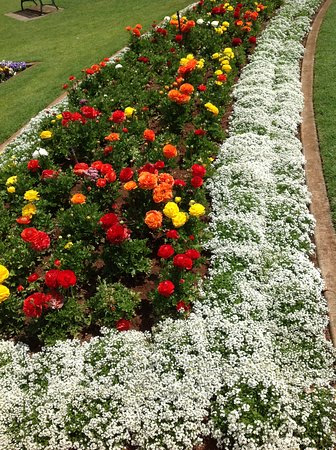
Saturday 19 September rewrites the clock, so here is the remixed version. Everything moves earlier: lookout by 8:15, Queens Park by 9, and the garden hours compressed into the morning because from 11:30 your job is the kerb. Claim parade position with the crowd, lunch from the markets at your spot (the picnic strategy peaks on parade day), and give the floats your full afternoon — they've earned it since 1949, as our history guide tells it. Post-parade, the remix's secret move: the gardens again, now emptied, in kind afternoon light, for the hour that quietly beats the whole morning.
The remix demands the transport honesty this series keeps preaching: parade day is the coach's championship round, and self-drivers attempting it should treat our driving-versus-coach guide as required reading, then book the coach anyway. The itinerary works either way; the arrival story differs by several kilometres of parking walk.
Variation two: the FEASTival weekend edition
On 26–27 September the food program joins the bill, and the day re-weights deliciously: gardens hold the morning exactly as scripted, but the midday free block stretches — arrive at FEASTival's precinct hungry at 11:45, walk everything once, then commit through the early afternoon with the producers, pop-ups and demonstrations. Laurel Bank shifts to a 2:30 slot as the digestif garden, and the decorated-homes drive closes the day unchanged. Food-first visitors should invert entirely — our food-and-wine guide's festival day is this itinerary wearing its plate-side out — while balanced travellers simply grant lunch the extra hour it deserves once a year.
The one FEASTival-day warning: the food crowds peak at classic lunch hour, so the early-graze strategy wins twice — full stalls, short queues — and the morning gardens ensure you've earned it. September's appetite planning is not a joke on the Downs.
Variation three: the family tempo
With children the itinerary keeps its bones and halves its ambitions, per our family guide's field manual: lookout stop shortened to view-and-wee, Queens Park led playground-first, the garden walking gamified, picnic replacing the cafe hunt, and the honest 2pm decision between Laurel Bank (pram sleepers permitting) and the declare-victory drive home past the decorated houses. Parade day with kids follows the remix above plus shoulders; the final school-holiday week runs this tempo at its friendliest. The family version's golden rule: one fewer stop than seems possible, one more snack than seems necessary, and the day ends on a win rather than through one.

The photographer's overlay
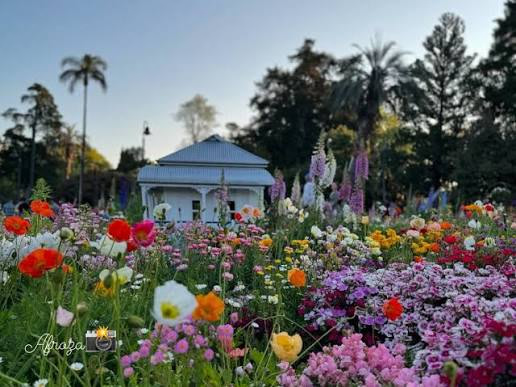
Shooters run the same clock with a parallel agenda, condensed here from our photography guide: lookout panorama in the morning haze; Queens Park's rotunda setup plus one macro inside the golden window; market colour and laneway murals in the free block; Laurel Bank's archways in the kinder afternoon light; and the decorated homes through a clean window on the drive out. The overlay costs the itinerary nothing — every setup sits on the existing route — and the discipline of five sessions beats the scattergun by an album's width. Golden-hour ambitions, as ever, argue for the overnight formats; the one-day clock lends its evenings to nobody.
Where to eat along the route, slotted
The itinerary's food slots, filled with this site's standing recommendations: the lookout's morning tea (bring it, or let the coach pour it); the free block's three-way choice — market graze for atmosphere, laneway cafe for the coffee-town experience, Queens Park picnic for value and lawn; and the optional closer for self-drivers, a ridge bakery detour northbound or Lockyer farm-gate southbound, converting the drive home into the day's final course. Booked-table ambitions belong to midweek dates or the overnight formats; the one-day clock treats lunch as refuelling with a view, and the city obliges brilliantly at every price.
If you have ninety extra minutes
The itinerary's most common happy problem: the day runs ahead of clock, and a bonus block appears. Spend it by taste — Ju Raku En for the serenity gap in the classic route; an open champion garden if the competition gates align with your map; Cobb & Co for the indoor change of pace; or the cafe belt properly, the sit-down the free block rationed. The one spend to resist is a fourth garden out of completism — the itinerary's whole design bets that three gardens seen well beat five glimpsed, and the bonus block is for depth, not distance. Overnight visitors, of course, bank the surplus toward golden hour and call it the deposit on tomorrow.
The wet-weather single day
Rain rewrites nothing structural: the lookout still opens (cloudscapes included), the gardens forgive drizzle photogenically, and the itinerary simply borrows from the indoor bench — museum hour, extended cafe block, gallery pivot — while the showers pass. The only true casualty of a wet forecast is hesitation; September rain on the Downs is an intermission, not a cancellation, and the post-shower gardens are this series' most repeated photography tip for good reason. Pack the compact umbrella, keep the shoes sensible, and run the day as written with weather-sized flex in the middle block.
Doing it car-free
The itinerary's car-free translation is mercifully short: book the coach. The day tours run this exact route — lookout, golden-window gardens, free block, Laurel Bank, decorated homes — from Brisbane ($89), the Gold Coast ($99) and the Sunshine Coast ($109), which is not a coincidence but a confession: this itinerary is the coach day with the badges removed, published because it's simply the correct shape for one Carnival day however you travel. Self-assemblers gain flexibility; coach guests gain the driver, the commentary, the morning tea and the nap. The flowers, neutral as ever, reward both parties for arriving before ten.
The itinerary's logic, exposed
Why this shape and not another? Each leg earns its slot by elimination. The lookout opens because it's the only major stop that peaks before the gardens do — view first, flowers second is the Downs' natural batting order — and because starting at the top of the Range converts arrival traffic into a tailwind. Queens Park takes the golden window because it's the festival's most crowd-sensitive experience: the same beds at noon are a different, lesser event. The free block sits at midday because food, markets and street life peak exactly as garden light troughs — the day's two curves crossing obligingly at lunch.
Laurel Bank owns the afternoon because scent and themed displays tolerate — even prefer — the later hours, and because its compactness suits post-lunch energy budgets. The decorated homes close because they're a seated, rolling experience: the day's only leg that works better tired. Reverse any pairing and the day audibly grinds; run it as written and each hour hands its successor a better version of you. Good itineraries aren't lists — they're gear ratios, and this one has been road-tested by more Septembers than any algorithm.
Common one-day mistakes, pre-empted
The failure modes, collected from years of coach-window forensics: the late start — every hour after 8am departure costs a golden-window minute at the far end, at unfavourable exchange. The garden overreach — five gardens attempted, none experienced; the three-garden discipline is the itinerary's load-bearing wall. The unplanned lunch — forty festival minutes lost to indecision at peak queue; pick your slot strategy the night before. The skipped lookout — 'we'll catch it on the way out' meets afternoon haze and the exodus queue; mornings or never. The parade collision — wandering into road closures unbriefed on the one day the map changes.
Each mistake shares a root: treating the festival as a venue rather than a schedule. The Carnival is time-structured the way theatre is — same stage, different show by hour — and the visitors who internalise that stop having logistics and start having Septembers. The itinerary above is simply that internalisation, printed.
Proof of concept: three real Septembers
How the clock survives contact with actual humans. The Brisbane retirees: coach from Chermside, itinerary as written, picnic add-on, back for the news — their verdict, repeated annually since, was that the day felt 'organised without feeling herded', which is the gear-ratio working. The Gold Coast photographer: self-drove midweek, ran the overlay, banked the bonus block at Ju Raku En, and conceded the guide's only failure was underselling the light. The Sunshine Coast family: coach, family tempo, victory declared at 2pm with both children asleep by Caboolture — scored by the household judges as the rare full-family win.
Three parties, three formats, one clock — which is the itinerary's actual thesis: the Carnival's perfect day isn't a matter of taste but of sequence, and sequence, unlike taste, can be handed over in an article. Yours now. Set the alarm.
The night-before ritual, scripted
Veterans compress the checklist into a fifteen-minute evening ritual worth copying verbatim: bag packed by the door (layer, hat, bottle, camera, cash); tomorrow's program and bloom report skimmed over dinner; the lunch strategy chosen — and, if picnicking, the makings bought tonight, because festival-morning bakery queues eat itineraries; alarms set with the departure time worked backwards from an 8:45 lookout arrival; and the household's one negotiable — who sits where, who shoots what, who picks the market treat — settled in peacetime rather than at dawn.
Coach travellers run the abbreviated liturgy: bag, layer, pickup point re-confirmed, phone charged for the photos. Either way the ritual's function is identical — moving every decision out of the morning, so the day's first thinking happens at 700 metres with a cup in hand. Septembers are won the night before; the flowers just take the credit.
The itinerary, laminated
The whole guide at fridge-door scale: 8:45 lookout. 9:45 Queens Park. 12:00 free block — markets, laneway or lawn. 1:45 Laurel Bank. 2:45 decorated streets. 3:15 down the Range, or check in and claim golden hour. Remix for parade, stretch lunch for FEASTival, halve for small legs, overlay for cameras, borrow indoors for rain. Three gardens seen well; one fewer stop than possible; earlier than feels necessary. That's one perfect Carnival day, transferable across every September the streak has left — and the streak, on current evidence, is patient.
After the perfect day: the debrief that pays forward
The itinerary's final discipline happens on the ride home: the five-minute debrief. Which hour over-delivered; which stop wanted longer; what next year's version changes — noted in a phone while the day is warm, because September memories blur by Christmas and the returning visitor armed with last year's notes runs this clock at expert difficulty. Coach guests conduct it aloud (the ride home's traditional programming); families run it as the day's last game; photographers do it culling on the Range descent.
And if the debrief's headline is 'one day wasn't enough' — the most common finding on record — the conclusion files itself: the weekend formats exist because this exact itinerary keeps recruiting for them. The perfect Carnival day's only reliable flaw is its length, and that one, happily, is upgradeable.
One clock, every September
A closing note on shelf life: this itinerary is written against the festival's permanent geography — lookout east, gardens central, streets everywhere — and the program's stable rhythm, which means it survives annual date changes untouched. Pour in any year's dates, check that season's parade Saturday for the remix, and the clock runs as printed for 2027 and beyond. Bookmark accordingly: perfect days, on the Downs, are a renewable resource.
The kettle at Picnic Point boils from 9am, festival mornings. The rest of the perfect day is waiting exactly where this guide left it — one early alarm east of the flowers, every September, indefinitely.
Pairing the day with the rest of the series
This itinerary is the executable file; the rest of our Carnival library is its documentation. Pair it with the best-gardens guide for depth at each stop, the best-time guide for choosing which September day to run it, the photography guide for the parallel agenda, the family guide for the small-passenger build, and the food guide for upgrading the middle block. Run it once as written, then remix with the library open — that's how the one perfect day becomes an annual personal tradition, which the Carnival, seventy-seven streaks deep, would consider entirely normal behaviour.
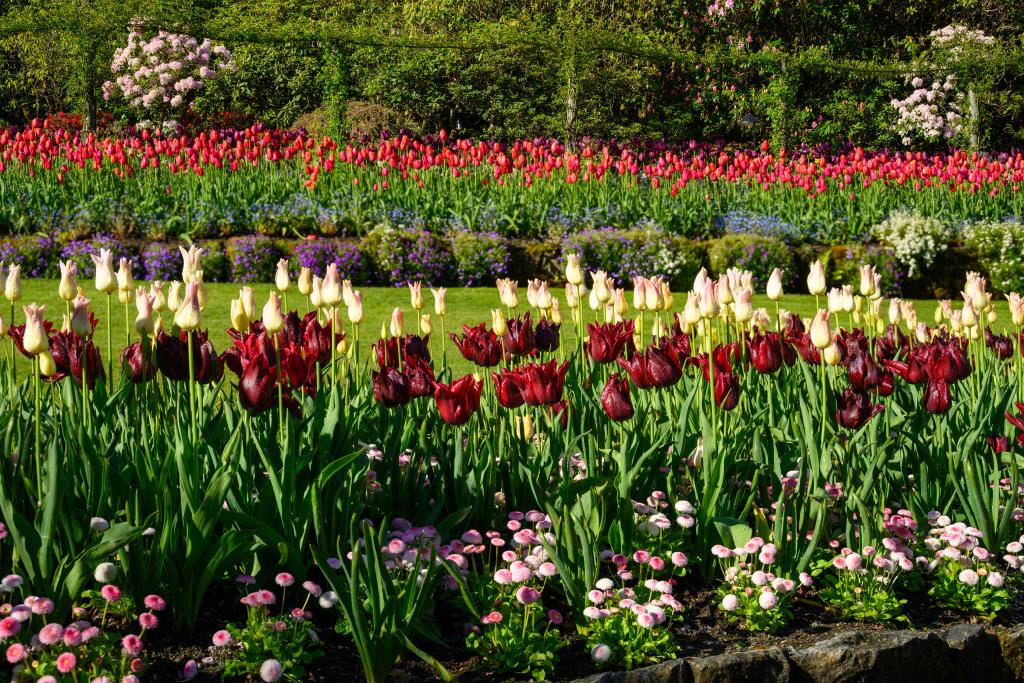

The coast editions: running this clock from the Gold and Sunshine Coasts
This itinerary was drafted from Brisbane, but the coasts run it too, with the approach stretched and the core intact. From the Gold Coast, departures pick up at Helensvale and take the long way to the Range, which shifts the arrival later and compresses the middle of the day: the coast edition trims the flexible lunch block rather than the gardens, keeps Picnic Point and Queens Park sacred, and treats Laurel Bank as the reward for disciplined pacing. The Gold Coast Carnival day tour ($99 adult, $79 child) runs exactly this shape with the timing already solved. The Sunshine Coast edition mirrors it from Maroochydore and Caboolture ($109/$89), and both share the same happy quirk: the longer ride home doubles as the debrief this itinerary prescribes, conducted at coach altitude with the day still warm.
Self-driving from either coast is possible and honestly a big day — the early start is earlier, the return is longer, and the driver sees the decorated streets at windscreen speed while everyone else naps. If the coasts are home and the car is the plan, borrow the coach's discipline: leave earlier than feels reasonable, anchor the day on the morning gardens rather than trying to have everything, and accept the shortened afternoon as the price of the postcode. Or let the coach absorb the geography, which is, not coincidentally, the entire reason the coast departures exist.
When the day deserves a sequel: the overnight edit
Run this itinerary well and it produces a predictable side effect: the conviction, somewhere around Laurel Bank, that one day was a sampler. The overnight edit is the cure. Staying the night unlocks the two sessions the single day structurally cannot reach — the decorated streets at dusk, walked at local pace with dinner afterwards instead of a Range descent, and the gardens at next-morning opening, misty, groomed and nearly private. Add a second-day excursion the day trip never fits (Spring Bluff met properly, or the champion private gardens given real time) and the overnight version stops being a longer visit and becomes a different, richer festival altogether.
The packaged version of this logic is the 2-day weekend tour (from $595), which strings the dusk session, the dawn session and the second-day gardens into one solved plan; a 3-day format (from $880) extends the same idea for those who have fully surrendered. The decision rule is simple enough to apply mid-itinerary: if you catch yourself rationing minutes at a garden you love, the format is the problem, not the pacing. One perfect day is this article's promise, and it keeps it — but the itinerary's most common review remains 'next year, we're staying', and the sequel formats exist because that review is right.
The unhurried edit: this clock at a gentler tempo
For travellers who prefer an easier register — older visitors, anyone for whom the standard clock reads more like a stopwatch — the itinerary keeps its shape and drops its urgency. The edit: hold the Picnic Point start (it is all lookout and no legwork), give Queens Park ninety unhurried minutes with the benches doing their share, promote lunch from refuelling stop to centrepiece, and then make the honest early-afternoon choice between Laurel Bank at strolling pace and the decorated-homes drive, rather than forcing both. Every garden on this route was built with sealed paths and seating in the right places; the unhurried edit simply uses them as designed. Total walking shrinks by half; total seeing, oddly, doesn't.
The coach suits this tempo particularly well — no Range driving, no parking hunts, and the day's transitions handled from a comfortable seat, with the $5 premium front-row seating a small kindness on the climbs. But the deeper point applies to every traveller of every age: this itinerary's stated times are a spine, not a sergeant. The Carnival rewards presence over coverage, and the visitor who takes four stops gently home happier than the one who takes six at a jog has not modified the perfect day. They have understood it.
For the deeper detail on each stop in this itinerary, see our guides to Queens Park, Picnic Point Lookout and the Carnival of Flowers — access, timing and what to look for at each.
See the Carnival the easy way
Cooee Tours runs Carnival day tours from Brisbane ($89pp), the Gold Coast ($99pp) and the Sunshine Coast ($109pp), plus a $159 small-group Deluxe Experience with lunch included — no traffic, no parking, local driver included.
Carnival of Flowers Tours