The Feature Beds
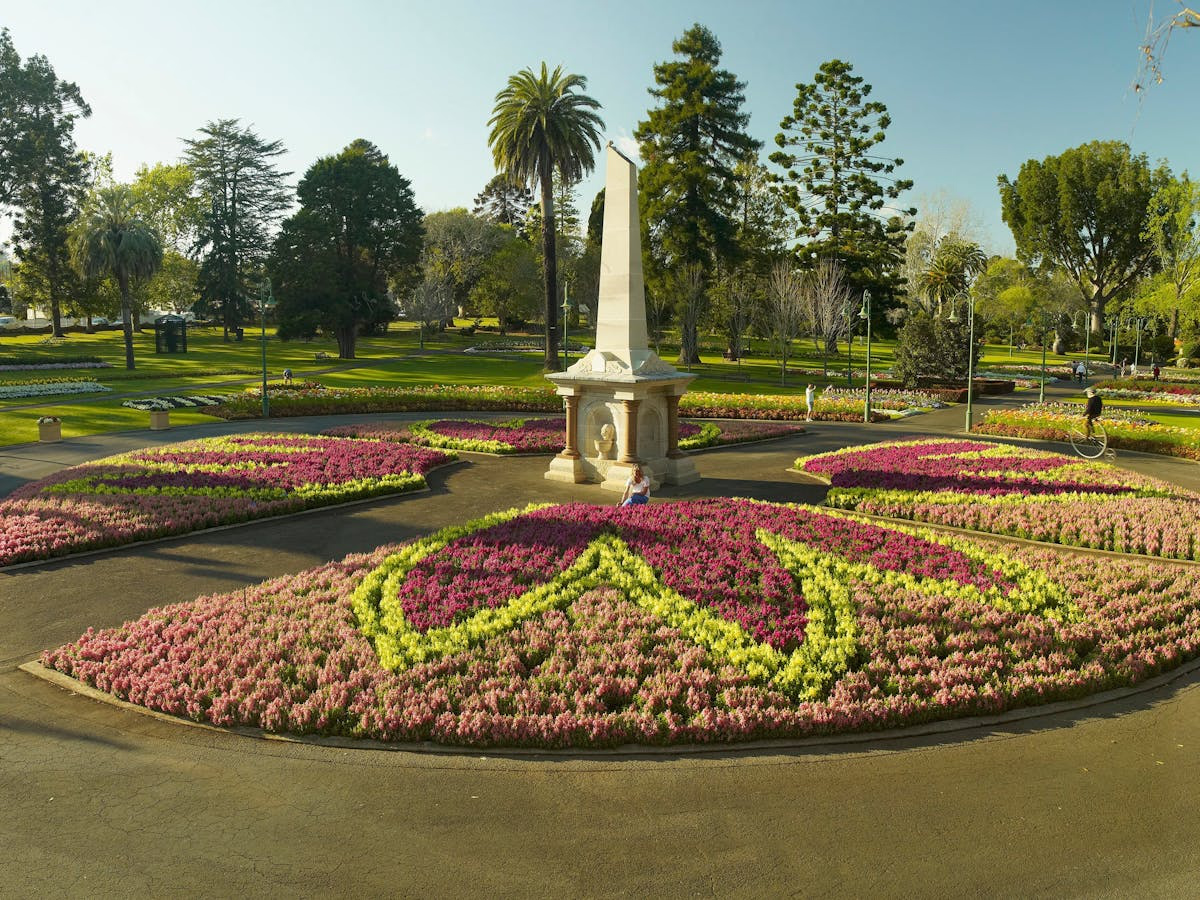
The botanic garden display beds are the park's showpiece — planted, tended and refreshed daily by the city's gardeners, and at their absolute peak through the September–October festival. Morning light is best.
The Garden City's heart — around 26 hectares of heritage-listed parkland, botanic gardens and grand old trees, and the stage for Australia's longest-running floral festival every spring.
Queens Park has anchored Toowoomba since the city's earliest days — heritage-listed parkland spread across roughly 26 hectares beside the CBD, combining formal botanic gardens, sweeping lawns and an avenue collection of mature trees that only a century and a half of cool-climate patience can grow. It's the city's gathering place year-round, and every spring it becomes something more: the main stage of the Carnival of Flowers, when the feature beds erupt with massed tulips, poppies and annuals in their hundreds of thousands.
The park splits into personalities: the ornamental botanic gardens on the eastern side, where the famous display beds live; and the broader parkland of lawns, playgrounds and picnic spots that host the markets, concerts and family crowds. Entry is free every day of the year — Carnival included.
The botanic garden display beds are the park's showpiece — planted, tended and refreshed daily by the city's gardeners, and at their absolute peak through the September–October festival. Morning light is best.
Grand avenues of mature exotics and natives that give the park its cathedral scale — and, in autumn, the deciduous colour show most of Queensland never sees.
Playgrounds, big shade, open lawns for burning energy and picnic space to spare — the free family day out at the centre of every Toowoomba visit with kids.
Every Cooee Toowoomba tour starts its garden trail right here.
See the Tours| Getting there | City centre, bounded by Margaret and Lindsay Streets — walkable from anywhere in the CBD. Street parking nearby; arrive early on festival weekends. |
|---|---|
| Cost | Free, including all Carnival of Flowers feature displays. |
| Accessibility | Sealed, mostly level paths through the display gardens; accessible facilities in the park. |
| Best time | Spring for the Carnival (18 Sept – 5 Oct 2026); autumn for foliage; mornings year-round for light and quiet. |
Queens Park was set aside in the colonial era, when Toowoomba was still deciding whether it was a town or merely a very ambitious swamp-drainage project, and the decision to reserve roughly 26 hectares beside the future city centre turned out to be one of the shrewdest pieces of land-use planning in regional Queensland. While the streets around it filled with banks, churches and pubs, the park stayed a park — and generation after generation of curators kept planting. What you walk through today is the compound interest on that patience: heritage-listed grounds where the trees are old enough to have shaded picnickers who arrived by horse, and where the layout still reads as a proper Victorian-era botanic reserve rather than a modern landscape architect's idea of one.
That longevity matters in a practical way, not just a sentimental one. Toowoomba sits about 700 metres above sea level on the crest of the Great Dividing Range, which gives it genuine cold winters and a temperate growing climate most of Queensland can only envy. The park's founders planted accordingly — elms, oaks, camphor laurels, conifers, species that need decades to reach their full architecture — and the altitude let them thrive. The result is a park with a canopy you simply cannot replicate at sea level in Brisbane, and it is a large part of why Toowoomba earned the Garden City title rather than merely claiming it.
The formal botanic gardens occupy the eastern portion of the park, across Lindsay Street from the Cobb+Co Museum, and this is the Queens Park most photographs show. The geometry is deliberately old-fashioned: symmetrical beds cut into lawn, gravel and sealed paths running between them, borders built up in tiers so the display reads from a distance as well as up close. Council gardeners work these beds virtually year-round, and the changeover between plantings is its own small spectacle — visit in late winter and you'll see thousands of seedlings going in with the precision of a military operation, each one a down payment on the September show.
Give this side of the park a slow hour. The beds reward close inspection — the colour schemes are planned like paint charts, with deliberate clashes and gradients that only resolve when you stand at the right end of the path — and the surrounding shrubberies and perennial borders carry interest even when the annuals are between seasons. There is no entry fee, no gate and no closing time to speak of; the gardens simply sit there, free, in the middle of a working city, which remains a quietly remarkable arrangement.
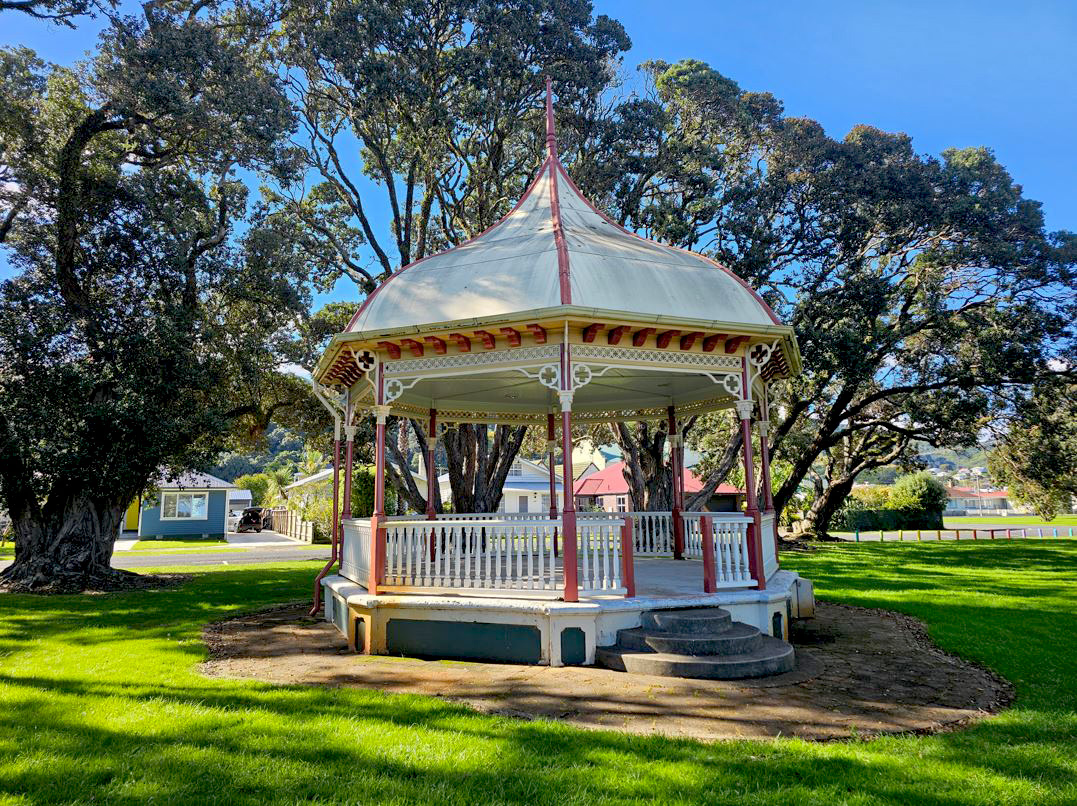
Cross into the broader parkland and the mood changes completely. The western side is about scale: sweeping lawns big enough for a festival, avenues of mature trees that meet overhead, and the kind of deep shade that makes a 30-degree summer day negotiable. This is where Toowoomba actually uses its park — joggers on the perimeter paths at dawn, families staking out picnic territory by mid-morning, teenagers sprawled under trees after school. The band rotunda anchors the middle distance, photogenic in every season and virtually mobbed by tulip beds in spring.
The tree collection deserves more attention than most visitors give it. Because of the altitude, Queens Park grows genuine deciduous colour — in April and May the elms and liquidambars turn properly gold and crimson, a show most Queenslanders drive to another state to see. In summer the same trees produce a green ceiling that drops the temperature a couple of degrees the moment you step under it. Walk the avenues rather than cutting across the lawns; the park was designed to be experienced along its lines, and the long perspectives under the canopy are the best free architecture in Toowoomba.
Every September, Queens Park stops being a park and becomes a stage. The Toowoomba Carnival of Flowers — running 18 September to 5 October in 2026, its 77th year, which makes it Australia's longest-running floral festival by a comfortable margin — uses the park as its centrepiece. The display beds are planted months ahead for a single synchronised eruption: massed tulips, ranunculi, poppies and annuals in the hundreds of thousands, timed to peak precisely when the crowds arrive. Around the flowers, the park fills with markets, food stalls, live music and the general hum of a regional city hosting the biggest weeks of its year.
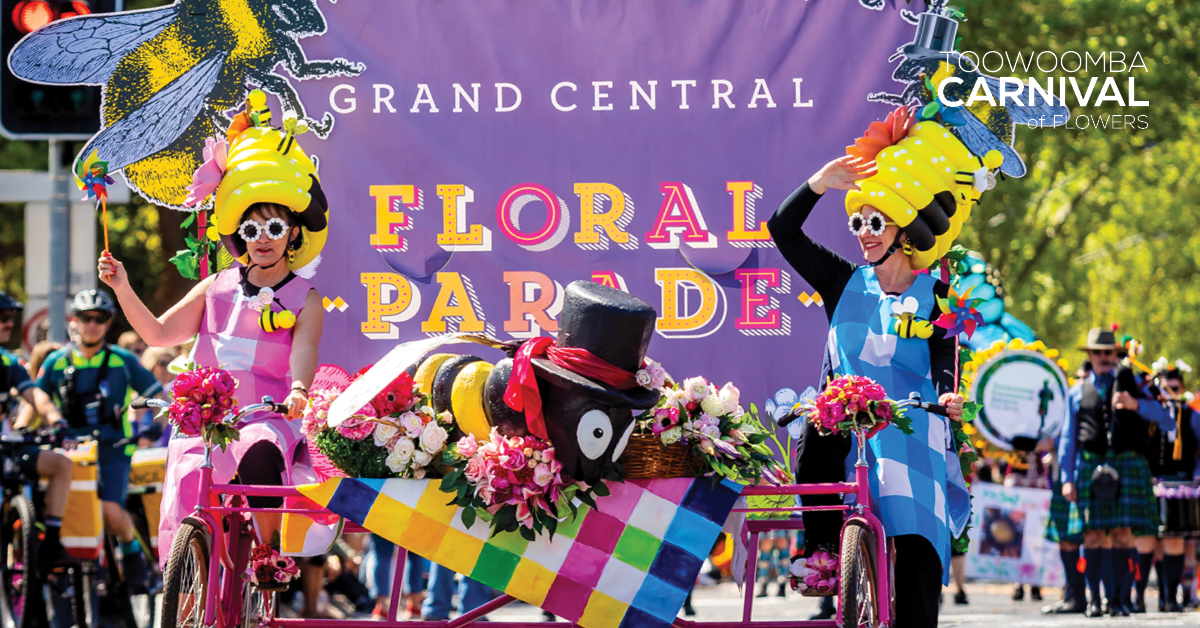
The Grand Central Floral Parade rolls through the city on Saturday 19 September 2026, and the park is the natural base camp for parade day — close enough to the route to walk, far enough to retreat for coffee when the crowds thicken. The FEASTival food program runs 26–27 September, and the Paw Parade closes proceedings on 4 October. If you're planning a trip around the festival, the Carnival of Flowers day tours from Brisbane (from $89 adult) are built around exactly this park — more on that below.
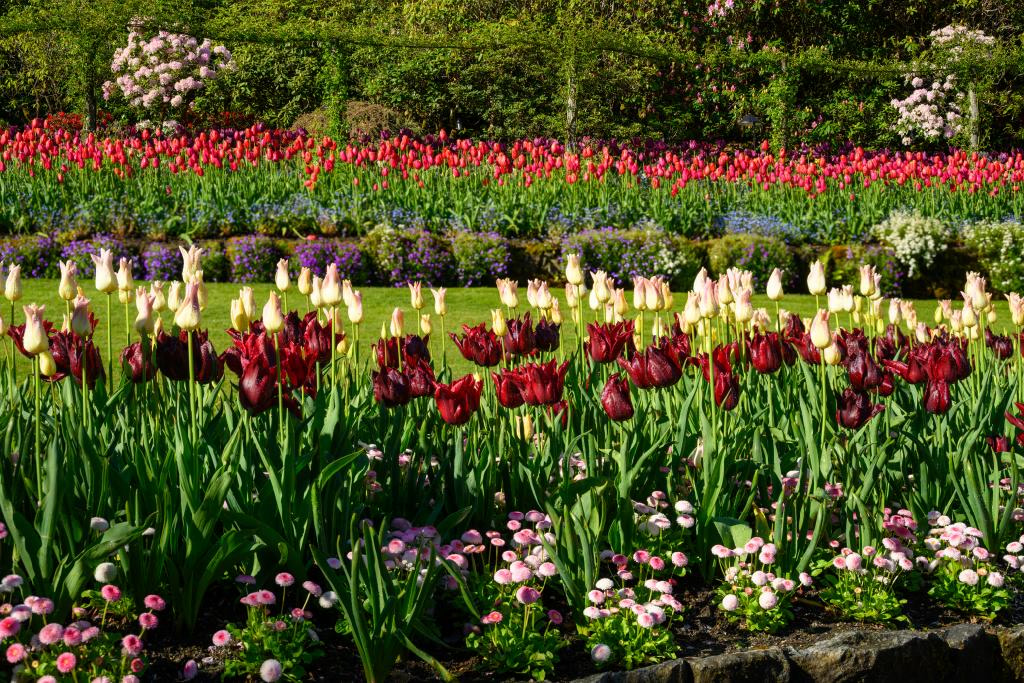
Spring is the obvious answer and also the correct one, but the park is not a one-act show. September and early October deliver the Carnival at full volume: the beds at their peak, the events calendar packed, the city buzzing and accommodation booked accordingly. October after the festival is the connoisseur's window — the plantings are still magnificent, the crowds have gone home, and you can photograph the rotunda without forty other people doing the same. November brings jacaranda season, when the purple canopy across Toowoomba's older streets gives the park's surrounds a second, unofficial festival.
Autumn is the sleeper. April and May turn the deciduous avenues gold and red — a genuine cool-climate foliage display, rare enough in Queensland to justify the trip on its own. Winter is crisp, quiet and often frosty at this altitude; come mid-morning with a coffee and you'll have the gravel paths largely to yourself while the gardeners build next spring underneath your feet. Summer is greenest and hottest, best handled early or late in the day, when the canopy earns its keep and the lawns fill with local families after the heat breaks. There is, in short, no bad month — only different parks.
Queens Park is the easiest family outing in Toowoomba, and possibly in regional Queensland: free entry, serious playgrounds, endless lawn, big shade, toilets and picnic facilities all within a flat, pram-friendly walk of the city centre. The playground precinct absorbs hours — equipment for a genuine range of ages rather than the token toddler set — and the open lawns handle the overflow energy that playgrounds never quite exhaust. Pack a picnic or graze from the cafes across the road; either way the economics of the day are hard to argue with.
During the Carnival, the family calculus gets even better. The park's festival program is largely free, the markets and food stalls mean nobody has to agree on a restaurant, and the flowers — it turns out — genuinely land with children when they're planted at this scale and saturation. The one tactical note: festival weekends are crowded, so claim your patch of shade early and treat the playground as a mid-morning activity rather than a midday one. For a full itinerary built around small people, see our guide to Toowoomba with kids.

The display beds photograph best in the first two hours after sunrise, when the light comes in low from the east and the colours saturate instead of bleaching. Toowoomba's altitude helps here too — spring mornings are often still and cool, which means dew on the tulips and none of the midday shimmer that flattens flower photography. Work the long axes of the formal beds for depth, get low for the massed-colour shots, and save the rotunda for when the sun is fully up and the white timberwork can hold its own against the sky.
During Carnival, the crowds are part of the equation. Before 8am you can still shoot the beds clean; by 10am on a festival weekend you are photographing people enjoying flowers, which is honestly a better picture than most postcards anyway. Autumn offers the other great subject — the deciduous avenues in April light — and November's jacarandas turn every street bordering the park into a purple-ceilinged corridor. Bring a polariser for the foliage seasons, and remember the park faces no particular direction: there is a good angle somewhere at every hour, which is more than most gardens can say.
One of Queens Park's structural advantages over almost every other great Australian garden is that it sits in the middle of a functioning city rather than at the end of a drive. Margaret Street and the surrounding CBD blocks — a few minutes' walk from the park gates — carry Toowoomba's cafe scene, which has grown into one of the strongest in regional Queensland: proper espresso, ambitious brunch menus and bakeries that take their laminated pastry seriously. The sensible rhythm is coffee first, gardens second, lunch third, with the park providing the digestif stroll.
During the Carnival the park itself joins the catering effort, with market stalls and food vendors through the festival weekends and the FEASTival program (26–27 September in 2026) putting food and drink formally on the bill. Outside festival season, picnics remain the local orthodoxy — there is shade, lawn and table space in quantities that make a packed esky the correct decision. For the full rundown of where the locals actually eat, our where to eat in Toowoomba guide covers the territory street by street.
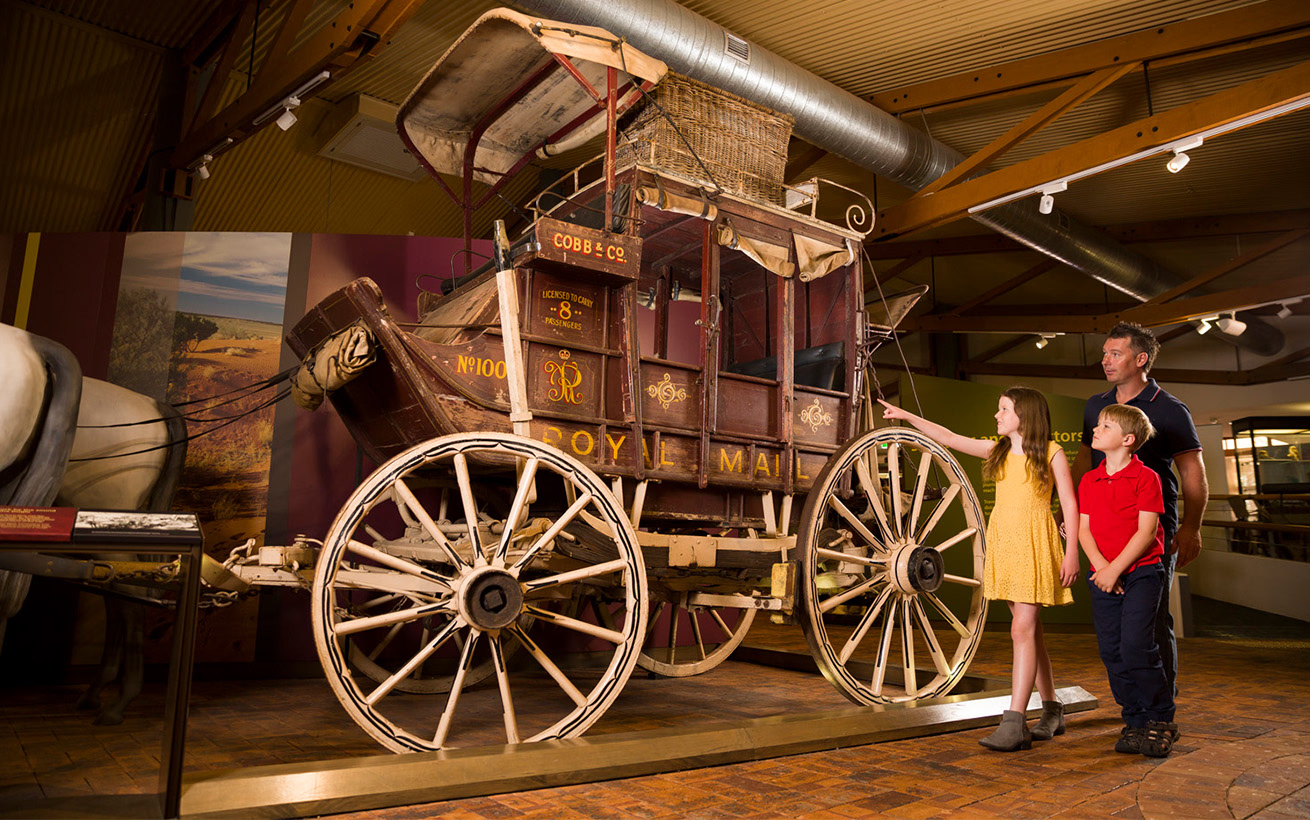
Directly opposite the botanic gardens on Lindsay Street stands the Cobb+Co Museum, home of the National Carriage Collection — dozens of horse-drawn vehicles spanning the full working vocabulary of pre-motor Australia, from grand coaches to the drays that actually built the Darling Downs. The museum and the park make a natural double bill: an hour or two among the carriages, then across the road to the beds and lawns, with the whole pairing achievable on foot from any CBD accommodation. It is the rare museum-and-garden combination where neither half feels like the compromise.
The sequencing advice is simple: museum in the middle of the day, park in the golden hours either side. The gardens want morning or late-afternoon light; the carriage halls are indifferent to the clock and gloriously indoors if the mountain weather turns. Families in particular should note the museum's hands-on galleries as the wet-weather insurance policy for a Queens Park day. Read the full guide to the Cobb+Co Museum before you go — there is more in there than the name suggests.
From Brisbane, Toowoomba is roughly 125 kilometres and about 1.75 hours by coach, the last stretch climbing the Toowoomba Range to the city's perch around 700 metres above sea level on the Great Dividing Range, at the edge of the Darling Downs. The climb is the trip's one theatrical moment — the highway winds up the escarpment and the temperature drops a few honest degrees by the top — and it is also the practical reason Toowoomba grows gardens Brisbane cannot. Once you're up, Queens Park is effortless: city centre, bounded by Margaret and Lindsay Streets, walkable from anywhere in the CBD.
If you're driving during Carnival, treat parking as a competitive sport with an early starting gun — street parking near the park exists but evaporates on festival weekends, and the surrounding blocks fill by mid-morning. Arriving before 9am solves most of it. Outside festival season, parking is straightforwardly easy, which is one more argument for the October, autumn and winter visits. The park itself is flat, the paths through the display gardens are sealed and mostly level, and accessible facilities are available — this is one of the most wheelchair- and pram-friendly major attractions in the region.
Every Cooee Tours Carnival itinerary treats Queens Park as the anchor stop — it is where the day's garden trail begins, with enough time allocated to do the display beds properly rather than at a route-march pace. Day tours during the Carnival of Flowers run from Brisbane CBD and Chermside from $89 per adult ($69 child), from the Gold Coast (Helensvale) at $99/$79, and from the Sunshine Coast (Maroochydore and Caboolture) at $109/$89. The deluxe day tour at $159 adds a two-course lunch, and add-ons include a Spring Picnic Lunch at $22 — eaten, naturally, in the park — and Premium Coach Seating in the first four rows for $5.
The coach case is strongest during the festival itself: someone else fights the Range traffic and the parking, the commentary fills the ride up, and the itinerary strings Queens Park together with the other Carnival essentials in an order that actually works. Travellers wanting more than a day can look at the 2-day weekend tours from $595 or 3-day from $880. Browse all Toowoomba tours for the full range, or call 0409 661 342 to talk through dates — September departures book out earliest, every year, without exception.
A few things the brochures skip. First, the park is genuinely free and genuinely open — there is no premium enclosure hiding the good flowers, which occasionally surprises visitors trained by ticketed festivals elsewhere. Second, the weather at 700 metres is not Brisbane's: spring mornings can be single-digit and festival afternoons can turn windy, so a layer you can shed is worth its space in any bag. Third, the gardeners are working the beds most weekday mornings and are, in our experience, happy to tell you what's planted and why — the best free horticultural education in Queensland, if you ask politely.
The verdict is uncomplicated. Queens Park is the single most reliable thing to do in Toowoomba: free, central, beautiful in at least four distinct ways per year, and the beating heart of the Carnival of Flowers when September comes around. If you see one thing in the Garden City, it is this; if you see ten things, you will still probably start here. Give it more time than you think it needs — the difference between a good visit and a great one is the second, slower lap of the display beds — and if you can possibly arrange your year around 18 September to 5 October 2026, do exactly that.
Here is the shape of a morning that works. Arrive at 8am — earlier during the Carnival — and start on the botanic side while the light is still low and the paths are quiet; this is when the beds photograph best and when the gardeners are out with their barrows and their opinions. By 9.30 you have earned coffee, and the CBD cafes are a five-minute stroll away; take it back to a bench under the trees rather than drinking it indoors, because the whole point of Toowoomba in the cool months is being outside in air that actually feels like air. Return via the western parkland, walk at least one full tree avenue end to end, and let the rotunda be the last photograph rather than the first.
If children are aboard, invert the order: playground first while patience is plentiful, gardens second while the small people are pleasantly tired, picnic third as the reward for everyone. If the Cobb+Co Museum is on the day's card, slot it from 11am and re-emerge for a late picnic lunch in the park. Half a day covers the ground honestly; a full day during the Carnival — markets, music, parade — barely does. The park scales to whatever time you give it, which is precisely why locals never stop coming back.
Queens Park makes most sense when you understand where Toowoomba sits: on the crest of the Great Dividing Range at the edge of the Darling Downs, one of Australia's great agricultural regions. The same combination that fills the Downs with crops — deep volcanic soils, reliable seasons, cool nights — is what lets a public park grow tulips in Queensland and elms to full cathedral height. The park is, in a real sense, the ceremonial front garden of an entire farming region, and the Carnival of Flowers began as exactly that: a city showing off what its soil and its altitude could do.
That context is worth carrying with you as a visitor, because it turns a pleasant stroll into a legible landscape. The display beds are the polished end of the same story you'll see from the coach window on the way up — paddocks, gardens and street trees all running on the same generous soil. Travellers doing Queens Park as a day tour from Brisbane get the whole arc in a single day: up the Range, into the Garden City, through the park at its peak, and back down before dinner. It remains one of the best-value single days in Queensland travel, and the park is the reason why.
Toowoomba is one very good destination out of a very long list. Cooee Tours has been running coaches since 1974 — start with the continent, the country next door, or somewhere further afield.
Every destination below has its own travel guide, things-to-do pages and tour range — built the same way as this one.