The National Carriage Collection
The headline — decades of Australian horse-drawn history under one roof, from royal-occasion carriages to the battlers' working vehicles.
Home of the National Carriage Collection — the coaching era that built the Darling Downs, told through magnificent horse-drawn vehicles, hands-on heritage trades and galleries the kids actually enjoy.
Before the railway conquered the Range, Cobb & Co's coaches stitched inland Australia together — and Toowoomba, gateway to the Downs, sat at the heart of the network. The Cobb & Co Museum, part of the Queensland Museum network, keeps that era breathing: it houses the National Carriage Collection, a superb assembly of horse-drawn vehicles from grand coaches to working drays, presented with the stories of the people who drove, built and depended on them.
What lifts it beyond a static collection is the making: heritage trades — the blacksmithing, leatherwork and wheelwrighting that kept the coaches rolling — live on through workshops and demonstrations, and the family galleries give kids levers to pull rather than labels to read. It's Toowoomba's best wet-weather card and a genuine attraction in any weather.
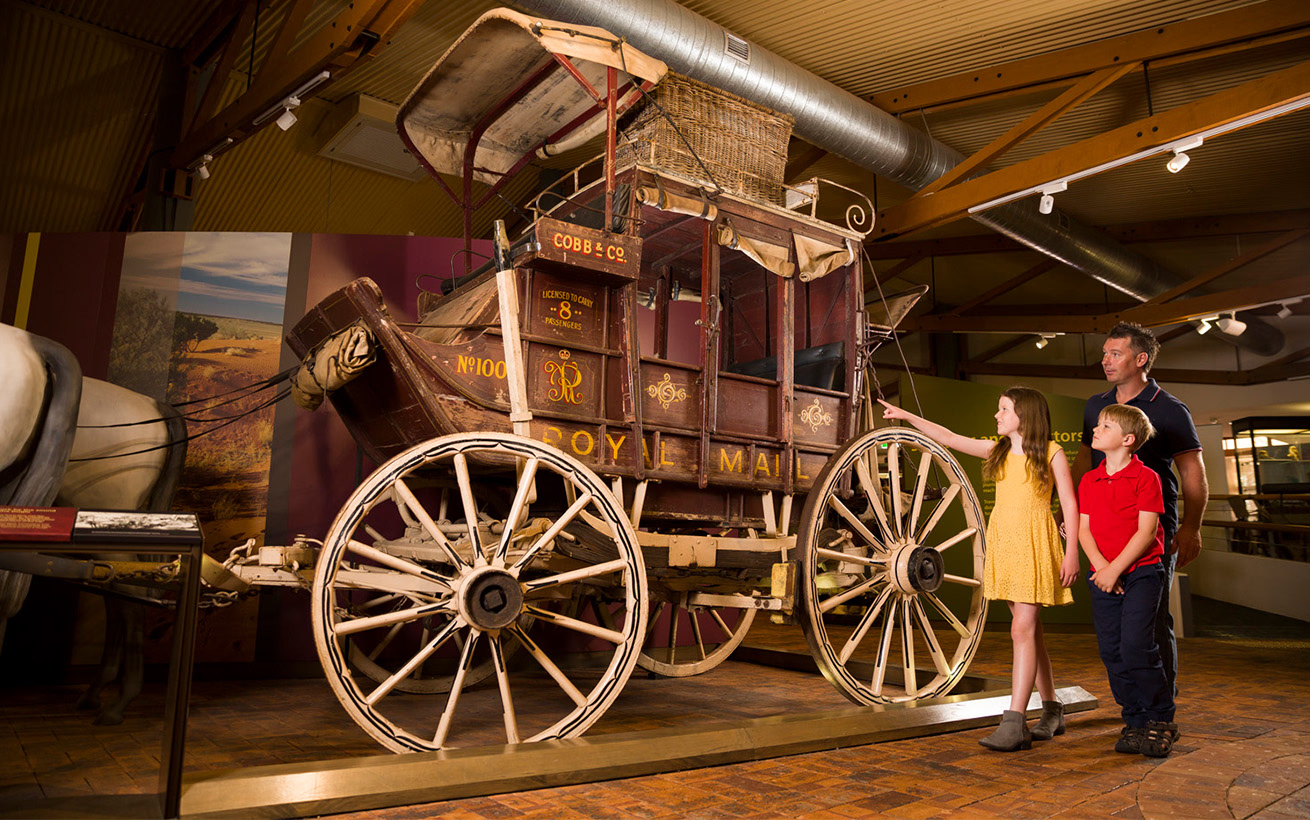
The museum's heart is the National Carriage Collection — dozens of horse-drawn vehicles spanning the full working vocabulary of pre-motor Australia, from grand drags and hansom cabs to the buckboards and drays that actually built the Downs. The Cobb & Co coaches headline, naturally: the company whose name became Australian shorthand for overland travel ran its last route in 1924 from this very region, which is why the national collection lives here and not in a capital.
What elevates the halls beyond static display is context done well: vehicles presented with the roads, distances and human endurance they implied, so a mail coach reads not as furniture but as the 1880s equivalent of a regional airline — timetabled, uncomfortable, indispensable. Allow a full hour for the carriage halls alone; visitors who budget twenty minutes are still there at ninety, being audibly educated by their own children reading the panels aloud.
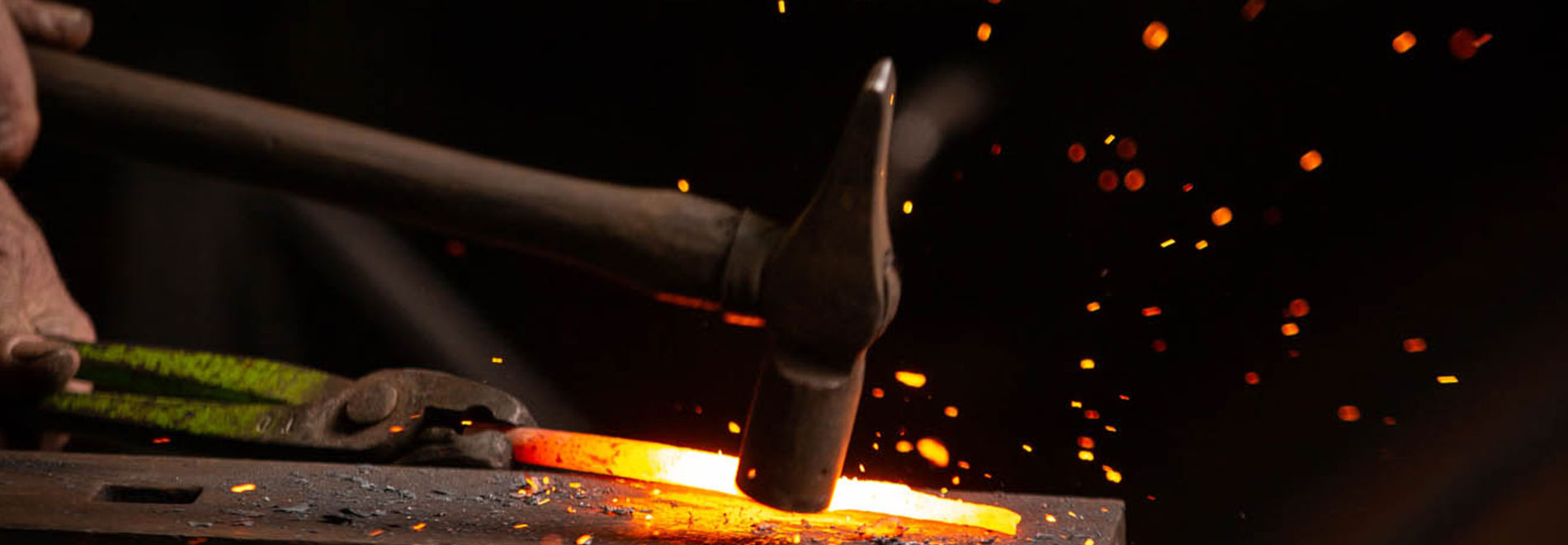
The museum's second act is alive: working heritage trades — blacksmithing, wheelwrighting, leatherwork, silversmithing — practised in real workshops by artisans who teach as they demonstrate. On workshop days the soundtrack alone justifies the visit: hammer on anvil, forge-draw, the specific ring of skills that built every vehicle in the halls next door. Demonstration schedules vary, so checking the museum's calendar before your visit is the one piece of planning this page insists on.
For the hands-on inclined, the museum runs genuine workshop courses — day-length introductions to the trades under artisan instruction — which have quietly become one of regional Queensland's great experience gifts. Watching a wheel come together from spokes, felloes and a heat-shrunk tyre reframes the entire collection: the carriages stop being antiques and become engineering, which is exactly the museum's intended trick.
The essentials, current at writing and worth confirming on the museum's own site: open daily through the core hours, closed only the major public holidays; paid entry with family, concession and local-resident structures that keep it accessible; and the workshops and special exhibitions layered over the permanent halls on their own calendars. On-site parking sits alongside, and the location — Lindsay Street, directly opposite Queens Park — makes the museum the single easiest add-on in Toowoomba tourism.
Timing craft: mornings run quietest, school-holiday afternoons liveliest; the trades demonstrations cluster on set days; and ninety minutes is the honest median visit, stretching toward three hours for families who meet the discovery spaces. During the Carnival, the museum's proximity to the festival's main stage makes it both the rain plan and the crowd-escape — the two roles our festival guides keep assigning it, with this page as the promised detail.
Cobb & Co ranks among Queensland's best family museums for unfussy reasons: the exhibits are big, mechanical and story-rich — 'giant old vehicles' being a genre children rate above most art forms — and the interpretation runs hands-on wherever conservation allows. The discovery spaces are built for younger visitors, the trades demonstrations supply sparks and noise at documentary scale, and the whole visit paces naturally in the forty-five-minute blocks small attention spans actually run on.
The parental logistics score equally well: pram-friendly circulation, facilities where you need them, a picnic-ready park directly across the road, and the cafe fallback when the snack economy demands it. Pair the museum morning with a Queens Park playground afternoon and you've assembled the city's classic family day — a pairing so standard the festival's family crowds run it in both directions all September long.
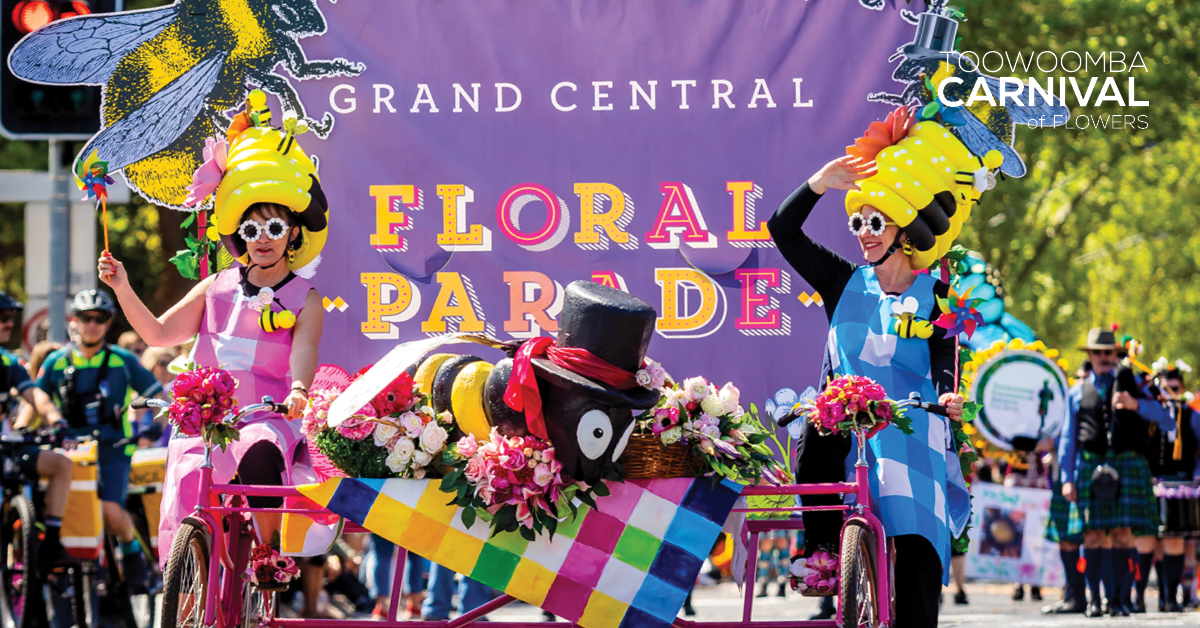
During the Carnival the museum plays three roles worth planning around. The rain card: when September showers pass through, the carriage halls absorb an hour in comfort while the beds rinse — and the post-shower gardens, as our photography guide preaches, are worth the wait. The crowd escape: on feature weekends when Queens Park runs at capacity, the museum across the road runs merely pleasant, and the contrast restores festival stamina. The context engine: an hour among the coaches explains the pre-festival Downs — the roads, the isolation, the toughness — and sharpens everything the festival celebrates about what the region became.
The practical version: festival visitors with ninety spare minutes should spend them here, and the itineraries in our Carnival library flag exactly where that block fits. Day-tour guests, note the honest constraint — the coach clock rarely allows it, which is one more entry in the case for the overnight formats.
The museum's name carries Australia's most storied transport brand. Founded in 1853 by Freeman Cobb and partners on the Victorian goldfields, Cobb & Co built the continent's overland circulatory system — at its height harnessing thousands of horses daily across a network that stitched the eastern colonies together, carrying mail, gold and people over roads that barely deserved the noun. The company followed the frontier north into Queensland, and it was here on the Darling Downs that the story closed: the last Cobb & Co coach ran in 1924, outpaced finally by the railways and the motor car.
The name outlived the network as pure legend — Henry Lawson wrote it into the national songbook, and 'Cobb & Co' still means the heroic-uncomfortable era of Australian distance. Housing the national collection an easy ride from that final route gives the museum its quiet authority: this isn't a themed attraction borrowing a brand, it's the actual estate of the story, kept where the story ended.
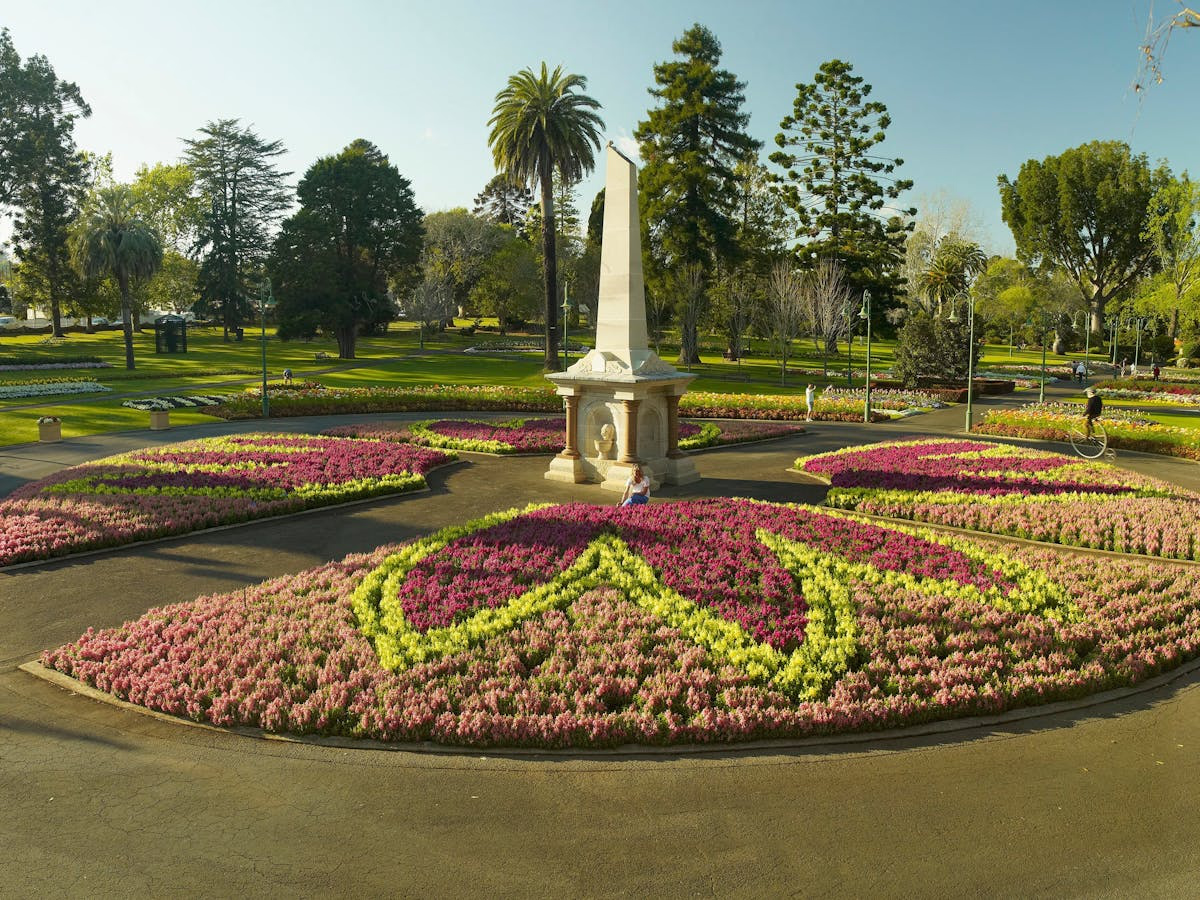
The museum anchors Toowoomba's most walkable visitor cluster. Directly opposite: Queens Park and the botanic gardens — festival centrepiece in September, heritage stroll year-round. Within a few blocks: the CBD's cafe belt and laneway street art, covered lovingly in our other guides, plus the gallery and theatre quarter for the culture-inclined. The practical upshot is that no one should visit Cobb & Co in isolation: the museum morning, park picnic and laneway-coffee afternoon assemble themselves into the city's easiest full day, no vehicle required between stops.
Regional pairings extend the theme for drivers: Highfields' pioneer village half an hour north deepens the settler-era thread, and the Jondaryan woolshed westward completes the working-heritage trilogy — a genuinely good history day-trip triangle that the day-trip matrix in our best-of guide files under 'west, when the heritage itch strikes'.
The honest audience audit: families — first-order recommendation, ninety minutes to half a day, demonstrations day if possible. History and engineering minds — the collection is nationally significant and the trades are the rare living version; allow half a day and check the workshop calendar. Festival visitors — the September roles above; ninety minutes well spent. The mildly curious — an hour converts most sceptics, usually somewhere between the mail-coach panel and the forge. The only poor fit is the visitor racing a day-tour clock, for whom the museum waits patiently across the road from the gardens they came for — a reason to come back that has been recruiting return visits since long before this page existed.
Final practical word: entry fees, hours and demonstration days move — confirm on the museum's official channels before travelling, and during the Carnival, book everything else early enough that the museum hour stays a pleasure rather than a casualty. The coaches have waited a century; they'll wait for good planning too.
A shortlist for the time-poor, drawn from years of visitor consensus. The royal mail coaches — the network's workhorses, scarred authentically by actual service. The grand private carriages — colonial wealth on springs, all button-leather and implication. The bullock dray — the vehicle that genuinely built the Downs, honest as a shovel. The hearse — every visitor's macabre favourite, magnificently sombre. The wheelwright's bench mid-project in the trades wing. The harness wall — leatherwork as landscape. The children's discovery vehicles, climbable by design. And the last-route storyboard, where the 1924 ending lands with more weight than any label should manage.
Walk those eight with the context panels and you'll have taken the museum's true measure in an hour; everything further is compounding interest. Repeat visitors report the list reorders itself each time, which is the reliable sign of a collection with depth beyond its greatest hits.
Beyond spectacle, the workshops carry a curriculum worth naming. Blacksmithing demonstrates the pre-industrial supply chain in miniature — every hinge, tyre and axle box in the halls began at a forge like this one. Wheelwrighting shows engineering tolerance without mathematics: a wooden wheel is a compression structure tuned by eye and ear, and watching the tyre shrink onto the felloes remains the museum's single best minute of applied physics. Leatherwork explains the harness wall — thousands of hours of stitching that the coaching economy consumed and renewed continuously.
The pedagogical trick is proximity: the skills demonstrate metres from the artefacts they built, so cause and object stay joined. School groups drilled on 'primary sources' meet the rarest kind — sources still warm from the forge — and adult visitors routinely leave having booked a workshop, which is how heritage actually survives: one converted spectator at a time.
Each season assigns the museum a different job. September: the Carnival roles this page has already argued — rain card, crowd escape, context engine. School holidays: the family flagship, discovery spaces at full hum. Winter: arguably its best season — crisp museum weather, forge heat welcome, and the heritage city outside matching the halls' mood. Event days: the museum's own calendar of trade shows, themed exhibitions and heritage festivals, worth checking before any visit and occasionally worth planning one around.
The year-round constant is the pairing with Queens Park opposite — whatever the season is doing to the gardens, the museum-and-park double remains Toowoomba's most weather-proof, generation-proof half day, which is why every guide in this series keeps handing visitors across the road in one direction or the other.
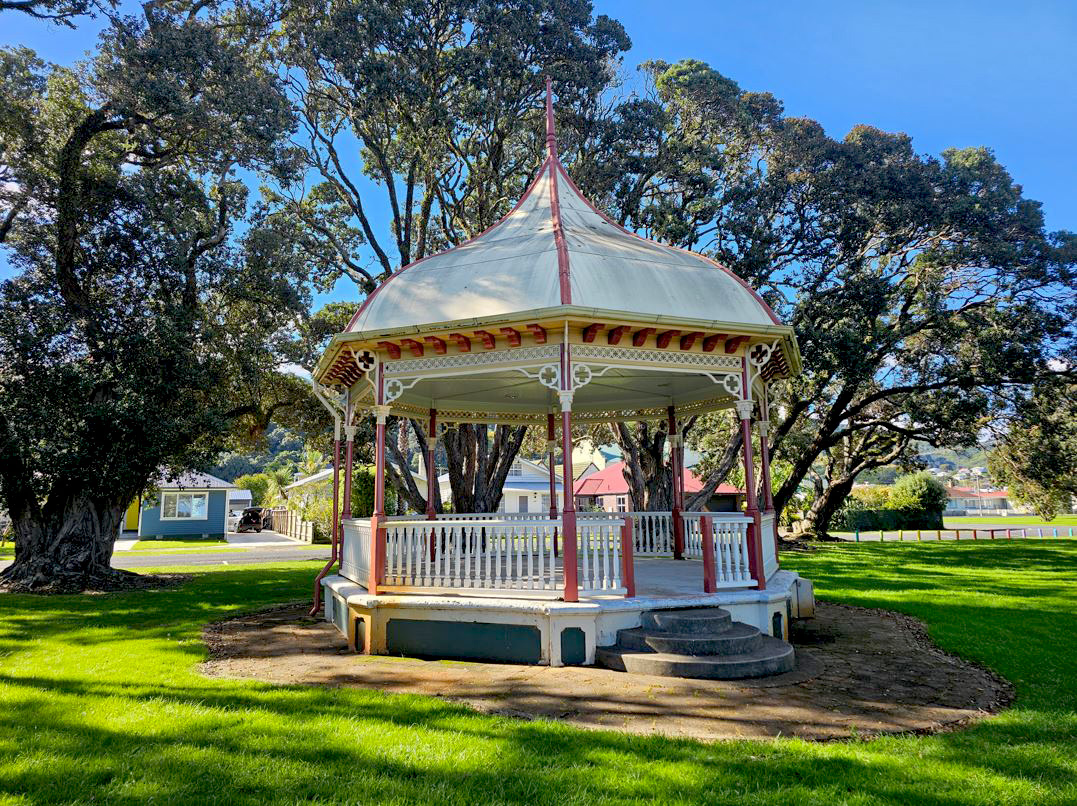

Self-drivers find it easiest of all Toowoomba attractions: Lindsay Street frontage, on-site parking, and the CBD grid delivering from any approach. Festival-season drivers should apply this site's standing September advice — park once, early, and walk the precinct — since the museum shares its street with the festival's main stage. Car-free visitors are equally served: the walkable core puts the museum ten flat minutes from the CBD's accommodation and cafes, and coach guests on the weekend tours meet it as a scheduled or optional stop depending on season and running sheet.
The distance arithmetic from the coast mirrors the festival's: 125km from Brisbane, the Range climb included — which is why most out-of-region visitors sensibly meet the museum inside a broader Toowoomba day or weekend rather than as a single-destination run. The pairing guides throughout our Toowoomba library exist for exactly that assembly job.
How long do we really need? Ninety minutes median, an hour minimum, half a day for families and enthusiasts on demonstration days. Is it worth it without kids? Emphatically — the collection is nationally significant and the trades wing plays adult curiosity even harder than children's. Accessible? The halls circulate well for wheels of all kinds; workshop viewing areas included. Photography? Permitted for personal use through the halls — the forge's light is a gift, and the carriage lines reward a wide lens. Cafe and shop? Both, with the shop's trades-made pieces ranking among Toowoomba's genuinely defensible souvenirs.
And the September question — can we squeeze it into a Carnival day trip? Honestly, rarely: the festival clock is tight, which is why this page keeps company with the overnight formats in our guides. The museum is the reason day-trippers book return visits — a conversion this city has been running smoothly since 1949 in one direction and 1853 in the other.
Strip the logistics away and Cobb & Co earns its place in this library for the same reason the Carnival earns its crowds: it's Toowoomba keeping faith with its own story at national standard. The city that plants forty million petals for a founding promise also keeps the continent's coaching estate polished, its dying trades alive at the forge, and the whole institution priced for families — civic seriousness wearing visitor-friendly clothes, which is this region's defining habit.
So file the museum where the locals do: not as the rainy-day compromise but as the other half of Lindsay Street — gardens on one side, the road that reached them on the other, and a century and a half of Downs determination holding the two together. Cross between them in either order; the day, like the city, works both ways.
Visitors the halls have hooked can pull the thread further through this site's Toowoomba library: the Carnival history guide carries the city's festival lineage from 1949; the best-of guide's western day-trip matrix reaches Jondaryan's woolshed country where the working-heritage story widens; and the weekend tours put Spring Bluff's railway chapter — the technology that ended the coaching era — onto an actual itinerary, which is heritage touring's neatest full circle. The Downs keeps its history unusually legible: roads, rails and gardens, each explaining the next, with Lindsay Street's museum as the index page.
However far you follow it, start where this page leaves you: across the road among the flowers, holding the coaching era's hard-won distances in mind. The gardens read differently once you know what it cost to reach them — which may be the museum's finest exhibit, and it's installed permanently in the visitor.
The headline — decades of Australian horse-drawn history under one roof, from royal-occasion carriages to the battlers' working vehicles.
Blacksmithing and traditional crafts demonstrated and taught — check the museum's program for workshop dates if you want hammer-in-hand time.
Interactive spaces built for children — the museum understands that history lands better with something to touch.
The museum is a favourite seasonal stop on our two-day Toowoomba touring — and the group-charter wet-weather ace.
See the Weekend Tours| Getting there | Lindsay Street, on the city fringe beside Queens Park — an easy pairing with the gardens. |
|---|---|
| Cost | Entry is ticketed; check current prices, hours and workshop programs on the museum's official website before visiting. |
| Time needed | Ninety minutes covers the collection; add time for demonstrations and the family galleries. |
| Combine with | Queens Park next door, the heritage walk through the CBD, or as the rainy-day swap for any outdoor stop. |
The museum asks for a different kind of photography than the gardens across the road. Queens Park hands you colour by the acre; the carriage galleries deal in texture — cracked harness leather, spoked wheels throwing shadows, coach bodies whose lacquer has gone the deep, uneven brown of things that were actually used. The instinct is to stand back and photograph whole vehicles, and the results are almost always dull: a big dark object in a big dark room. Work close instead. A hub boss, a folded leather curtain, the painted lettering on a mail coach door — these carry the century better than any wide shot, and they photograph beautifully in the galleries' controlled light.
Come prepared for indoor conditions. Light levels are kept gentle to protect the collection, so a lens that opens wide will earn its place in the bag, and a steady hand beats a hurried one. Ask staff on arrival about any photography conditions on the day rather than assuming — policies for flash and tripods vary in collection spaces everywhere, and the front desk will set you straight in thirty seconds. Then slow down. The signwriting alone rewards a deliberate lap: coachbuilders lettered their work with real pride, and the surviving liveries are a small museum of Victorian graphic design hiding inside the larger one.
The heritage trades wing is the action photography, and it plays by opposite rules: movement, sparks, steam and human hands doing difficult things at speed. Time your visit for a demonstration day if you can, stand where the artisans direct you, and shoot the work rather than the worker's face — the glowing metal on the anvil tells the story. If you're building a Toowoomba photography trip around September, our Carnival of Flowers photography guide pairs naturally with a museum morning: soft indoor texture before lunch, massed colour in the parks after it.
The best thing the museum does is change how the Darling Downs looks on the drive home. Once you've stood in front of the mail coaches and understood the arithmetic of the horse-drawn era — stages measured by what a team could manage, changing stations spaced accordingly, pubs and stores growing up around each stop — the map of the Downs starts reading as coaching geography. Towns sit where they sit for reasons the collection explains. The main streets are wide because vehicles with teams needed room to turn. Even the Range crossing itself, the winding climb every visitor from Brisbane makes, is the modern descendant of the problem that occupied coach operators for decades: how to get wheels, weight and passengers up a 700-metre escarpment without disaster.
There's a neat symmetry in arriving by coach to see the coaches, and it remains the least stressful way to do it. Cooee Tours runs day tours up the Toowoomba Range from Brisbane — about 125 kilometres and an hour and three-quarters, from $89 per person — and the free time in the city centre sits within an easy walk of the Lindsay Street precinct, so the museum and Queens Park can share one unhurried visit. Browse the options on our Toowoomba tours page; the climb up the escarpment from a high coach seat, valley falling away behind you, is the closest thing modern travel offers to the view the 1880s passengers paid for.
For groups, the museum is close to purpose-built. The galleries are level, the pacing is self-directed, the seating is regular, and the subject matter lands hardest with visitors who remember when some of these trades were still working trades. Our seniors tours are built around exactly this kind of day — door-to-door coach travel, no parking, no rush, and a destination where an hour's wandering keeps producing conversation for the ride home.
Most visitors give the carriage collection forty minutes and leave satisfied, which is fair — it's a generous forty minutes. But the museum belongs to the small club of collections that repay a deliberately slow second hour, and the method is simple: choose three vehicles and refuse to move on quickly. Read every line of the interpretation. Count the seats and imagine them filled, in summer, on an unmade road, for ten hours. Find the repairs — the replaced spoke, the patched panel — because the mends are where the working life shows. A drag or a dray examined this way stops being an exhibit and becomes evidence, and the whole gallery reorganises itself around what you now know.
The slow visit also sets up the best kind of Toowoomba day, because everything nearby runs at the same walking pace. Queens Park is directly opposite for a picnic hour under the old trees; the CBD's street art laneways are a few blocks on, swapping nineteenth-century craft for twenty-first-century paint; and in September the whole precinct joins the Carnival of Flowers, when the museum makes the ideal calm counterweight to the festival crowds across the road. History in the morning, flowers in the afternoon, coffee in between — it's the Garden City's most reliable full-day formula, and it starts at the carriage doors.
Toowoomba is one very good destination out of a very long list. Cooee Tours has been running coaches since 1974 — start with the continent, the country next door, or somewhere further afield.
Every destination below has its own travel guide, things-to-do pages and tour range — built the same way as this one.