
How the Garden City became a mural city
Toowoomba's street art story is one of the quiet triumphs of Australian regional culture. Through the mid-2010s, the city's mural-festival program — most famously the First Coat festival — invited Australian and international artists to treat the CBD's blank walls as canvases, year after year. When the festival era wound down, something better than a memory remained: the walls kept their art, the city kept commissioning, and new works have continued arriving ever since. The result is a collection of dozens of large-scale murals threaded through the laneways and side streets of a heritage city centre — contemporary paint layered against Victorian sandstone and Federation brick in a way very few Australian cities, of any size, can match.
What makes it work is the collision. In most cities, street art colonises the industrial fringe; in Toowoomba it moved into the middle of one of Australia's best-preserved 19th-century streetscapes. A three-storey portrait gazes across a lane at iron lacework; abstract colour fields wrap the service walls of buildings older than the Federation; and the effect — old money architecture wearing new art — gives the CBD a texture that neither element could manage alone.
For visitors, the practical meaning is simple: Toowoomba's second-biggest attraction after the gardens is free, open every hour of every day, immune to weather in a way gardens never are, and dense enough to fill anything from a spare forty minutes to a full half-day. This guide covers how the collection came to be, how to walk it well, how to photograph it, and how to fold it into the rest of a Toowoomba visit.
What you'll find on the walls
The collection resists a single style, which is its strength. Expect photo-realistic portraiture at startling scale — faces several storeys tall, rendered with a patience that rewards standing still. Expect sweeping abstract and geometric pieces that turn utilitarian walls into colour. Expect Australian flora and fauna reimagined at mural scale, typography and sign-writing traditions given contemporary swagger, and playful smaller works hiding in the gaps between the showpieces. Because the program drew artists from around the country and the world across multiple festival years, the laneways read like a group exhibition assembled over a decade — different hands, different decades of style, one gallery.
And the gallery keeps rehanging itself. Walls change, new commissions appear, older works weather into a different kind of beauty or give way to fresh paint. Locals will tell you which pieces have survived since the festival years and which arrived last season — part of the pleasure is that no two visits find quite the same collection.
Walking the trail
There is no single official route, and honestly, that's the charm. The collection is dense enough in the blocks around Ruthven and Margaret Streets — the historic commercial spine — that a slow wander finds the bulk of it in a couple of hours. The method matters more than the map: work the laneways systematically. Every gap between buildings in the central grid is a candidate, the best pieces are often a deliberate half-block off the main streets, and the rule of the walk is simple — if a laneway looks like nothing, check it anyway. That's where the good ones live.
If you'd rather hunt with a list, Toowoomba Regional Council and the visitor information centre publish current mural maps, and they're worth grabbing precisely because the collection changes — a printed map from the counter beats an outdated blog post every time. But leave room for the unplanned find; the mural you turn a corner into always beats the one you navigated to.
A half-day, hour by hour
9:00am — coffee first. The specialty scene shares the same blocks as the murals, so open with a flat white from one of the CBD's serious rooms and plot your first laneways from the window. 9:30am — the Ruthven–Margaret core: work the grid methodically, main street to laneway and back, letting the density carry you. This is the richest hour. 11:00am — widen the loop into the surrounding blocks, where the finds get more occasional but more surprising, and the heritage facades between them earn their own photographs. 12:00pm — bakery or brunch stop; you will have earned it and passed six candidates. 1:00pm — the last stretch: any marked pieces from the map you haven't crossed, plus the works near the parks if you're combining with a garden visit. 2:00pm — done, caffeinated twice, camera full — with the whole afternoon left for Queens Park or the escarpment.
Pair it with the heritage streets
The murals share their blocks with the boom-era architecture of the Darling Downs' 19th-century capital — banks built like temples, verandahed pubs from the coaching era, and the beautifully restored Empire Theatre. Walking both at once is the two-for-one the CBD was accidentally designed for: contemporary paint in the foreground, colonial sandstone behind, and the whole history of the city legible in a single frame. Look up as you go — Toowoomba's ground floors have been modernised like every Australian main street, but the 19th century survives intact from the awnings upward. Our heritage walking guide covers the buildings; do both in one loop and you've read the whole city in an afternoon.
The cafe pairing
No Australian art trail comes with better catering. Toowoomba's cafe culture has outperformed its postcode for over a decade — the altitude breeds coffee rituals, and the CBD holds enough serious rooms within the mural grid that you're never more than a block from the next flat white. Ground Up Espresso has long anchored the specialty scene; Baker's Duck is the pastry pilgrimage; The Finch flies the flag for Darling Downs produce. The practical upshot: structure the walk as coffee, murals, pastry, murals, brunch — the caffeine stops double as map-reading intervals, and the whole morning becomes the city's two best free-range attractions braided together. The coffee guide maps the rooms.
Photographing the murals
Street art photography has one counterintuitive rule: overcast light is your friend. Hard sun throws laneway shadows across the works and blows out saturated colour; a bright grey sky renders every pigment true. Shoot straight-on where the lane allows to keep the geometry honest, or exaggerate the angle deliberately for scale — a person standing at the base of a three-storey portrait tells the size story better than any caption. Early mornings give you empty lanes; weekends give you life in the frame. Choose your intent and time accordingly.
Etiquette travels with the camera. These are working laneways behind working businesses — mind delivery vehicles, don't block doorways, and treat private property lines as real. Credit artists where their signatures are legible if you're posting; the paint was labour. And if you find a wall mid-repaint, enjoy it — you're watching the collection's next chapter arrive.
Street art with kids
The trail is accidental family gold: flat, free, full of giant colourful things, and structured like a treasure hunt. Turn it into one deliberately — who can spot the next mural first, find an animal, find a face taller than Dad — and the CBD becomes a game board. The laneway distances are short enough for small legs, ice cream and milkshake resupply points are constant, and the whole outing costs nothing but the snacks. Pair it with Queens Park's playgrounds and you've built a full free family day in the middle of the city.
When to walk it
The trail is the rare all-season, all-weather Toowoomba attraction. Overcast and drizzle actually improve it — the colours saturate, the crowds thin, and the awnings of the heritage streets keep you largely dry between lanes. Winter's crisp blue mornings make for sharp shadows and sharper coffee appetites; summer is best walked early. During the Carnival of Flowers each September, the laneways offer a genuinely useful counter-programming move: when the gardens hit peak crowd in the late morning, the art trail absorbs the overflow beautifully — same city centre, fraction of the foot traffic.
Beyond the laneways
The mural collection is the headline, but it sits inside a broader public-art habit the city has developed — commissioned works, creative precinct projects and the ongoing additions that keep the collection alive. The visitor information centre is the best single source for what's new, what's commissioned and what's coming; ask what's been painted lately and you'll usually be pointed somewhere the maps haven't caught up with yet. And the habit is spreading through the region — keep an eye out in the Downs villages, where silo-and-wall art traditions have taken root across rural Australia.
Getting there and getting around
The trail's core is the flattest, most central attraction in Toowoomba: the Ruthven–Margaret grid sits in the middle of the CBD, ninety minutes from Brisbane up the Warrego Highway, with street and off-street parking through the centre (easy midweek, tighter on festival weekends — park wide and walk in). No tickets, no opening hours, no gear beyond comfortable shoes and a charged phone. Wheelchair and pram users will find the main streets and most key laneways manageable and level; a few rougher lane surfaces reward a quick visual check before committing, and the awning-covered main streets link everything in weather.
How a mural actually gets made
Standing under a three-storey portrait, it's worth knowing what you're looking at in labour terms. A large-scale mural is days to weeks of work: walls cleaned and primed, designs scaled up from sketches using grids or projection, boom lifts and scaffolds negotiated into working laneways, and then the long haul of blocking, detailing and weatherproof coating — often through whatever weather the Range decides to supply. Festival-era works were frequently painted in public over a week or more, with the artists' progress becoming a spectator event in itself; contemporary commissions follow the same rhythm. That's part of why the collection commands the respect it does locally: everyone watched the work go up, and everyone knows what it cost in hours. When you spot a wall mid-transformation on your visit — drop sheets, a lift, a half-emerged image — you're seeing the collection's most interesting state.
Toowoomba's place in the regional mural movement
Toowoomba's laneways sit inside a bigger Australian story. Over the past decade and a half, regional towns across the country discovered that large-scale public art does something main-street revitalisation programs struggle to: it gives people a reason to walk, linger and photograph — and it tells a town's story on the town's own walls. Silo art trails now stretch across the wheat belts, water towers wear portraits from the tropics to the Mallee, and mural festivals have remade the centres of dozens of regional cities. Toowoomba was an early and emphatic mover — its festival years put it on the national street-art map while most regional centres were still commissioning their first wall — and the depth of the collection still sets it apart. For travellers who collect regional art towns the way others collect wineries, the Garden City is one of the essential stops.
A photographer's shot list
If you're walking with intent, build the session around five frames. The scale shot: a person dwarfed at the base of the biggest portrait you find — nothing else communicates size. The collision shot: mural colour in the same frame as heritage detail — iron lace, sandstone, a Federation parapet — because that contrast is the collection's signature. The corridor shot: straight down a laneway with the work filling one wall, using the lane's geometry as natural leading lines. The detail shot: close on brushwork, drips and texture, where the labour lives. And the life shot: a local walking past without looking up, which says more about a mural city than any posed frame. Overcast sky, mid-morning, and patience with delivery vans complete the kit. The broader craft — light, timing, festival etiquette — is covered in our photography guide.
Make it a full Toowoomba day
The trail's best quality might be how neatly it slots into everything else. The classic combination: Queens Park and Laurel Bank in the morning light, murals-plus-lunch through the middle of the day, Picnic Point for golden hour — the definitive one-day Toowoomba, with the art trail as its connective tissue. The culture day: murals and heritage streets in the morning, Cobb & Co Museum after lunch, an Empire Theatre show in the evening. The wet-weather day: museum, cafes and laneways under the awnings, in whichever order the rain dictates. The festival day: during the Carnival of Flowers, use the lanes as your late-morning crowd escape, then rejoin the gardens when the tide ebbs. However you cut it, the murals are the attraction that makes the others work harder — the free, always-open middle of every good Toowoomba plan.
Respecting the collection
A word on keeping the gallery great. The murals survive because the city, the businesses whose walls they occupy and the visitors who come for them hold up their ends. Touch with eyes, not hands — oils and repeated contact age paint fast. Keep clear of parked vehicles, loading docks and doorways; the lanes work for a living. Report damage if you see it (the visitor information centre will know who to tell) rather than photographing it into fame. Buy something from the businesses whose walls you've enjoyed — the cafe beneath the portrait is not a coincidence, it's the ecosystem. And resist the urge to add your own mark anywhere, ever; the difference between a mural city and a tagged one is exactly that restraint. The collection is a commons. Walk it like one, and it'll still be growing when you bring the next visitor back.
Planning a repeat visit
Because the collection is alive, the trail rewards a second lap in a way most attractions can't. Six months is enough for new commissions to land, festival seasons bring bursts of change, and works you loved will read differently in a different season's light. Veterans of the trail develop a routine: grab the current map on arrival, walk the new additions first while attention is fresh, then revisit the favourites on the way through — checking how they're weathering, which is its own quiet pleasure. If Toowoomba is your regular escape (and once the coffee scene has you, it will be), the murals are the attraction that will be measurably different every single time. Not many galleries can promise that, let alone free ones with this much natural light.
One practical tip for the return visitor: photograph the works you like with their surroundings included, not just the art. When walls change hands or paint, your archive becomes a record of a collection that no longer quite exists — and comparing your visits becomes part of the tradition. The locals have been doing exactly that since the first festival lifts went up.
A short glossary for the walk
A few terms make the trail read better. A mural is the commissioned, sanctioned large-scale work — everything this guide celebrates; street art is the broader family it belongs to. A piece in the tradition's own language is a full, considered work; a paste-up is paper-based art applied to the wall, usually smaller and more ephemeral; a tag is the unsanctioned scribble that mural cities work hard to stay ahead of — and the presence of so few in Toowoomba's lanes tells you how much the collection is respected. Aerosol, brush and roller all appear across the collection, often in the same work: the crisp gradients are usually spray, the big colour fields roller, the fine portrait detail patient brushwork from a boom lift. Once you can read the techniques, every wall becomes twice as interesting.
Why it matters to the city
It's easy to file street art under decoration, but the laneways carry real civic weight. The murals turned service lanes into destinations, put foot traffic past shopfronts that never used to see it, and gave Toowoomba a second visual identity to set beside the flowers — younger, year-round, and utterly free to experience. For a heritage city, that's a delicate trick: growth without demolition, novelty without erasing the past, the 1880s and the 2020s sharing wall space on good terms. Visitors feel it as atmosphere; the city banks it as pride and as one more reason the ninety-minute drive from Brisbane keeps earning itself. When people say regional Australia's cultural gap is closing, this is what closing looks like — one primed wall at a time.
Quick answers
How long does it take? Two hours covers the core at a looking pace; a half-day adds the wider blocks, coffee and brunch. Does it cost anything? Nothing — it's a free, open-air, always-open gallery. Is there a map? Yes — current mural maps from the visitor information centre and Toowoomba Regional Council beat anything older online, because the collection changes. Is it good in the rain? Genuinely better: saturated colour, empty lanes, awnings overhead. Can I combine it with the gardens? That's the classic Toowoomba day — gardens in the morning light, murals and lunch in the middle, escarpment in the afternoon. Is it suitable for kids and prams? Very — flat, short distances, constant snack access.
The murals after five: an evening circuit
Most visitors walk the laneways in daylight and assume that's the whole show, but the collection keeps a second set of hours. From late afternoon the low western light rakes across the brickwork and gives the paint a warmth the midday sun flattens out — reds deepen, golds catch, and the texture of the walls themselves becomes part of the work. Then the shopfront and street lighting takes over, and a handful of the bigger walls turn theatrical: strong colour under artificial light against a darkening sky is a combination the daytime walker never sees. The CBD's compact grid makes the evening version easy — the same loop you'd walk at noon, started at five, delivers you to the Margaret Street dining strip exactly when you want to be there.
The practical shape of the circuit: begin on the eastern laneways while the sun is still doing its raking-light work, drift west as the daylight goes, and let the last twenty minutes run on street lighting alone. Stick to the main laneway spine and the well-lit blocks — this is a city-centre stroll, not an expedition, and the busiest murals sit on exactly the routes the dinner crowd uses. Photographers should stay for the blue hour, that stretch after sunset when the sky holds deep colour and balances the artificial light; it's the most flattering twenty minutes the murals get all day, and it changes with the season, so check sunset times and work backwards.
The evening walk also fixes the trail's one genuine limitation, which is that it has no natural finale — the murals simply stop when you stop. Ending at a restaurant table solves that with some style. Build the loop toward wherever you're eating, arrive as the kitchens open, and the street art becomes the first course of the night rather than an afternoon's loose end.


Spring pairing: the murals in Carnival season
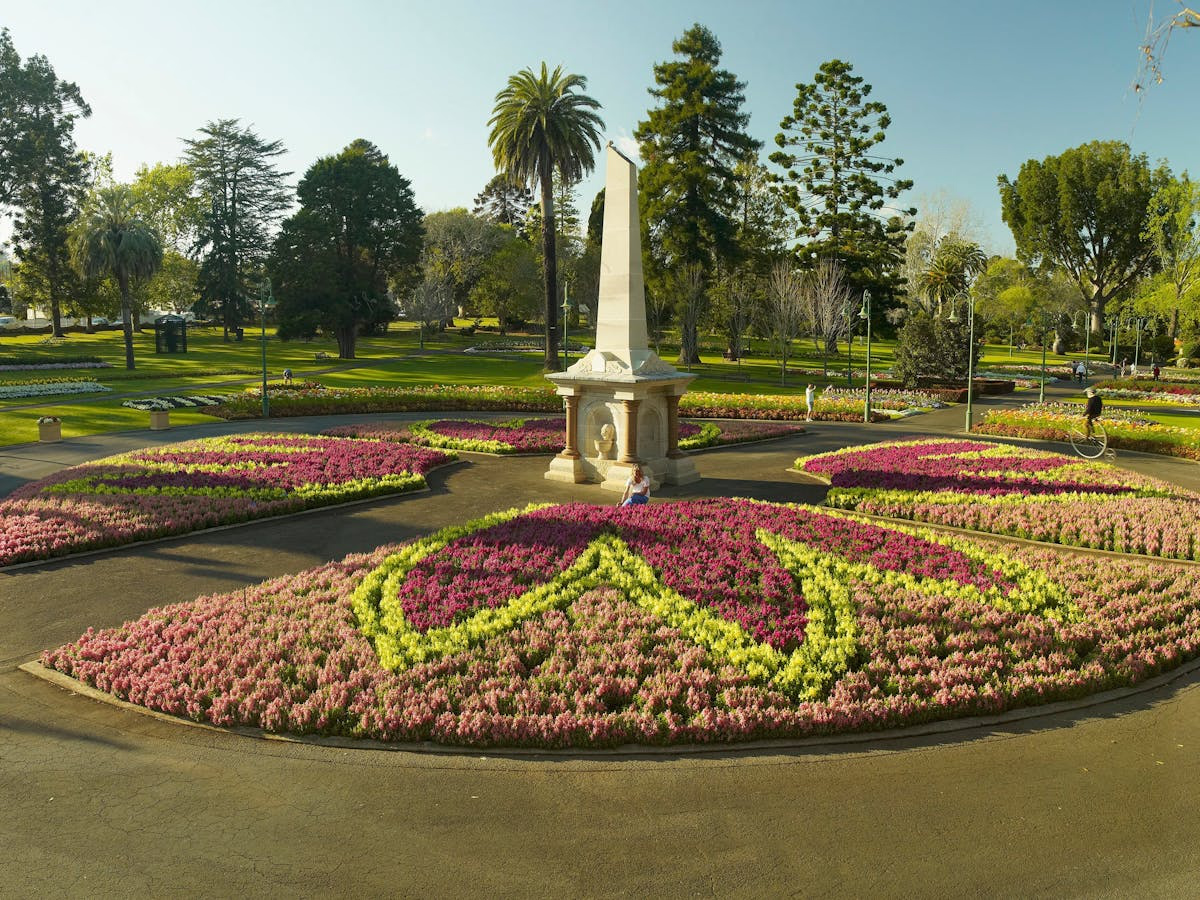
September is when the street art earns its keep as the city's counter-programming. The Carnival of Flowers fills the parks with visitors from 18 September to 5 October in 2026, and the laneways offer the festival crowd exactly what it needs: a free, uncrowded, shaded interlude between garden circuits. The walk from Queens Park's display beds to the mural spine takes about ten minutes, and the tonal shift — massed living colour to massed painted colour — is one of the best one-two combinations any Australian regional city can stage. Festival market stalls and food stands operate within a few blocks, so the whole spring precinct works as one continuous wander.
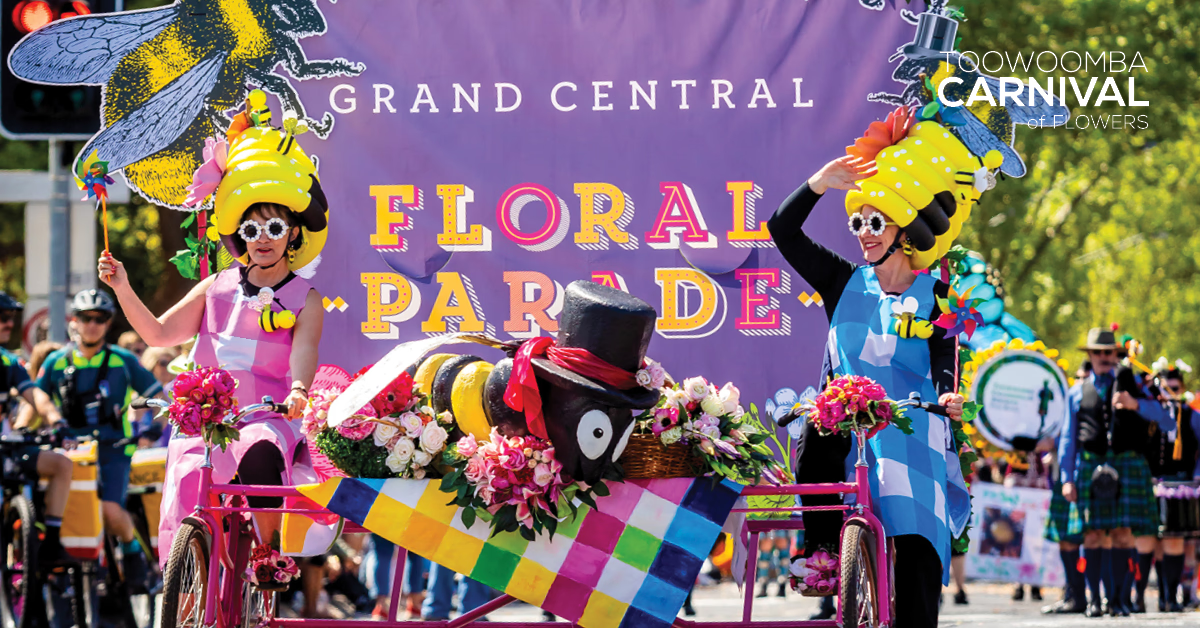
Parade Saturday — 19 September in 2026, one day only — is the trail's strangest and best hour. While the Grand Central Floral Parade owns the main streets, the laneways a block either side stay strangely quiet, which makes them the connoisseur's route between vantage points; and once the floats pass, the crowd disperses straight through the mural blocks, giving the walls their biggest audience of the year. If you're coming up the Range for the festival anyway, the pairing costs nothing extra but an hour. Our Carnival of Flowers day tours (from $89 per person, Brisbane pick-ups) build in CBD free time that covers a laneway loop comfortably, and the street art and culture guide in our travel-guide series maps the wider cultural precinct if you want to extend the walk to the galleries and theatres.
Outside the festival, spring still flatters the trail: jacaranda haze at the laneway ends in late October and November, mild walking weather, and the clear Range light that photographers cross the state for. The murals don't bloom, exactly — but for two months a year the city around them does, and the walk is better for it.

Add Toowoomba to your touring
Our Toowoomba day tours include free time in the city centre — enough for a laneway loop between the gardens and lunch, with a driver-guide who knows the current favourites. Transport from Brisbane included, from $89pp; weekend tours from $595pp give the trail a whole unhurried midday.
Keep exploring
- The street art walk, as a story — our narrative companion on the blog
- The heritage architecture trail — the buildings behind the paint
- The coffee and cafe guide — fuel for the laneways
- All ten essential Toowoomba attractions
The gardens made Toowoomba famous; the laneways made it interesting twice. Walk both on the same visit and you'll understand why the locals grin when day-trippers say they've come for the flowers — they know what's waiting half a block off the main street, and now so do you.