Toowoomba street art & culture
There's more to the Garden City than gardens. Toowoomba has quietly become one of regional Australia's street-art capitals, its laneways transformed by bold murals, and it backs that up with excellent museums, a grand art-deco theatre and a free regional gallery. Here's how to explore the murals and the culture on an easy, walkable day in town.
The street-art laneways
Toowoomba's street art is its coolest surprise — dozens of large-scale murals by Australian and international artists, clustered in the CBD laneways off Ruthven and Margaret Streets. The scene sprang from the First Coat festival in the 2010s; that festival has since wound up, but the murals endure as a permanent, self-guided outdoor gallery, and new works keep appearing. Follow the council's mural map or just wander the lanes with a coffee in hand.
Cobb+Co, the Empire & the gallery
For indoor culture, start at the Cobb+Co Museum, home to the National Carriage Collection of horse-drawn vehicles and hands-on heritage-trades workshops (open daily). The magnificent art-deco Empire Theatre — opened in 1911, rebuilt after a 1933 fire and beautifully restored in 1997 — is one of regional Australia's grandest venues, worth catching a show at. And the free Toowoomba Regional Art Gallery on Ruthven Street, the first public gallery in regional Queensland, is well worth an hour.
The city's grand old bones
Toowoomba wears its history well. The city has more than fifty state heritage listings, from the landmark City Hall to the timber pubs and Victorian and Federation facades of streets like Russell Street, and the 1847 Royal Bull's Head Inn out at Drayton. The National Trust runs heritage walking tours, and even a self-guided stroll reveals grand old banks, churches and shopfronts. It all adds up to a city that rewards looking up as you wander.
The First Coat era and what it left behind
The transformation of Toowoomba's laneways is a genuinely unlikely story. In the early 2010s this was a conservative regional city whose back lanes were what back lanes usually are — service corridors of bins, loading docks and blank brick. The First Coat festival changed that with startling speed, inviting Australian and international artists to treat the CBD's bare walls as canvas, and over a handful of festival years the city accumulated one of the largest outdoor collections of contemporary mural work in regional Australia. That the festival itself has since wound up matters less than you might think: the walls stayed painted, commissioning continued, and the laneways settled into their new identity as a permanent, free, always-open gallery.
What makes the collection interesting a decade on is that it behaves like a living archive rather than a finished monument. Street art weathers, buildings change hands, and new commissions go up over old ones — so the laneways you walk this year are not quite the laneways of last year, and repeat visitors make a sport of spotting what has changed. That churn is the medium's nature, and it is worth embracing rather than mourning: no printed map is ever perfectly current, and half the pleasure is turning a corner onto something the guides have not caught up with yet. Treat the CBD as a gallery that rehangs itself continuously, because that is precisely what it is.
Walking the laneways: a practical route
The mural trail needs no ticket, no booking and no fitness — just shoes and an hour or two. The works concentrate in the grid of lanes and side streets off Ruthven and Margaret Streets, so the practical method is to start anywhere central, pick a laneway, and let each discovery pull you toward the next. The council and Visit Toowoomba publish mural maps if you like structure, and our own street-art walk blog lays out a tested route with coffee stops built in. Walk slowly and look high: some of the best work sits two and three storeys up, painted for the long view down a lane rather than the close inspection.
Timing shapes the experience more than most visitors expect. Early morning gives you empty lanes, clean light and the city to yourself; mid-morning adds the cafe hum that makes the CBD feel lived-in; late afternoon throws warm side-light across the west-facing walls. Build in stops — the laneway art and the coffee scene grew up together and share the same blocks, so a flat white every third lane is not indulgence, it is methodology. For the fuller picture of what is on the walls and where, the street art guide goes deeper than this page can.

Photographing the murals and the city
Toowoomba is a generous city for photographers, and the street art is only the most obvious reason. For the murals themselves, overcast days are secretly the best days — flat light kills the harsh shadows that slice across laneway walls in full sun, and the saturated paint does the rest of the work for you. Shoot wide to place a mural in its lane, then tight on details; the best frames usually include some context — a doorway, a passer-by, a slice of sky — that says painted city rather than isolated artwork. A phone is entirely adequate: these are large, high-contrast subjects that flatter modest equipment.
Beyond the lanes, the city keeps offering. Heritage facades photograph beautifully in the low golden light of early morning and late afternoon, the escarpment parks give you long views east over the Lockyer Valley, and in spring the whole city becomes a subject — flower beds, jacarandas, decorated gardens. The connoisseur's move is the juxtaposition shot: Victorian brickwork and contemporary mural in a single frame, which is Toowoomba's whole cultural argument compressed into one image. Ask permission before photographing people at close quarters, mind the delivery vans that still use the working lanes, and note that the murals sit on private walls in public view — fine for personal shooting, worth checking locally for commercial work.
Theatre, music and the evening city
Toowoomba's culture does not clock off at five. The city's grand theatre heritage — anchored by the art-deco splendour already covered above — supports a year-round program of touring productions, concerts, comedy and local performance, and catching a show is the single best way to see the city's most beautiful interior with its lights on and its purpose intact. Around the theatres, the evening economy has grown into the same laneways the murals occupy: small bars, dining rooms and live-music corners that turn the CBD's daytime gallery into a different kind of venue after dark. An evening that runs early dinner, a show, and a slow drink afterwards is a genuinely metropolitan night out at regional prices.
The practical advice is to check what is on before you travel and book the show first, then build the evening around it — the reverse order leaves you choosing from what is left. Margaret Street and the blocks around it hold most of the after-dark action within an easy, well-lit walk of the central hotels, which makes the car-free evening entirely feasible. Pair the night with the where to eat guide for the dinner half of the equation. Even without a ticket to anything, the evening city rewards a wander: lit facades, warm windows, and murals going moody under the streetlights.

A closer look at the heritage streetscape
The city's architecture repays slower attention than most visitors give it. Toowoomba grew rich early — wool, wheat and the railway made it the capital of the Downs by the late nineteenth century — and it spent that wealth on buildings meant to announce permanence: banks with columns, churches with spires, civic halls with clocks. Because the twentieth century treated Toowoomba gently, sparing it the demolition waves that gutted many Australian CBDs, an unusual amount of that fabric survives intact. The result is a city centre where you can read a century of ambition in a single block: Victorian confidence, Federation flourish, interwar deco, all standing shoulder to shoulder above the modern shopfronts.
The technique is simply to look up. Ground floors everywhere belong to the present — glass, signage, retail — but first floors and rooflines belong to the past, and that is where the parapets, pediments, finials and painted ghost-signs live. The heritage-listed railway station, the grand pubs with their iron-lace verandahs, and the residential streets east of the centre with their timber Queenslanders on wide gardens all extend the walk beyond the CBD. For a structured version of this ramble, our heritage walk blog strings the best of it into a route; the free-form version is as simple as choosing the interesting skyline and following it.
Deeper into Cobb+Co
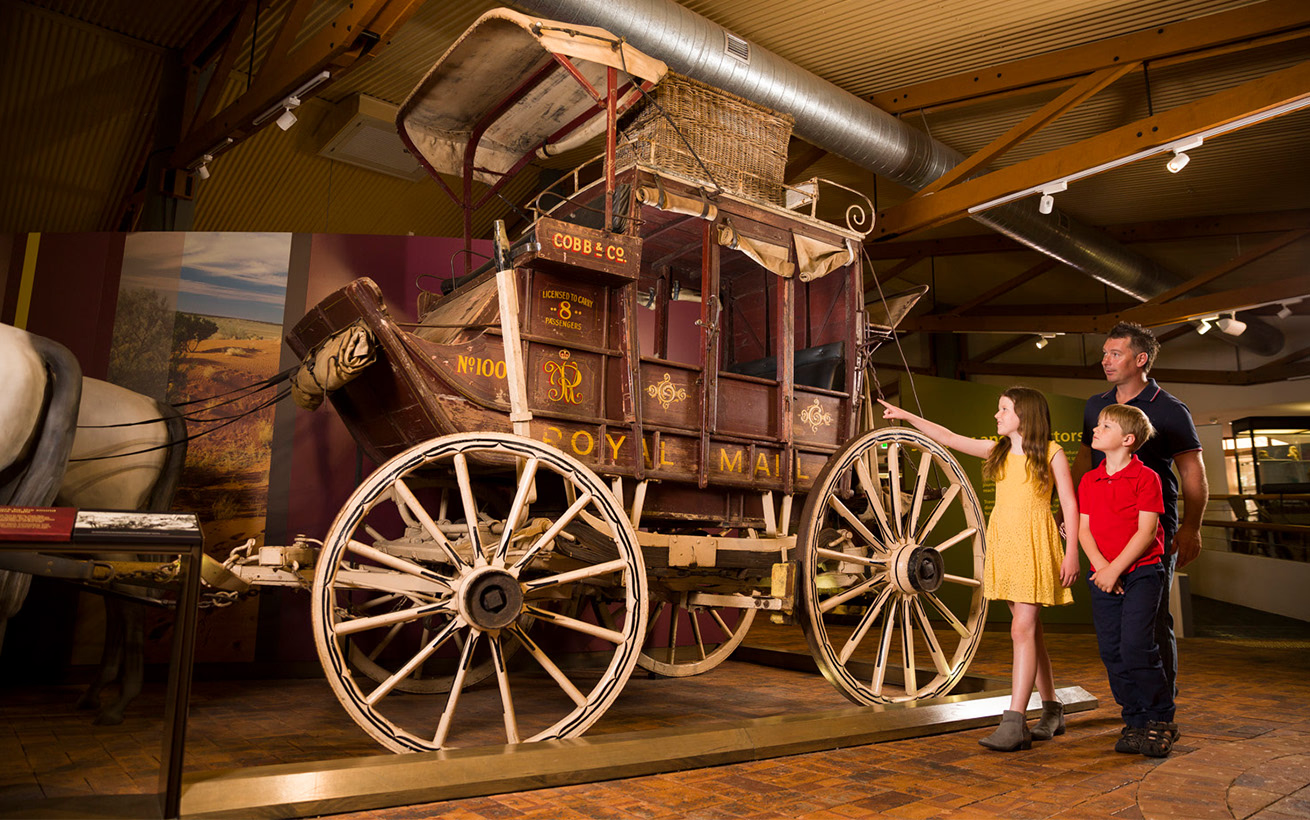
The Cobb+Co Museum earns a longer look than the single paragraph most itineraries give it. Its heart is the National Carriage Collection — dozens of horse-drawn vehicles spanning the full working vocabulary of pre-motor Australia, from grand drags and hansom cabs to the buckboards and drays that actually built the Downs. Read the vehicles as machines rather than antiques and the collection comes alive: a mail coach is the 1880s equivalent of a regional airline — timetabled, uncomfortable, indispensable — and the whole room is a transport network frozen at the moment the engine made it obsolete. The museum sits on Lindsay Street directly opposite Queens Park, which makes the pairing effortless.
What lifts Cobb+Co above the standard glass-case museum is that it keeps the old skills warm rather than merely displayed. Its heritage-trades workshops put blacksmithing, leatherwork and other pre-industrial crafts into living practice, with programs that let visitors watch — and at times try — the techniques that built the carriages in the next room. Check the museum's current program before you visit, because a day with the forge lit is a different and better day. Allow two hours at minimum; families and anyone with the slightest mechanical curiosity will want longer, and the combination with a Queens Park picnic makes a natural half-day.
How culture pairs with a garden day
Toowoomba's two reputations — Garden City and street-art city — are usually presented as a contrast, but on the ground they assemble into one exceptionally good day. The geography does the work: Queens Park's heritage-listed 26 hectares sit a short walk from the CBD laneways, with the Cobb+Co Museum directly opposite the park and the gallery and theatres in between. A day that runs morning in the gardens, museum before lunch, laneways and gallery through the afternoon covers both reputations without ever needing the car. The rhythm is the secret — green space, then interiors, then painted lanes — each stage resting whatever the previous one exercised.
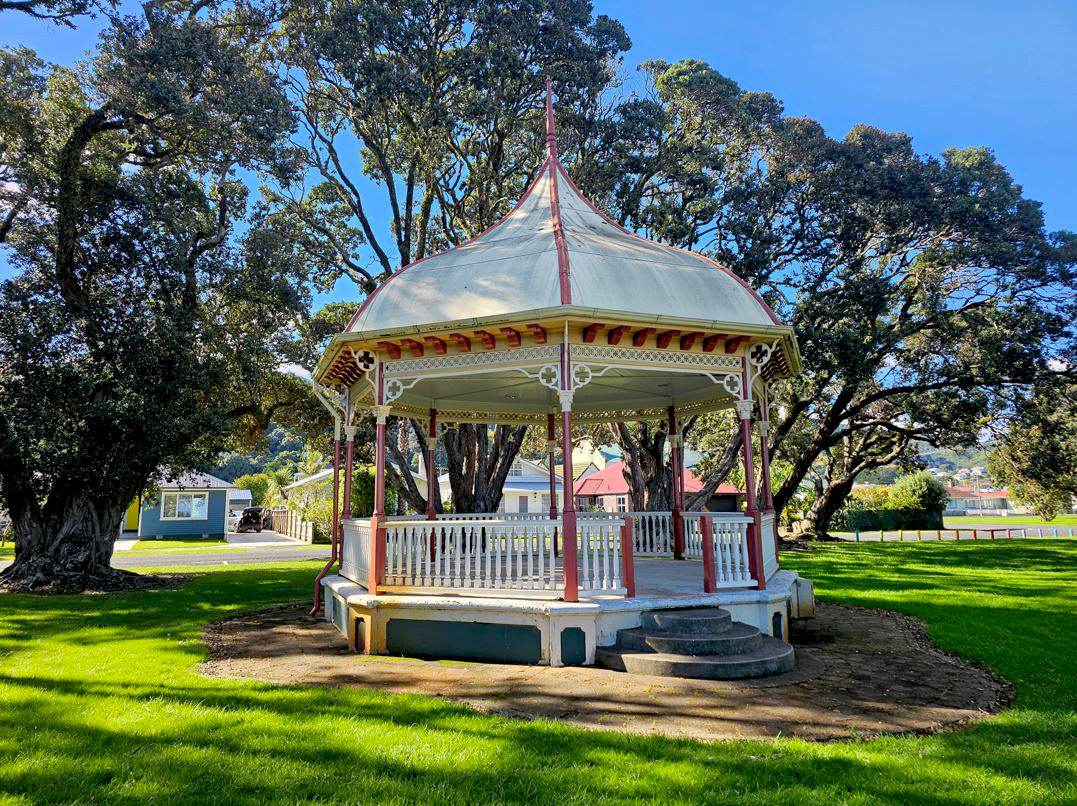
The pairing works because the two halves genuinely illuminate each other. The gardens are the city's formal, civic self — clipped, planned, generationally maintained; the laneways are its improvised, contemporary self — loose, rotating, occasionally cheeky. Seeing both in one day gives you a rounder read on Toowoomba than either alone, and the transitions are part of the pleasure: stepping from a band-rotunda lawn into a graffitied lane inside ten minutes is a whiplash few cities this size can offer. In jacaranda season the connecting streets themselves join the show, purple canopies linking one kind of gallery to the other.
Culture during the Carnival of Flowers
If you can aim your culture trip at spring, do. The Carnival of Flowers — 18 September to 5 October in 2026, the 77th running — is nominally a garden festival, but in practice it is the fortnight when every cultural wire in the city carries current at once. The program spills well beyond the flower beds: live music in the parks, the Grand Central Floral Parade through the city on 19 September, food and wine programming, markets, and evening events that keep the CBD humming after the gardens close. The laneways, galleries and theatres do not pause for the festival; they play to their largest audiences of the year alongside it.
For a visitor the effect is a city operating in stereo — gardens performing in one channel, culture in the other, and the markets and street life mixing the two. It is also the busiest fortnight on the calendar, so the standing advice applies double: book beds and shows early, arrive with a plan, and expect happy crowds. The events guide tracks what sits alongside the Carnival across the year, and the festival section below covers how to do it all without driving. September is Toowoomba with the volume up; the culture is the reason to stay past the flowers.

A culture day that children actually enjoy
Street art may be the most child-friendly art form ever devised: it is outdoors, it is enormous, it is bright, and absolutely nobody tells you to keep your voice down. A laneway walk with children works best as a game — who can spot the next mural, the hidden animal, the tallest wall — and the short distances between works keep the momentum up in a way no gallery can match. The Cobb+Co Museum extends the day indoors with vehicles at exactly child height and heritage-trades demonstrations that read as live action rather than history lesson. Between the two, Queens Park's lawns and playground absorb whatever energy remains.
The practical shape for families is short blocks and frequent resets: an hour in the lanes, an hour in the museum, lunch, park. Everything sits within pram-friendly walking distance of everything else, most of it is free or cheap, and the cafes are well used to small customers. Rainy days tilt the plan toward Cobb+Co and the gallery; hot ones toward morning lanes and afternoon shade. For the fuller family playbook — playgrounds, parks and the rest of the kid-tested city — the Toowoomba with kids guide picks up where this section stops.
A cultural year in the Garden City
The murals never close, which makes street art the rare attraction with no wrong season — but the city around the walls changes character through the year, and the choice of month shapes the trip. Spring is the headline act: Carnival crowds, full programs, the city at maximum wattage, and the trade-off of booking early and sharing the lanes. Summer brings long, warm evenings that favour the after-dark city — outdoor dining, lit facades, murals in the dusk. Autumn is the photographers' pick, all golden light and thinning crowds, with the heritage streets at their most handsome and the cafes at their most conversational.
Winter, at 700 metres on the Great Dividing Range, is Toowoomba’s secret indoor season: genuinely cold nights that make the museum, the gallery and the theatre feel like the point of the trip rather than its wet-weather backup, and clear, crisp days that are ideal walking weather in a coat. November deserves a special mention for the jacarandas, when the streets around the parks turn purple and the city runs a quieter, unofficial second bloom. Choose by temperament: September for spectacle, November for colour without crowds, winter for interiors and atmosphere. The best time to visit guide weighs the full year in detail.
Planning the day: access, cost and logistics
Few cultural destinations in Australia are this logistically gentle. The core circuit — laneways, gallery, theatre district, Queens Park, Cobb+Co — fits inside a flat, compact grid that walks comfortably in a day, and the overwhelming majority of it is free: the street art costs nothing, the regional gallery costs nothing, the parks cost nothing, and only the museum and any show tickets ask for your wallet. Footpaths are broad and well maintained, the terrain is level by hill-city standards, and the whole circuit is manageable with prams, and largely with wheelchairs — though laneway surfaces are honest working bitumen rather than polished promenade, so sensible shoes beat elegant ones.
From Brisbane, the city is roughly 125 kilometres and about 1.75 hours by coach up the Toowoomba Range — close enough for a generous day trip, far enough that the drive is a real consideration at the end of a long day on foot. If you are self-driving, park once near the centre and forget the car until home time; the CBD grid makes it redundant. Carry a water bottle, check museum and gallery hours locally before travelling, and if a show is the anchor of your visit, build the timetable backwards from the curtain. Everything else about the day forgives improvisation.
Seeing it all with Cooee Tours
The pleasant paradox of a Toowoomba culture day from Brisbane is that the best part of the city — its walkability — is bracketed by the least walkable part of the trip: the Range drive at either end. A coach dissolves the problem. Cooee Tours’ Carnival of Flowers day tours run from $89 an adult ($69 child) out of Brisbane CBD and Chermside during the September festival, with Gold Coast and Sunshine Coast departures and a $159 deluxe option that includes a two-course lunch — and the festival itineraries leave real time in the city, which is exactly where the laneways, gallery and museum come in. You climb the Range watching the view instead of the white lines, and doze home the same way.
Outside the festival window, the full tour range covers the rest of the year, and weekend formats — two days from $595, three from $880 — give culture-minded visitors what the day trip cannot: the evening city. With a coach weekend you get the show at the theatre, the late dinner, the slow morning gallery, none of it negotiated against a drive home. Cooee has run the Brisbane–Toowoomba road since 1974, and the practical value of that is a day built by people who know which hour the laneways are quietest. Phone 0409 661 342 or book online; either way, the Range is somebody else’s problem.
Why the culture is the sleeper hit
Here is the quiet truth about Toowoomba: the flowers bring people up the Range, but the culture is what surprises them. Visitors arrive calibrated for a pretty regional garden city and find, wrapped around the gardens, a legitimate street-art destination, a museum of genuine national standing, a working theatre of real grandeur and a heritage streetscape most state capitals would envy. None of it is oversold, which is precisely why it lands so well — the city presents its culture the way it presents everything, without fuss, and lets the laneways make the argument. Budget a full day for it at minimum; it will take more if you let it.
If you take one piece of advice from this page, take this: do not treat the culture as the rainy-day annex to a garden trip. Walk the lanes properly, go inside the buildings you would otherwise photograph from the footpath, and stay for an evening if you possibly can, because the city after dark is half the story. Toowoomba rewards the visitor who assumes there is more going on than the brochure says — and in the gap between its modest self-presentation and its actual cultural depth lies the best kind of travel experience: the one you did not see coming.
Street art & culture: your questions
Yes — Toowoomba is one of regional Australia's leading street-art cities, with dozens of large-scale murals splashed across the CBD laneways and buildings off Ruthven and Margaret Streets. The scene grew out of the First Coat festival in the 2010s; although that annual festival has wound up, the murals remain as a permanent, self-guided outdoor gallery and new works are still being commissioned. See the street art page for the trail.
Absolutely. The murals are concentrated in the walkable CBD laneways, so you can easily explore them on foot in an hour or two. Visit Toowoomba and the council publish a mural map to follow, or you can simply wander the lanes around Ruthven, Margaret and Little Streets and discover them. It's free, and it pairs perfectly with the city's café scene — grab a coffee and go mural-spotting.
No — the First Coat festival has ended (it ran through the mid-2010s). But its legacy lives on: First Coat Studios continues as a not-for-profit creating public art, the existing murals are maintained as a permanent "outdoor gallery," and Toowoomba's reputation as a street-art city is very much intact. So while there's no annual festival to time your visit around, the art is there to enjoy year-round.
Beyond the street art, Toowoomba has a strong cultural offering: the Cobb+Co Museum (home to the National Carriage Collection), the grand art-deco Empire Theatre, and the free Toowoomba Regional Art Gallery (the first public gallery in regional Queensland, with the notable Lionel Lindsay collection). Add heritage streetscapes and National Trust walking tours, and there's plenty for a culture-focused day.
The Cobb+Co Museum (part of the Queensland Museum network, on Lindsay Street) is home to the National Carriage Collection — Australia's finest collection of horse-drawn vehicles — alongside heritage-trades workshops and changing exhibitions. It's open daily (9am–4pm) and is a genuine highlight, especially for families and anyone interested in colonial and transport history.