Toowoomba events 2026
Toowoomba's calendar runs on flowers, food, cars and country shows. The Carnival of Flowers is the crown jewel each September, but the year is dotted with big drawcards — one of Australia's largest car swap meets, a historic royal show, a barbecue festival and a festive Christmas display. Here's what's on across 2026, with the spring highlights still to come. Dates recur most years; confirm nearer the time.
Swap, Royal Show & Meatstock
The year opens big. The Toowoomba Swap (February) is one of Australia's largest vintage-car and parts swap meets, drawing enthusiasts from across the country. In March, the historic Toowoomba Royal Show (running since 1860) brings livestock, rides, showbags and fireworks to the Showgrounds, and in April the Meatstock festival fires up the barbecues with low-and-slow cooking, craft beer and live music. June adds the free International Food Festival, a celebration of the city's multicultural food.
The Carnival of Flowers
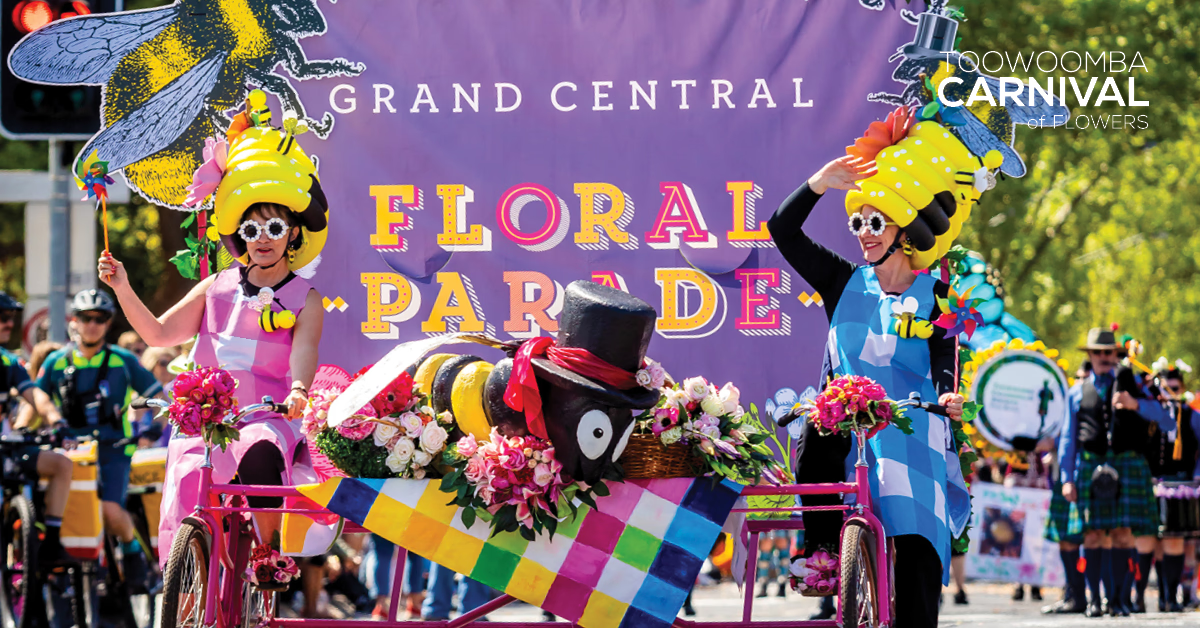
The event the whole city builds towards, the Carnival of Flowers, runs 18 September to 5 October 2026 — three weekends of flower displays at Queens Park and Laurel Bank Park, the Grand Central Floral Parade (Saturday 19 September), the FEASTival food weekend (26–27 September), open gardens, live music and family events. It's the busiest and most spectacular time to visit, so book accommodation and tours months ahead.
Christmas Wonderland & nearby festivals
As the year winds down, Christmas Wonderland brings festive lights, markets and entertainment to Queens Park through December (a Toowoomba tradition since 2003). Just out of town, the Hampton Food, Wine & Arts Festival near Crows Nest is worth catching for regional produce and craft. Between the big-ticket events and these smaller gems, there's nearly always something on in and around the Garden City.
How the Carnival of Flowers program actually works
Understanding the shape of the Carnival of Flowers makes planning it far easier. The 2026 festival — the 77th — runs 18 September to 5 October, and the smartest way to read those eighteen days is as three distinct weekends threaded together by a quieter, greener weekday rhythm. The parks are in full competition dress for the entire run: the massed annual beds at Queens Park, the scented terraces of Laurel Bank Park and the private gardens of the city's champion growers all hold their peak from the first Friday to the last Sunday. What changes from week to week is the event layer on top — the parade, the food weekend, the family program — and that layer is what should decide which dates you book.
The first weekend is the ceremonial one, anchored by the Grand Central Floral Parade through the city centre. The middle weekend belongs to food, with the FEASTival program taking over for two days. The final weekend rides into the Queensland school holidays and the King's Birthday long weekend traffic, finishing with the Paw Parade on the last Sunday. Between those poles, weekdays are the connoisseur's Carnival: the same flowers, a fraction of the people, and room to stand in front of a prize-winning border for as long as you like. If your dates are flexible, decide first whether you are coming for an event or for the gardens themselves — the answer points you at a weekend or a Tuesday respectively.

Free versus ticketed — what your money actually buys
A surprising amount of the Carnival costs nothing at all. The flower displays at Queens Park and Laurel Bank Park are free, all day, every day of the festival. The Grand Central Floral Parade is free to watch from any stretch of footpath you can claim. Wandering the streets of prize-winning private gardens in their front-yard glory, the evening buzz along the restaurant strips, the jacarandas beginning to crack open in the last week — none of it requires a ticket. A family could fill two full days with nothing but free Carnival and leave feeling they had seen the whole show. That is not an accident; the festival has always been built around the public parks first.
The ticketed layer sits on top: headline concerts, some food and wine experiences within the FEASTival program, and certain special-access garden events. The honest guidance is this — first-time visitors rarely need tickets to anything to have a complete Carnival day, while returning visitors often use tickets to add a new dimension to a festival they already know. Ticketed events are also the first things to sell out, sometimes months ahead, so if a particular concert or long-table lunch is the reason you are coming, secure it before you book anything else and build the rest of the trip around it. For everything else, check the official program when it is released and treat it as a menu rather than a syllabus.
Planning the opening weekend and parade day
The opening weekend is the Carnival at maximum wattage. Friday 18 September the festival opens; on Saturday 19 September the Grand Central Floral Parade rolls through the city centre, and the town is as full as it gets all year. Parade day rewards early arrivals: the best kerbside positions go well before the first float appears, coffee queues stretch, and the streets around the route close to traffic. If you are driving up from Brisbane, leave earlier than feels reasonable — the Range crossing is straightforward, but the last two kilometres into the city centre on parade morning are the slowest of the entire 125-kilometre journey. Once the parade passes, the crowd decants into Queens Park almost as one body, so consider doing the reverse: parks in the morning quiet, parade at midday, lunch late.
For all its logistics, the opening weekend is the right choice for first-timers. The parade is the festival's signature — floats built entirely from fresh blooms, marching bands, a city centre turned into a moving garden — and no other weekend replicates that spectacle. It is also the weekend when the flower beds are at their most pristine, barely a week into public display. The trade-offs are real: accommodation in Toowoomba books out furthest ahead for these dates, and dinner tables need reserving before you leave home. Treat it like a grand final weekend in a country city, because that is functionally what it is.
The middle weekend: FEASTival and the food angle
The second weekend hands the microphone to the kitchens. Over 26–27 September, the FEASTival program brings the food side of the festival forward — stalls, producers and cooking programming that put the Darling Downs' farm larder on display alongside the flowers. It is a different kind of Carnival day: you graze rather than march, and the gardens become the interval entertainment between courses instead of the main event. For couples and groups of friends, this is arguably the best weekend of the three — the opening-weekend crush has eased, the beds still look immaculate, and the city's food scene is performing at full stretch.
Plan a FEASTival day loosely. Arrive with an appetite rather than an itinerary, do a slow lap of the stalls before committing to anything, and keep one hand free for whatever the region's producers are pouring or plating that day. The parks are minutes away when you need to walk a course off, and the late-September light on the escarpment makes the tail end of the afternoon the prettiest part of it. If food is your organising principle for the whole trip, this is the weekend to book — and it is worth noting that the middle weekend often offers slightly easier accommodation availability than the first, though 'slightly easier' in Carnival terms still means booking months out.

The final weekend: school holidays and the Paw Parade
The Carnival's last act runs into the Queensland school holidays and closes on the October long weekend, finishing Monday 5 October. The mood shifts noticeably family-ward: more prams, more grandparents, more picnic rugs staking out lawn. The signature event is the Paw Parade on Sunday 4 October — the festival's dog parade, which is exactly as charming and chaotic as it sounds and costs nothing to watch. The flower beds, three weeks into their public run, are still remarkably good; the head gardeners' whole craft is timing displays to hold through the full festival, and the late-season beds have a blowsy, generous fullness the crisp opening-week plantings lack.
The long-weekend maths deserves respect. Monday 5 October is a public holiday, which means Friday-to-Monday visitors from Brisbane, the Gold Coast and beyond compress into the same accommodation pool as the school-holiday family trade. Book the final weekend as early as you would the first. The reward is a Carnival with its tie loosened — less ceremony, more picnic — and the bonus that the city's jacarandas are usually beginning to show their first purple by festival close, a preview of the season that follows. If you want Carnival plus long-weekend value from a single tank of fuel, this is your window.
Weekdays during the Carnival: the same flowers, minus the crowd
Here is the piece of advice regular visitors guard most closely: go midweek. Every flower that dazzles ten thousand people on a Carnival Saturday is still standing on the Tuesday, and the difference in experience is enormous. Midweek you can park within a short walk of Queens Park, photograph the massed beds without strangers drifting through frame, hear the bees rather than the crowd, and get a table at lunch without a booking made three weeks prior. The private prize-winning gardens are calmer; the volunteers and gardeners have time to talk, and they are consistently the best free guides in the city — ask one what a bed took to grow and you will get twenty minutes of genuine expertise.
Midweek Carnival suits particular travellers especially well: photographers chasing clean morning light, older visitors who would rather not negotiate parade-day footpaths, and anyone whose main interest is the horticulture rather than the events. It is also the practical answer for those who could not get weekend accommodation — staying Sunday to Thursday often succeeds when Friday and Saturday failed months earlier. The one thing weekdays lack is the event layer itself; there is no parade on a Wednesday. But as a way to see Australia's longest-running floral festival at its unhurried best, a midweek visit is not a consolation prize. For many repeat visitors it has quietly become the preferred format.
Jacaranda season: the purple encore
When the Carnival packs up in early October, Toowoomba does not go back to ordinary — it changes colour. Through October and into November, the city's jacarandas come into bloom, turning avenues and park edges a saturated violet that arguably out-photographs the festival itself. This is the Garden City's unofficial second season: no program, no tickets, no crowds to speak of, just streets under purple canopies and lawns hazed with fallen blossom. The trees around Queens Park and along the older residential avenues put on the most reliable show, and because the display belongs to the streets rather than to an event, you can catch it on any day that suits you.
Timing jacarandas is a gentler art than timing tulips. The bloom builds through October, generally peaks late October into early November depending on the year's weather, and lingers for weeks — so a trip planned loosely in that window rarely misses. Combine a jacaranda visit with the escarpment lookouts and the city's cafe scene and you have a full day that feels utterly different from Carnival, at shoulder-season prices and with parking outside the door. Our jacaranda season guide covers the best streets and the photography angles in detail. If September defeated your calendar this year, October is not second best; it is a different, quieter kind of first.

Autumn, winter and the events between the headliners
Outside the spring spectacular, Toowoomba's calendar keeps a steady country-city pulse. Summer brings long green evenings in the parks; autumn colours the deciduous plantings that make this one of the few Queensland cities with a genuine fall, and autumn also brings heritage and food events — check official listings closer to the date, as programs and dates are confirmed year by year. Winter on the Range is crisp in a way that surprises coastal Queenslanders: fireplace weather, clear-skied lookout mornings, and a cafe culture that makes complete sense at 700 metres above sea level. None of it needs a festival to justify the trip.
The practical point for trip-planners is that Toowoomba rewards the off-peak visitor with the city's full attention. Restaurants have tables, the gardens staff have time, accommodation costs what a regional city should cost, and attractions like the museums and lookouts are at their unhurried best. If your travel dates are fixed and they miss the Carnival, do not force the comparison — plan a gardens-lookouts-food day on its own merits and you will have an excellent one. And if you are choosing dates freely, the honest hierarchy is: September for spectacle, October–November for jacarandas and value, autumn and winter for the city as locals actually live in it.
How coach tour departures map to the events calendar
Cooee Tours builds its Toowoomba schedule directly around this calendar, which is worth understanding before you book anything yourself. During the Carnival window, Carnival of Flowers day tours run from Brisbane from $89, timed so the coach crests the Toowoomba Range mid-morning and delivers you to the gardens fresh, with the driving, the parade-day parking hunt and the Range descent at day's end all somebody else's problem. On a day tour the calendar mapping is done for you: departures line up with the festival's strongest days, and the itinerary flexes around what is on — parade logistics on parade weekend, a food tilt when FEASTival is running.
The one-day format suits Brisbane, Gold Coast and Sunshine Coast visitors who want maximum Carnival for minimum planning: no accommodation battle, no designated driver, and a guaranteed seat into the city on days when parking is a competitive sport. It is also the format that makes a midweek Carnival visit trivially easy — board in the morning, spend the day among the flowers, be home for dinner. If you have read this far and concluded that your ideal Carnival day is a specific one — parade Saturday, a FEASTival Sunday, a quiet Tuesday — the sensible next step is simply to check which departures cover it and book that date before the seats go the way of the accommodation.
Weekend tours: seeing more than one day of the program
A single Carnival day is complete, but it is not comprehensive — the festival's three-weekend structure means there is always more program than one day can hold. That is the case for the two-day weekend tours from $595 and the three-day format from $880, which solve the two hardest problems of a Carnival weekend in one booking: guaranteed accommodation in a sold-out city, and a coach seat through the busiest traffic of the Toowoomba year. Over two or three days you can take the gardens slowly, cover both a headline event and the quieter corners, and see the city lit up in the evening — the part every day-tripper misses.
The weekend format changes the character of the visit. Day one can absorb the big-ticket spectacle; day two belongs to the places crowds thin out of — the Japanese garden, the escarpment lookouts, the villages and countryside of the Darling Downs that frame the city. Meals, touring and local knowledge come built in, which is precisely what multi-generation groups and interstate visitors tend to want during the festival crush. If the events calendar on this page has you trying to choose between parade weekend and FEASTival weekend, the honest answer may be that you are a weekend-tour traveller: pick the weekend whose headline event you want most, and let the tour fill in everything around it.
Already planning 2027
If 2026 does not fit, the next edition is already locked in: the 2027 Carnival of Flowers runs 17 September to 4 October 2027 — the 78th festival, holding the same three-weekend spring shape. That confirmed window matters, because the Carnival is one of those events best booked absurdly early: accommodation for the 2027 parade weekend will start disappearing long before most travellers have thought about the year at all. Details of the 2027 program will land closer to the date, but the structure described on this page — an opening parade weekend, a food-focused middle, a family-flavoured long-weekend finish, and glorious midweeks in between — is the festival's reliable architecture, and you can plan against it now.
For early planners, Carnival of Flowers 2027 tours carry the forward dates and open for booking well ahead of the festival itself. The travellers who enjoy the Carnival most are consistently the ones who chose their dates deliberately — event weekend or quiet midweek, day trip or weekend stay — rather than taking whatever was left. Reading a page like this a year out puts you in that first group. Toowoomba in spring rewards nothing so much as a calendar and a small amount of nerve about booking early.
Picking your dates: a working verdict
Strip the year down and the decision tree is short. Want the full spectacle and do not mind crowds? Parade weekend, 18–20 September — book everything early. Travelling for food? FEASTival, 26–27 September. Bringing children or chasing a long weekend? 2–5 October, with the Paw Parade as the closing charmer. Prefer flowers to festivals? Any Carnival weekday. Missed September entirely? October–November jacarandas give you the Garden City in its second-best clothes at half the fuss. And the rest of the year holds a genuinely pleasant regional city with lookouts, gardens, museums and a food scene that never depends on a festival to be worth the drive up the Range from Brisbane.
Two final practicalities. First, accommodation is the binding constraint for every Carnival weekend — solve it before you solve anything else, or sidestep it entirely with a day tour or a packaged weekend; our where to stay guide covers the options and the timing. Second, treat non-Carnival event dates on this page as indicative: Toowoomba's recurring fixtures move within their seasons from year to year, so confirm against official listings once your dates firm up. The Carnival dates themselves — 18 September to 5 October 2026, 17 September to 4 October 2027 — you can build a holiday on.
Toowoomba events: your questions
The flagship is the Carnival of Flowers (18 September–5 October), the city's spring showcase and still to come this year. Earlier highlights include the huge Toowoomba Swap vintage-car meet (February), the Toowoomba Royal Show (March), Meatstock barbecue-and-music festival (April) and the International Food Festival (June). Christmas brings Christmas Wonderland to Queens Park. Dates recur most years — confirm nearer the time.
The Toowoomba Royal Show (now the People First Bank Toowoomba Royal Show) was held 26–28 March 2026. Running since 1860, it's the Darling Downs' big agricultural show — livestock, competitions, showbags, rides and fireworks. It's an annual late-March fixture, so if you're planning around it for a future year, expect a similar window (with 2027 provisionally mid-April).
Yes — Meatstock, the touring barbecue, music and craft-beer festival, has a Toowoomba edition at the Showgrounds, held 10–11 April in 2026. It's a genuinely popular annual event for the low-and-slow crowd, combining barbecue competitions, food, live music and family fun. It typically runs in April.
The Carnival of Flowers (18 September–5 October 2026) is itself a program of events: the Grand Central Floral Parade (Saturday 19 September), the free flower displays and open gardens, the FEASTival food weekend (26–27 September), live music and family activities. It's the busiest, most festive time to be in town.
Yes — Christmas Wonderland lights up Queens Park each December (running annually since 2003), with festive light displays, markets and family entertainment in the lead-up to Christmas. Exact 2026 dates are usually confirmed closer to the time, but it typically runs across early-to-mid December. It's a lovely, free family outing if you're visiting in the festive season.