Best time to visit Toowoomba
High on the range, Toowoomba enjoys something rare in Queensland — four proper seasons, cooler air and even a touch of autumn colour. The headline act is spring, when the Carnival of Flowers bursts into bloom, but each season has its charm. Here's how they stack up, so you can time your visit to the flowers, the weather and the crowds.
Spring & the jacarandas
Spring is Toowoomba's moment. The Carnival of Flowers (18 September–5 October in 2026) fills the parks and gardens with colour under mild, sunny skies — the single best time to see the Garden City at full tilt, though also the busiest. For a second, quieter flowering, come in November, when the city's jacarandas turn the streets purple. Between them, spring into early summer is the most colourful and rewarding window of the year.
Autumn, winter & summer
Autumn (April–May) is a quiet gem — settled, mild days and, unusually for Queensland, pockets of real autumn foliage. Winter (June–August) is cold, crisp and clear, with frosty mornings around 5–6°C and comfortable days near 16–17°C — perfect for cosy cafés, open fires and the odd Granite Belt "Brass Monkey" trip. Summer (December–February) is warm and green, cooler than the coast, with humid afternoons and the occasional storm. There's no truly bad season — just different moods.
What to expect & pack
At nearly 700 metres, Toowoomba is a cool-climate city by Queensland standards. Expect summer days around 28°C and winter days near 16–17°C, with cold winter nights and regular frosts. Rain is summer-dominant. The practical upshot: pack layers whatever the season, sun protection for the bright days, and something genuinely warm if you're visiting between May and August. Mornings on the range can be misty and cold even after a warm afternoon.
700 metres up: the climate that makes the Garden City
Everything about timing a Toowoomba trip flows from one number: the city sits at roughly 700 metres above sea level, on the crest of the Great Dividing Range at the edge of the Darling Downs. That altitude is why a city just 125 kilometres from subtropical Brisbane behaves like somewhere much further south. Summers stay milder than the coast, winters bring genuinely cold, frosty mornings, and — rarest of all in Queensland — the four seasons actually feel different from one another. Deciduous trees change colour and drop their leaves, spring arrives as an event rather than a rumour, and the gardens that made the city’s name are possible precisely because the climate gives them a proper winter to rest through.
The altitude also explains the small rituals visitors notice on arrival. The coach climbs the Toowoomba Range from the Lockyer Valley and the air changes perceptibly near the top — drier, cooler, often clearer. Locals dress in layers most of the year because a bright afternoon and a cold evening routinely share the same day. For trip planning, the practical translation is simple: whatever month you choose, Toowoomba will usually be a few degrees kinder than Brisbane in summer and noticeably sharper in winter, and mornings on the range can be misty even when the day ahead is sunny. Pack for the altitude, not the postcode.
Summer: green, stormy and cooler than the coast
Summer is Toowoomba’s sleeper season. While coastal Queensland swelters, the range takes the edge off the heat — days are warm rather than punishing, evenings cool down properly, and the escape from coastal humidity is real enough that Brisbane residents have been summering up here since the nineteenth century. This is the green season: storms build over the Downs on summer afternoons, dramatic and usually brief, and they leave the parks, street trees and surrounding farmland at their lushest. December carries the festive overlay, with Queens Park dressed for Christmas; January is the quietest tourist month of the year, which makes it a fine time for unhurried café mornings and empty lookouts.
The tactics for summer are about the afternoon. Do your outdoor sightseeing — Picnic Point’s escarpment views, the parks, the drives across the Darling Downs countryside — in the morning, when the light is clean and the storm clouds are still assembling; keep the galleries, museums and long lunches for the hot middle hours; then step out again for the late light, which after a storm can be spectacular over the valley. Accommodation is easy to find and the pace across the whole city relaxes. If your idea of a good trip involves no queues whatsoever, midsummer — oddly, for a festival city — is your window.

Autumn: the connoisseur’s season
Autumn is when Toowoomba quietly does something almost nowhere else in Queensland can: it turns. The city’s stock of exotic deciduous trees — planted by generations of gardeners who wanted a piece of the cool-climate world on the Downs — colours through April and May, and pockets of the older suburbs and parks take on genuine reds and golds. The weather settles into the year’s most reliable pattern: still, mild, sunny days with crisp edges morning and evening. Photographers, walkers and anyone allergic to crowds should look hard at this window. It is the best all-round touring weather of the year, and the city is between its big events, so you get the Garden City at its most local.
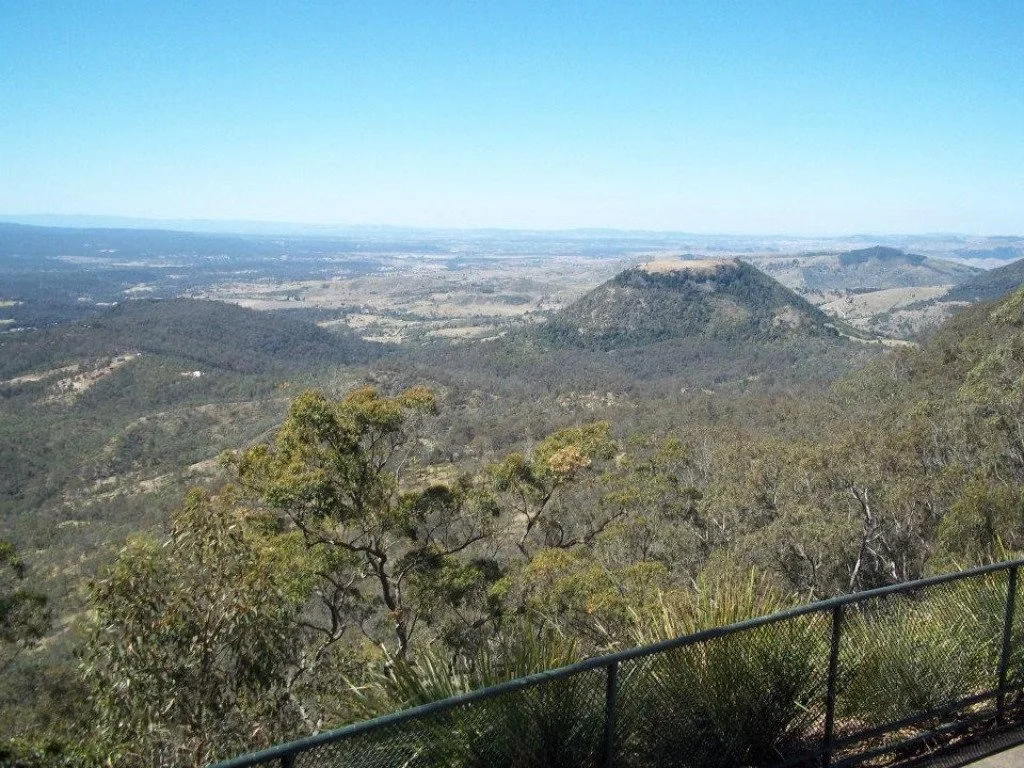
March still carries some late-summer warmth and green; by May the first frosts are flirting with the forecast and the café fireplaces come back into service. Autumn suits the slower itineraries: the heritage streetscapes, the drives to the villages and lookouts along the range, long lunches that turn into afternoons. It is also prime season for pairing Toowoomba with the surrounding country — the air over the Lockyer Valley is at its clearest, which makes the escarpment lookouts genuinely long-sighted, and the Downs wear that settled, end-of-harvest look that flatters every photograph. If someone asks for the best month with no festival attached, the honest answer is usually April.
Winter: frost, fireplaces and the clearest skies of the year
Winter on the range is the real thing — and that is a recommendation, not a warning. Mornings are cold and often frosty, the kind of white-lawn, visible-breath mornings that Queensland is not supposed to have, and they break into brilliantly clear, dry, sunny days that are ideal for walking. This is the season Toowoomba feels most like a southern city that got lost: coats, coffee, open fires, low golden light through bare trees. The gardens rest, but the city’s bones show — the heritage architecture, the parks’ big tree skeletons, the long views — and winter’s clear air gives the escarpment lookouts their sharpest visibility of the year.
Come prepared and winter is a pleasure; come in shorts and it is a character-building experience. Pack a genuinely warm layer for mornings and evenings, plus something lighter for the middle of the day, which is frequently mild enough for outdoor lunch in the sun. Winter is also shrewd value: the city is quiet, tables are easy, and accommodation is at its most relaxed. Families take note that the school-holiday weeks in late June and early July lift things slightly, but nothing like spring. If your travel taste runs to crisp air, quiet streets and the smug feeling of having a lookout to yourself, June to August is criminally underrated.
September: the Carnival, and the city at full tilt
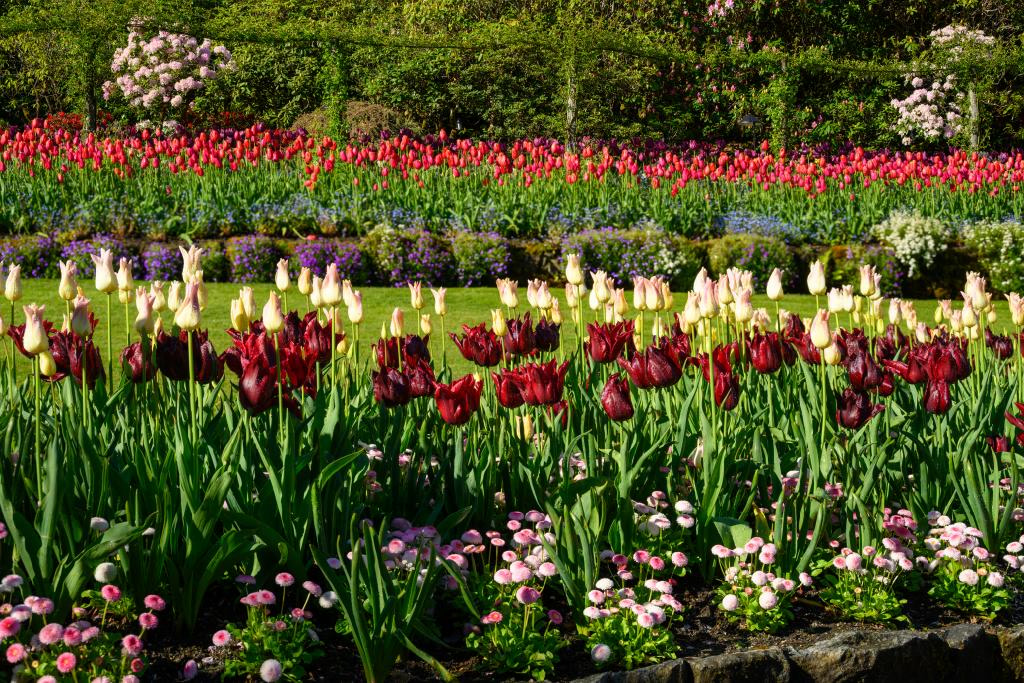
Then comes September, and the city changes gear entirely. The Toowoomba Carnival of Flowers — Australia’s longest-running floral festival — runs 18 September to 5 October in 2026, and for those three weekends the Garden City is simply the best place to be in regional Australia. Queens Park and Laurel Bank Park erupt into massed displays, prize-winning private gardens open their gates, the Grand Central Floral Parade takes the streets on Saturday 19 September, and the FEASTival food weekend (26–27 September) feeds everybody. Spring weather usually cooperates: mild days, cool nights, and gardens timed to peak precisely for the program.
September’s only cost is popularity. The festival draws visitors in the hundreds of thousands, accommodation books out months ahead, and parade weekend asks for patience around parking and café queues. The simplest fix is to let someone else drive: our Carnival of Flowers day tours run from Brisbane from $89 per adult, with Gold Coast and Sunshine Coast departures too, delivering you to the gardens without a single circuit of a full car park. Mid-week visits catch the same displays with half the company. However you do it, if you have never seen Toowoomba and can choose any fortnight of the year, choose this one — it is the city’s whole identity, in bloom, on schedule.
October: the Carnival’s long tail and the sweet spot after it
October is two months in one. Its first days belong to the Carnival — the 2026 program runs until 5 October, and the final weekend (including the Paw Parade on 4 October) has a relaxed, last-days-of-the-fair charm, with the displays still full and the biggest crowds already thinning. Then, almost overnight, the city exhales. Mid-to-late October is one of the cleverest windows on the calendar: the parks are still planted and recognisably in bloom, spring weather is at its most reliable, and the accommodation market returns to normal. Visitors who want most of the Carnival’s colour with a fraction of its company should aim here.
Late October also carries the first hints of the next act — the earliest jacaranda blooms begin to break in warm years, previewing November’s show. The month suits garden-lovers who prefer study to spectacle: with the festival infrastructure packed away, you can stand at the Queens Park beds for as long as you like, and the gardeners are already quietly turning ground toward the summer plantings. Pair it with the clear-aired lookouts and the last of the spring-green Downs, and October’s back half might be the most underrated fortnight in the Toowoomba year — the applause has faded, but the stage is still dressed.
November: the jacarandas take over
In November the Garden City changes its palette from everything to purple. The jacarandas — planted in their hundreds through the older suburbs, around the parks and along the avenues — come into bloom together, and whole streets disappear under a lilac canopy that then falls to carpet the footpaths in colour. It is a shorter, wilder, less curated show than the Carnival: nobody plants a jacaranda season, it simply happens to the city, and its exact peak shifts with the year’s weather. The effect on a blue-sky day is extraordinary, and photographers arguably get more from November than from September — the purple-on-blue combination flatters every lens pointed at it.
November’s logistics are September’s with the difficulty setting lowered: no festival crowds, ordinary accommodation prices, and the pleasant late-spring warmth of the range before summer’s storms arrive. The established viewing ritual is a slow drive or walk through the older streets near the parks, camera at the ready, followed by coffee somewhere the fallen blooms drift against the kerb. Our jacaranda season guide covers where and when to look in detail. If purple is the point of your trip, aim for the first half of the month and build in a flexible day or two — the trees answer to the season, not the calendar.

When the city is busy — and when it’s blissfully not
Toowoomba’s visitor year has one towering peak and a mostly gentle landscape around it. The Carnival fortnight-and-a-bit in September–October is the unambiguous high season: accommodation sells out months ahead, weekend traffic thickens, and the parks carry real crowds. A few smaller spikes dot the calendar — event weekends through the year, the November jacaranda flush, school holidays — but outside these, the city is an easy, uncrowded place where the only queue of consequence forms at the best cafés on Saturday morning. January and the depths of winter are the quietest of all.
Value tracks the crowds almost exactly. If budget matters, the winter and midsummer troughs offer the city at its most affordable and relaxed; if the Carnival is non-negotiable, the levers that remain are booking very early, visiting mid-week rather than on parade weekend, or taking a packaged tour where the accommodation problem is somebody else’s. For weekenders, a 2-day weekend tour (from $595) rolls transport, beds and the itinerary into one booking — during Carnival season that bundling is less a convenience than a strategy. The broader point: there is no month when Toowoomba is unpleasantly busy except the one when it is gloriously so, and even that one can be played smartly.
Timing a day tour from Brisbane
Because Toowoomba sits only about 125 kilometres from Brisbane — roughly 1.75 hours by coach up the range — it is one of the most practical day trips in south-east Queensland, and the timing question shifts from “when can I go?” to “which version of the city do I want?” A day tour from Brisbane in September lands you in the middle of the Carnival; the same seat in November delivers the jacarandas; in April it buys autumn colour and the year’s most settled touring weather. The drive itself changes with the seasons too — the Lockyer Valley runs green after summer rain and gold-brown through winter, and the climb up the Toowoomba Range announces the altitude change in your ears.
Day-trippers should think about hours of light. Spring and summer’s long days let an itinerary breathe — gardens, lunch, a lookout, and home in daylight — while winter compresses the schedule and rewards an early start. Morning is Toowoomba’s best self in every season: parks are freshest, light is best, and crowds are thinnest, which is why coach departures leave Brisbane early and why the sensible self-driver copies them. And if a single day feels tight — it is, in September — the calendar answer is to upgrade the timeframe rather than rush the day: the city rewards an overnight in any month, and demands one in Carnival season.
So — when should you actually come?
Here is the honest ranking, allowing that every traveller weighs it differently. For spectacle: the Carnival, 18 September to 5 October 2026 — nothing else comes close, and it justifies the crowds it draws. For photography and a quieter kind of magic: the first half of November, under the jacarandas. For perfect touring weather without an event attached: April and May, when the air settles and the exotic trees colour. For solitude, value and crisp-air charm: winter, taken with a warm coat and no apologies. For a lush, storm-lit, uncrowded city: midsummer. There is no dud month — the altitude sees to that — only different Toowoombas.
The deeper advice is to match the month to your travelling temperament rather than to a highlights list. If you thrive on occasion and don’t mind company, book September now and book it properly — beds and tours both. If your best travel memories involve having somewhere lovely largely to yourself, take the shoulder months and let the Garden City work at conversational volume. And if you can manage two visits in a lifetime, the canonical pairing is a September Carnival and a November jacaranda run — the city’s two great flowerings, six weeks apart, each making the case that the other isn’t even the best one. Deciding between them is the most pleasant argument in Queensland travel.
If you can only pick one week
Pick the September school-holiday lull if gardens are the goal, the opening Carnival weekend if the Grand Central Floral Parade is non-negotiable, and early November if you would trade the festival program for jacaranda light and empty lookouts. Whichever week wins, our Toowoomba tours run to meet it — day tours from $89, weekends from $595 — and the coach clock is built around exactly the timing advice above.
Does it snow in Toowoomba?
Almost never — and that surprises people who hear "Queensland's coldest city" and picture white winters. Toowoomba's 700-metre elevation delivers crisp, frosty winter mornings, single-digit dawns and genuine fireside weather, but actual snowfall is a rarity measured in decades; when flurries do reach the region they usually land on the higher Granite Belt around Stanthorpe, two hours south. What winter reliably delivers instead is brilliant blue-sky days, sharp clear air, and gardens resting for their spring performance — bring a proper coat for the mornings and you'll be in shirtsleeves by noon.
Best time to visit: your questions
For the flowers, spring is unbeatable — the Carnival of Flowers runs 18 September to 5 October in 2026, with mild days and the city at its most colourful. If you're chasing the jacarandas, come in November. Autumn (April–May) is also lovely and settled, with (unusually for Queensland) some autumn foliage. Winter is crisp, clear and cold — great for cosy escapes, if you don't mind frosty mornings.
Yes, noticeably. Sitting about 691 m up on the Great Dividing Range, Toowoomba is several degrees cooler than Brisbane and has four distinct seasons. Summer days average around 28°C, but winter days sit near 16–17°C with cold nights around 5–6°C and regular frosts in July and August (snow is very rare but not unheard of). Pack layers year-round, and something warm for winter evenings.
The jacarandas peak in November — after the September Carnival of Flowers — when streets around the parks and older suburbs turn lilac-purple. If purple blooms are your goal, plan for November; nearby Goombungee even holds a Jacaranda Festival in early November. It's a beautiful, slightly quieter alternative to the Carnival crowds.
A mild, subtropical-highland climate with four real seasons. Summers are warm (not tropical) and humid with afternoon storms; autumn is settled and pleasant; winters are cold, crisp and frosty; and spring is mild and colourful. Rainfall is summer-dominant (roughly 900–950 mm a year on the long-term average, though it varies). It's a refreshing change from the coast's humidity.
Very — September is peak season, and the Carnival of Flowers draws hundreds of thousands of visitors, so the city is at its busiest and accommodation is in high demand (book months ahead). If you prefer things quieter, visit in autumn, in November for the jacarandas, or mid-week at other times. See our Carnival of Flowers guide.