Jacaranda Season in Toowoomba
Just as the Carnival packs up, Toowoomba stages a second spring — the jacarandas turn the old suburbs purple, and hardly anyone plans a trip around it. Their loss.
The second act of spring
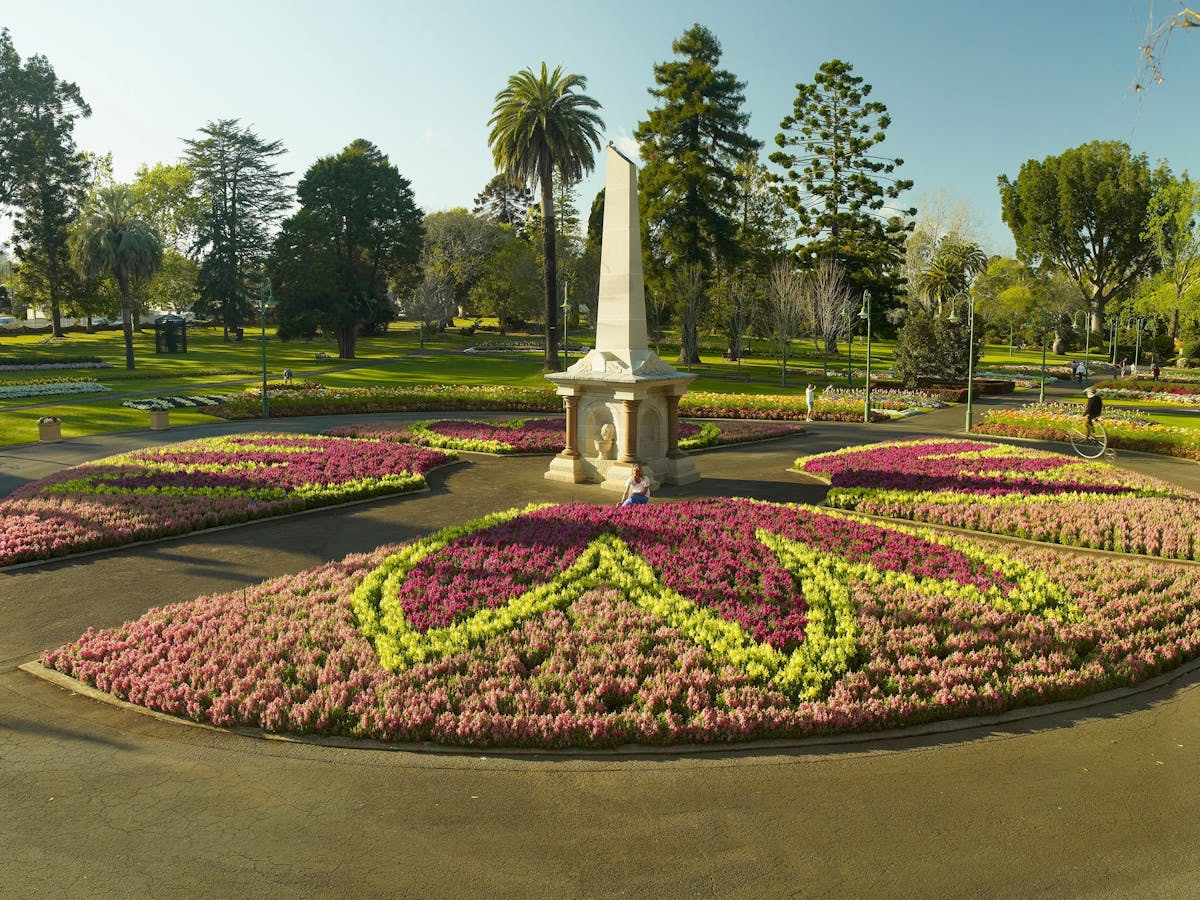
The Carnival of Flowers closes in early October, the crowds head back down the Range — and then, from late October into November, the city's jacarandas take over. The heritage suburbs and older streets turn hazy purple, Queens Park gets a second colour scheme, and the Garden City runs a quieter, cooler-toned encore that most visitors never see.
Where the purple lives
The best displays follow the old money: the established streets of East Toowoomba and the city's heritage belt, where century-old jacarandas arch over Federation homes and hedged gardens. Queens Park and the surrounding avenues carry fine specimens, and the effect compounds block by block — this is a season best explored on foot, drifting wherever the canopy looks thickest.
Jacaranda rule one, everywhere in Australia: photograph the tree, don't park under it. The flowers fall sticky and the birds are ungenerous.
Timing the bloom
The window shifts with the year's weather — a warm spring brings it forward, a cold one holds it back — but late October through mid-November is the reliable heart of the season. The sweet spot is when fallen flowers carpet the ground beneath a still-full canopy: purple above, purple below. If your trip can flex a week either way, watch local reports and move with them.
Photographing it
Jacarandas love the same light flowers do — early morning and late afternoon, or bright overcast that saturates the mauve. Shoot down avenues for the tunnel effect, use the fallen carpet as foreground, and put heritage rooflines behind the canopy for the Toowoomba signature. The broader techniques in our Carnival photography guide all apply.
The quiet-season bonus
Because jacaranda season lands after the festival, it inherits none of the crowds: accommodation eases, restaurants breathe, and the gardens return to the locals. For travellers who like their spring without queues, this — not September — might secretly be Toowoomba's best fortnight. Pair it with the two-day itinerary and you have the whole city almost to yourself.
Why 700 metres makes better purple
Jacarandas bloom across half of Queensland, so why drive up a mountain for them? Altitude, again — the Garden City's signature trick. Toowoomba's cool nights slow the bloom's arrival and then hold it: where coastal jacarandas flush and drop inside a rushed fortnight, the Downs' trees build colour later and keep it longer, often carrying strong canopy well into November. The dry-side climate spares the flowers the coastal storm-stripping, and the city's century of street planting means the trees stand in avenues, not accidents — whole corridors of touching canopy over heritage streets.
The effect at peak is less 'tree in flower' than 'city under glass': purple light on the footpaths, carpets of fallen bells edging every kerb, and streetscapes that photograph like a filter nobody applied. Brisbane visitors who know their own jacaranda spots consistently rate the Toowoomba version above them — the altitude buys depth of colour, and the town planning bought the geometry.


The peak-timing question, answered properly
The season's shape is reliable even when its dates wobble. First colour typically shows in late October as the Carnival's crowds are still dispersing; the build runs through early November; peak spectacle — full canopy before heavy bell-drop — usually owns the first three weeks of November; and the carpet phase, beloved of photographers, closes the show toward month's end. Warm springs pull everything earlier, cool ones hold it back, so the local rule is to watch the trees rather than the calendar: when Brisbane's jacarandas peak, Toowoomba's are roughly a fortnight behind.
For trip-planners the safe bet is the second week of November, midweek for the usual reasons — and the beautiful economics of the purple season is that missing peak barely matters. Early buys you colour-against-green; late buys you the carpets. There is no bad week, only different purples, which is more than any tulip can promise.
The streets and corners worth the walk
The purple map clusters where the old plantings do: the blocks around Queens Park and the university precinct, where mature trees close over the street; the heritage ridges east of the centre, whose Federation houses were apparently built to be photographed under jacaranda; and the park edges themselves, where single monster trees stage solo performances against lawn. The joy of the season is that no address list survives it — every year a different tree wins, and the correct technique is the slow drive or long walk with eyes up.
Two etiquette notes keep the season sweet: the best trees overhang private homes, so photograph from the footpath with the same courtesy the Carnival's decorated-homes visitors owe; and resist the imported-influencer habit of shaking branches for confetti shots — the carpet arrives on its own schedule and the trees have a century's more practice at this than any of us.

Goombungee and the village purple
Half an hour northwest, the village of Goombungee throws the region's dedicated jacaranda party — an early-November festival day when a genuinely tiny Downs town celebrates its avenue in full country style: markets, morning teas, and the kind of main-street purple that makes city plantings look tentative. It pairs perfectly with the ridge-country food trail covered in our other guides, turning jacaranda season into a proper Downs day loop: Toowoomba's avenues in the morning, the village festival at midday, farm gates on the way home.
The wider villages run their own unofficial shows — old pub verandahs under old purple being something of a regional speciality — and November's gentle calendar means every one of them can be enjoyed without a booking, a queue, or a plan more detailed than 'north, then follow the colour'.
Purple season with a camera
Jacarandas are the most forgiving spectacular subject in Australian nature photography, with three seasonal specialities. The avenue shot: stand centre-street (safely, quiet streets abound), long lens compressing the canopy tunnel — the season's signature. The carpet composition: fallen bells as foreground, tree as background, best in the season's second half after light wind and no rain. The contrast play: purple against heritage red brick, against golden late light, against the last of the spring green — the colour wheel does the work.
Light rules are kinder than the Carnival's: jacaranda purple deepens beautifully in overcast, making cloudy days shooting days, while golden hour turns the canopies incandescent. The phone-camera note: purple famously confuses auto white balance, so pull the temperature slider cool if your shots run pink — the trees are bluer than your phone believes.
Building the jacaranda weekend
The season's itinerary writes itself gently: day one — the city's avenues and park edges in the morning, cafe belt lunch at tables September couldn't offer, Ju Raku En or the rose gardens (still performing) in the afternoon, golden hour among the purple; day two — the Goombungee-and-ridge loop, farm gates included, home via the Lockyer stalls. It's the 2-Day Weekend Tour's shape wearing purple, and indeed the weekend tours run jacaranda departures for exactly this audience — same itinerary bones, different colour scheme, easier bookings and kinder rates.
Day-trippers can compress the city half into one purple morning plus lunch — and Brisbane's jacaranda devotees should note the coach maths works identically in November, minus the festival surcharges. However you build it, build it soon after the Carnival teaches you the city's rhythm: the purple season is the Garden City's encore, played to a half-empty, entirely converted house.
The season nobody plans for, planned
Summarising the purple file: second week of November as the anchor, trees trusted over calendars, avenues around the park and heritage ridges, Goombungee for the village version, overcast days embraced, footpath courtesy maintained, and accommodation booked with a freedom September visitors would weep for. The jacaranda season asks almost nothing — no tickets, no timetable, no strategy beyond eyes up — and returns one of Queensland's great colour spectacles. It is the easiest recommendation this blog series makes, which is presumably why the trees have needed no marketing department for a hundred years.
Jacaranda meets rose: the November double bill
The purple season's underrated pairing is what's still blooming beneath it. November catches Newtown Park's State Rose Garden in magnificent ongoing flush — thousands of bushes running their long season — while Laurel Bank's beds carry their late program and Ju Raku En simply continues being Ju Raku En, its green architecture indifferent to the calendar's colour politics. A November garden day therefore stacks: roses at eye level, purple overhead, and the whole arrangement photographed against heritage streetscapes that September's crowds never let you frame cleanly.
The double bill also rescues the couples' argument that splits so many spring trips — one partner's tulip pilgrimage versus the other's crowd allergy. November offers the gardens at their gentlest and the city at its most photogenic, minus the festival's logistics entirely. More than a few annual visitors have quietly migrated their Toowoomba week from September to November and describe it, disloyally but accurately, as keeping the flowers and returning the queues.
For completists, the season even keeps a food angle: the ridge's stone fruit begins arriving at the farm gates as the bells fall, and the November cafe tables that September couldn't offer come with the purple view attached. The Downs does not stop performing when the Carnival bows; it just changes costume and drops the ticket prices.
Getting there in the purple weeks
November's logistics are September's with the difficulty setting lowered. The Range drive runs clear, the parking sport returns to amateur level, and accommodation books like a normal regional city again — which makes this the season where self-driving genuinely shines and the driving-vs-coach debate our other guide stages goes quiet. Brisbane day-trippers can run the classic loop — Picnic Point, the avenues, lunch, Laurel Bank — on a relaxed clock with no festival tax at any stop.
The guided options continue for those who prefer the window seat: the weekend tours run jacaranda-season departures with the purple threaded through their standard itinerary, and private charters take garden clubs through the avenues at exactly the crawling pace the photography demands. But the honest seasonal advice is that November is the most beginner-friendly month in the Toowoomba calendar — the month to bring the nervous driver, the spontaneous friend, or the sceptic who thinks regional festivals require six months' planning. This one requires eyes and a Tuesday.
The purple season's quiet economics
Number the November advantages and the case compounds: accommodation at shoulder rates, restaurant tables on arrival, golden-hour lookouts shared with nobody, and the same 700-metre light that sold September's photographs. The season's only scarcity is awareness — the jacarandas have never needed a marketing campaign, so the crowds never learned to come — which makes it that rare travel arbitrage where the guide itself is the entire secret.
Spend the savings where November spends best: the boutique room September priced out of reach, the long producer lunch, the extra night that turns the day trip into the proper visit. The city's tourism year has two peaks and one whispered encore; this article's job was the whisper, and yours, ideally, is the Tuesday in question.
Purple season questions, answered
Is it worth a special trip if I did the Carnival? Different show, same theatre — the visitors who do both describe them as spring's two acts, and the November act needs no interval queue. Best single day? A midweek mid-November morning: avenues at nine, roses at eleven, cafe lunch, Goombungee or the ridge after. Do the trees disappoint in off years? Colour intensity varies with the spring's weather, but the avenues' geometry carries even a modest year — and modest years empty the streets further still. Kids? The carpet phase is childhood catnip; the fallen bells are nature's confetti and require no supervision beyond footpath sense. Dogs? November's quiet streets are the city's best walking month; the jacarandas won't mind the company.
And the planner's question — how far ahead to book? The season's entire luxury is the answer: a week's notice books November comfortably, which after this series' September sermons should read like a holiday in itself.
The purple postscript
Every city keeps one season for itself, and Toowoomba's is this one. September belongs to the visitors — planned for, priced for, magnificently staged. November belongs to the town: school runs under purple, cafe tables in bell-drift, the Garden City wearing its second-best colour with nobody watching. Visitors are welcome precisely because so few think to come — and those who do get the rarest festival ticket of all, the one to the show a city puts on purely out of habit. The trees have kept the appointment for a hundred years. The kerb, in November, is yours alone.
A short natural history of the purple import
The tree behind the season deserves its footnote. Jacaranda mimosifolia arrived in Australia from South America in the colonial nursery trade and found, in Queensland's east, conditions generous enough to make it an honorary local — nowhere more so than the Downs, where the altitude that suits the bulbs suits the bells. Toowoomba's avenues date substantially to deliberate civic planting across the early twentieth century, when street trees were town policy and patience was a municipal virtue: the canopies November admires are the hundred-year dividend on a council minute nobody thought to photograph.
The seasonal spectacle carries its small ironies — the tree is a garden-escape risk in bushland, so the city's gift is best admired in streets rather than replicated in acreage — and its folklore: generations of Queensland students have eyed the first purple as the exam-season warning, which gives the Toowoomba avenues a wistful double meaning every October. None of it dims the show. Imported, planted, inherited: the purple season is the Garden City doing what it has always done best — taking a good plant seriously for a century and letting the result speak.
Pairing the purple with the coach
For the car-free and the group-minded, November's guided options run quieter but real: jacaranda-season departures of the weekend tours thread the avenues into the standard two-day shape, and charters remain the garden clubs' pick for slow-lane avenue touring with commentary. Day-trip demand runs softer than September's, so dates are selective — the practical move is to call 0409 661 342 with your November window and let the office match it, or to book the weekend format where the purple is guaranteed staging rather than drive-past luck. The coach's November advantage is the same as its September one, minus the necessity: someone else watches the road while everyone else watches the canopy.
November's supporting cast
The purple headline plays over a full November bill worth naming: the year's first proper picnic weather on the Queens Park lawns; the escarpment walks at their green-gold best before summer's haze; the Christmas Wonderland build beginning in the park as the bells fall — the city rigging its next show while the current one drifts down; and the cafe belt's outdoor tables finally warm enough for the long linger the espresso always deserved. Thread any two of these through an avenue morning and the day fills itself; thread all four and you've accidentally reconstructed the locals' favourite month from primary sources. The purple brought you; November keeps you.
See you under the canopy — midweek, mid-November, camera cool-balanced and calendar mercifully empty. Bring nothing else; the season provides.

The two-trip spring: pairing September's festival with November's encore
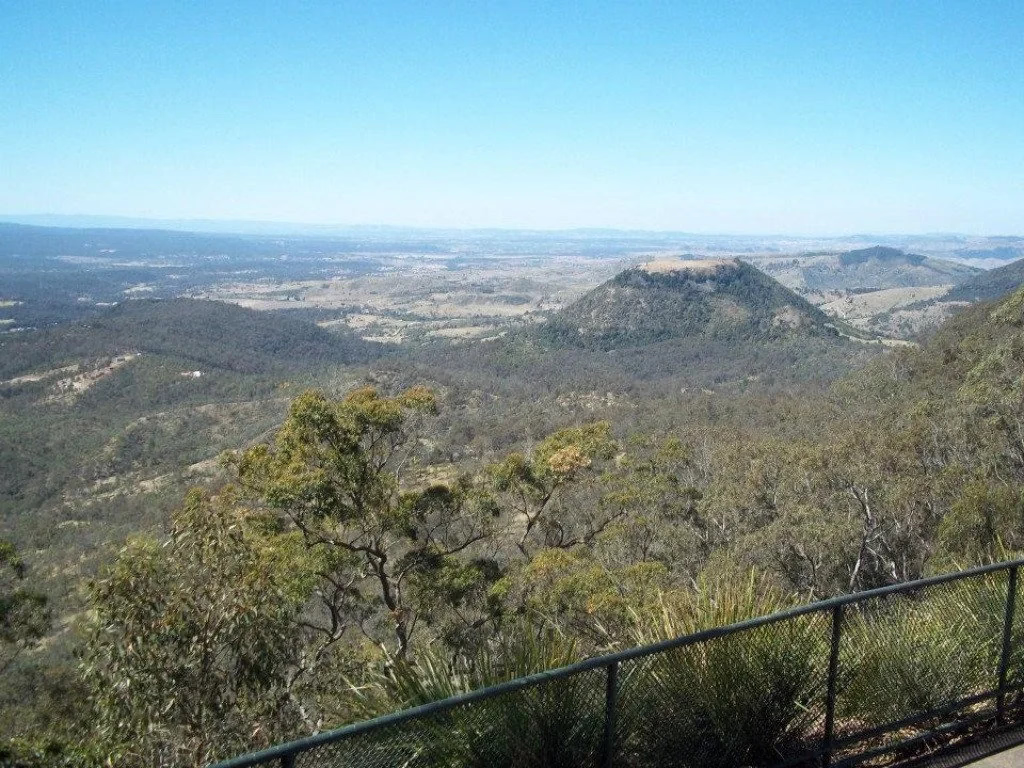
The travellers who understand Toowoomba's spring best stop choosing between its two acts and simply attend both. The format that works: take the Carnival in September as the staged spectacle it is — most efficiently via the Carnival day tour from Brisbane from $89, which handles the festival's logistics at their annual worst — then return in November under your own steam, when the purple season's empty streets make self-driving the easy mode this blog's other guides can rarely promise. Two trips, two entirely different cities: one dressed for company, one caught off duty, and each improving the other in the comparison.
The September trip also works as reconnaissance for the November one. Jacarandas are easy to identify out of season once you know the fern-fine canopy, and the festival visitor who clocks the big bare-limbed specimens over the heritage streets in September is unknowingly drafting their own November walking map. Note the avenues that will close over, the corner trees with clear sightlines, the cafe with the table facing the right direction — then come back six weeks later and collect. The double-trip spring is the Garden City's best-kept itinerary precisely because each half markets the other: September sells you on the town, November sells you on having it to yourself.
Basing yourself in the purple: where to sleep in November
Accommodation strategy in jacaranda season inverts every September rule, which is half the pleasure. The purple weeks are shoulder season proper: rooms available on short notice, rates at their civilised annual levels, and the luxury September never offers — choosing on character rather than scarcity. The choosing matters more than usual, because in November the location question is really a tree question: the heritage belt and the streets east of the centre put century-old canopy at your literal doorstep, meaning the season's best hour — early light through purple, streets empty — starts at your own front gate rather than after a drive. The full genre survey lives in our where to stay in Toowoomba guide; the November shorthand is simply to favour the old suburbs over the motel corridors, because this season's amenity is overhead.
The overnight case is gentler than September's but real: the jacarandas' best light comes at the day's soft ends, and the day-tripper's schedule misses both. One November night buys the dawn avenue walk, the golden-hour canopy and a dinner at tables the festival months cannot offer — for less than a September Saturday costs before breakfast. Couples migrating their annual Toowoomba stay from festival week to purple week report the same maths every year: half the spend, twice the street, and a city performing its second-best season for an audience small enough to feel personally invited.
What to pack for the purple weeks
November at 700 metres asks for a different bag than September did, and the adjustments are worth knowing before the Range delivers its usual surprise. The altitude still rules: days run warm and walkable, but evenings and early mornings keep the highland edge, so the light layer stays in the bag even when Brisbane left home in summer. Sun protection is non-negotiable — late-spring UV on the Downs is fiercer than the mild air suggests, and jacaranda touring is hours of looking up in open streets. Footwear should assume distance; the avenues reward the long wander, and the best purple always sits two blocks past where you meant to turn around. And the storm-season fringe begins: spring afternoons can build dramatic skies, so the morning-heavy schedule this guide already recommends doubles as weather insurance, with a compact umbrella riding along on the afternoons that look ambitious.
The season's specialist items are few and cheerful: the camera or phone with the white balance pulled cool, as the photography section explained; a picnic rug, because November lawns under purple are the year's best free seating; and hay-fever remedies for the pollen-sensitive, for whom high spring on a garden city's lawns is a known negotiation. Leave behind September's queue-management gear entirely — the thermos tactics, the dawn-parking plans, the booking spreadsheets. November's only required equipment is time, and the season is generous with everyone who brings some.
The purple season's best stages have their own guides: Queens Park, Ju Raku En and the best of Toowoomba year-round.
See the Carnival the easy way
Cooee Tours runs Carnival day tours from Brisbane ($89pp), the Gold Coast ($99pp) and the Sunshine Coast ($109pp), plus a $159 small-group Deluxe Experience with lunch included — no traffic, no parking, local driver included.
Carnival of Flowers Tours