The Garden City on the Range
Toowoomba sits high on the crest of the Great Dividing Range, roughly 125 kilometres and ninety minutes west of Brisbane — and those 700 metres of altitude change everything. The air is cooler, the seasons actually behave like seasons, the streets are lined with trees that need a proper winter, and the city that grew rich on the Darling Downs' wool and grain built itself to last, in sandstone and iron lace. The result is the most rewarding regional day trip in South East Queensland, and an even better weekend.
This guide covers the essentials and the sleepers — what to do, when to come and how to string it together. Every attraction below links to its own detailed guide, and if you'd rather have the whole thing organised with a driver-guide, that's been our job since 1974.
Start with the gardens
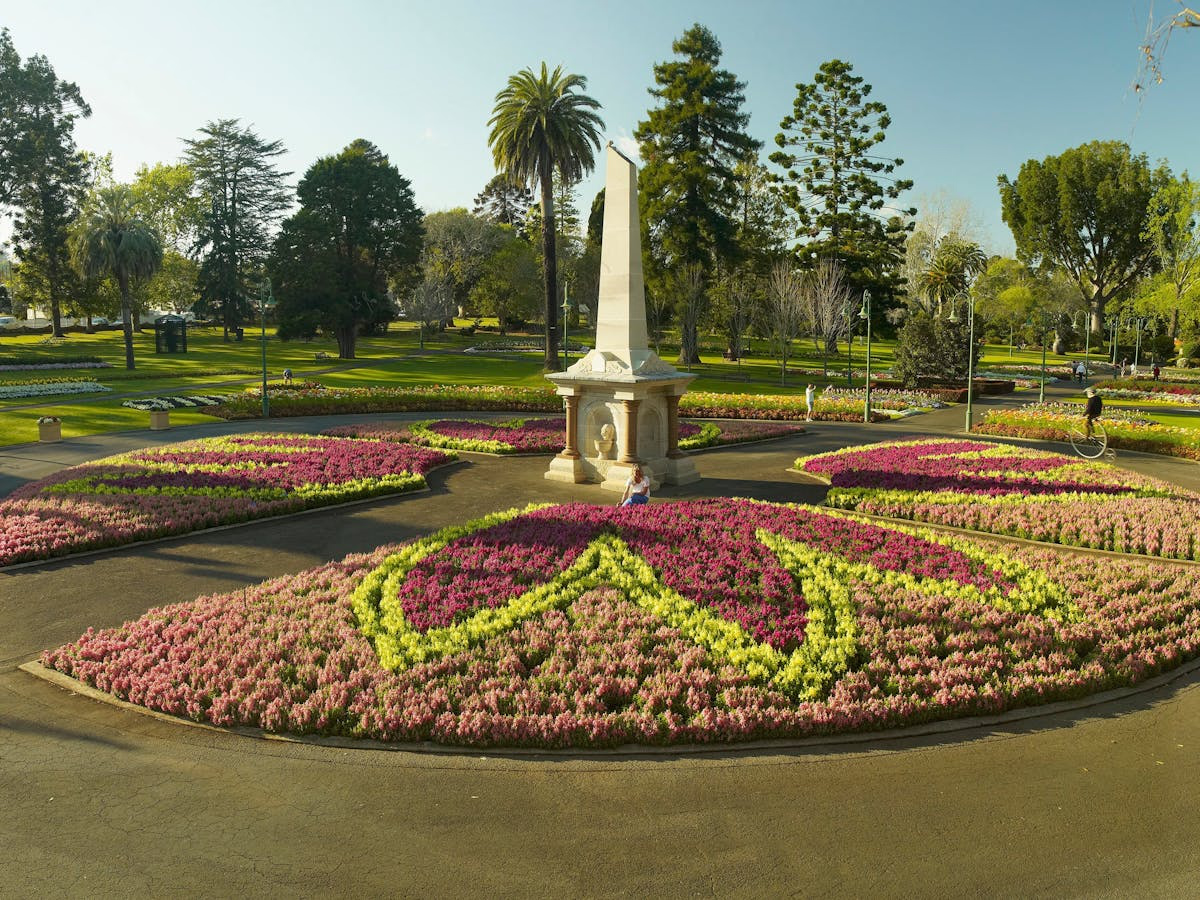
The nickname is earned. Queens Park is the heart of it: around 26 hectares of heritage-listed parkland beside the city centre, splitting its personality between the ornamental botanic gardens — home of the famous feature flower beds — and the broad lawns, grand old trees and playgrounds that host the city's daily life. It's free, open every day, and at its theatrical best each spring. Go between 8am and 10am and you'll share it with walkers and gardeners rather than crowds.
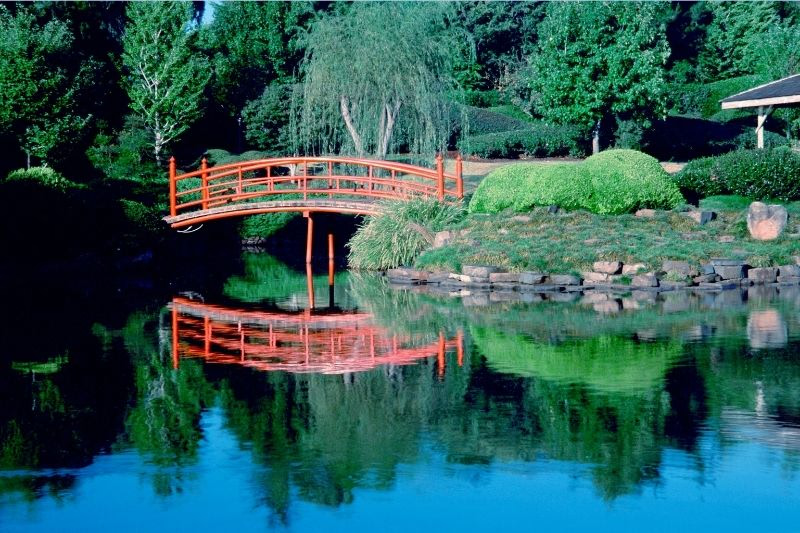
Laurel Bank Park is the connoisseur's second stop — smaller, quieter, built around heritage roses and a scented garden designed to be experienced with your eyes closed. Many locals privately prefer it. Across town on the university campus, Ju Raku En is one of the largest traditionally designed Japanese gardens in Australia: a lake, bridges, stone arrangements and about three kilometres of contemplative path, and the perfect palate-cleanser after a morning of massed colour. The quiet finisher is Boyce Gardens, a former private garden with a rainforest gully that most visitors never find.
For the full trail — including how the gardens transform during festival season — see our gardens guide.
Stand on the edge of the Range
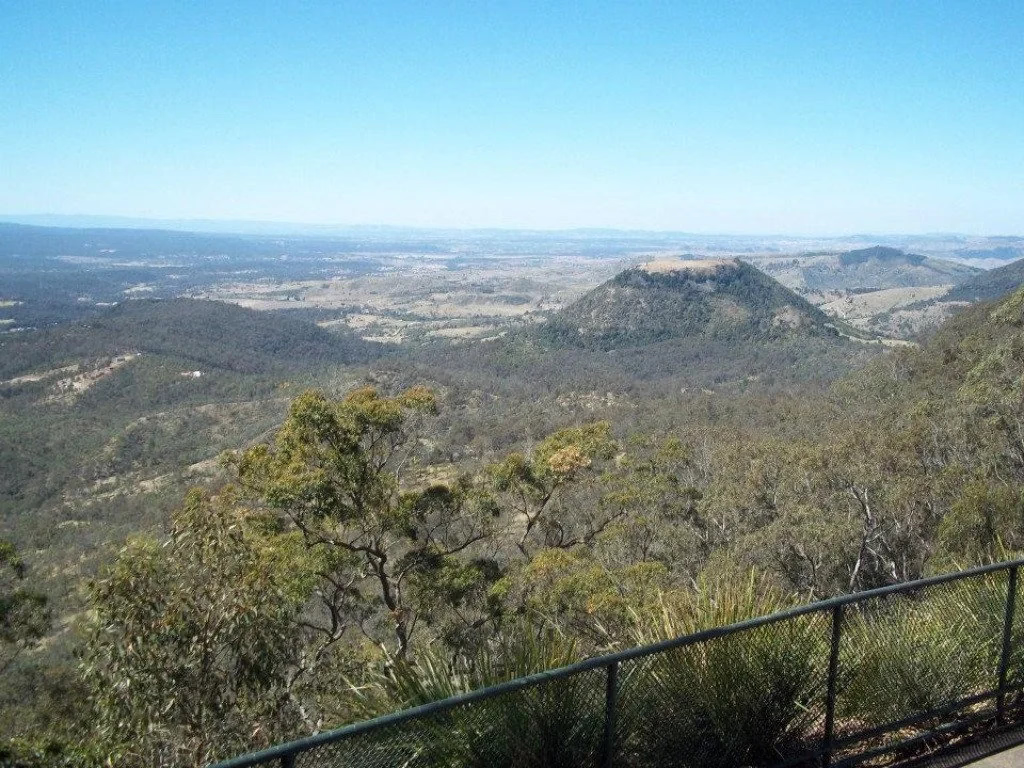
Picnic Point is where Toowoomba's geography becomes a spectacle: parkland and gardens running right to the escarpment edge, with the Lockyer Valley spread out 700 metres below and the flat-topped bulk of Tabletop Mountain in the foreground. It's free, five minutes from the CBD, and it has a cafe, playgrounds and a network of walking trails along the clifftop and down the slopes. Late afternoon is the classic — the light falls across the valley and golden hour from the lookout is the best free show in the city. Locals will tell you a summer storm rolling in from the east beats even that.
Walkers can push further: Redwood Park protects more than 200 hectares of the Range's eastern slopes with trails through remnant rainforest and eucalypt bush. Tabletop Mountain itself has a summit scramble, but be clear-eyed about it — steep, unmarked in sections, and for experienced walkers only. For most visitors, Tabletop is best enjoyed from the lookout with an ice cream. Full details in the escarpment guide.
Walk the laneways: street art
Between the sandstone banks and Federation pubs, Toowoomba hides one of regional Australia's best public art collections. Years of mural festivals through the mid-2010s left dozens of large-scale works threaded through the CBD's laneways and side streets, and new pieces have kept arriving since. There's no single official route — the collection is dense enough in the blocks around Ruthven and Margaret Streets that a slow two-hour wander finds the bulk of it, and the best pieces are often a deliberate half-block off the main streets.
It's flat, free, good in any weather, and the cafes are never more than a block away. We've given it a full guide of its own, plus a narrative walk on the blog.
Read the heritage streets
Toowoomba boomed as the capital of the Darling Downs through the late 1800s, and the money built to last: banks like temples, emporiums with iron lacework, corner pubs holding their ground since the coaching era, and the beautifully restored Empire Theatre — worth timing a show around. The centre keeps an unusually intact run of Victorian and Federation architecture, and two hours on foot along Ruthven and Margaret Streets reads the whole story. The rule of the walk: look up. Ground floors have been modernised like every Australian main street; the 19th century survives from the awnings upward. Our heritage walking guide has the full route.
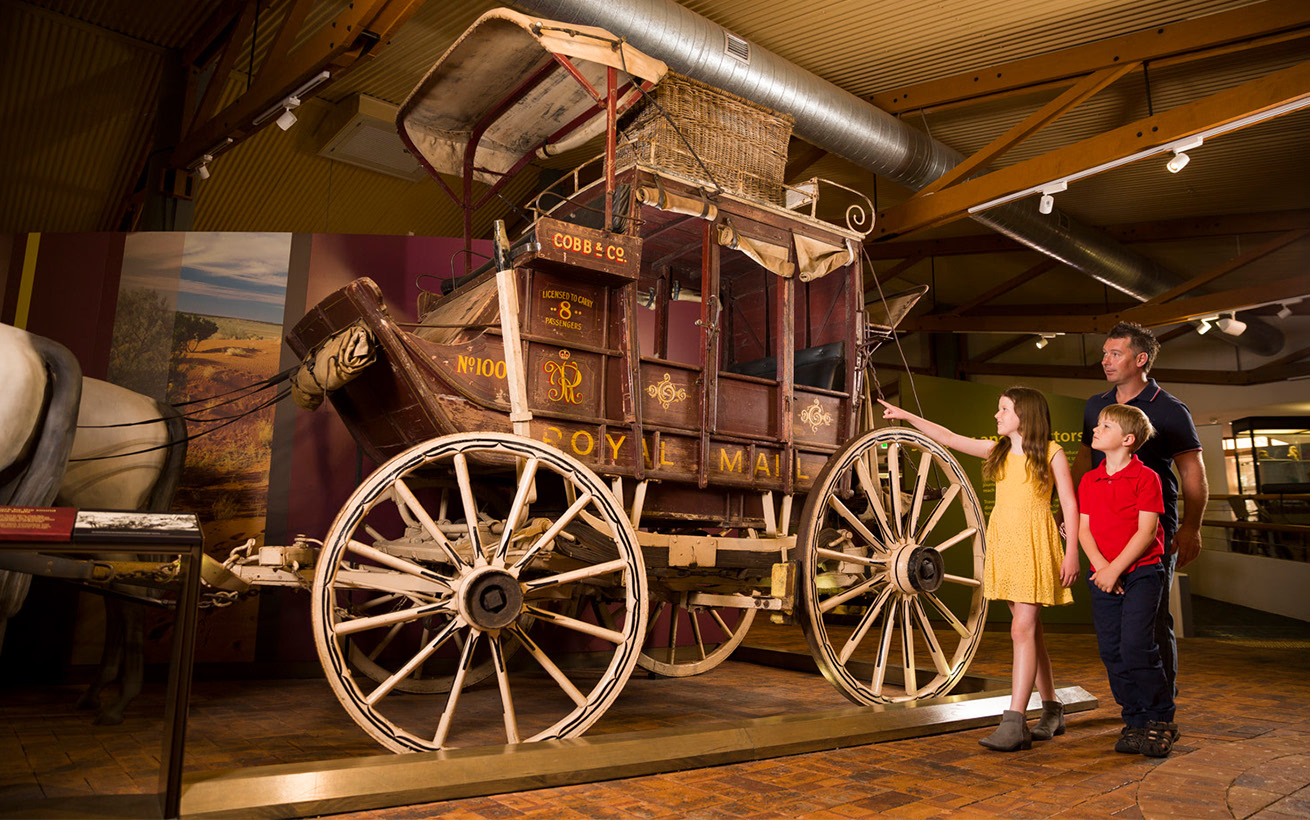
To put the streetscape in context, the Cobb & Co Museum beside Queens Park holds the National Carriage Collection — the coaching era that built the Downs, told through magnificent horse-drawn vehicles, hands-on heritage trades and family galleries with levers to pull rather than labels to read. It's ticketed (check current prices on the museum's site), takes a comfortable couple of hours, and doubles as the city's best wet-weather card.
Eat and drink your way through the CBD
Toowoomba's cafe culture has outperformed its postcode for well over a decade — crisp mornings breed coffee rituals, and the CBD holds enough serious rooms within walking distance that standards keep each other honest. Ground Up Espresso has long been the name most associated with the city's specialty coffee; Baker's Duck is the pastry pilgrimage that has justified entire trips up the Range on its own; The Finch carries the flag for produce-driven dining built on Darling Downs ingredients. Around them sits a deep bench of brunch rooms and hole-in-the-wall espresso bars that reward wandering — mapped in our coffee guide.
The country bakery belt around the city — Highfields, Hampton, Crows Nest and the Downs villages — runs a parallel tradition of pies and country baking that takes itself extremely seriously. Any day trip doubles as a bakery tour if you let it.
Head for the Range villages
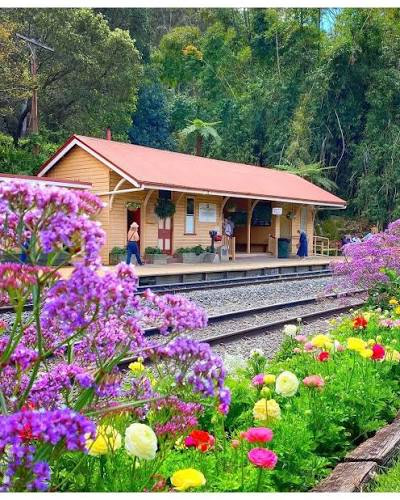
Twenty minutes down the old Range road, Spring Bluff Railway Station is the region's postcard: a heritage-listed station in a green fold of the Range, wrapped in award-winning gardens kept in bloom for over a century and planted to peak each spring. Highfields, fifteen minutes north, does village shopping, cafes and pioneer heritage; Hampton, on the cool ridge beyond it, is a hamlet with a food reputation far bigger than its footprint, celebrated each year by the Hampton Festival.
Forty minutes north, the Downs turn to granite at Crows Nest — antiques, a proper bakery and a heritage pub in the village, and just east of town the national park's headline walks: Crows Nest Falls and the Valley of Diamonds lookout, where light glitters off the gorge walls. Rock pools, eucalypt bush, spring wildflowers — carry water, wear real shoes, swim only where signage allows. The Crows Nest and Hampton loop strings it all into the classic half-day.
Go further: the valley, the Bunyas, the wine
Every visitor sees the Lockyer Valley — it's the patchwork of green below Picnic Point — but slow down on the way home and it repays the detour: one of Australia's most productive farming valleys, laced with farm gates, roadside stalls and country towns like Gatton and Laidley. About ninety minutes north-west, the Bunya Mountains rise out of the plains as an island of ancient rainforest, home to the world's largest stand of bunya pines and famously bold king parrots. And around two hours south sits the Granite Belt — Queensland's improbable high-altitude wine country around Stanthorpe, with cool-climate cellar doors, orchards and Girraween's granite monoliths. All eight drives are ranked in our day trips guide.
Time it right: the seasons
Spring is the marquee: the Carnival of Flowers fills the city each September — in 2026, the 77th festival runs 18 September to 5 October — and just as it packs up, the jacarandas stage a second act, turning the heritage suburbs purple from late October into November with none of the festival crowds. Autumn brings the deciduous colour show most of Queensland never sees. Winter is crisp blue walking weather, firesides and the cafe scene at its most persuasive. Summer trades on the altitude — milder days than Brisbane and long, cool evenings on the escarpment. There is no wrong season; there are only different Toowoombas. The timing guide and jacaranda guide go deeper.
Planning the practical bits
Getting there: the Warrego Highway runs the ninety-minute route from Brisbane, with the Toowoomba Bypass now carrying most through traffic around the city. The moment the road crests the Range and the Downs open out westward is the trip's first highlight. Staying: the city spans motels to boutique heritage stays; festival weekends sell out months ahead, so book early or visit midweek — the accommodation guide has the strategy. Packing: layers, always — the altitude giveth crisp mornings and taketh away Brisbane's humidity. How long: a day covers the gardens, lookout and lunch; two days adds the Range villages and museums; three days lets the Downs breathe.
Tour Toowoomba and the Darling Downs
Skip the drive up the range. Our Toowoomba day tours from $89pp cover the gardens, lookouts and laneways with pick-ups from Brisbane — and our year-round weekend tours (2-day from $595pp, 3-day from $880pp) add the villages, the falls and the nights in between.
A perfect first day, hour by hour
If you only have one day, sequence is everything — day-trippers waste Toowoomba by doing it in the wrong order. Leave Brisbane around 7am and you're cresting the Range with the morning still fresh. 9:00am: Queens Park, while the light is soft and the beds are at their crispest — give the botanic side ninety minutes. 11:00am: Laurel Bank Park for the roses and the scented garden, while your legs are still generous. 12:30pm: lunch in the CBD cafe belt, with a lazy loop of the street-art laneways attached — the murals and the coffee share the same blocks, which is the kind of civic planning we can all get behind.
2:00pm: your wildcard. Ju Raku En for calm, Cobb & Co for history, the champion private gardens in festival season, or the heritage streets if the light is good. 3:45pm: Picnic Point, because the escarpment view over the Lockyer Valley is best in the falling afternoon light and it's on the way home anyway. 4:30pm: down the Range, with a Lockyer farm-gate stop if the boot has room, and into Brisbane by early evening. Reverse any of this and you're fighting the light and the crowds all day. The one-day itinerary expands every stop.
Toowoomba with kids
The Garden City is quietly excellent family territory, mostly because so much of the best of it is free and outdoors. Queens Park's playgrounds and lawns absorb toddler energy while the adults admire the beds; Picnic Point adds playgrounds with a view and easy clifftop paths; and the Cobb & Co Museum is the ace — its family galleries are genuinely hands-on, and its heritage trades demonstrations turn history into something with sparks and hammering. In festival season, the closing long weekend is the family sweet spot: school holidays, the Paw Parade, and a program that skews family-friendly. Build in ice cream stops and the escarpment sunset and you've had a better day than any theme park. The family guide covers festival-time specifics, pram logistics included.
The wet-weather plan
The Range makes its own weather, and a misty Toowoomba day is not a wasted one — it might be the most atmospheric version of the city you'll get. The order changes: Cobb & Co Museum first (a comfortable two hours under cover), then the cafe crawl, which was built for exactly this, then the street-art laneways under an umbrella — murals photograph beautifully in overcast light, with none of the hard shadows that plague sunny-day shots. The Empire Theatre's program is worth checking for a matinee, and the heritage streets keep their dignity in drizzle better than almost any Australian main street, thanks to the awnings. If it clears by late afternoon, Picnic Point after rain — with mist lifting out of the Lockyer — is a photograph people won't believe you took in Queensland.
Where to point the camera
Toowoomba has four classic frames, and they're all free. The Queens Park feature beds in morning light, shot low with the blooms filling the foreground. The red bridge and lake reflections at Ju Raku En, best in early stillness or late gold. The Spring Bluff station gardens, framed from the platform with the Range rising behind. And Picnic Point at golden hour, with Tabletop Mountain catching the last light. In late October, add a fifth: a jacaranda avenue in East Toowoomba, shot down the tunnel of the canopy with the fallen flowers carpeting the road. Overcast days belong to the murals; storm season belongs to the escarpment. The photography guide covers timing, angles and festival etiquette in detail.
Beyond September: the events calendar
The Carnival of Flowers dominates the calendar — eighteen days each spring, anchored by the Grand Central Floral Parade, the FEASTival food weekend and the Weekend Table dining series — but the region keeps score year-round. Hampton throws its acclaimed little food festival on the ridge; the Empire Theatre runs a serious performing-arts program in one of regional Australia's loveliest venues; and the villages of the Downs stage the shows, markets and country race days that stitch rural Queensland's year together. Check current programs before you travel — and if your dates land in late October or November, the jacarandas are an event that needs no tickets at all.
Getting around without a car
Central Toowoomba is genuinely walkable — gardens, laneways, cafes and heritage streets all sit within a compact grid, and Picnic Point is a short rideshare from the middle of it. The Range villages and day-trip country are a different story: they're driving territory, spread along the New England Highway and the valley roads. That's precisely the gap our touring fills — day tours from Brisbane handle the whole circuit with a driver-guide, and weekend tours add the villages, falls and overnights. For garden clubs, seniors groups and social organisations, we build private charters around your own pace — call 0409 661 342 and we'll plan it together.
A little history, for the walk
The Giabal and Jarowair peoples are the Traditional Custodians of the Toowoomba region, with the Jagera people of the foothills and escarpment — custodianship stretching back tens of thousands of years before the first European squatters pushed onto the Downs in the 1840s. The town that grew from the swamp-side settlement boomed on wool, grain and the audacious railway that conquered the Range in the 1860s, and by the late 1800s it was the undisputed capital of the Darling Downs, building the sandstone confidence you'll walk past today. The garden obsession is nearly as old: civic plantings and private competition gardens shaped the city's identity across the twentieth century, culminating in the festival that began in 1949 and hasn't missed a spring since. Knowing that story makes every street read differently.
Six habits of people who do Toowoomba well
They go early. The gardens between 8am and 10am belong to walkers and photographers; by 11am on a festival weekend they belong to everyone else. They travel midweek when they can — same flowers, no queues, easier tables at the good cafes. They dress for the altitude, which means layers in every season and a genuine coat in winter; Brisbane rules do not apply at 700 metres. They eat like locals — bakery on the way up, long cafe lunch in the middle, and no shame in a second coffee stop; the scene is the attraction. They keep an eye on the sky, because the Range's changeable weather is a feature: mist makes the heritage streets cinematic, and clearing storms make the escarpment unforgettable. And they leave the parade precinct to the pedestrians on the third Saturday of September — nobody who has tried to park near Queens Park on parade day has ever tried twice.
One more, from the coach seats: the visitors who enjoy Toowoomba most are the ones who plan the shape of the day but not every minute of it. The city rewards wandering — the unplanned laneway, the pub verandah, the garden bed you weren't looking for. Leave slack in the schedule and let the Garden City fill it. If you'd rather borrow local judgement wholesale, that's what our driver-guides are for — forty years of knowing which slack to leave, and where.
Quick answers
Is one day enough? For the gardens, the lookout and lunch — yes, and it's a superb day. The villages, museums and food scene need a second day. Is it worth visiting outside festival season? Emphatically. The gardens are tended year-round, the jacarandas own late spring, autumn brings colour Queensland rarely sees, and everything is quieter. How cold does it get? Winter mornings can dip near zero — pack proper layers and enjoy coffee that finally makes climatic sense. Is it doable with limited mobility? The main parks have sealed, mostly level paths and accessible facilities, the CBD is flat, and Picnic Point's lookout is steps from parking. Our accessible touring page covers coach options and planning. Where should I stay? City-centre for walkability, heritage stays for character — and book months ahead for festival weekends. The accommodation guide has the full strategy.
Keep exploring
- All ten essential Toowoomba attractions — the complete guides
- The Toowoomba blog — 22 guides covering itineraries, food, photography and more
- Brisbane to Toowoomba — the day-trip playbook
- Carnival of Flowers 2027 — dates and early planning
However you assemble your visit — a single golden day, a proper weekend, or the full Downs circuit — Toowoomba repays curiosity like few Australian regional cities. Come for the festival the first time if you can. You'll come back for everything else.