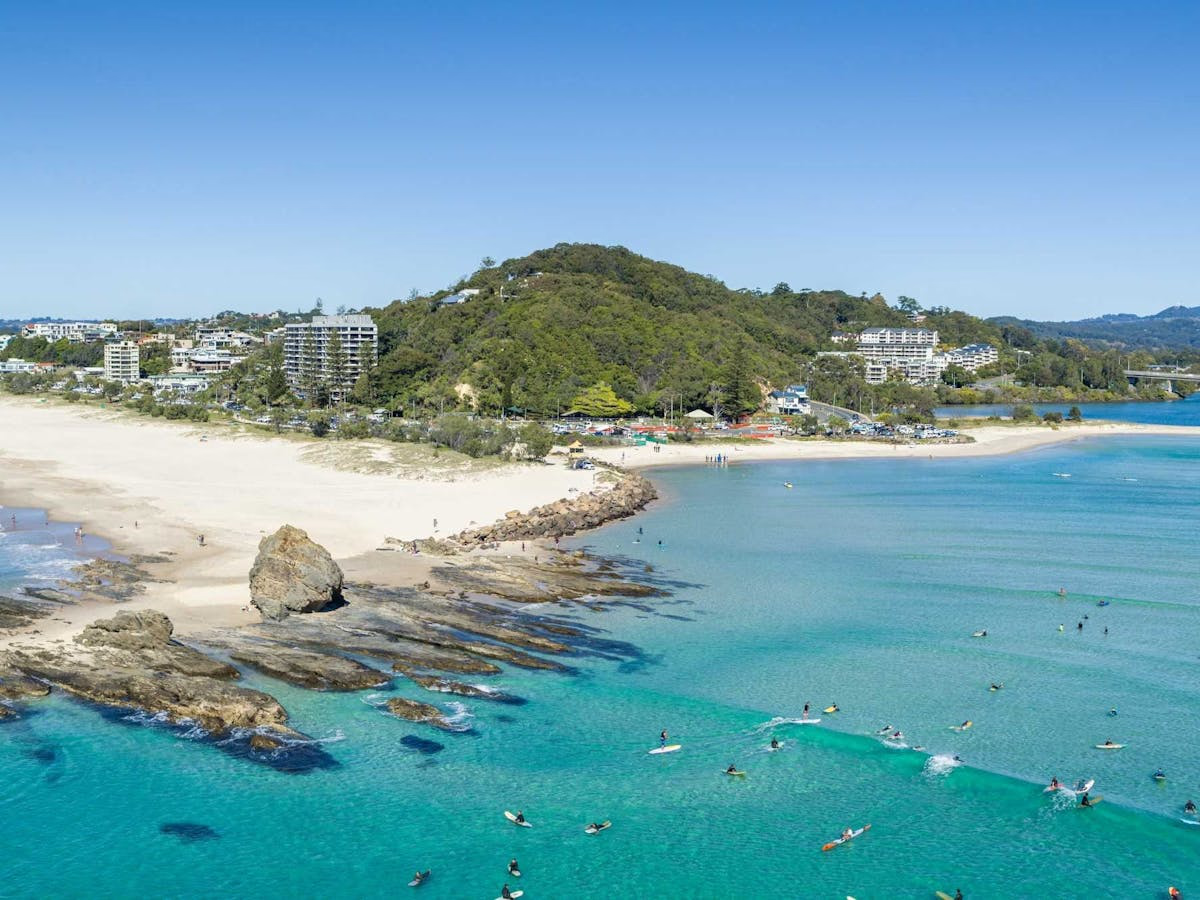
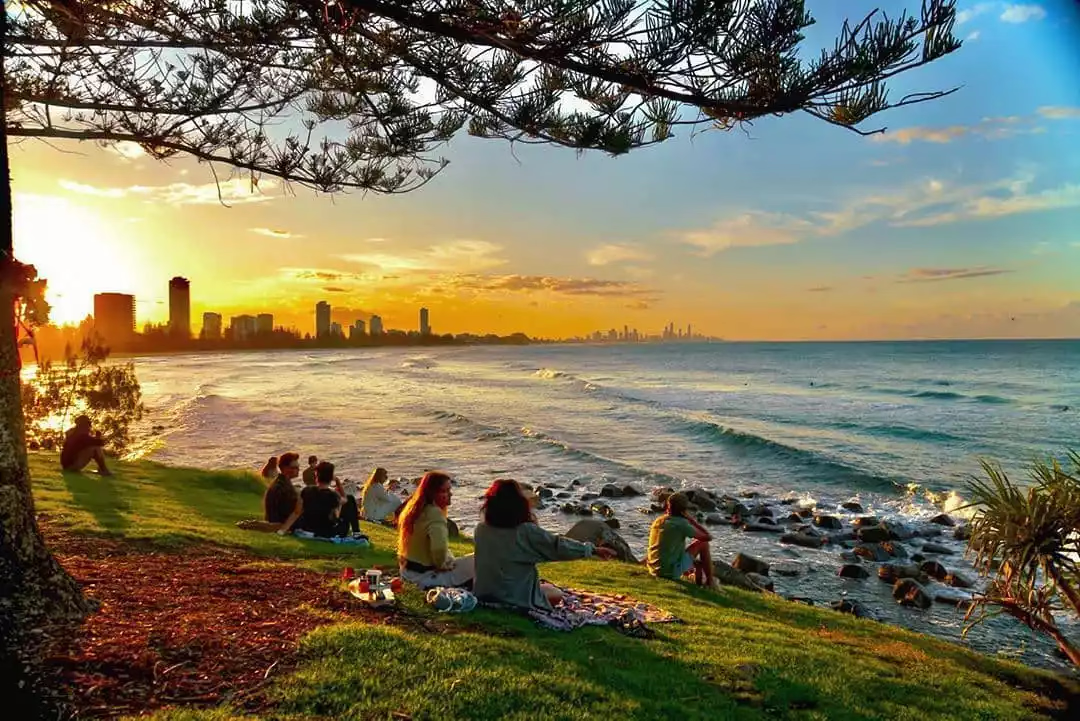
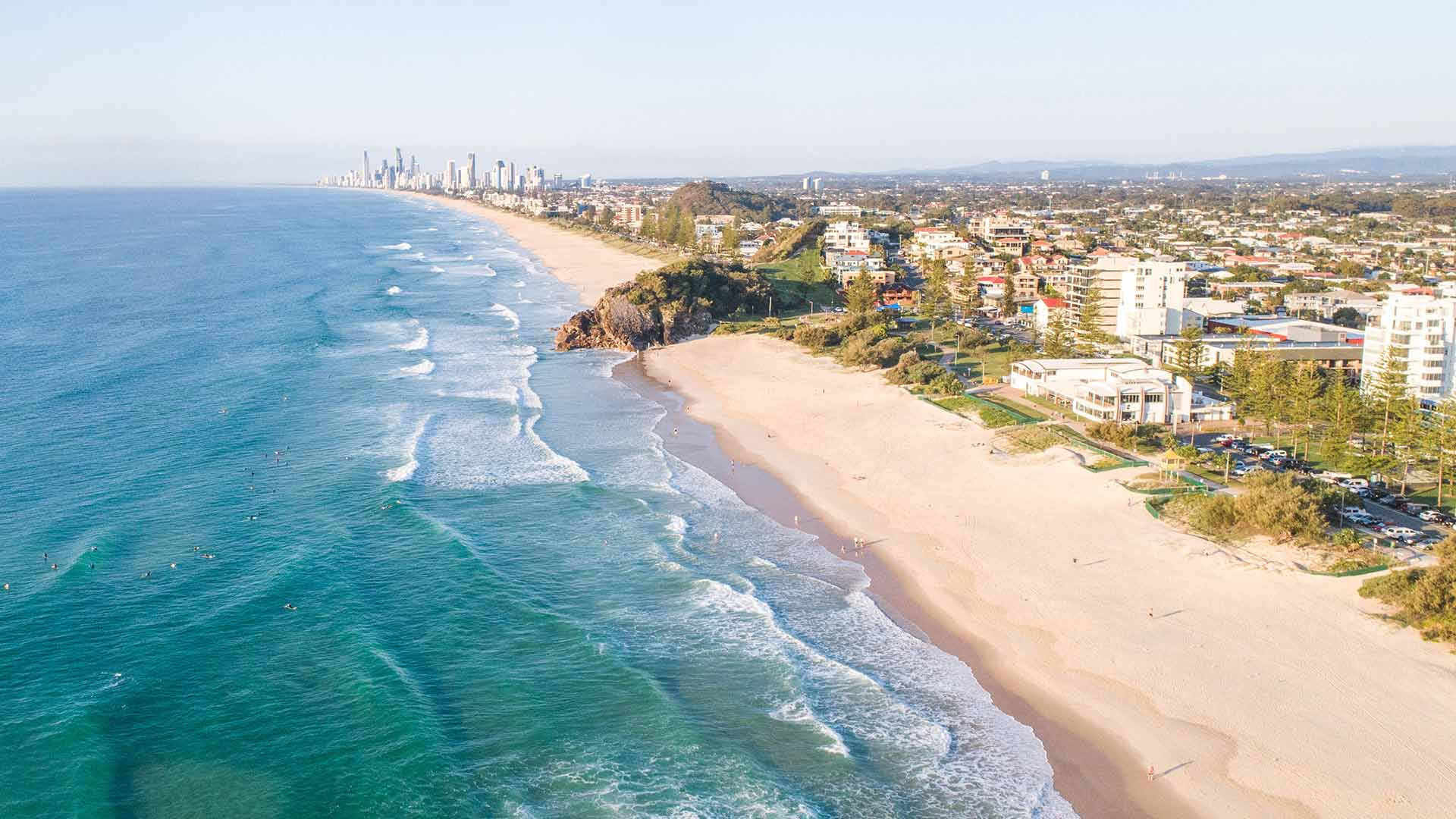
Burleigh Heads beach and headland on the Gold Coast, Queensland

Gold Coast · Queensland · Yugambeh Country

The Gold Coast, all of it, in one place

Fifty-two kilometres of surf beach on one side and World Heritage rainforest forty minutes inland on the other. This is the hub for every Cooee Tours Gold Coast page — where to stay, what to do, how to get around, when to come, and which tours are worth your day.

Start here

What the Gold Coast actually is

Most people picture the Gold Coast as one thing: a wall of towers behind a beach at Surfers Paradise. That is roughly two kilometres of a city that runs fifty-two. The rest is the part that surprises people — a chain of distinct beach suburbs heading south, each with its own personality, and behind them a hinterland of rainforest, waterfalls and vineyards that most visitors never reach because nobody told them it was there.

The city sits about an hour south of Brisbane on the M1 and stretches from Paradise Point in the north to Coolangatta on the New South Wales border in the south. Three things define the geography, and understanding them makes every other planning decision easier. First, the coastal strip — beach suburbs strung along the Gold Coast Highway and the G:link light rail. Second, the theme-park corridor inland at Oxenford and Coomera, roughly thirty minutes north-west of Surfers. Third, the hinterland — Tamborine Mountain, Springbrook and Lamington, all part of the Gondwana Rainforests World Heritage Area, and all within an hour's drive.

Almost every planning mistake we see comes from treating those three as if they were next door to each other. They are not. A day that tries to do Movie World in the morning and a Springbrook waterfall in the afternoon spends most of itself in a car. Our Gold Coast itineraries are built around that constraint rather than in spite of it.

52 km
of coastline, roughly 35 named beaches
~1 hr
from Brisbane CBD on the M1
6
major theme-park gates in one corridor
300+
sunny days a year, subtropical climate

Neighbourhoods

Where to base yourself

The single decision that shapes a Gold Coast trip more than any other. These suburbs are twenty minutes apart but they are not interchangeable — the difference between Surfers Paradise and Burleigh Heads is the difference between two holidays.

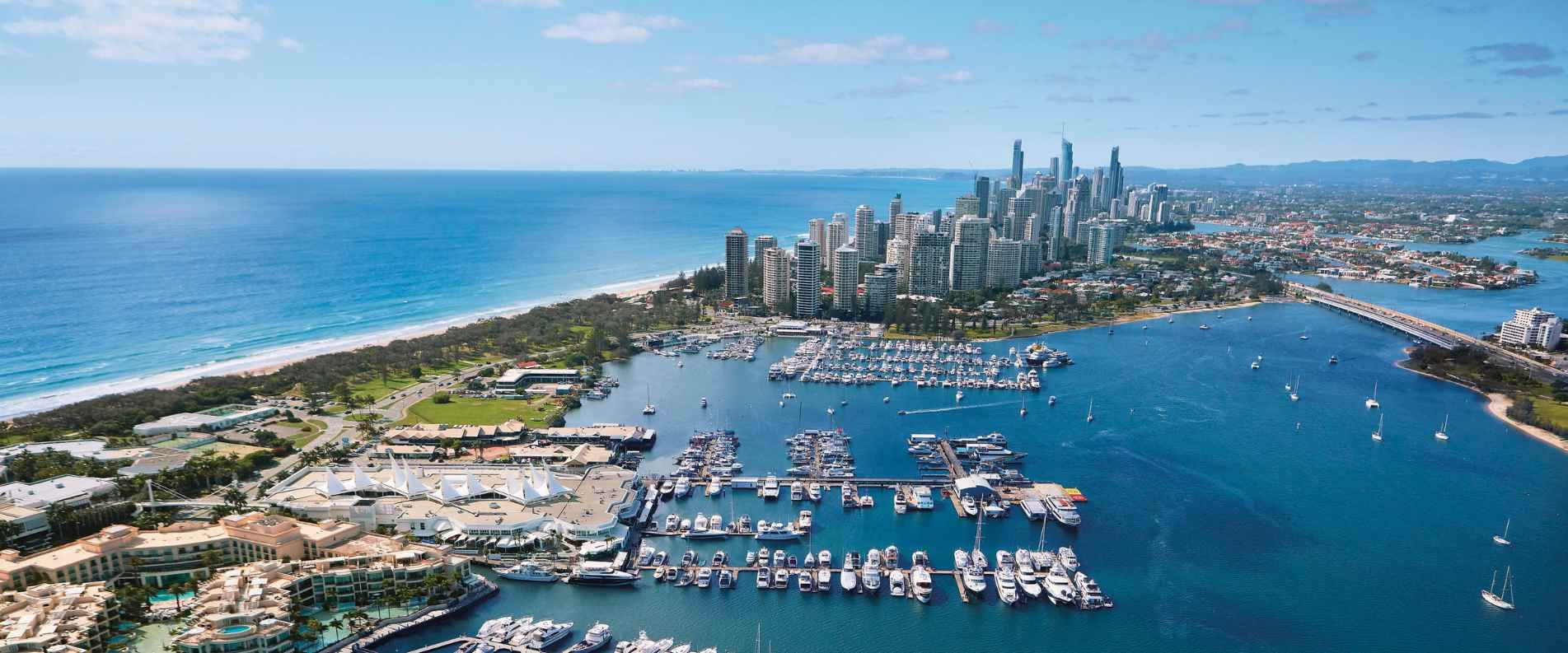
Aerial view over Southport and the Broadwater looking south to the Surfers Paradise skyline, Gold Coast
Central · High energy

Surfers Paradise

The postcard. Patrolled beach, the highest density of hotels and apartments, nightlife, and the light rail running straight through it. Loud, convenient, and the easiest place on the coast to be car-free.

Surfers Paradise guide →
Burleigh Heads beach and surf break below the national park headland, Gold Coast
South · Relaxed

Burleigh Heads

A world-class right-hand point break, a national park headland walk, and a café strip on James Street that locals actually use. Low-rise, walkable, and the coast's most consistently recommended base for people who want a beach town rather than a resort city.

Burleigh Heads guide →
Snapper Rocks and the Superbank surf break at Coolangatta on the southern Gold Coast
Far south · Border

Coolangatta & Tweed Heads

The border towns. Quieter beaches, Snapper Rocks and the Superbank, and the airport on the doorstep. Straddles the Queensland–New South Wales line, which means it also straddles a time zone during daylight saving.

Coolangatta guide →
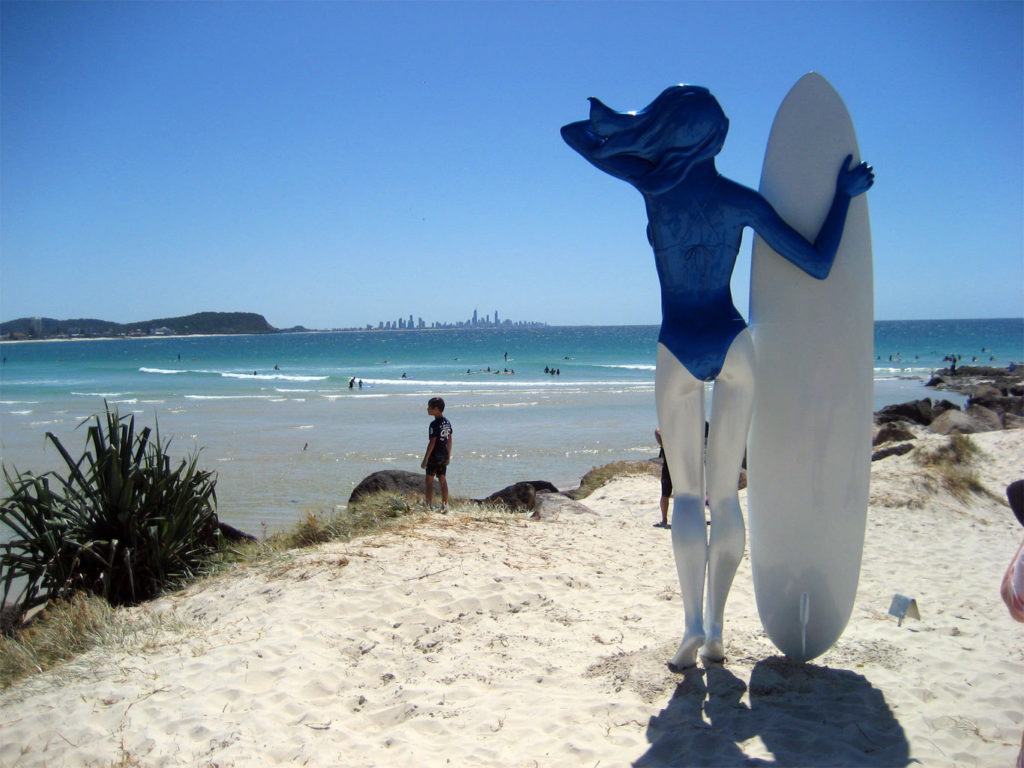
Currumbin Beach and the Currumbin Alley creek mouth on the southern Gold Coast
South · Local

Palm Beach & Currumbin

Where the Gold Coast stops performing. Currumbin Alley's protected creek mouth is one of the best family swimming spots on the coast, Elephant Rock anchors the headland, and the Currumbin Wildlife Sanctuary sits five minutes away.

Palm Beach guide →

The other bases worth knowing

Broadbeach is two kilometres south of Surfers and a different temperature altogether — the strongest restaurant precinct on the coast, wide beachfront parkland at Kurrawa, and still on the light rail. It is the usual answer for people who want the convenience of the centre without the noise of it.

Main Beach and The Spit sit north of Surfers on a narrow neck of land between the Broadwater and the ocean, with Tea Tree Park, the marina precinct and Sea World along it. The calmer water on the western side makes it the pick for families with small children. Further north again, Runaway Bay and Hope Island are quiet, residential and golf-oriented — a long way from the strip in feel if not in kilometres.

Choosing your accommodation

The Gold Coast is overwhelmingly apartment-based rather than hotel-based, and that single fact drives most of the pricing. A two-bedroom apartment with a kitchen and laundry frequently costs less than two hotel rooms, which is why the coast suits families and groups so well and why comparing it on a per-room basis gives a misleading picture.

High-rise or low-rise

Surfers Paradise, Broadbeach and Southport are the high-rise suburbs — ocean views, pools on level forty, and a lift queue in school holidays. Burleigh, Palm Beach, Currumbin and Coolangatta are predominantly low-rise, with smaller buildings, more short-term rental houses and a quieter street. Neither is better; they are different holidays and the choice is worth making deliberately.

Book earlier than you think

Queensland school holidays and the December–January block sell out the good apartments months in advance, and many buildings apply minimum stays of five to seven nights across those periods. Outside them, the same properties are available at short notice and materially cheaper.

Pick the suburb before the building. Our where to stay guide breaks the choice down by suburb, traveller type and season rather than by star rating — which is the order the decision actually happens in.

The corridor

Six theme-park gates, two operators

This is the detail that saves people the most money and the most confusion, and almost nothing written about the Gold Coast explains it properly. The parks are not six independent businesses. They belong to two operators, and passes do not cross between them.

Village Roadshow runs Warner Bros. Movie World, Sea World, Wet'n'Wild and Paradise Country — one multi-park pass covers all four. Coast Entertainment runs Dreamworld, the seasonal WhiteWater World, and SkyPoint at Surfers Paradise on a separate ticket. Buying a Village Roadshow pass and then expecting it to open the Dreamworld gate is the single most common mistake we hear about.

Geography matters just as much. Movie World, Wet'n'Wild and Paradise Country sit together at Oxenford; Dreamworld and WhiteWater World are a few minutes further north at Coomera. Sea World is the outlier — it is on The Spit at Main Beach, ten to fifteen minutes from Surfers and nowhere near the others. Pairing Sea World with Movie World on the same day means crossing the city twice.

Forty minutes inland

The hinterland is the half most visitors miss

Three mountain areas, all inside the Gondwana Rainforests of Australia World Heritage Area, all reachable as a day trip from any coastal suburb.

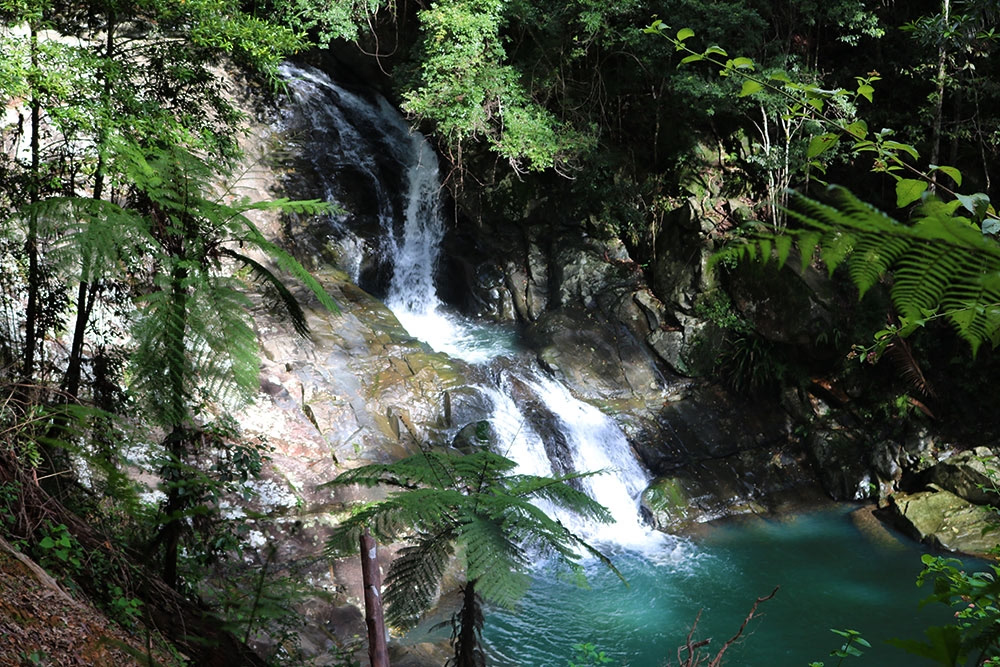
Cougal Cascades waterfall running through rainforest in Currumbin Valley, Gold Coast hinterland

Tamborine Mountain is the accessible one and the busiest. A plateau of rainforest walks, a rainforest skywalk, a gallery walk of shops and cafés, and the densest concentration of cellar doors and distilleries in South East Queensland. It is the hinterland trip that works even when the weather is uncertain, because there is as much to do under a roof as under a canopy.

Springbrook is the dramatic one. Purling Brook Falls, the Natural Bridge cave with its glow worm colony, and Best of All Lookout on a clear day. It is higher, cooler and wetter than the coast, which is exactly why the waterfalls run — and why a Springbrook day in a summer downpour can be spectacular rather than ruined.

Lamington National Park is the serious one. O'Reilly's and Binna Burra sit at the ends of long, winding mountain roads, and the walking track network is the best in the region. The drive is the commitment — narrow, steep and slow in both directions.

The road is the reason people book a tour here. The climbs to Springbrook, O'Reilly's and Binna Burra are genuinely demanding drives — single lane in places, tight switchbacks, and no shoulder. Add a cellar door to the day and someone has to stay dry. That is the whole argument for a guided hinterland day rather than a hire car.

Cellar doors and distilleries

Tamborine Mountain and the Canungra Valley hold a small but genuinely good wine and spirits scene. These are individual venue guides rather than a list — opening days vary, several are weekend-only, and the mountain roads make self-driving between them a poor idea if tasting is the point.

Touring with Cooee

What we actually run here

Cooee Tours has been operating in South East Queensland since 1974. On the Gold Coast that means small-group and private touring with our own coaches, planned from our Brisbane office.

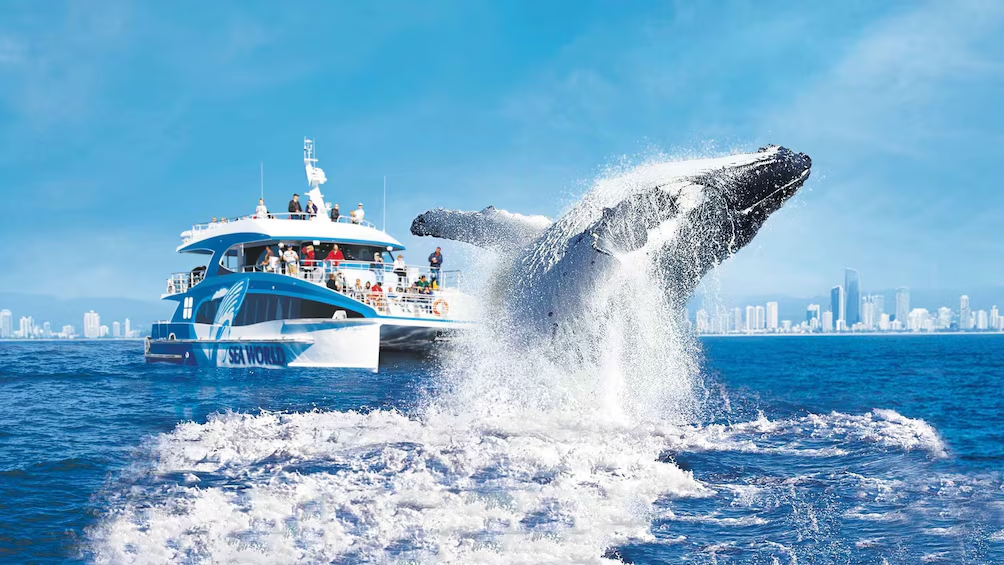
Humpback whale breaching off the Gold Coast on a whale watching cruise, Queensland
Gold Coast touring at a glance — full detail on each tour page.
If you want…Look atTypical shape
Rainforest and waterfalls Hinterland waterfalls · Springbrook Full day, mountain roads, walking shoes needed
Wine and cellar doors Wine tours · Wine & rainforest Full day, several venues, nobody drives
Whales, in season Whale watching Half day, roughly June to early November
Theme parks without the parking Theme park transfers Return transfer, corridor parks and Sea World
A day across the border Byron Bay day trip · Byron & Tweed Full day, lighthouse and hinterland villages
Food, beer and coffee Food & drink · Brewery tours · Foodie tours Half or full day, coast and hinterland
A private group or occasion Private charters · Hens parties · Corporate Built to your itinerary and group size
Comfort and pace Seniors tours · Family tours Fewer stops, longer at each, accessible vehicles

Logistics

Getting here, and getting around

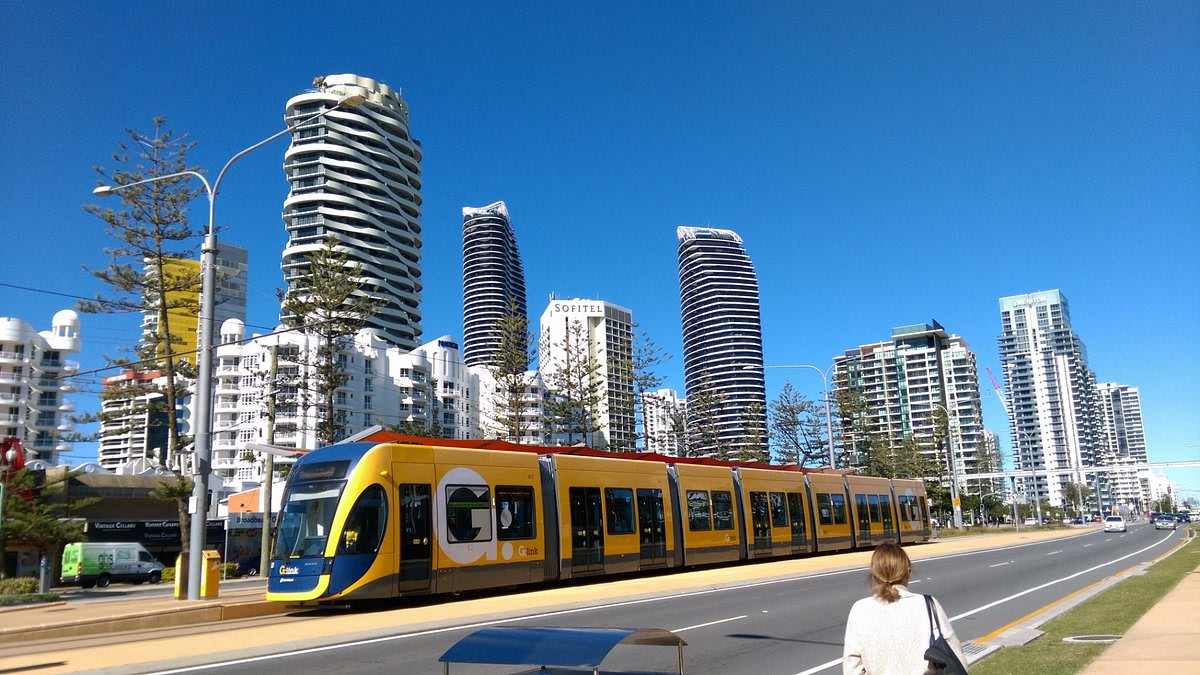
G:link light rail tram on the Gold Coast, the Stage 3 extension south toward Burleigh Heads

Arriving

By air

Two airports serve the city, and choosing the wrong one costs you an hour in each direction.

Gold Coast Airport, Coolangatta

Sits at the southern end of the city, walking distance from the southern beaches and about forty-five minutes from Surfers Paradise. Domestic and trans-Tasman services. If you are staying south of Burleigh, this is comfortably the better arrival point.

Brisbane Airport

The larger international gateway, roughly ninety minutes north of Surfers Paradise by road. Better route options and more long-haul connections, at the cost of a longer transfer. Flying into Brisbane to stay at Coolangatta means driving past your accommodation's own airport.

By road

From Brisbane the M1 is the only realistic route, and it is genuinely congested at peak times and on Friday afternoons through holiday periods. Allow well beyond the hour the map suggests if you are travelling at those times.

By rail

The Gold Coast line runs from Brisbane through to Varsity Lakes. Helensvale and Coomera are the stations that matter for the theme-park corridor, and Helensvale is also the northern terminus of the light rail, which makes it the single most useful interchange on the coast.

Moving around once you are here

The G:link light rail

The backbone of the coastal strip, running from Helensvale in the north through Southport, Surfers Paradise and Broadbeach, with Stage 3 extending the line south toward Burleigh. If you are staying anywhere on that line you can have a genuinely good Gold Coast holiday without a car — unusual for an Australian city this spread out.

Everywhere else

Off the light rail line the picture changes. The southern beaches, the theme-park corridor and the entire hinterland need a bus connection, a car, or a tour. For the hinterland there is no useful public transport at all — that is the whole reason guided days exist up there.

Getting to the theme parks without a car

One route does the job, and it is TX7. It runs between Coomera station and Helensvale station via Dreamworld, Warner Bros. Movie World and Wet'n'Wild, stopping at the park gates themselves. Roughly eight stops end to end, about forty minutes for the full run, and it operates daily from around 8am to 6pm.

That gives you two ways in. From anywhere on the coast, take a northbound tram to Helensvale and change to TX7 — the tram and the bus meet at the same interchange. From Brisbane, take the train to Coomera and pick up TX7 there. Helensvale is the closer end for Movie World, Wet'n'Wild, Paradise Country and Australian Outback Spectacular; Coomera is the closer end for Dreamworld and WhiteWater World.

TX1, TX2, TX3 and TX5 no longer run. They were the old “Theme Park Xpress” services, and they were peak-flow routes from the southern and central coast — TX1 from Tweed Heads and Coolangatta, TX2 and TX3 from Broadbeach, Surfers Paradise and Main Beach. TX7 is the surviving successor to TX5. Plenty of travel sites still list the old numbers, so check TransLink's journey planner rather than a printed guide.
Sea World is the exception

TX7 does not go there, because Sea World is not in the theme-park corridor. Take the tram to Southport or Main Beach and change to bus route 704. There is no express service to Sea World.
Weather & timing

When to come, and what to expect

The Gold Coast is subtropical, which means there is no bad season — only seasons that suit different trips. The real variables are humidity, rainfall and school holidays.

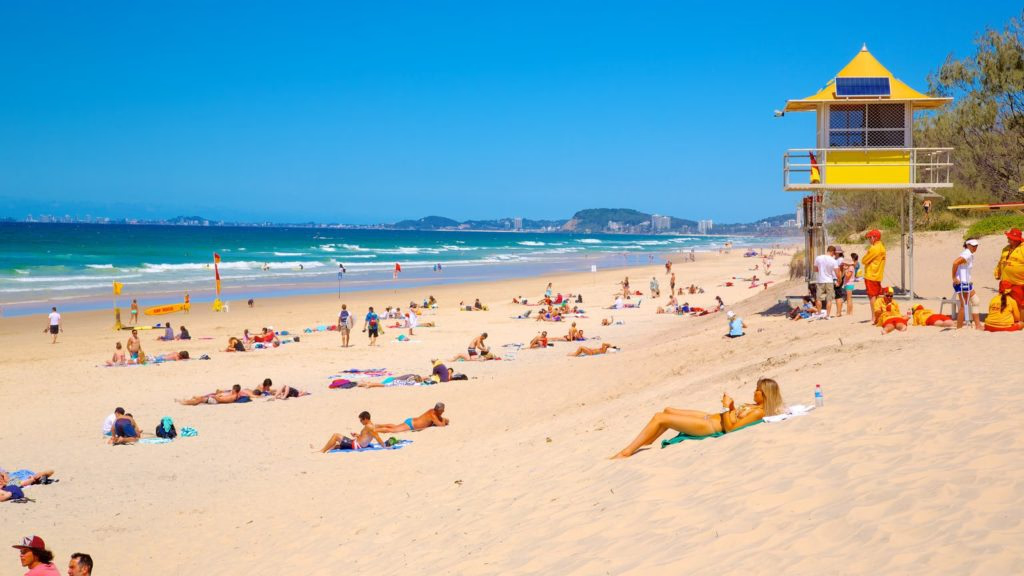
Sunny Gold Coast beach day with clear water, showing the best time to visit south east Queensland
Summer
December – February
Hot & humid

Peak beach season and peak crowds. Warm ocean, long evenings, and the wettest months of the year — rain usually arrives as afternoon storms rather than all-day drizzle. Book accommodation well ahead; this is when the coast fills.

Autumn
March – May
The sweet spot

Warm days, falling humidity, water still comfortable, and crowds thinning after January. If you want one recommendation for the best all-round time to visit the Gold Coast, this is it.

Winter
June – August
Mild & dry

Clear, dry, and mild rather than cold. The driest months, the best hinterland walking weather, and whale migration season offshore. Ocean swimming is bracing but far from impossible.

Spring
September – November
Warming up

Rising temperatures, low rainfall, and the ocean warming again. September school holidays are busy; outside them, spring rivals autumn for value and comfort.

The thing that matters more than the weather

Queensland school holidays reshape the Gold Coast more than any weather pattern does. Accommodation prices rise sharply, theme parks extend their hours and fill their car parks, and the hinterland roads get busy. If your dates are flexible, travelling in the fortnight either side of a school holiday block gets you the same weather at a very different price.

Food & drink

Eating on the Gold Coast

Restaurant dining on the Gold Coast, part of the where to eat guide for Queensland's Gold Coast

The city's food scene has changed considerably and the reputation has not caught up. Broadbeach holds the highest concentration of serious restaurants, and the Surf Parade and Oracle Boulevard area is where most visitors will find their best meal. Burleigh Heads runs on café culture by day and a small, good dinner strip by night along James Street. Palm Beach and Miami have quietly become the places locals go when they want something interesting.

Beyond the restaurants, three things are worth planning around: the weekend markets, which move between Burleigh, Miami and the hinterland; the brewery scene in the light-industrial pockets at Burleigh and Currumbin; and the hinterland cellar doors, which are a different proposition again and belong in a day of their own rather than squeezed into an evening.

Nearby

Where the Gold Coast leads next

Some of the best days out from the Gold Coast are not on the Gold Coast.

Byron Bay sits about an hour south across the New South Wales border — the lighthouse at Cape Byron is mainland Australia's most easterly point, and the hinterland villages of Bangalow and Federal are the part most day-trippers skip. Note the time difference during daylight saving; Queensland does not observe it and New South Wales does.

Brisbane is an hour north and repays a day of its own rather than a rushed afternoon. The Scenic Rim sits inland to the west, and the Tweed Coast runs south from Coolangatta through a string of beach villages that feel a generation removed from the Gold Coast strip.

Who it suits

Why the Gold Coast works for almost everyone

Most destinations make you choose — beach or mountain, family or adventure, city or wilderness. The Gold Coast refuses to pick, and that is the actual reason it works for such different travellers.

Fifty-odd kilometres of coast, and a lifeguard service to match

From South Stradbroke Island down to Coolangatta is somewhere over fifty kilometres of coastline. The City of Gold Coast runs what it describes as the largest lifeguard service in Australia, operating 365 days a year and patrolling 27 beaches year-round, rising to 41 during school holidays.

Worth being precise about what that means, because it is easy to misread: patrolled does not mean the whole coast is watched. It means those beaches have flagged areas that a lifeguard has chosen and is actively monitoring. Between the flags is the safe part. That distinction is the single most useful thing a visitor can understand about swimming here, and it is covered properly in our practical information.

Different beaches genuinely suit different people

Surfers Paradise has the skyline and the central action. Burleigh Heads has the world-class right-hand point break and a headland national park at the end of it. Main Beach has the calm Broadwater water that suits young children. Currumbin Alley is where beginners learn. Rainbow Bay and Coolangatta sit in the lee of the border headlands. They are not interchangeable, and choosing the wrong one for your group is the most common avoidable disappointment here.

And the mountains are forty-five minutes away

The part that surprises people. From the sand at Burleigh to ancient Gondwana rainforest at Springbrook is under an hour, and the two feel like different countries. That contrast is the Gold Coast's real distinguishing feature, and it is why a three-day trip here can be more varied than a week somewhere flatter.

Brisbane-based, Gold Coast specialists

We are an hour up the M1 and have been booking the Gold Coast since 1974. Our specialists know the Natural Bridge dusk window for glow worms, the difference between Movie World on a school holiday and Movie World on a Tuesday, and which Broadbeach restaurants will take a group booking the night before. We coordinate the transfers, the hinterland day, the whale cruise — one team, one contact, one invoice.

Trip length

How many days do you have?

The Gold Coast rewards a longer stay less than most destinations, because the three landscapes are close together but not close enough to combine. Here is what each length realistically buys you.

Grouped by landscape, which is what actually constrains a Gold Coast day.
You haveA realistic planLeave out
One day The coast: a headland walk, a patrolled beach, an evening in Surfers or Broadbeach. Theme parks and the hinterland. Each is a full day on its own.
Two days Add either one theme park or one hinterland day — not both. Lamington, which is the longest drive of the inland options.
Three days Coast day, theme park day, hinterland day. The sweet spot. Very little. This is the length the region is built for.
Five days or more All of the above plus Byron Bay, a second park, or a proper hinterland walk. Nothing — but keep one day genuinely unplanned.

The one planning rule worth taking seriously: group your days by landscape rather than by attraction. A theme park in the morning and a Springbrook waterfall in the afternoon looks fine on a map and spends most of the day in a car. Our day-by-day itineraries are built around exactly that constraint.

Before you go

Costs, events, packing and official sources

The detail that changes year to year lives on its own pages, so it stays current. Here is what to read and why.

What a Gold Coast trip costs

Cost here varies more by season than by anything else — the same apartment can double in price between a quiet week and a school holiday block. Accommodation, theme-park entry and car hire are the three largest line items, and the first two are where the seasonal swing bites hardest. Our budget guide and 2026 tour prices carry the working numbers.

What is on while you are here

The coast runs a full events calendar — surf competitions, food and beer festivals, marathons and the summer season — and several of them move accommodation prices on their own. Check the 2026 events calendar before you lock dates, particularly if you are travelling on a weekend.

What to pack

Less than you think for the coast and more than you think for the hinterland. The mountain runs several degrees cooler than the beach, catches cloud the coast never sees, and can be genuinely cold on a winter morning while people are swimming at Burleigh. Reef-safe high-SPF sunscreen matters year-round — Queensland's UV sits at extreme levels for much of the year — and closed walking shoes are the item most often left behind by people who then want to walk a rainforest track.

Official sources worth checking

For anything safety-related, go to the source rather than a travel guide. Beach conditions and patrol flags come from Surf Life Saving Queensland; national park closures, track conditions and camping permits from the Queensland Parks and Wildlife Service; public transport times from TransLink's journey planner; and weather from the Bureau of Meteorology. All four change faster than any guide can, and in the hinterland a track closure is a real possibility after heavy rain.

Common questions

Gold Coast questions we get asked most

How many days do you need on the Gold Coast?

Three full days is the practical minimum to see the coast, one theme park and the hinterland without rushing. Two days forces a choice between parks and rainforest. Five days lets you add Byron Bay or a second park and still have a beach day that is genuinely a beach day. Our three-day itinerary is built around that minimum.

Do I need a car on the Gold Coast?

Not if you are staying on the G:link light rail line between Southport and Broadbeach and are happy to use tours or transfers for the parks and the hinterland. You do need transport of some kind for the theme-park corridor, the southern beaches beyond the line, and anywhere in the hinterland. Many visitors find a mix works best — no car, plus a guided day for the mountain.

Which bus goes to the Gold Coast theme parks?

TX7. It runs between Coomera station and Helensvale station via Dreamworld, Warner Bros. Movie World and Wet'n'Wild, stopping at the park gates. Take a northbound tram to Helensvale and change to TX7, or the train from Brisbane to Coomera.

The older TX1, TX2, TX3 and TX5 Theme Park Xpress routes no longer run, though a lot of travel sites still list them. Sea World is not on TX7 — take the tram to Southport or Main Beach and change to bus route 704.

Which theme park is best?

It depends who is going. Movie World for thrill rides and shows, Sea World for marine life and younger children, Dreamworld for the widest ride range across ages, Wet'n'Wild for a hot day, Paradise Country for a gentle farm experience. Remember that Movie World, Sea World and Wet'n'Wild share one operator's pass while Dreamworld is ticketed separately — see the theme parks guide before buying anything.

When is the best time of year to visit the Gold Coast?

Autumn, roughly March to May — warm, drying out after summer, ocean still comfortable, and crowds down. Winter is the driest and best for hinterland walking and whale watching. Summer has the warmest water and the biggest crowds and the most rain. Avoid Queensland school holiday blocks if price matters.

Is the Gold Coast good for families?

It is one of the strongest family destinations in Australia — patrolled beaches, six theme-park gates, wildlife sanctuaries, and apartment accommodation that suits families better than hotel rooms. Main Beach and Currumbin have the calmest water for small children. See things to do with kids.

What is there to do on the Gold Coast when it rains?

More than you would think. Tamborine Mountain's gallery walk, cellar doors and distilleries work in any weather, the waterfalls are at their best in rain, and the indoor attractions along the coast — aquariums, arcades and the major shopping centres — absorb a wet day easily. Our rainy day guide covers it properly.

How far is the Gold Coast from Brisbane?

About an hour by road on the M1 in good traffic, longer at peak times and on Friday afternoons. By rail, the Gold Coast line runs from Brisbane to Varsity Lakes. A Gold Coast day trip from Brisbane is very doable — our day trip itinerary sets out a realistic version of it.

Can you see whales from the Gold Coast?

Yes — humpbacks migrate past the coast through the middle of the year, roughly June to early November, and they pass close enough that headlands like Burleigh and Point Danger give genuine land-based sightings. Boat-based whale watching runs through the season.

Is Surfers Paradise safe at night?

It is a busy entertainment precinct with the usual characteristics of one — well lit, heavily patrolled, and with the late-night issues any nightlife district has. Most visitors have no trouble. We have written about it in detail in is Surfers Paradise safe at night.

What does a Gold Coast trip cost?

It varies more by season than by anything else — the same apartment can double in price between a quiet week and a school holiday. Theme park entry, accommodation and car hire are the three largest line items. Our budget guide and 2026 tour prices give current working numbers.

Ready to put a Gold Coast trip together?

Tell us who is travelling, roughly when, and what you would hate to miss. A Cooee specialist in our Brisbane office will come back with a plan — not a brochure.