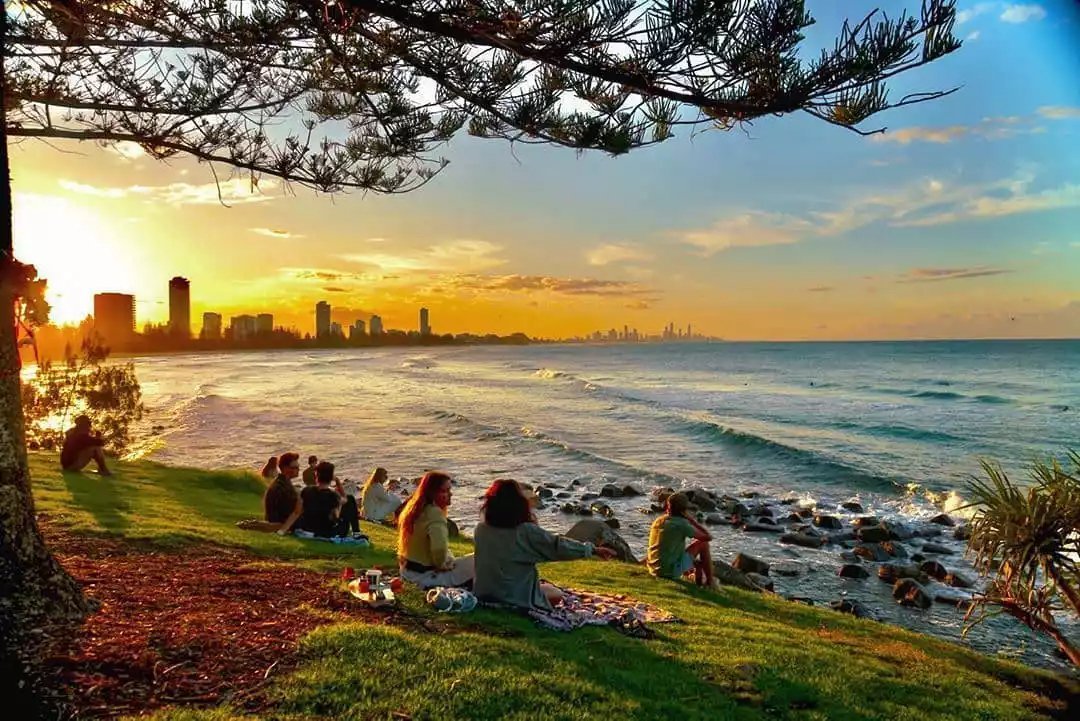
The Best Time to Visit the
Gold Coast
Subtropical, sunny and swimmable year-round — but the Gold Coast changes character month to month. Here's the honest local guide to weather, crowds, prices, whale season and the shoulder-season sweet spots, so you can time your trip to what matters most.
See the Month-by-Month Where to StayQuick Answer — Best Time to Visit the Gold Coast
Best overall
The shoulder seasons — March to May and September to November. Warm, settled weather, smaller crowds and lower prices.
Best value
Winter (June to August). Mild, dry, blue-sky days, the cheapest rooms of the year, and whale season on top.
Best for whales & beaches
Whales June–November (peak Sep–Oct); warmest ocean swimming November–April at 24–27°C.
When Is the Best Time to Visit the Gold Coast?
The short answer most locals give: aim for the shoulders. The Gold Coast has a subtropical climate with more than 300 days of sunshine a year, so there is genuinely no bad time to come — but the trade-offs between weather, crowds and price shift through the year. The autumn and spring shoulder seasons (roughly March–May and September–November) hit the sweet spot: warm, settled days, water that's still swimmable, far smaller crowds than summer, and noticeably lower accommodation prices.
Summer (December–February) brings the warmest ocean and the biggest holiday energy, but also the heaviest crowds, the highest prices and the wettest, most humid weather. Winter (June–August) surprises people: it's mild, dry and clear rather than cold, it's the cheapest time to visit outside the July school holidays, and it coincides with the humpback whale migration. Below we break it down season by season and month by month, then show you the best time for the specific things you might have come for.
The Gold Coast Season by Season
A quick overview of what each season delivers — temperatures, ocean, crowds and what it's best for.
| Season | Air temp | Ocean | Crowds & value | Best for |
|---|---|---|---|---|
| Summer Dec–Feb | 21–29°C, humid, storms | 25–27°C | Busiest & priciest (school holidays) | Warm-water swims, water parks, festivals, New Year |
| Autumn Mar–May | 20–27°C, easing humidity | 22–24°C | Great value, quiet (bar Easter) | The all-rounder — beach, hinterland, no queues |
| Winter Jun–Aug | 12–22°C, mild, dry, clear | ~20–21°C | Cheapest; short queues (bar July hols) | Whale watching, hinterland walks, golf, value |
| Spring Sep–Nov | 16–27°C, warming, low rain | 21–24°C | Excellent value until late Nov | Late whales, beaches before the summer crush |
The shoulder-season rule
If your dates are flexible and you want the best all-round trip, target April–May or September–October: warm days, swimmable water, whales at either end, thinner crowds and prices well below the summer peak. Sidestep the school-holiday weeks and you've found the Gold Coast at its best.
Gold Coast Month by Month
The detail behind the seasons — typical weather, what's on, and what each month is good for. Temperatures are averages; the ocean lags the air, staying warm well into autumn.
| Month | Weather | Crowds & what's on | Good for |
|---|---|---|---|
| January | Hot, humid, afternoon storms (24–29°C) | Peak — summer school holidays; Magic Millions carnival | Full beach & water-park days, if you accept the crowds |
| February | Hot, humid, the wettest month (24–29°C) | Eases after holidays; warm and quieter | Warm-ocean swims with fewer families than January |
| March | Warm, humidity easing (23–27°C) | Quiet, great value (except Easter) | The all-rounder — beach mornings, hinterland afternoons |
| April | Mild, pleasant, drier (21–26°C) | Easter spike, then calm; whale season nears | Comfortable beach & walks; excellent value either side of Easter |
| May | Mild, dry, low humidity (19–24°C) | Quiet; Blues on Broadbeach, WSL surfing at Snapper | Value, live music, still-swimmable water |
| June | Cool mornings, mild sunny days (16–21°C) | Low season; whale season begins | Whales, hinterland, the cheapest rooms of the year |
| July | Mild, dry, clear (16–21°C) | Winter school holidays busier; Gold Coast Marathon | Whales, golf, theme parks with short mid-week queues |
| August | Mild, dry, very low humidity (17–22°C) | Quiet and clear | Arguably the best all-round month — walks, whales, value |
| September | Warming, minimal rain (18–24°C) | Good value; SWELL festival, peak whales | Whales, beaches before the crowds, festivals |
| October | Warm, dry (20–26°C) | Busy weekends — Supercars, Pacific Airshow | Warm beaches and big events (book rooms early) |
| November | Warm, humidity building (22–27°C) | Great until Schoolies hits Surfers (~21 Nov) | Early-month beaches; avoid central Surfers late in the month |
| December | Hot, humid, storms building (24–29°C) | Peak from mid-month — Christmas & New Year | Summer beach season and festive buzz (book well ahead) |
Whenever You Come, We'll Show You the Best of It
Hinterland in winter, beaches and wildlife in summer, whales in spring — our small-group day tours run year-round, with hotel pickup from every Gold Coast precinct.
The Best Time for What You Came For
The "best" month depends entirely on your priorities. Here's when to come for each of the things people plan a Gold Coast trip around.
Beaches & swimming
Warmest ocean
The water peaks at 25–27°C from December to March and stays warm through April. For warm swims with fewer people, aim for late spring (November) or April — the shoulders on either side of the summer peak.
Theme parks
Short queues
Rides run year-round, but queues balloon in the summer and school holidays. Visit in the shoulder months, mid-week, for the shortest waits — the same coaster can be a 10-minute wait in May and 45 in January.
Whale watching
Peak Sep–Oct
Humpbacks migrate past the coast from June to November, peaking in September and October. You can spot them from the Burleigh and Point Danger headlands, or get close on a Broadwater cruise.
Hinterland & walks
Cool & clear
Springbrook, Tamborine and Lamington are best in the cooler, drier months — comfortable walking, low humidity, and waterfalls running hard after the summer rains. Winter is prime hinterland time.
Surfing
Cleaner swells
Autumn and early winter bring cleaner, more organised swell and lighter winds. The famous Superbank points at Snapper, Rainbow Bay and Kirra fire best from late summer into winter — beginners should start at Currumbin Alley any time.
Value & fewer crowds
Cheapest rooms
Winter, outside the July school holidays, is the cheapest and quietest time — mild, dry weather, short queues and the lowest accommodation rates. The autumn and spring shoulder weeks run a close second.
Gold Coast Weather Through the Year
The Gold Coast is warm and sunny by any measure — around 300 sunny days a year — but the feel of the weather changes with the season. Summer (December to March) is hot and humid, with daytime highs around 28–29°C and warm, sticky nights. It's also the wet season: rain arrives as short, intense tropical downpours and afternoon thunderstorms that build and clear within an hour or two rather than settling in all day. Humidity, not temperature, is what makes summer feel heavy.
From about April, the humidity drops away and the coast settles into its most comfortable stretch. Autumn and winter days are mild, dry and clear — winter highs sit around 20–21°C with cool mornings and very low rainfall, which is exactly why locals rate it so highly for walking, golf and the hinterland. Spring warms back up through September to November with settled, low-rain weather before the summer humidity returns.
The ocean lags the air by a month or two, which is the useful part: it's warmest (25–27°C) from December through March, still very swimmable at 22–24°C through autumn, and dips only to about 20°C at its winter coolest — swimmable year-round for most visitors, especially between the flags at a patrolled beach. Cyclones are a Tropical North Queensland concern rather than a Gold Coast one, though the tail of a distant system can occasionally bring a few days of rain and big surf in summer; a glance at the Bureau of Meteorology forecast is worth it if you're visiting in the wet season.
Events, School Holidays & Crowds
Weather is only half the timing question — crowds and prices are the other half, and they're driven by school holidays and a handful of big events. Queensland school holidays (roughly late December to late January, two weeks around Easter, late June to mid-July, and a fortnight from late September) fill the coast and lift accommodation prices, especially the summer break. If value and space matter, the weeks between the holidays are the ones to target.
A few marquee events also spike demand on specific weekends — worth knowing whether you want to catch them or avoid them.
| When | Event | Effect on a visit |
|---|---|---|
| January | Magic Millions Carnival | Racing & beach gallops; lifts summer-peak demand further |
| May | Blues on Broadbeach | Big free music festival; Broadbeach books out for the weekend |
| July | Gold Coast Marathon | Road closures on the central route; rooms fill early |
| October | Gold Coast 500 & Pacific Airshow | Surfers accommodation can jump 3–4×; book well ahead |
| Late Nov | Schoolies (from ~21 Nov) | Central Surfers Paradise fills with school-leavers — families should base south |
6 Tips for Timing Your Gold Coast Trip
Aim for the shoulders
March–May and September–November give you warm, settled weather, swimmable water and far smaller crowds than summer.
Dodge the school holidays
The summer break especially fills the coast and pushes prices up. The weeks between holidays are quieter and cheaper.
Don't write off winter
Mild, dry, clear and the cheapest time of year — plus whale season and the hinterland at its best. It's the local's secret.
Check the events calendar
Some weekends — the Supercars, the Marathon, Magic Millions — send prices soaring. Book early for them, or plan around them.
Book summer months ahead
Christmas and January are the busiest, priciest weeks of the year. If that's your window, reserve as far ahead as you can.
Swim any time
The water's swimmable year-round — 25°C+ in summer, around 20°C at its winter coolest. Pack for the beach whenever you come.
Frequently Asked Questions
When is the best time to visit the Gold Coast?
What is the cheapest time to visit the Gold Coast?
When is the weather best on the Gold Coast?
When should I avoid the Gold Coast?
When can you see whales on the Gold Coast?
When is the best time to visit with kids?
Does it rain a lot on the Gold Coast?
Is the water warm enough to swim year-round?
Whenever You Visit,
We'll Take You Everywhere Worth Going
Hotel pickup from every Gold Coast precinct. Hinterland, beaches, wildlife sanctuaries, whales in season and the Scenic Rim. Small groups of max 14, expert local guides, free 48-hour cancellation.
See All Gold Coast Tours 📞 Call 0409 661 342