Gold Coast Wineries
The best wineries near the Gold Coast, cellar door by cellar door
Forty minutes inland from the beach there is a genuine wine region — small, subtropical, and nothing like the Barossa. Here is what actually grows up there, which cellar doors are worth the drive, and how to build a day that works.
Orientation
Why there is wine here at all
The Gold Coast hinterland is not obvious wine country. It is subtropical, it is humid through summer, and it sits well outside the cool-climate bands where most Australian wine is grown. Ask a winemaker from the Barossa about growing Cabernet at this latitude and you will get a look.
What makes it work is altitude and geology. Tamborine Mountain is a basalt plateau standing well above the coastal plain — the remnant of the enormous shield volcano centred on Wollumbin, which erupted around twenty-three million years ago and left the whole region ringed with basalt outcrops, columns and waterfalls. That elevation drops the temperature, opens up a day-to-night swing the coast never gets, and lays down deep red volcanic soil. The Canungra Valley below it and the Albert River country to the west are warmer and flatter, with different soils again.
The result is a region of small producers rather than large estates. Several cellar doors here work with a mix of estate fruit and grapes brought in from cooler regions — most often the Granite Belt around Stanthorpe, which sits at seven hundred metres and higher and is Queensland's only substantial cool-climate growing area. This is standard practice and the good venues tell you plainly which is which. It is worth understanding before you arrive so that you ask better questions and are not disappointed by the size of the vineyard out the window.
The geography
Three areas, three different days
People talk about "the hinterland wineries" as one place. It is three, and they are not close enough together to treat casually.
Tamborine Mountain — the plateau
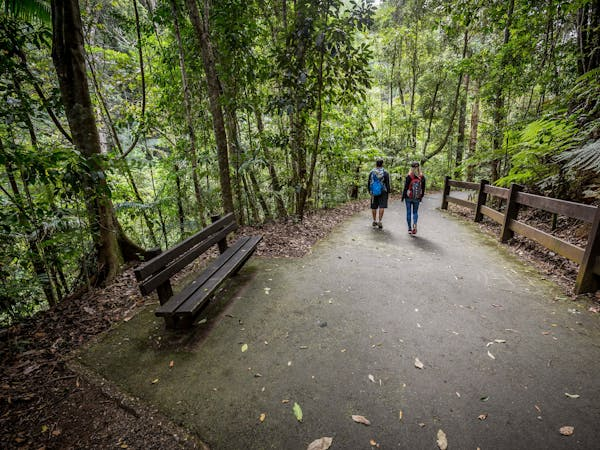
The densest concentration of cellar doors, distilleries and food in the region, all on a plateau you reach by one of several winding access roads. Because the venues sit within a few minutes of each other, this is the only area where you can realistically visit three or four in a day without spending it in the car. It is also where you will find the gallery walk, the rainforest skywalk and the walking tracks, so a tasting day here can absorb people who are not that interested in wine.
Canungra Valley — the road to Lamington
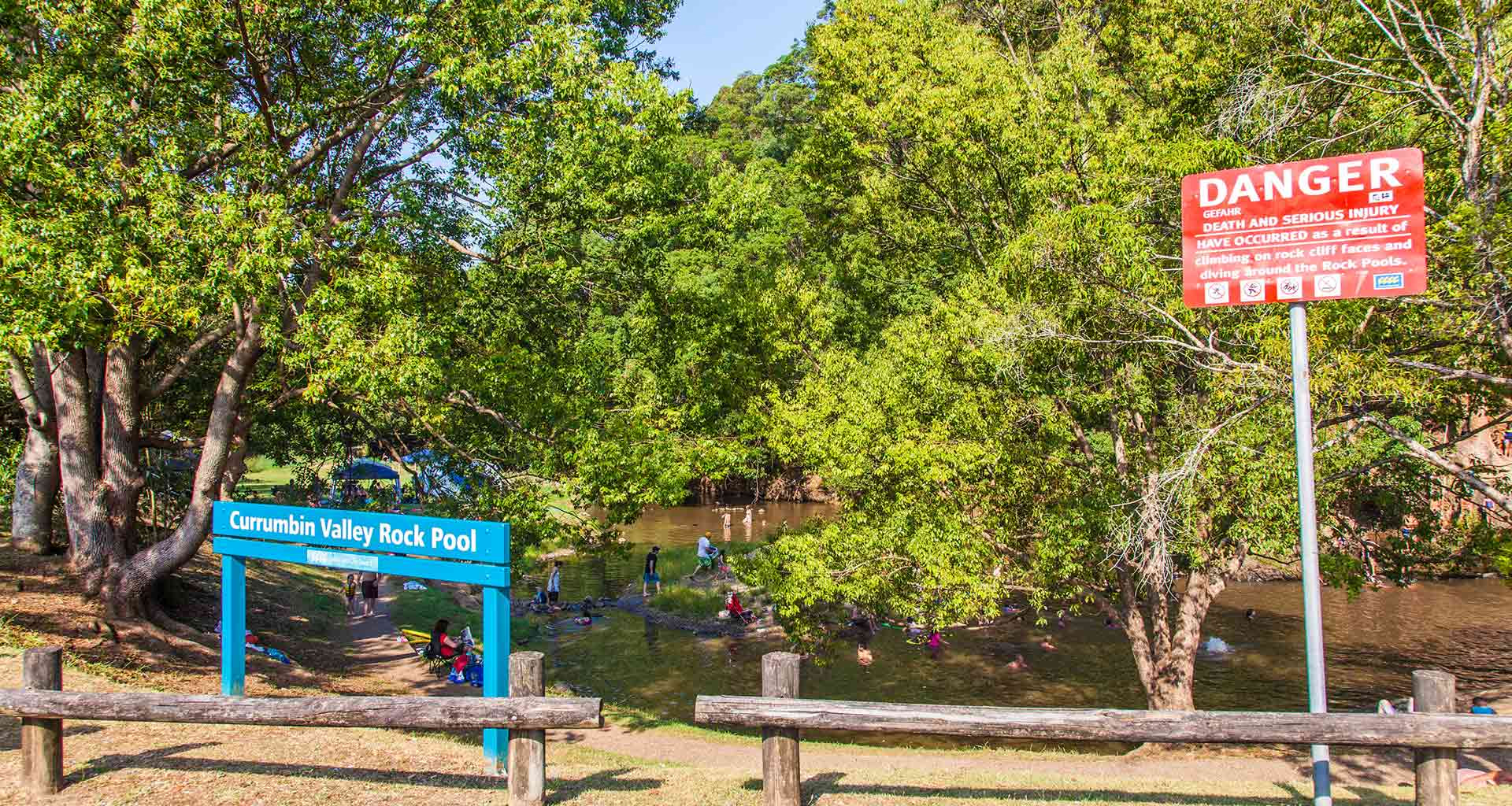
Below and west of the mountain, on the way to O'Reilly's and Lamington National Park. Fewer venues, more space between them, and a completely different feel — river flats, big trees, historic buildings. This is the area to combine with a national park visit rather than with more tastings.
Albert River and the western country
Flatter, warmer, more agricultural, out towards Kerry and the Albert River. The venues here tend to have more land around them and a more relaxed rural character. Least likely to be crowded on a weekend.
Tamborine Mountain
The plateau cellar doors
Witches Falls Winery
One of the best known names on the mountain, and the one most often used as a benchmark for the region. The winery takes its name from the nearby Witches Falls — the waterfall in what became Queensland's first national park, declared in 1908. The name itself comes from the mountain's crooked, twisted branches, which generations of local children thought looked like witches' brooms in the dusk.
The house style leans toward hands-off winemaking, and the range is broader than you might expect from a boutique operation. Cheese and grazing platters are part of the offer here rather than an afterthought, which makes it a reasonable place to build a longer stop rather than a quick flight. There is also a non-alcoholic sparkling option, which is worth knowing if someone in your group is driving.
Full Witches Falls Winery guide →
Cedar Creek Estate
A large, well-established estate on the mountain with gardens, a restaurant and a cellar door that handles groups comfortably. The setting is the differentiator — this is a place you sit in for a couple of hours rather than pass through, and the grounds absorb people who would rather walk around than taste.
Full Cedar Creek Estate guide →
Mount Nathan Winery
On the Gold Coast side of the range rather than up on the plateau proper, which makes it one of the closest cellar doors to the coast and an easy first or last stop. A relaxed, family-scale operation.
Full Mount Nathan Winery guide →
The two distilleries
Tamborine Mountain now has two distilleries, which means "the distillery on the mountain" is no longer a useful phrase — check which one a tour or a friend actually means.
Tamborine Mountain Distillery
The longer-established of the two, known for a wide range of liqueurs and spirits made in small batches. A tasting here is a very different experience from a wine flight — more varied, more aromatic, and considerably shorter, which makes it a good mid-day palate reset.
Cauldron Distillery
An eighteen-acre estate in the Hartley Road precinct, founded by three friends and named for Australia's Green Cauldron — the volcanic country of basalt columns and waterfalls left behind by the Wollumbin eruptions. Best known for its Five To Five gin range, with seasonal gins and liqueurs alongside, and it has since extended into Australian agave spirits and a Queensland single malt whisky. There is a prohibition-styled cocktail bar, a stone-baked pizza kitchen, a meadow for picnics and lawn games, and live music through the week. Of all the venues in this guide it is the least like a traditional cellar door, and the most likely to suit a group that is not primarily there to taste.
Canungra Valley & the Albert River
Down off the mountain
O'Reilly's Canungra Valley Vineyards
The most atmospheric setting of any venue in this guide, on the road up to Lamington National Park. The property centres on a historic homestead beside Canungra Creek, with enormous shade trees and lawns running down to the water. It is a picnic-and-an-afternoon place as much as a tasting place, and it connects naturally with a morning in the national park.
Full O'Reilly's Canungra Valley guide →
Albert River Wines
Out in the flatter country west of the range, with a heritage building at its centre and a more relaxed rural pace than anything on the mountain. Dining is a real part of the offer here rather than a sideline.
Full Albert River Wines guide →
Sarabah Estate Vineyard
The smallest and quietest of the venues covered here, tucked into the country south of Canungra. Limited opening, so this is one to confirm before you drive — but if you want a cellar door with nobody else in it, this is the one.
Planning
Building a day that actually works
| Stage | Roughly | Why it matters |
|---|---|---|
| Leave the coast | Mid-morning | Cellar doors generally open late morning. Leaving at dawn only means sitting in a car park. |
| First tasting | Late morning | Your palate is freshest here. Put the venue you most care about first, not last. |
| Lunch | Early afternoon | Non-negotiable. Tasting across a whole day without a proper meal is how good days go wrong. |
| Second and third stops | Afternoon | Two after lunch is comfortable. Three is ambitious. Four is a blur. |
| Something that isn't wine | Mid afternoon | A distillery, a lookout, a short rainforest walk. It resets everyone. |
| Back on the coast | Late afternoon | Cellar doors close earlier than restaurants. Do not plan a late finish up there. |
How many venues is right
Three or four is the honest answer for a full day, and three is better than four. Each tasting takes longer than you plan for, particularly if it is any good and someone starts talking to you about the fruit. Groups compound this — a party of ten does not move through a cellar door in the time a couple does.
Getting there
Every access road onto Tamborine Mountain climbs, and most of them wind. They are sealed and perfectly manageable in normal conditions, but they demand attention, they get slow behind traffic, and they are genuinely unpleasant if the driver has been tasting. That last point is the whole reason guided wine days exist in this region — the argument is set out in full in our guide to wine tours versus self-drive.
What to bring
Cash is not necessary anywhere, but a cooler bag is genuinely useful — bottles bought at ten in the morning spend the rest of the day in a hot car otherwise. The mountain runs several degrees cooler than the coast and can be windy on the escarpment, so bring a layer even in summer. And if anyone in the group does not drink, check ahead: several venues have thought about this properly and a couple have not.
At the bar
Getting more out of a tasting
Cellar-door tastings reward a small amount of preparation, and almost nobody does it. You do not need any technical vocabulary — you need to ask better questions and to slow down.
Ask where the fruit came from
In this region it is the single most useful question, because the answer varies venue by venue and even wine by wine. Some pours will be estate fruit grown in front of you; others will be from the Granite Belt or further afield. Neither is better, but knowing which is which tells you what you are actually tasting and usually gets you a far more interesting conversation than "what do you recommend".
Taste in the order they give you
Flights are sequenced deliberately — lighter to heavier, dry to sweet, so that each wine does not flatten the next. Skipping ahead to the red you came for undoes it. If you only want reds, say so at the start and let them build you a flight rather than jumping the queue.
Use the spittoon, or at least the dump bucket
Nobody is judging you. Tipping out what you have finished with is normal cellar-door behaviour, and across four venues it is the difference between remembering the day and not. It matters even more here than in other regions, because the drive home is a mountain road.
Try the thing you would not order
The tasting bar is the one place where an unfamiliar variety costs you nothing. Subtropical Queensland grows things that are unusual in the Australian mainstream — Chambourcin above all, along with a range of alternative varieties and the fortifieds that have a long history in this part of the state. If you only taste what you already drink, you have driven an hour to confirm something you knew.
Eat something before the second venue
The most common mistake on a hinterland day, and the easiest to avoid. Tasting on an empty stomach at eleven in the morning catches up with people by the third stop, and the venues are far enough apart that you cannot fix it quickly.
Timing
When to go up the mountain
The hinterland runs on a different climate from the beach, and the gap is bigger than the distance suggests. Tamborine Mountain is consistently cooler than the coast, catches cloud that never reaches the beaches, and can be genuinely cold on a winter morning while people are swimming at Burleigh.
Autumn and winter are the season
From about April through September the mountain is at its best for this kind of day — clear, dry, mild, and comfortable for moving between venues and sitting outside. Winter weekends are busy for exactly this reason, so book lunch.
Summer is humid, and storms are afternoon events
The venues are open and the gardens are at their greenest, but the drive is less pleasant and afternoon storms are common. If you are going in summer, go early and be off the mountain by mid-afternoon.
Weekends versus weekdays
The difference is substantial. Weekends bring live music, full restaurants and a good atmosphere, plus queues at the tasting bar and a real chance of not getting a table. Weekdays are quieter, some venues have reduced hours or close entirely, and the smaller estates in particular may not be open at all. Neither is wrong — but check before you commit.
More than wine
What else is up there

The strongest argument for the hinterland is that a wine day does not have to be only a wine day. The same plateau holds a rainforest skywalk, a gallery walk of small shops and cafés, and the walking tracks of Tamborine National Park — including the waterfall that gave Witches Falls its name, in what became Queensland's first national park.
Further out, the waterfalls at Springbrook and the walking network at Lamington are among the best in South East Queensland, and Cedar Creek's falls and rock pools sit on the way up the mountain. The hinterland also holds Tamborine Mountain's share of the region's extraordinary biodiversity — the mountain alone accounts for a large majority of the animal species and a substantial share of the plant species recorded across the City of Gold Coast area.
Pairing one or two of those with two cellar doors makes for a better day than four cellar doors, for most groups. It also solves the problem of the person who came along but does not much care about wine.
Common questions
Gold Coast winery questions
How far are the wineries from the Gold Coast?
Tamborine Mountain is roughly 45 minutes to an hour from most Gold Coast beach suburbs, depending which access road you take. The Canungra Valley venues sit a little further inland again, and the Albert River area is out towards the flatter country west of the motorway. Realistically, plan on an hour each way and treat it as a full day rather than an afternoon.
Is there really a wine region near the Gold Coast?
Yes, though it works differently from the famous Australian regions. This is subtropical country, and the growing conditions are challenging — so a number of the cellar doors here blend estate fruit with grapes from cooler regions such as the Granite Belt near Stanthorpe. That is normal practice and usually stated openly. What you are visiting is a genuine cellar-door region rather than a large planted viticultural one.
Which winery should I visit if I only have time for one?
For a first visit, a Tamborine Mountain cellar door makes the most sense — the plateau has the densest concentration of venues, so if one is closed or booked you have alternatives within minutes. Beyond that it depends what you want: a working estate with vines around you, a restaurant with a view, or a gin tasting rather than wine.
Do the cellar doors charge for tastings?
Most do, and several waive or credit the fee against a purchase. Fees change often enough that publishing them would mislead you — check the venue's own site when you book. Several venues also offer structured or extended tastings that cost more and are worth it if you actually want to learn something.
Do I need to book?
For a standard tasting at the larger Tamborine Mountain venues, often not. For lunch, for a group of more than about six, for anything described as an experience or a structured tasting, and for the smaller estates — yes, and well ahead on weekends. Several venues have limited opening days and some close for private functions.
What grapes grow in the Gold Coast hinterland?
Chambourcin is the variety most associated with subtropical Queensland because it copes with humidity and disease pressure better than the classic European varieties. You will also encounter Verdelho, Shiraz, Chardonnay and a range of alternative varieties, along with fortifieds, which have a long history in this part of Queensland.
Are the distilleries worth including?
Tamborine Mountain now has two, and they are a genuinely good change of pace in the middle of a tasting day — spirits tastings are shorter and more structured than wine flights. They also give non-wine drinkers something to do, which matters more on a group day than people expect.
Can I visit the wineries with children?
Several are set up for it, with lawns, gardens and food, and a couple have animals or gardens that make the visit interesting for kids. Others are small tasting rooms where children would be bored within ten minutes. Check the individual venue guides — we have noted the setting on each.
What is the best time of year to visit?
Autumn and winter. The mountain is cooler than the coast year-round, and the clear dry days from about April through September are the most comfortable for moving between venues. Summer is humid and brings afternoon storms; the venues are still open and pleasant, but the drive is less enjoyable.
Is this the Gold Coast or the Scenic Rim?
Both, depending on who is drawing the map. Tamborine Mountain, Canungra and the Albert River area are commonly promoted as Gold Coast hinterland because that is where visitors come from, but several sit inside the Scenic Rim rather than the City of Gold Coast. Practically it makes no difference to your day — it is the same drive either way.
Want the cellar doors without the driving?
Tell us your date and group size and we will put together a hinterland day that suits the people in it — from a couple to a full coach.