Wine & Cheese
Wine and cheese near the Gold Coast, and who actually makes it
The hinterland has something most Australian wine regions do not: cheesemakers working within minutes of the cellar doors, using milk from dairies down the road. Here is where to sit down with both.
The short version
Why this works here
Most wine regions serve cheese. Very few of them make it. What makes the Gold Coast hinterland unusual is that the cheese on a Tamborine Mountain platter has a decent chance of having been made on the same mountain, from milk produced in the valleys you drove through to get there.
That is a function of geography. The Scenic Rim is dairy country and has been for a long time — the basalt soils and reliable rainfall that make the hinterland green also make it good grazing. The plateau above it turned out to suit small-scale food production, so cheesemakers set up where the visitors and the milk were both within reach. The wineries came for the altitude. The result is three things happening within a few kilometres of each other, which is rare anywhere in Australia and very rare within an hour of a major beach city.
This guide covers where to sit down with both, who is making the cheese, and how to get the most out of a board. It does not attempt to teach pairing theory from first principles — we have written that separately, and it applies across the state rather than just here.
The producers
Who makes the cheese on the mountain
Witches Chase Cheese Company
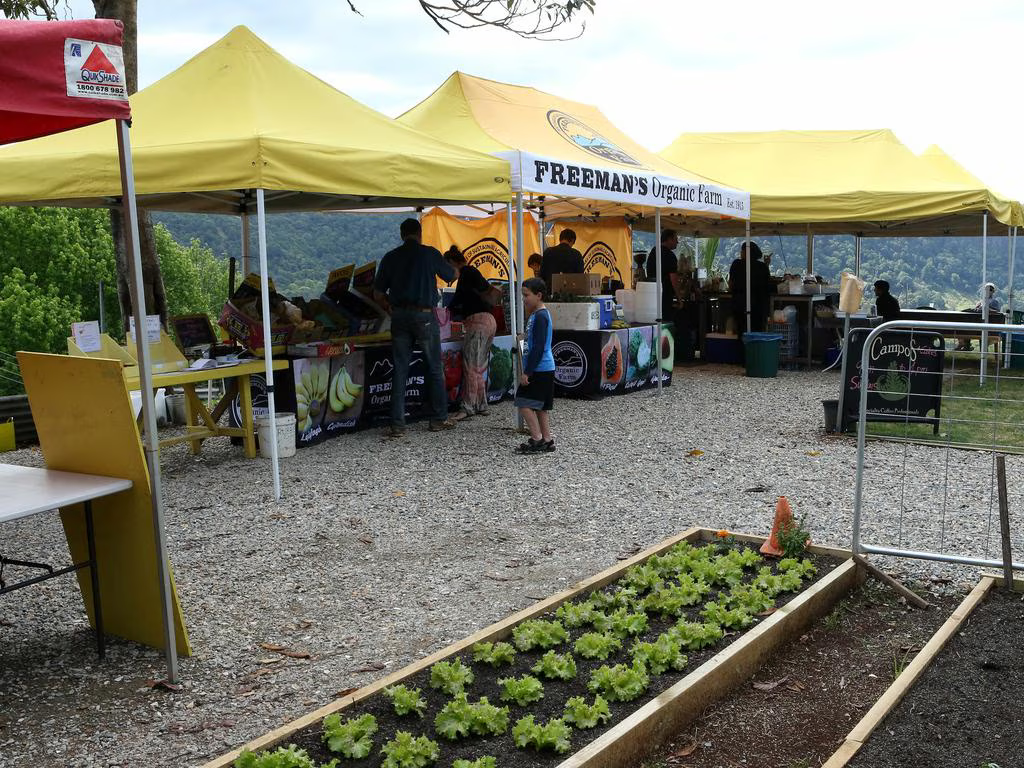
A boutique cheese factory on Tamborine Mountain where you can buy the cheese and watch it being made — which is the part most visitors do not expect and end up enjoying most. The business began in 2004 when Andrei and Meredith Morris took on the factory, and it has since grown into a factory, brewery and restaurant on one site. Alongside cheese they produce ice cream and yoghurt, working with both cow and goat milk.
They are open about their supply chain, which is worth something: milk comes from the Scenic Rim Robotic Dairy a short drive away, a pasture-based operation, and Witches Chase states plainly that it pays a premium for it. That is the kind of detail that makes a board here more interesting than a board assembled from a wholesaler.
Pure Artisan Cheese
Also on Tamborine Mountain, also drawing milk from the Scenic Rim Robotic Dairy, and notable for having actively worked on wine matches — they have collaborated with Witches Falls on which of that winery's pours suit which of their cheeses. If you want a board where somebody has already done the thinking about what goes with what, that is a useful thing to know.
The wider Scenic Rim
Beyond the mountain, the surrounding country supports a genuine spread of small dairy and cheese producers — sheep-milk cheesemakers in the quieter valleys, and even a camel dairy, which is the largest operation of its kind in the country. Not all of them are set up for casual visitors, and several are a solid drive from the wineries, so treat them as a reason to buy widely rather than as extra stops on a tasting day.
Where to sit down
Cellar doors that do this properly
Almost every venue can put a board in front of you. These are the ones where the food is a real part of the offer rather than an afterthought.
| Venue | The setting | Suits |
|---|---|---|
| Witches Falls Winery | Tamborine Mountain. Cheese and grazing platters are a core part of the offer, built to go with a flight rather than served alongside it. Non-alcoholic options available. | Couples and small groups who want the pairing thought through |
| Cedar Creek Estate | Tamborine Mountain. Large estate with gardens and a restaurant; comfortable for groups and easy to spend two hours in. | Bigger groups, mixed parties, anyone who wants space |
| O'Reilly's Canungra Valley | Canungra Valley. Historic homestead, enormous shade trees, lawns running down to the creek. The picnic option rather than the seated one. | Families, picnics, combining with Lamington National Park |
| Albert River Wines | Albert River country. Heritage building, relaxed rural pace, dining is a genuine part of the business. | A longer lunch away from the mountain crowds |
| Cauldron Distillery | Tamborine Mountain. Not a cheese venue — a pizza kitchen, a cocktail bar and a meadow. Included because it is the best change of pace when a group has had enough of boards. | Groups with non-wine drinkers |
The pattern worth noticing is that the mountain venues are close enough together to combine, while the Canungra and Albert River options are best treated as the whole afternoon. Trying to do a mountain board and a valley lunch in the same day means a lot of driving between two things that were each meant to take two hours.
The board
What is actually on it
A Queensland cheese board is not a French one, and expecting it to be is the fastest way to be disappointed by something perfectly good. The producers here work in small batches with fresh local milk, which favours certain styles and makes others impractical.
The styles you will meet
Fresh and soft
The category that benefits most from being made nearby, because freshness is the whole point. Expect soft white-rind styles and fresh curd cheeses, sometimes from goat milk. These are usually the first thing on the board and they go with the crisp whites the region does well.
Washed rind and semi-hard
The middle of the board and often the most interesting part. Washed-rind styles are pungent on the nose and much milder on the palate than first-timers expect, and they are where a softer red like Chambourcin earns its place.
Blue
The style that most often defeats an ordinary red and most often works beautifully with something sweet or fortified. If a venue offers a fortified with the blue, take it — that is the pairing this part of Queensland has the strongest historical claim to.
Hard and aged
Less common from the smallest producers, because ageing ties up money and space. Where you find it, it is usually the cheese the maker is proudest of.
The rest of the board
Quince or fig paste, nuts, dried and fresh fruit, crackers, and often local honey or relish. The accompaniments matter more than people think: the sweet element is doing real work against salt and blue, and a good venue chooses it deliberately rather than out of a jar.
A note on temperature
Cheese served straight from a cold fridge tastes of very little. Somewhere warm and humid, this cuts both ways — a board left in the sun on a summer afternoon is worse. If your cheese arrives cold, give it fifteen minutes before you judge it.
Matching
Pairing, the practical version
The full theory is a separate guide. What follows is what is genuinely useful to know before you sit down at a hinterland cellar door.
Match intensity before you match anything else
A delicate fresh cheese under a heavy red disappears entirely, and a powerful blue flattens a light white. Getting the weight roughly right solves most of the problem before you consider anything more subtle.
Acidity is your friend with rich cheese
This is why the crisp whites the hinterland does well are a better bet than they sound. Acid cuts through fat and resets the palate; a rich soft cheese with a lean white is a more reliable pairing than the same cheese with a big warm-climate red.
Sweet beats blue
The most dependable pairing on any board, and the one worth actively seeking out here given the region's fortified tradition. The sweetness has to exceed the salt for it to work — a barely off-dry wine will not do it.
White works more often than red
Counter-intuitive and consistently true. Tannin and cheese protein do not always get along, and a lot of classic red-and-cheese pairings survive on tradition rather than merit. In a subtropical region where the whites are a genuine strength, this is good news.
If you want the underlying mechanisms — why acid cuts fat, why tannin binds to protein, why salt suppresses bitterness — our Queensland wine and cheese pairing guide sets them out properly, with a variety matrix for the styles grown in this state.
Seasons
Cheese has a season too
Wine seasonality is well understood — vintage happens, the new releases arrive, the cellar door talks about it. Cheese seasonality is just as real and almost nobody mentions it, which is a shame because it explains a lot about why the same board tastes different in September and in March.
Milk changes through the year
Pasture-fed dairying means the milk reflects what the cows are eating, and in the Scenic Rim that changes substantially between the lush growth after summer rain and the drier, tighter pasture of late winter. Fat and protein levels shift, and so does the character of the cheese made from it. Producers working with a single local dairy — as the Tamborine Mountain makers do — cannot smooth that out the way a national processor can, and mostly they do not want to.
Fresh styles are a spring and summer story
Fresh curd and soft young cheeses are made and sold quickly, so they track the milk closely. They are at their most abundant when the pasture is at its best. Goat milk in particular is seasonal, and a goat cheese that was on the board in October may simply not exist in July.
Aged styles run on a delay
A hard cheese sold in winter was made from milk produced months earlier, which is why the aged end of a board is more consistent year-round and why it is also the part most likely to sell out. If a producer has a hard cheese they are pleased with, buy it when you see it.
What this means for planning
Nothing dramatic — the mountain has good cheese every month of the year. But it does mean that asking "what is best right now" is a far better question at the counter than reading a menu, and it means a return visit in a different season is genuinely a different experience rather than a repeat. It also explains why small producers sometimes have gaps: they are not disorganised, they are working with what the paddock gave them.
The weather side of it
There is a practical seasonal point too. A cheese board is a cool-weather pleasure, and the hinterland obliges — the plateau runs several degrees below the coast and is genuinely crisp on a winter morning. From about April through September you can sit outside on a mountain terrace comfortably for two hours. In February you will want shade, air conditioning and a much shorter sit, and soft cheese will not thank you for the humidity.
Practical
Booking and getting there
Book the food, not just the tasting
The tasting bar can usually absorb a walk-in. The kitchen often cannot. Mountain kitchens are small, weekends are busy, and platters do run out — particularly late in the afternoon, which is exactly when most people think of ordering one. If the board is the reason you are going, book it.
Groups change everything
Above about six people you move from a booking to an arrangement. Several venues have private spaces or group menus, several require a minimum number, and a few cannot take groups at all on busy days. Sorting this a week ahead is the difference between a good afternoon and standing in a car park making phone calls.
Getting up the mountain
Every road onto Tamborine Mountain climbs and winds. They are sealed and straightforward in good conditions, but they need a driver who is paying attention and has not been tasting. That constraint is the entire reason guided wine days exist in this region, and it is worth thinking about before you plan an afternoon around a matched flight. We have set out the honest comparison in wine tours versus self-drive, including the cases where driving yourself is genuinely the better call.
Order in the right sequence
If you are having a board alongside a flight, ask for the food to arrive after the first two pours rather than at the same time. Tasting a lean white against a wedge of blue is not a fair test of either, and a board sitting in front of you from the start tends to get eaten in the wrong order. Most venues are happy to time it if you say so when you order.
Two venues is the ceiling
A wine and cheese day is not a cellar-door crawl. Once food is involved, each stop takes an hour and a half to two hours properly, and eating substantial cheese at three venues in a row is genuinely unpleasant by the third. Two is the right number: one for a seated tasting with a board, one for something else entirely — a distillery, a lookout, a short walk through the rainforest.
Buy the cheese to take home
The most overlooked part of the day. The producers sell what they make, and a mountain cheese in a cooler bag is a considerably better souvenir than a bottle you will not open for a year. Bring the cooler bag — it is warm in a car up there even in winter.
Common questions
Wine and cheese questions
Where can I do wine and cheese near the Gold Coast?
Tamborine Mountain is the centre of it. Several cellar doors on the plateau serve cheese and grazing platters alongside their tastings, and there are working cheesemakers on the same mountain — so the cheese on your board may have been made a few minutes away. Cellar doors in the Canungra Valley and out towards the Albert River also do platters, generally in a more relaxed rural setting.
Is the cheese actually made locally?
A good deal of it is, which is unusual. Tamborine Mountain has established cheesemakers producing in small batches on the mountain itself, and they draw milk from dairies in the surrounding Scenic Rim country rather than from a national supply chain. Ask at the venue — the ones sourcing locally are generally keen to tell you.
Do I need to book a wine and cheese experience?
For a platter alongside a standard tasting, often not on a quiet weekday. For weekends, for groups larger than about six, and for anything described as an experience, a structured tasting or a matched flight — yes, and ahead. Kitchens on the mountain are small and they do sell out.
What cheeses will I be given?
Boards vary by venue and by season, but a Queensland platter typically spans a fresh or soft style, a washed or semi-hard style, something blue, and a hard aged cheese, with quince or fig paste, nuts and crackers alongside. Several mountain producers work with both cow and goat milk, so a board here often has more variety than you would expect from its size.
Which wines go with a Queensland cheese board?
In broad terms, the acidity and lighter tannin of the styles grown well in subtropical Queensland suit cheese better than big heavy reds do. Verdelho and other crisp whites handle fresh and soft cheeses; Chambourcin's softer tannin works with semi-hard styles; and the fortifieds this part of Queensland has long made are a genuinely good match for blue. The underlying mechanics are covered in our Queensland wine and cheese pairing guide.
Can I do wine and cheese without drinking?
Yes, and it is worth asking rather than assuming. Several venues on the mountain now carry non-alcoholic options, and a cheese board with a good soft drink or coffee is a perfectly reasonable way to spend an hour up there. If the group includes a designated driver, check what is available before you choose the venue.
Is a picnic or a seated tasting better?
It depends on the weather and the group. A seated tasting gives you staff who can talk you through what you are drinking; a picnic on the lawn suits families and larger groups who want to spread out. Some venues do both. In summer humidity, seated and shaded wins comfortably.
Can venues cater for dietary requirements?
Usually, with notice. Gluten-free crackers are widely available, and most kitchens can work around common requirements if you tell them when booking. Vegan boards are harder at a cheese-focused venue and genuinely need advance warning. Do not rely on sorting it out on arrival.
What is the best time of year for this?
Autumn and winter. The mountain is cooler than the coast year-round, and a cheese board is more appealing on a clear fifteen-degree day than in February humidity. Winter weekends are the busiest time on the plateau for exactly this reason, so book.
Can we bring our own cheese?
Generally no, and it is poor form to try at a venue that sells food. The exception is the picnic grounds attached to some properties, where the rules differ — check with the venue. Buying the board from the people pouring the wine is also how you get the pairing they have actually thought about.
Planning a wine and cheese day?
Tell us the group and the date. We will build the day around whichever venues can actually seat you, and nobody has to drive the mountain road afterwards.