Know Before You Go
Gold Coast practical information, for first-time visitors
The questions people ask before they arrive, answered plainly. Most of them have short answers, and several of the ones that worry visitors most turn out to be the least worrying once you know how things actually work here.
The water
Beach safety, honestly
This is the section most visitors are quietly worried about, so here it is without the marketing gloss.
The flags are the whole thing
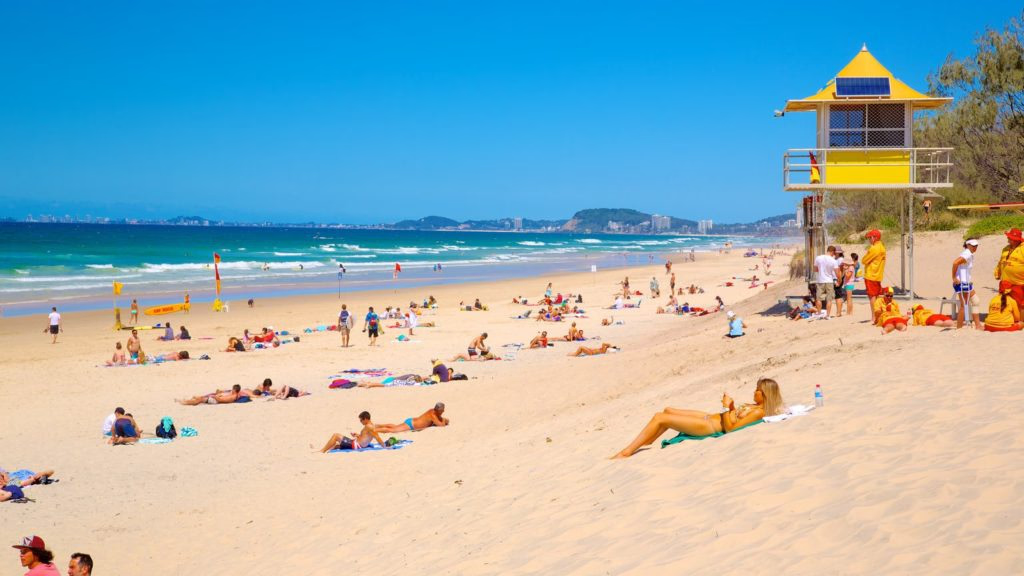
Red and yellow flags mark the patrolled area. A lifeguard has looked at the conditions that morning and chosen that stretch because it is the safest available. Swimming outside them, on an unpatrolled beach, or after the flags come down in the evening is where nearly every serious incident on this coast happens.
How to recognise a rip
A rip current is a channel of water flowing back out to sea. Counter-intuitively it often looks like the calmest part of the beach — a darker, flatter gap where the waves aren't breaking. That is precisely why weak swimmers walk into one: it looks like the easy option. If you are caught in a rip the advice is to stay calm, not fight it, raise an arm and float; it will generally release you beyond the break, and lifeguards will reach you.
Sharks, and what the equipment actually does
The Queensland Shark Control Program has run on this coast since 1962, using a combination of mesh nets and baited drumlines off most major Gold Coast beaches. It is a genuine measure and it has a long record behind it.
It is also worth understanding rather than simply trusting. The nets are roughly 186 metres long and six metres deep, anchored in about ten metres of water. They are not a fence across the swimming area and were never designed to be one. There is a 20-metre exclusion zone around the equipment under the Fisheries Act, so if you are on a board or a kayak, keep clear of the marker buoys.
The programme is publicly contested — there is an active debate in Queensland about bycatch and about non-lethal alternatives like drones and SMART drumlines. We're not going to pretend that argument doesn't exist. What we will say is that serious shark incidents on Gold Coast beaches are extremely rare, and that the risk a visitor should actually plan around is the rip, not the shark.
Bluebottles, and the stingers that aren't here
The dangerous tropical stingers — box jellyfish and irukandji — are a Far North Queensland concern and are not present on the Gold Coast. You will not need a stinger suit here. Bluebottles do arrive on north-easterly winds in the warmer months; the sting hurts, but it is not the emergency people imagine when they read about Australian jellyfish.
The sun
The UV here is genuinely different
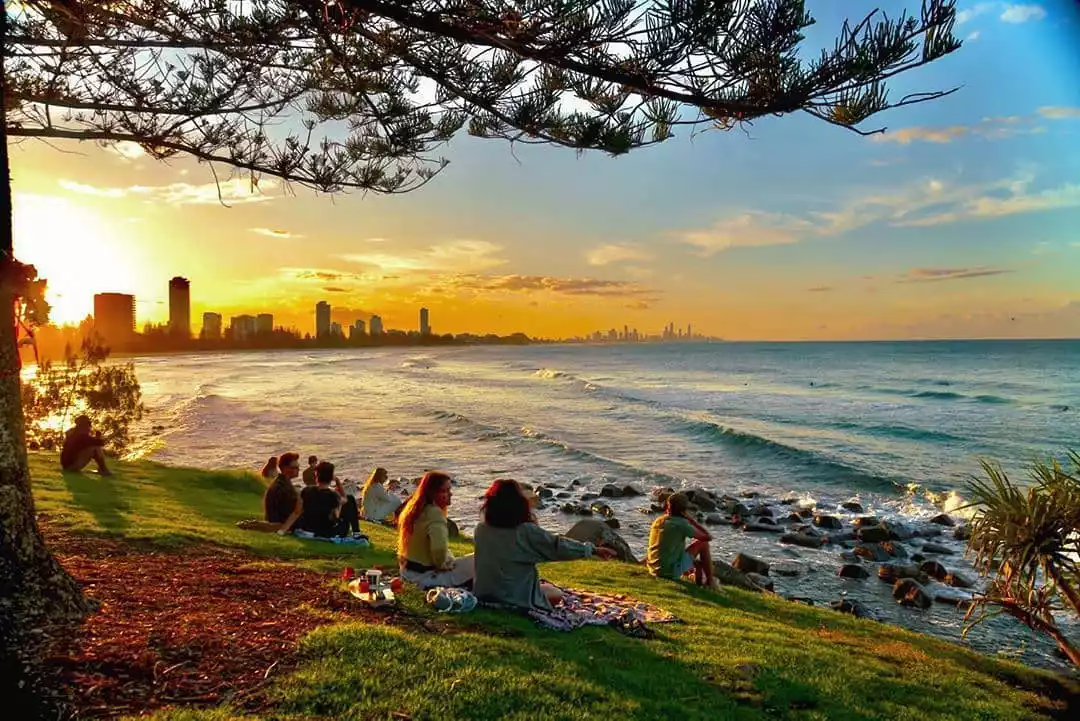
This is the one where visitors from cooler climates most often get caught. The Queensland UV index regularly reaches 11 or above through summer — the international scale labels that "extreme", and it is not a marketing exaggeration. Burning takes a fraction of the time it would in northern Europe or the northern United States.
What that means in practice
SPF 50+ sunscreen, reapplied properly and more often than feels necessary. A broad-brimmed hat rather than a cap. A rash shirt for children in the water — far more reliable than trying to keep sunscreen on a wet, moving child. And shade in the middle of the day, which is also simply the more pleasant way to spend it.
It is not only a summer problem
UV is driven by the sun's angle, not the temperature. A clear winter day on the Gold Coast can still burn you while the air feels mild, and an overcast day passes plenty of UV through. If you are outdoors for any length of time between roughly September and April, treat sunscreen as routine rather than as something you do at the beach.
Money and admin
Paying for things, and the small print
| Question | Short answer |
|---|---|
| Currency | Australian dollars. Notes are polymer and colour-coded; coins run from five cents to two dollars. |
| Cards | Accepted essentially everywhere, tap-and-go standard. Some venues are cashless entirely. Amex less universal than Visa and Mastercard. |
| Cash | Rarely needed. Worth a small amount for markets and some car parks. |
| Tipping | Not expected. No service charge. Staff are paid an award wage. |
| Drinking age | 18. Carry photo ID if you look under 25 — venues will ask, and a foreign driving licence may not be accepted as proof of age. A passport always is. |
| Electricity | 230V, Type I plug — the three flat pins. Bring an adapter. |
| Emergency number | 000 for police, fire and ambulance. It is free from any phone. |
Prices are the price
Unlike the United States, the figure on the menu or the shelf is what you pay. Tax is already included in the advertised price, there is no service charge, and tipping is optional — so the bill that arrives is the bill you expected. The one thing to watch for is a surcharge on card payments or on public holidays, which venues are required to display.
Ambulance cover is the one people miss
An ambulance callout in Queensland is not free for visitors, and it is not covered by the reciprocal health agreements even where those apply. It is the single most common unpleasant financial surprise for travellers here, and it is exactly what travel insurance is for.
Timing
Seasons, holidays and what closes
The seasons are upside down
Worth stating plainly because it catches people out every year. December to February is summer. June to August is winter. If you are booking from the northern hemisphere and thinking of July as peak beach season, adjust — a Gold Coast July is mild, dry and genuinely lovely, but it is winter, and the hinterland mornings are cold.
School holidays reshape the coast
Queensland school holiday blocks matter more here than the weather does. Accommodation prices rise sharply, the theme parks fill their car parks, hinterland roads slow down and restaurants need booking. The fortnight either side of a holiday block buys you the same weather at a very different price. Dates are published by the Queensland Government and shift year to year.
Public holidays
Australia Day (26 January), Good Friday and Easter Monday, Anzac Day (25 April), Christmas Day and Boxing Day are the ones most likely to affect a trip, alongside Queensland's own Labour Day and the Queen's or King's Birthday holiday. Expect reduced hours, surcharges on restaurant bills, and some smaller venues closed entirely. Anzac Day is unusual: many businesses stay shut until after midday out of respect, and dawn services are held along the coast.
Weekday closures catch people too
Outside the main tourist strip, plenty of good places simply don't open every day. Hinterland cellar doors, brewery taprooms and smaller restaurants often run Wednesday or Thursday through Sunday. Monday and Tuesday are the days most likely to leave you looking at a locked door — check before you drive up the mountain.
Day to day
Phones, parking, dogs and the rest
Phones and connectivity
Prepaid SIMs and eSIMs are easy to arrange, and coverage along the coastal strip is strong on all three networks. The exception worth planning for is the hinterland: reception drops out in the rainforest valleys around Springbrook and Lamington, and on walking tracks you should assume you have no signal. Download maps before you drive up.
Parking
Free and plentiful in the southern suburbs, tighter and largely paid through Surfers Paradise and Broadbeach, and genuinely difficult around popular beaches on summer weekends. Shopping-centre car parks are the pragmatic fallback in the central precincts. In the hinterland, national park car parks are unsealed and fill early on weekends — arriving before ten makes a real difference.
Travelling with a dog
The Gold Coast is better than most Australian cities for this. There are designated off-leash and timed dog-friendly beaches, and a good number of cafés and brewery taprooms welcome dogs in their outdoor areas. Two things to know: the rules vary beach by beach and are posted on City of Gold Coast signage, and dogs are not permitted in national parks — which rules out Springbrook, Lamington and Tamborine's walking tracks entirely.
Accessibility
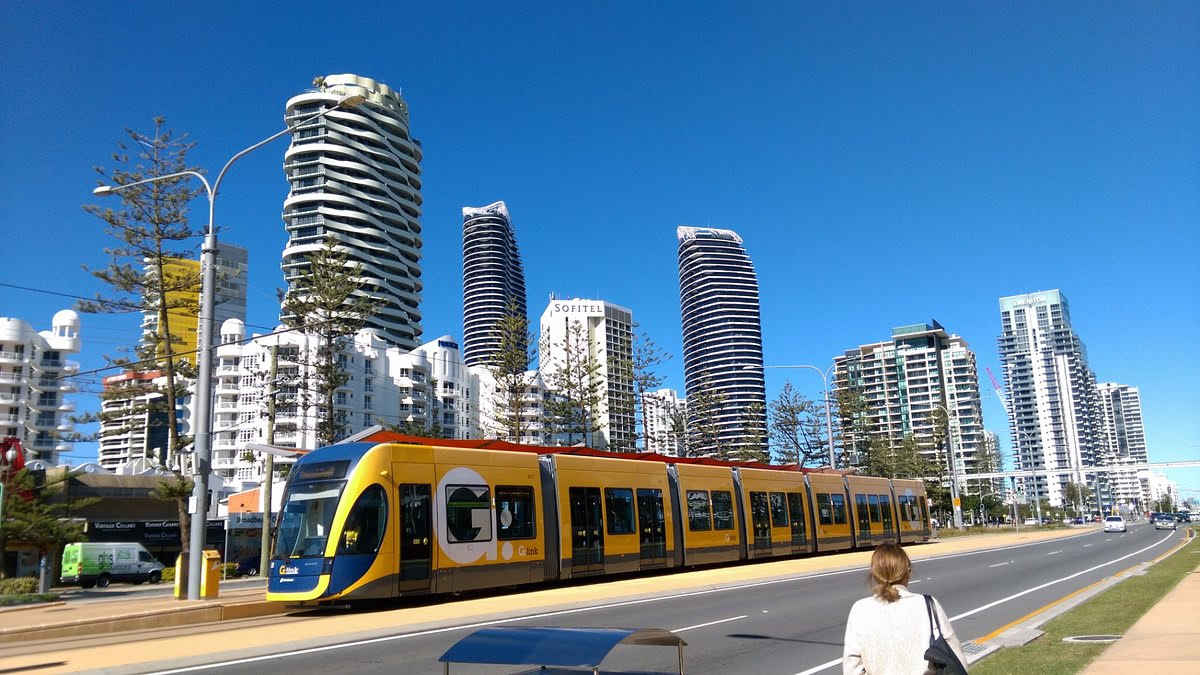
The G:link trams are level-access, most major beaches have accessible matting or ramps in summer, and beach wheelchairs can be borrowed at several patrolled beaches. The hinterland is far more variable — some lookouts and boardwalks are accessible, many tracks are not. Ask us before booking if mobility matters, and we'll tell you honestly which stops work.
Wildlife
What you will actually meet
Australia's reputation precedes it. Here is the honest version for this particular corner of it.
No crocodiles
Saltwater crocodiles are a Far North Queensland animal. Their range does not extend anywhere near the Gold Coast, and there are no croc warnings on this coastline. If you have been reading about swimming restrictions in Cairns or the Daintree, none of it applies here.
Snakes and spiders, in proportion
Both exist, as they do across Australia. In practice a visitor sticking to beaches, towns and formed walking tracks is very unlikely to have an encounter with either. On hinterland tracks, wear closed shoes, stay on the path, and don't put your hands into crevices you can't see into. If you see a snake, stop and let it move away — they are not interested in you.
The animals you will actually see
Rainbow lorikeets everywhere and noisily. Brush turkeys strolling through café courtyards as if they own them. Water dragons on rainforest boardwalks. Kookaburras. Possums after dark. And, between roughly June and November, humpback whales close enough to see from the headlands.
Please don't feed them
Feeding wildlife is genuinely harmful — it makes birds aggressive, changes their diet and their behaviour, and in national parks it is prohibited. The lorikeet feeding at Currumbin Wildlife Sanctuary is the exception, because it is a managed programme with a specially formulated feed.
Fitting in
Small things that make it easier
Cafés work differently
Coffee here is closer to the Italian tradition than the American one. A "flat white" is the local default; filter coffee is uncommon. Most cafés stop serving food mid-afternoon, and breakfast runs later and larger than visitors expect — a proper sit-down breakfast is a normal thing to do at ten on a weekday.
Distances are deceptive
The Gold Coast reads as compact on a map and behaves otherwise. It is roughly 50 kilometres from Coolangatta at the southern border to the northern suburbs, and the hinterland roads are winding rather than fast. An hour each way is a realistic figure for most cross-region trips, and planning as though everything is fifteen minutes apart is the most common way to spoil a day.
Sun, then shade, then sun again
Locals treat the middle of the day as indoor time in summer, and it is worth copying. Early morning and late afternoon are when the beach is at its best, the light is good, and the heat is manageable. It is also when you will see the coast actually being used by the people who live here.
Acknowledging where you are
The Gold Coast is the Country of the Yugambeh language people, and of the Kombumerri families in particular, with a continuing connection stretching back more than 65,000 years. Several places you will visit carry Yugambeh names — Nerang, Tallebudgera, Mudgeeraba, Pimpama — and the Jellurgal Aboriginal Cultural Centre at Burleigh is the place to hear that history from the people whose it is.
Where to check
The sources that are actually current
Anything that changes — beach conditions, track closures, timetables, visas — should come from the source rather than from a travel guide, including this one.
Before you leave home
Visas and entry requirements come from the Department of Home Affairs, and health cover eligibility from Services Australia. Both change, and both are the only authoritative word on their own subject.
While you're here
Beach conditions and patrol times from Surf Life Saving Queensland. National park track closures and camping permits from Queensland Parks — worth checking before any hinterland walk, because closures after heavy rain are common. Timetables and the journey planner from TransLink. Weather and warnings from the Bureau of Meteorology.
Those four are linked below. If something on this page ever contradicts one of them, believe them, and tell us so we can fix it.
Common questions
Practical questions
Is the tap water safe to drink on the Gold Coast?
Yes. Tap water across the Gold Coast is treated to Australian Drinking Water Guidelines and is safe everywhere — hotels, restaurants, public bubblers and the taps in a rented apartment. Bottled water is a convenience here, not a necessity. Bring a refillable bottle; you'll use it constantly in the heat.
Are there sharks on the Gold Coast, and is it safe to swim?
There are sharks in the ocean along every Australian coast, and the Gold Coast is no exception. The Queensland Shark Control Program has operated here since 1962 and maintains nets and baited drumlines off most major Gold Coast beaches, including Main Beach, Broadbeach, Kurrawa, Burleigh, Currumbin, Kirra, Greenmount and Coolangatta.
Be clear what that equipment is, though. The nets are around 186 metres long and six metres deep, set in roughly ten metres of water — they do not fence off the beach, and they aren't intended to. Fatal shark incidents on Gold Coast beaches are extraordinarily rare. The genuine everyday risk on this coast is rip currents, not sharks, which is why the advice below matters far more.
What is the single most important beach safety rule?
Swim between the red and yellow flags. It is not a formality — the flags mark the stretch a lifeguard is actively watching and has chosen because the conditions there are the safest available that day. Rip currents cause the overwhelming majority of Australian beach rescues, and a rip is hard to spot if you don't know what you're looking at: it looks like a calmer, darker gap in the breaking waves, which is exactly where an inexperienced swimmer heads.
Are there dangerous jellyfish on the Gold Coast?
Not the ones people are thinking of. Box jellyfish and irukandji — the seriously dangerous stingers, and the reason for stinger nets and full-body suits — are a tropical Far North Queensland problem. They are not present on the Gold Coast.
What you may meet here is the bluebottle, a small blue drifting stinger that blows inshore in numbers on north-easterly winds, mostly in the warmer months. A bluebottle sting is painful and unpleasant, not dangerous for most people. Lifeguards post warnings when they're about.
Do I need a visa to visit Australia?
Almost certainly yes. Unless you hold an Australian or New Zealand passport, you need a visa or an Electronic Travel Authority arranged before you fly — it is not something you can sort out on arrival. Which one you need depends on your passport and how long you're staying. The Department of Home Affairs is the only authoritative source, and applying through it directly avoids the third-party sites that charge a fee to fill in the same form.
Can I use Medicare, or do I need travel insurance?
Australia has Reciprocal Health Care Agreements with eleven countries: Belgium, Finland, Italy, Malta, the Netherlands, New Zealand, Norway, the Republic of Ireland, Slovenia, Sweden and the United Kingdom. If you hold a passport from one of those, you may be able to access medically necessary public treatment through Medicare.
Note who is not on that list: the United States, Canada, Germany, France and Japan, among others. And even where an agreement applies, it typically excludes ambulance, dental and elective care — an ambulance callout in Queensland is not free for visitors. Travel insurance is sensible for everyone and essential if your country isn't on the list.
Do I need cash, or will cards work everywhere?
Cards work essentially everywhere — tap-and-go is the default for a coffee as much as a hotel bill, and many venues no longer take cash at all. Visa and Mastercard are universal; American Express is common but not guaranteed at smaller cafés and market stalls. Carry a small amount of cash for weekend markets and the occasional car park, and expect a surcharge on card payments at some venues, which must be displayed.
Is tipping expected in Australia?
No. Hospitality staff are paid an award wage, and there is no service charge. Tipping is genuinely optional and nobody will think less of you for not doing it. Rounding up or leaving ten per cent for exceptional service is appreciated but never assumed — you will not be chased down the street.
What are the seasons, and when is summer?
The seasons are reversed from the northern hemisphere, and this catches people out every year. Summer is December to February, autumn March to May, winter June to August, spring September to November. A July trip to the Gold Coast is a winter trip — a very mild one, but winter. Book a beach holiday for August expecting northern-hemisphere summer and you will be surprised.
How do I get a local SIM or mobile data?
Prepaid SIMs are sold at the airport, at supermarkets and at phone shops throughout the coast, and eSIMs can be arranged before you fly. Telstra, Optus and Vodafone are the three networks; coverage is strong across the whole coastal strip. Do check coverage if you're heading into the hinterland — reception is patchy in the rainforest valleys around Springbrook and Lamington, and you should not rely on a phone signal on a walking track.
Still working out the shape of the trip?
Tell us roughly when you're coming and who's travelling. A Cooee specialist in our Brisbane office will come back with a plan, not a brochure.