Gold Coast · Learn to Surf
Surf lessons on the Gold Coast, and how to get to them
Fifty-two kilometres of surf coast, and only a handful of it is any good for a first lesson. Here is where to learn, who teaches, when to go, and how Cooee gets your group there and back.
Straight up
What Cooee does here, and what we don't
We do not teach surfing. Cooee Tours is a Queensland touring company — we have been moving people around South East Queensland since 1974, and putting an instructor in the water is not something we do or pretend to do. Surf instruction on the Gold Coast is delivered by licensed, insured surf schools accredited through the Academy of Surfing Instructors, operating under City of Gold Coast permits at specific beaches.
What we do is the logistics. Getting eight people, or forty, from an apartment in Surfers Paradise to Currumbin Alley at 7am with boards already arranged, and back again with everyone sandy, fed and accounted for. That is a genuinely annoying problem to solve with hire cars and ride-shares, and it is the part of a surf day that most often falls apart.
So this page is written as a guide first. If you are a couple who can drive yourselves to the Alley, you do not need us — book directly with one of the schools below and have a great morning. If you are a group, a school, a corporate team, a hens or bucks weekend, or a family with grandparents who want to watch from the sand, the transport is the bit worth handing over.
The breaks
Where to actually learn
The Gold Coast's famous waves and the Gold Coast's beginner waves are not the same waves. Getting this wrong is the single most common mistake first-timers make.
Currumbin Alley — the default answer
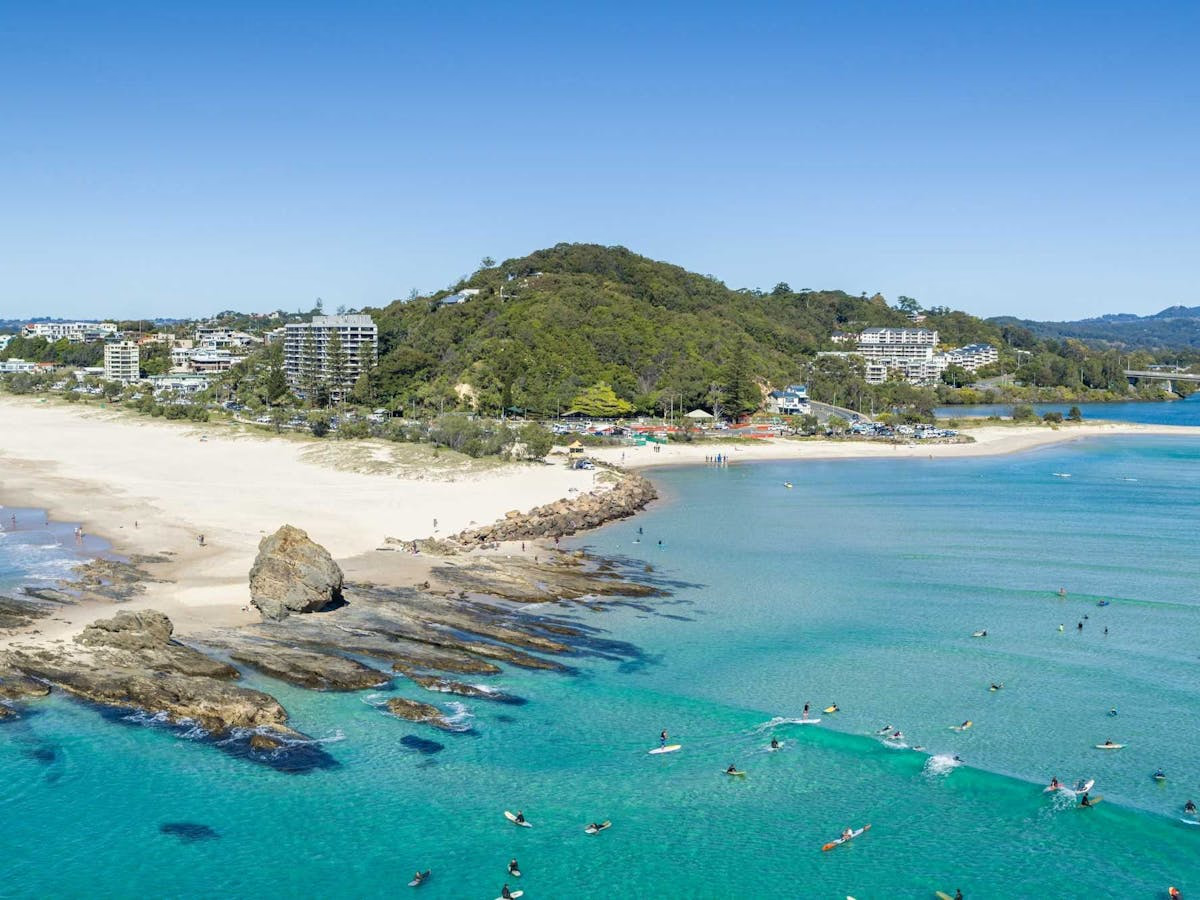
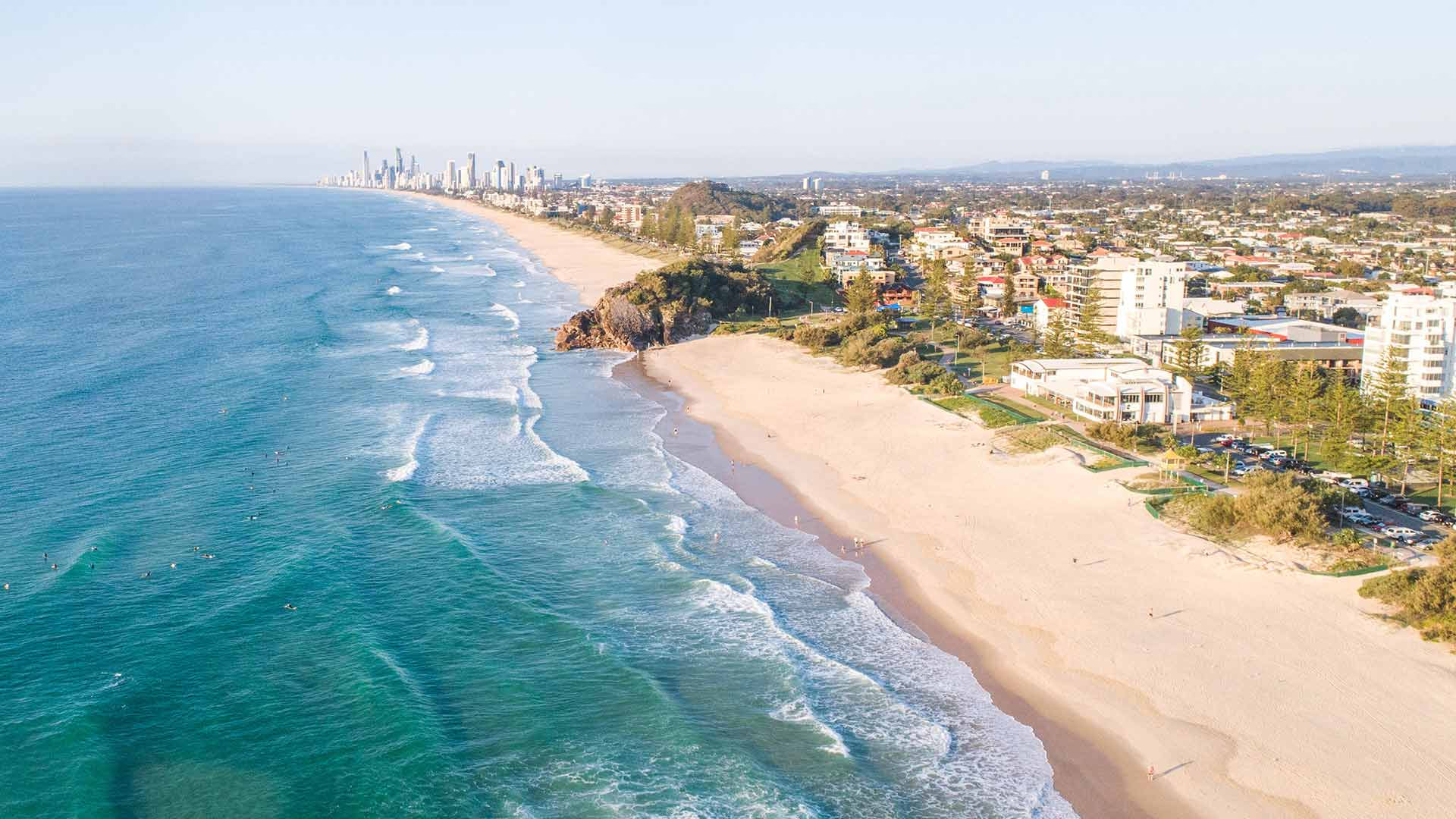
If someone tells you to learn at Currumbin Alley, they are giving you good advice. The Alley sits at the mouth of Currumbin Creek on the southern Gold Coast, where the creek pushes sand out to form a long, gently sloping bank. The result is a sand-bottom wave that breaks slowly, runs a long way, and reforms in waist-deep water — which is exactly what a beginner needs and almost nowhere else on the coast reliably provides.
It is also the most practical beach for a lesson on land: sealed car park, public toilets, beach showers, changing facilities, shaded parkland and cafés within a short walk. Nearly every serious surf school on the coast either operates here or wishes it did.
The catch: the creek mouth generates a current. On an outgoing tide the flow out of Currumbin Creek is genuinely strong, and it is the reason lessons are timed around tide rather than around your calendar. A school will move a lesson time to suit the tide. Take that seriously — it is not them being precious.
Broadbeach — central and uncrowded
An underrated option, and the pick if you are staying centrally and do not want a drive. Broadbeach is an open sand-bottom beach with a variety of banks along it, and it is consistently less crowded than Surfers Paradise a couple of kilometres north. Schools here are mobile — they park where the banks are best on the day rather than teaching from a fixed spot — so a booking is by arrangement rather than turn-up-and-go.
The trade-off against Currumbin is honesty about the wave: it is a beach break, so it is punchier and less forgiving than the Alley on an average day. On a small, clean morning it is lovely.
The Spit and Main Beach — sheltered northern option
The northern end of the coast, ten minutes from Surfers Paradise, near Sea World. The Spit is protected by the Seaway wall, which knocks the size down and makes it a reasonable beginner option when a big swell has made everywhere else unmanageable. Handy if you are already up that end for Main Beach or the marina precinct.
Coolangatta and Rainbow Bay — the southern corner
Rainbow Bay and Coolangatta Beach tuck in behind Greenmount and Point Danger, so they sit in the lee of the headland and are often smaller and cleaner than the open beaches. Good beginner conditions in the right swell direction, with the significant caveat that this corner gets very busy — you are sharing water with a lot of experienced surfers.
Who teaches
The established surf schools
Every operator below is a licensed, permitted surf school on the Gold Coast. Details change — always confirm times, ages and inclusions with the school directly when you book.
| School | Beach | Worth knowing |
|---|---|---|
| Currumbin Alley Surf School | Currumbin Alley | Accredited through the Academy of Surfing Instructors. Runs year-round, group and private, plus multi-week programmes and school-holiday courses for kids. One of the longest-running schools at the Alley. |
| Surfing Services Australia | Currumbin Alley | A SurfGroms delivery centre — the national Surfing Australia junior programme. Group, private and structured coaching from beginner through to advanced. |
| Surf Easy | Currumbin Alley | Teaching at the Alley since 1994, with council approval and international instructor accreditation. Lessons plus board hire, beginner and intermediate coaching. |
| Broadbeach Surf School | Broadbeach | Operating since 2006. Mobile — they position to wherever the banks are working, so it is by appointment only rather than turn-up. Small group sizes, kids' lessons from around age eight. |
| Surf in Paradise | The Spit, Main Beach | Based at the northern end of Sea World Drive. Small classes, useful when a big swell has shut down the open beaches. |
How to tell a good one
Three things are worth checking, and none of them are the price. First, accreditation — the Academy of Surfing Instructors is the recognised Australian body, and a school will say so plainly if it holds it. Second, instructor-to-student ratio in the water, not on the beach; the good schools put coaches out among the students rather than watching from the sand. Third, a permit for the beach they teach at, which the City of Gold Coast requires and which legitimate operators hold as a matter of course.
We deliberately do not publish surf-lesson prices. They shift with season, group size and duration, and a number that is wrong is worse than no number. Ask the school.
What happens
Your first lesson, realistically
A standard group lesson runs somewhere between ninety minutes and two hours, and less of it is spent surfing than you would expect — which is correct, because the dry-land part is what stops you wasting the wet part.
The shape of it
Meet and kit up
You arrive fifteen minutes early at the car park, not the water. Boards, rash shirts and wetsuits if needed come from the school — soft-top foam boards, which are big, buoyant, forgiving and much safer for everyone around you than a hard board. You bring swimmers, a towel and sunscreen.
On the sand
A warm-up, then the pop-up drilled on the beach, then a safety briefing that covers flags, rips, how to fall, and how to hold the board when a wave is coming at you. This part matters more than it feels like it does.
In the water
The bulk of the lesson, in waist-to-chest-deep water on broken waves — whitewater, not the green face. Instructors push you into waves so you can concentrate on standing rather than on paddling, which is a separate and much harder skill you will learn later.
Standing up
Most people do stand up in their first lesson. Several Gold Coast schools quote first-lesson stand-up rates in the high nineties, and while nobody audits those numbers, the underlying claim is fair: on a forgiving beginner wave with a foam board and someone pushing you, standing is achievable. Riding a wave you caught yourself, unassisted, is a different milestone and usually several sessions away.
You will be more tired than you think
Two hours of paddling, falling and dragging a board through shore break is genuinely hard work, especially in summer heat. Plan something gentle afterwards. A surf lesson at 7am and a theme park at 11am is a plan that sounds great and ends in a sulk.
Timing
When to book, and why mornings win
Three variables decide whether a lesson is pleasant or a slog, and only one of them is the season.
Wind — book the morning
South East Queensland runs a reliable daily pattern: light offshore or glassy conditions at dawn, then a north-easterly sea breeze building through the middle of the day. By early afternoon the surface is chopped up and messy. Early lessons are not surf-school theatre; the water is measurably better at 7am than at 2pm, most days, most of the year.
Tide — especially at the Alley
At Currumbin the tide governs both the wave and the current out of the creek. Schools schedule around it and will happily explain which tide they are chasing. If a school offers you a time that seems inconvenient, that is usually the tide talking.
Season
Water in the mid-twenties, no wetsuit needed, long daylight. Also the busiest beaches, the strongest sun and the most afternoon storms. Book the earliest slot you can face.
Warm water lingering from summer, lighter winds, smaller crowds and often the cleanest mornings of the year. If you can choose, choose autumn.
Water rarely drops below about 18–20°C, and schools provide wetsuits. Offshore winds are more consistent, the beaches are quiet, and humpbacks are passing offshore. Genuinely underrated.
Water climbing back up, light crowds outside the September school holidays, and long settled spells. A strong second choice after autumn.
Note that a big swell is bad news for a lesson, not good news. When the coast is firing, beginner beaches close out and schools cancel or relocate. A one-metre morning is a far better first lesson than a two-metre one.
Safety
The things that actually matter
Swim and surf between the flags
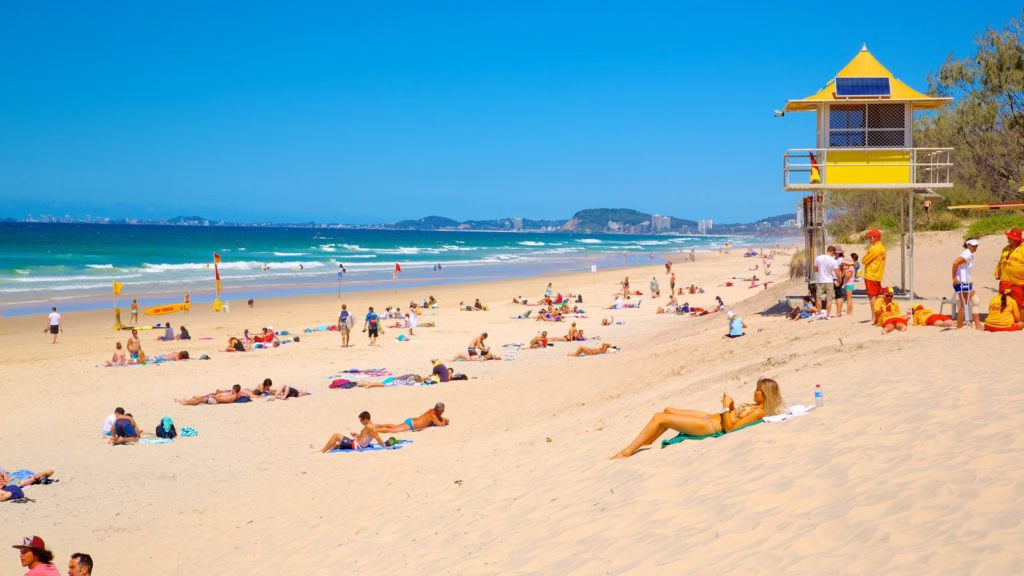
Gold Coast beaches are patrolled by Surf Life Saving Queensland lifeguards, and the red-and-yellow flags mark the patrolled swimming area. Surfboards are not permitted between the flags — surfing happens outside them, which is why a lesson is run by an operator who knows where the safe margin is. If you go back on your own afterwards without an instructor, the flags are the rule.
Rips
Rip currents are the single biggest hazard on any Australian surf beach, and they are what your briefing is really about. A rip looks deceptively calm — darker, flatter water with less breaking surf, often churned and sandy. That gap in the waves is not the easy way out; it is the current. If you are caught in one, do not swim against it. Stay on your board, raise an arm, and let the school or the lifeguards come to you. At Currumbin, the creek-mouth flow on an outgoing tide behaves the same way.
Sun
Queensland's UV index sits at extreme levels for much of the year, and two hours of reflected glare off the water burns people who thought they would be fine. Use a high-SPF water-resistant sunscreen before you leave, and expect the rash shirt the school gives you to be doing real work. Reapply after.
Marine life
Realistically: bluebottles. These blue-purple drifting stingers arrive in numbers when north-easterly winds blow them inshore, usually in the warmer months, and a sting is painful rather than dangerous. Lifeguards post warnings at beach entrances. If bluebottles are in, ask the school — they will often move the lesson. Sharks are present in Queensland waters as they are anywhere, and the risk is genuinely very low; the Gold Coast operates a shark control programme along its beaches.
Kids and families
Surfing with children
Most Gold Coast schools take children from around seven or eight in a standard group lesson, and younger with a private instructor. The limiting factor is rarely bravery — it is being able to manage a board in moving water and follow instructions when tired.
Programmes worth knowing about
SurfGroms
The national junior programme run by Surfing Australia, delivered on the Gold Coast by accredited centres including Surfing Services Australia at Currumbin Alley. It is a structured multi-session course rather than a one-off lesson, covering surfing alongside beach safety and ocean awareness. If your children are here for a week or more, it is a considerably better experience than a single lesson.
Multi-week and holiday programmes
Several Alley schools run multi-week courses and school-holiday intensives. These fill up ahead of Queensland holiday periods, so book before you arrive rather than after.
For the adults not surfing
Currumbin Alley has parkland, shade, tables, toilets and cafés a short walk away, which makes it easy for grandparents or non-surfing partners to watch the whole lesson comfortably. That is a real advantage over the mobile-van beaches, where there is less infrastructure.
Where Cooee comes in
Groups, schools and corporate days
A surf lesson for two people is a booking. A surf lesson for thirty is a logistics exercise — and that is the part we are actually good at.
The problems scale badly. Currumbin Alley's car park fills early on a good morning. A group split across four hire cars will not arrive together, which means the lesson starts late for everyone. People finish wet, sandy and hungry at the same moment. And somebody always needs to be somewhere else afterwards.
What we provide is a vehicle, a driver who knows the coast, and a schedule built backwards from the lesson time the school gives you — including the early start, which is the part groups most often underestimate.
Who this suits
School and youth groups
Coaches sized to the group, one arrival, one departure, and a driver who stays with the vehicle. Pairs naturally with a SurfGroms-style structured programme rather than a single lesson.
Hens, bucks and birthdays
A morning surf lesson is a genuinely good opening to a celebration weekend — it is active, it is cheap in hangover terms, and it gets everyone talking. It also runs early, which leaves the rest of the day open for the hinterland or the coast. See hens parties and birthday tours.
Corporate and team days
Beginner surfing levels a group quickly — seniority does not help you stand up. Works well as a morning activity before a lunch or a session somewhere else. See corporate tours.
Private charter
If your group already has a lesson booked and simply needs moving, a private charter is the straightforward option.
Building the rest of the day around it
Because a lesson finishes mid-morning, it combines well with almost anything that is not physically demanding. Breakfast at Palm Beach or Burleigh, a headland walk once you have dried off, the Tamborine Mountain cellar doors in the afternoon, or a whale watching trip in season. What it does not combine well with is a full theme-park day — see the theme parks guide for why that corridor eats a whole day on its own.
Practical
What to bring, and what not to
| The school provides | You bring | Leave behind |
|---|---|---|
| Soft-top beginner surfboard | Swimmers, worn under your clothes | Your own hard board on day one |
| Rash shirt, and a wetsuit in cooler months | Towel and a change of clothes | Jewellery and watches |
| Leg rope and wax | High-SPF water-resistant sunscreen | Anything valuable — car parks are public |
| Instruction, safety briefing and supervision | Drinking water, and a hat for after | Contact lenses if you can manage without |
| Public liability insurance | A realistic account of your swimming | A tight schedule for afterwards |
One genuinely useful tip: put your swimmers on before you leave your accommodation. Changing facilities at the beach exist but they are basic and busy, and the fifteen minutes you save is the difference between a relaxed start and a rushed one.
Common questions
Gold Coast surf lesson questions
Where is the best place to learn to surf on the Gold Coast?
Currumbin Alley, on the southern Gold Coast. Sand pushed out by Currumbin Creek forms a long, gently sloping bank, so the wave breaks slowly and reforms in waist-deep water — which is what a beginner needs. It also has a car park, toilets, showers, shade and cafes nearby. Broadbeach and The Spit at Main Beach are the main alternatives.
Do I need to be able to swim to have a surf lesson?
You do not need to be a strong swimmer for a beginner lesson, because it takes place in waist-to-chest-deep water on broken waves, but you must tell the school honestly what your swimming is like. Every school asks, and they place students accordingly.
How long is a Gold Coast surf lesson?
A standard group lesson runs about 90 minutes to two hours. That includes a warm-up, pop-up practice on the sand and a safety briefing before you get in the water, so the time actually spent surfing is less than the total.
Will I stand up in my first lesson?
Most people do. On a forgiving beginner wave with a soft foam board and an instructor pushing you into it, standing up is achievable in a first lesson. Catching a wave yourself, unassisted, is a separate milestone that usually takes several sessions.
What time of day is best for a surf lesson?
Early morning. South East Queensland gets light offshore or glassy conditions at dawn, then a north-easterly sea breeze builds through the day and chops the surface up by early afternoon. Schools also schedule around the tide, especially at Currumbin Alley where the creek mouth generates a current on an outgoing tide.
What should I bring to a surf lesson?
Swimmers worn under your clothes, a towel, a change of clothes, high-SPF water-resistant sunscreen and drinking water. The school supplies the soft-top board, leg rope, rash shirt and a wetsuit in cooler months. Leave jewellery and valuables behind — beach car parks are public.
Can you surf on the Gold Coast in winter?
Yes, and winter is underrated for learning. Water rarely drops below about 18 to 20 degrees Celsius, schools provide wetsuits, offshore winds are more consistent and the beaches are far quieter than in summer.
What age can children start surf lessons?
Most Gold Coast schools take children from around seven or eight in a group lesson, and younger with a private instructor. For a longer stay, the SurfGroms programme run by Surfing Australia is a structured multi-session course covering surfing alongside beach safety.
Can I learn to surf at Snapper Rocks or Burleigh Heads?
No. Snapper Rocks, the Superbank, Burleigh Heads, Kirra and Currumbin Point are world-class waves that break over rock or shallow sand banks and are crowded with very experienced surfers. They are the wrong place for a first lesson. Learn at Currumbin Alley, Broadbeach or The Spit instead.
Does Cooee Tours run the surf lessons?
No. Cooee Tours does not teach surfing — instruction is delivered by licensed, accredited surf schools operating under City of Gold Coast permits. What Cooee provides is the transport and scheduling for groups, including school groups, corporate days, hens and bucks parties and families, built around the lesson time the school gives you.
Moving a group to the surf?
Tell us the size of the group, the dates, and whether you have a lesson booked already. We will build the day around the school's tide window and handle getting everyone there and back.