Picnic Point & the Toowoomba Range Lookouts
One of Queensland's best free lookouts sits five minutes from the Toowoomba CBD. Here's how to do the escarpment properly — and when.
Picnic Point: the essential stop
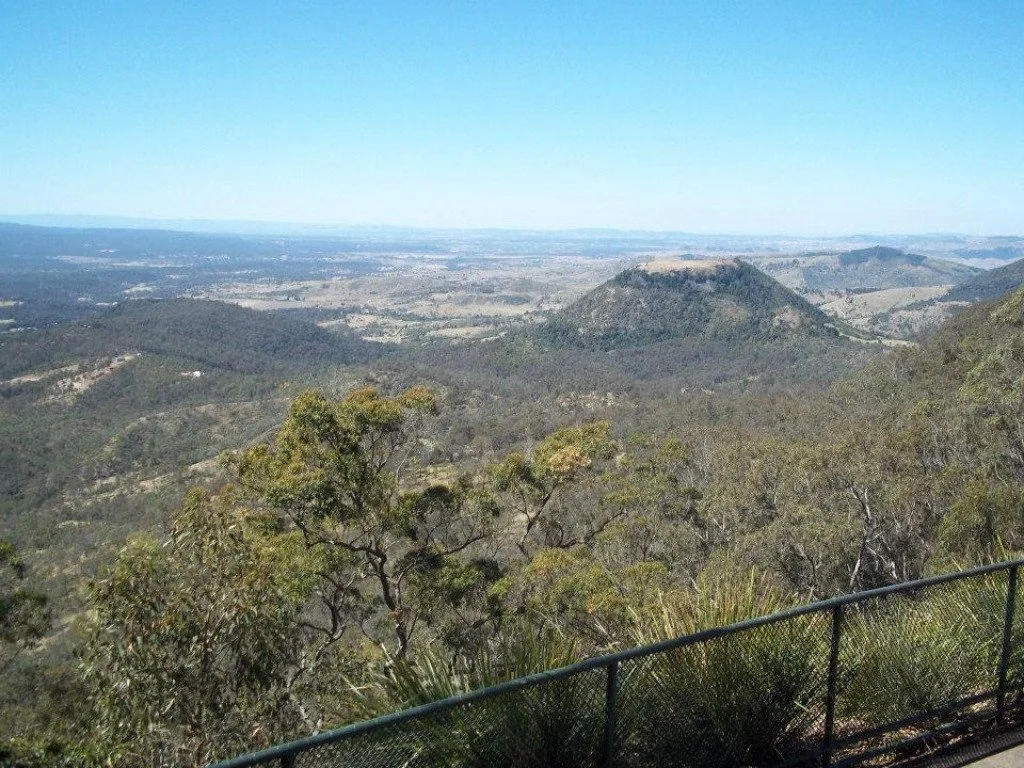
Perched right on the eastern escarpment, Picnic Point looks out over the Lockyer Valley toward Brisbane, with Tabletop Mountain standing sentinel in the foreground. It's free, it's five minutes from the CBD, and it packs parkland, gardens, a cafe, playgrounds and a network of walking trails onto the Range edge. Every Toowoomba itinerary should end here at least once.
When to come
Late afternoon is the classic — the light falls across the valley and golden hour from the lookout is the best free spectacle in the city. Sunrise rewards early risers with the sun coming up over the valley floor, and locals will tell you the most dramatic show of all is a summer afternoon when storms build over the Lockyer and roll toward the Range. Whatever the hour, it's the natural bookend to a garden day.
Gardens in the morning, escarpment in the evening — the Toowoomba day has a natural shape, and Picnic Point is its full stop.
The walks
Trails drop from the parkland along the escarpment edge and down the slopes below the lookout, ranging from easy strolls to steeper descents that earn their return climb. Tabletop Mountain — the flat-topped peak in the view — has a summit scramble of its own, but be clear-eyed: it's steep, unmarked in sections and for experienced walkers only. For most visitors, Tabletop is best enjoyed from the lookout with an ice cream.
Redwood Park and the Range bush
Redwood Park protects more than 200 hectares of the Range's eastern slopes just north of Picnic Point — walking and riding trails through remnant rainforest and eucalypt forest, with birdlife to match. It's the wilder counterpart to the manicured escarpment parkland, and spring walking weather here is superb.
Making a picnic of it
The name is an instruction. Pack from the CBD's bakeries (the coffee and cafe guide will sort you), claim a table on the edge, and let the valley do the entertaining. On Cooee day tours, Picnic Point is the traditional final stop before the run home — the view you carry back down the Range.
A short history of the edge
Picnic Point did not have to be invented, which is part of its charm. For as long as Toowoomba has existed, its people have walked east until the ground stopped, and the habit named the place: this was where the town came to picnic, long before anyone thought to formalise the idea with lawns and a cafe. The city grew up on the crest of the Great Dividing Range with its back to the Darling Downs and its face to the drop, and the eastern escarpment became the default Sunday destination the way a beach does in a coastal town. Generations of Toowoomba families have marked birthdays, courtships and ordinary weekend afternoons on this stretch of edge, and the parkland you visit today carries that accumulated ease — it feels used in the best sense, like a favourite chair.
What has changed over the decades is everything around the view rather than the view itself. The parkland has been progressively landscaped, the trail network extended and signed, the lookout terraces built out to give the drop a safe railing, and the cafe added so that the picnic could be optional rather than mandatory. But the essential transaction is the one it has always been: you arrive at roughly 700 metres above sea level, the Lockyer Valley unrolls below you toward Brisbane, and for the price of absolutely nothing you get one of the best long views in Queensland. Very few free attractions this good survive without a ticket booth appearing. Picnic Point has, and Toowoomba is quietly proud of that.
The geography, explained
It helps to understand what you are standing on. The Great Dividing Range runs down the eastern side of the continent like a spine, and Toowoomba sits directly on its crest — which is why the drive up from Brisbane, about 125 kilometres and roughly an hour and three quarters by coach, ends with that long, winding climb up the Toowoomba Range. The escarpment at Picnic Point is the abrupt eastern face of that crest: on one side of the city the land falls away hundreds of metres to the Lockyer Valley floor, and on the other it rolls out flat and generous into the Darling Downs. Toowoomba is one of the few Australian cities where you can stand in a suburban park and read the continent's basic architecture at a glance.
That geography explains almost everything else about the city. The altitude delivers the cool nights and crisp springs that make the gardens possible — and make the Carnival of Flowers a September fixture rather than a heat-struck compromise. The escarpment catches the weather coming up from the coast, which is why the Range wears cloud some mornings while the Downs behind sit in sunshine. And the drop itself is why the lookout works: you are not on a hill admiring other hills, you are on a wall looking over farmland from the height of a small mountain. Once you have read the landscape this way, the rest of your Toowoomba visit makes more sense — the gardens, the climate and the view are all the same fact wearing different outfits.

What is actually there, area by area
Picnic Point is bigger and more varied than the single postcard suggests, so it pays to know the layout. The heart of the reserve is the lookout precinct itself — railed terraces right on the lip of the escarpment, with the long view east and Tabletop Mountain in the foreground. Behind the terraces spread the picnic lawns: open grass, mature trees, tables and sheltered spots that fill with families on fine weekends. The cafe sits within the parkland with the view as its dining room; opening days and hours are its own business, so check locally before you build a morning around eggs. Gardens thread through the precinct, and in September they are dressed for the Carnival like everything else in Toowoomba.
Beyond the manicured core, the reserve gets progressively wilder. Trailheads leave the parkland edge and drop along and below the escarpment — some are gentle contouring paths that give you the view from new angles, others descend properly and make you pay for the privilege on the way back up. There are playgrounds for the smaller members of the party, plenty of parking distributed around the reserve, and enough space that even a busy Sunday rarely feels crowded once you walk two minutes from the main terrace. Give it ninety minutes at minimum; a lazy half day with lunch is better. The Picnic Point listing in our things-to-do guide has the practical summary if you want it on one page.
Reading the view
The view rewards a little orientation, because it is not just scenery — it is a map. Directly below you the escarpment drops to the Lockyer Valley, some of the most intensively farmed country in Queensland, its floor stitched into paddocks and irrigation greens that change colour with the season. The flat-topped mountain standing alone in the middle distance is Tabletop, a landmark so distinctive that once you have identified it you will spot it from half the lookouts in the region. On the clearest days the view runs a long way east toward Brisbane, and picking out the far ranges on the horizon becomes a small competitive sport among whoever you have brought with you.
The view also performs, and the performances differ by season and hour. Winter mornings can fill the valley with fog so that the escarpment becomes a shoreline and Tabletop an island — an effect worth setting an alarm for. Summer builds storms over the valley that you can watch approach for an hour before the first drop reaches the Range. And in spring, Carnival season, the air tends toward that scrubbed clarity that makes the far distance look implausibly close. The escarpment travel guide goes deeper on the walks and viewpoints along the whole eastern edge if the geography gets its hooks into you, which it tends to.
September: the Carnival angle
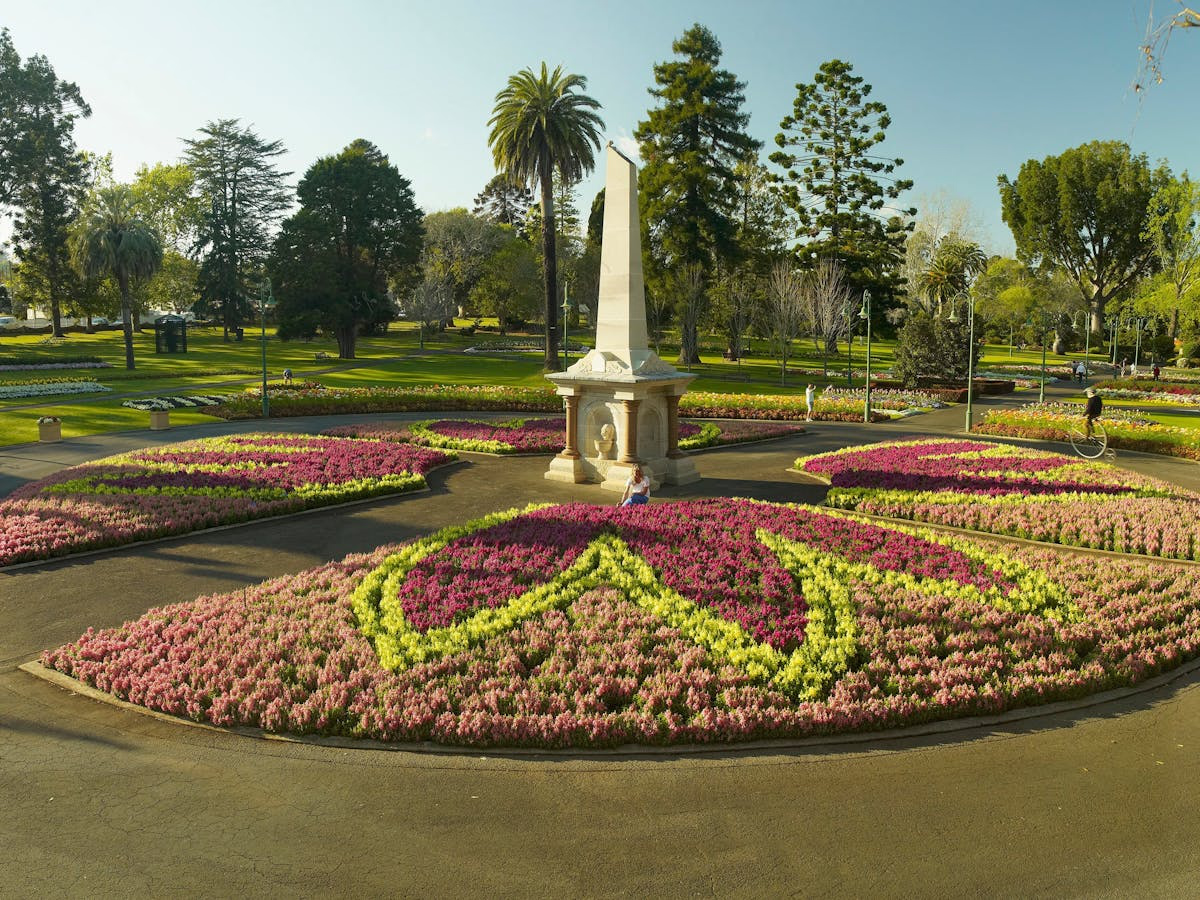
During the Toowoomba Carnival of Flowers — 18 September to 5 October in 2026, the 77th running of the festival — Picnic Point plays a particular role in the visitor's day, and it is worth understanding it in advance. The Carnival's headline acts are in town: Queens Park and Laurel Bank Park in full display, the Grand Central Floral Parade on Saturday 19 September, the exhibition gardens scattered across the suburbs. Picnic Point is not the headline; it is the encore. After a day walking flower beds, the escarpment supplies the thing no garden can — distance, air and a horizon — and the late-afternoon light across the Lockyer Valley closes the day the way a good dessert closes a meal.
The practical Carnival note is that everyone else has read the same script. Fine September afternoons bring genuine crowds to the lookout, and parking near the main terrace becomes an exercise in patience from mid-afternoon. Arrive with time in hand, or better, arrive on foot of a sort — coach passengers get dropped near the precinct and stroll in past the queue of circling cars, which is one of those small logistical wins that colours a whole day. If your Carnival visit is a day trip, resist the urge to squeeze Picnic Point into the middle of the schedule; it belongs at the end, when the light is doing its best work and the gardens have already been walked.
Getting there, parking and access
The logistics are mercifully simple by the standards of famous lookouts. Picnic Point sits barely five minutes' drive east of the Toowoomba CBD along Tourist Road — close enough that locals treat it as an extension of town rather than an excursion. Entry is free, parking is free, and there is a lot of it spread through the reserve, though as noted it fills on Carnival weekends and fine Sunday afternoons. If you are timing a visit around the golden hour, add a buffer; the last half hour before sunset is precisely when everyone else arrives, and the difference between a calm arrival and a flustered one is about twenty minutes.
Access around the main precinct is generous: the lookout terraces, principal lawns and cafe area are connected by formed, mostly level paths, and you can collect the full postcard view without tackling a single stair. The descending trails are another matter — they are proper walking tracks with grades to match, and anyone with mobility considerations should simply enjoy the network's top edge and leave the descents to the enthusiasts. As with any escarpment park, supervise children near the railings, wear real shoes if you intend to leave the lawns, and treat the weather with respect: the edge catches wind that the city centre never feels, and a Range evening cools quickly once the sun drops.
Coffee, cake and the cafe question
A lookout with a cafe is a different proposition from a lookout without one, and Picnic Point's cafe is a genuine part of its appeal — there are not many places in Queensland where you can hold a flat white with a hundred-kilometre view for free. The cafe trades within the parkland precinct, close enough to the terraces that you can drift between coffee and view without commitment. Opening days and hours shift with the seasons and the operator's own arrangements, so confirm locally before you promise anyone breakfast; the reliable rule is that fine weekend middays are safest and early weekday mornings are the gamble.
The beauty of Picnic Point, though, is that the cafe is an option rather than a dependency. The place is named for the alternative, and the alternative is excellent: tables and lawn in oversupply, shelter if the wind is up, and the entire Toowoomba CBD five minutes behind you for provisions. Between the city's bakeries, delis and coffee roasters you can assemble a spread that would embarrass most kiosks, carry it up Tourist Road, and take the best table in the house — the one on the grass, facing east. On a Cooee day tour during Carnival season, the Spring Picnic Lunch add-on ($22) solves the same problem with even less effort: the picnic is packed for you, and your only job is choosing the view.
Bringing the kids
Picnic Point is one of Toowoomba's easiest wins with children, provided you set it up correctly. The playgrounds give the under-tens a legitimate destination of their own, the lawns absorb any amount of running, and the view — usually wasted on small children in theory — works here in practice because it comes with props: spotting Tabletop Mountain, counting paddocks on the valley floor, watching birds ride the updrafts off the escarpment. Add an ice cream from the kiosk end of proceedings and you have engineered a solid ninety minutes of contentment for remarkably little money, which is the fundamental equation of family travel.
The supervision note is the obvious one and worth stating plainly: this is an escarpment park, the main terraces are properly railed, and the drop beyond them is real. Keep children inside the railed areas and off the descending trails unless you actually intend to walk them — the tracks below the lookout are steep enough to turn a casual wander into a carry. The other family tip is timing. Late afternoon suits photographers and couples; families tend to do better mid-morning, when the playgrounds are fresh, the parking is easy and the cafe queue is short. Pair it with a morning at Queens Park's playground and you have built the classic Toowoomba family double.
The photographer's half hour
Photographers should treat Picnic Point as two different assignments. The first is the grand landscape: for this, the last hour of light is the whole game, a wide lens takes in the sweep of valley and sky, and the railed terraces give you a stable, unobstructed platform that most escarpment lookouts cannot match. Watch the light move across the valley floor rather than just the sky — the low sun rakes the paddocks into a corduroy of shadow and gold, and the best frames usually come ten minutes before you expect them. Winter fog mornings, when the valley fills and Tabletop floats, are the lottery win; you cannot schedule them, but if you wake to fog in Toowoomba, drop everything and go.
The second assignment is the long lens, and it is the one casual visitors miss. A telephoto compresses Tabletop Mountain against the ranges behind it into something genuinely dramatic, isolates single farms and tree lines on the valley floor, and turns the view's enormous cast into a series of portraits. Between the two assignments, leave time to simply put the camera down; the light show at the escarpment moves quickly, and the frames you carry in your head have a longer shelf life than most of the ones on the card. During Carnival, the gardens within the reserve add a foreground option — flowers in front, valley behind — that neatly summarises the whole Toowoomba proposition in one photograph.
How Cooee Tours does the escarpment
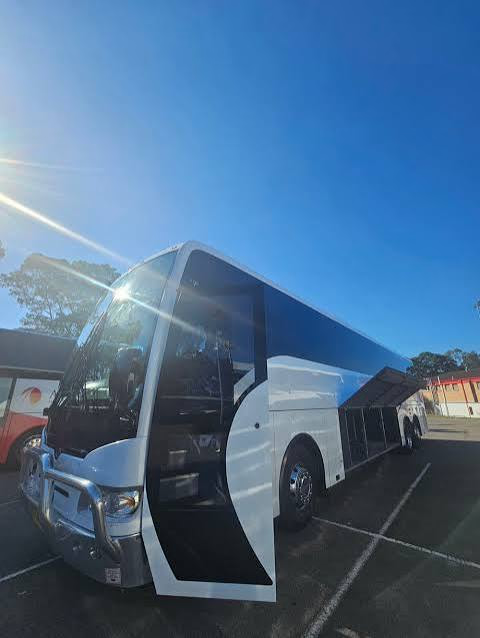
Cooee has been running coaches up the Toowoomba Range for long enough to have firm opinions about how the day should be sequenced, and Picnic Point's place in it is settled doctrine: last stop, late afternoon, before the run back down the Range. Our Carnival of Flowers day tours run from $89 adult and $69 child out of Brisbane CBD and Chermside, with Gold Coast (from $99) and Sunshine Coast (from $109) departures as well, and the itinerary works the gardens through the morning and midday before delivering you to the escarpment when the light starts to lean. You step off the coach, walk to the railing, and collect the view as a summary of everything the day has shown you.
The coach also solves the two problems Picnic Point actually has: Carnival-weekend parking, which becomes a circling contest precisely when the light is best, and the Range drive itself, which is far more enjoyable from a high seat with someone else holding the wheel. The driver-guide fills the climb with the kind of local commentary that turns scenery into a story, and the run back down at dusk — Lockyer Valley lights coming on below — is quietly one of the best moments of the whole tour. If a single day feels tight, the 2-day weekend tours from $595 buy you an unhurried evening up top and a second crack at the escarpment light; the full menu is on our Toowoomba tours page.

Pairing the Point with the rest of the day
Because Picnic Point asks for the end of the day, everything else slots in ahead of it, and the pairings are easy to get right. The classic structure gives Queens Park the morning — 26 heritage-listed hectares in the city centre, at their absolute peak during Carnival — a CBD lunch in the middle, one more garden or the Cobb+Co Museum for the early afternoon, and then the drift east to the escarpment as the shadows lengthen. That sequence has survived decades of visitor testing because it follows the light: gardens photograph best before the middle of the day, and the valley view does its finest work after four.
The evening extension is Margaret Street. Toowoomba's main dining strip sits five minutes back from the lookout, which means the Picnic Point sunset can roll directly into dinner without logistics intervening — a genuinely rare luxury in regional sightseeing, where the great view and the good restaurant usually live an hour apart. For travellers staying overnight, that combination is the argument for the second day; for day trippers, it is the argument for booking the later departure home. And if the valley floor below the lookout has been tempting you all afternoon, the Lockyer Valley makes a fine follow-up excursion — the view from inside, as it were, through some of Queensland's richest farm country.
The honest verdict
Every city has an attraction that locals send visitors to with complete confidence, and Picnic Point is Toowoomba's. It costs nothing, it is five minutes from the centre of town, it works in every season and at every fitness level, and it delivers a view that cities elsewhere would build a cable car and a gift shop around. The only ways to get it wrong are to skip it — a genuine itinerary error — or to visit it at noon in a hurry, which wastes the light and the point alike. Give it the end of your day, give it at least an hour, and let the valley do what it has been doing for Toowoomba picnickers for more than a century.
For Carnival visitors the verdict sharpens further: in a festival built around close-up beauty — tulip beds, exhibition gardens, parade floats — the escarpment is the wide shot, and a Carnival day that ends at the railing feels complete in a way that a gardens-only day does not. Whether you drive yourself up the Range or let a Cooee coach do the climbing, make sure the Point is on the schedule and the schedule puts it last. The gardens are why you come to Toowoomba in September; the edge is what you remember on the way back down.
See the Carnival the easy way
Cooee Tours runs coach day tours from $89pp and 2-day overnight tours from $595pp — no traffic, no parking, local driver-guide included.
Carnival of Flowers Tours