Toowoomba's Coffee & Cafe Scene
Regional Queensland's most underrated coffee city sits 700 metres up a mountain range. The cool air helps; the obsession does the rest.
Why the coffee is this good here
Toowoomba's cafe culture has been outperforming its postcode for well over a decade. Part of it is climate — crisp mornings breed coffee rituals in a way tropical Queensland never quite does — and part is critical mass: the CBD and railway precinct hold enough serious rooms within walking distance of each other that standards keep each other honest. The result is a scene that surprises Brisbane visitors and quietly delights Melbourne ones.
The institutions
Ground Up Espresso has long been the name most associated with Toowoomba specialty coffee — a local institution that helped build the scene. Baker's Duck is the pastry pilgrimage: a bakery whose sourdough and croissants have justified entire trips up the Range on their own. And The Finch carries the flag for produce-driven dining built on Darling Downs ingredients. Around them sits a deep bench of brunch rooms, roasters and hole-in-the-wall espresso bars that reward wandering.
The cafe crawl rule: coffee in the laneway spots, pastry at the bakery, brunch where the queue is local.
How to plan the crawl
Keep it walkable — the best of the scene sits in the blocks around Ruthven and Margaret Streets and the railway precinct, which conveniently overlaps the street art laneways and the heritage streetscape. Coffee, mural, building, repeat: it's the ideal wet-weather or winter morning, and the perfect recovery lap after a big garden day.
Beyond the CBD
The country bakery belt around Toowoomba — Highfields, Crows Nest, Hampton and the Downs villages — runs a parallel tradition of pies, slices and country baking that takes itself extremely seriously. Any of the day trips doubles as a bakery tour if you let it.
Festival season
During the Carnival of Flowers, the whole scene lifts — a festival food trail links dozens of venues with Carnival-themed dishes, and the cafes near Queens Park hum from opening. Go early or book where you can.
The lie of the land: where the coffee actually is
If you want to understand Toowoomba's cafe geography, picture the CBD as a compact grid with two spines. Ruthven Street runs north–south and carries the retail weight; Margaret Street crosses it east–west and carries most of the atmosphere, running from the courthouse end down towards Queens Park with heritage facades the whole way. The serious coffee sits in the blocks where those two streets meet, and — crucially — in the laneways and arcades that stitch the blocks together. Toowoomba's laneways were working service lanes for a century, which means they are narrow, oddly angled and full of back doors, and over the past decade cafes have colonised them the way cafes colonised Melbourne's: a roller door here, six stools and a bench there.
The second cluster worth knowing is the railway precinct on the CBD's north-western edge, where the grand 19th-century station and its goods yards have been progressively reworked into event and hospitality spaces. It has a different feel to the Margaret Street blocks — more industrial, more room to spread out, better for a long weekend brunch than a fast flat white. Between the two, almost everything worth drinking sits inside a fifteen-minute walking radius, which is why locals treat a cafe crawl here as a genuine plan rather than a driving exercise. Park once, or better still arrive by coach, and simply walk the grid.
What 700 metres of altitude does to a flat white
Toowoomba sits roughly 700 metres above sea level on the crest of the Great Dividing Range, and the altitude is not a trivia point — it is the whole personality of the coffee scene. Winter mornings routinely open in low single digits, fog hangs in the escarpment gullies, and even summer starts cool enough that an outdoor table wants sun. That climate produces a coffee culture closer to Canberra's or Hobart's than to coastal Queensland's: people drink coffee because they are cold, then keep drinking it because the rooms are warm and the baristas are good. Brisbane, 1.75 hours down the Range, drinks iced lattes for half the year; Toowoomba keeps the espresso machine as the hearth of the room.
The altitude also shapes the food that comes with the coffee. The Darling Downs is one of Australia's most productive food bowls — grain, beef, pork, dairy and cool-climate vegetables all grown within an hour of the city — and the better kitchens lean on it hard. Menus read seasonally in a way that still surprises visitors expecting standard-issue smashed avocado: braises and baked eggs in winter, stone fruit and berries through the warm months, and local flour in everything with a crust. It is the rare regional scene where “locally sourced” describes the supply chain rather than the font on the blackboard.
How to read a Toowoomba cafe from the footpath
Because rooms open, move and change hands the way cafes everywhere do, the smartest approach is to learn the tells rather than memorise names — and to check current openings before you build a morning around any single door. The first tell is the queue: a Toowoomba queue at 8am on a Saturday is a local endorsement, because this is not a city that queues recreationally. The second is the retail shelf — a cafe selling bags of beans with a roast date on them takes its coffee seriously enough to argue about. The third is the menu length: the best rooms up here run short, seasonal menus that change often, while the laminated twelve-page book is the same warning sign it is anywhere in Australia.
The fourth tell is architecture, and it is the distinctly Toowoomba one. The scene's best rooms tend to occupy the city's old commercial bones — former banks, warehouses, corner shops and arcade tenancies — because the CBD has so much heritage fabric that hospitality gets to choose from it. High ceilings, original brick and a mural on the side wall are close to a house style. If you walk a laneway and smell toast, follow it; if you pass a heritage shopfront with a hand-lettered A-frame and a crowd of regulars, you have almost certainly found the right place without needing anyone's list.
The brunch hour, done properly
Brunch in Toowoomba is an event with local rules. The kitchens hit their stride from about 7.30am and the peak runs to 11, with weekends adding a distinct second sitting of post-sport families around midday. Portions run country-generous — this is the Darling Downs, and nobody has ever left a Downs table hungry — and the cooking is more ambitious than the prices suggest, because rents up here are kinder than in the capitals and the kitchens spend the difference on produce. Order whatever involves local bacon or seasonal fruit and you will eat better than the equivalent spend buys in Brisbane.
A practical warning that doubles as a compliment: this is a working regional city, not a resort town, so the rhythm follows local life rather than tourist demand. Sundays can go quiet by mid-afternoon, some of the best rooms take Monday or Tuesday off, and public holidays are a lottery — always check current openings on the day rather than trusting last year's habits. Our where to eat guide keeps the broader picture current, but the golden rule stands: in Toowoomba, the locals' queue is more reliable than any website.


Coffee with a side of street art
No Australian city pairs caffeine and murals quite as conveniently as Toowoomba, because the laneways that hold the espresso bars are the same laneways that hold the street art collection built up since the First Coat festival era. The works rotate as walls are repainted and new commissions arrive, but the core of the collection stays concentrated in the lanes off Ruthven and Margaret Streets — which means a cafe crawl and an art walk are functionally the same route walked at different speeds. Order a takeaway, pick a lane, and let the walls set the itinerary.
The pairing works because both scenes grew from the same instinct: a regional city with beautiful bones deciding its back lanes deserved better than bins. The murals gave people a reason to walk the laneways; the cafes gave them a reason to linger; each has been feeding the other for a decade. If you want to do the art side with intent rather than by accident, the street art and culture guide covers the current state of the collection — but the honest advice is that a coffee in hand and a willingness to check every gap between buildings gets you ninety per cent of the way there.

Takeaway strategy: Queens Park is your other dining room
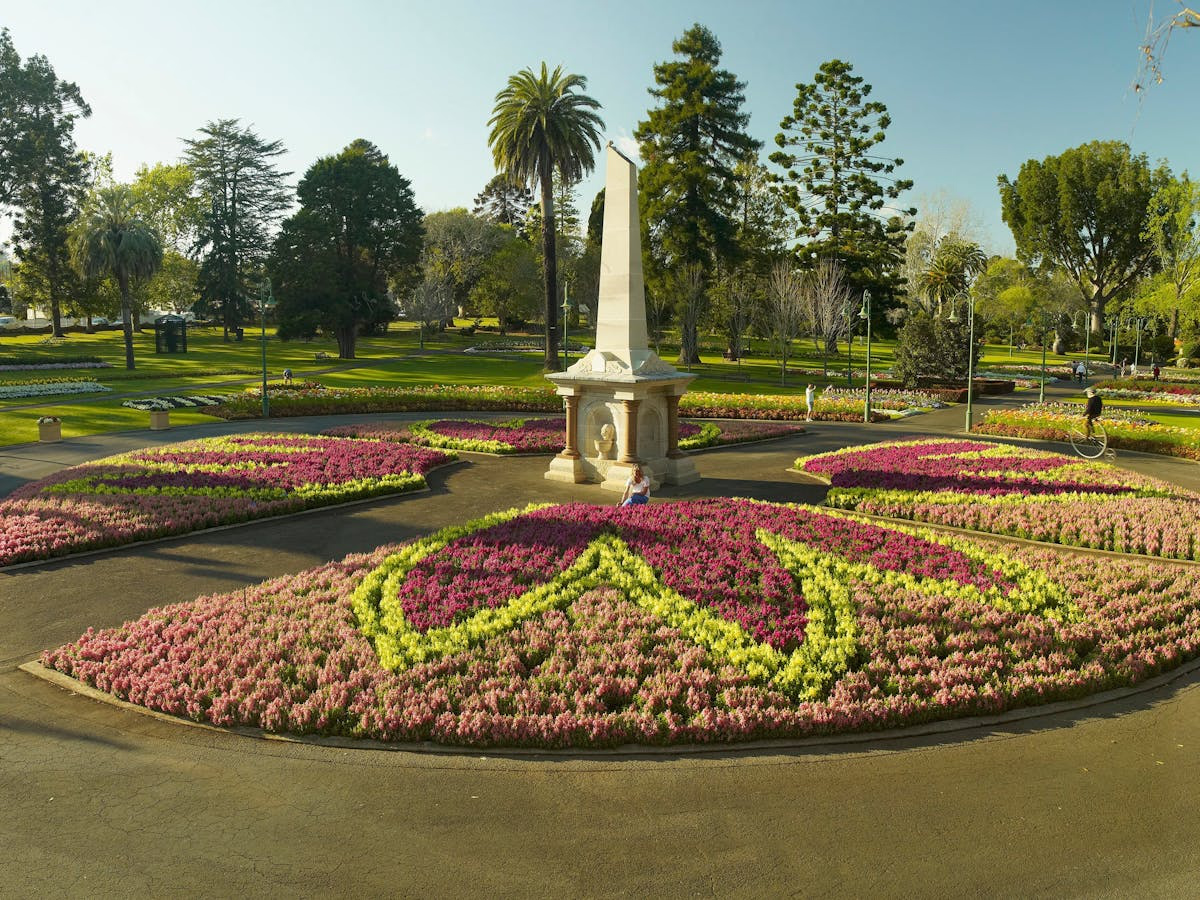
Toowoomba's single best cafe table is not in a cafe. Queens Park — heritage-listed, around 26 hectares, and a flat ten-minute walk from the Margaret Street coffee blocks — is the natural landing place for a takeaway coffee and a paper bag of pastries, with lawns, established trees and enough benches that even a Carnival crowd leaves room. The park's botanic gardens corner is the pick: sit facing the beds, and in spring the view competes seriously with the coffee. Locals have run this play for generations, which is why the cafes nearest the park do such brisk takeaway trade on fine mornings.
The move works year-round with seasonal adjustments. In winter, take the coffee walking — the park's avenues are made for a brisk lap and the cold keeps the flat white at drinking temperature for exactly one circuit. In spring, arrive before 9am during the Carnival, because the gardens draw their biggest crowds mid-morning and the early light on the beds is better anyway. Our Queens Park guide covers the park itself; the cafe scene's contribution is simply to make sure you never have to enjoy it undercaffeinated.
After the machines wind down: Margaret Street in the evening
Toowoomba's coffee day has a long tail. As the espresso rooms close through the afternoon, Margaret Street hands over to its evening self — wine bars, restaurants and pubs occupying the same heritage run, with the facades lit and the footpath tables holding out as long as the Range air allows. The transition is worth planning around: a late-afternoon coffee, a slow wander while the light goes gold on the sandstone, then dinner within two blocks of where you started. Few regional cities let you run a whole day's eating and drinking on a single street without ever moving the car.
Evening is also when the scene's country manners show most clearly. Kitchens seat early by capital-city standards, service is genuinely friendly rather than performed, and a table for 6pm needs no negotiation except during Carnival season — when the whole city books out and reservations become the difference between dinner and a servo pie. If you are staying over, the smart structure is coffee crawl in the morning, gardens or galleries through the middle, Margaret Street at night; if you are day-tripping, at least walk the street before you leave, because the dusk light on that streetscape is the city's best free show.
Carnival season: when the cafes hit festival pace
For three weeks each spring, the coffee scene runs at a tempo the rest of the year never asks of it. The Toowoomba Carnival of Flowers — 18 September to 5 October in 2026, the 77th festival — fills the city with visitors from first light, and the cafes respond with extended hours, spring specials and queues that start before the machines warm up. The FEASTival food program (26–27 September) and the Carnival markets add outdoor eating to the mix, so the scene briefly doubles in size: laneway espresso bars on one side, market coffee carts and food stalls among the flowers on the other.
The tactical play for Carnival visitors is to treat coffee as the first event of the day, not a mid-morning pause. Be at a cafe door at opening, eat properly, then hit Queens Park while the tour buses are still climbing the Range — you will have beaten the day's two biggest queues in one move. Cooee Tours' Carnival of Flowers day tours (from $89 adult / $69 child out of Brisbane) build free city time into the itinerary for exactly this reason: enough hours in the centre for a proper cafe stop between the gardens, without you having to fight the parade-day parking.

Winter: the scene's secret best season
Ask a local when Toowoomba's cafes are at their best and the honest answer is July. Winter on the Range is proper winter — frost on the parked cars, breath visible on the walk from the car, occasionally even the rumour of sleet — and the cafe scene is built for it in a way nothing on the Queensland coast is. Fires get lit, menus go to braises and puddings, windows fog agreeably, and the flat white stops being a habit and becomes a necessity. For Brisbane visitors, the 1.75-hour run up the Range in July delivers the closest thing to a southern-winter city break available without an airfare.
Winter is also when the crawl itself is most pleasant: no Carnival crowds, easy tables, baristas with time to talk about what they are pouring, and the heritage streetscape looking its moody best under grey light. Pair a morning of laneway coffee with an afternoon at a museum or gallery and you have the ideal cold-weather itinerary — entirely indoors when you want it to be, two minutes from warmth when you do not. The only planning note: winter Mondays and Tuesdays are the scene's rest days, so a midweek trip should check current openings before setting an alarm.
Getting here: the case for not driving
The drive from Brisbane is straightforward — roughly 125 kilometres and 1.75 hours up the Warrego Highway and the Toowoomba Range — but a cafe crawl is one of the outings where the coach argument writes itself. Someone has to drive back down the Range after a day that may have involved a breakfast wine; CBD parking is contested at the best of times and a competitive sport during Carnival; and the whole point of the exercise is to walk a compact grid, which a city-centre drop-off serves far better than a multi-storey car park at the wrong end of it.
Cooee Tours' Toowoomba day tours run from Brisbane CBD and Chermside, with Gold Coast and Sunshine Coast departures in Carnival season, and the itineraries deliberately include free time in the city centre — enough for a proper cafe stop rather than a gulped takeaway. For the fully food-focused version, the dedicated food trail tour builds the eating into the itinerary itself. Either way you arrive rested, caffeinate at leisure, and let a local driver-guide handle the Range while you argue about where the second coffee should come from.
Bringing the family without losing the plot
Toowoomba's cafe scene is unusually workable with children, for structural reasons. The rooms are big — heritage tenancies come with floor space that inner-city cafes can only dream of — so prams fit and toddlers have somewhere legal to orbit. Kitchens keep proper kids' options because their core clientele is local families, not influencers. And the geography helps most of all: Queens Park's playgrounds sit ten minutes' walk from the coffee blocks, which enables the classic Toowoomba family manoeuvre — one parent holds the cafe table while the other runs the playground shift, then swap.
The scene also suits the other end of the family: this is one of the most comfortable regional cities in Australia for older travellers, with flat CBD walking, generous footpaths, awning cover on the main streets, and cafes long practised at unhurried service. Toowoomba's popularity with seniors' groups is no accident — Cooee has run coach touring since 1974 and the city remains one of the most requested destinations on the books precisely because it works so well at strolling pace. Multi-generational groups can split confidently: art hunters to the laneways, gardeners to the park, everyone back to the same table for lunch.
The verdict, and how to spend your one morning
Toowoomba's coffee scene earns its reputation not by having one famous room but by having depth: a compact heritage grid where good coffee, serious baking and Darling Downs produce sit close enough together that wandering is a strategy. If you have a single morning, run it like this — arrive early, start with coffee in a laneway off Ruthven or Margaret Street, walk one block of murals while it goes down, take the pastry course at whichever bakery queue looks most local, then carry the final coffee to Queens Park and drink it facing the flower beds. Two hours, no car moved, and you will have understood the city better than most day-trippers who drove to five separate attractions.
The scene rewards repeat visits because it refuses to stand still — rooms change, menus turn with the seasons, and the laneway walls repaint themselves around the tables. Come in spring for the Carnival's festival energy, in winter for the fires and the fog, or in any ordinary week for the pleasure of a regional city that quietly out-coffees most of the capitals. However you time it, check current openings before you commit the morning, follow the locals' queue when in doubt, and leave room for the second pastry. On the Darling Downs, there is always a second pastry.
A short field guide to ordering like a local
A few dialect notes will smooth the morning. Toowoomba baristas pour to southern standards, so the flat white arrives properly hot rather than coastal-lukewarm, batch brew is increasingly common in the serious rooms, and asking what single origin is on will get you a considered answer rather than a blank look. Sizes run honest — a large is a large — and takeaway culture is strong because so much of local life involves carrying a coffee somewhere: to the park, to a netball sideline, to the ute. Tipping is appreciated and never expected, and the person ahead of you in the queue will talk to you if given the slightest opening. Let them; the best cafe intelligence in the city travels by queue conversation, and a local's offhand recommendation is worth more than any list this article could legally print.
Timing matters more than venue choice. The whole scene is at its best between 7am and 10am, when the baking is fresh from the ovens, the machines are dialled in and the rooms hum without crowding; by 2pm many kitchens are winding down and by 4pm the espresso day is largely done outside festival weeks. Build your Toowoomba itinerary accordingly — coffee first, gardens and galleries after — and you will be moving with the city's grain rather than against it. It is a small adjustment that makes the difference between sampling the scene and actually joining it for a morning.
See the Carnival the easy way
Cooee Tours runs coach day tours from $89pp and 2-day overnight tours from $595pp — no traffic, no parking, local driver-guide included.
Carnival of Flowers Tours