
Laneway coffee & street art
Morning coffee in the CBD laneways with time to wander the murals that have made Toowoomba a street art destination.
Toowoomba · Year Round
The Garden City earned a second reputation while no one was looking: laneway cafes among the street art, and a string of high country villages along the range — Highfields, Hampton, Crows Nest — growing, baking and bottling some of Queensland's best regional produce. This day tour eats its way through both.
Toowoomba sits on the crest of the Great Dividing Range, and the altitude changes everything: crisp air, four real seasons, and rich red volcanic soil that feeds the gardens the city is famous for — and the producers north along the range. The high country between Highfields and Crows Nest has quietly become a trail of farm gates, bakeries, cheese and coffee worth a day of anyone's time.
In town, the laneways around the CBD carry one of regional Australia's best street art collections, the cafe scene punches far above the city's size, and Picnic Point's lookout drops a hundred-kilometre view over the Lockyer Valley you've just driven up from.
September's Carnival of Flowers gets its own dedicated tour — this one runs the rest of the year, when the trail is quieter and the table by the window is yours.
Morning coffee in the CBD laneways with time to wander the murals that have made Toowoomba a street art destination.
The classic range-top view east over the Lockyer Valley — with the gardens and Tabletop Mountain in the frame.
North along the range through Highfields and Hampton towards Crows Nest, calling at farm gates, bakeries and regional makers — venues confirmed with your booking.
Lunch at a high country cafe, pub or farm venue, then the easy run back down the range to Brisbane.
Producer stops and lunch venues vary by day of week and season, and are confirmed at booking. Wine lovers can pair this trail with our Toowoomba wine tours.
The Darling Downs has fed other people for a very long time. From the 1840s its black-soil plains grew the wheat, beef and dairy that built south-east Queensland, and for most of that history the region's produce left on trains and trucks with no expectation that anyone would come the other way to eat it at the source. That has changed inside a generation. The same forces that remade regional Victoria and the Granite Belt — growers selling direct, bakers and cheesemakers choosing lifestyle towns, a coffee culture that treats postcode as irrelevant — arrived on the Downs and found conditions quietly ideal: honest raw ingredients, cheap heritage buildings to cook in, and a city of 140,000 that was ready to eat better than its reputation suggested.
Toowoomba is the natural base camp for tasting all of it because the city sits exactly where the plains meet the range. Look west from the CBD and you are facing wheat, beef and some of the deepest agricultural soil in the country; drive twenty minutes north and you are in cool high country dairy and berry territory; drop east off the escarpment and the Lockyer Valley's irrigated flats grow a startling share of Australia's winter vegetables. Very few Australian cities let a single day tour cross three genuinely different food landscapes without hurrying. That accident of geography is the whole premise of this tour, and the reason the itinerary below is sequenced the way it is.
A food day can be a string of stops or it can be an argument, and ours is the latter. The sequence is built around appetite. Coffee comes first and comes in town, because Toowoomba's cafe benches are at their best before ten and because caffeine sharpens a palate rather than blunting it. Late morning belongs to the high country producers, when tasting-room pours of cheese, preserves and baked things land as anticipation rather than excess. Lunch arrives at a proper hour, long and seated, at altitude, where the day's grazing resolves into an actual meal. The afternoon runs gently downhill in every welcome sense — a final farm gate, a look at the view, and the run back to Brisbane timed so nobody's dinner is ruined and nobody's nap is denied.
The other half of the logic is restraint. A dozen stops sounds generous and eats terribly; you finish such days remembering none of them. We hold the itinerary to a handful of producers chosen for contrast — a baker, a cheesemaker, a grower, a roaster, rather than four versions of the same jam shed — so each stop teaches something the last one did not. Portions at tastings are genuine tastes, not ambush meals, and the spacing between stops gives each its digestive due. The coach matters here more than people expect: nobody is driving, so nobody is abstaining, counting kilometres or negotiating over who misses out. The whole table gets the whole day.
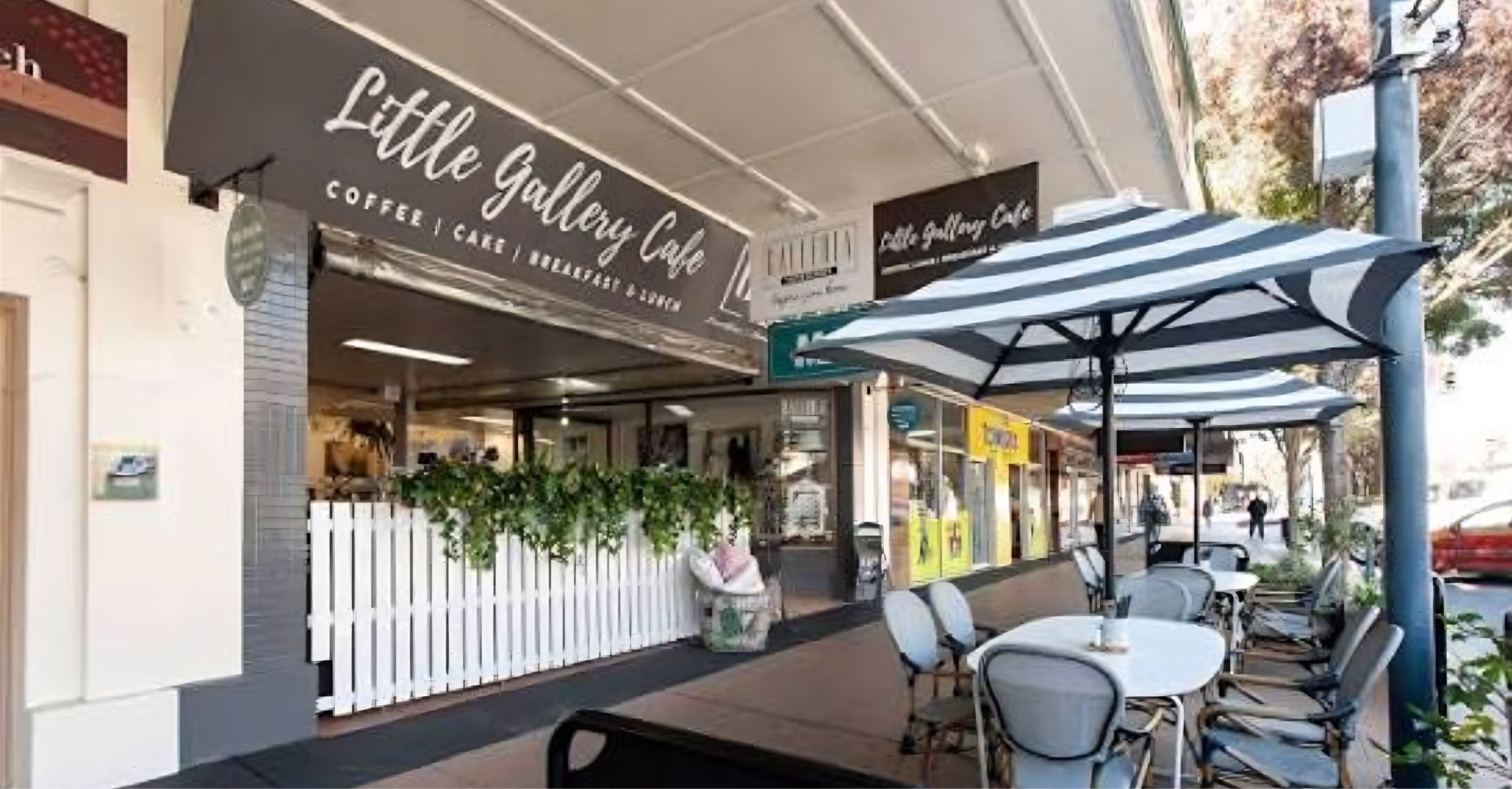

The day opens in the Toowoomba CBD, which has spent the past decade converting its surplus of heritage warehouses and arcades into one of regional Australia's most convincing cafe scenes. The espresso benchmark here is genuinely high — local roasters supply cafes that would hold their own in Brisbane's West End, and several bakeries treat pastry with the seriousness the Downs once reserved for wheat futures. The morning stop gives you time for a proper coffee and something laminated, taken at a laneway table, before the day's serious eating begins. Our rundown of the Toowoomba coffee scene names names, but part of the pleasure is that the standard is now deep enough to make the choice difficult.
The laneways themselves are half the reason to linger. Toowoomba's street art program has covered the CBD's service lanes and side walls with large-scale murals by Australian and international artists, and the densest clusters sit within a block or two of the best coffee — a pairing no marketing department planned but every visitor enjoys. The walk between beans and murals is flat, short and self-directing, which suits mixed groups: the caffeine-focused hold the table while the curious do a fifteen-minute mural loop and return with opinions. It is a distinctly un-country start to a country food day, and that contrast is deliberate. The city half of the trail proves the region's polish; the range half, coming next, proves its soil.
Fifteen minutes north of the city the suburbs give way abruptly to the high country, and Highfields is the threshold. What was a scatter of orchards a generation ago is now the fastest-growing corridor on the Downs, and its food has grown with it: village cafes with serious kitchens, providores stocking the region's jams, honeys and sauces under one roof, and garden nurseries whose attached tearooms have quietly become destinations in their own right. As a first producer stop it works because it offers breadth — a single browse covers a dozen local makers — and because the village green pace resets the day's clock from city to country. Our Highfields guide covers the village beyond its pantry.
Push on ten minutes and Cabarlah announces the real altitude: the paddocks turn deep green, the air goes noticeably cool even in summer, and the roadside starts advertising eggs, berries and honey in hand-painted capitals. This stretch is classic farm gate territory, and the stops here are the day's most direct transaction — produce sold by the people who grew it, often within sight of where it grew. What is actually on the table depends squarely on the season, which is a feature rather than an apology: strawberries and stone fruit in the warm months, citrus and brassicas in the cool, honey and preserves holding the line year-round. The coach's luggage bay, it should be noted, has carried home some formidable grocery hauls.

Hampton sits near the highest point of the range road, and its size is wildly out of proportion to its reputation. The village is barely a crossroads, yet it has become the high country's kitchen: a clutch of cafes and providores whose scones, pies and cabinet baking draw weekend traffic from a hundred kilometres away, and a regular calendar of food events that treats this stretch of the range as a single, walkable pantry. The altitude does real work here — at 700 metres the Downs gets genuine cold-country produce, and the local menus lean into it with a confidence lowland Queensland cannot fake. A Hampton morning tea, taken looking east over the escarpment's green folds, is the moment most first-timers understand what the trail is about.
Crows Nest, twenty minutes further, closes the northern run with a proper country town rather than a village: a heritage main street around a shaded square, a butcher and baker of the old school, and makers' shops that reward an unhurried lap. It is also the trail's best argument that food tourism and ordinary life can share a postcode — you will queue for your pie behind farmers who are buying lunch, not an experience. The run back south retraces the prettiest stretch of the range road at the drowsy pace the afternoon deserves. Groups wanting to dig deeper into the town itself should allow Crows Nest a full unhurried hour rather than a comfort-stop twenty minutes.
Lunch is the hinge of the day and we plan it like one. Depending on the departure and the season, the table is set at a high country cafe, a farm venue or a country pub with a kitchen worth the name — venues are confirmed at booking — but the format is constant: seated, unhurried, and built around what the region actually grows. Downs beef, Lockyer vegetables, high country dairy and local baking form the backbone of every menu we use, and the kitchens we work with treat provenance as a starting point rather than a slogan. Ninety minutes is the working minimum; the coach does not idle meaningfully outside, and no dessert has ever been abandoned to a schedule.
The practical details are handled the way food days require. Dietary requirements — gluten-free, vegetarian, allergies, the lot — are collected at booking and confirmed with the venue in advance, so the alternative plate arrives with the mains rather than twenty awkward minutes later. Drinks are each traveller's own affair, and the absence of designated drivers means the local wine and beer lists finally get read properly; those who want to make a theme of it should look at our Toowoomba wine tours, which point the same coach at the cellar doors of the Downs and the Granite Belt. For mixed groups, the food trail's lunch stop is deliberately venue-flexible: tell us the occasion — birthday, reunion, club Christmas in July — and the table is dressed for it.
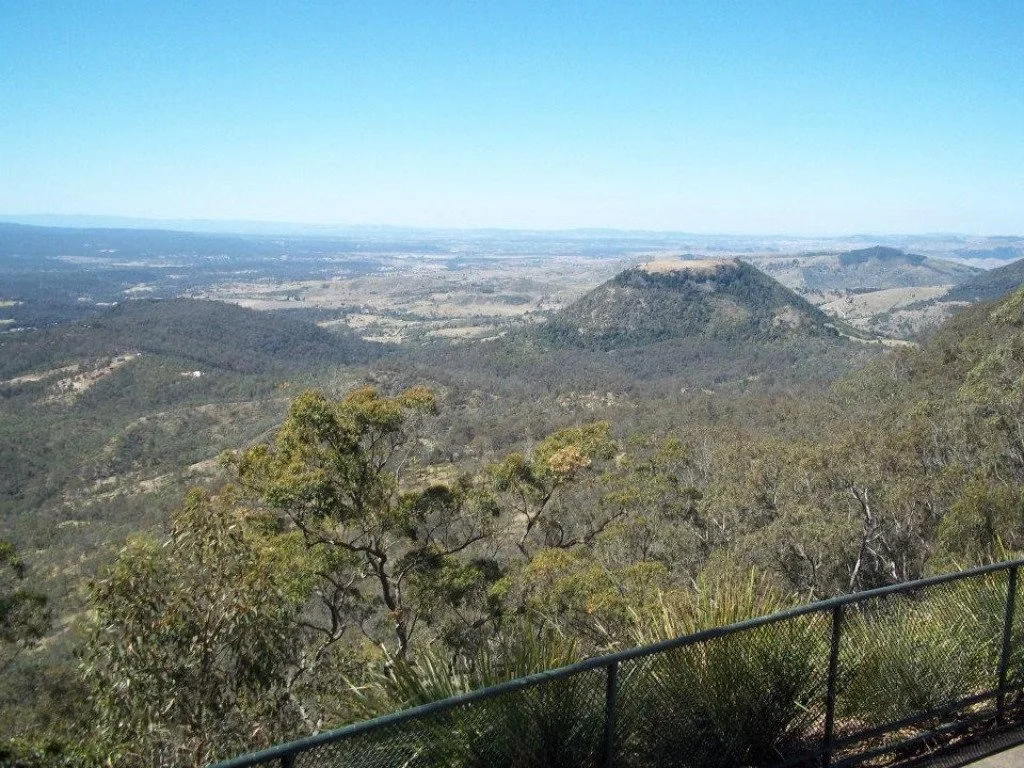
Most food tours show you produce; the Toowoomba trail can show you the map. Picnic Point's escarpment lookout, a short hop from the city centre, puts the entire Lockyer Valley at your feet — a green and brown quilt of irrigated flats, five hundred metres below and running east towards Brisbane, that ranks among the most productive vegetable-growing districts in the country. Standing at the rail with a coffee from the lookout cafe, you can trace the paddocks that stock the supermarkets you shopped in yesterday. It reframes the whole day: the morning's farm gates stop being quaint and start being the retail arm of the serious agricultural engine spread out below you.
The stop earns its place on logistics as well as symbolism. The lookout is a level stroll from the coach park, the viewing terraces have seating and shade, and the cafe — confirm opening days locally if you are building plans around it — makes it a natural mid-afternoon pause on departures that run the city leg late. Photographers get the trail's one indispensable landscape: Tabletop Mountain in the foreground, the valley floor stitched with crops, and afternoon light that flatters both. On clear winter days the visibility runs to absurd distances, and the temptation to stretch a twenty-minute stop to forty is one the itinerary is built to accommodate.
Each spring the trail's two worlds collide, deliciously. The Toowoomba Carnival of Flowers — 18 September to 5 October in 2026, the festival's 77th year — is nominally about gardens, but it has grown a serious food program alongside the flowers: FEASTival, the carnival's dedicated food and drink weekend, runs 26–27 September 2026 and fills the city with regional producers, pop-up kitchens and long-table events that put the Downs' pantry on public display. Add the carnival markets threading through the parklands and the city's cafes at full spring throttle, and late September offers the single richest eating fortnight in the Toowoomba calendar — with a million flowers as table dressing.
The catch is company: September is the one season the Garden City is genuinely crowded, and parking near the parks becomes a competitive sport. Our answer is the same as it is for the gardens — arrive by coach. Cooee's dedicated Carnival of Flowers day tours run from $89 per adult out of Brisbane, with Gold Coast departures from $99 and Sunshine Coast from $109, and a $159 deluxe day that folds in a two-course lunch — effectively the food trail's spirit grafted onto carnival's spectacle. Food-first travellers should target the FEASTival weekend and book early; those dates sell out first. The rest of the year, this food trail keeps the same producers and none of the queues, which is its own kind of luxury.


The trail's menu is written by altitude and season, and knowing the calendar helps you pick your month. Summer is berry and stone fruit season in the high country — strawberries, peaches and the roadside stalls at their most persuasive — balanced against heat that makes the cool range villages more pleasant than the plains. Autumn is the quiet triumph: harvest abundance at the farm gates, the first genuinely cold mornings that put soups and slow braises back on high country menus, and exotic autumn colour in the city's parks as a bonus. It is the month-for-month best eating on the trail, and the least crowded time to do it.
Winter belongs to the bakeries and the fireplaces. The high country gets real cold — frosts, single-digit days, occasionally a headline-making chill — and its kitchens respond with the pies, puddings and pub roasts that lowland Queensland can only impersonate; citrus and Lockyer winter vegetables keep the farm gates honest. Spring outside the carnival fortnight offers new-season everything and gardens warming up for their festival, while September itself, covered above, is the crowded crescendo. The honest advice: there is no bad month, but there are different tours hiding in the same itinerary, and choosing your month is choosing your menu.
A day tour samples the region; some travellers, sensibly, decide one day is not enough. Toowoomba town rewards the overnight eater. Beyond the morning-coffee laneways, the city runs a full food repertoire — heritage pubs cooking above their station, dining rooms built into converted banks and warehouses, and a cluster of evening venues along and around Margaret Street that give the CBD a genuine after-dark appetite. The density is the gift: an evening's eating happens on foot within a few flat blocks, and the standard, as at breakfast, is consistently better than a city this size owes anybody.
Travellers extending their stay should start with our where to eat in Toowoomba guide, which sorts the scene by neighbourhood and occasion. The two-day version of the region — food trail one day, gardens and museum the next, dinner in town between — is the itinerary we would build for a friend, and it is exactly the shape of our 2-day weekend tours from $595, which handle the accommodation and the driving in one booking. However long you stay, the pattern holds: the Downs feeds you better the longer you sit still, and Toowoomba has finally built the table to prove it.
The scheduled trail suits couples and small parties, but food days have a special affinity for groups — a long table simply beats a short one — and charters are where this itinerary shows off. The coach collects at your venue, anywhere from Brisbane to the Downs, and the day is tuned to your crowd: a providore-heavy run for the food-obsessed, a bakery-and-views day for a seniors club, a producers-plus-cellar-door hybrid for a birthday that intends to be remembered. Because the whole coach is yours, the pace is negotiable in real time; a group that falls for Hampton can simply stay, and the itinerary bends rather than breaks.
Charters also unlock venues the scheduled tour cannot promise — private tastings, farm visits arranged with the producer, a booked-out dining room opened for your table alone. Organisers deal with one phone number, 0409 661 342, and get back a written per-head quote, dietary handling, and a driver who knows which farm gate has the shade. Corporate groups use the trail as the rare team day nobody dreads; clubs use it as the annual outing that fills the sign-up sheet in a week. If your group spans big eaters and light ones, walkers and non-walkers, the trail's structure — short hops, seated stops, optional everything — absorbs the spread better than almost any day out we run.
Booking is a conversation, not a cart. Call 0409 661 342 or email contact@cooeetours.com.au, and we confirm dates, pick-up points, dietary notes and the season's producer line-up — stops vary by day of week and time of year, and we would rather tell you exactly what your date holds than promise a generic brochure day. Scheduled departures run year-round from Brisbane with pick-ups by arrangement; charters set their own calendar. The trail books comfortably a few weeks ahead for most of the year, with two exceptions: long weekends, and the carnival fortnight in late September, when everything on the Downs sells out early and the dedicated carnival tours — from $89 — absorb the demand.
Our honest steer for first-timers: come in autumn or winter if eating is the point, when the high country kitchens are at their most confident and the trail is quietest; come in late September if you want the region's food scene at maximum wattage and can book ahead; and take the charter option if your party runs to a dozen or more, because the long table is where this day was always headed. However you come, the claim we started with holds up under a fork: the Darling Downs has become a food region worth a day of anyone's time, and the top of the range is the right place to test it. After fifty years of running coaches up that hill, we can say the trail only gets better — browse all our Toowoomba tours and pick your date.
The villages strung along the Great Dividing Range north of Toowoomba — Highfields, Hampton, Cabarlah and Crows Nest — sitting at around 700 metres with cool air, rich red soil and a growing cluster of cafes, farm gates and regional producers.
About 125 kilometres west of Brisbane, roughly an hour and three quarters by coach up the Warrego Highway and the Toowoomba Range — an easy day tour with a full day on the ground.
September belongs to the Carnival of Flowers, and we run dedicated carnival departures — see our Toowoomba Carnival of Flowers tour. The food trail runs the rest of the year, when the Garden City's cafes and high country producers have the streets to themselves.
Yes. Clubs and groups can charter the food trail with their own pick-up points, venue preferences and pacing — call 0409 661 342 or email contact@cooeetours.com.au for a quote.
Winter fires in the high country pubs, spring gardens, summer berries, autumn colour — the trail changes with the calendar. Call to plan dates for your group.
Call 0409 661 342Toowoomba is one very good destination out of a very long list. Cooee Tours has been running coaches since 1974 — start with the continent, the country next door, or somewhere further afield.
Every destination below has its own travel guide, things-to-do pages and tour range — built the same way as this one.