Village Shopping & Cafes
A relaxed strip of boutiques, homewares, galleries and cafes — the browse-and-brunch morning perfected, without city parking.
The village on Toowoomba's northern doorstep — cafes, boutique shopping, gardens and pioneer heritage along the New England Highway, and the natural first stop on any Crows Nest run.
Fifteen minutes up the New England Highway, Highfields is where Toowoomba's suburbs give way to the ridge country — a growing village that has kept its country rhythm: cafes and bakeries, boutique and homewares shopping, garden centres, and pioneer heritage attractions that tell the story of the timber-getters and settlers who opened this side of the Range.
For visitors it works two ways: a gentle half-day in its own right, or the opening act of the classic northern run — Highfields for morning tea, Spring Bluff for the gardens, Hampton for lunch, Crows Nest for the falls.
A relaxed strip of boutiques, homewares, galleries and cafes — the browse-and-brunch morning perfected, without city parking.
Highfields' settler and timber history is kept alive in its heritage attractions and village museum precincts — an easy add-on with kids or history lovers aboard.
Every northern day trip passes through — which makes Highfields the natural fuel, coffee and provisions stop before the Range country opens up.
Highfields features on our Darling Downs group charters — garden clubs love the morning-tea stop.
Call 0409 661 342| Getting there | New England Highway, 15 minutes north of the Toowoomba CBD. Easy parking throughout the village. |
|---|---|
| Cost | Free to explore; individual attractions set their own entry. |
| Best time | Weekend mornings for the full village buzz; any day as the northern-run launchpad. |
| Combine with | Spring Bluff (15 min), Hampton (15 min further), Crows Nest (25 min further). |
Highfields sits on the spine of the ridge country that runs north from Toowoomba toward Crows Nest, and its story begins with what stood on that ridge before anyone built a shop. Through the second half of the nineteenth century these highlands carried heavy stands of hardwood and softwood scrub, and the first European industry here was cutting it down: sawpits, bullock teams and small timber mills strung along the track that became the New England Highway. The name itself is the plainest kind of description — high fields — and the altitude that made the timber grow tall also delivered the reliable rain and red volcanic soil that made the cleared country worth farming.
Once the sawyers had done their work, the district settled into the mixed pattern that held for the better part of a century: dairy farms, orchards, pigs and poultry, small crops on the red soil, and a scatter of schools, halls and churches serving families who measured distance in sulky hours. Toowoomba was the market town down the road, close enough for monthly business and far enough that Highfields kept its own institutions. That long farming era is still legible if you look — in the older timber houses set back from the highway, in road names that remember original families, and in the pioneer heritage attractions that have made preserving this story the village's civic hobby.
The modern chapter is growth, and plenty of it. Over the past few decades Highfields has become one of the fastest-growing residential districts on the Darling Downs, as Toowoomba families traded suburban blocks for acreage and cooler ridge air. The happy accident, from a visitor's point of view, is that the growth arrived as a village rather than a strip of franchises: the new Highfields built itself around cafes, garden centres, boutiques and parkland, so the place you visit today feels less like an outer suburb and more like a country town that happens to have excellent coffee.
Highfields is not a town you park once and walk in a grid; it is a sequence of precincts strung along a few kilometres of the New England Highway, and knowing the sequence saves circling. Coming from Toowoomba, the shopping and cafe clusters announce themselves in stages — garden centres and homewares first, then the main village retail around the central roundabouts, with the community parkland and village green precinct sitting just off the highway where markets and events set up on their appointed weekends. Each cluster has its own generous car park, so the local method is to drive between precincts and stroll within them.
The browsing here is genuinely good, and it skews toward things you cannot buy in a chain store: homewares and giftware, galleries and craft co-operatives, plant nurseries with acreage-sized ambitions, and food retailers selling Darling Downs produce to people who know what it should taste like. Allow more time than the size of the village suggests. A nominal hour of shopping in Highfields has a documented tendency to become a morning, particularly once a bakery or a cafe inserts itself into proceedings, and the relaxed pace is precisely the point — nobody in Highfields is in a hurry, and the village quietly recalibrates visitors to match.
The village green precinct deserves a specific mention because it is the social heart of the place. Lawns, mature trees, playgrounds and picnic shelters make it the default stop for travelling families, and on market weekends it fills with stalls, music and the particular cheerfulness of a district that still turns out for its own events. Market schedules move around through the year, so confirm dates locally before building a trip around one — but if your visit happens to coincide, the markets are the fastest possible introduction to who lives here and what they grow, bake and make.


Highfields takes its settler history seriously, and the district's pioneer heritage attractions are the reason a visit here can be more than shopping and lunch. The village museum precincts gather the working vocabulary of nineteenth-century ridge life — slab construction, working machinery, household interiors, school rooms and churches of the kind that once dotted every few miles of this country — and present it at walking pace, often with volunteers on hand who can explain exactly how a cream separator earned its keep. Opening days and demonstration schedules vary through the year, so check locally before you set your heart on a particular experience.
What makes the heritage angle land is the immediacy of it. Down in a city museum, a pit saw is an artefact; up here, you can stand next to one, look out the door at the descendants of the very ridges it cut, and understand the economics in a single glance. Children who would fidget through a display case will happily lose an hour to farm machinery, heritage animals and the general permission to touch things that pioneer-village museums grant. It pairs naturally with the Cobb+Co Museum down in Toowoomba — the National Carriage Collection tells the transport half of the same story the Highfields attractions tell from the farmhouse verandah.
If your interest runs deeper, the district rewards a slow drive off the highway. The side roads toward Cabarlah, Meringandan and Kleinton pass through the old farming country itself, where surviving timber homesteads, avenue plantings and tiny cemeteries fill in the texture the museums frame. None of this requires a ticket or a timetable; it asks only that you drive at a pace that would exasperate a courier, which is arguably the correct pace for the entire district.
Highfields punches well above its population in the cafe department, which is what happens when a district fills up with people who moved specifically to live somewhere pleasant. The village supports a healthy roster of cafes and bakeries doing serious breakfast trade on weekends, along with lunch rooms attached to garden centres and gift barns — a Darling Downs institution in which the scones are never an afterthought. Expect country portions, unhurried service and menus built on regional produce; expect, too, that the popular rooms fill by mid-morning on Saturdays, so book ahead or arrive early if your party is larger than a table for two.
The morning-tea stop is the signature Highfields meal, and it is worth doing properly rather than incidentally. The district's bakeries and cafe kitchens keep the old ceremony alive — pots of tea, cakes made on the premises, and the kind of seating that invites you to stay for the second pot — which is exactly why garden clubs and coach groups have made Highfields their standard first stop on the northern run for decades. If you are travelling through toward Crows Nest, resist the urge to push on with a takeaway cup: twenty unhurried minutes here sets the tone for the whole day.
For self-caterers and picnic-builders, the village works as a provisioning stop. Local produce retailers, butchers and the bakery counters can assemble a hamper worthy of the parks up the road, and the drive north offers no better resupply point until Crows Nest. Individual opening hours shift with the seasons — a handful of rooms close early midweek — so if your plans hinge on a particular cafe, a quick phone call before you leave Toowoomba is cheap insurance.

Gardening is close to a competitive sport on this part of the Range, and Highfields is one of its training grounds. The village's nurseries and garden centres are destinations in their own right — acres of stock suited to the cool ridge climate, display gardens that double as idea catalogues, and staff who can tell you precisely what will and will not survive a Downs frost. Toowoomba sits around 700 metres above sea level and Highfields rides the same high country, which means the growing palette here runs to cold-climate exotics, roses, camellias and bulbs that coastal Queensland gardeners can only envy.
That climate is also why this district orbits the Toowoomba Carnival of Flowers each September. Many of the exhibitors, growers and volunteer gardeners who power the Carnival live on these ridges, and the nurseries spend late winter provisioning half the region's spring displays. Visit in the weeks around the festival — the 2026 Carnival runs 18 September to 5 October — and the whole district is in bloom, from the village roundabouts to private front gardens that would win prizes anywhere else. The Carnival's garden trail is centred on Toowoomba itself, but the northern approach through Highfields is a worthy prologue.
Even outside spring, garden-minded visitors will find the browsing productive. Autumn brings bulb-planting stock and the best of the deciduous colour; winter is bare-rooted rose season, taken very seriously hereabouts; and summer keeps the display gardens in full leaf. If you garden at altitude anywhere in Australia, the Highfields nurseries are a legitimate reason to detour — and if you merely admire other people's gardens, the village delivers those too, free of charge, on every side street.
Spring is the headline. From late August the ridge country shakes off winter, the nurseries hit peak stock, and September delivers the Toowoomba Carnival of Flowers on Highfields' doorstep — in 2026, the 77th festival runs 18 September to 5 October, with the Grand Central Floral Parade on Saturday 19 September. Highfields makes a shrewd base or side-trip during Carnival weeks: you get the spring display without the city-centre parking contest, and the run into Toowoomba's parks takes fifteen minutes. Book accommodation and popular cafes well ahead in this window; the whole region fills.
Summer on the ridge is kinder than the Queensland average — the altitude takes the edge off the heat, storms build theatrically over the Downs in the afternoons, and the parks and playgrounds stay usable all day in a way coastal visitors will appreciate. Autumn is arguably the connoisseur's season: April and May bring still, clear days, deciduous colour through the village and the gardens, and the year's most reliable driving weather for the northern loop through Hampton and Crows Nest.
Winter is frost country, and the district wears it well. Mornings crackle, wood smoke settles over the valleys, and the cafes lean into the season with fires and soup menus — pack a proper coat, because June and July mornings up here routinely sit near zero. The reward is winter light of absolute clarity, empty roads, and the particular pleasure of being somewhere in Queensland that has a genuine cold season. There is no bad month for Highfields; there are only different arguments for coming.
Highfields is an easy sell for families, mostly because it never asks children to be quiet or careful. The village green precinct's playgrounds and open lawns absorb energy on arrival; the pioneer heritage attractions turn history into a contact activity rather than a lecture; and the distances between everything are so short that nobody melts down in transit. The standard family circuit — playground, morning tea, pioneer village, picnic lunch — fills a half day without any queueing, ticketing anxiety or car-park hiking, which is more than most purpose-built attractions can claim.
The district also works as the family-friendly staging post for the bigger northern day out. Crows Nest's falls and national park walks, Hampton's lookout country and the picnic grounds along the way all sit within an easy run north, with Highfields providing the provisions and the first leg-stretch. Travelling with a mixed-age crew, the trick is to let the youngest members set the pace here in the village, then bank the goodwill for the car time beyond.
Down in Toowoomba itself, the natural companion stop is Queens Park — 26 heritage-listed hectares in the city centre with playgrounds that justify the detour on their own, and free, like almost everything else in this itinerary. A Highfields morning plus a Queens Park afternoon is about as reliably successful as family sightseeing gets on the Downs, and neither end of it costs a dollar beyond lunch.

Photographically, Highfields trades in landscape and light rather than landmarks. The ridge sits high enough to catch first sun before the valleys wake, and the back roads east and west of the highway serve up the classic Darling Downs repertoire — paddocks rolling to a far horizon, avenues of trees, weathered timber sheds, and cloudscapes that build all afternoon. Golden hour is the whole game up here: the low sun rakes across the contours and turns ordinary farmland into something worth stopping the car for, which locals do so routinely that the good pull-offs have informal names.
In the village itself, the material is human-scale — market mornings, nursery rows in bloom, heritage timber buildings and cafe still-lifes. Spring is the obvious peak, when the garden displays and Carnival plantings hand you colour on every corner, but winter's frost mornings run it close: fog pooling in the valleys below the ridge, low golden light and bare trees make June and July the sleeper season for photographers who can tolerate the cold fingers. Whatever the season, work early; the Downs' midday light is as flat as anywhere's.
If you are building a photographic day, the northern run stacks up beautifully: Highfields ridge light at dawn, Spring Bluff railway station mid-morning — its Carnival-season gardens are among the most photographed scenes in regional Queensland — then the falls and granite country around Crows Nest for the afternoon. Every stop on that list is free, and none of it requires more than a phone camera to be worth keeping.
From Toowoomba, Highfields could hardly be simpler: straight up the New England Highway from the northern edge of the city, about fifteen minutes from the CBD with no turns worth writing down. From Brisbane, allow roughly two hours all told — approximately 1.75 hours to Toowoomba by coach or car up the Warrego Highway and the Toowoomba Range, then the short northern leg — or route via Esk and Hampton through the Brisbane Valley if you would rather trade a little time for a much prettier road. Either way the village arrives without fuss: parking is generous, free and beside everything.
Getting around once you arrive is a matter of short hops. The precincts are strung along a few kilometres of highway, so the practical rhythm is drive, park, browse, repeat — comfortable for anyone, and notably friendly to visitors with limited mobility, since nothing involves stairs, gradients or long walks unless you seek them out. Most attractions and cafes are level-entry; individual heritage sites vary, so check access details locally if it matters to your party.
Time budgeting is the only planning decision with consequences. A bare highway stop takes half an hour; the village properly done — shopping, morning tea, pioneer heritage — is a half day; and Highfields as the gateway to the full northern loop through Hampton and Crows Nest fills a day comfortably. The most common visitor error is allocating the half hour and then wishing they had the half day, so err long. There is no entry fee to anything you cannot decline, no timed tickets, and no penalty for changing plans mid-morning — the district is built for exactly that kind of improvisation.
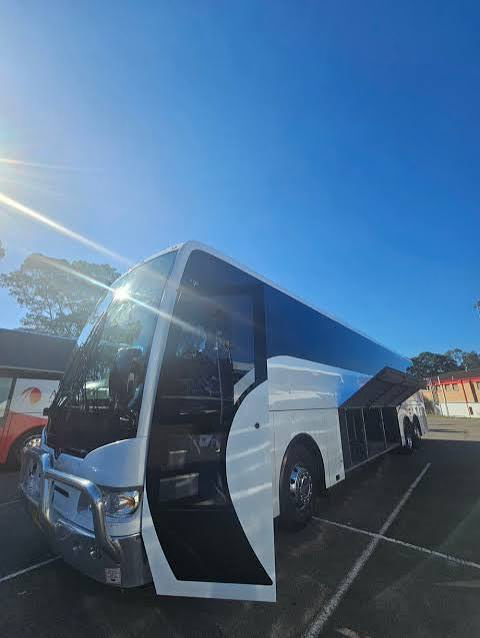
Cooee Tours has been running coaches up the Range since 1974, and the Highfields district features regularly on our Darling Downs group charters — garden clubs, probus groups and social clubs have kept the village morning-tea stop in the repertoire for good reason. A charter turns the northern run into what it should be: everyone watches the country instead of the road, the coach handles the highway and the parking, and the itinerary strings Highfields, Spring Bluff, Hampton and Crows Nest into one unhurried day. Call 0409 661 342 or email contact@cooeetours.com.au to talk through a group day built around the village.
For individual travellers, the easiest way into the region is our September program: Carnival of Flowers day tours run from Brisbane CBD and Chermside from $89 per adult ($69 per child), with Gold Coast departures from $99 and Sunshine Coast from $109, and a deluxe day tour at $159 including a two-course lunch. The day tours centre on Toowoomba's Carnival parks and gardens — the same high country Highfields shares — and the coach ride up the Range is half the sightseeing, with the Lockyer Valley unrolling below the escarpment on the climb.
If one day is not enough — and on the Downs in spring it rarely is — the full tour program includes 2-day weekend tours from $595 and 3-day tours from $880, which is where the northern villages genuinely come into play: the extra days buy the unhurried loops that day-trippers have to skip. Premium coach seating in the first four rows can be added for $5, and a spring picnic lunch for $22, for those who like their logistics settled in advance.
Highfields is the opening move of the best half-day drive on the Downs, and the sequence practically plans itself. Fifteen minutes east of the village, Spring Bluff's heritage railway station sits in its fold of the Range between Murphys Creek and Toowoomba, famous for gardens that reach full theatrical pitch during Carnival season. North again, Hampton marks the top of the Range with cafes and lookout country, and Crows Nest caps the run with its waterfall, national park walks and a town square built around a story worth reading on the plaque. Done unhurriedly with lunch, the loop returns you to Toowoomba by mid-afternoon.
Southbound pairings work just as well. The city's big free attractions — Queens Park, Laurel Bank Park's scented garden, the Ju Raku En Japanese garden at UniSQ and Picnic Point's escarpment lookout — are all within twenty minutes of the village, which means a Highfields morning slots cleanly in front of any Toowoomba afternoon. During September's Carnival, that ordering is tactically sound: do the village early, then arrive at the city parks after the first wave of coaches has moved on to lunch.
The honest scheduling advice is to resist cramming. Highfields, Spring Bluff and Crows Nest in one day is comfortable; adding the full Toowoomba park circuit to the same day is not, and the district's whole character argues against rushing it. If your trip allows two days, spend one north and one in the city — the villages and the Garden City reward full attention in a way that a drive-through visit simply cannot collect.
What Highfields does best is ease. It is not a bucket-list monument, and it does not pretend to be; it is a genuinely pleasant high-country village that feeds you well, sells you things you actually want, entertains your children for nothing and hands you the keys to the prettiest touring country in southern Queensland. Come with modest expectations and a loose schedule and it will quietly exceed both. Come expecting spectacle and you have misread the brochure — the spectacle is twenty-five minutes north at the falls, or fifteen minutes south in the Carnival parks, and Highfields is the hinge between them.
The practical tips, distilled: arrive mid-morning on a weekday for the quietest browsing, or Saturday morning if you want the village at full social hum; book cafe tables ahead for groups; confirm pioneer-village opening days and market dates locally before anchoring plans to them; and pack a layer even in summer, because the ridge runs several degrees cooler than Brisbane in every season. If you are coming for September's Carnival of Flowers, treat Highfields as your decompression valve — the village stays calm even when Toowoomba is at festival pitch.
Finally, give the district the courtesy of the side roads. The highway shows you Highfields the shopping village; the roads toward Cabarlah, Meringandan and Spring Bluff show you Highfields the place — ridge farms, old timber houses, long views over the Darling Downs and the reason people have been choosing this high ground for a century and a half. That version costs nothing, takes twenty minutes, and is the one you will describe to people afterwards.
Toowoomba is one very good destination out of a very long list. Cooee Tours has been running coaches since 1974 — start with the continent, the country next door, or somewhere further afield.
Every destination below has its own travel guide, things-to-do pages and tour range — built the same way as this one.