Crows Nest Falls
The headline walk — a well-formed track to the falls and cascades, with rock pools glinting below the granite. Swim only where signage allows.
Where the Darling Downs turn to granite — a classic country village of antiques and bakeries, and a national park of waterfalls, rock pools and gorge lookouts just east of town.
Forty minutes up the New England Highway from Toowoomba, Crows Nest does the country-town essentials with quiet confidence: antiques and collectibles, a proper bakery, a heritage pub and a village green. But the town's ace sits just east — Crows Nest National Park, where Crows Nest Creek has carved falls, rock pools and a granite gorge out of the ridge country.
Together they make the region's best half-day: village browse and bakery lunch, then boots on for the falls. Spring wildflowers and post-rain flows show the park at its finest.
The headline walk — a well-formed track to the falls and cascades, with rock pools glinting below the granite. Swim only where signage allows.
The gorge lookout that names itself: light off the granite walls glitters like its namesake. The short extension beyond the falls that everyone should take.
Antique shops, bakery, pub and country hospitality — the browse-and-lunch half of the day, best taken slowly.
The Crows Nest loop is a favourite for our private group charters — built around your group's pace.
Call 0409 661 342| Getting there | New England Highway via Highfields and Hampton, about 40 minutes from Toowoomba. The national park entrance is signposted just east of the village. |
|---|---|
| Cost | Village and national park day access are free. |
| The walks | Well-formed tracks with rocky sections and steps — carry water, wear proper shoes, and heed swimming signage. Check park alerts before travelling. |
| Combine with | Hampton morning tea on the way up; the Bunya Mountains for the full-day extension. |
Crows Nest grew up where the open farming country of the Darling Downs runs out and the granite ridge country begins — a frontier of timber-getters, teamsters and small selectors in the second half of the nineteenth century. The tall forests east of town fed sawmills, the cleared country ran dairy cattle and crops, and the village that formed on the New England Highway alignment did what such villages did everywhere: put up a pub, a school of arts, churches and a strip of verandahed shops, then settled in for the long haul. Unlike many timber towns, Crows Nest kept its bones. The heritage streetscape survived the twentieth century largely intact, and the town wears its history openly rather than behind glass.
The name has a story attached, as good country town names usually do. The version told locally involves an Aboriginal man known to early carriers as Jimmy Crow, who camped in a hollow tree near the waterholes where teams pulled up for the night — the carriers' landmark became "Crow's nest", and the name stuck to the settlement that followed. Like most foundation stories it comes in several tellings, and the visitor information centre in the village is the place to hear them properly. What is not in dispute is the town's affection for the tale: keep an eye out for the memorial in the village centre, and you will find the story built into the streetscape itself.
The village rewards an unhurried lap. The shops string along the highway and the side streets around the village green, and the mix is classic high-country Queensland: antiques and collectibles dealers where an hour disappears without explanation, a proper country bakery, cafes, craft and secondhand browsing, and a heritage pub holding down its corner as it has for generations. None of it is curated for tourists in the theme-park sense — this is a working town of a couple of thousand people that happens to be old, handsome and forty minutes from a regional city — and that authenticity is precisely the appeal. Shop hours in small towns keep small-town logic, particularly early in the week, so confirm locally if a specific shop is the point of your trip.
Give the village green and its surrounds a proper look rather than a drive-by. The green anchors the town centre with mature trees, war memorial and rotunda energy, and it hosts the markets and community events that punctuate the Crows Nest calendar — timing a visit to a market morning turns a browse into an occasion, and dates are worth checking before you travel. The heritage buildings around the centre carry interpretive plaques that stitch the timber-and-teamster story together, and the whole town centre can be walked comfortably in an hour with stops. It is the rare place where the recommended activity is genuinely just wandering with a bakery bag in hand.
If markets and events are your lever, the town obliges several times a year — community markets on the green, village festivals and seasonal celebrations that turn the main street into the region’s living room. Dates shift year to year, so check locally or with the visitor information centre when planning; landing on an event weekend transforms the visit, while landing the week after still delivers the town at its unhurried, authentic best. Either way, bring cash-or-card flexibility for the stalls and a boot with room for whatever the antique dealers talk you into.
The town's trump card sits just east of the village, where Crows Nest Creek drops off the tableland through a landscape of granite domes, sheets and boulders. Crows Nest National Park protects the falls, the string of rock pools above and below them, and the gorge the creek has cut on its way down — a compact, concentrated dose of scenery that feels imported from somewhere far more remote than a signposted turn-off minutes from a bakery. Eucalypt forest covers the ridges, she-oaks line the water, and the granite gives the whole park a distinctive architecture: rounded, massive, warm-coloured in low light, and glittering with mica in the sun.
The set-piece walk leads from the day-use area to Crows Nest Falls, with the Valley of Diamonds lookout as the extension that everyone should take — the gorge view that gives the park its most dramatic frame, named for the way light sparks off the granite walls. Tracks are well formed but honest about the terrain: expect rock steps, uneven sections and enough gradient to earn the scenery. The rock pools are the park's summer currency, with the essential caveat that swimming is only ever where signage allows and never above the falls — granite is unforgiving, water levels change, and the park's rules exist for reasons written in its history. Check Queensland park alerts before travelling, as tracks and access can close after fire or heavy rain.

The park's walks sit in the sweet spot where genuine bush scenery meets manageable effort, but they are bushwalks, not garden paths, and the difference matters in summer. Carry more water than feels necessary — the granite country radiates heat and shade comes and goes — wear actual walking shoes with grip for the rock sections, and start early in the warm months so the return leg does not coincide with the worst of the afternoon. Allow roughly half a day to do the falls and lookout circuit justice with swimming or photography stops; the distances are modest, but this is country that punishes hurrying and rewards sitting on a warm slab of granite doing absolutely nothing.
A few field notes that improve the day. The light in the gorge is best when the sun is reasonably high, which for once makes the middle of the day useful; photographers chasing the Valley of Diamonds sparkle should not schedule it for dawn. Wildlife is a genuine feature — the park is habitat for wallabies and a strong bird list, and quiet walkers see more. Phone coverage is patchy in the gorge country, so tell someone your plans if walking alone. And the perennial rule of granite creeks bears repeating: surfaces near water are polished and treacherously slick, rockhop with humility, and supervise children with the closeness the environment asks for rather than the closeness a city park allows.
Crows Nest sits in the high country, and the altitude writes the calendar. Spring is the headline: wildflowers through the granite country, the creek usually carrying decent flow from winter rain, and mild walking weather that makes the falls circuit a pleasure rather than a project. September visitors get a bonus of scale — the Toowoomba Carnival of Flowers runs 18 September to 5 October in 2026, and the northern loop through Highfields, Hampton and Crows Nest is the established way to add country air to a Carnival itinerary. The contrast is the point: massed city gardens in the morning, granite gorge and village verandahs in the afternoon, and the whole exchange costs forty minutes of highway.
Summer swings the emphasis from walking to water — the rock pools earn their keep on hot days, with the usual caveats about signage and common sense — while autumn delivers the year's most reliable walking weather and the quietest tracks. Winter surprises people: this is one of the cooler corners of Queensland, with crisp mornings, occasional frost and the kind of clear blue days that make a pub lunch feel earned. Pack a layer more than Toowoomba requires, which is itself a layer more than Brisbane requires. The park is at its most photogenic after rain, when the falls run hard — but that is exactly when track closures are most likely, so the post-rain visit is a check-the-alerts-first visit.
The drive is a feature, not a transfer. From Toowoomba the New England Highway runs north along the spine of the Great Dividing Range — the city sits around 700 metres above sea level, and the road holds the high country the whole way — through Highfields' busy village strip, then the little roadside hamlet of Hampton, then open farmland and forest to Crows Nest in about forty minutes. It is a sealed, straightforward highway drive with genuine scenery: the Darling Downs opening to the west, timbered ridge country closing in as you go north, and enough bakeries en route to constitute a hazard. The national park entrance is signposted just east of the village.
From Brisbane, the practical shape is Toowoomba first: roughly 1.75 hours up the Warrego Highway and the Toowoomba Range by coach, about 125 kilometres, then the northern run on top. That makes Crows Nest a full-day proposition from the coast and a half-day one from Toowoomba, which is exactly how the locals treat it. Parking in the village is easy by any city standard; the park's day-use area has its own parking, with the usual peak-weekend caveat in spring and summer. There is no meaningful public transport for this loop, so the options are your own car, or letting someone else drive — of which more below. Fuel up in Toowoomba or Highfields; the high country is not the place to test a fuel light.
One last logistics note for spring travellers: the northern loop shares its calendar with the Toowoomba Carnival of Flowers, which means September weekends put more traffic on the New England Highway than the high country sees the rest of the year combined. It remains a comfortable drive — this is relative busyness, not gridlock — but the practical adjustments are worth making. Leave Toowoomba earlier than feels necessary, take the park walk before the mid-afternoon warmth rather than after lunch, and book any sit-down lunch venue ahead on Carnival weekends rather than trusting the walk-in. Midweek visitors can ignore all of this and enjoy the loop essentially to themselves, gardens and gorge included.

Eating well is half the itinerary. In the village, the country bakery is the traditional first stop — pies and sweet things of the kind that country bakeries stake reputations on — and the heritage pub covers the sit-down lunch with verandah, history and counter-meal portions. A handful of cafes fill the gaps between, and the general rule of the high country applies: kitchens keep country hours, weekends are livelier than Tuesdays, and anyone travelling specifically for a particular venue should confirm opening days locally before building the day around it. None of this is a hardship; it is the operating rhythm of a real town, and it pairs beautifully with the absence of queues.
The gourmet reinforcements sit twenty minutes back down the highway at Hampton, the food-and-produce hamlet between Highfields and Crows Nest that has quietly become the larder of the high country — cafe dining, local produce and provisions exactly where a morning-tea stop wants to be. The classic structure runs: coffee at Highfields on the way up, Hampton for morning tea or to load a picnic, bakery or pub lunch in Crows Nest, then the park in the afternoon. Do it in reverse in summer — walk early, eat late — and the day works even better. Either way, arrive with appetite margin; the Downs does not do small serves.

Crows Nest is an easy sell for families, provided the day is shaped honestly around ages. The village half works for everyone — bakeries are universal diplomacy, the green gives younger children space to decompress from the car, and the browse-and-wander pace suits mixed generations. The park half needs a judgement call: the falls track's rock steps and gradients are a genuine adventure for primary-aged kids and a genuine workout for parents carrying anyone smaller. For toddler-heavy crews, the day-use area and the gentler early sections of track deliver the granite-and-creek atmosphere without committing to the full circuit, and nobody has ever regretted a picnic blanket deployed within sight of moving water.
The non-negotiables are the water rules. Rock pools are magnetic and granite is slick; swim only where signage allows, never above the falls, and keep the supervision genuinely close rather than picnic-rug-distance. With that handled, the park is the kind of place childhood memories are manufactured — wallaby sightings, first proper bushwalks, the echo in the gorge. Build in an ice-cream-in-the-village buffer at the end, and if the family is doing the full northern loop, note that the day competes well with anything in the Toowoomba-with-kids playbook for sheer variety per kilometre: village, farmland, forest, waterfall, all inside an afternoon.
The photographic menu here runs three distinct courses. The village is heritage-streetscape territory: verandah posts and iron lace, shopfront signage, the pub's proportions, all best in the low warm light of early morning or late afternoon when the highway is quiet and the west-facing frontages catch the glow. The farmland between Hampton and Crows Nest is big-sky Darling Downs at its most classic — paddocks, windbreaks, weather moving along the ranges — and the highway's rises offer safe pull-over vantage points if you scout rather than improvise. It is honest, uncomplicated landscape work, and in spring the roadside greens are at their most generous.
The park is the technical session. Crows Nest Falls wants shutter-speed decisions — silk or sparkle — and carries its best flow after rain; the rock pools give mirror reflections on still mornings; and the Valley of Diamonds does its glittering party trick when high sun hits the mica in the gorge walls, making midday genuinely useful for once. A polariser earns its place in the bag for wet granite and water surfaces. Mind the footing absolutely — polished rock and camera-face concentration are a proven bad combination — and stay on track for the gorge viewpoints. Photographers structuring a whole spring trip around the region will find our Carnival photography guide a useful companion for the city half of the shot list.
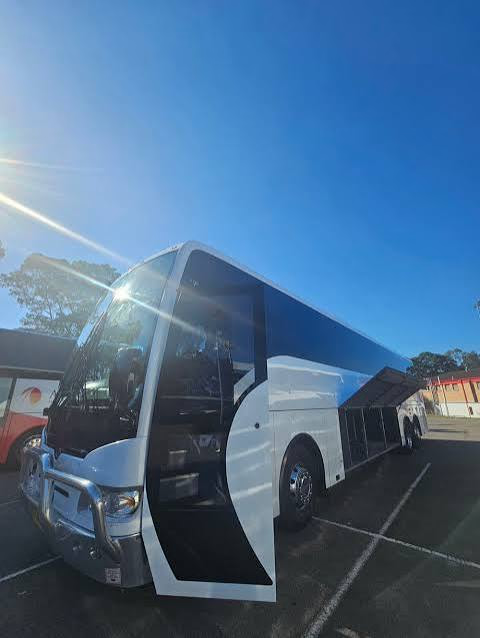
The Crows Nest loop is tailor-made for coach touring, and it is a staple of Cooee Tours' private group charters — the driver takes the highway, the group takes the bakeries, and the day is built around your pace rather than a timetable's. Family-owned and touring since 1974, Cooee runs the Range and high-country routes with the local knowledge that turns a drive into a narrated landscape: where the Downs end and the granite begins, which villages earn the stop, and when the falls are running. Groups, clubs and seniors' outings are the natural fit; call 0409 661 342 or email contact@cooeetours.com.au to shape a charter around the northern loop.
For individual travellers, the smart doors in are the scheduled tours. During the Carnival of Flowers, day tours run from Brisbane from $89 per adult ($69 child), from the Gold Coast from $99, and from the Sunshine Coast from $109 — and while the day tours centre on the city's gardens, the 3-day weekend tours from $880 are where the high country gets room to breathe, with time for the villages north of town. A 2-day option from $595 splits the difference. The economics are worth stating plainly: by the time you price fuel, the Range drive and a designated driver for the pub lunch, the coach argues for itself.
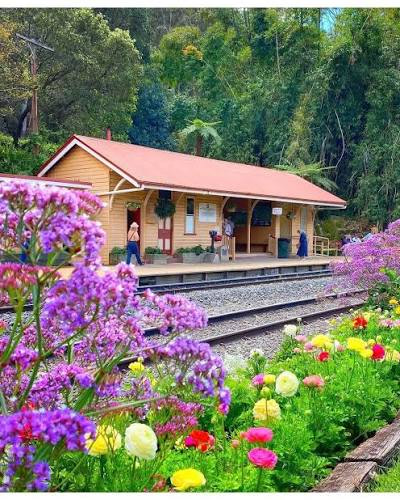
The northern loop supplies its own supporting cast. Highfields opens the run with its village strip and cafes; Hampton, ten minutes further, is the produce-and-provisions stop; and just off the route between them, Spring Bluff Railway Station waits in its fold of the Range with the most famous station gardens in Queensland — in September, adding it to a Crows Nest day is close to mandatory. Back in Toowoomba, Picnic Point's escarpment lookout makes the natural bookend for the return leg, catching the late light over the Lockyer Valley just as the day winds down. None of these detours costs more than minutes, which is the loop's quiet genius.
For travellers with a full day and an appetite for distance, Crows Nest is also the gateway to the longer country: the road continues north-west toward the Bunya Mountains for the region's serious rainforest walks, a genuine full-day extension rather than an add-on, best attempted with an early start and a realistic fuel plan. In the other direction, the escarpment country and the Lockyer Valley fill out a two-day itinerary handsomely. The honest sequencing advice is to resist cramming: Crows Nest village plus the national park is already a complete, satisfying day, and the region rewards a second trip more than a forced march. The day trips guide lays out the full menu with driving times attached.
Crows Nest earns its place on any Toowoomba itinerary that extends past a single day, and in spring it pushes into the first-day conversation. The combination is what sells it: a genuine heritage village that has not been dressed up for visitors, and a national park of falls and granite gorge ten minutes from the bakery — a pairing no other stop within an hour of Toowoomba can match. The trade-offs are real but minor: country opening hours reward a little planning, the park asks for proper shoes and water discipline, and the forty-minute drive means the day needs deciding in the morning, not improvising at 3pm.
The distilled advice reads like this. Do the loop clockwise in the day's logic — caffeine at Highfields, provisions at Hampton, village browse and lunch in Crows Nest, park in the afternoon — and reverse it in summer heat. Check park alerts and shop days before you commit the day to a specific plan. Take the Valley of Diamonds extension; skipping it is the classic first-timer's regret. Respect the water rules without exception. And if your dates land inside the Carnival of Flowers window, do not choose between city gardens and high country — the region is compact enough to refuse the choice, and the contrast between massed tulips and glittering granite in a single day is the Darling Downs at its persuasive best.
Toowoomba is one very good destination out of a very long list. Cooee Tours has been running coaches since 1974 — start with the continent, the country next door, or somewhere further afield.
Every destination below has its own travel guide, things-to-do pages and tour range — built the same way as this one.