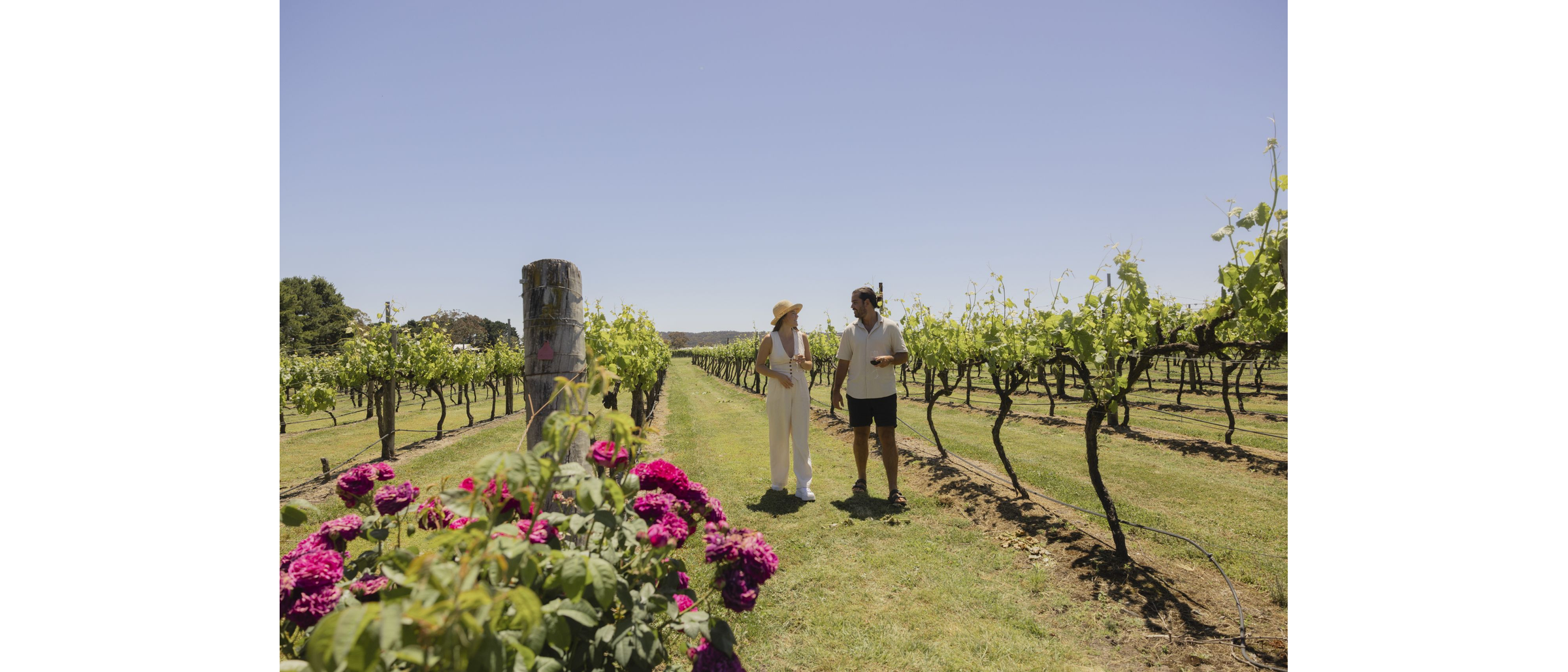
Granite Belt Vineyard
Granite Belt · South Burnett · Scenic Rim · 2026
4.8/5 · 247 verified reviews

Toowoomba Wine Tours
your gateway to the Granite Belt

Toowoomba is the closest major city to the Granite Belt — Queensland's flagship cool-climate, high-altitude wine region. Cooee Wine Tours runs Toowoomba-departure tours into the Granite Belt (1.5 hours south), the South Burnett (north) and the Scenic Rim (east) — three regions, one base.

5 tour options
3 wine regions
1.5hr to Granite Belt
Max 11 guests
The Granite Belt Gateway

Closest Major City to Queensland's Flagship Wine Region

Toowoomba sits 700 metres above sea level on the eastern edge of the Darling Downs — Queensland's Garden City and, for serious wine travellers, the closest major city to the Granite Belt. The 1.5-hour drive south to Stanthorpe is one of regional Queensland's better road trips, climbing through the Great Dividing Range to one of Australia's most distinctive cool-climate wine regions.

Cooee Wine Tours runs Toowoomba-departure wine tours into three Queensland wine regions as part of our broader Queensland programme. The Granite Belt is the headline — closer from Toowoomba than from any other Queensland departure city — but we also run regular Toowoomba departures into the South Burnett (north, 2 hours) and the Scenic Rim (east, 1.5 hours). Three regions, one departure base.

Why Toowoomba is the right Granite Belt departure. The Brisbane-to-Granite-Belt drive is roughly 2.5 to 3 hours each way; that's five to six hours of travel before you've even tasted a wine. The Toowoomba departure cuts that by an hour each way — three additional hours at cellar doors, less travel fatigue, and a meaningfully better experience for guests staying with family or friends on the Downs, attending Toowoomba events, or specifically choosing Toowoomba as their wine touring base.

The Granite Belt itself is Queensland's flagship — the only cool-climate, high-altitude growing area in the state at 800 to 1,000 metres elevation. Ancient granite soils, cold winters and warm sunny days produce wines with the structure and complexity of much more famous Australian regions. The "Strange Bird" movement of Italian and Spanish varietals — fiano, vermentino, tempranillo, sangiovese — has built Queensland's modern wine reputation here. For visitors planning broader Queensland touring, see the Queensland wine hub for the full six-region picture.

Our Toowoomba Wine Tours

Five Tour Options, Three Wine Regions

From the headline Granite Belt day tour through to a two-day overnight escape with Stanthorpe accommodation — choose by region, format and how much time you want at each cellar door.

A small group enjoying a Granite Belt vineyard tasting near Stanthorpe, Queensland's flagship cool-climate region Full Day · 9–10hr Most Booked

Granite Belt Day Tour

The flagship Toowoomba-departure tour. 1.5-hour drive south to Stanthorpe, four to five Granite Belt cellar doors with tastings, vineyard restaurant lunch, and return to Toowoomba by early evening. The shorter drive than from Brisbane means more time at each cellar door.

Shiraz Fiano Vermentino Tempranillo
  • 4–5 Granite Belt cellar doors with tastings
  • WSET-certified sommelier guide
  • 2-course vineyard restaurant lunch
  • "Strange Bird" alternative varietals focus

$195 / person

South Burnett cellar door — Kingaroy and Murgon wine region tour Full Day · 8–9hr North

South Burnett Day Tour

Drive north to Kingaroy and Murgon — Queensland's second-largest wine region by vine area. Four to five South Burnett cellar doors with tastings, regional lunch, and return to Toowoomba in the evening. Toowoomba is positioned well between Brisbane and the South Burnett heartland.

Shiraz Verdelho Chambourcin
  • 4–5 South Burnett cellar doors
  • Kingaroy & Murgon producers covered
  • Regional lunch with Burnett produce
  • Family-owned estate focus

$175 / person

Scenic Rim Canungra Valley and Tamborine Mountain wine tour Full Day · 8–9hr East

Scenic Rim Day Tour

Drive east via the Cunningham Highway to the Scenic Rim — Canungra Valley and Tamborine Mountain cellar doors. Four to five cellar doors with tastings, lunch with regional produce, return to Toowoomba. Particularly popular with Toowoomba guests wanting cool-climate plateau wines from Tamborine Mountain.

Wild Ferment Chardonnay Pinot Noir Verdelho
  • 4–5 Scenic Rim cellar doors
  • Canungra Valley & Tamborine Mtn plateau
  • Lunch with regional produce
  • Cool-climate plateau wines featured

$165 / person

Wine enthusiasts relaxing on a two-day Granite Belt escape in Stanthorpe, Queensland 2 Days · accommodation incl. Overnight Escape

Granite Belt Two-Day Escape

The wine-enthusiast option. Overnight in Stanthorpe at the heart of Granite Belt country with eight cellar doors across two unhurried days, gourmet regional dinner, breakfast and selected meals. Wine enthusiasts particularly value the chance to spend an evening in Granite Belt wine country.

8 Cellar Doors Stanthorpe Stay Dinner Incl.
  • 2 days, 8 Granite Belt cellar doors
  • Overnight accommodation in Stanthorpe
  • Gourmet dinner & breakfast included
  • Unhurried pace, more winemaker time

$385 / person

A couple enjoying a private wine tour from Toowoomba with their dedicated guide, Queensland Custom · 2–12 guests Private Group

Private Toowoomba Wine Tour

Bespoke private tour for couples, small groups, anniversaries and corporate entertaining. Choose your region (Granite Belt, South Burnett or Scenic Rim), select your cellar doors, set departure times, and arrange a lunch venue to suit. Popular with serious wine groups wanting deeper winemaker access.

Customisable 2–12 guests Any region
  • Fully customisable itinerary
  • Choose your wineries & lunch venue
  • Dedicated guide & vehicle
  • Flexible pickup & departure timing

From $155 / person

Region Access from Toowoomba

Three Wine Regions, Three Directions

Toowoomba's geographic position on the Darling Downs makes it the natural hub for three of Queensland's six wine regions.

1.5 hours south · 800–1,000m elevation

Granite Belt

The headline region. Queensland's only cool-climate, high-altitude wine country, sitting in the Great Dividing Range around Stanthorpe and Ballandean. Granite soils, cold winters and the "Strange Bird" alternative varietal movement built Queensland's modern wine reputation here. Toowoomba is closer than any other Queensland city.

Signature wines: Shiraz · Fiano · Vermentino · Tempranillo · Sangiovese
2 hours north · Inland Queensland

South Burnett

Queensland's second-largest wine region by vine area — centred on Kingaroy and Murgon. Red volcanic loam and granite-based soils produce full-bodied warm-climate Shiraz, Verdelho and Chambourcin. The region tends toward unhurried family-owned cellar doors. See our dedicated South Burnett region page for details.

Signature wines: Shiraz · Verdelho · Chambourcin · Tempranillo
1.5 hours east · 100–525m elevation

Scenic Rim

The mountain-rim wine region between Brisbane and the Gold Coast hinterland — Canungra Valley, Tamborine Mountain plateau (525m), and the wider Beaudesert-Boonah area. From Toowoomba, the eastward drive via the Cunningham Highway reaches the heart of the region. See our dedicated Scenic Rim region page for details.

Signature wines: Wild Ferment Chardonnay · Pinot Noir · Verdelho · Chambourcin
Your Guides

Toowoomba Wine Guides Who Know the Granite Belt

Every Cooee Wine Tours Toowoomba departure is led by a WSET-certified guide with deep knowledge of the Granite Belt and surrounding regions.

Daniel W., Granite Belt senior wine guide based in Toowoomba
Daniel W.
Granite Belt Lead

17 years guiding the Granite Belt cellar doors. Knows the "Strange Bird" alternative varietal scene personally — has worked alongside several of the region's winemakers at vintage time. Leads most Toowoomba Granite Belt day tours and overnight escapes.

WSET L3 17yr
Olivia M., South Burnett and Scenic Rim regional wine guide
Olivia M.
South Burnett & Scenic Rim

11 years covering Queensland's secondary regions from Toowoomba. Specialises in the South Burnett's family-owned estate scene and the Scenic Rim's cool-climate Tamborine producers. Strong food-and-wine pairing focus.

WSET L3 11yr
Ben G., overnight Granite Belt escape specialist
Ben G.
Overnight Escape Lead

Built the two-day Granite Belt overnight itinerary and leads most overnight escapes. Knows the Stanthorpe accommodation and dinner venues by name, and can pace a two-day cellar door schedule that leaves time for the Granite Belt's food producers as well.

WSET L3 13yr
Catherine L., private and corporate Toowoomba wine tour specialist
Catherine L.
Private & Corporate

Specialises in bespoke private Toowoomba departures, corporate entertaining and milestone celebrations. Strong relationships across the Granite Belt cellar door community for arranging winemaker access and barrel sessions on private bookings.

WSET L3 8yr
The High Country

How Queensland Learned to Grow Cool-Climate Wine

The Granite Belt story is a story about altitude — and it starts on the same mountain range Toowoomba sits on.

Queensland is not supposed to make wine like this, which is precisely why the Granite Belt matters. Follow the Great Dividing Range south-west from Toowoomba — a run of roughly an hour and a half to two hours depending on where on the Belt you are headed — and the country climbs to 800 to 1,000 metres around Stanthorpe and Ballandean. Up there the state's subtropical rulebook stops applying: winters are properly cold, with Stanthorpe widely cited as Queensland's coldest corner, and summer days are warm and sunny with cool nights. That day-night swing is the mechanism the whole region runs on — long, slow ripening that builds flavour while the acidity that makes wine refreshing survives intact.

The other half of the story is underfoot. The Belt sits on ancient decomposed granite — free-draining, low-vigour soil that makes vines work for a living and rewards them with concentration. On that foundation the region built two reputations: classical Shiraz and Cabernet with genuine structure, and the "Strange Bird" movement of alternative varietals — fiano, vermentino, tempranillo, sangiovese — that gave Queensland wine its modern identity. A cellar door crawl here swings from familiar to genuinely novel within a single tasting flight, which is exactly what makes the region such a rewarding day out from Toowoomba.

For Toowoomba itself the connection is natural. The Garden City sits at 700 metres on the same range, shares the cool-climate temperament, and is the closest major city to the Belt — near enough that the vineyards function as Toowoomba's own wine country. For the broader picture of the region beyond the cellar doors, see our Granite Belt guide.

Why a Hosted Day

What a Coach Wine Day Actually Solves

The unglamorous truth about wine touring is that it is a driving problem wearing a leisure costume. The Granite Belt's cellar doors are scattered across genuine countryside — minutes apart by car, impossible on foot — and every tasting adds to a maths problem no responsible driver wants to do at the wheel on a winding highway home. A hosted coach day deletes the problem entirely: everyone in the group tastes properly, nobody draws the designated-driver short straw, and the drive back down the range happens while you doze against the window with a mixed half-dozen in the boot.

The second thing the coach solves is curation. A region with dozens of producers is wonderful in theory and paralysing on a Saturday morning; a guided day replaces guesswork with a route built on relationships — cellar doors chosen to contrast with one another, visits timed so you are not queueing behind a bus-load, and a host who can translate what the winemaker is doing with a fiano for the friend who came along for the scenery. You taste more widely and learn more in one day than most self-drive visitors manage in three.

And there is the pure logistics dividend: one pickup point in Toowoomba, lunch booked before you were hungry, tasting appointments confirmed in advance, and purchases stowed safely rather than rolling around a back seat. Wine touring done this way costs a little more than driving yourself and returns the difference several times over in what you actually get to drink.

Cellar Door Craft

Tasting Etiquette & the Art of Pacing

A wine day is a marathon run at a stroll. A few habits keep it that way.

First-timers are often nervous about cellar door protocol, and they needn't be — the Granite Belt is friendly country and nobody is testing you. A handful of habits still improve the day. Taste in the order the cellar door suggests, usually lighter whites through to bigger reds, so each wine gets a fair hearing. Use the spittoon without embarrassment; the professionals do, and it is the single best trick for arriving at cellar door four with your judgement intact. Skip the heavy perfume or aftershave on tasting day — half of wine is smell, yours and everyone else's.

Pacing is the real skill. Four to five cellar doors is a full and generous day; more than that and the wines start blurring into each other, which is a waste of the drive. Eat a proper breakfast before pickup, drink the water your host keeps offering, and treat the vineyard lunch as a genuine intermission rather than a pit stop. Ask questions — the person pouring often grew the grapes, and a single good question routinely unlocks the barrel-room story that becomes the anecdote you retell for years.

On buying: there is no obligation, ever, but tasting fees are commonly waived against purchases and the honest currency of a good tasting is taking home the bottle you kept coming back to. Policies vary door to door, so confirm on the day. Wine bought on tour rides home in the coach — one more argument for not being the driver.

Eat the Region

Food Pairing, Darling Downs Edition

The Granite Belt was orchard country before it was wine country, and the table still shows it. This is Queensland's apple and stone-fruit high country, and the same cold nights that shape the wine shape everything grown beside it — which is why lunch on a wine day is not an afterthought but the hinge of the whole itinerary. Vineyard restaurant menus lean on what the district does best, and the pairing logic writes itself: crisp high-altitude whites alongside orchard fruit and fresh regional produce, savoury tempranillo and sangiovese with slow-cooked dishes built for cold-climate appetites.

The Darling Downs adds its own chapter on the way home. The plains around Toowoomba are some of Australia's most productive farming country, and the city's food scene has grown up around that supply line — which makes a wine day pair naturally with a Toowoomba dinner at either end. A robust Granite Belt Shiraz meets Downs beef as an argument-settler; the Strange Bird whites — fiano especially — are built for lighter, brighter plates. Menus and producer line-ups change with the seasons, so treat specifics as things to confirm locally and the general rule as reliable: eat what the district grows, drink what it makes.

Guests who want to keep pulling this thread after the tour can start with our guide to Toowoomba's wineries and breweries — the city-side companion to a Granite Belt day, and proof the Downs' drinking interests do not stop at the vineyard gate.

Spring Double Act

September: Carnival of Flowers Plus Wine Country

One weekend, two of southern Queensland's best experiences — flowers in the city, wine in the high country.

For a few weeks each spring, Toowoomba runs the best double act in regional Queensland. The Carnival of Flowers — 18 September to 5 October in 2026, the festival's 77th year — fills the Garden City with parkland plantings, decorated gardens and the Grand Central Floral Parade on Saturday 19 September, while ninety-odd minutes down the range the Granite Belt is waking out of winter into blossom and new-season releases. Basing yourself in Toowoomba puts both within reach of a single weekend: gardens one day, cellar doors the next, no re-packing required.

The mechanics are simple. Day one goes to the festival — Cooee's Carnival of Flowers day tours run from $89 per adult, covering Queens Park's headline displays and the festival circuit with a host handling the notorious September parking. Day two goes south to Stanthorpe for a full Granite Belt tasting day. For visitors coming from further afield, the multi-day Carnival packages — two-day weekends from $595, three-day itineraries from $880 — leave comfortable room to fold a wine day into the middle of the garden programme.

One honest planning note: September is Toowoomba's peak month, and the Carnival dates concentrate demand on accommodation, restaurants and tour seats alike. Book the wine day and the festival day together, several weeks ahead, rather than hoping to improvise the second one on arrival. The reward for organisation is the rare weekend where both halves — floral and vinous — are at their absolute seasonal best.

The Vineyard Year

When to Go: the Granite Belt by Season

The Granite Belt is a true four-season region — rare in Queensland — and each quarter offers a different tour. Spring is blossom and optimism: orchards flowering, new vintage whites hitting the tasting benches, and the Carnival of Flowers anchoring the Toowoomba end of the trip. Days are mild, evenings still cool enough to justify the fireplace at dinner. It is the easiest recommendation for first-time visitors, with the caveat that September demand rewards early booking.

Summer brings warm, sunny days moderated by altitude — noticeably gentler than the coast — with the vines in full leaf and veraison colouring the rows late in the season. Autumn is the connoisseur's pick: vintage activity around the wineries, golden vineyard light, and winemakers full of the new season's news, though exact harvest timing shifts with each year's weather, so treat any promise of watching the crush as something to confirm locally. The tasting rooms are calm, the light is extraordinary, and photographers book this window deliberately.

Winter is the sleeper. The Belt gets genuinely cold — frosts, occasional sleet on the highest ground, and the only reliably wintry landscape in the state — which turns cellar doors into fireside rooms and makes the big reds taste exactly right. Toowoomba's own crisp winter adds to the mood rather than subtracting from it. There is no wrong season so much as four different correct ones; the honest advice is to pick the version of the region you want and book the calendar around it.

Before You Board

Planning Your Tasting Day from Toowoomba

The practical side of a Toowoomba wine day is mercifully short, but the few items on it matter. Dress in layers: the Granite Belt sits higher than Toowoomba and runs several degrees cooler, so a day that starts crisp at pickup can be cold in a stone-floored barrel room and warm in a vineyard courtyard at lunch — all before mid-afternoon. Comfortable closed shoes beat fashionable ones on gravel cellar door car parks, and sunglasses and sunscreen stay relevant in every season at this altitude.

Bring photo ID whatever your age bracket looks like — tasting is an 18-plus activity and cellar doors are obliged to check — and bring less cash than you think, since cards are near-universal. Eat breakfast. Decide roughly what you want from the day before it starts: collectors chasing structured reds, curious drinkers hunting Strange Bird varietals, and groups who mostly want scenery and a long lunch are all well served, but telling your guide which one you are turns a good route into a tailored one.

Finally, book with the calendar in mind. Weekends fill first, September and school holidays fill fastest, and private groups wanting specific cellar doors or winemaker time need the most lead. Midweek departures are the quiet-connoisseur option — emptier tasting benches, more pouring-side conversation, and the region essentially to yourselves. Whichever day you choose, the format holds: Toowoomba pickup, high-country wine, and someone else worrying about the drive home.

Questions Answered

Toowoomba Wine Tour FAQ

Toowoomba is the closest major Queensland city to the Granite Belt — Queensland's flagship wine region. The drive south to Stanthorpe is approximately 1.5 hours, compared to 2.5 to 3 hours from Brisbane. Toowoomba departures give you more time at cellar doors and less time on the bus. Toowoomba is also reasonably positioned for South Burnett tours (2 hours north) and Scenic Rim tours (1.5 hours east).
Cooee Wine Tours runs Toowoomba-departure tours into three Queensland wine regions: the Granite Belt (the flagship — 1.5 hours south), the South Burnett (2 hours north via Kingaroy), and the Scenic Rim (1.5 hours east). The Granite Belt is the most popular Toowoomba departure given its proximity.
The Granite Belt is Queensland's only cool-climate, high-altitude wine region — sitting at 800 to 1,000 metres elevation in the Great Dividing Range. The ancient granite soils, cold winters and warm sunny days produce wines with the complexity and structure of much more famous Australian regions. The region is also home to the "Strange Bird" movement of Italian and Spanish alternative varietals — fiano, vermentino, tempranillo, sangiovese — that have built Queensland's modern wine reputation.
Approximately 9–10 hours including travel. Pickup from your Toowoomba accommodation around 8:30am, 1.5-hour drive south to the first cellar door, four to five Granite Belt wineries with tastings, vineyard lunch, and return to Toowoomba by approximately 6:30pm. The shorter travel time compared to Brisbane departures means more time at each cellar door.
For serious wine enthusiasts, almost certainly yes. The two-day overnight escape includes accommodation in Stanthorpe, eight cellar doors across both days (versus four to five on a day tour), a gourmet regional dinner, and significantly more time at each producer. Wine enthusiasts particularly value the chance to spend an evening in Granite Belt wine country and visit cellar doors on both days at an unhurried pace.
Toowoomba is also our base for South Burnett and Scenic Rim wine tours. South Burnett tours head north to Kingaroy and Murgon (six cellar doors covered — see our South Burnett region page). Scenic Rim tours head east via the Cunningham Highway to Canungra Valley and Tamborine Mountain (seven cellar doors covered — see our Scenic Rim region page). Both are full-day tours from Toowoomba.
Choose by where you're staying. If Toowoomba is convenient for your trip — staying with family on the Downs, attending an event, or specifically choosing Toowoomba as a base — the Toowoomba departure gives you the most time at Granite Belt cellar doors. If you're in Brisbane, the Brisbane wine tour picks up from your CBD hotel and covers Granite Belt as part of its broader regional range.
Yes. Cooee Wine Tours offers complimentary pickup and return from Toowoomba accommodations. Confirm your address at booking and your guide will collect you at the agreed time.
Yes. Private Toowoomba wine tours are available for couples, small groups, anniversaries and corporate entertaining. Choose your region (Granite Belt, South Burnett or Scenic Rim), customise your cellar doors, set departure times, and arrange your own lunch venue. Private tours offer access to winemaker introductions and behind-the-scenes cellar visits that are difficult to arrange on group departures.
Many of our tours are wheelchair accessible, though tour-specific accessibility varies — it depends on the cellar doors and venues we visit on the day, since some have stairs or uneven garden terrain. Email bookings@cooeetours.com.au with your specific needs and we'll advise which tours work best for you, or see our accessibility page for full details on NDIS-compatible tours, wheelchair access, support workers and assistance animals.
More Cooee Wine Tours

Departing From a Different City?

Cooee Wine Tours runs wine tours from five Queensland departure cities. If you're not in Toowoomba, one of these pages is the right starting point.

Reserve Your Place

Your Toowoomba Wine Day

Five tour options, three Queensland wine regions, and the closest major-city access to the Granite Belt. Two-day overnight escapes fill quickly during cooler months — book ahead.

Or call 0409 661 342 · 7 days · 8:30am–5:30pm AEST

Need accessibility advice? See our accessibility page or email bookings@cooeetours.com.au for tour-specific options.