The Carnival of Flowers & the gardens
Toowoomba is the "Garden City", and nothing shows it off like the Carnival of Flowers — Australia's longest-running floral festival, held every September since 1950. But the gardens are a joy year-round: grand heritage parks, a serene Japanese stroll garden and streets that turn purple with jacarandas in November. Here's how to experience the Carnival, and the gardens worth visiting any time.
The Carnival of Flowers
The Carnival of Flowers runs 18 September to 5 October in 2026, across three spring weekends. Its heart is the free flower displays at Queens Park and Laurel Bank Park, planted with millions of blooms, joined by the Grand Central Floral Parade (Saturday 19 September), the Chronicle open gardens, the FEASTival food weekend (26–27 September) and live music. It draws hundreds of thousands of visitors, so book accommodation and tours months ahead. It's the single best time to see Toowoomba at its most spectacular.
Queens Park, Laurel Bank & Ju Raku En
You don't need the Carnival to enjoy Toowoomba's gardens. The heritage Queens Park Botanic Gardens — about 26 hectares in the centre of town — is the city's green heart and the Carnival's main stage. Nearby Laurel Bank Park is famous for its intricate carpet-bedding displays and scented garden. And the exquisite Ju Raku En Japanese Garden at the university — Australia's largest traditionally designed Japanese stroll garden — is free and open daily from dawn, lovely in every season.
Jacarandas in November
There's a second flowering worth planning for. Each November, a month or so after the Carnival, Toowoomba's jacarandas burst into lilac-purple bloom, lining streets around the parks and the older suburbs — a photographer's delight. Nearby Goombungee holds a Jacaranda Festival in early November. So while September is for the Carnival, come in November if it's the jacarandas you're chasing — either way, the Garden City delivers.
How a post-war idea became Australia’s longest-running floral festival
The Carnival of Flowers began in 1950, when a city still finding its feet after the war decided that the best advertisement for itself was the thing its residents already did better than anyone: gardening. Toowoomba’s basalt soils, four genuine seasons and 700-metre altitude had long produced gardens that coastal Queensland simply couldn’t grow, and the first Carnival turned that private obsession into a public festival. Seventy-odd years later it has never missed a spring, which makes the 2026 edition — running 18 September to 5 October — the 77th consecutive festival, a run that outlasts televised cricket, decimal currency and every fashion in garden design from conifers to succulents and back.
Knowing the history changes how you read the event. This is not a council-invented tourism product bolted onto a country town; it grew out of a genuine local culture, and that culture is still what you’re seeing. The parade floats are built by community groups, the competition gardens are private backyards tended by people who have been entering for decades, and the park plantings are planned a year ahead by the city’s own horticultural staff. The festival’s scale has grown enormously — it now draws visitors in the hundreds of thousands — but its engine remains the same one that started it: a city on the Darling Downs that takes flowers personally.
Queens Park during the Carnival
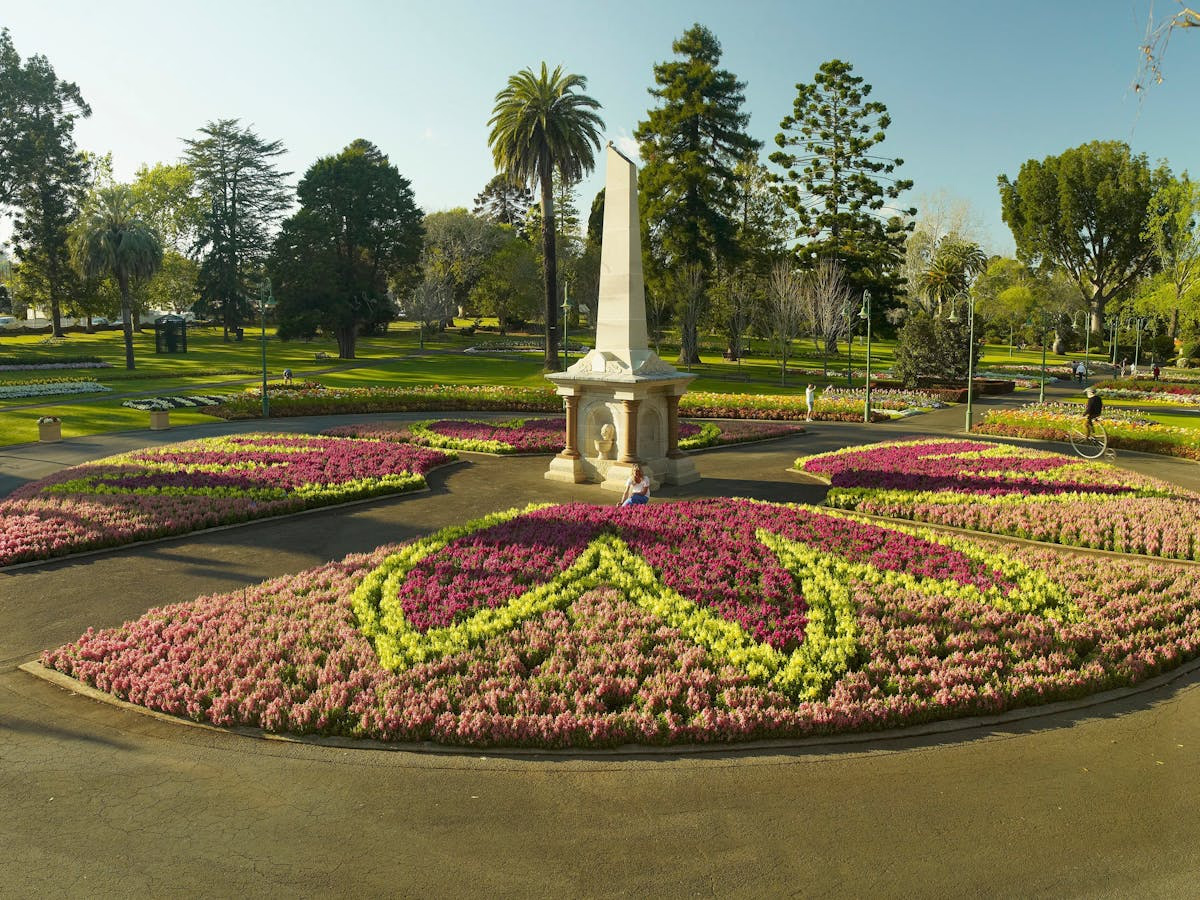
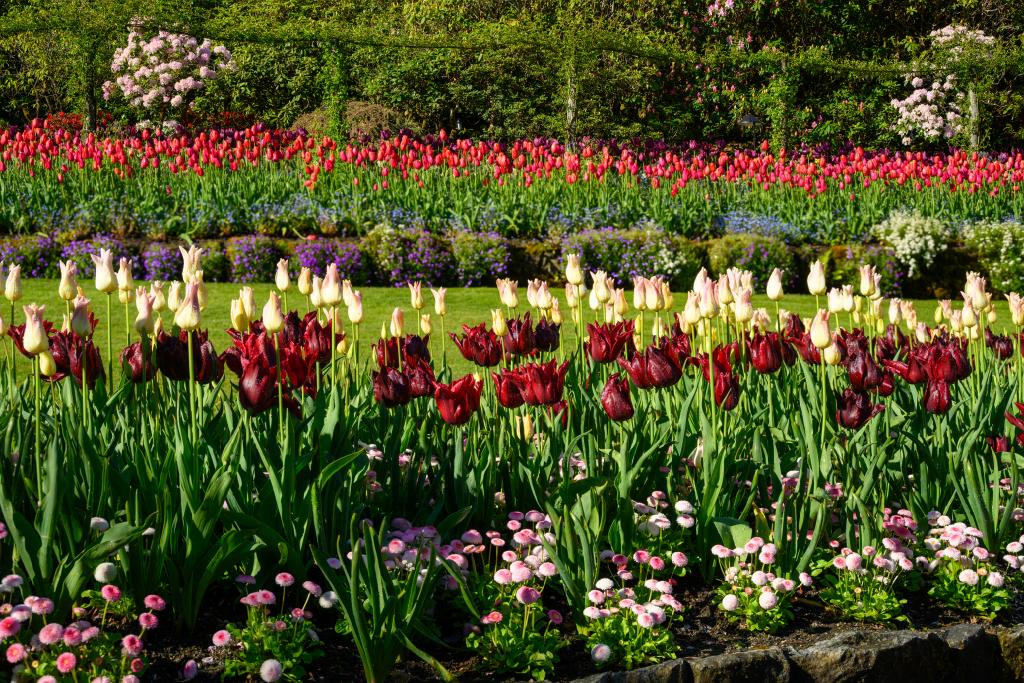
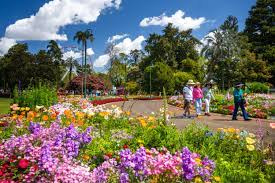
If you see one thing at the Carnival, see the annual beds at Queens Park. The heritage-listed park covers about 26 hectares in the middle of the city, and each September its botanic corner becomes the festival’s centrepiece: long, curved beds packed with tens of thousands of annuals — tulips, poppies, ranunculi, violas, snapdragons — laid out in designs the gardeners keep secret until the beds come up. The effect at full bloom is genuinely startling, a saturation of colour that photographs struggle to exaggerate. Entry is free, the park is flat and easily walked, and the displays sit close to Lindsay Street, directly opposite the Cobb+Co Museum if you want to pair the two.
Timing matters more than most visitors expect. The beds are planted to peak across the festival, but early in the program you may catch tulips at their crispest, while the final week trades a little freshness for fuller, blowsier mass. Mornings are the connoisseur’s window — soft light, dew still on the petals, and coach groups yet to arrive. By mid-morning on festival weekends the main beds carry a steady procession of admirers, which has its own festive charm but makes unhurried photography a patience game. Weekdays are noticeably calmer, and the park’s old camphor laurels and araucarias give you shaded benches to retreat to when the colour becomes almost too much.
Laurel Bank Park and the art of carpet bedding
Laurel Bank Park, a few blocks south-west of the city centre, is the Carnival’s second stage and, for many regulars, its finest. At about 4.5 hectares it is a fraction of Queens Park’s size, and that concentration is precisely the point: the whole park reads as one composed picture. This is where Toowoomba’s gardeners practise carpet bedding — the Victorian-era craft of planting thousands of small annuals so tightly that they form patterns, pictures and lettering, a kind of horticultural mosaic that has all but vanished from most Australian cities. Each Carnival brings a new themed design, and watching visitors work out the picture from ground level, then hunt for a higher vantage, is part of the fun.
Don’t leave without finding the scented garden, planted so that fragrance, not colour, leads — it was designed with vision-impaired visitors in mind and rewards everyone who slows down to use their nose. Laurel Bank is also gentler on crowds than Queens Park: the tour coaches come, but they cycle through, and mid-afternoon on a weekday you can have long stretches of the park almost to yourself. Croquet players share the grounds, the lawns are immaculate in the way only a proud regional city manages, and entry is free. If Queens Park is the Carnival’s grand opera, Laurel Bank is its chamber music — smaller, more intricate, and to some tastes the better performance.
Ju Raku En — the Japanese garden that ignores the Carnival
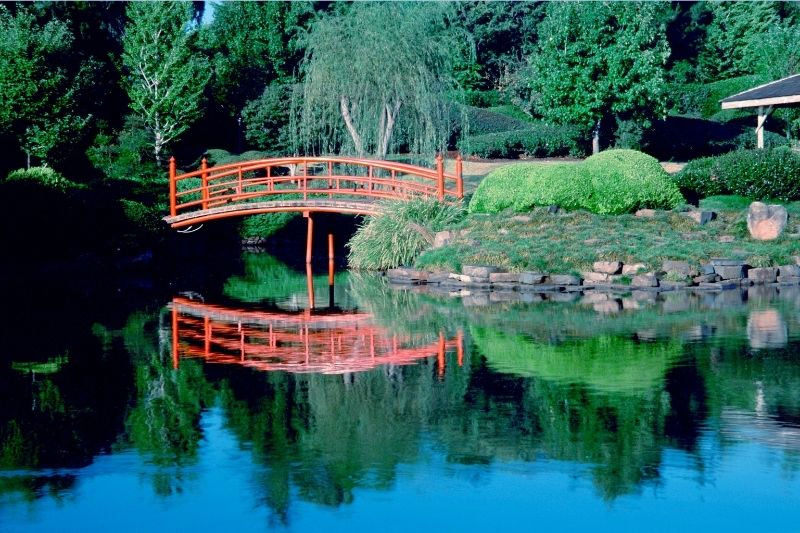
While the annual beds shout, Ju Raku En whispers. The Japanese garden at the University of Southern Queensland campus is one of Australia’s largest traditionally designed Japanese gardens, and it is deliberately not a flower garden — it works in green, stone and water, in borrowed views and raked gravel, in the reflection of a bridge on a still lake. Visiting it in Carnival week is a masterclass in contrast: an hour among azalea clips and pine silhouettes recalibrates your eye, so that when you return to the tulip beds they land twice as hard. It is free, open daily, and a short drive from the city centre.
The garden rewards a slow lap — the path is designed as a stroll circuit, revealing composed scenes in sequence rather than all at once, and there is nearly always a heron or turtle doing something photogenic on the lake. Spring brings its own subtle flowering here (azaleas, wisteria, the last of the cherry blossom in early season), but the garden’s real subject is structure, which is why it holds up in every month of the year. If your Carnival party includes someone whose enthusiasm for massed annuals has a ceiling, this is where you send them — they will come back the most contented member of the group. Our guide to the best gardens of the Carnival ranks it accordingly high.
The competition gardens — Toowoomba’s private obsession, opened
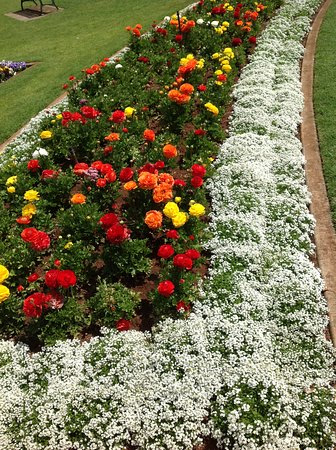
The Carnival’s most distinctive tradition is the Chronicle Garden Competition, in which private gardeners across the city and the surrounding Darling Downs compete for honours and then throw open their gates to the public, free, for the festival. This is the part of the Carnival you cannot get anywhere else in Australia at this scale. The park displays are professional horticulture; the open gardens are personal — a retired couple’s quarter-acre refined over thirty years, a new build whose owners have done something audacious with salvias, a farm garden that shelters roses from the westerlies behind a hedge of photinia. Winners’ addresses are published in the festival program, and following the trail of them across the suburbs is a day out in itself.
A few practical notes make the open-garden circuit sing. Go early in the festival if you can — the gardens are judged to peak for opening, and a hot week can tire the more delicate plantings by the final weekend. Wear sensible shoes, since paths in private gardens are narrow and often gravelled, and be ready to chat: the gardeners are usually in attendance, they know everything, and a good question (“what do you feed the delphiniums?”) can unlock twenty minutes of the best free horticultural consultancy in Queensland. Street parking near the most-awarded gardens fills quickly on weekends, which is one more argument for a coach tour that handles the driving.
The Grand Central Floral Parade
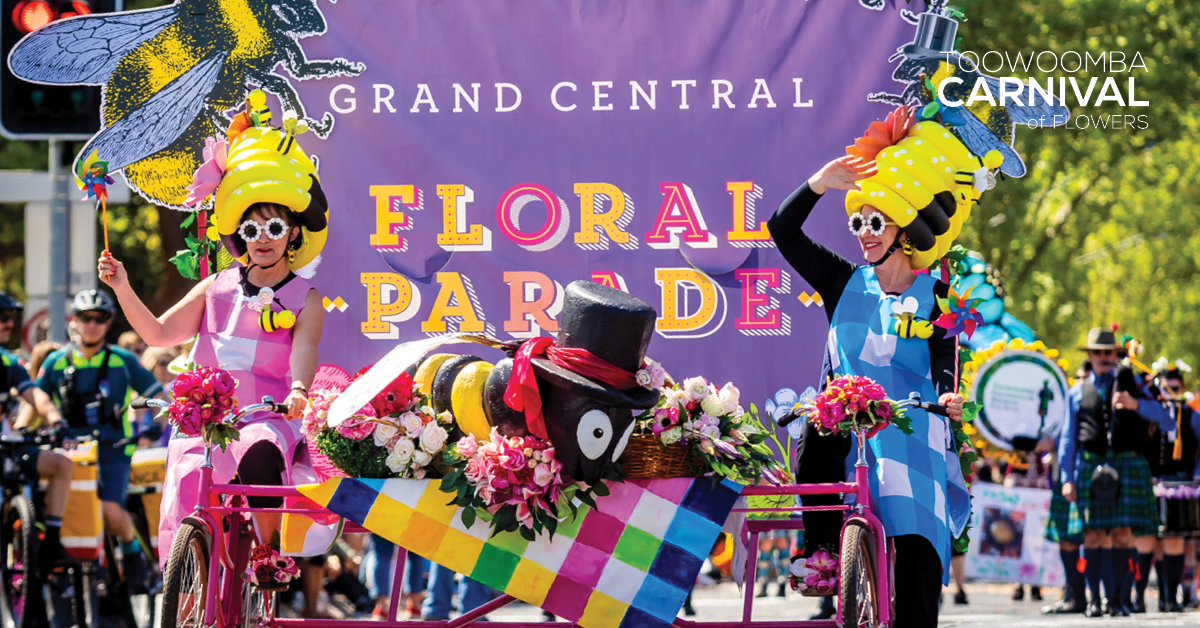
The Grand Central Floral Parade rolls through the city centre on Saturday 19 September 2026 — the festival’s first Saturday and its single biggest day. Floats decorated with real flowers, marching bands, dance schools, vintage cars and community groups process along the city streets in front of the year’s largest crowd. The floats are made in the weeks beforehand by clubs, schools and businesses, and the craft standard is genuinely high; petals are pinned and glued by hand in the thousands, which is why float-builders watch the weather forecast with more anxiety than anyone else in town.
Treat parade day as a logistics exercise and it will treat you well. The route lines the central streets, so claim a kerbside position early — families with camp chairs start settling in well before the first float, and the shady side of the street is the experienced choice on a bright spring morning. Expect road closures across the city centre and plan your parking (or better, arrive by coach and skip the problem entirely). Afterwards, the crowd disperses into the parks and cafés in one big, good-natured wave; if you want lunch without a wait, either book ahead or drift a street or two away from the main drag. It is the one day of the festival when the whole city is visibly, collectively on show — worth building your visit around.
Spring Bluff, street plantings and the garden city at large
The Carnival doesn’t stop at the park gates. The city itself is planted for the festival — roundabouts, median strips and street beds all get the treatment, so even the drive between gardens keeps the theme running. Half an hour down the range, the heritage railway station at Spring Bluff has been famous for its Carnival gardens for generations: a working-era station on the old main line between Murphys Creek and Toowoomba, its platform beds are planted each spring and the whole scene — flowers, station building, cutting and bush — is one of the region’s most photographed. It makes a natural half-day pairing with the city gardens, particularly for anyone with a soft spot for railway history.
Serious garden-hunters should also allow time for the FEASTival weekend (26–27 September 2026), when the festival’s food program takes over and the region’s producers, winemakers and chefs set up alongside the flowers — the Darling Downs is farming country before it is anything else, and the eating during Carnival reflects it. Between the parks, the open gardens, Spring Bluff and the food weekend, a single day is genuinely tight. Many visitors solve this by coming twice, or by staying over; our where to stay guide covers the options, with the standing caveat that Carnival accommodation books out months ahead.
Photographing the Carnival — light, angles and patience
The Carnival is one of the most photogenic events in regional Australia, and a little strategy lifts your results dramatically. The golden rules: shoot the massed beds early or late, when the light rakes low and the colours saturate instead of bleaching; get low for tulip close-ups so the flowers stand against sky or soft background rather than mulch; and use people deliberately — a figure on a path gives the vast beds scale, while a patient wait at a popular spot will eventually gift you a clean frame. Laurel Bank’s carpet bedding reads best from its higher vantage points, and Ju Raku En is an overcast-day specialist, its greens and greys actually improving when the sun goes in.
Phone photographers are well served — the displays are designed to be readable at every focal length — but bring a lens hood or shade your phone against the high spring sun in the middle of the day. Parade day rewards a position with clean background (watch for bins and barriers behind your kerb spot) and a fast shutter for the moving floats. And a courtesy note that doubles as craft advice: stay out of the beds. Every year a handful of visitors step over the low rails for a closer shot, and every year the gardeners quietly repair the damage. The best photographs are taken from the paths anyway — the designs are composed to be seen from them.
The Carnival with children
The Carnival is more child-friendly than a flower festival has any right to be. Queens Park pairs its displays with big open lawns and one of the best playgrounds in the region, so the classic family rhythm — flowers for the adults, playground for the kids, picnic for everyone — runs all day without a car. Parade day is the children’s highlight, all bands and floats and things thrown from passing displays; arrive early enough for a front-row kerb spot and bring hats, water and snacks, because the wait is part of the event. The festival program always carries family events across the three weekends, and the final Sunday’s Paw Parade (4 October in 2026) — the dog-friendly closing celebration — is a reliable hit with small people and their small dogs.
Pace is the whole game with children among flowers. One park per day, taken slowly, beats three parks endured; Laurel Bank’s compact scale actually suits short legs better than Queens Park’s spread, and its carpet-bedding pictures give kids a puzzle to decode. Ju Raku En works surprisingly well too — turtles and koi carry more juvenile appeal than tulips ever will — provided you frame it as a spotting expedition rather than a contemplative stroll. Toilets, shade and coffee are close at hand in all three, which is most of what family logistics ever amounts to.
Seeing the Carnival with Cooee Tours
There is a strong case for doing the Carnival by coach, and it begins with September parking. Our Carnival of Flowers day tours run from Brisbane CBD and Chermside from $89 per adult ($69 per child), with pick-ups also from the Gold Coast (Helensvale, $99/$79) and the Sunshine Coast (Maroochydore and Caboolture, $109/$89). The coach takes the Warrego Highway and climbs the Toowoomba Range while someone else drives — about 1.75 hours from Brisbane — then delivers you to the gardens without a single lap of a full car park. The itinerary covers the headline displays with a guide who knows which beds are peaking that particular week, which is intelligence no printed program can give you.
If you want the fuller version, the deluxe day tour at $159 adds a two-course lunch to the day, and add-ons include a Spring Picnic Lunch ($22) and premium front-of-coach seating ($5) for those who like the big windscreen view coming up the range. Travellers who’d rather not compress the festival into one day can take the 2-day weekend tour from $595 or the 3-day from $880, with accommodation handled — a meaningful advantage in a city that books out for September. A day tour from Brisbane remains the single most popular way our travellers see the Carnival, and it books out in roughly the same pattern as the city’s hotels: early.
What to pair with the gardens
The gardens sit in the middle of a city worth lingering in, and the best Carnival days mix flowers with something else entirely. The Cobb+Co Museum stands directly opposite Queens Park on Lindsay Street, holding the National Carriage Collection — an hour among the coaches and drays is a well-judged contrast to the tulips, and the two together make the most efficient culture-and-colour pairing in town. Picnic Point, on the crest of the range east of the city, adds the long view: the escarpment lookout gazes down over the Lockyer Valley you climbed out of, and its parkland and café make it the natural sunset full stop to a garden day.
Coffee and food need no special planning — the city’s café scene has grown into one of regional Queensland’s best, and during FEASTival weekend the eating becomes an event of its own. If the spring theme has you fully committed, the drive out through the Darling Downs countryside puts the gardens in context: this is deep farming country, and the same volcanic soils that fill the competition gardens with delphiniums also fill the paddocks that surround the city. However you assemble the day, resist the urge to do everything — the Carnival rewards the visitor who sees three things properly over the one who sees seven from a moving queue.
Is the Carnival worth planning a trip around?
Emphatically, yes — with the caveat that you plan it like the major event it is. The Carnival of Flowers is free at its core, spectacular at its peak, and backed by seven decades of civic practice; there is no better single reason to visit Toowoomba, and no better fortnight-and-a-bit in which to do it. The honest advice reduces to timing and logistics. Come mid-week if crowds bother you; come on parade weekend if atmosphere matters more than elbow room. See Queens Park early in the day, Laurel Bank in the quiet mid-afternoon, and Ju Raku En whenever you need the volume turned down. Book beds and tours months out, not weeks.
And if you miss it — or fall for it and want more — the Garden City keeps flowering on schedule. The jacarandas turn the streets purple in November, the parks hold their standard year-round, and the 2027 festival is already confirmed for 17 September to 4 October, the 78th running. Few Australian events can publish next year’s dates with that kind of certainty. It is the confidence of a city that has been doing this every spring since 1950, and expects to be doing it every spring for a long time yet.
Carnival & gardens: your questions
The Carnival of Flowers 2026 runs from 18 September to 5 October, across three weekends, with the Grand Central Floral Parade on Saturday 19 September. It's billed as Australia's longest-running floral festival, first staged in 1950. Most of the flower displays and open gardens are free. Accommodation books out months ahead, so plan early — see our where to stay guide.
A lot. The centrepieces are the free flower displays at Queens Park and Laurel Bank Park (planted with millions of blooms), the Grand Central Floral Parade of decorated floats through the city, and the Chronicle Garden Competition, when prize-winning private gardens open free to the public. There's also the FEASTival food event (26–27 September 2026), live music, and family events. See the Carnival of Flowers page for more.
Mostly no — the flower displays, open gardens and the parade are free to enjoy. Some events within the Carnival, such as certain food, music or ticketed experiences, may be paid, and they can sell out. The best approach is to check the official program closer to the dates and pre-book anything ticketed, plus your accommodation and any tours well in advance.
Year-round, the pick are the heritage Queens Park Botanic Gardens (about 26 hectares in the heart of the city), Laurel Bank Park with its famous carpet bedding and scented garden, and the tranquil Ju Raku En Japanese Garden at the university — Australia's largest traditionally designed Japanese stroll garden, free and open daily. During the Carnival, dozens of private gardens open their gates too.
The jacarandas peak in November — a little after the Carnival of Flowers — when streets around the parks and older suburbs turn purple. So if the jacarandas are your goal, aim for November rather than the September Carnival. Nearby Goombungee even holds its own Jacaranda Festival in early November. Either way, spring into early summer is Toowoomba's most colourful season.