The Best of the Toowoomba Region
Perched 700 metres up on the crest of the Great Dividing Range, Toowoomba is Queensland with the volume turned down and the colour turned up — cool air, grand gardens, heritage streets and a food scene that outperforms its postcode. Here's the whole region, properly.
Why visit Toowoomba?
Altitude is the whole story. At roughly 700 metres above sea level, Toowoomba enjoys a genuinely temperate climate — crisp mornings, mild days, actual seasons — and that climate built the Garden City. European-style parks and street trees thrive here in a way they simply can't on the coast, which is why Australia's longest-running floral festival calls Toowoomba home and why the city has worn the "Garden City" title for more than a century.
But the gardens are the headline, not the whole paper. Toowoomba is also regional Queensland's quiet overachiever: a serious cafe and dining culture, one of the country's best regional street-art collections, heritage architecture from its boom years as the capital of the Darling Downs, and countryside in every direction — escarpment lookouts to the east, farming plains rolling west to the horizon.
Must-see gardens and attractions
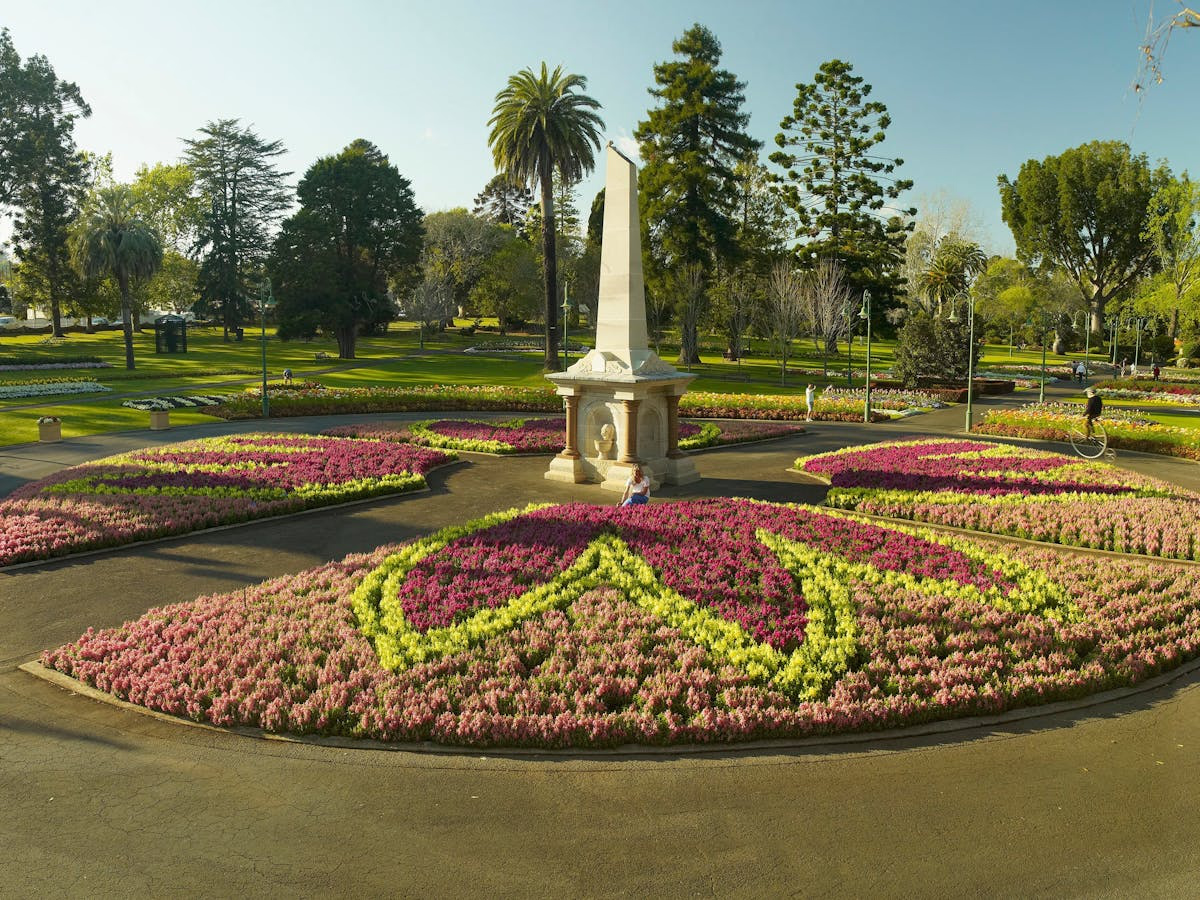
Queens Park and the Botanic Gardens anchor the city — around 26 hectares of heritage-listed parkland with grand old trees, sweeping lawns and the feature flower beds that erupt each spring. Laurel Bank Park is its quieter sibling: topiary, heritage roses, a scented garden and the picnic lawns locals guard jealously. Ju Raku En, the Japanese garden on the UniSQ campus, is one of the largest traditionally designed Japanese gardens in Australia — a lake, bridges, stone arrangements and three kilometres of contemplative paths.
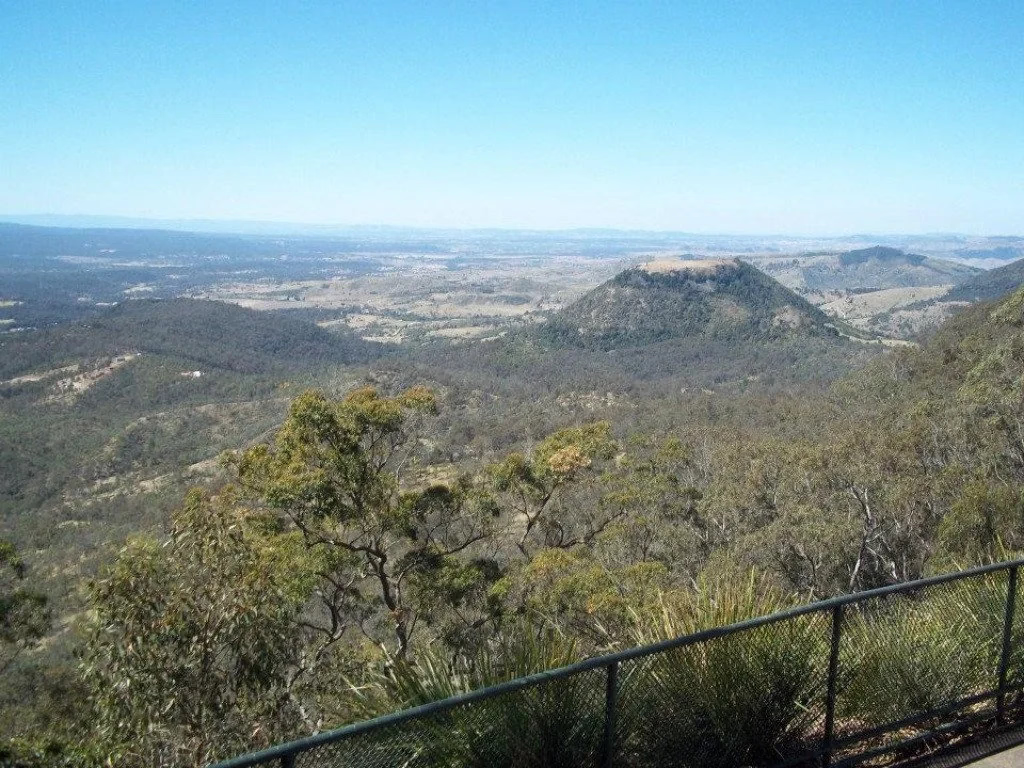
Beyond the green: the Empire Theatre, a gorgeously restored art deco house with a year-round program; the Toowoomba Regional Art Gallery, the oldest public gallery in regional Queensland; the Cobb & Co Museum, home of the National Carriage Collection and hands-on heritage trades; and Picnic Point, the escarpment-edge park whose views over the Lockyer Valley and Tabletop Mountain close out every good Toowoomba day.
Hidden gems and local secrets
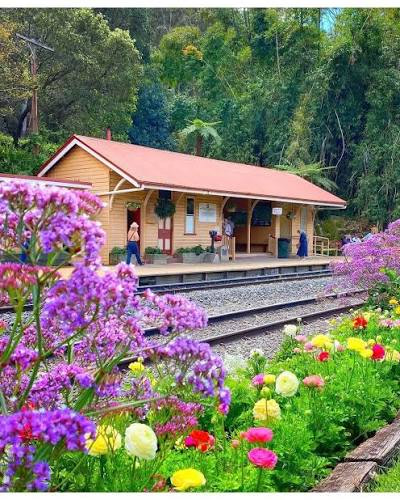
Boyce Gardens — a former private garden now in public hands — folds a rainforest gully into its collection of native and exotic plantings, and most visitors never find it. Spring Bluff Railway Station, halfway down the Range, is a heritage-listed station wrapped in award-winning gardens: the most photographed spring scene on the Downs. The Toowoomba street art trail threads the CBD's laneways with large-scale murals built up over years of mural festivals — walk it between gardens. And the country towns ringing the city — Highfields, Crows Nest, Millmerran, Pittsworth — reward slow drives with bakeries, local produce and rural quiet.
The Toowoomba trick: alternate. Follow a grand garden with a laneway mural, a museum with a lookout, a festival crowd with a country town.
The food scene
Toowoomba eats far better than a city its size has any right to. The CBD and railway precinct carry a cafe and specialty-coffee culture that regional Queensland envies — Baker's Duck's pastries alone justify the drive up the Range — while restaurants like The Finch have built reputations on Darling Downs produce, and the heritage pubs know exactly what to do with local beef. The surrounding towns fight a running country-bakery war that visitors win.
Time it right and the food becomes the event: during the spring Carnival of Flowers, a festival food trail links dozens of venues with seasonal dishes, the FEASTival weekend brings celebrated chefs and pop-up kitchens, and the Weekend Table sends diners out to the region's producers. Read our full Carnival food and wine guide for the details.
Seasonal highlights
Spring is the crescendo: the Carnival of Flowers (18 September – 5 October in 2026) fills the city with more than 40 million petals, the Grand Central Floral Parade and three feature weekends of food and entertainment. Autumn is the sleeper season — the exotic street trees that struggle elsewhere in Queensland put on a genuine display of colour here, and the city promotes its own foliage trail. Winter brings crisp blue days made for heritage walks, gallery afternoons and cafe crawls. Summer stays milder than the coast, with long evenings at Picnic Point and farmers' markets in full swing. The Toowoomba Royal Show adds agricultural spectacle to the autumn calendar each year.
Three ready-made itineraries
The classic two-day weekend
Day one: Queens Park in the morning, Laurel Bank before a CBD cafe lunch, Ju Raku En in the afternoon, and an evening show at the Empire if the program obliges. Day two: Spring Bluff for a morning picnic, the Cobb & Co Museum after lunch, and golden hour at Picnic Point to finish. Our spring weekend escape guide runs the festival-season version of this shape.
The country drive
Boyce Gardens for morning quiet, then out onto the Downs — Millmerran or Pittsworth for a rural bakery lunch, returning via Highfields or Crows Nest with lookout and produce stops along the way. Crows Nest National Park adds waterfalls and bushwalking for those with boots in the car.
The festival-focused spring visit
Build the trip around the Carnival: gardens and parade on the big weekend, the food trail between events, private competition gardens, and twilight programs where offered. Start with our guides to the best time to visit and best gardens.
Outdoors and nature
Picnic Point's trail network drops along the escarpment edge with the region's signature views. Redwood Park protects more than 200 hectares of bushland on the Range's eastern slopes, with walking and riding trails through remnant rainforest and eucalypt forest. Gumbi Gumbi Gardens at UniSQ showcases plants of cultural significance to the region's First Nations peoples, interpreted with local Aboriginal knowledge. Further out, Tabletop Mountain dominates the view east — admire it from Picnic Point, or tackle its steep, unmarked summit scramble only if you're an experienced walker. Ravensbourne National Park, north-east of the city, adds rainforest walks and birdlife.
Heritage and culture
Toowoomba's nineteenth-century wealth left the city an unusually rich built legacy — grand civic sandstone, timber Federation homes, and landmarks like the heritage-listed Clifford House in the city's heart. Spring Bluff station tells the story of the audacious railway climb up the Range. The street art movement supplies the counterpoint: contemporary, large-scale and utterly of this city. And the land's deeper history belongs to the Giabal and Jarowair peoples, whose Country this is — Gumbi Gumbi Gardens is a good place to begin engaging with it.
Practical tips
The city centre is walkable, but a car (or a coach tour) unlocks the lookouts, Spring Bluff and the country towns. Pack for the altitude — mornings and evenings run cool even in the warm months; our packing guide covers spring specifically. Accommodation spans CBD hotels, motel corridors, farmstays and holiday parks, and books out hard around the Carnival — see where to stay. For festival dates and programs, check the official Carnival of Flowers website. And everywhere you go: stay on the paths, respect the gardens, and leave the beds to the gardeners who spent a year on them.
The verdict
Toowoomba is the rare regional destination that works in every season and at every pace — a flower-mad spring festival city, an autumn foliage town, a food destination, a heritage walk and a gateway to the Darling Downs, all wearing the same cool-climate crown. Come for the Carnival the first time. You'll be back for the rest.
The season planner: one city, four programs
Toowoomba's calendar is the rare regional one worth planning around, so here it is as a programming grid. Spring headlines: Carnival of Flowers through late September, jacaranda season straight after — the city's marquee weeks, booked accordingly. Summer runs the cool-evening counter-program: altitude makes the Garden City a refuge when the coast swelters, and Christmas Wonderland lights Queens Park through December. Autumn is the sleeper hit — real deciduous colour, the Royal Show's country pageantry, Meatstock's smoke and noise, and touring weather the equal of any southern tableland. Winter plays heritage: crisp blue mornings, open fires, museums and galleries at their cosiest, and the beds quietly being planted with September's promises.
The planning consequence: there is no wrong season, only wrong expectations — and the visitors who let the calendar choose their program consistently out-experience the ones who fight it. This guide's remaining sections work in any of the four.


The street-art quarter, given its due
Between the gardens and the cafes runs the city's third act: a CBD laneway network carrying one of regional Australia's strongest street-art collections, built through years of mural festivals that imported national and international artists and left the walls to prove it. The core walk threads the lanes off Ruthven and Margaret — twenty minutes at art-gallery pace, zero dollars, no opening hours — and rewards repetition, since the collection keeps growing and the coffee keeps interrupting.
The craft of enjoying it: go morning for clean light and empty lanes, pair each cluster with the nearest roaster (the geography cooperates suspiciously well), and let the walk be the connective tissue of a CBD day rather than its own errand. Guided visitors get the drive-past version with commentary on the weekend tours' city circuits; walkers get the full gallery. Either way it recalibrates expectations of what a Downs city keeps in its alleys.
The day-trip matrix: four compass points, four personalities
North — the ridge and falls run: Highfields, Hampton's producers, Crows Nest and its granite gorge country; the food-and-nature blend, and the direction our weekend tours call day two. East — the escarpment edge: Picnic Point's panoramas, Spring Bluff's platform gardens, Murphys Creek's valley folds; the photography direction. South — the long ambition: the Granite Belt's wineries and high-country orchards around Stanthorpe, a genuine region deserving its own overnight rather than a rushed return. West — the Downs proper: Jondaryan's woolshed heritage, Oakey and the plains' big-sky agriculture; the history direction, and the least touristed by a distance.
The matrix's use: pick one direction per day and refuse the temptation to combine — the distances punish greed — and let the season weight the choice: north in autumn, east in spring, south for vintage, west when the heritage itch strikes. The city makes an ideal base for all four, which is the quiet argument for the multi-day formats every guide on this site keeps arriving at.

Eating and drinking: the shortlist of shortlists
The full food story lives in our dedicated guides, but the best-of demands its digest: coffee from the roasters' own laneway cafes, morning, no exceptions; bakery pilgrimage to the famous counters early, before the display cases become archaeology; lunch in the CBD belt where Darling Downs produce arrives paddock-fresh; the shared-table solution at Walton Stores when the group can't agree; and one proper dinner booked ahead — the city holds hatted ambition and heritage-pub comfort in equal strength, and September fills both.
Drink-wise: the festival events pour the region efficiently, the ridge's gates pour it personally, and the Granite Belt awaits the committed. The single organising fact behind all of it — volcanic soil, 700 metres, cool nights — is the same one growing the tulips, which makes every good meal here a footnote to the gardens and vice versa.
The 48-hour best-of, assembled
Two days, the city's greatest hits, any season: Day one — Picnic Point early for the valley (coffee in hand from the first roaster you passed); Queens Park and its seasonal program; laneway art walk to lunch in the belt; afternoon at Ju Raku En or the galleries; golden hour back on the escarpment; dinner booked, walked to, unhurried. Day two — north with the matrix: Highfields morning tea, Crows Nest or the producers, country pub lunch, Lockyer farm gates on the descent if Brisbane calls, or a second Toowoomba evening if it doesn't.
Readers of our tour pages will recognise the skeleton — it's the 2-Day Weekend Tour with the serial numbers filed off, which is either an endorsement of the itinerary or of the tour, and the city doesn't mind which. Add the Carnival, the purple, the autumn colour or the winter fires according to the season planner above, and the 48 hours flexes across the whole year without changing its bones.
Best of, folded pocket-size
One city at altitude; four seasonal programs; gardens always, festival in September, purple in November; laneways between coffees, escarpment for views, ridge for food, west for history, south for wine; 48 hours minimum, a weekend properly, a repeat visit inevitably. Toowoomba's best-of list is finally a loop, not a list — each strength feeding the next until the visitor who came for one thing leaves planning for four. The Garden City has been running this conversion funnel since 1949. Consider this guide your enrolment paperwork.
The museums-and-culture bench
When weather or curiosity turns indoors, the city's cultural bench runs deeper than its size suggests. Cobb & Co Museum anchors it — the National Carriage Collection plus working heritage trades, covered fully in our dedicated guide — with the regional gallery's serious collection, the Empire Theatre's restored art-deco program, and the heritage walking routes threading between them. Winter turns this bench into the main game; festival season turns it into the rain card every good plan carries.
The practical note: the cultural cluster sits within the same walkable core as the cafes and laneways, so an indoor pivot never costs the day its shape — swap the garden hours, keep everything else, and let the espresso schedule hold the itinerary together as it was always going to anyway.
What to skip (a best-of guide's honest duty)
Trust requires the negative space, so: skip trying to 'do' all four day-trip directions in one visit — the matrix is a menu, not a checklist, and the distances punish completists. Skip the feature-weekend cafe queue when one block's walk halves it. Skip the noon garden arrival, forever and everywhere in this blog series. And skip the assumption that the city empties of interest outside September — the entire premise of this page is that the Garden City's best-of list runs four seasons deep, and the November-purple, autumn-colour and winter-fire visitors are in on something the September-only crowd hasn't discovered yet.
Nothing on the skip list is a scandal; it's just the difference between a good visit and the version locals would design. This guide exists to hand over the local version, queue-free.
The return visitor's ladder
Toowoomba's best-of resolves finally into a sequence rather than a set. Visit one: the Carnival, because September is the front door. Visit two: jacaranda season or autumn colour, because the crowds' absence reframes everything. Visit three: a full weekend with the day-trip matrix engaged, because the region has been waiting behind the city all along. Visit four onward: you've stopped counting, you have a bakery allegiance and a bloom-report bookmark, and this guide has nothing left to teach you. The ladder's first rung is the only one that needs booking discipline — everything above it, the Garden City handles with the quiet competence of a place that has been converting day-trippers into regulars since 1949.
And the final word belongs to the altitude, this guide's quiet protagonist throughout: 700 metres is the single fact from which every Toowoomba superlative descends — the tulips and the jacarandas, the crisp mornings and the cool evenings, the food bowl and the festival that celebrates it. Visit anything on this page and you're visiting the mountain's argument with the Queensland coast; stay long enough and you'll find yourself, like the city, taking the mountain's side.
The family best-of
Toowoomba with children compresses to a very reliable core. Queens Park leads: the playground is genuinely excellent, the lawns absorb any amount of running, and the gardens tolerate small visitors far better than their formality suggests — a picnic under the trees remains the city's best-value family lunch by a wide margin. The Cobb & Co Museum, directly opposite, is the rainy-day and hot-afternoon ace: carriages at child height, hands-on heritage trades, and enough genuine spectacle to hold an eight-year-old well past the parental estimate. Picnic Point rounds out the trio — an easy lookout, ice-cream within reach, and short escarpment trails that feel like an expedition without ever being one. That triangle, plus a car or coach between the corners, is a full family day with margin to spare.
The craft is in the tempo rather than the destinations: one fewer stop than seems possible, a playground before every garden rather than after, and the picnic as the day's anchor rather than an afterthought. Spring adds the Carnival's decorated houses — in-car entertainment of a very high order — and summer swaps the middle of the day for shade and the museum. Our full Toowoomba with kids guide runs the ages-and-stages detail; the short version is that the Garden City is one of the easiest family destinations in regional Queensland, largely because its best assets are free, central and next to each other.
The zero-dollar best-of
Strip the budget to nothing and Toowoomba barely notices. Every headline garden in this guide is free: Queens Park, Laurel Bank, Ju Raku En and the Picnic Point lookout between them would constitute a paid attraction portfolio in most cities, and here they cost precisely the effort of arriving. The street-art laneways are free and self-guiding; the heritage streetscapes of the CBD are free at any pace you like; the escarpment walking trails are free and better than most paid lookouts on the coast; and in September the Carnival's spine — the gardens, the decorated streets, the Grand Central Floral Parade itself — is free from first bed to final float. A visitor could assemble two full zero-dollar days here and feel undersold on none of it.
Where money is actually worth spending, spend it small and well: on the city's coffee, which is a legitimate regional strength; on one good lunch rather than three mediocre ones; and on getting up the Range without a car if driving doesn't appeal, since the coach fare buys the lookouts and gardens that the rail line doesn't reach. The zero-dollar version is not the compromise itinerary — it is very nearly the best-of itself, which says something true and slightly subversive about this city: its finest assets were built as public goods, and they still behave like them.
The unhurried best-of
Toowoomba may be the best slow-travel city in Queensland, and travellers who prefer an unhurried register — older visitors especially — should plan to take it at that pace on purpose. The core assets cooperate: Queens Park and Laurel Bank run sealed, level paths with benches placed by someone who understood knees; Ju Raku En is a designed stroll with rest points around the lake; Picnic Point delivers its entire spectacle within thirty metres of the car park, cafe adjacent. Midweek mornings hand you all of it at half volume. Add the city's deep morning-tea culture — this is a town that still takes the scone seriously — and the unhurried day practically assembles itself: one garden, morning tea, one garden, lunch, one lookout, home.
The Range drive is the one genuinely tiring element, and it is also the most outsourceable. Cooee Tours' seniors tours are built precisely for this register — door-side coach travel up the Range, the headline gardens at conversational pace, and the day's logistics handled by someone whose job it is to handle them. Whether guided or self-directed, the principle holds: Toowoomba's best-of does not reward hurry, and the visitors who move through it slowest reliably see the most.
Ready to plan the places themselves? Our guides to everything worth doing in Toowoomba, Queens Park and Picnic Point carry the practical detail — hours, access, and how each fits a day.
See the Carnival the easy way
Cooee Tours runs Carnival day tours from Brisbane ($89pp), the Gold Coast ($99pp) and the Sunshine Coast ($109pp), plus a $159 small-group Deluxe Experience with lunch included — no traffic, no parking, local driver included.
Carnival of Flowers Tours