Sections on extreme heat, bushfire risk, marine stingers, cyclones and travel insurance are general travel information, not medical, safety or financial advice. Conditions change daily. Before and during travel, check current warnings with the Bureau of Meteorology and the relevant state or territory emergency service, and follow local advice on the day.
Australia's seasons are opposite to the Northern Hemisphere — summer is December to February, winter is June to August. But the more important variable isn't hemisphere: it's the profound difference between the tropical north and temperate south. The rule of thumb: winter go north, summer go south. Spring and autumn work almost everywhere. This guide explains the nuances that make the difference between a good trip and an extraordinary one.
☀️ Summer — December to February
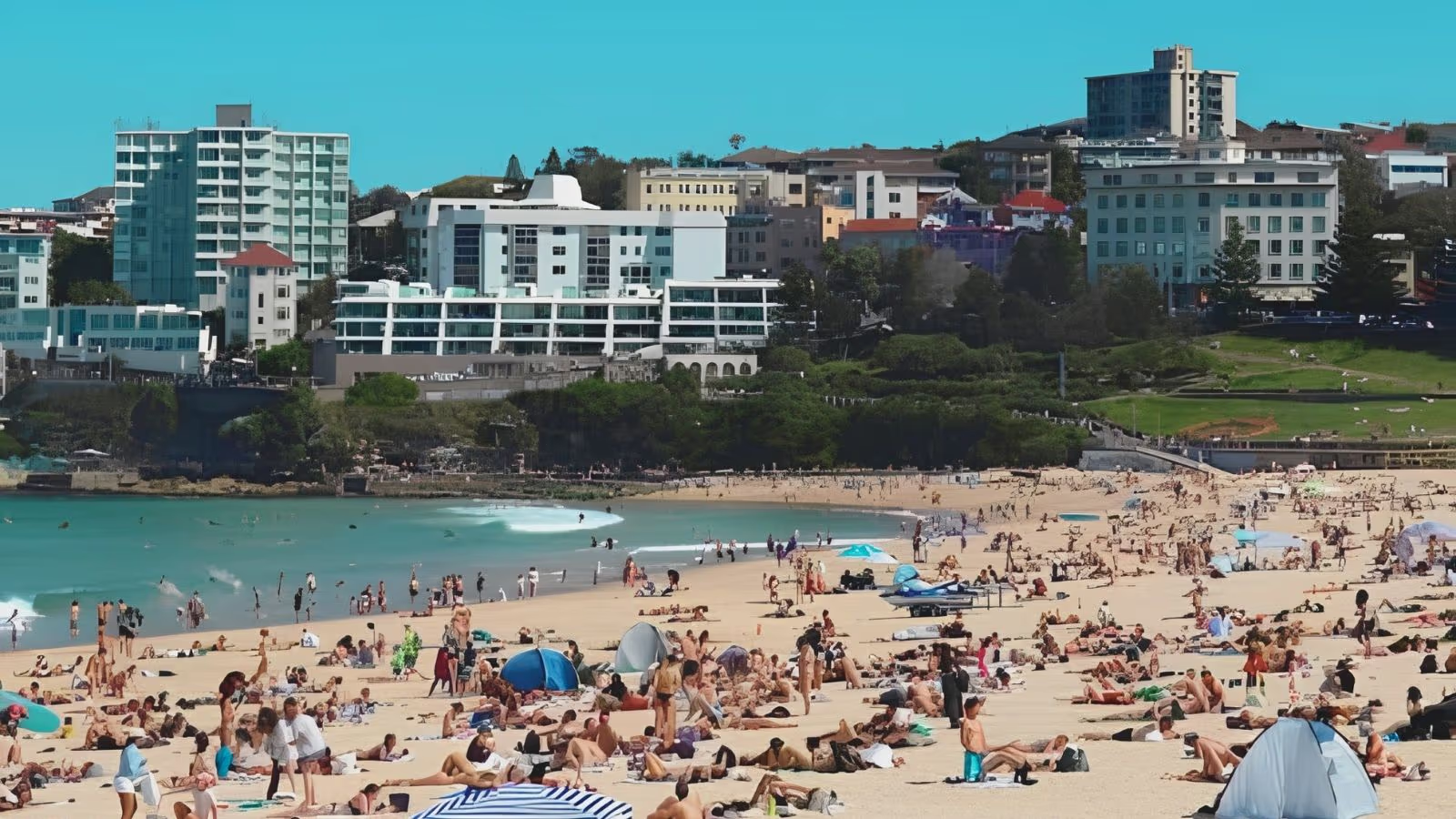 Peak Season (South)
Australian summer is when the southern half of the country comes alive — Sydney's beaches fill, Melbourne's events calendar peaks, coastal road trips are at their most glorious, and New Year's Eve fireworks over Sydney Harbour are among the world's most spectacular. Average temperatures range from 22–37°C across major southern cities. It's peak tourist season with highest prices and crowds. Book well in advance and consider February once school holidays end. For a city-level view of the season, see our guide to Brisbane in summer.
✅ Best For
Sydney, Melbourne, Adelaide, Perth beaches, Tasmania, Great Ocean Road, Gold Coast beaches, NSW South Coast road trips. Sydney New Year's Eve. Australian Open (January).
⚠️ Avoid or Take Care
Tropical north (Cairns, Darwin, Whitsundays) — wet season with flooding, cyclones, and marine stingers. Outback interior (extreme heat 40°C+). Consider February over December/January for thinner crowds.
Summer highlights:
Australian summer brings genuine extreme heat risk. The Outback interior regularly exceeds 45°C; heatwaves affect all southern cities. Bushfire risk is highest December to March. Check the Bureau of Meteorology (bom.gov.au) for fire danger ratings and heat warnings before and during summer travel.
🍂 Autumn — March to May
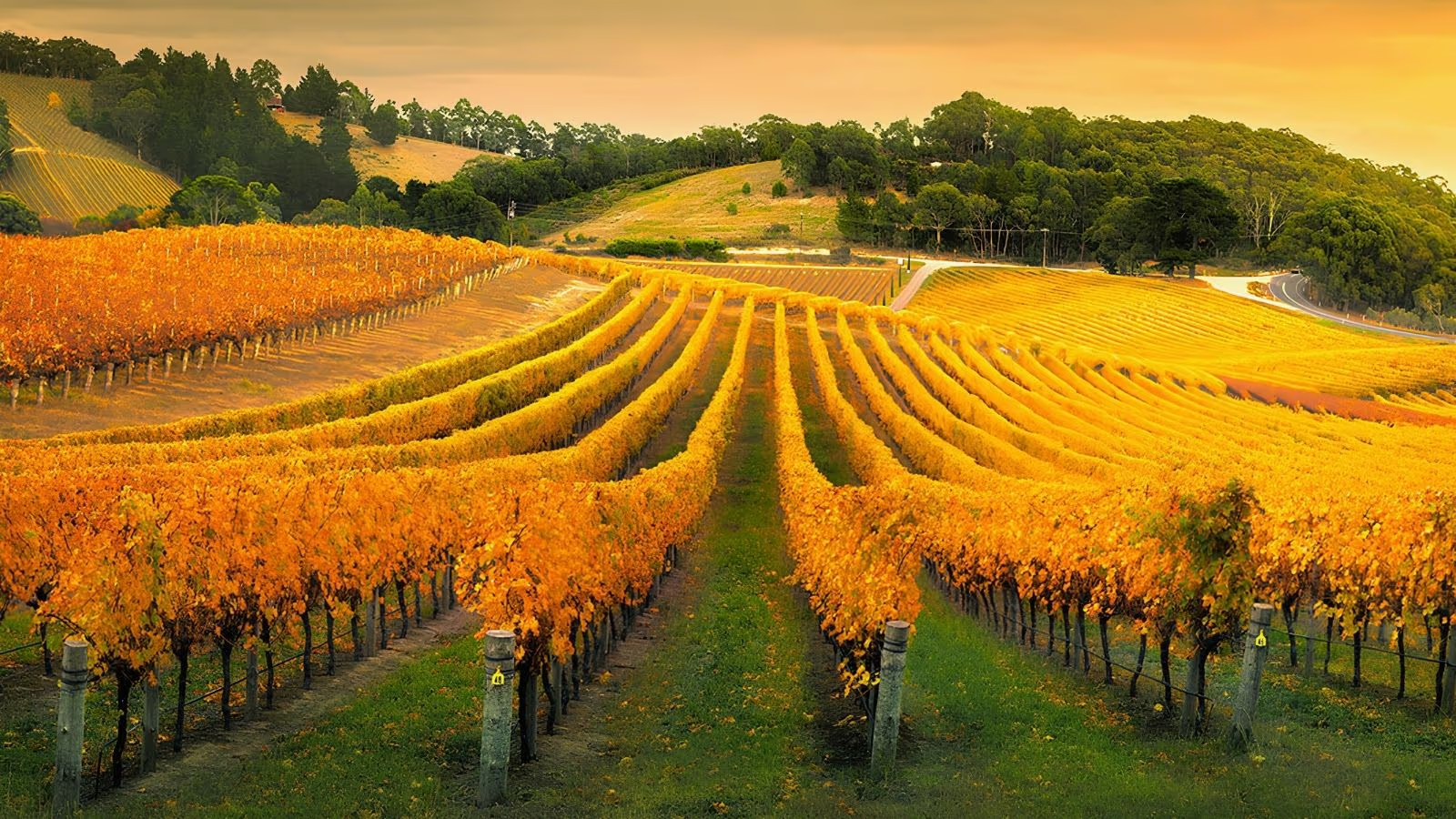 Best Shoulder Season
Autumn is Australia's most underrated travel season — and arguably the best overall for first-time visitors. The summer heat softens, crowds thin out significantly after school holidays end in late January, accommodation prices drop 20–40%, and the quality of light across vineyards, hinterlands, and coastlines is extraordinary. In the south it's winding down from summer; in the north (Queensland, NT) it's improving rapidly from the wet season.
Harvest season activates Australia's wine regions — the Barossa Valley, McLaren Vale, Yarra Valley, and Margaret River are at their most sensational March to May. Melbourne earns its cultural reputation with the Australian Grand Prix (March) and the Comedy Festival. Vivid Sydney transforms the city in May–June.
✅ Best For
Everywhere in the south (Sydney, Melbourne, Adelaide, Perth, Tasmania) is excellent. Queensland (Cairns, Whitsundays) opens up beautifully by April–May as the wet season clears. Wine regions at harvest. Hiking in temperate national parks.
📅 Key Dates
Easter long weekend (book accommodation early). Australian Grand Prix Melbourne (March). Melbourne Comedy Festival (March–April). Whale watching begins May–June. Sydney Royal Easter Show (March/April).
Autumn highlights:
❄️ Winter — June to August
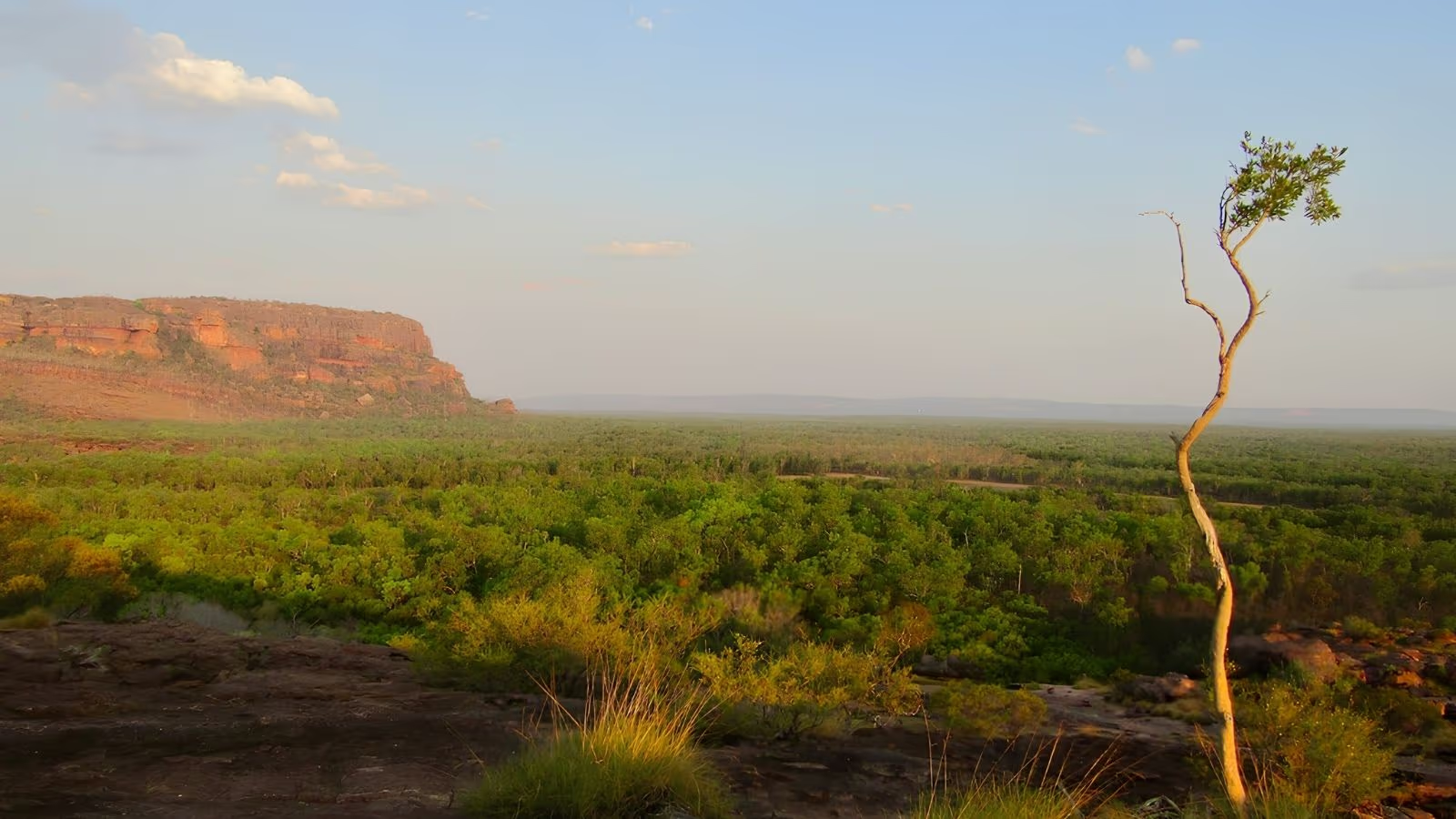 Best: Tropical North
Australian winter is the smartest season for visitors prioritising the tropical north — Cairns, Darwin, the Whitsundays, and the Kimberley all reach their absolute peak. The dry season delivers cloudless skies, low humidity, clear reef visibility (sometimes 30+ metres on the Outer Reef), and the best conditions for Kakadu, Litchfield, and the Northern Territory's national parks. It's also peak season for whale watching along the entire east coast, with Hervey Bay's humpbacks arriving in July–October.
Southern cities cool considerably — Sydney averages 13–17°C, Melbourne 8–13°C — but still get plenty of sunshine and are crowd-free with the cheapest flights of the year. The Snowy Mountains and Victorian Alps offer skiing in July–August.
✅ Best For
Cairns and the Great Barrier Reef (best visibility, no stingers), Darwin and Kakadu (dry season essential), the Kimberley, Whitsundays, whale watching (east coast), Uluru and the Red Centre, Perth wine regions, skiing in the Snowy Mountains.
💡 Budget Tip
Winter is Australia's cheapest travel season for southern cities. Sydney, Melbourne, and Adelaide flights are 20–40% cheaper than summer. Accommodation prices drop significantly. The exception: tropical north is peak season with higher prices. Our guide to Brisbane in winter covers what the season actually feels like in the subtropics.
Winter highlights:
🌸 Spring — September to November
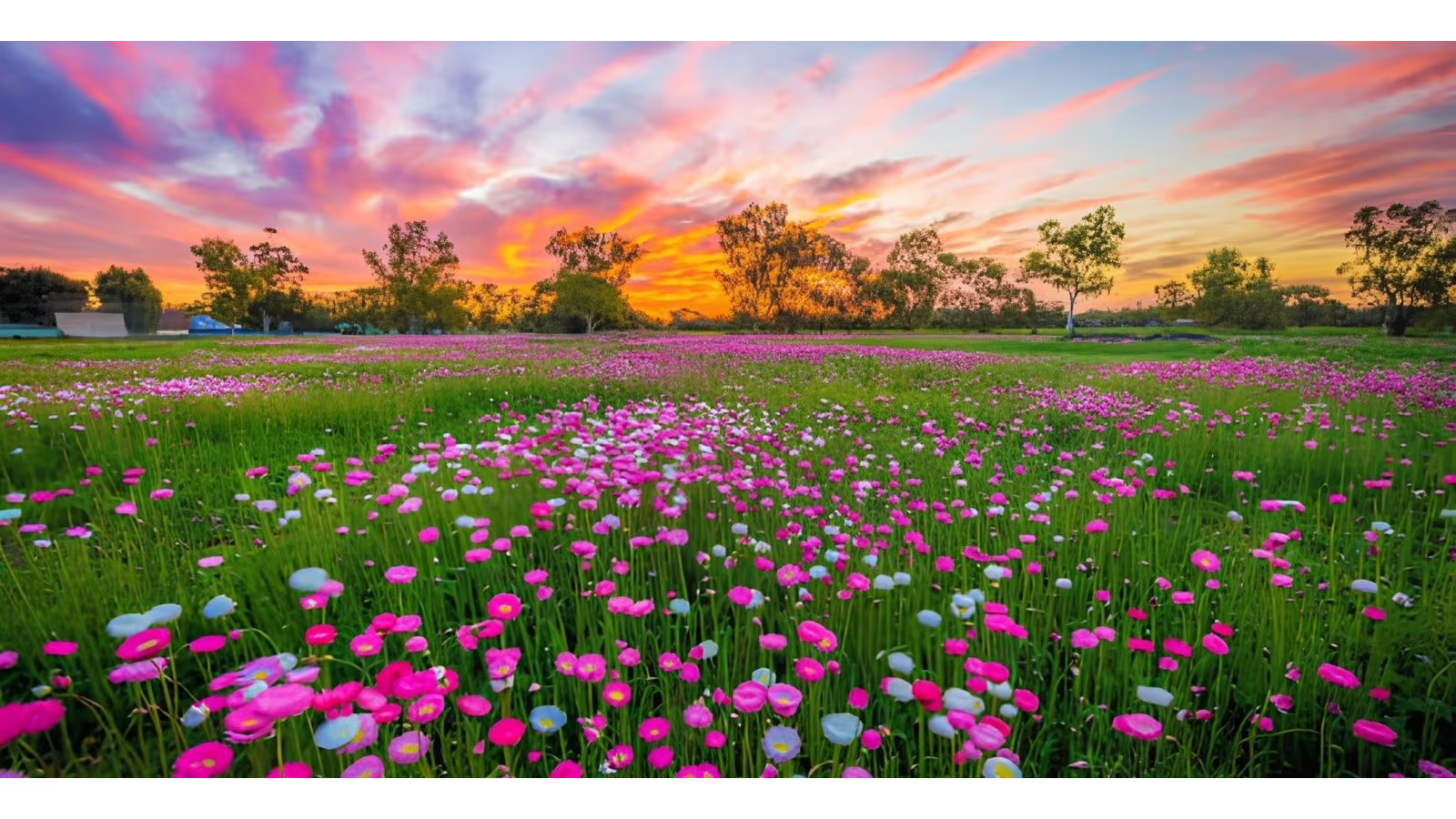 Best: WA & South
Spring is arguably Australia's most beautiful season — the country is warming up, the light is extraordinary, and Western Australia's famous wildflower season (August–October) transforms the Midwest and Wheatbelt into carpets of colour unlike anything else on Earth. Wildlife is particularly active — spring is when kangaroos have joeys in pouches, koalas are most visible, and migrating whales continue their northward passage.
It's Melbourne's racing carnival season — the AFL Grand Final (September) and the Melbourne Cup (November) fill the city. Sydney's Sculpture by the Sea transforms the Bondi to Tamarama coastal walk in October–November. The Snowy Mountains are accessible again after winter, and Uluru is comfortable before summer heat builds in November–December.
✅ Best For
Western Australia wildflowers (Aug–Oct), Sydney and NSW, Melbourne racing carnival, Great Ocean Road, national park hiking, whale watching continuing (east coast), Uluru before summer heat, reef access improving.
⚠️ Watch Out For
School holiday peaks in September–October drive up Gold Coast and coastal accommodation prices. Stinger season begins in northern Queensland in October. Start booking tropical north activities before November.
Spring highlights:
🗺️ Best Time by Region — Quick Reference
Australia's vast geography means the ideal timing varies enormously by destination. Use this matrix to plan multi-stop trips:
| Region / Destination | Best Time | Avoid | Why |
|---|---|---|---|
| Sydney & NSW | Dec–Jan (crowds) | Mild temperatures, shoulder season pricing, good reef and coastal access | |
| Melbourne & Victoria | Winter (cold, grey) | Grand Prix (Mar), harvest (Mar–Apr), AFL (Sep), Melbourne Cup (Nov) | |
| Cairns & Great Barrier Reef | Nov–Apr (stingers, wet) | Best visibility, no stingers, low humidity, dry season conditions | |
| Whitsundays & QLD tropical coast | Nov–Apr (cyclones) | Dry season: clear skies, calm seas, low stinger risk | |
| Brisbane & Gold Coast | Dec–Jan (stingers, crowds) | Year-round viable; winter is mild and uncrowded; spring is excellent | |
| Darwin & Top End | Nov–Apr (wet season only) | Dry season is essential — wet season floods roads and closes parks | |
| Uluru & Red Centre | Nov–Mar (extreme heat) | Manageable temperatures for walking; summer regularly exceeds 45°C | |
| Western Australia (Perth & south) | Jul–Aug (cold) | Spring wildflowers (Sep–Oct); autumn harvest; Mediterranean climate | |
| WA Coral Coast & Ningaloo | Nov–Feb (hot) | Whale sharks Mar–Jul; best beach weather Apr–Sep; June–Aug peak | |
| Kimberley (WA) | Oct–Apr (wet, roads close) | Dry season only accessible for most roads; spectacular gorge country | |
| Adelaide & South Australia | Jan–Feb (extreme heat) | Harvest season (Mar–Apr); Barossa vintage; Kangaroo Island wildlife | |
| Tasmania | Jun–Aug (cold, limited access) | Summer opens hiking tracks; wildflower season; longest days |
📅 Month-by-Month Quick Reference
A quick snapshot of the ideal Australian destinations and activities for each calendar month:
🐾 Australia Wildlife Seasonal Calendar
Australia's wildlife events follow strict seasonal patterns — plan around these windows for the best encounters. More species-by-species detail sits in our wildlife travel writing, and Cooee Nature is the touring thread built around them:
| Wildlife Event | Best Months | Location | Notes |
|---|---|---|---|
| 🐋 Humpback whale watching | May–November | Hervey Bay (Jul–Oct peak), east coast, Moreton Bay | Hervey Bay is Australia's premier destination — sheltered bay, close encounters |
| 🐳 Dwarf Minke whales | June–July | Cairns Outer Reef | World's only swim-with Minke whale programme — licensed operators only |
| 🦈 Whale sharks | March–July | Ningaloo Reef, WA (peak Apr–Jun) | World's largest annual aggregation; licensed swim-with tours required |
| 🐢 Sea turtle nesting | November–January | Mon Repos, Bundaberg | Australia's largest loggerhead nesting site; ranger-guided night tours |
| 🐢 Sea turtle hatching | January–March | Mon Repos, Bundaberg | Hatchlings emerging to the sea — extremely popular, book months ahead |
| 🌼 Wildflowers + birdlife | August–October | Western Australia, SA | 12,000+ WA wildflower species; extraordinary birdwatching in Midwest |
| 🦘 Kangaroos with joeys | Year-round (peak spring) | Nationwide | Spring (Sep–Nov) brings highest joey visibility at national parks and reserves |
| 🦆 Platypus | Year-round (best Apr–Aug) | Eungella NP (Mackay), Mary River | Dawn platforms above Broken River — most reliable in Australia |
| 🦅 Kakadu wetlands birds | May–October | Kakadu NP, Northern Territory | Dry season concentrates birds at wetlands — Yellow Water Billabong cruises |
| 🐊 Crocodile activity | Year-round | Daintree River, Kakadu | Crocodiles year-round; most visible basking in dry season (May–Oct) |
| 🦈 Great White sharks | Apr–Nov | Neptune Islands, SA; WA south coast | Cage diving tours from Port Lincoln, SA — peak season autumn/winter |
🎉 Major Events to Plan Around
These events either create exceptional travel experiences or result in sold-out accommodation and higher prices — plan accordingly:
Australian Open, Melbourne
First Grand Slam of the year, late January. Book Melbourne accommodation 6+ months ahead.
Sydney NYE Fireworks
World's most spectacular New Year's Eve. Harbour-view locations book out a year in advance.
Melbourne Grand Prix
Formula 1 Australian Grand Prix at Albert Park. Melbourne hotel prices surge significantly.
Melbourne Comedy Festival
Australia's biggest comedy festival — 4 weeks of international and Australian comedians.
Vivid Sydney
23 nights of light installations across the CBD, Opera House, and Harbour Bridge. Very popular.
Hervey Bay Whale Season
Humpback whales shelter in the bay. July–October peak; book tours 2–4 weeks ahead during peak.
AFL Grand Final, Melbourne
Australian Rules Football Grand Final — Melbourne is electric. Accommodation books out months ahead.
Sculpture by the Sea
Outdoor sculpture exhibition along the Bondi to Tamarama coastal walk, Sydney. Free entry.
Melbourne Cup
"The race that stops a nation" — public holiday in Melbourne, huge racing carnival season.
Mon Repos Turtle Season
Sea turtle nesting and hatching at Bundaberg. Ranger tours sell out — book months ahead.
Queensland Holiday Peaks
April, July, Sep–Oct, Dec–Jan. Theme park and coastal accommodation prices peak significantly.
WA Wildflower Season
12,000+ native wildflower species bloom across the Midwest and Wheatbelt — free and spectacular.
Australia's weather can be extreme and change rapidly. Before and during travel — particularly to the tropical north, outback, and bushfire-prone areas — always check bom.gov.au for cyclone warnings, flood alerts, fire danger ratings, and severe weather warnings. The BOM app provides location-specific alerts.
💡 Practical Timing Tips
- ✓The golden rule: winter go north, summer go south. This single principle solves most Australia timing questions — the Australia travel guide is the starting point for planning around it. The tropical north (Cairns, Darwin, Kimberley) is at its best in the Australian winter (June–August). Southern cities and coastlines are at their best in Australian summer (December–February).
- ✓September holidays are Australia's sweet spot. September school holidays are smaller than July and December, weather is excellent across all regions, and prices haven't peaked for summer. Often the best value combination of conditions and cost for Australia-wide trips.
- ✓May is criminally underrated. May marks the beginning of the dry season in the north while the south still has lingering warmth. Cairns reef visibility is climbing, crowds from the southern summer have left, Vivid Sydney is on, and prices are at shoulder-season levels.
- ✓The northern wet season is manageable but requires planning. November to April in the tropical north brings flooding, road closures, and marine stingers. If visiting during this period: book tours that operate despite the wet season, focus on freshwater swimming holes instead of ocean beaches, and check road conditions before driving.
- ✓Book major events accommodation extraordinarily early. Sydney New Year's Eve, the Melbourne Grand Prix, AFL Grand Final, and Australian Open regularly sell out 6–12 months in advance. If these events are on your list, treat accommodation booking as the first step of trip planning.
- ✓Australia's seasons are opposite to the Northern Hemisphere. If visiting from Europe or North America, this is genuinely counterintuitive at first. Christmas Day in Sydney is in the middle of summer (hot, beach weather). School holidays fall in April, July, September–October, and December–January.
Tropical north (Nov–Apr): Cyclone season, heavy flooding, road closures, marine stingers. Some parks entirely close. Outback (Dec–Feb): Extreme heat 40–50°C; dangerous for extended outdoor activity. Alpine areas (Jun–Aug): Snow and ice on roads — check conditions before driving. Bushfire-prone areas (Oct–Mar): Monitor fire danger ratings, particularly in Victoria, SA, and eastern NSW.
🌍 Australia's Five Climate Zones Explained
The single most useful piece of knowledge for planning any Australia trip is this: Australia operates on five distinct climate zones, not one. The country spans 7.7 million square kilometres — larger than the continental United States — and the weather that defines Darwin is almost completely unrelated to what happens in Melbourne. Most travel planning mistakes come from treating Australia as a single climate destination rather than five distinct ones.
Zone 1 — Tropical (Far North Queensland, Northern Territory, Broome)
Key cities: Cairns, Darwin, Broome, Townsville, Katherine. See the Queensland and Northern Territory travel guides for what this means on the ground. Climate: Two seasons only — Wet (November–April) and Dry (May–October). There are no four seasons here. The Wet brings torrential monsoonal rain, cyclones, flooding, and marine stingers in coastal waters. The Dry delivers cloudless blue skies, low humidity, and temperatures of 25–35°C. The Dry is the undisputed best season for this zone — it's not a close call. National parks (Kakadu, Litchfield) are only fully accessible in the Dry. Reef visibility peaks in the Dry. Do not plan your first visit to the tropical north in the wet season unless you understand what you're accepting.
Zone 2 — Subtropical (Southeast Queensland, Northern NSW)
Key cities: Brisbane, Gold Coast, Sunshine Coast, Byron Bay, Bundaberg. Climate: Warm year-round with a distinct summer wet season (December–March). Winter temperatures rarely drop below 10°C. Summer brings humidity, afternoon thunderstorms, and marine stingers on northern beaches. This is Australia's most forgiving zone for travellers — there is genuinely no terrible time to visit Brisbane or the Gold Coast, though April–October is optimal. Beach swimming is recommended May–October when stinger risk drops and water temperature is comfortable.
Zone 3 — Arid and Semi-Arid (The Outback, Red Centre)
Key cities/destinations: Uluru, Alice Springs, Coober Pedy, Broken Hill, the Kimberley interior, the Nullarbor. Climate: Extreme heat (December–February often exceeds 45°C) and cool winters (June–August nights can reach 5–10°C). The Outback demands timing respect more than any other zone — attempting extended outdoor activity in January near Uluru is genuinely dangerous. The optimal window is April–September. Rain can occur at any time of year but is always brief and absorbed quickly. The appeal of the Outback is the extraordinary star-gazing, blood-red landscapes, and wildlife; choosing the right window makes all of this accessible and safe.
Zone 4 — Temperate (Sydney, Melbourne, Adelaide, Victoria, Tasmania)
Key cities: Sydney, Melbourne, Adelaide, Hobart, Canberra. Climate: Genuine four seasons, most closely resembling a Northern Hemisphere temperate pattern — except it's reversed. Melbourne is famous for its volatility ("four seasons in one day"). Sydney is more consistent. Tasmania has a cool maritime climate with snow in winter on the central plateau. This zone is genuinely year-round viable. Summer (December–February) is beach season and peak tourism; winter (June–August) is cheapest and least crowded; spring and autumn are arguably the most beautiful. Extreme bushfire conditions can occur in this zone December–March.
Zone 5 — Mediterranean (Southwest Western Australia)
Key cities: Perth, Margaret River, Albany. Full detail in the Western Australia travel guide. Climate: Hot dry summers, cool wet winters — the same pattern as the Mediterranean coast of Europe and California. This means summer (December–February) in Perth can be very hot (38–42°C on peak days), but winters are mild and green. The famous wildflower season (August–October) coincides with the end of the wet season when the countryside is lush. Margaret River's wine harvest runs March–April. Perth is excellent year-round but spring (September–November) is the standout season for first-time visitors.
Before booking any Australia trip, identify which climate zones your destinations fall in. If you want tropical north (Zone 1) AND southern cities (Zone 4) in the same trip, you'll find autumn (March–May) is the only season where both work well simultaneously — the north is clearing its wet season while the south still has warmth. This is one reason autumn is consistently recommended as the best overall season for multi-region itineraries.
🧳 What to Pack for Each Australian Season
What to pack for Australia depends almost entirely on which zones you're visiting and in which season — not the calendar date. Here's a practical guide to packing for each seasonal scenario.
☀️ Summer Pack (Dec–Feb, South)
Lightweight breathable fabrics only — linen, cotton, moisture-wicking synthetics. Rashguard for reef and beach. Wide-brim hat (non-negotiable in Australian sun). SPF 50+ sunscreen — the UV index regularly reaches 10–11+ in summer. Good walking sandals. Light cardigan for air-conditioned restaurants and transport. Reusable water bottle (minimum 1L). Avoid dark-coloured clothing which absorbs heat rapidly.
❄️ Dry Season Pack (May–Oct, North)
Light daytime layers (28–35°C) with a warm fleece for dawn/dusk in the Outback where temperatures can drop 20°C overnight. Long-sleeved shirts for sun protection on reef boats and in the bush. Sturdy closed-toe shoes for national park walks. Insect repellent (especially for the Northern Territory). Electrolyte supplements if doing extended walks. Stinger suit for reef swimming (provided by most reef tour operators).
🍂 Autumn / Spring Pack (Mar–May, Sep–Nov)
Layering system: t-shirts + light merino or cotton mid-layer + waterproof shell. This covers the 10–28°C range typical of shoulder seasons in southern Australia. Comfortable walking shoes with ankle support for national parks. Light rain jacket (Melbourne rain is famously unpredictable). SPF 50+ still essential — UV remains high even in mild temperatures.
❄️ Winter Pack (Jun–Aug, South)
Full winter layers for Melbourne and southern Tasmania: warm base layer + mid-layer fleece + waterproof insulated jacket. Melbourne nights can reach 6–8°C. Uluru winter nights below 5°C require warm clothing for sunrise/sunset experiences. Note: if your winter trip includes tropical north (Cairns, Darwin), you'll need both tropical-light clothing AND winter layers for the south — pack a flexible range.
Regardless of season: SPF 50+ sunscreen (the Australian sun is genuinely stronger than most visitors expect; UV can burn even on cool overcast days); a reusable insulated water bottle; a mosquito repellent containing DEET or picaridin; Medicare-ineligible travel insurance with medical evacuation cover; an Australian power adapter (Type I, 230V — different from US, UK, and European plugs); an offline map app with downloaded Australian maps (Alltrails or Maps.me for national parks; Google Maps with offline packages for highway driving).
💰 Australia Travel Budget by Season
Australia is genuinely one of the world's more expensive travel destinations — our Australia on a budget guide breaks the numbers down further. The combination of a strong Australian dollar, high domestic labour costs, and geographic isolation means that comparable accommodation and food costs more than in Europe or Southeast Asia. That said, the timing of your visit has a dramatic effect on total cost — potentially 20–40% difference in flights and accommodation between peak and shoulder seasons.
| Season / Period | Intl Flight Cost (typical) | Budget/Day (2 sharing) | Notes |
|---|---|---|---|
| Summer peak (Dec–Jan) | AUD $250–450/day | School holidays + New Year drive peak prices. Sydney harbour NYE hotels can exceed $1,000/night | |
| Autumn (Mar–May) | AUD $180–320/day | Shoulder season except Easter long weekend (book ahead). Best overall value for multi-region trips | |
| Winter — south (Jun–Aug) | AUD $150–280/day (south) | Southern city accommodation drops 20–40%. Tropical north in peak season simultaneously | |
| Winter — north (Jun–Aug) | — | AUD $200–380/day (north) | Cairns, Whitsundays, Darwin at peak: reef tours and island accommodation priced at premium |
| Spring (Sep–Nov) | AUD $180–320/day | Sep school holidays spike Gold Coast/coastal QLD. October is typically good value. Nov starts creeping up. |
Budget Breakdown: What a 2-Week Australia Trip Costs in 2026
For a pair of travellers spending two weeks across Sydney, the Great Barrier Reef, and Uluru in the shoulder season (May):
- ✓International flights (return, per person): AUD $1,400–$2,800 from UK/Europe; AUD $800–$1,600 from the US West Coast; AUD $600–$1,200 from Southeast Asia. Booking 3–6 months ahead in shoulder season reduces cost by 20–35% versus peak.
- ✓Domestic flights: Sydney–Cairns AUD $120–$250 per person (book early with Jetstar or Virgin Australia); Cairns–Uluru (via Alice Springs) AUD $200–$400. Domestic flights in Australia can be expensive on short notice — book as soon as international flights are confirmed.
- ✓Accommodation: Budget hostels AUD $30–$60/dorm; mid-range hotel AUD $140–$220/double; boutique/resort AUD $280–$500+. Uluru resort options are limited and expensive ($250–$500/night); book immediately on trip confirmation.
- ✓Key activities: Great Barrier Reef full-day cruise AUD $160–$260 per person; Uluru sunrise/sunset tour AUD $80–$150; Sydney Harbour Bridge Climb AUD $198–$388; snorkelling on Ningaloo AUD $150–$220. Factor major activities into the budget upfront — these are where most budgets blow out.
- ✓Food: Self-catering from supermarkets (Woolworths, Coles) AUD $15–$25/day; casual dining AUD $20–$40 per meal; restaurant with wine AUD $70–$120 for two. Eat at food markets and BYO restaurants to cut costs significantly in Sydney and Melbourne.
- ✓Total estimate (2 weeks, 2 people, mid-range shoulder season): AUD $7,000–$12,000 all-in including flights. Budget travellers can achieve AUD $5,000–$8,000 with hostel stays, self-catering, and Jetstar domestic flights.
February, March, and September consistently produce the lowest international airfares to Australia from UK, Europe, and North America. These months fall outside Australian school holiday peaks and major public holidays. Setting a fare alert on Google Flights or Skyscanner 4–6 months ahead typically captures the best deals. Flying into Melbourne rather than Sydney often saves AUD $100–$300 on international fares for the same routing.
🛫 International Visitor Essentials
For visitors flying to Australia from the UK, Europe, North America, or Asia, several practical matters directly affect when and how to plan your trip. These are the most commonly missed planning steps.
Visas & Entry Requirements (2026 Update)
Almost all international visitors require a visa or electronic travel authority to enter Australia. As of 2026, the main options are:
- 📋ETA (subclass 601) — AUD $20: The fastest option for eligible passport holders including US, UK, Canada, Japan, South Korea, Singapore, and most European nations. Applied online or via the Australian ETA app. Usually approved within minutes. Allow 48 hours as a safety margin. Valid for multiple entries within 12 months, up to 3 months per visit.
- 📋eVisitor (subclass 651) — Free: Available to EU and EEA passport holders. Applied online, no fee. Same 12-month multiple-entry entitlement as the ETA. Apply at least 2 weeks before travel to allow processing time.
- 📋Visitor Visa (subclass 600, offshore) — AUD $195–$400: Required for nationalities not eligible for ETA or eVisitor. Requires supporting documentation. Apply 4–8 weeks ahead minimum. Australia introduced enhanced financial capacity screening in January 2026 — have bank statements and a clear itinerary ready.
- 📋Working Holiday Visa (subclass 417/462) — AUD $650: For 18–35-year-olds (up to 45 for some nationalities) from eligible countries wanting to work and travel for 12 months. Popular for extended travellers. Note the age limit and country eligibility before applying.
Driving in Australia — What International Visitors Must Know
Australia drives on the left side of the road — the opposite of the US, Canada, and continental Europe. This adjustment is the most significant practical challenge for most first-time international visitors hiring a car. Allow 2–3 days to fully normalise before attempting rural highway driving. International driving licences are valid for up to 3 months; a non-English licence must be accompanied by a certified translation. Speed limits are strictly enforced with fixed and mobile speed cameras — 50km/h in urban areas, 100–110km/h on highways. Never drive at night in rural Australia due to wildlife on roads.
Flights & Getting Around Australia
Australia's vast geography makes domestic flights essential on most itineraries. The major domestic carriers are Qantas, Jetstar (budget), Virgin Australia, and Rex (regional). Book domestic flights immediately after securing international arrivals — prices rise significantly on short notice. Key routes that often require advance booking: Sydney–Uluru (Alice Springs), Cairns–Darwin, Melbourne–Hobart. If planning to visit Uluru, note that it's genuinely isolated — flying in from Alice Springs is the only practical option unless you're doing an extended road trip. Allow at minimum a full extra day at each end of an Uluru visit to account for flight connections.
Time Zones
Australia operates across five time zones, which complicates multi-city scheduling more than most visitors anticipate. Eastern Standard Time (EST, UTC+10): Sydney, Melbourne, Brisbane, Hobart. Central Standard Time (CST, UTC+9:30): Adelaide, Darwin. Western Standard Time (WST, UTC+8): Perth. During daylight saving time (October–April), NSW, Victoria, South Australia, Tasmania, and the ACT add an hour — but Queensland, Western Australia, and the Northern Territory do not observe daylight saving. This means Sydney and Brisbane can be 1 hour apart for half the year. Factor this into planning inter-state calls, video conferences, and especially booking tours and transport connections.
Travel Insurance
Travel insurance is strongly recommended for all international visitors to Australia. Australia does not have reciprocal healthcare agreements with most countries (Canada and New Zealand are partial exceptions). Medical treatment without insurance can be extremely expensive — a basic emergency department visit can cost AUD $400–$800; evacuation from a remote national park can exceed $20,000. Ensure your policy covers: medical treatment including hospitalisation, emergency evacuation (essential for anyone visiting Kakadu, the Kimberley, or remote Outback), trip cancellation, luggage loss, and adventure activities (hiking, reef diving, and other active pursuits may require specific mention).
📅 Australian School Holidays & Peak Pricing 2026
Australian school holiday periods dramatically affect accommodation availability and pricing at coastal and theme park destinations. International visitors who don't plan around these dates often find their preferred accommodation sold out or triple the standard price. The dates vary slightly by state, and the Queensland travel guide has the coastal and theme-park detail; Queensland and New South Wales have slightly different schedules.
| Holiday Period | Approx Dates (2026 QLD) | Price Impact | Worst Affected Destinations |
|---|---|---|---|
| Autumn Holidays | 3–17 April 2026 | Gold Coast, Sunshine Coast, Port Douglas | |
| Winter Holidays | 27 June – 17 July 2026 | Cairns, Whitsundays, Gold Coast, Theme Parks | |
| Spring Holidays | 19 Sep – 5 Oct 2026 | Gold Coast, Noosa, Sunshine Coast | |
| Summer Holidays | 19 Dec 2026 – 26 Jan 2027 | All coastal QLD, Sydney beaches, Great Ocean Road | |
| Easter Long Weekend | 3–6 April 2026 | Great Ocean Road, Noosa, Byron Bay — book months ahead | |
| Melbourne Cup Weekend | Fri–Mon, early Nov 2026 | Melbourne hotels at peak; regional VIC accommodation & wineries book out |
Schoolies Week occurs each November on the Gold Coast when Queensland Year 12 students celebrate finishing school exams. The event runs approximately 22–30 November 2026. If you're not attending, avoid the Gold Coast during this period entirely — accommodation prices spike and the vibe of Surfers Paradise changes dramatically for those two weeks. Coolangatta and southern Gold Coast beaches are less affected.
Not Sure When to Visit?
Cooee Tours' Australia specialists plan itineraries around the right timing for your specific destinations and interests.
Talk to Our Travel Team →❓ Frequently Asked Questions
What is the best time of year to visit Australia overall?
There isn't one single "best" time for all of Australia — the country is continent-sized with profoundly different climates by region. However, the practical answer for most first-time visitors planning a multi-region trip is:
Spring (September–November) and Autumn (March–May) work well across the broadest range of destinations, with mild temperatures, shoulder-season pricing, and the northern dry season either beginning (May) or still active (October). May specifically is often recommended — the north is excellent, the south is mild, Vivid Sydney is on, and prices are reasonable.
When is the best time to visit the Great Barrier Reef?
May to October (dry season) is the best time for the Great Barrier Reef. This period offers the clearest water visibility (sometimes 30+ metres on the Outer Reef), no box jellyfish or Irukandji (marine stingers present October to May), comfortable humidity, and the most consistent weather for day-boat crossings.
Reef tours run year-round, but November to April brings reduced visibility in some areas (wet season river runoff), higher humidity, stinger risk, and the possibility of weather cancellations. June and July specifically are excellent — the reef is at peak visibility, dwarf Minke whales visit in July, and the Outer Reef platforms are uncrowded.
When is the best time to visit Uluru?
April to October is the ideal window for Uluru in the Northern Territory's Red Centre. Daytime temperatures are 14–25°C — comfortable for hiking and the 10km base walk. May and September are particularly pleasant.
Avoid November to March when temperatures regularly exceed 40°C and can reach 48°C. The park closes some walking tracks when temperatures are forecast above 36°C. Winter nights at Uluru can drop below 5°C, so pack layers for the Field of Light and night sky viewing experiences.
When is whale watching season in Australia?
Humpback whales migrate north along Australia's east coast from May to November. Peak times by location:
Hervey Bay (Queensland): July–October — Australia's best whale watching. Sydney and NSW coast: June–November, with August–September peak. Whitsundays: August–September calving ground. Moreton Bay (Brisbane): June–November.
Dwarf Minke whales visit the Cairns Outer Reef in June–July. Southern Right Whales are seen at Warrnambool (Victoria) and the Great Australian Bight (SA) from June to October.
What are Australia's seasons and when do they occur?
Australia's seasons are reversed compared to the Northern Hemisphere: Summer December–February · Autumn March–May · Winter June–August · Spring September–November.
However, the tropical north (Darwin, Cairns, Kimberley) has two seasons: Wet Season (November–April — monsoon, heavy rain, flooding) and Dry Season (May–October — clear, dry, comfortable). The Outback/Red Centre is better described as Hot (November–March, extreme heat) and Comfortable (April–October).
When is wildflower season in Western Australia?
Western Australia's extraordinary wildflower season runs from late July to November, with the peak from August to October. The Midwest and Wheatbelt regions are most spectacular — areas around Geraldton, Kalbarri, the Pinnacles, and Esperance transform into vast carpets of everlastings, kangaroo paw, banksia, and orchids.
With over 12,000 native wildflower species unique to WA — more than the entire British Isles — this is one of Australia's most underrated natural events. Combine with a Ningaloo Reef visit (whale sharks peak April–June) for an outstanding WA spring trip.
When is the cheapest time to visit Australia?
June and July offer the cheapest flights and accommodation to and around southern Australia. International airfares drop 20–40% compared to summer, and accommodation in Sydney, Melbourne, and Adelaide is significantly cheaper outside school holidays.
The catch: tropical north destinations (Cairns, Whitsundays) are in peak season during Australian winter (May–October) so prices are higher there. For the best value across a multi-region trip, May or September (shoulder seasons) offer a good balance — reasonably priced flights, the north still active but not yet at Christmas-level prices, and excellent weather conditions across most of the country.
📖 Related Australia Travel Guides
More planning reading: Australia travel guide · Things to do in Australia · Australia on a budget · Wildlife writing · Food & wine · The Cooee Journal
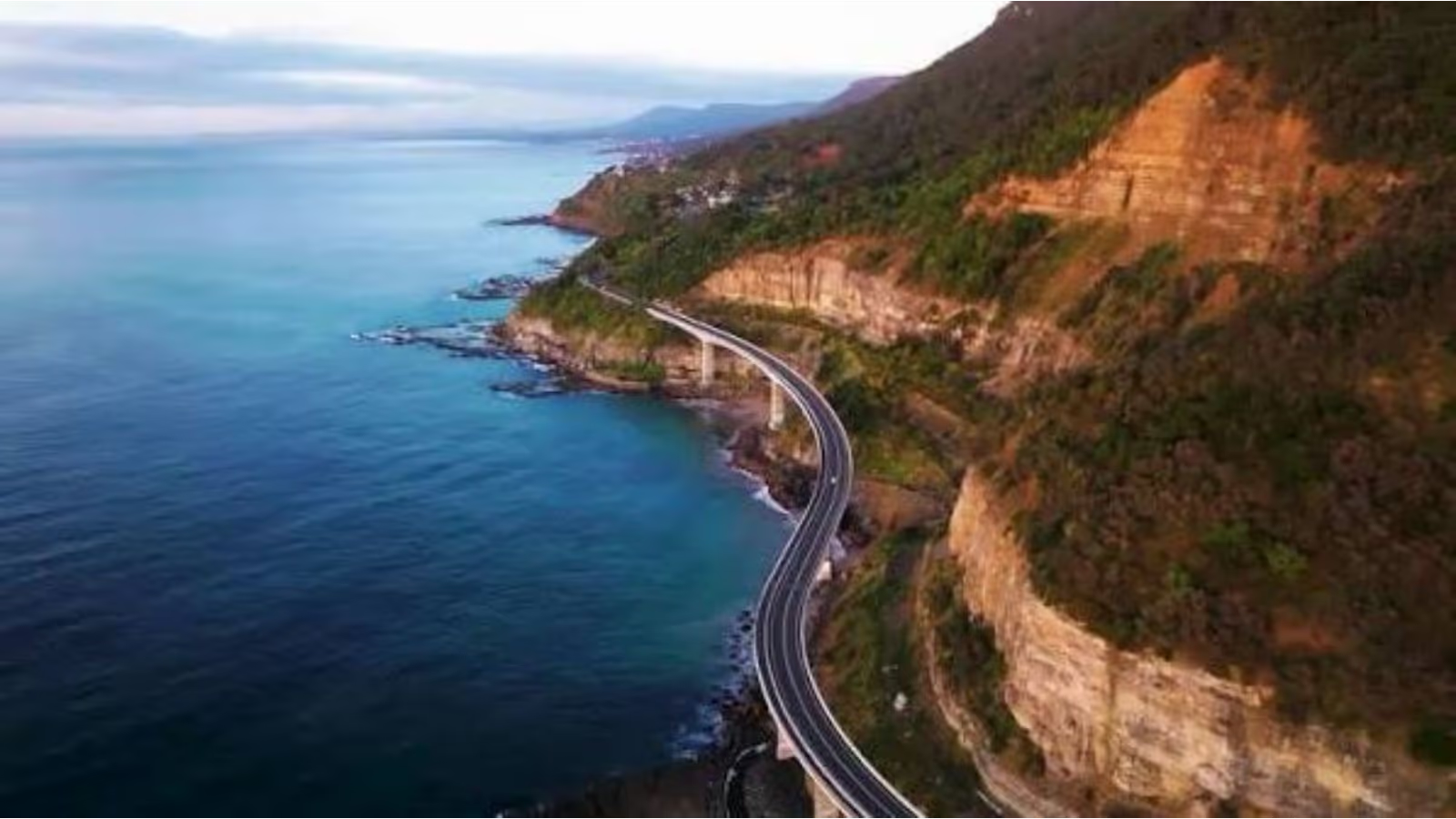
Highway 1 Big Lap Guide
14,500km around Australia — when and how to plan the Big Lap
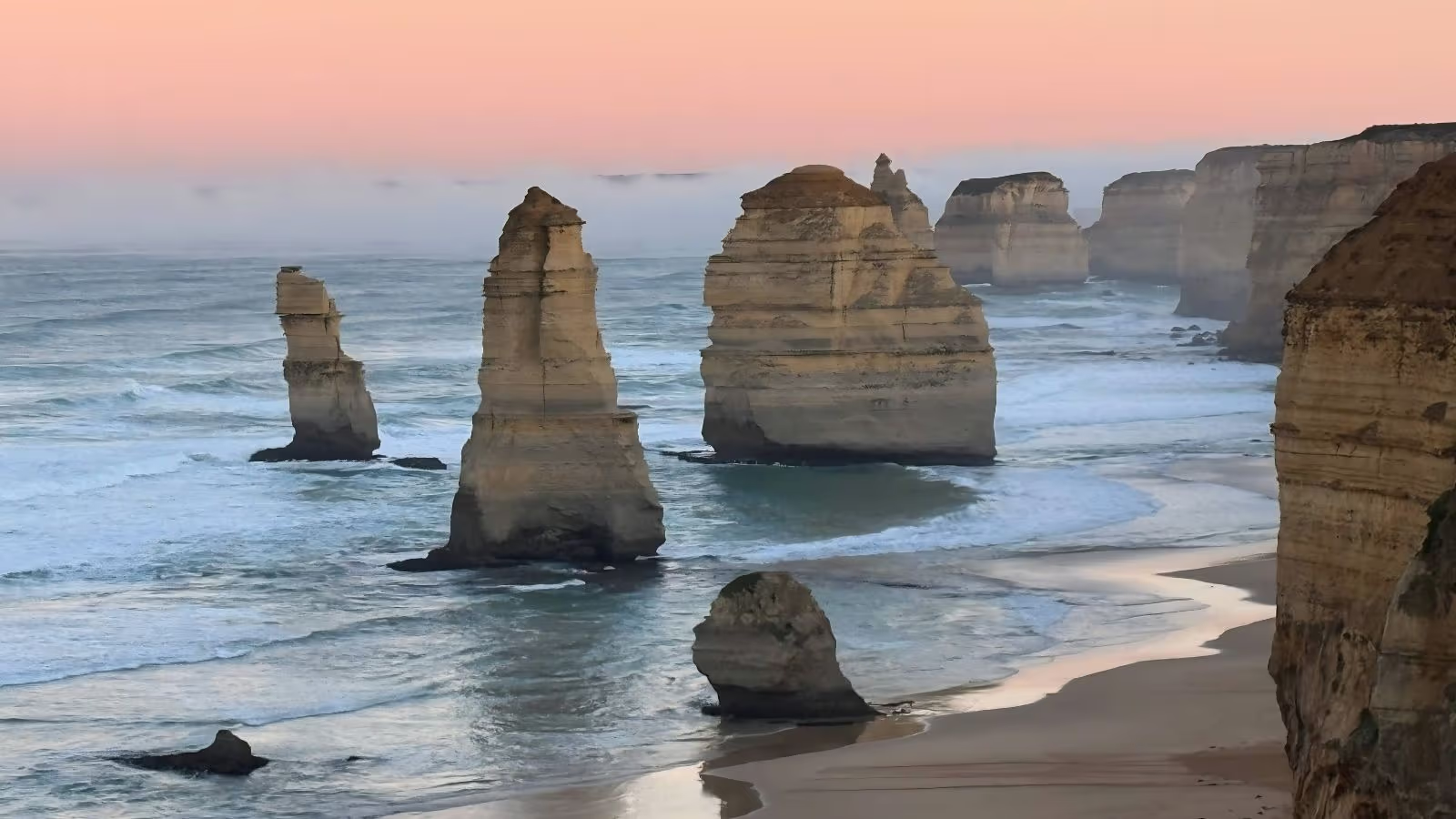
Great Ocean Road Itinerary
Complete 2–4 day self-drive guide — Apostles timing & hidden gems
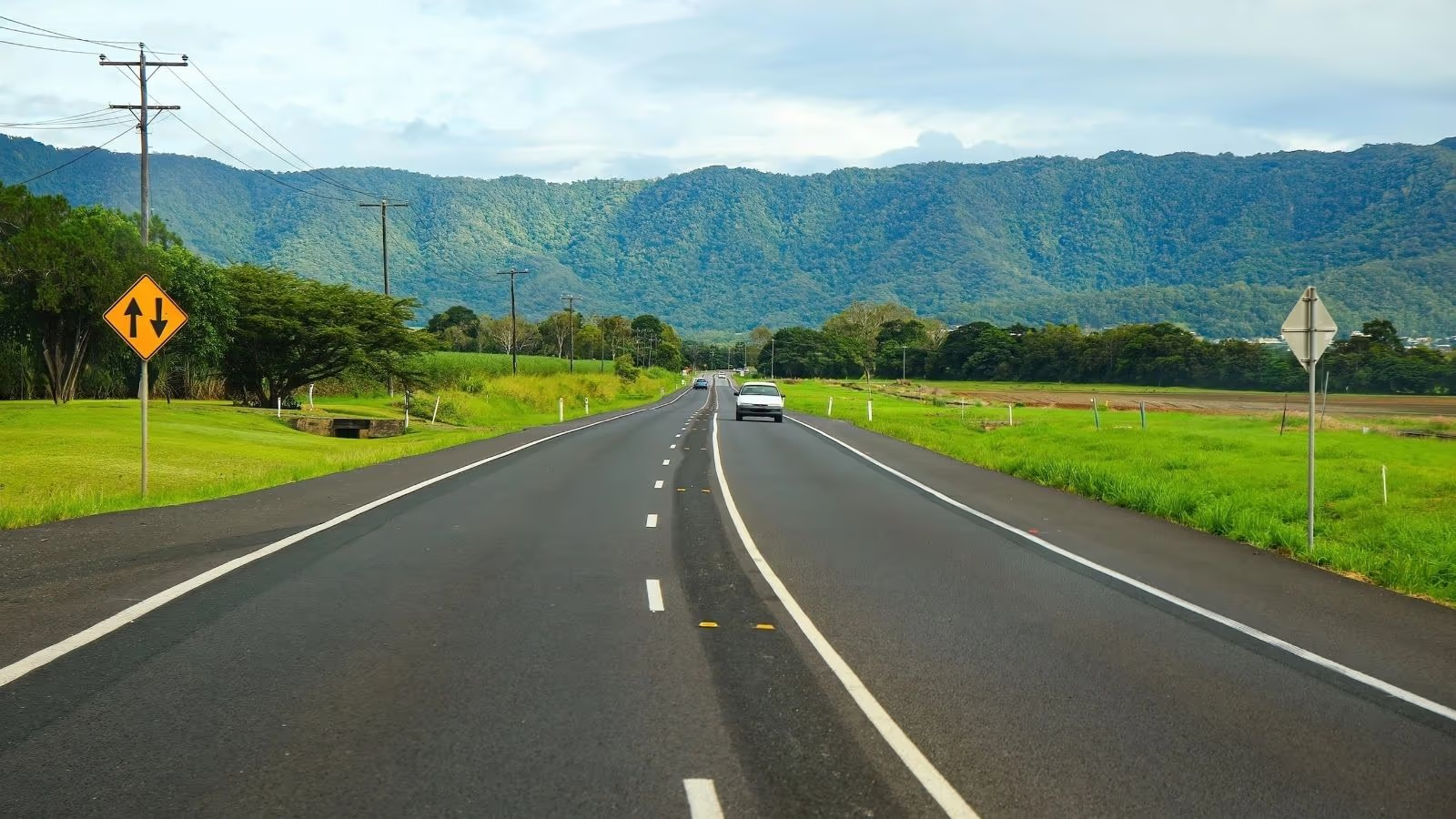
Brisbane to Cairns Guide
Queensland's Pacific Coast — 1,705km, 10 stops, seasonal timing guide

Queensland Wildlife Guide
Seasonal wildlife calendar for koalas, turtles, whales & more