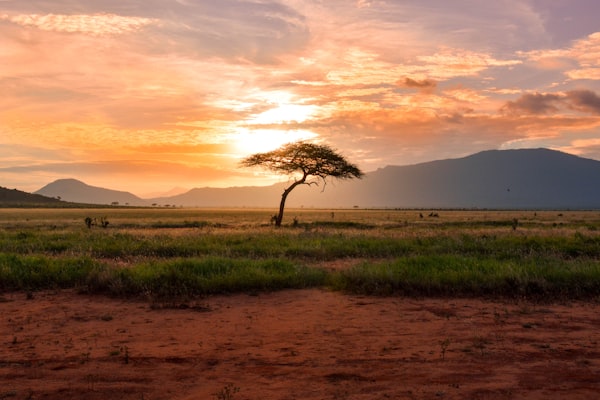
The largest intact volcanic caldera on Earth, holding 25,000 animals at the bottom. Eight thousand wildebeest calves born on a single plain on a single morning in January. The highest free-standing mountain in the world, its glaciers retreating, the summit cloud-free for 30 minutes at dawn. An Arab-Swahili island whose air still carries cloves. Tanzania is where the largest scale events in African wildlife and geography happen simultaneously.
Tanzania (Jamhuri ya Muungano wa Tanzania — the United Republic of Tanzania — 945,087 km² — 64 million people — the largest country in East Africa — formed in 1964 from the union of Tanganyika and the islands of Zanzibar and Pemba — bordered by Kenya and Uganda to the north, Rwanda, Burundi, and the DRC to the west, Zambia, Malawi, and Mozambique to the south, and the Indian Ocean to the east — the country contains approximately 28% of its total area as national parks and protected areas — the highest proportion of any country in Africa and one of the highest in the world) is where most experienced East Africa safari travellers end up when they ask themselves honestly which country they would choose if they could only visit one. The answer they give is usually Tanzania — and the reasons are architectural: the Serengeti (the largest and most intact savanna ecosystem on Earth), the Ngorongoro Crater (the most wildlife-dense enclosed area on Earth), Kilimanjaro (the highest free-standing mountain in the world), and Zanzibar (the Indian Ocean island whose 2,000 years of spice trade history are legible in every carved door in Stone Town). These are not the finest examples of their category. They are the category-defining instances — the things against which all other savanna ecosystems, all other calderas, all other volcanic massifs, and all other Swahili islands are compared.
Tanzania’s safari circuits: The Northern Circuit (Arusha as the base city — Tarangire National Park, Lake Manyara National Park, the Ngorongoro Crater and Conservation Area, and the Serengeti National Park — the circuit that most Tanzania visitors follow and that provides the core of the Tanzania wildlife experience). Mount Kilimanjaro (the trekking objective — the seven established routes — the summit attempt — addressed in the dedicated section below). Zanzibar (the island extension — Stone Town, the spice tour, Nungwi and Kendwa beaches, the Mnemba Atoll diving). The Southern Circuit (the Nyerere National Park (formerly Selous — the largest protected area in Africa at 54,600 km²), Ruaha National Park (the remote and vast southern park — the largest in Tanzania), and Mahale Mountains National Park (the chimpanzee trekking on the shores of Lake Tanganyika — the most remotely located chimpanzee habitat accessible to visitors in Tanzania)).
Tanzania rewards visitors who see the country as a sequence rather than a collection of stops — the northern circuit, the mountain, and the island each completing what the others begin.
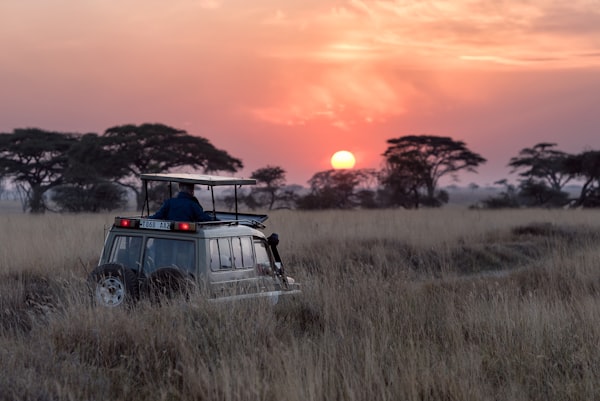
The Serengeti National Park (Siringit in the Maasai language — “endless plains” — 14,763 km² of savanna, woodland, and kopje (the Swahili term for the granite inselbergs — the ancient exposed volcanic rock outcrops that rise from the plain — the preferred resting and lookout platform of lion prides and the hunting perch of the martial eagle) in northern Tanzania — the Tanzanian portion of the 40,000 km² Mara–Serengeti ecosystem — the most intact large mammal ecosystem on Earth — established as a national park in 1951 — UNESCO World Heritage since 1981) is the anchor of the northern circuit and the reason Tanzania is on the itinerary of most Africa-bound Australian travellers. The Serengeti is distinct from the Masai Mara in three specific ways that the guide explains on the first drive: scale (the Serengeti is approximately 10 times the size of the Masai Mara National Reserve — the horizon in the central Serengeti (the Seronera area) is significantly further away and the wildlife is more dispersed), the calving season (the January–February calving season in the southern Serengeti (the Ndutu area on the Serengeti–Ngorongoro border) is the Tanzania-specific chapter of the migration that has no equivalent in Kenya — addressed below), and the kopjes (the granite rock formations — the Simba Kopje, the Moru Kopje — the large resident lion prides that use these specific rock formations as territorial anchors — the guide knows which pride uses which kopje and why). The Serengeti balloon safari (the hot air balloon from the Seronera camps at 6am — the Serengeti at dawn from 300m — the scale of the plains visible in a way that is not possible from a vehicle — the wildebeest column stretching to the horizon during the migration). The northern Serengeti (the Kogatende area — the Tanzanian side of the Mara River crossings from July through September — the same crossings as the Masai Mara but from the Tanzania bank — fewer vehicles per crossing point — the guide is specific about the difference in experience).
The Ngorongoro Crater (the Ngorongoro Conservation Area — UNESCO World Heritage since 1979 — the collapsed caldera of an ancient volcano — the caldera formed approximately 2–3 million years ago when the Ngorongoro volcano (estimated at approximately 4,500m when active — comparable in size to Kilimanjaro) collapsed inward as its magma chamber emptied — the resulting caldera: 19.2km across (the largest intact caldera in the world), 600m deep at the rim, floor area of 260 km²) is the most wildlife-dense enclosed area on Earth. The floor of the crater supports approximately 25,000 large mammals — a population that cannot leave the crater through the steep walls in significant numbers, creating an extraordinary concentration. The species: lion (the densest lion population in Africa — 60–70 individuals in the crater), spotted hyena (the most numerous large carnivore — approximately 400 — the guide explains the hyena’s matriarchal social structure and the misconception of hyena as a scavenger (it is a highly effective hunter — the lion in the Ngorongoro Crater is as likely to steal from a hyena kill as the reverse)), elephant (the large old bulls — the male elephants who have descended into the crater alone — the tuskless state of some individuals reflecting the decades-long genetic impact of the poaching crisis of the 1970s–80s which specifically removed the large-tusked individuals from the breeding population), black rhinoceros (the Ngorongoro black rhino (Diceros bicornis michaeli — the eastern black rhino subspecies — approximately 26–32 individuals within the crater — the highest surviving density of black rhinos in the world — the guide uses the specific tracking protocol — the KWS/NCAA anti-poaching unit scouts confirm the rhino location before the guide proceeds — the sighting is not guaranteed but the probability at Ngorongoro is higher than anywhere else on Earth)), and the flamingos on Lake Magadi (the shallow alkaline lake at the crater floor — the pink line visible from the crater rim before descent — the lesser flamingo (Phoeniconaias minor) and the greater flamingo (Phoenicopterus roseus) — the colony at peak ranges from 20,000 to 1 million depending on the alkalinity of the lake and the presence of the blue-green algae Spirulina arthrospira that the lesser flamingo specifically filters from the water).
Tarangire National Park (2,850 km² — in the Manyara Region — 120km south of Arusha — the first park on the standard northern circuit route from Arusha) is the park that most Tanzania visitors arrive at first and that most underestimate — expecting a warm-up act and receiving something more specific and eccentric than any subsequent park. The Tarangire’s defining characteristic is the combination of ancient baobab trees (Adansonia digitata — the “tree of life” — the Tarangire baobabs are among the oldest and largest in East Africa — specimens estimated at 1,000–2,000 years old — the baobab stores water in its trunk (up to 120,000 litres in the largest individuals) — the trunk circumference of the largest Tarangire specimens exceeding 20m — the guide photographs visitors beside the baobab to provide scale, a practice the guide has performed approximately 4,000 times and which produces a specific consistent expression of disbelief in the visitor). The elephant concentration in the dry season (June–October — the Tarangire River is the only permanent water source in the area during the dry season — the elephant population migrates from the surrounding areas to the river, producing concentrations of 200–500 elephants visible from a single vehicle position on the river bank — the greatest density of elephants per km² accessible from a road in Tanzania during this period). The birdlife (Tarangire has the highest bird species diversity of any northern circuit park — over 550 species recorded — the dry woodland habitat (the miombo and acacia woodland — the mix of grass and canopy that produces the specific light condition where the guide finds the nightjars asleep on the road). The Silale Swamp (the year-round wetland in the northeast of the park — the buffalo herds (2,000–5,000 at peak dry season — the largest buffalo concentrations in the northern circuit), the pythons in the sausage tree (Kigelia africana) along the swamp edge — the guide knows the specific trees).
Lake Manyara National Park (330 km² — 126km south of Arusha — in the Great Rift Valley — the park wedged between the Rift Valley escarpment (the western wall — rising 600m above the park floor) and the alkaline Lake Manyara (the lake covering approximately 230 km² at peak levels — 75% of the park area — the Lake Manyara alkalinity produced by the volcanic geology of the Rift Valley — the same chemistry that produces the Ngorongoro Lake Magadi flamingo population but here at the scale of an entire lake)) is the park most commonly allocated a half-day on the northern circuit — a decision that the guide consistently describes as adequate for a tick on an itinerary and inadequate for actually seeing what makes Manyara singular. The tree-climbing lions (the Lake Manyara lion population (Panthera leo — the same species as all African lions) that has developed the specific habit of climbing the large fig trees and mahogany trees along the lake shore — the behaviour is most commonly observed in the early morning when the lions have finished hunting and seek a platform above the ground — multiple theories for the behaviour: escape from the tsetse fly (the ground-level tsetse concentration in the lakeshore woodland makes resting on the ground uncomfortable), the view (the tree provides a clear sightline across the woodland), or cultural learning (the behaviour may have been developed by one individual and learned by the pride — the guide presents all three theories without declaring a winner because the science has not declared one). The flamingo colony on Lake Manyara (the lesser and greater flamingo — the pink line on the lake visible from the top of the escarpment on the road down into the park — the colony numbers vary from 10,000 to several hundred thousand depending on the lake level and the Spirulina bloom). The hippo pools (the hippo pools at the Simba camp junction — 400–600 hippos in the deep channel pools — the guide stops here for 20–30 minutes — the hippo territorial disputes (the yawning threat display — the lower canine teeth (up to 50cm) visible in full — the guide identifies the dominant bull by the scarring on the flank)).
Zanzibar (the Swahili “Unguja” — the main island of the Zanzibar Archipelago — 1,651 km² — 50km west of the Tanzanian mainland — the island whose position in the Indian Ocean made it the dominant trade centre of East Africa for most of the 2nd millennium CE — the Arab, Persian, Indian, and Chinese merchant networks intersecting at Stone Town and producing a cultural and architectural synthesis unlike anywhere else in Africa — the island ruled by the Sultanate of Oman from 1699 until 1964 — the clove production (introduced by the Sultan Seyyid Said in 1818 — Zanzibar at its peak producing 90% of the world’s cloves — the clove economy that made the Sultanate extraordinarily wealthy — the 19th-century slave trade (Zanzibar was the largest slave market in the Indian Ocean world — the slave trade abolished in 1873 under British pressure — the Old Slave Market in Stone Town, now the Anglican Cathedral, being the most historically weighted architectural site on the island)) is the Indian Ocean extension that most Tanzania safari visitors add as a 3–4 day beach and culture component. Stone Town (UNESCO World Heritage since 2000 — the maze of narrow streets and whitewashed coral-rag buildings with overhanging carved wooden balconies and the most concentrated collection of carved wooden doors outside Lamu — the Zanzibar door (the specifically Zanzibar style — heavier than the Lamu door, with brass studs (the studs historically used to strengthen the door against elephant charging — a practice brought from the Persian Gulf where elephant attacks on city gates were a genuine medieval concern) and more deeply carved relief panels)). The spice tour (the clove plantations of the island interior — the guide’s approach: the spices presented to the group by smell before identification — most visitors to Zanzibar’s spice tour correctly identify approximately 2–3 of the 12 spices presented — the clove (identified immediately by everyone — the entire island smells of it), the vanilla (identified by approximately 60% of groups in its unprocessed green pod form), and the nutmeg (identified by approximately 30% of groups as a specific seed rather than a shaker)). Freddie Mercury’s birthplace: the house at 26 Kenyatta Road in Stone Town where Farrokh Bulsara was born in 1946 — the guide mentions this when passing — the guide’s personal position on Mercury’s place in Zanzibar’s cultural history is that it is significant and consistently underemphasised in the Zanzibar tourism narrative).
The southern circuit (the Nyerere National Park (formerly the Selous Game Reserve — renamed in 2019 for Tanzania’s first president Julius Nyerere — the largest protected area in Africa at 54,600 km² — larger than Switzerland — the photographic safari area of approximately 5,000 km² in the northern section of the reserve is accessible to visitors — the remaining area is a hunting concession (legal trophy hunting — the political and conservation context of which the guide addresses directly)) and Ruaha National Park (20,226 km² — the largest national park in Tanzania — the remote dry woodland ecosystem of the south-central region — the Great Ruaha River — the baobab and borassus palm woodland — the wildlife: the Ruaha lion (the largest lion in Tanzania — the Ruaha lions are measurably larger in body size than the Serengeti lions — a well-documented pattern with multiple proposed explanations related to prey size, temperature, and genetic isolation), the Ruaha wild dog pack (one of the highest densities of African wild dog in East Africa), and the large elephant population (approximately 10,000 elephants in the Ruaha ecosystem — the highest density in the southern circuit))) provides the Tanzania experience for visitors who have already done the northern circuit and want the country without the other vehicles. The Nyerere boat safari (the boat on the Rufiji River — the largest river in Tanzania — the hippopotamus (the highest density of hippos in Africa — the Rufiji River holding approximately 2,000 hippos in the photographic zone), the Nile crocodile, the water monitor, the African fish eagle, and the boat’s proximity to water level (the hippo at 3 metres is experienced differently from a vehicle at 2 metres of road clearance — the guide is specific about this distinction)). Mahale Mountains National Park (on the eastern shore of Lake Tanganyika — accessible only by charter flight and boat — the chimpanzee (Pan troglodytes schweinfurthii — the eastern chimpanzee — the habituated M-Group at Mahale — 60+ individuals — the trekking to find the group (1–4 hours through the mountain rainforest — the guide hears the chimpanzee vocalisations before the group sees them — the 1-hour permitted visit — the most remote chimpanzee encounter accessible to visitors in Tanzania)).
Arusha (the city — population approximately 500,000 — at 1,416m on the southern slopes of Mount Meru — 80km from Kilimanjaro International Airport — 50km from Kilimanjaro’s starting gate at the Marangu or Machame trailheads — the safari capital of Tanzania and the operational centre for all northern circuit itineraries — the city where the guide briefing happens, the safari vehicle is parked, and the correct nyama choma restaurant is located) is treated by most visitors as a transit point between the airport and the bush, which means most visitors miss the 2–3 hours that reward a specific curiosity: the Arusha Cultural Heritage Centre (the largest collection of Tanzanian art, Maasai and Chagga cultural objects, and contemporary East African painting outside Dar es Salaam — the guide selects 4–5 objects and provides context — the total time: 45 minutes — the result: the visitor enters the Maasai lands of the Serengeti having had a 45-minute Maasai cultural introduction that changes everything they subsequently observe). The Arusha National Park (137 km² — the smallest of Tanzania’s northern circuit parks — but containing the complete Arusha ecosystem: the Momella Lakes (the alkaline lakes with flamingo), the mountain forest (the black-and-white colobus monkey, the Defassa waterbuck, the buffalo, the giraffe — the only national park in Tanzania where giraffe are visible), and the slopes of Mount Meru (4,566m — Tanzania’s second-highest mountain — visible from Arusha on a clear morning — the Meru trekking circuit (3–4 days — more difficult in terms of gradient than Kilimanjaro but less altitude sickness risk (the summit is 1,300m lower) — the view of Kilimanjaro from the Meru summit is the finest view of Kilimanjaro available)).
The most common question Cooee Tours receives from visitors planning an East Africa trip is: “Should I go to Kenya or Tanzania?” The honest answer requires distinguishing between the shared ecosystem (the Mara–Serengeti) and the country-specific experiences. The Masai Mara and the Serengeti are the same ecosystem — the boundary line runs through the middle of the wildebeest migration’s territory. What differs: Kenya offers the private conservancy model (night drives, off-road driving, fewer vehicles per sighting — all unavailable in Tanzania’s national parks), and the Amboseli and Samburu ecosystems (the Samburu Special Five have no equivalent in Tanzania). Tanzania offers the Ngorongoro Crater (the most wildlife-dense area on Earth — no equivalent in Kenya), the calving season in the Ndutu area of the southern Serengeti (no equivalent in Kenya), Kilimanjaro (no equivalent in Kenya), the southern circuit (Nyerere, Ruaha, Mahale — no equivalent in Kenya), and Zanzibar (Lamu is the Kenyan coastal equivalent but smaller and less accessible). The guide’s position: a 14-day East Africa trip should include both countries. The Cooee Tours grand circuit covers both.
Kilimanjaro is the most climbed high mountain in the world. It is also the one most likely to turn its climbers back before the summit — not for technical difficulty but for altitude sickness that a longer, slower ascent would have prevented.
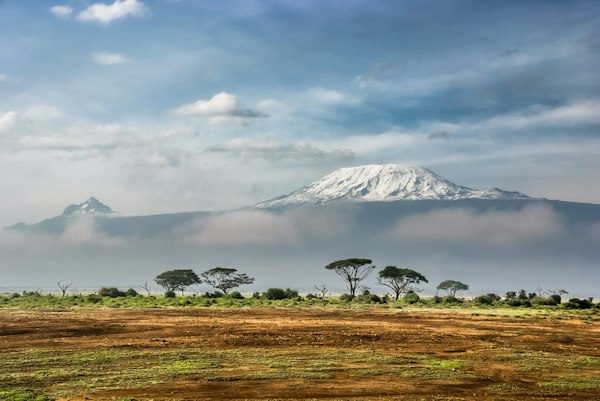
Mount Kilimanjaro (5,895m — the highest mountain in Africa and the highest free-standing mountain in the world — “free-standing” meaning it rises from the surrounding plain without being part of a mountain range — the base of Kilimanjaro is at approximately 900m and the summit is 5,895m above sea level, giving a visual rise of approximately 5,000m from the surrounding Amboseli and Maasai steppe that makes the mountain appear impossibly large from the approach) is a dormant stratovolcano consisting of three distinct volcanic cones: Kibo (5,895m — the highest — the summit that trekkers attempt — the crater rim of the ancient Kibo caldera — Uhuru Peak (“uhuru” meaning “freedom” in Swahili — the summit named at Tanzanian independence in 1961) at the highest point of the crater rim), Mawenzi (5,149m — the sharply eroded second cone — a technical climbing objective — not accessible to trekkers), and Shira (3,962m — the oldest and most eroded cone — now a plateau that the Lemosho and Shira routes cross on the approach). The receding glaciers: Kilimanjaro’s icecap (the ice fields and glaciers visible on the summit crater rim and the Kibo cone) has lost approximately 85% of its ice extent since 1912 — the current trajectory suggests the remaining ice may be gone by 2040–2060 — the guide discusses the Kilimanjaro glacier recession as the most visible single instance of climate-driven change available to visitors at the current time (the before-and-after photographs taken from the same position show the change unambiguously — the guide carries these in his phone).
There are seven established Kilimanjaro trekking routes — each with different length, approach side, and acclimatisation profile. The summit success rate is directly correlated with the number of days on the mountain (the longer routes provide more acclimatisation time — more acclimatisation = less altitude sickness = higher summit success). The four routes most commonly offered: Marangu Route (“the Coca-Cola Route” — the only route with permanent hut accommodation (bunk beds in A-frame huts — shared with other groups) — the shortest route — 5–6 days — the lowest summit success rate of the main routes (approximately 50–60% at 5 days) — the guide recommends against Marangu unless the huts are specifically required for a medical reason (the huts are used by operators as a cost reduction and not a quality upgrade)). Machame Route (“the Whiskey Route” — the most popular — 6–7 days — tent camping — the most scenic of the main routes — the Shira Plateau crossing, the Lava Tower acclimatisation day (4,600m — sleep low, walk high — the key acclimatisation principle), the Barranco Wall (the most dramatic climbing section — no technical gear required — hands and feet on the rock — the guide is in front and behind simultaneously — this is not possible — the guide is in front). Lemosho Route (8 days — the most gradual acclimatisation profile — the highest summit success rate (approximately 85–90% — the guide’s personal success rate on Lemosho over 200+ summits is 92%) — the correct route for visitors prioritising the summit. Rongai Route (6–7 days — the only route that approaches from the north — the drier, quieter route — the correct choice for visitors doing the safari-to-Kilimanjaro sequence whose time is inflexible and who have a 6-day window for the mountain).
Altitude sickness (Acute Mountain Sickness — AMS — the primary reason that approximately 30–50% of Kilimanjaro trekkers do not reach the summit) is a physiological response to the reduced partial pressure of oxygen at altitude. At 5,895m, the available oxygen is approximately 50% of what is available at sea level. AMS typically produces headache, nausea, fatigue, and disrupted sleep — beginning at approximately 3,000m for susceptible individuals and affecting most people to some degree above 4,000m. The key principle: “pole pole” (slowly, slowly — the guide’s most repeated instruction — the Swahili phrase used on every Kilimanjaro route by every guide — the pace that feels painfully slow at 3,000m is the correct pace at 5,000m — the guide sets the pace and does not negotiate it upward). Acetazolamide (Diamox) (the most commonly prescribed altitude medication — inhibits the renal enzyme carbonic anhydrase, producing a metabolic acidosis that stimulates breathing — the effect is real and well-documented — the side effects (tingling fingers and toes, increased urination, altered taste of carbonated drinks) are common — the guide recommends discussing Diamox with your doctor before departure). The turn-around decision: the guide makes the final call on the summit attempt at approximately 5,750m (the Hans Meyer Cave area on the final ascent) if a trekker is showing severe AMS signs (vomiting, ataxia (loss of coordination), severe headache unresponsive to ibuprofen). This is not a group decision. The guide’s assessment is final and the guide is not wrong about this. The guide has made this call 12 times. The trekker has thanked the guide on each of the 12 occasions.
The summit night: the standard Kilimanjaro summit attempt departs from the high camp (Barafu Camp — 4,673m — or Kibo Camp on the Marangu route) at approximately midnight. The reasons for the midnight departure: the volcanic scree above the high camp (the loose, rough rock that is powdery dust at midday becomes firm and easier to walk on when frozen at midnight temperatures (typically −10 to −20°C at 5,000m in winter — June through August)), and the timing (the 6–7 hour ascent from high camp to the crater rim (Stella Point — 5,739m) arriving at dawn). The summit dawn: the sun rising over the east African plain as the trekker arrives at Stella Point — the shadow of Kilimanjaro visible to the west — the first light on the glaciers (the Northern Icefield — the remaining ice from the summit caldera floor). The further 45 minutes from Stella Point to Uhuru Peak (5,895m — “uhuru” = freedom in Swahili — the sign at the summit (the original hand-painted wooden sign replaced by the current metal sign in 1989 — the guide is photographed at this sign several hundred times per year and still finds a compositional angle he has not tried before) — the time at the summit is typically 15–30 minutes (altitude, cold, and the descent requirement limit the visit) — then the 5–6 hour descent to the lower camp for lunch and one more night). What the guide says at Uhuru Peak: “Look around you. This will feel like it happened to someone else tomorrow. Pay attention right now.”
The calving season (the wildebeest calving in the southern Serengeti — the Ndutu area on the Serengeti–Ngorongoro border — January and February — approximately 8,000 wildebeest calves born per day at peak) is the Tanzania-specific chapter of the Great Migration that has no equivalent in Kenya and that most East Africa visitors do not know exists. The wildebeest calves stand within 5–7 minutes of birth and can run at full speed within 15 minutes. They must — the Ndutu area during calving season has the highest concentration of predators per square kilometre in Africa — the lion, cheetah, leopard, hyena, and wild dog all converge on the calving plain, drawn by the simultaneous availability of the most vulnerable prey they will encounter in any season.
Tanzania is also where the Ngorongoro Crater sits — a geological fact so extreme that it took the early 20th-century European explorers several visits to accurately measure what they were looking at — the caldera that holds 25,000 animals on its floor and looks from the rim like something that should not be taken literally. Tanzania asks visitors to adjust their sense of what is real — and the country’s consistent ability to produce experiences that seem excessive in description and then prove understated in person is the quality that makes returning visitors the largest share of its tourism.
Tanzanian food divides cleanly between the mainland (the nyama choma, ugali, and safari camp tradition shared with Kenya) and the Zanzibar table (the most complex food culture in East Africa).
Zanzibar mix (the street food plate sold at the Forodhani Gardens Night Market on Stone Town’s waterfront — the market that operates from sundown to approximately 11pm — the mix: urojo (the Zanzibar “soup” — a spiced coconut milk broth with tamarind, lime, and an assortment of the market’s other components — the guide describes urojo as “the most deliberately untranslatable dish in East Africa — it is simultaneously a soup, a sauce, a flavour delivery mechanism, and a commitment to the cook’s personal vision of what spice means”) plus the bhajia (the spiced potato fritter — the Zanzibar variant lighter than the Indian original — the cumin and turmeric in the batter — fried to order), the cassava chips (the thick-cut cassava (Manihot esculenta) fried in coconut oil — the specific fat that distinguishes Zanzibar fried food from mainland fried food — the coconut oil temperature at the correct market stall is higher and more stable than at the incorrect stall — the guide identifies the correct stall by the queue rather than by any signage), and the octopus (the grilled octopus — caught locally — the Zanzibar octopus fishing tradition — the guide requests the tentacle section specifically). The Forodhani market sequence: arrive at sunset (6:30pm — the light on the Old Fort behind the market), eat at the market for 90 minutes (the guide navigates — the group does not split up — the market is small but disorienting at night), sit by the waterfront with the Kilimanjaro beer as the market noise diminishes.
Zanzibar biryani (the Zanzibar version of the rice dish — distinct from the Indian biryani in its specific spice combination (the rosewater — the cardamom — the ghee — all brought by Omani traders in the 17th–19th centuries — combined with the Zanzibar local spices (the clove, the local cumin, the dried lime (loomi — a Persian ingredient that arrived with the same Arab trade networks) — the Zanzibar biryani is the most complex rice dish in East Africa and is prepared in the long-cook tradition: the spiced meat is cooked separately, the rice parboiled to 70%, the two combined in a sealed pot and baked (“dum” cooking — the steam from the meat cooking the rice to its final texture — the pot sealed with dough or a wet cloth). The biryani is a special-occasion dish on Zanzibar (weddings, Eid, Friday lunches after the mosque) — available at restaurants throughout the week but consumed by locals primarily at the specific social occasions that justify its 4–6 hour preparation time. The guide’s recommendation: the biryani at Emerson Spice restaurant in Stone Town (the rooftop — the view over the old town — the specific biryani that the chef has been refining for 15 years — the guide does not make other restaurant recommendations within Stone Town — this is the one).
Zanzibar spice cuisine (the cooking tradition of the islands — structured around the spice production that made Zanzibar economically dominant in the Indian Ocean world from the early 19th century) uses the island’s own production as the cooking medium rather than as a seasoning. Cloves (Syzygium aromaticum — the dried flower bud — Zanzibar produced 90% of the world’s cloves at the height of the Sultanate economy in the 19th century — the clove is used in Zanzibar cooking as both a spice (the biryani, the pilau) and an aromatic (the clove tea — chai ya karafuu — the clove tea that is the specific olfactory signature of Stone Town in the early morning)). Vanilla (Vanilla planifolia — the green pod, unprocessed — the guide splits a pod on the spice tour and asks the group to smell the interior before and after — the unprocessed pod smells nothing like the processed extract and the comparison is the spice tour’s most instructive moment). Cinnamon (the bark of Cinnamomum verum — the guide distinguishes Ceylon cinnamon (the true cinnamon — thin, layered — the Zanzibar production) from cassia (the supermarket cinnamon — single thick bark — more pungent — not the same ingredient)). Coconut: the base fat of the entire coastal cuisine — the coconut milk, the coconut cream, the coconut oil — the guide’s cooking class on Zanzibar opens with cracking the coconut, extracting the meat, grating it by hand, and pressing the milk — the process taking 20 minutes and producing approximately 200ml of fresh coconut milk that is categorically different from the canned alternative.
Tanzanian mainland food shares the ugali and nyama choma tradition with Kenya (addressed in the Kenya guide — the basic structure is the same — the stiff maize meal and the roasted meat) with the additional presence of wali wa nazi (coconut rice — the rice cooked in coconut milk rather than water — the coastal influence that extends inland — the specific flavour (the slight sweetness of the coconut fat in the rice — the rice grains separate and slightly glossy — the smell of coconut milk in steam) makes wali wa nazi more suitable for the companion dishes of the coastal cuisine than plain boiled rice). Chipsi mayai (the Tanzanian street food — the “chips mayai” — the French fries embedded in a fried egg omelette — the combination cooked to order on the flat griddle — the fries (chipsi) folded into the beaten egg (mayai) and poured onto the hot oil — the result: a fried potato omelette — served with ketchup and chilli sauce — the guide’s explanation: “it is not a food that recommends itself in description — the correct approach is to eat it at the Arusha market on Day 1 of the safari and form an opinion from an empirical position rather than an aesthetic one”). The safari camp cuisine follows the same pattern as Kenya (the bush breakfast, the sundowner, the dinner under stars) — the specific variation: the Tanzanian camp cook’s use of pilipili hoho (bell pepper) and coconut milk in meat dishes reflects the coastal Zanzibar influence that has moved inland through the safari camp workforce.
Kilimanjaro Premium Lager (the Tanzanian lager produced by the Tanzania Breweries Limited at the Arusha plant — the label: the mountain — 5,895m of volcanic massif on a beer bottle — the specific light lager that is correct at the sundowner in the Serengeti for reasons that have nothing to do with the flavour and everything to do with the label being accurate to the landscape). The summit tradition: Kilimanjaro climbers traditionally drink a Kilimanjaro beer at the summit — which requires carrying a can up 5,895m — which the guide does not recommend for the weight — the beer is instead consumed at the base camp restaurant at Marangu Gate or Machame Gate on the descent — the guide drinks his in one go and does not make a performance of it — the trekkers take photographs and drink slowly and also do not make a performance of it — this is the correct outcome. Tusker (the Kenyan lager — available throughout Tanzania and frequently the only cold lager at smaller bush camps — the elephant on the label — named for the elephant that killed one of the founders of the Kenya Breweries Ltd in 1923 — the guide tells this story at the sundowner when the elephant is within 100 metres of the vehicle — the timing is deliberate). Konyagi (the Tanzanian gin — the national spirit — the local gin made from sugarcane — the correct use is in a Konyagi tonic with a lime squeezed from the garden of the Stone Town hotel at the end of the Zanzibar spice tour — the guide recommends this sequence specifically).
Kilimanjaro camp cuisine (the food on the mountain — prepared by the camp cook (the designated porter who carries the kitchen box and cooks the three daily meals — the kitchen box containing the gas stoves, the pots, the provisions loaded by the operator before departure)) is consistently one of the most surprising aspects of the Kilimanjaro experience for trekkers who arrive expecting trail mix and instant noodles. The three daily meals on a standard Kilimanjaro itinerary: breakfast (porridge (the camp cook’s porridge — made with rolled oats, hot milk, and honey — the first morning this seems excessive — by the fourth morning it is the most anticipated part of the day), eggs to order, toast made on the camp stove lid, fruit (banana and passion fruit — the provisions loaded in Moshi), tea and coffee (the guide’s specific instruction to the cook: “the tea first — then the coffee — then the hot water bottles for the sleeping bags tonight”)), lunch (served on the trail — the packed lunch box — sandwich, fruit, energy bar, juice — eaten at the lunch rock (the specific flat-topped boulder that the guide has identified as the correct midway stopping point on each route from 200 ascents)), and summit night food (the hot soup at 11:30pm before the midnight departure — the guide’s position: “eat all of the soup — the altitude will suppress your appetite completely above 5,000m — this is the last hot food before the summit — eat the soup”).
From a 5-day northern circuit focus to Kilimanjaro ascents and the full 15-day Tanzania circuit — designed around the correct seasons, the right routes, and the specific wildlife knowledge the country demands.
The complete northern circuit in 7 days — all four parks in the correct order and with the correct allocation. Day 1: Arusha (Cultural Heritage Centre · nyama choma dinner · briefing). Day 2: Tarangire (baobabs · dry-season elephants at the river · Silale Swamp buffalo · the pythons in the sausage trees). Day 3: Lake Manyara (tree-climbing lions · hippo pools 400–600 · flamingo colony · Rift Valley escarpment). Days 4–5: Serengeti (fly from Arusha · Seronera area · kopje lion prides · cheetah on the plains · leopard in the acacia woodland · migration position assessed daily). Day 6: Ngorongoro Crater descent (the 600m descent to the crater floor · black rhino tracking with NCAA ranger · lion pride at the crater lake · Lake Magadi flamingos). Day 7: crater rim sunrise · drive back to Arusha · fly home.
The calving season at Ndutu — the Tanzania-exclusive chapter of the Great Migration — available only in January and February. The Ndutu area (the Serengeti–Ngorongoro border zone — the specific short-grass plains where the wildebeest calve in their millions — the grass is short because of the specific soil nutrient density that makes the Ndutu plain the nutritionally richest calving ground available to the migration). The daily game drive structure: 6am departure · the calving plain · the calves within hours of birth standing and walking · the predator concentration (cheetah, lion, wild dog, hyena — all present simultaneously on the calving plain — the guide’s observation that “the calving plain in January is the only place in Africa where you can watch four different predator species actively hunting within view of each other without moving the vehicle”). The Ndutu marsh (the acacia woodland lake — the hippo pool — the yellow-billed stork · the guide’s secondary speciality is birds and January is when the migratory shore birds are present at the marsh). Ngorongoro Crater Day 5 before fly out. January–February only — the calving season is not extendable.
The Ngorongoro Crater in 2 days — the standard northern circuit allocation (1 crater descent) is insufficient for a site of this calibre. Two crater descents (one per day) give the guide access to both the morning predator activity (the lion pride from the overnight hunt — the hyena returning from the kill — the black rhino in the Lerai Forest in the early morning) and the afternoon light (the flamingo colony at Lake Magadi in the warm afternoon light — the orange filter — the guide positions the vehicle with the sun behind the group for the flamingo shot). Day 1: morning descent · black rhino tracking with NCAA ranger (the specific tracking protocol — the ranger’s radio — the approach — the sighting if the rhino is cooperative — the guide has never promised a rhino and has delivered a sighting on approximately 85% of crater days in the past decade). Day 2: sunrise from the crater rim (the shadow of the caldera walls on the crater floor as the sun rises — the guide calls this the most accurate available photograph of what the interior of a caldera looks like — technically correct but also a sunrise — both true simultaneously) · second crater descent · lion pride · Lake Magadi flamingo afternoon.
The Lemosho Route — 8 days — the highest summit success rate of all Kilimanjaro routes (approximately 85–90% — the guide’s personal rate 92% over 200+ Lemosho ascents) — the correct route for visitors who want to reach the summit. The approach from the western Shira Gate · the Shira Plateau (the highest trailhead approach at 3,500m — the plateau crossing — the lava towers — the first high-altitude morning). The key acclimatisation day: Lava Tower (4,600m — sleep low, walk high — the guide’s explanation of why descending 300m to sleep and re-ascending the next morning is more effective than staying at altitude — the physiology — the guide explains the physiology rather than just the protocol). The Barranco Wall (the hands-and-feet rock section — no technical gear — the guide is in front — the guide’s instruction before the wall: “focus on the rock immediately in front of you — not on where you are going — the route becomes obvious if you look at the rock you are stepping on rather than the route above”). Summit night midnight departure (−15°C — all layers — the guide’s pace) · Stella Point 5:45am (dawn over the Serengeti below) · Uhuru Peak 6:30am. The guide’s summit words.
The Machame Route — 7 days — the “Whiskey Route” — the most popular Kilimanjaro route and the most scenically diverse. The Machame Gate (1,800m) through the rainforest zone (the lush equatorial forest — colobus monkey, Kilimanjaro tree fern, the specific smell of wet moss and volcanic soil that the guide describes as “the smell of altitude beginning”) to the heath and moorland zone (the giant lobelia (Lobelia deckenii — the 3m rosette plant that looks invented — the guide’s standard comment: “it looks like a prop from a 1960s science fiction film — it is not — it has been on this mountain since before humans were on any mountain”) and the giant groundsel (Senecio kilimanjari)) to the Shira Plateau · the Lava Tower acclimatisation day · the Barranco Wall · the Karanga Valley approach · the Barafu High Camp (4,673m — rest — the guide’s summit night briefing at 9pm — the guide’s wake-up knock at 11:30pm — “soup first — then we go”). Summit night · Stella Point dawn · Uhuru Peak · the guide’s words. Descent via the Mweka Route (the standard Machame descent route — the fastest route down — the guide’s pace on descent is approximately 200% of the ascent pace — the trekker’s knees note this for approximately 48 hours afterwards).
Zanzibar — the spice island — the Swahili architecture — the beach — in 5 days. Fly Arusha or Nairobi to Zanzibar (ZNZ). Day 1: Stone Town (the carved door circuit · the Freddie Mercury birthplace at 26 Kenyatta Road · the Old Slave Market (now Anglican Cathedral · the guide’s most carefully prepared narrative: the slave trade context — the numbers, the trade routes, the 1873 abolition, and what the Cathedral being built on the exact site of the market was meant to symbolise · the spice market). Forodhani Night Market sunset (6:30pm · the urojo · the octopus · the cassava chips · the Kilimanjaro beer at the waterfront). Day 2: spice tour (12 spices by smell · the clove plantation · the vanilla pod split open · the coconut milk pressing · Swahili cooking class from the harvested spices). Day 3: Jozani Forest (the red colobus monkey (Piliocolobus kirkii — endemic to Zanzibar — approximately 3,000 remaining — the Zanzibar colobus is the most endangered primate in East Africa — the Jozani Forest protects the largest remaining population). Days 4–5: Nungwi Beach (the north coast · Indian Ocean swimming · sunset dhow at Nungwi lagoon).
The southern circuit — Tanzania’s least-visited and most remote safari experience. Fly Dar es Salaam–Nyerere (45min charter). Days 1–3: Nyerere National Park (the Rufiji River boat safari · 2,000 hippos in the photographic zone · the Nile crocodile at the sandbank · the African fish eagle · the waterside lunch · the guide’s identification of 40+ bird species from the boat in one afternoon). The walking safari (with armed ranger and guide · the approach to a buffalo herd on foot · the ranger’s positioning · the guide’s explanation: “on foot you understand the scale of a buffalo in a way you cannot from a vehicle — the vehicle makes you bigger — the foot makes the buffalo bigger — both of these facts are useful to have experienced”). Days 4–6: Ruaha National Park (fly Nyerere–Ruaha · the Great Ruaha River · the large lions · wild dog tracking · elephant families at the river crossings). Fly Ruaha–Dar es Salaam on Day 6. Optional Zanzibar extension.
Mahale Mountains — the most remote chimpanzee habitat accessible to visitors in Tanzania — on the eastern shore of Lake Tanganyika — accessible only by charter flight from Dar es Salaam or Arusha (4–5 hours) followed by a boat from the landing strip to the camp. The habituated M-Group (the 60+ chimpanzee social group that has been studied and habituated since 1965 — the longest-running chimpanzee research programme in Africa after Gombe — the habituated group comfortable with human presence at a distance of 10–15 metres). The tracking (the morning departure from camp · the guide hears the chimpanzee vocalisation (the pant-hoot — the long-distance call that carries 2km through the forest — the guide identifies the individual caller by vocal signature · the 1–4 hour approach through the mountain rainforest · the encounter · the 1-hour permitted visit · the alpha male’s direct eye contact — the guide’s instruction: “do not look away first — do not look away at all — hold the gaze — the alpha is assessing whether you are a threat — you are not a threat — the alpha will lose interest in 30 seconds — wait”)). The beach at Mahale (Lake Tanganyika · the deepest lake in Africa at 1,470m · the clear water · the guide’s afternoon snorkel · the cichlid fish (600+ endemic species — the most endemically rich lake in Africa)).
The complete Tanzania in 15 days — the northern circuit, Kilimanjaro, and Zanzibar. Days 1–6: Northern Circuit (Arusha Cultural Heritage Centre · Tarangire baobabs + elephant · Lake Manyara tree-climbing lions · Serengeti (2 days · kopje lions · balloon Day 4 dawn · migration position · cheetah on the plains) · Ngorongoro Crater (2 descents · black rhino · flamingo · crater rim sunrise)). Days 7–14: Kilimanjaro Lemosho Route (8 days · the highest success rate · the guide’s 92% personal summit rate on Lemosho · the Shira Plateau · the Lava Tower · the Barranco Wall · summit night midnight departure · Uhuru Peak 5,895m · the descent). Day 15: Zanzibar (fly KIA–ZNZ · Stone Town · spice tour · Forodhani Night Market · beach at Nungwi). All 14 nights · all park and KINAPA fees · balloon safari · porter team on Kili · Zanzibar full programme.
Tanzania is a year-round safari destination with four distinct seasons, each offering a specific and different wildlife experience.
January through February is the calving season in the southern Serengeti — the Tanzania-exclusive chapter of the Great Migration. The wildebeest calving in the Ndutu area (the short-grass plains on the Serengeti–Ngorongoro border — the specific nutritionally rich grass that produces the “green flush” that triggers the calving movement south from the central Serengeti). Approximately 8,000 calves born per day at peak — the calves standing within 7 minutes of birth and running at full speed within 15 minutes. The predator concentration during calving is the highest in Africa: the lion, cheetah, leopard, wild dog, and spotted hyena all concentrate on the calving plain simultaneously — the guide can position the vehicle to observe multiple predator species hunting simultaneously. The January–February Ngorongoro: the crater is uncrowded (the tourist peak in Tanzania is June–October) — the black rhino probability is high. Kilimanjaro in January–February: an excellent trekking window — the mountain is above the cloud layer on most days, the temperatures on the upper mountain are cold but manageable, and the short rains have ended.
March through June is the Long Rains season — the Tanzania wet season. The northern circuit parks receive rain daily (typically afternoon showers — the mornings generally clear). The wildebeest migration column moves north from the Ndutu area through the central Serengeti toward the Grumeti River in the western Serengeti (the Grumeti River crossing — a smaller but still significant crossing — typically May–June). The green season advantages: the prices are the lowest of the year (30–50% below the July–October peak at most camps), the landscape is intensely green, the birdlife is at its most diverse (migratory birds present from Europe and Asia), and the Ngorongoro Crater and Tarangire are essentially uncrowded. March–April: the heavy rains can make some camp access roads difficult (4WD required — all Cooee Tours vehicles are 4WD). May–June: the rains lighten — the green season is ending — the Serengeti is at its most photogenic (green grass, blue sky, predators visible against the colour). The Kilimanjaro trekking in April–May is the wettest and most difficult window — the guide recommends avoiding March through May for the summit attempt.
June through October is the dry season and the peak safari season in Tanzania — the period most Australians plan their Tanzania trip around, and the period when the Great Migration is in the northern Serengeti, making the Mara River crossings accessible from the Tanzania side. June–July: the migration arrives in the northern Serengeti — the Bolongonyek and Wasso crossing points on the Mara River begin to see crossings — the Serengeti camp prices begin their seasonal peak. August–September: the peak crossing period in the northern Serengeti — the most wildebeest simultaneously in the Kogatende area — the guide’s position: the Kogatende crossing experience differs from the Masai Mara crossing experience specifically in the vehicle density (the Serengeti national park limits vehicle numbers per sighting more strictly than the Masai Mara — the guide enforces the limit — the result is a closer experience to the “alone with the animals” ideal of the classic safari). Tarangire in the dry season: the dry season concentrates wildlife at the Tarangire River — the 200–500 elephant concentration is specifically a dry-season phenomenon and does not occur in the wet season. The Kilimanjaro June–October window is the most popular trekking season — the mountain is drier, the glaciers are visible, and the summit success rate is at its annual peak.
November and December are the short rains — the transition period when the migration is moving south from the northern Serengeti back toward the Ndutu calving grounds. The short rains are typically less intense than the Long Rains (shorter daily showers — the mornings usually clear — the afternoons variable). The wildlife is active and the predator: prey concentration is building in the southern Serengeti ahead of the calving season. Zanzibar in November–December: the short rains affect the island (the northeast monsoon — the October–December rainy period — the beach conditions at Nungwi and Kendwa are reduced — the Stone Town and spice tour components are unaffected — the guide recommends the November–December Zanzibar visit for the Stone Town and culture components and not as the primary beach itinerary). The Kilimanjaro November–December window: the mountain receives more cloud and rain during the short rains — the summit success rate is lower than the January–February or June–October windows — the guide recommends the Lemosho Route if trekking in November to maximise the acclimatisation buffer against the additional precipitation risk.
Three structures — from the 7-day northern circuit to the full 15-day Tanzania grand safari.